MSN
Trump's 'fatal flaw' back in the microscope after new 'deal of a lifetime': analyst
August 31, 2026 11:25AM ET
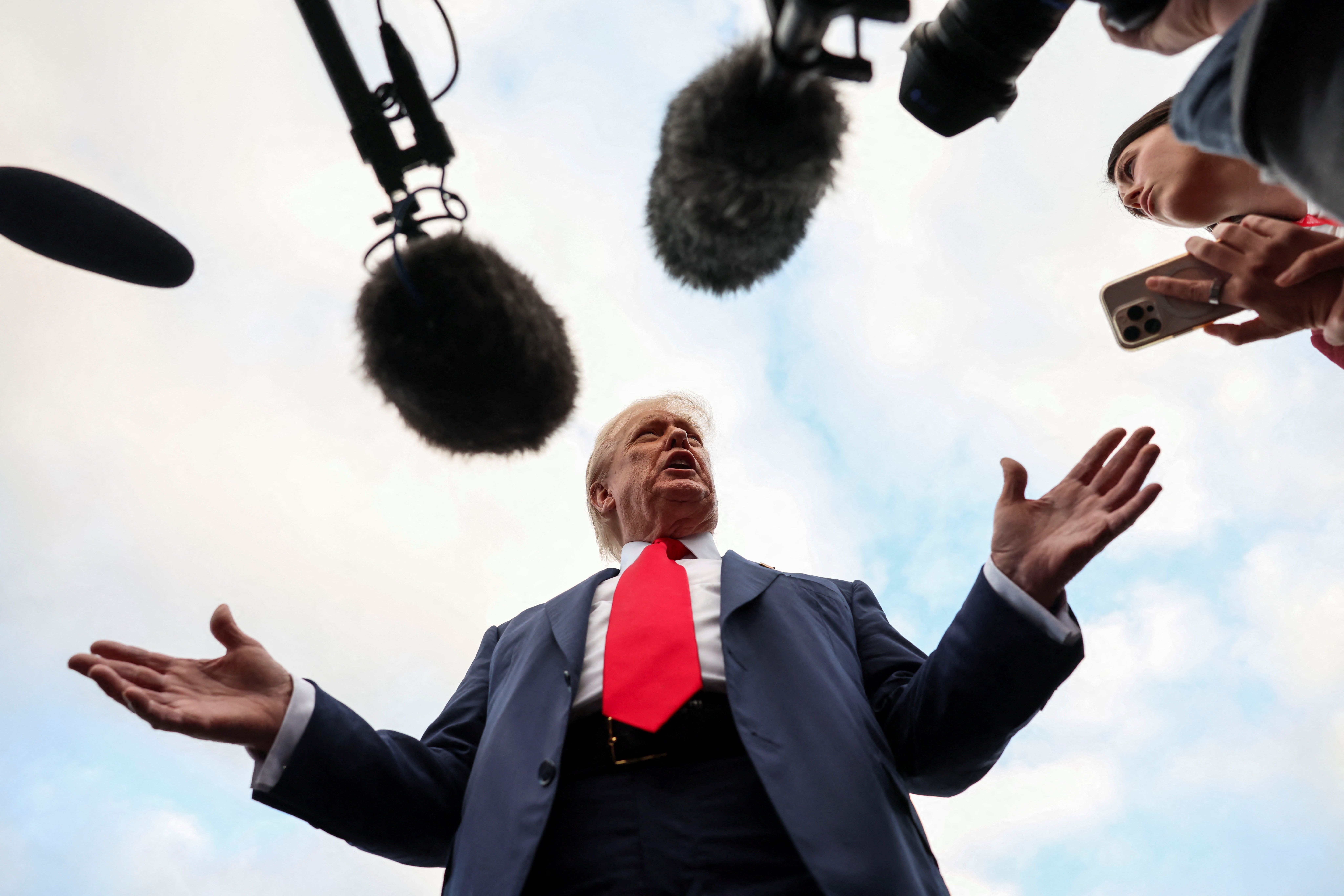
Donald Trump speaks to the media in Prestwick, Scotland. REUTERS/Evelyn Hockstein
President Donald Trump announced late Friday that he had secured "THE BIGGEST OIL DEAL IN WORLD HISTORY," claiming majority U.S. control over more than 65 billion barrels of Venezuela's proven oil reserves "at no cost to the American taxpayer," but an analysis argued this "deal of a lifetime" will most likely fail to materialize.
The announcement comes as the U.S. faces a cost-of-living crisis that has worsened amid Trump's ongoing conflict with Iran, which has significantly disrupted global oil and gas supplies, but columnist James Ball wrote for The i Paper that his claimed deal has drawn skepticism rather than the market reaction typically expected from an agreement of that scale.
"Trump could certainly use a new, plentiful source of oil right now," wrote Ball, the political editor for The New World. "The USA’s ongoing cost of living crisis – which Trump was elected on the promise to fix – is being made worse by his conflict with Iran, and the global oil and gas shortages it has fueled. But Trump’s supposed huge, new deal is outright confusing."
No oil companies involved have confirmed the arrangement, and publicly listed firms would ordinarily be legally required to disclose such a deal themselves rather than leave the announcement to the federal government.
"If it were a normal private-sector oil deal by U.S. companies, the companies involved would have announced it themselves, too – indeed they would be obliged to do so, as publicly listed companies," Ball wrote. "Also, typically, the federal government would not involve itself in such a deal."
Trump has credited Venezuela's "interim President" Delcy Rodríguez with brokering the arrangement, but critics say her government, installed after a U.S. military operation in January that captured Venezuela's previous leader and left Trump declaring the U.S. was "running" the country, lacks the authority to give away control of the nation's oil reserves.
The analyst warned that one country effectively seizing another's natural resources without consent or compensation could violate core principles of international law, including national sovereignty and prohibitions on coercive action.
Despite the scale of the claim, the announcement has generated relatively little sustained attention, which Ball attributes largely to uncertainty over whether the deal is real.
Ball placed the episode alongside a broader pattern of Trump announcements that have failed to materialize, including tariff packages that were never implemented, ceasefires with Iran that collapsed within minutes of being announced, and a declared agreement to disarm Hamas that Israel never actually signed.
"It is increasingly difficult to take Donald Trump seriously, because so few of his announcements are actually backed up by substance," Ball wrote. "That is his fatal flaw. Trump is trying to project the image of a decisive man of action, a strongman imposing his will on the world, with no one able to stand in his way."
"Perhaps the Venezuelan oil deal is different," Ball concluded. "Maybe this time, he’s actually got a plan. But to almost everyone, the President just looks like he’s become absorbed in yet another of a long line of distractions."