RawStory

Science

Virtually certain 2023 will be warmest year on record: US agency

Following another month of record-breaking temperatures throughout the globe in September, the year 2023 is all but certain to be the warmest on record, a US agency said Friday.

The unwelcome news comes as world leaders prepare to meet for crunch talks in Dubai in late November where phasing out fossil fuels, the main driver of human-caused climate change, will be top of the agenda.

Keep reading... Show less

Starlink satellites are ‘leaking’ signals that interfere with our most sensitive radio tel

When I was a child in the 1970s, seeing a satellite pass overhead in the night sky was a rare event. Now it is commonplace: sit outside for a few minutes after dark, and you can’t miss them.

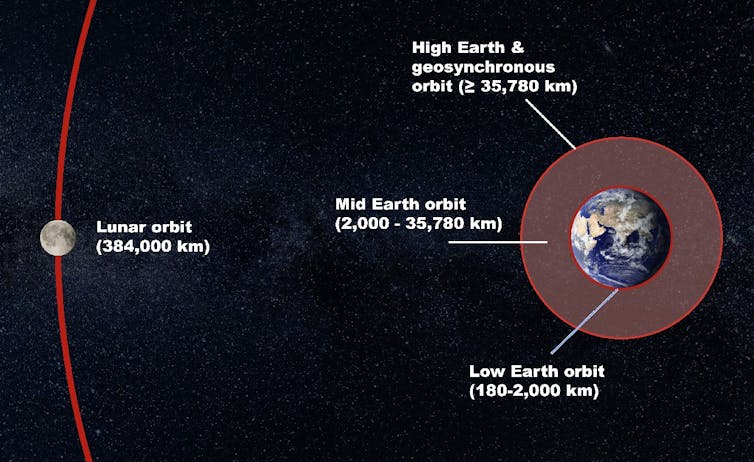
Thousands of satellites have been launched into Earth orbit over the past decade or so, with tens of thousands more planned in coming years. Many of these will be in “mega-constellations” such as Starlink, which aim to cover the entire globe.

Keep reading... Show less

Dumbing down or wising up: how will generative AI change the way we think?

Information is a valuable commodity. And thanks to technology, there are millions of terabytes of it online.

Artificial intelligence (AI) tools such as ChatGPT are now managing this information on our behalf – collating it, summarising it, and presenting it back to us.

Keep reading... Show less

How – and why – did homosexual behaviour evolve in humans and other animals?

Since gay couples have fewer children, the high frequency of same-sex relationships in humans is puzzling from an evolutionary point of view. Perhaps there are social advantages such relationships confer on a group, or perhaps “gay genes” are selected for other reasons.

A group of Spanish researchers have studied same-sex sexual behaviour and social relationships in more than 250 species of mammals – and in a recent paper in Nature Communications, they conclude it arose independently many times, and is related to other kinds of social behavior.

Keep reading... Show less

NASA set to journey to a metal-rich asteroid

It's a world like no other: a metal-rich asteroid that could be the remnants of a small planet, or perhaps an entirely new type of celestial body unknown to science.

A NASA probe is set to blast off Friday bound for Psyche, an object 2.2 billion miles (3.5 billion kilometers) away that could offer clues about the interior of planets like Earth.

Keep reading... Show less

Audit calls NASA’s goal to reduce Artemis rocket costs threat to deep space exploration

ORLANDO, Fla. — NASA’s goal to reduce the costs of the powerful Space Launch System rocket for its Artemis program by 50% was called “highly unrealistic” and a threat to its deep space exploration plans, according to a report by NASA’s Office of the Inspector General released on Thursday. The audit says the costs to produce one SLS rocket through its proposed fixed-cost contract will still top $2.5 billion, even though NASA thinks it can shrink that through “workforce reductions, manufacturing and contracting efficiencies, and expanding the SLS’s user base.” “Given the enormous costs of the Ar...

Young frogs may camouflage selves as animal poo: study

The young offspring of a frog native to Southeast Asia display an "unusual color pattern", probably to camouflage themselves "as animal droppings" to escape predators, according to a study.

A team of researchers studying juvenile Wallace's flying frogs -- which are bright red with small white dots -- made the findings thanks to an experiment at Vienna's Schoenbrunn Zoo, the zoo said on Thursday.

Keep reading... Show less

Your immune system makes its own antiviral drug − and it’s likely one of the most ancient

Antiviral drugs are generally considered to be a 20th century invention. But recent research has uncovered an unexpected facet to your immune system: It can synthesize its own antiviral molecules in response to viral infections.

My laboratory studies a protein that makes these natural antiviral molecules. Far from a modern human invention, nature evolved cells to make their own “drugs” as the earliest defense against viruses.

Keep reading... Show less

Comets 101 − everything you need to know about the snow cones of space

When you hear the word comet, you might imagine a bright streak moving across the sky. You may have a family member who saw a comet before you were born, or you may have seen one yourself when comet Nishimura passed by Earth in September 2023. But what are these special celestial objects made of? Where do they come from, and why do they have such long tails?

As a planetarium director, I spend most of my time getting people excited about and interested in space. Nothing piques people’s interest in Earth’s place in the universe quite like comets. They’re unpredictable, and they often go undetected until they get close to the Sun. I still get excited when one comes into view.

Keep reading... Show less

NASA asteroid sample contains life-critical water and carbon

A sample collected from the 4.5-billion-year-old asteroid Bennu contains abundant water and carbon, NASA revealed on Wednesday, offering more evidence for the theory that life on Earth was seeded from outer space.

The discovery follows a seven-year-round-trip to the distant rock as part of the OSIRIS-REx mission, which dropped off its precious payload in the Utah desert last month for painstaking scientific analysis.

Keep reading... Show less

NASA unveils newly returned carbon-rich asteroid sample

By Steve Gorman (Reuters) -NASA on Wednesday gave the public a first glimpse of what scientists found inside a tightly sealed capsule that was returned to Earth last month carrying a carbon-rich soil sample scooped from the surface of an asteroid, including water molecules locked inside clay-like minerals. A small portion of the material collected by the OSIRIS-REx spacecraft three years ago from the near-Earth asteroid Bennu was unveiled in an auditorium at NASA's Johnson Space Center in Houston, a little more than two weeks after it was parachuted into the Utah desert. The landing of the ret...

NASA to unveil first images of historic asteroid sample

NASA is set to reveal on Wednesday the first images of the largest asteroid sample ever collected in space, something scientists hope will yield clues about the earliest days of our solar system and perhaps the origins of life itself.

The OSIRIS-REx mission collected rock and dust from the asteroid Bennu in 2020, and a capsule containing the precious cargo successfully returned to Earth a little over two weeks ago, landing in the Utah desert.

Keep reading... Show less

Nearly half of flowering plant species face threat of extinction

Global scientists warned Tuesday that 45% of known flowering plant species could be at risk of disappearing, underscoring the need for urgent international action to tackle the planet's sixth mass extinction—the first driven by human activity.

That figure is among the key findings from State of the World's Plants and Fungi, the fifth annual report from the U.K.'s Royal Botanic Gardens (RBG) Kew, about such species amid the intertwined biodiversity crisis and climate emergency.

Keep reading... Show less