‘Very troubling’: U.S. honeybees just suffered second deadliest year on record
The year that spanned April 1, 2022 to April 1, 2023 was the second deadliest on record for U.S. honeybees.
Beekeepers lost 48.2% of their managed hives, according to the initial results of the Bee Informed Partnership's annual Colony Loss and Management Survey, released Thursday.
"This is a very troubling loss number when we barely manage sufficient colonies to meet pollination demands in the U.S.," Jeff Pettis, a former government bee scientist and current president of the global beekeeper association Apimondia who was not involved in the study, toldThe Associated Press. "It also highlights the hard work that beekeepers must do to rebuild their colony numbers each year."
"Beekeepers are under substantial pressure to recover from losses by creating new colonies every year."
Honeybees—and pollinators in general—are essential to biodiversity and agriculture, helping around three-quarters of the world's flowering plants and around 35% of its crops to reproduce. Honeybees alone pollinate more than 100 crops including nuts, vegetables, berries, citrus, and melons, according to the AP.
But in 2006, U.S. beekeepers began to report an alarming trend, The Hillexplained. Worker bees would simply abandon their hives, leaving the queen and larvae to die on their own. The emergence of "colony collapse disorder," as the phenomenon came to be known, prompted the University of Auburn in Alabama and the University of Maryland to team up to survey American beekeepers on rates of colony collapse through the nonprofit Bee Informed Partnership.
The worst year for colony survival was 2020 to 2021, when 50.8% of hives were lost. That loss doesn't mean that a beekeeper goes out of business; rather, they find a way to rebuild their hives, but doing it again and again takes a toll.
"Although the total number of honey bee colonies in the country has remained relatively stable over the last 20 years (~2.6 million colonies according to the USDA NASS Honey Reports), loss rates remain high, indicating that beekeepers are under substantial pressure to recover from losses by creating new colonies every year," the report authors wrote.
Nathalie Steinhauer, lead survey author and University of Maryland bee researcher, told the AP that "the situation is not really getting worse, but it's also not really getting better."
During 2022 to 2023, it was the winter that hit particularly hard, with 37.4% of hives lost, the survey found. This was 13.2 percentage points higher than last year's loss and 9.9 percentage points higher than the average. More than 60% of beekeepers also reported unacceptable losses during winter 2022-2023—or losses above 21.3% of their hives.
While honeybees face many threats, the leading cause of collapse reported by the beekeepers was the Varroa destructor mite, a parasite that makes bees more susceptible to viruses. The harm varroa causes has increased over time, Steinhauer told the AP. While it once took a 60% infestation to harm a colony, an infestation of just 1-2% can now have devastating consequences.
Another important cause of loss during 2022 and 2023 was "adverse weather." U.S. Department Agriculture research entomologist Jay Evans, who was not a part of the survey, told the AP that, in Washington, D.C., a spate of unusual 80°F days in January tricked bees into emerging earlier from winter habits only to face challenges when temperatures plunged again. In general, a change in seasonal rhythms can lead to a mismatch between the spring emergence of bees and the blooming of the flowers they rely on, The Hill pointed out.
"The impact of climate change on bee colony survival is real and can go undetected."
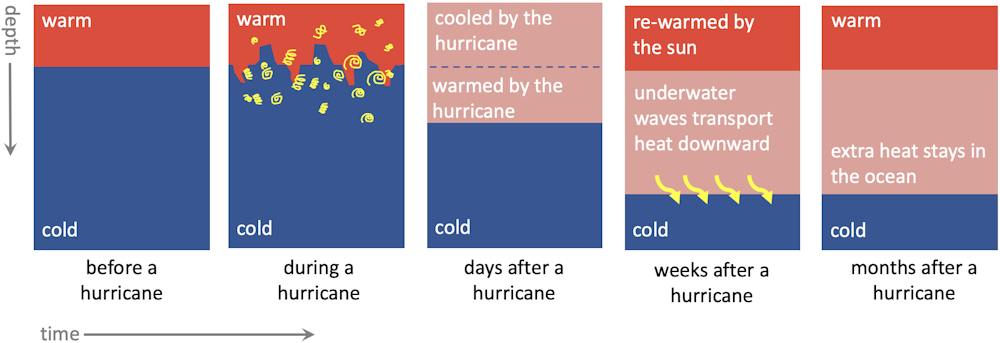
Other types of extreme weather—from heat to rainfall—can also take a toll. Hurricane Ian destroyed as many as 300,000 beehives in Florida in September 2022, as The New York Times reported in December, though the survey did not mention this.
"The impact of climate change on bee colony survival is real and can go undetected," Pettis told the AP.
Bee health can also be undermined by the spraying of pesticides and a lack of plant biodiversity that limits bees' food, scientists said.
The survey results come as wildlife advocacy groups celebrate National Pollinator Week from June 19 to 25. This year's week is focusing on how the climate crisis impacts pollinators.
"Pollinators are dying because their food and homes are disappearing, diseases have increased, and rising temperatures and natural disasters are affecting their ability to survive—all of which are related to climate change," the Pollinator Partnership wrote on its website.
Protecting pollinators can help lessen climate impacts by improving the health of the surrounding environment.
"Combined," the group said, "these results make planet earth a safer place for us to live."
Our work is licensed under Creative Commons (CC BY-NC-ND 3.0). Feel free to republish and share widely.OLIVIA ROSANE Olivia Rosane is a staff writer for Common Dreams.