Top Stories Daily Listen Now
RawStory

Science

12 dark-sky parks in the U.S. where you can see millions of stars

By Samanda Dorger

Here are 12 state and national parks around the U.S. that are recognized as International Dark Sky Parks where you can see stellar night skies. Remember stars? No, not movie stars. If you live in the city, you may have forgotten the sight of a star-filled sky, but perhaps remember it from a long-ago camping trip you went on as a child. But today, millions of children around the world will never experience the sight of the Milky Way in the skies where they live, according to the International Dark-Sky Association. Less than 100 years ago, everyone could look up and see a spect...

There could be alien life on Mars, but will our rovers be able to find it?

Robotic rovers are currently exploring the surface of Mars. Part of a rover’s mission is to survey the planet for signs of life. There might be nothing to find – but what if there is, and the rovers just can’t “see” it?

New research published today in Nature Communications suggests the rovers’ current equipment might not actually be up to the task of finding evidence of life.

Keep reading... Show less

Euclid spacecraft prepares to probe universe's dark mysteries

For now, Europe's Euclid spacecraft sits quietly in a sterilized room in the south of France, its golden trim gleaming under the fluorescent light.

But in a few months the space telescope will blast off on history's first mission to search for two of the universe's greatest mysteries: dark matter and dark energy.

Keep reading... Show less

Daily cannabis use linked to boosted risk of heart disease

Daily use of cannabis has been linked in a new study to a significant increase in heart disease.

People who used marijuana daily were found to be 34% more likely to develop coronary artery disease (CAD) than those who have never used the drug, according to research findings released Friday that will be presented at an upcoming conference of the American College of Cardiology and the World Congress of Cardiology.

Keep reading... Show less

In a new study, we’ve observed clues that distinguish the very deepest part of Earth’s core

Not so long ago, Earth’s interior was thought to be made up of four layers: the crust, mantle, (liquid) outer core and (solid) inner core.

In a new study published today in Nature Communications, we provide further evidence for the existence of an “innermost inner core” – a distinct internal metallic ball embedded in the inner core like the most petite Russian nesting doll.

Keep reading... Show less

Russia launches empty ship to ISS to replace damaged capsule

An uncrewed Russian Soyuz capsule took off early Friday from Kazakhstan for the International Space Station to eventually bring home three astronauts whose return vehicle was damaged by a tiny meteoroid.

The Soyuz MS-23 vessel lifted off successfully from the Russian-operated Baikonur Cosmodrome, live video broadcast by ISS-partner NASA showed.

Keep reading... Show less

How frontotemporal dementia, the syndrome affecting Bruce Willis, changes the brain – research is untangling its genetic causes

Around 55 million people worldwide suffer from dementia such as Alzheimer’s disease. Recently, the actor Bruce Willis was diagnosed with frontotemporal dementia, or FTD, a rare type of dementia that typically affects people ages 45 to 64. In contrast to Alzheimer’s, in which the major initial symptom is memory loss, FTD typically involves changes in behavior.

The initial symptoms of FTD may include changes in personality, behavior and language production. For instance, some FTD patients exhibit inappropriate social behavior, impulsivity and loss of empathy. Others struggle to find words and to express themselves. This insidious disease can be especially hard for families and loved ones to deal with. There is no cure for FTD, and there are no effective treatments.

Keep reading... Show less

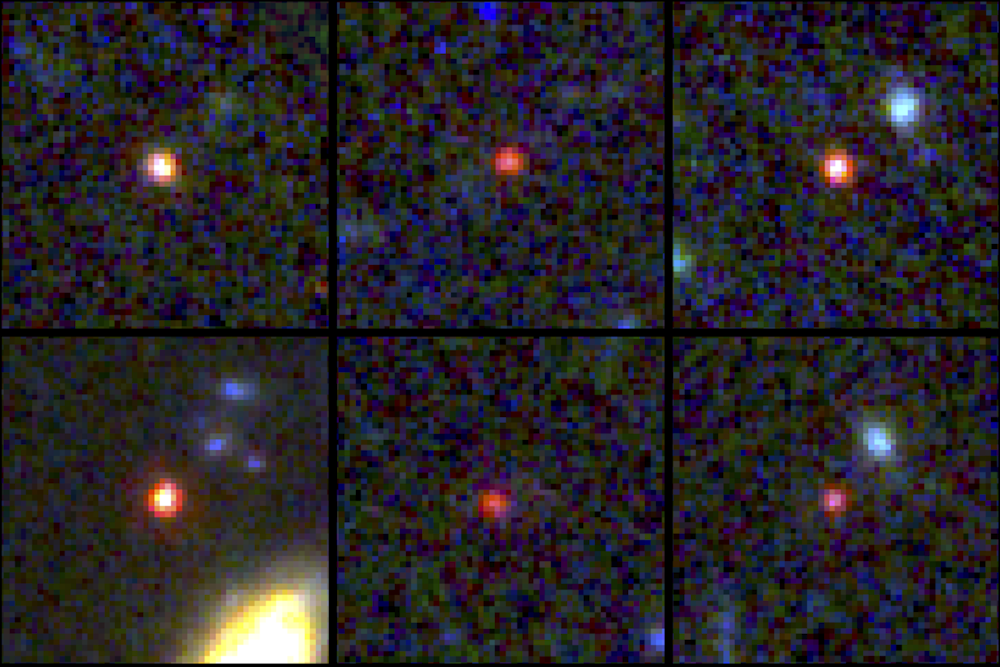
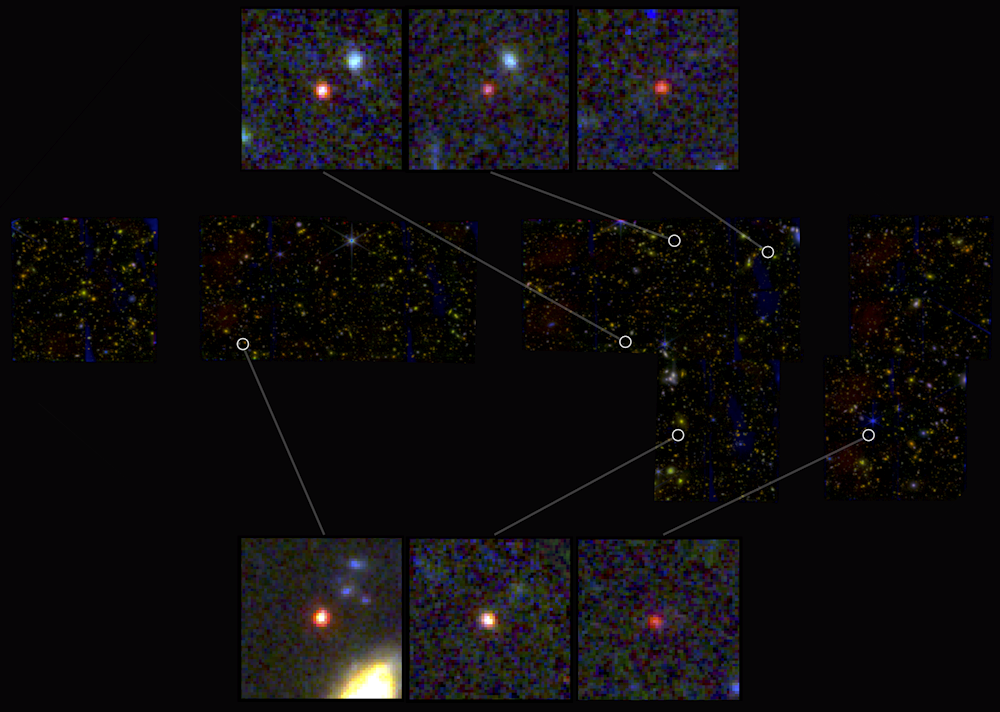
‘We just discovered the impossible’: how giant baby galaxies are shaking up our understanding of the early Universe

“Look at this,” says Erica’s message. She is poring over the very first images from the brand new James Webb Space Telescope (JWST).

It is July 2022, barely a week after those first images from the revolutionary super telescope were released. Twenty-five years in the making, a hundred to a thousand times more powerful than any previous telescope, one of the biggest and most ambitious scientific experiments in human history: it is hard to not speak in superlatives, and it is all true.

Keep reading... Show less

US spy pilot takes 'selfie' with China balloon before it was shot down

The U.S. Department of Defense released a previously classified “selfie” Wednesday, taken from the cockpit of a U-2 intelligence plane.

Behind the pilot can be seen the now-infamous Chinese spy balloon that was shot down by the U.S. military off the coast of South Carolina earlier this month.

Keep reading... Show less

Homo sapiens in Europe used bow-and-arrow 54,000 years ago: study

A cave in southern France has revealed evidence of the first use of bows and arrows in Europe by modern humans some 54,000 years ago, far earlier than previously known.

The research, published on Wednesday in the journal Science Advances, pushes back the age of archery in Europe by more than 40,000 years.

Keep reading... Show less

“Camouflaging” of autistic traits linked to internalizing symptoms such as anxiety and depression

A study of autistic children and adolescents in Australia showed that those suffering from anxiety, depression or similar symptoms (apart from autism) showed a more pronounced tendency to try to mask their autistic traits in social situations. Adolescents were also more likely to camouflage their autistic traits than children. The study was published in Autism Research. Autism or autism spectrum disorder is a neurodevelopmental disorder characterized by communication and social difficulties, restricted interests and repetitive behavior. It is more common in boys than in girls. On the other han...

Toxic forever chemicals found in more than 330 animal species

More than 330 animal species around the world are at risk of harm from exposure to toxic "forever chemicals," according to an Environmental Working Group analysis published Wednesday.

EWG's examination of data from dozens of recent peer-reviewed studies shows that more than 120 unique per- and polyfluoroalkyl substances (PFAS) have been detected in a wide range of wildlife. This includes many types of fish, birds, reptiles, amphibians, and mammals large, small, and aquatic—from pandas and tigers to squirrels and cats to otters and dolphins—as well as plankton, oysters, and scorpions. Some of the affected creatures are already endangered or threatened.

Keep reading... Show less

Narwhals' hungry summers as climate warms

Narwhals may not be much good at hunting in summer, according to new research that warns the unicorn-tusked whales may be dangerously reliant on their ice-bound winter habitat that could "disappear" with climate change.

Scientists studying the mammals in the fjords off the eastern coast of Greenland during the summer found narwhals were largely unsuccessful at capturing prey.

Keep reading... Show less