Neil deGrasse Tyson debated science, religion and the existence of God with a celebrity pastor Wednesday on "The Nightly Show."
"Any time someone describes their understanding of God, it typically involves some statement of benevolence or some kind of kindness," Tyson said.
"I look out to the universe -- and yes, it is filled with mysteries -- but it's also filled with all manner of things that would just as soon have you dead -- like asteroid strikes, and hurricanes, and tornadoes, and tsunamis, and volcanoes, and disease, and pestilence," Tyson continued. "There are things that exist in the natural world that do not have your health or longevity as a priority. So I cannot look at the universe and say, Yes, there's a God, and this God cares about my life -- at all. The evidence does not support this."
Host Larry Wilmore pointed out that Tyson had just described the Old Testament.
Pastor Carl Lentz, of Hillsong Church in New York City, said he believed that God had created science -- so he saw no conflict in their roles.
"It's going to lead you to acknowledge that something had to begin this, there's something more," Lentz said. "So I love it -- I think science is awesome. I don't think they war at all."
Wilmore agreed with comedian Tom Papa that science could lead people to God, but it hurt religion -- because it exposed the absurdity of an intelligent designer who could create the universe but doesn't want Christians to eat meat on Fridays.
"What is the intelligence of which you speak?" Tyson said. "Once again, an asteroid comes and it takes out 70 percent of all the species of life on Earth. Is there some intelligence you're ascribing to it?"
Wilmore joked that he thought that would be pretty clever.
"I think of, like, the human body, and I look at what's going on between our legs," Tyson said. "There's like a sewage system and entertainment complex intermingling. No engineer of any intelligence would have designed it that way."
Watch the entire segment posted online by Comedy Central:
Just as a fish never stops to think about the water in which it spends its entire life, so do many human beings rarely pause to consider the body fluids that make our lives possible.
Though not always fit for polite conversation, even the less pleasant among them play a crucial role in maintaining health. By learning a bit more about 11 of these body fluids, we can develop a deeper appreciation for the beauty and complexity of our own biology. What exactly are these fluids, and what often unheralded contributions do they make?
1. Bile
Bile is a brown to dark green fluid that is produced by the liver, stored in the gallbladder (a synonym for bile is gall), and released into the intestines when we eat. It is partly responsible for the color of vomitus and stool. Its most important ingredient is bile salts, which function like soap to break down dietary fats, enabling them and fat-soluble vitamins such as A, D and E to be absorbed. They also help to prevent the cholesterol-containing bile in the gallbladder from forming gallstones.
Curiously, about 15 grams of bile salts are excreted into the intestine each day, yet the human body contains only about five grams in total. How is this possible? The answer is that bile salts are recycled, being reabsorbed into the blood through the small intestine and then secreted again by the liver.
Some intestinal diseases, such as Crohn’s disease, can damage the part of the small bowel where bile salts are reabsorbed, predisposing patients to gallstones.
Perhaps the most important body fluid of all is blood. The average adult contains about six liters of blood, which functions to transport oxygen to cells, carry metabolic waste products such as carbon dioxide away from cells and transport infection-fighting white blood cells, glucose, hormones and other essential substances throughout the body. Blood also contains cell fragments called platelets and clotting factors that help to seal leaks that may develop in blood vessels.
An adult’s body contains about 25 trillion red blood cells – about one-third of all the body’s cells. Red blood cells survive on average about 120 days, which means that every second of every day, an adult human produces about two million red blood cells. If lined up end to end, the tiny blood vessels in which gas is actually exchanged, the capillaries, would reach a length of about 60,000 miles, long enough to encircle the earth more than twice.
3. Menstrual fluid
The average woman menstruates every 28 days over 42 years of her life, for a total of about 520 menstrual periods. The average volume of menstrual fluid is approximately 40 milliliters, or about 2.5 tablespoons in total. The fluid itself is about one-half blood, and also contains tissue from the inner lining of the uterus, mucus and secretions from the vagina. If the amount of bleeding is abnormally high, it can result in anemia, a deficit of red blood cells.
Along with blood and semen, menstrual fluid is one of the body fluids with the strongest psychological and cultural overtones. Traditionally, the onset of menstruation is associated with the transition from childhood to adulthood, and the onset of each menstrual cycle has long provided the best evidence that a woman is not pregnant. Some societies and faith traditions have sequestered menstruating women, although menstrual fluid is no more biologically hazardous than blood.
4. Mucus
Mucus sounds unpleasant, but none of us would be here without it. A slippery, clear liquid produced by mucous glands, it lines the cells of the bronchi in the lungs, the stomach and intestines, the urinary and reproductive tracts, and the eyes and ears. Mucus contains a variety of important substances, including antiseptic enzymes, antibodies and mucins that give mucus its gel-like properties. The average adult produces about one liter of mucus per day.
Mucus keeps the lining of the respiratory system from drying out and also filters out dust and infectious agents in the air we breathe. Microscopic hair-like projections from the cells lining the lung’s air passages help to propel the mucus back up toward the mouth at a speed of about one millimeter per minute, where it can be swallowed or expectorated.
Patients with cystic fibrosis have a genetic mutation that makes their mucus too thick, undermining this important defense against infection.
5. Pus
Any pus? Watercolour by J. Cats, 1787, after B. Maton.
Pus sounds even more disagreeable but serves as a sign that the immune system is working. A white, yellow or brown viscous fluid that accumulates at sites of infection, pus usually consists of bacteria, white blood cells, and other proteins and cell debris. Pus under the skin is often found in a pimple, but deeper in the body a larger collection is known as an abscess. Pimples and abscesses represent the body’s attempt to contain the spread of an infection.
For many centuries, one of the dictums of the barber-surgeon was, “Where there is pus, evacuate it,” thereby purging the infection from the body. Until several decades ago, drainage required a surgical procedure. Today, however, many abscesses are drained using just a needle and catheter, with ultrasound or CT imaging for guidance. This less invasive approach reduces the need for anesthesia, recovery time and cost.
6. Semen
Semen, the fluid released by males at ejaculation, generally contains spermatozoa, the gametes that fertilize the female egg, though this is not the case for males who have undergone the most common sterilization procedure, vasectomy.
In addition to providing a medium through which sperm can “swim,” semen also contains fructose, a sugar that nourishes the sperm, as well as alkaline secretions that help to neutralize the normally acidic environment of the vagina.
Females are born with all the eggs they will ever have, but males continuously produce gametes from puberty onward, and the average healthy male’s ejaculate of about five milliliters contains approximately 300 million spermatozoa.
Why such large quantities are produced when only one sperm can fertilize an egg is a bit of a puzzle, but one explanation may be that the competition between sperm helps to select for the fittest.
Saliva is secreted by salivary glands in and around the mouth. The average adult produces about a liter of saliva per day, with peak secretion at meals. Like mucus, saliva contains antibacterial enzymes and antibodies, as well as mucus itself. Saliva helps to moisten food, which is important to lubricate chewing and swallowing. It also enhances taste, because if the chemicals in food were not in a liquid medium, they could not be detected by taste receptors.
Some of the enzymes in saliva also begin to break down substances in food, such as starches, which are broken down by amylase. Because such enzymes are generally neutralized within seconds after reaching the highly acidic secretions in the stomach, they probably function mainly to break down food particles trapped between teeth, helping to prevent cavities.
Patients who lack sufficient saliva have much higher rates of tooth decay and gum disease.
8. Sweat
Sweat, like saliva, consists almost entirely of water, though it also contains minerals that account for its salty taste. Sweat production can vary widely between one-tenth of a liter and eight liters per day, and during intense exercise, an adult may produce two liters per hour or more. The body’s three million sweat glands come in two types. Eccrine glands are found all over the body, with the highest density in palms and souls. Apocrine glands are located most prominently in the armpits.
Sweat’s most important role is thermoregulation, helping to cool the body when it begins to overheat. By comparison, dogs, which lack sweat glands, must pant to dissipate heat through evaporation. The brain stimulates sweating through nerves, and the rate is increased in response not just to heat but also emotional states. In contrast to heat-based sweating, the emotional type is associated with perspiration in only the palms, soles and armpits.
Tears are produced by the lacrimal glands above and lateral to the eye, and are spread over the eye’s surface by blinking. They are drained into the nasal cavity, which explains why people often get a runny nose when they cry. Tears serve three functions: to lubricate the eye, to remove irritants such as smoke (and a sulfuric acid-producing chemical from cut onions) and in association with emotional states such as sorrow and joy.
Dry eye syndrome, the most common eye disease, affects as many as one-third of elderly people, though it can occur at any time in life. The most common cause is decreased tear production, which in most patients occurs for no known reason, though it is associated with a variety of diseases and medications. The most common treatment involves, naturally enough, the use of eye drops.
10. Urine
The average adult produces about 1.5 liters of urine per day. Produced by the kidneys and stored by the bladder, urine contains many substances that must be removed from the body to maintain a state of health. These include the breakdown products of protein metabolism, which would become toxic if they were allowed to accumulate in the blood. Urine also serves as the principal means for removing excess salt and water from the body.
A common diagnostic procedure in medicine is urinalysis. Finding glucose in urine could indicate that a patient is suffering from diabetes mellitus, a disease that got its name in part from the fact that the urine of diabetic patients tastes sweet. Likewise, finding bacteria suggests that the patient is suffering from a urinary tract infection. Interestingly, most of the amniotic fluid that cushions a fetus in utero is made up of urine produced by the fetus’ kidneys.
11. Vomitus
Vomitus differs from the other body fluids discussed here because it is not produced under everyday circumstances. Everyone vomits at some point in their life in response to one of several types of stimuli. The balance center of the inner ear can induce vomiting, as in motion sickness. Another cause is irritation of the gastrointestinal tract by infections and poisons.
In some cases, vomiting purges the body of toxins, but in other cases vomitus contains only food. In either case, the fluid is usually highly acidic, because of the acids normally secreted by the stomach. In individuals who vomit frequently, such as patients with bulimia, this acid can erode the surface of the teeth and cause dangerous changes in the pH balance of the blood. The presence of blood in vomitus is generally a sign of bleeding from the esophagus or stomach.
This list of bodily fluids only scratches the surface. For every fluid that is regularly visible to the eye, there is another that, at least in health, we see only rarely. These include amniotic fluid, cerebrospinal fluid and the fluids that lubricate the surface of the heart and lungs, the abdominal organs and the joints, among many others. To get to know these fluids better is to gain deep insights into the biology of the human body in both health and disease.
It’s early November in New York City, yet it’s 70 degrees outside. The unusually warm autumn has certainly come with perks, such as an extended season for milkshakes and jean shorts, the ability to get fresh air without shivering and fewer people declaring their love of sweater weather. But, when the temperature rises, we cut back on one, widely cherished past time: sex. Or, that’s what history tells us.
In a new paper from the National Bureau of Economic Research, as Bloomberg reported, economists compared 80 years of fertility and temperature stats and found that fewer people get down when the temperature exceeds 80 degrees (fahrenheit).
To be more precise, hot days corresponded to a 0.4 percent drop in birthrates nine months later. That’s 1,165 fewer American babies entering the world. And we don’t make up for the scaled-down relations, as birth rates don’t bounce back hard enough after heat waves to compensate for the decline in sperm-egg unions. But they do increase somewhat, which means more children are conceived in autumn and born in summer. And, as it turns out, summer babies statistically have a higher rate of poor health than babies birthed in cooler months.
Thanks to climate change, our birthrate troubles won’t melt away like the polar ice cap. Study authors projected temperature patterns down the road, based on climate change continuing along a severe trajectory. Between 2070 and 2099, according to their projection, the US could have more than twice as many 80-plus degree days than it had between 1990 and 2002, translating to a 2.6 percent birth-rate decline.
Either we’re all going to suck it up and start incorporating ice cubes into the bedroom more often, or suffer the consequences.
I once read a question that went as follows: Two groups of young men are walking on opposite sides of the street. One group is black, the other, white. Both are loud and swaggering, both have baseball caps turned to the back, both are brandishing bats. Which one is the baseball team and which one, the…
Independent NASA accident investigators said the U.S. space agency should “perform a greater level of due diligence for major system components” in rockets that deliver cargo to the International Space Station following a 2014 explosion.
The recommendation came in the investigators' report on the explosion of Orbital ATK's Antares rocket that destroyed a load of cargo for the space station. It may spur calls for more oversight of NASA's use of commercial contracts to deliver cargo - and soon crew members - to the space station.
NASA shared development costs for those programs with its commercial partners, while earlier rockets were fully government-funded.
Separate accident investigations are underway to determine the cause of a SpaceX Falcon 9 rocket failure on June 28, 2015, which claimed another load of station cargo.
NASA hired both Orbital and privately held Space Exploration Technologies, or SpaceX, to fly cargo to the station after the space shuttles were retired. The U.S. space agency is working on a similar program with SpaceX and Boeing to fly crew.
Orbital, in a report obtained by Reuters from the Federal Aviation Administration on Tuesday, said the Oct. 28, 2014 Antares explosion was most likely caused by an engine manufacturing defect, while NASA said it could also have been caused by a design issue or debris in the engine.
Both investigations said a fire and explosion in the rocket engine’s liquid oxygen turbopump caused the booster to fail about 14 seconds after liftoff from Wallops Island, Virginia.
Orbital said the cause of the failure was most likely a manufacturing defect in a turbopump in one of the rocket’s two AJ-26 engines, a Soviet-era motor refurbished and resold by Aerojet Rocketdyne Holdings Inc.
Aerojet in September paid Orbital $50 million to settle the dispute.
Orbital plans to replace the AJ-26 engines with a new Russian-made engine manufactured by Russia's NPO Energomash. First flight of the refurbished Antares is expected in 2016.
The use of Russian engines is controversial – they have been banned from use in rockets carrying military payloads – but analyst Marco Caceres, with Teal Group, says NASA has no choice if they want competition. “We know the Russians build excellent engines, but we don’t know how the quality control is,” he said. “To a certain extent, it’s a moot point because NASA doesn’t have a lot of choices.” The NASA investigators said a manufacturing defect was possible in the Antares case, noting that a defect also was found in a separate AJ-26 engine that exploded during testing in May 2014. But they said it was not clear the defect alone could have caused the explosion.
The NASA probe found two other potential causes of the failure: an engine design that made the turbopump “vulnerable to oxygen fires and failures,” and silica and titanium debris found in the engine.
The probe said any one of the three potential causes, or a combination of them, could have triggered the explosion. Investigators also said Orbital and Aerojet did not have full insight into the design and operational record of the engines, which were manufactured 40 years ago for a Soviet moon program.
(Reporting by Irene Klotz; Editing by Andrea Shalal and Andrew Hay)
Israel's antiquities body claimed Tuesday to have solved "one of Jerusalem's greatest archaeological mysteries" by unearthing an ancient Greek citadel -- the Acra -- buried under a car park.
Archaeologists have puzzled for more than a century over the exact location of the Acra, built by Seleucid Emperor Antiochus IV Epiphanes (215-164 BC) to control Jerusalem and the ancient Jewish temple there.
The temple was razed by the Romans in 70 AD, and two Muslim holy sites -- the Dome of the Rock and the Al-Aqsa mosque were built there centuries later.
The site, known to Muslims as The Noble Sanctuary and to Jews as Temple Mount, is sacred to both peoples and today the site of frequent disputes and clashes.
"Researchers with the Israel Antiquities Authority believe they have found the remains of the stronghold... in the Givati parking lot excavations at the City of David," the authority said.
That was a reference to an archaeological site situated in the Palestinian neighbourhood of Silwan in occupied east Jerusalem.
"The Givati excavation continues to uncover numerous artifacts from more than 10 different ancient cultures from Jerusalem's history," the authority said.
The citadel is mentioned in both the Jewish Book of Maccabees and in the writings of historian Flavius Josephus in the 1st Century AD but its exact location was unknown until now.
Excavators uncovered a section of the citadel's wall as well as the base of a tower of "impressive dimensions," the authority said.
"This sensational discovery allows us for the first time to reconstruct the layout of the settlement in the city" as it was more than 2,000 years ago, archaeologists said.
Lead sling slots, bronze arrowheads and stone projectiles were also discovered at the site.
The fortification's defences withstood all attempts at conquering it until Jewish leader Simon Maccabees took it in 141 BC after the Greek garrison starved during a lengthy siege.
Antiochus is remembered in the Jewish tradition as the villain of the Hanukkah holiday who sought to ban Jewish religious rites, sparking the Maccabean revolt.
Scientists have for the first time detected molecular oxygen (O2) in a comet’s coma, the cloud of gas surrounding it when it moves close to the sun. The discovery, which challenges our understanding of how the solar system formed, was made by the European Space Agency’s Rosetta spacecraft orbiting
The findings, published in Nature, came as a complete surprise to researchers.
Tracing the origin of O2
Oxygen is one of the most abundant elements in our galaxy and solar system, and we take the free molecular oxygen that makes up 20% of our atmosphere for granted with every breath. So why is finding oxygen in a comet such a big deal? Oxygen readily binds with other abundant elements such as hydrogen (H) or carbon ( C ) to form water (H2O) or carbon dioxide (CO2).
It takes some energy to split these molecules into their components again to produce free oxygen. The high levels of free oxygen in our atmosphere only persist because they are constantly replenished by the photosynthetic activity of the plant life on Earth. Our atmosphere is actually such an oddity that if a similarly oxygen-rich atmosphere was found around a planet orbiting a star other than the sun, the most likely explanation would in fact be life. But life has nothing to do with the oxygen on 67P. Though the comet contains some of the building blocks for life, it does not provide the conditions to assemble them.
We know that water, carbon monoxide and carbon dioxide are the dominant gases in the comas of comets. The authors of the study therefore first of all exclude the possibility that the oxygen came from the spacecraft or was produced by reactions with the thruster propellant. Other explanations include chemical reactions or interactions with radiation, for example UV light, which could also split these molecules to produce free oxygen.
Small amounts of oxygen observed on other icy bodies – such as Jupiter’s moons – Europa, Ganymede, and Callisto – as well as Saturn’s rings, are produced through the splitting of water or CO2 molecules by UV light (photolysis) or higher energy radiation (radiolysis). However, the researchers measured a constant release of oxygen as 67P approached the sun, suggesting that oxygen is evenly distributed throughout the icy nucleus and not the result of photolyis or radiolysis since the comet formed.
The comets in our solar system are made from the material left over from the formation of the planets. That means we have to go back to the time when the solar system formed from a solar nebula or protoplanetary disk to understand how it got there. The fact that a comet can incorporate oxygen as it grows by accumulating small ice and dust grains is one thing but preserving it to this day is another. The fact that it is still there reinforces the idea that comets are indeed the most pristine, least-altered remnants of the formation of our solar system 4.5 billion years ago.
But if 67P has oxygen in its tail, surely we have seen it in other measurements and on other comets? Unfortunately, it is difficult to detect oxygen from observations of comets using telescopes. Instead, scientists are now busy re-examining the data of another close encounter with a comet, Halley, almost 30 years ago.
Glimpse into the birth of the solar system
But at present, there is no reason to assume that the oxygen in 67P is a one-off observation. So what does the presence of free oxygen tell us about the conditions in the solar nebula or protoplanetary disk thought to have given birth to our solar system?
Free oxygen is rarely observed in interstellar nebulas or clouds, so we wouldn’t expect it to be there when our solar system formed. But there are exceptions, and one of them could hold the key to understanding what’s going on. The cloud ρ Ophiuchi has a slightly higher temperature, 20-30 Kelvin (-253°C to -243°C), than the average temperature of interstellar clouds of about 10 Kelvin (-263°C). The amount of oxygen relative to water in this “warm” cloud is comparable to that observed in the coma of 67P. Slightly elevated temperatures would allow oxygen to sublimate (turning to gas without first turning to liquid) more readily instead of condensing (turning to liquid from gas) on the surface of cold ice and dust grains where it would react with hydrogen to form water.
That means that our solar system might have formed from an unusually warm cloud, which raises the question as to what might have caused this elevated temperature.
The authors of the study also explore other more intricate ways of oxygen formation and incorporating it into a comet. The trapping of O2 gas inside water ice grains would require rapid heating and cooling events. Radiolysis of icy grains in a nebula, on the other hand, would require that these grains are assembled into a comet in an unaltered way, meaning we should not expect much shock from collision of grains or other potential sources of heat.
Hopefully, more studies might help us work out the sequence of events that occurred at the earliest stages of solar system formation. Rosetta’s investigation of comet 67P/Churyumov-Gerasimenko remains exciting because it provides us with a window into the past to a time before the formation of the planets. We can look forward to the next surprises this comet has in store for us.
A sense of crisis is developing in economics after two Federal Reserve economists came to the alarming conclusion that economics research is usually not replicable.
The economists took 67 empirical papers from 13 reputable academic journals. Without assistance from the original researchers they were only able to get the same result in a third of the cases.
With the original researchers’ assistance, that percentage increased to about half, suggesting reporting practices and requirements are seriously deficient.
The replication crisis in psychology is well-documented. Science recently published a stunning report by the Open Science Collaboration. Almost 300 researchers were involved in trying to directly replicate the results of 100 papers published in 2008. This followed earlier exercises involving many labs (such as here,here and here.)
The researchers did not succeed in the clear majority of cases. On average they found the mean effect size to be only half of what was reported in the original studies. While the report has been questioned (here and here,) there is growing concern that a cornerstone of the scientific edifice is in serious need of renovation.
What’s the problem?
Researchers are too often granted inappropriate degrees of freedom, and some are just fraudulent. But that said, some of these distressing replication results are because good science is messy. It involves hard work and reasonable people can reasonably disagree on the various calls that have to be made.
Simohnson questioned the results of an earlier study from the pair that suggested noble-sounding German names could boost careers. Re-running the analysis with a better analytical approach, Simonsohn did not confirm the effect. Silberzahn and Uhlmann eventually conceded the point in a joint paper with Simonsohn.
In their new study, the researchers provided a data set and asked more than two dozen teams of researchers to contribute. They sought to determine, based on the data set, whether skin colour of soccer players from four major leagues (England, France, Germany, and Spain) influenced how often they were given a red card.
Somewhat shockingly, the answers were rather diverse. Of the 29 teams, 20 found a statistically significant correlation with the median, suggesting dark-skinned players were 1.3 times more likely than light-skinned players to be sent off.
But the researchers reported:
“Findings varied enormously, from a slight (and non-significant) tendency for referees to give more red cards to light-skinned players to a strong trend of giving more red cards to dark-skinned players.”
Interestingly, this diversity of results survived even after the researchers debated the methodological approach.
The upshot is that even under the best of circumstances – one data set, what seems like a straightforward question to answer, and an exchange of ideas on the best method – arriving at consensus can be extraordinarily difficult. And it surely becomes even more difficult with multiple data sets and many teams.
It is not just the social sciences that are in the grip of replication crises. The extent and consequences of p-hacking, and publication biases (studies that report no effect not being published) in science, are well-documented and have been known for a while.
So, where to from here? With a number of journals (including the Journal of the Economic Science Association, Experimental Economics, Journal of Experimental Social Psychology, Journal of Personality and Social Psychology, Psychological Science, Perspectives on Psychological Science) opening their doors to replication in various guises, we can expect more results to seemingly discredit the social sciences.
Hopefully in the long run it will up the ante on what it takes for a study to be reliable. Replication studies can inflict considerable damage on individuals’ productivity and reputation. There’s a need for minimal reporting standards and acceptable replication etiquette to be clarified, such as whether original authors have to be invited or consulted. Journals should become more serious about their data set collection efforts, when not prevented by confidentiality.
Astronauts celebrated 15 years of circling the Earth aboard the International Space Station Monday, a new milestone for an orbiting space lab that some say deserves the Nobel Peace Prize.
With operations expected to last another decade, the world's space agencies are now looking to the outpost to provide key data on how future space pioneers may withstand the rigors of venturing further, perhaps even to Mars.
"We do a lot of experiments up here, but I think the most important experiment is the space station as an orbiting vehicle that keeps humans alive in space for long periods of time," said NASA astronaut Scott Kelly, during a live press conference with the station's crew to mark 15 years of continuous habitation.
Along with Russian cosmonaut Mikhail Kornienko, Kelly is spending one year at the ISS so scientists can study the effects of long-term spaceflight on the body and mind.
Any trip to Mars would likely last years, raising the issue of harmful radiation. But it could also help scientists understand how to nourish astronauts for long periods and how to maintain healthy crew psychology.
"The space station really is a bridge," US astronaut Kjell Lindgren told the media conference. "It is a test bed for the technologies we need to develop and understand in order to have a successful trip to Mars."
- Space pioneers -
The ISS was just a two-module unit when the first crew to inhabit the research laboratory project arrived on Nov. 2, 2000.
They were American astronaut Bill Shepherd and Russian cosmonauts Sergei Krikalev and Yuri Gidzenko.
Since then, a rotating cast of more than 220 of the world's elite astronauts have lived and worked at the ISS, which includes 16 participating nations and is led by the United States and Russia.
Modules were added over time and today the football-stadium-sized outfit represents about $100 billion in investment and provides as much living space as a six-bedroom house.
Traveling at an altitude of about 250 miles (400 kilometers) and a speed of about 17,500 miles (28,000 kilometers) per hour, the space station circles the Earth once every 90 minutes.
Typically, six crew at a time eat, sleep and float around in the microgravity environment, working 35 hours per week on a host of science projects for a mission duration of about six months.
After one crew of three astronauts departs, three replacements blast off aboard a Russian Soyuz spaceship, now the only mode of transport to and from the ISS after the US space shuttle program was retired in 2011.
- Peace Prize? -
John Holdren, director of the White House Office of Science and Technology Policy, called the 15th anniversary an "incredible achievement," and said "the international partnership that built and maintains the station is a shining example, moreover, of what humanity can accomplish when we work together in peace."
In the past, NASA administrator Charles Bolden has said the project is worthy of the Nobel Peace Prize.
Asked about that assertion, Russian cosmonaut Oleg Kononenko, who also took part in Monday's news conference, said Bolden is "100 percent right."
"People on the ground sometimes fail to hear each other, to see each other. Here in space, this is impossible," Kononenko said through a translator.
"Everyone is important here and the success of the program -- and sometimes even life -- depends on what each and every one of us does."
The six crewmen currently living in space planned to mark the anniversary with a communal dinner and some reflection, said Japanese astronaut Kimiya Yui.
"We are going to have a meal together," he said.
"And also we would like to talk about the future."
Melting ice in West Antarctica is a major concern for global sea levels, and a key area may already be unstable enough to unleash three meters of ocean rise, scientists said Monday.
The study follows research out last year, led by NASA glaciologist Eric Rignot, warning that ice in the Antarctic had gone into a state of irreversible retreat, that the melting was considered "unstoppable" and could raise sea level by 1.2 meters (four feet).
This time, researchers at Germany's Potsdam Institute for Climate Impact Research pointed to the long-term impacts of the crucial Amundsen Sea sector of West Antarctica, which they said "has most likely been destabilized."
While previous studies "examined the short-term future evolution of this region, here we take the next step and simulate the long-term evolution of the whole West Antarctic Ice Sheet," the authors said in the Proceedings of the National Academy of Sciences.
They used computer models to project the effects of 60 more years of melting at the current rate.
This "would drive the West Antarctic Ice sheet past a critical threshold beyond which a complete, long-term disintegration would occur."
In other words, "the entire marine ice sheet will discharge into the ocean, causing a global sea-level rise of about three meters," the authors wrote.
"If the destabilization has begun, a three-meter increase [9.84 feet] in sea level over the next several centuries to millennia may be unavoidable."
Even just a few decades of ocean warming can unleash a melting spree that lasts for hundreds to thousands of years.
"Once the ice masses get perturbed, which is what is happening today, they respond in a non-linear way: there is a relatively sudden breakdown of stability after a long period during which little change can be found," said lead author Johannes Feldmann.
- Large uncertainty -
The authors noted that Antarctica's situation presents the largest uncertainty in sea level projections for the coming centuries, and that studying the vast region poses many challenges.
And indeed, just days before the PNAS study was released, another scientific paper used NASA satellite data form 2003 to 2008 to show that Antarctic ice had gained mass, and had packed on enough to exceed the amount lost in other areas.
"We're essentially in agreement with other studies that show an increase in ice discharge in the Antarctic Peninsula and the Thwaites and Pine Island region of West Antarctica," said a statement by Jay Zwally, a glaciologist with NASA Goddard Space Flight Center whose study was published October 30 in the Journal of Glaciology.
"Our main disagreement is for East Antarctica and the interior of West Antarctica -- there, we see an ice gain that exceeds the losses in the other areas."
According to climatologist Michael Mann, who was not involved in either study, the use of older satellite data could be the cause for the disconnect.
"It sounds to me as if the key issue here is that the claims are based on seven-year-old data, and so cannot address the finding that Antarctic ice loss has accelerated in more recent years," he told AFP.
Want a special someone who will bring you to your knees? One who will be totally in charge? One who will tell you that you are really, really bad and threaten you with punishments? Maybe you have a little day dream about being a captive virgin. Or maybe you prefer to fantasize about a man who is helpless, who, say, has his arms secured to a crossbeam. Christianity has something for everyone.
I’m not the first person to observe that religious and sexual ecstasy have a lot in common—or that the love songs Christians croon to Jesus sound remarkably like other love songs. Nor am I the first to point out that Christian ministers, musicians, and recruiters play with this blurry boundary deliberately. Tim Tebow posing as sexy Jesus-on-the-cross for GQ kind of says it all. As if there weren’t enough Christian girls and boys struggling with Jesus fantasies already. (here, here, here)
Early pagan religions incorporated sexuality explicitly into religious practice, for example, in the form of temple prostitutes or fertility rites or sacred sexuality. Some Dharmic traditions, like tantric Buddhism, continue to do so today. Given the power of religion to arouse and exploit sexual energy, it should come as no surprise that sacred sexuality takes a wide variety of forms—or that, despite an overt attempt by the Abrahamic traditions to constrain and control sexuality, these traditions also make use of the very same urges they seek to suppress.
One offshoot of the religion-sensuality-sexuality nexus that doesn’t get talked about much is the relationship between Christianity and kink. On the surface, the two couldn’t appear more different. Christianity has often advocated abstinence or sex exclusively for procreation, as a means to propagate the religion itself, while kink is about consensual pleasuring limited only by an agreement between the individuals involved. Christianity can be thought of as seeking to sublimate, or redirect, sexual passion, while kink tries to enhance it. Christianity claims to be about the end game, while kink often is about the moment. Christianity is deadly serious, while kink commonly is framed as playful. Christianity is a multi-billion dollar, multi-billion member, multi-national enterprise, while kink is a small counter culture without revenue and membership goals.
But just beneath the surface both communities may be leveraging a similar set of instincts and emotions. Consequently, comparing Christianity and kink may illustrate how seemingly unrelated activities can draw on some basic human impulses that we all share. I am not suggesting that Christianity is all about sexual arousal, even sublimated or redirected sexual arousal, though that most certainly is a part of the picture. Nor am I suggesting that kink typically represents a far-reaching moral and spiritual worldview, though perhaps for some it does. I am suggesting that kink and Christianity appear to tap an overlapping array of social and psychological impulses that include sexual arousal, moral emotions like shame and disgust, our tendency to seek hierarchy, our desire to escape rationality, our heightened sensory acuity in the presence of emotional arousal, and our tendency to take every pleasure to its extreme. In all of these, the themes of dominance and submission, inflicting pain, and receiving pain, have parts to play.
Pleasure and Pain: In the past five hundred years, few Christian writers have described the relationship between pain and pleasure as graphically as St. Teresa of Avila, whose sixteenth century vision of mystical union with God drips with sexuality:
In his hands I saw a long golden spear and at the end of the iron tip I seemed to see a point of fire. With this he seemed to pierce my heart several times so that it penetrated to my entrails. When he drew it out, I thought he was drawing them out with it and he left me completely afire with a great love for God. The pain was so sharp that it made me utter several moans; and so excessive was the sweetness caused me by the intense pain that one can never wish to lose it, nor will one’s soul be content with anything less than God.
Still today, in some Christian traditions, pain and religious passion go hand in hand. Mother Theresa is quoted as saying that love isn’t real unless it hurts. In one anecdote, she tells a suffering woman that her pain is the kiss of Jesus. The nuns of Mother Teresa’s order, the Missionaries of Charity, have practiced self-mortification techniques including striking their legs with rope and wearing a spiked chain called a cilice. Dan Brown’s thriller, The DaVinci Code was a wild fantasy, but the mortification practices of the order Opus Dei are real.
With or without the erotic overtones, pain appears to heighten some spiritual experiences through several mechanisms. Self-inflicted pain or voluntary submission to pain can be proof of commitment, as in gang initiations. It may offer temporary relief from guilt, anxiety, emptiness, or self-loathing, like self-cutting does for some depressed girls and others. It may produce an endorphin release as when runners and rowers push past a pain threshold. It may intensify focus on the present moment by causing distractions to recede into the background, like pinching oneself can do. It may offer a mesmerizing rhythm of sensation, as in head banging. The point isn’t that Christian penance and self-mortification are always or even usually erotic—they aren’t—but that both Christianity and kink can use pain as sensory enhancers.
Bondage and slavery: The Bible has its share of stories about master-slave relations and other funky sex—starting with Adam who sleeps with his female clone; and Abraham who has sex with his half-sister/ wife Sarah as well as her slave; and Lot’s daughters, who after being offered to a rabbling mob get their father drunk so they can conceive by him. Then there’s the temptress, Delilah, who ties Samson up and finally saps his strength by cutting of his hair after their time together; and we can’t forget Solomon with his 700 wives and 300 concubines or sex slaves. (It wasn’t violence alone that got the Bible reviewed by Hong Kong’s media regulators.) Some people were shocked by all of the humping in Robert Crumb’s illustrated version of Genesis, but the Bible’s naughty bits have been staples for generations of teenage boys stuck in church.
Of course a key difference between these stories and modern sexuality is that dominance in kink is dictated by preference rather than gender. Also, both ethics and law dictate that BDSM actions require the enthusiastic consent of both parties, which definitely is not the case in the Bible stories. Fortunately most scholars think of the Bible stories as either mythologized history or historicized mythology rather than a factual record of events. Also fortunately, (as Greta Christina pointed out in the introduction to her kinky novella, Bending) most people who enjoy fictional violence or coercion—murder mysteries, spy novels, rape fantasies, or sexual slavery—would not seek or enjoy the same experiences in real life.
When it comes to bondage, perhaps the most common stimulus in the Christian tradition is the crucifixion itself, with its glorified, beatific images of Jesus hanging and swooning, eyes half lidded. The crucified Jesus is almost never depicted as a short, ordinary looking Semite. Instead, whether Caucasian, Middle Eastern, or Black, he is usually lanky and well-muscled with perfect skin and a face that fits some artist’s version of male beauty. Small wonder Tim Tebow slipped so easily into the pose.
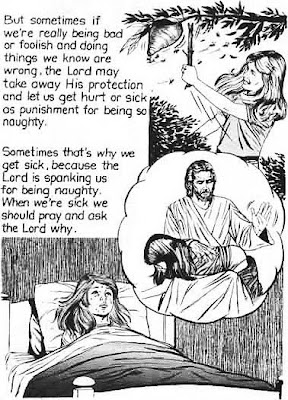
Discipline: Articles and forums devoted to “Christian domestic discipline” couch the practice in spiritual or religious terms: Wife spanking, like child spanking, is a means of maintaining the hierarchy that God established, with a man on top and wife as his “helpmeet.” Proponents are careful to distinguish their approach from secular kink, which they disparage. They establish a proper biblical context with texts like this one from the book of Hebrews: “Now no chastening for the present seemeth to be joyous, but grievous: nevertheless afterward it yieldeth the peaceable fruit of righteousness unto them which are exercised thereby.” Domestic discipline is described as a means to fend off, “this unholy culture, with its radically selfish feminism, and wholesale bias against true manhood, [which] launches relentless attacks against traditional Christian family values,” and it is recommended for serious offenses such as “the four D’s” (Disobedience, Disrespect, Dishonesty or Dangerous behavior).
Pious protestations aside, Christian wife spanking is clearly erotic. If it were not, why is it practiced in the bedroom, on a woman’s bare bottom? Why not have the preacher do the spanking? In fact, why not have the preacher spank men when they are bad? Of course, penance or punishment need not be routinely sexual. Punishing or being punished may have its own satisfactions, for example, as a way of wiping the slate clean or asserting hierarchy. Punishment also can be simply a form of abuse or self-abuse. As we know, moral emotions like shame, guilt and righteous indignation can be channeled in many directions toward many ends.
Dominance and Submission:One BDSM website for Christians suggests that, “A BDSM relationship between a dominant husband and submissive wife is actually the ideal of marriage set out in Ephesians 5:22-26 taken to its logical conclusion.” The author of Ephesians had this to say:
Wives, submit yourselves to your own husbands as you do to the Lord. For the husband is the head of the wife as Christ is the head of the church, his body, of which he is the Savior. Now as the church submits to Christ, so also wives should submit to their husbands in everything.
While few Christian couples own gags or restraints, a great many believe that God ordained a hierarchical relationship between women and men, and that this extends to the marriage bed. Women, in this view, were made from Adam’s rib and caused sin to enter the world, and so should not be allowed positions of authority in the church or home. In the words of the New Testament, “It is shameful for a woman to speak in church. Wives should regard their husbands as they regard the Lord. Women are not permitted to speak, but should be subordinate” (I Corinthians 14:33-35). This theology of “male headship” teaches that a woman’s greatest glory lies in bearing children and serving her husband. Protestant reformer Martin Luther put it bluntly: “If a woman dies from childbearing, it matters not; she is there to do it.”
Obviously this kind of relationship hierarchy and female servility can exist independent of male sexual dominance and female submission. Similarly, sexual hierarchy can exist in a more egalitarian relationship. Consequently, in any given Christian relationship, “Wives submit to your husbands” may or may not be given a sexual interpretation.
Either way, because humans are hierarchical social animals, dominance and submission may produce their own feelings of gratification. We’ve all heard that Islam means submission, literally. But submission is a pervasive theme in the Christian Bible as well. Children submit to their parents; women submit to men; slaves submit to their masters; and men submit to God, who, in many passages, is modeled on a Near-Eastern warlord. For modern born-again believers, conversion is often experienced as sweet surrender to the irresistible Divine will. In each of these asymmetric relationships, the person on the bottom gets excused from certain responsibilities, while person on the top gets power and authority. As observation of non-human primates suggests, there are privileges and obligations of each role in a hierarchy, whether dominant or subordinate.
Biblically and historically, within human society these privileges and obligations extend to the sexual domain—with men giving daughters in marriage, housing concubines, and claiming war captives. Females are, essentially, male property. (In no place does the Bible state or imply that a woman’s consent is needed before sex, and in fact nonconsensual asymmetric sex is routinely sanctioned or blessed.) In other words, within a modern context of mutual adult consent and role playing, BDSM experiments with aspects of sexuality that were non-consensual, non-playful parts of the Iron Age cultural fabric from which Christianity emerged. Whether either Christianity or BDSM is good for society or good for the people involved, I leave for you to decide. (A biblical rule of thumb might suggest that the consequences are what matters: “by their fruits you shall know them.”)
Bible believers often claim that they are a moral beacon to the world, a “light shining on a hill.” In particular many look with disgust on the curious, open sexuality of modern society. A closer look might suggest that their claims of superiority are unwarranted, that—just like the rest of us—they are complicated creatures whose spiritual and sexual practices are driven by an array of motives and instincts. Do Christian teachings and practice simply draw on the same aspects of human psychology and physiology as kink or do they actually lay groundwork for BDSM sexuality? I know of no research that attempts to tease this apart. But given the overlap, maybe someone should find out.
The Haunted House is a time-honored horror setting. All of us have shivered our way through spooky flicks such as The Haunting, The Amityville Horror, The Sentinel and Poltergeist.
It’s not only at the movies that we pay good money to frighten ourselves to death: commercial haunted houses are an integral part of 21st-century Halloween theater, with an estimated 5,000 such attractions operating in the United States each year.
The portrayal of cinematic haunted houses has remained remarkably consistent across time, and the architects of our annual macabre Halloween rituals incorporate all of the same bells and whistles (okay – creaks and groans) that we’ve come to expect.
From a psychological point of view, the standard features of haunted houses trigger feelings of dread because they push buttons in our brains that evolved long before houses even existed. These alarm buttons warn us of potential danger and motivate us to proceed with caution.
Haunted houses give us the creeps not because they pose a clear threat to us, but rather because it is unclear whether or not they represent a threat.
This ambivalence leaves you frozen in place, wallowing in unease.
For example, it would be considered bizarre and embarrassing to run screaming out of a house that makes you feel uneasy if there is actually nothing to fear. On the other hand, it could be perilous to ignore your intuition and remain in a place that is dangerous.
These are the psychological mechanisms behind feeling “creeped out.” They may be useful if they help you maintain vigilance when threat is uncertain. They also help you manage the balance between self-preservation and self-presentation (ie, presenting yourself in a socially desirable way).
While human psychology can explain what makes a haunted house so scary, it also provides the perfect guide to making one ourselves.
Things that trigger our ‘agent detection’ mechanisms
Evolutionary psychologists have proposed the existence of agent detection mechanisms – or processes that have evolved to protect us from harm at the hands of predators and enemies.
If you’re walking through the woods alone at night and hear the sound of something rustling in the bushes, you’ll respond with a heightened level of arousal and attention. You’ll behave as if there is a willful “agent” present who is about to do you harm.
If it turns out to be a gust of wind or a stray cat, you lose little by overreacting. But if you fail to activate the alarm response and a true threat is present – well, the cost of your miscalculation could be high.
Thus, we evolved to err on the side of detecting threats in ambiguous situations. Things that activate hypervigilance for malevolent supernatural (or natural) agents abound in large, drafty old houses: rattling or creaking sounds in upstairs rooms; the sighing and moaning of wind passing through cracks; ragged curtains fluttering in the breeze; echoes; and cold spots.
Feeling trapped
Research has consistently shown that we need more personal space while seated than while standing, more space when we are in the corner of a room rather than in the center of it and more space in rooms with low ceilings.
We feel uncomfortable when our personal space is violated anywhere, but especially so in situations where we feel as if escape will become difficult.
Such feelings of discomfort are symptomatic of the fact that we are constantly – even if unconsciously – scanning our surroundings and assessing our ability to flee if it should become necessary.
Consequently, a haunted house is our worst nightmare.
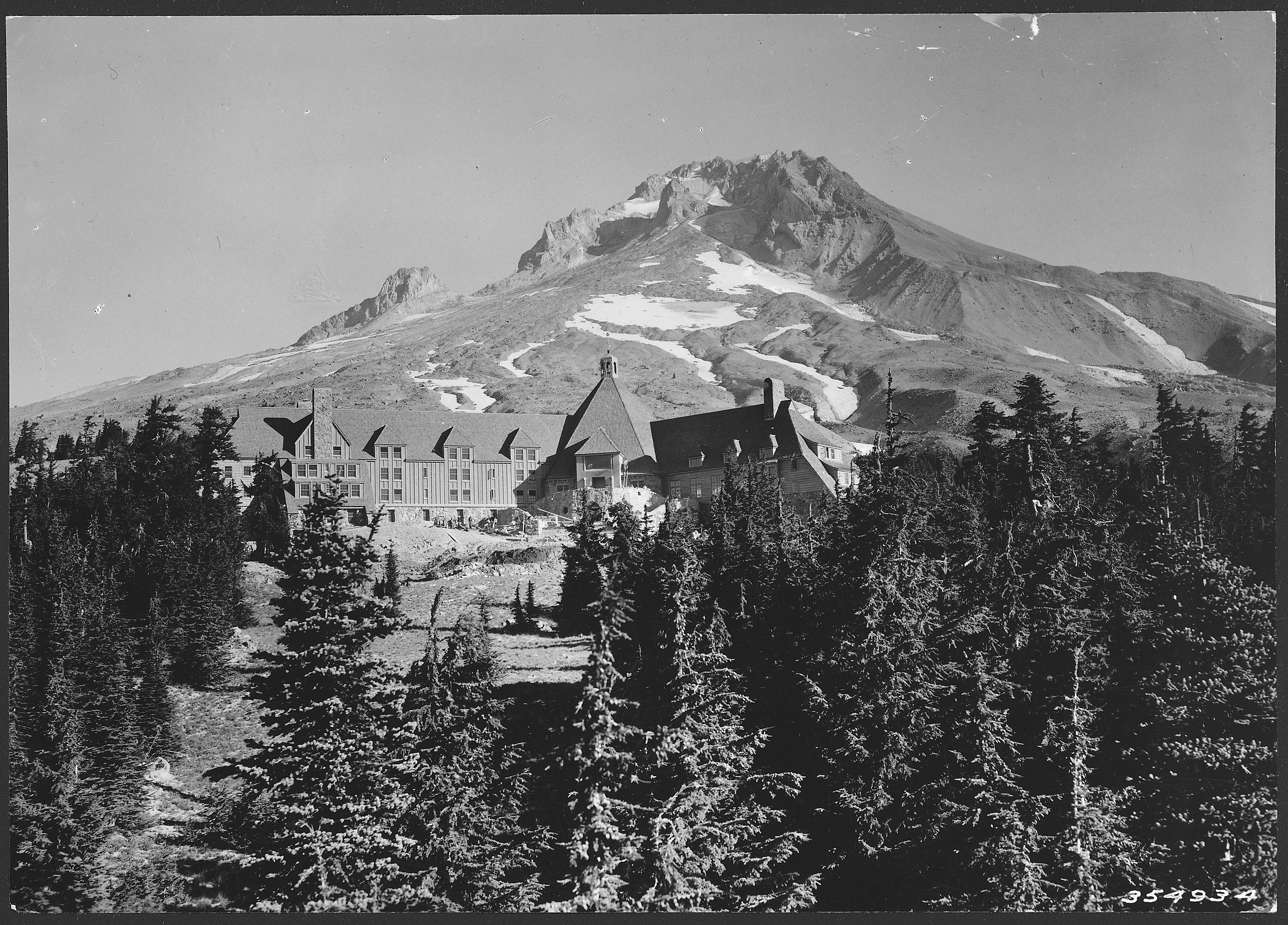
The prototypical haunted house is in a remote, isolated location, far removed from the rest of society (think of the off-season resort hotel in The Shining, for example). If bad things do happen, help would be a long time coming, even if communication with the outside world were possible. (Conveniently, in old horror movies the telephones always stop working.)
Exterior shots of Oregon’s remote Timberline Lodge were used for The Shining’s haunted Overlook Hotel.
Also, the darkness and confusing layout of the house may cause us to get lost; at the very least, it would slow us down. Escape could further be impeded by hedges, iron fences or crumbling stairways, all of which are featured prominently in Hollywood haunted houses.
A womb with a view
British geographer Jay Appleton was the first to describe two crucial features that determine whether a place is attractive or frightening to humans: the more “prospect” and “refuge” a place offers us, the more attractive it is.
Refuge means having a secure, protected place to hide where one can be sheltered from danger, while prospect refers to one’s clear, unobstructed view of the landscape. Attractive places offer us a lot of prospect and a lot of refuge, or what landscape architect Randolph Hester refers to as a “Womb with a View.”
In the words of Appleton, these are, evolutionarily speaking, places where “you can see without being seen, and eat without being eaten.”
Unfortunately, most haunted houses make for a bad combination of very low prospect for us, and very high refuge for the creepy-crawly things that are lying in wait to get us. Research has confirmed that people experience such environments as unsafe and dangerous.
Such places also lack what environmental psychologists refer to as legibility. Legibility reflects the ease with which a place can be recognized, organized into a pattern and recalled – in other words, a place that we can wander around in without getting lost.
Thus, the typical haunted house is large, dark, surrounded by overgrown vegetation, and full of surprising architectural features such as secret rooms and closets under staircases. Attics and basements are also must-have items, and, of course, spider webs, bats, rats and insects make nice accessories.
The older the better
Most haunted houses have some sort of “legend” associated with them. It usually involves a story about a grisly death or accident. There may even be a history of suicide and murder.
The older a place is, the more likely we are to perceive it as haunted because there’s been much more time for tragic things to have taken place.
Stimuli such as moldy odors, antiquated Victorian or Gothic architecture, wood interiors and old portraits on the wall reinforce an ambiance of great age. Assuming that the house is no longer occupied, signs of life suddenly interrupted and frozen in time only amplify the fear factor.
For example, remnants of a half-eaten meal on a kitchen table or clothing laid out on a bed waiting for a homeowner who has apparently vanished without warning create a frightening ambiguity about what may have taken place in the house. (There are bonus points awarded if the house is conveniently located next to or on top of an old cemetery or burial ground!)
Ultimately, whether or not a house is perceived as haunted obviously depends upon something other than the physical features of the house. Just as important are the inherent beliefs of the person exploring the house.
Individuals who believe in paranormal phenomena and have expectations that creepy things might actually be present in such a place are more likely to engage in the sort of top-down, cognitive processing that induces fear.
For these people, otherwise innocuous but uncertain surroundings can become a chilling experience.
A teenage girl in Oregon has tested positive for bubonic plague, state health officials said on Thursday.
The girl was believed to have been infected by a flea bite during a hunting trip earlier this month, according to the Oregon Health Authority's Public Health Division and the Crook County Public Health Department.
The teen was in an intensive care unit at a hospital in Bend, in central Oregon, health officials said. Her condition was not known.
There were no other known infections in the state from the centuries-old scourge, health officials said.
"Many people think of the plague as a disease of the past, but it's still very much present in our environment, particularly among wildlife," said Emilio DeBess, Oregon state public health veterinarian in the Public Health Division.
"Fortunately, plague remains a rare disease, but people need to take appropriate precautions with wildlife and their pets to keep it that way," he said.
The U.S. Centers for Disease Control and Prevention said the plague was introduced to the United States in 1900 by rat-infested steamships that had sailed from affected areas, mostly in Asia.
In recent years, less than 10 human plague cases have been reported in the U.S. each year, the agency said.
Early symptoms of plague include high fever, chills, nausea, weakness and swollen lymph nodes in the neck, armpit or groin.
(Reporting by Victoria Cavaliere; Editing by Kavita Chandran)