Manzanita, with its peeling red bark and delicate pitcher-shaped blossoms, thrives on the dry, rocky ridges of Northern California. The small, evergreen tree or shrub is famously drought-tolerant, with some varieties capable of enduring more than 200 days between waterings. And yet here I was, gently lowering an 18-inch variety named for botanist Howard McMinn into the damp soil of Tacoma, a city in Washington known for its towering Douglas firs, bigleaf maples, and an average of 152 rainy days per year.
It’s not that I’m a thoughtless gardener. Some studies suggest that the Seattle area’s climate will more closely resemble Northern California’s by 2050, so I’m planting that region’s trees, too.
Climate change is scrambling the seasons, wreaking havoc on trees. Some temperate and high-altitude regions will grow more humid, which can lead to lethal rot. In other temperate zones, drier springs and hotter summers are disrupting annual cycles of growth, damaging root systems, and rendering any survivors more vulnerable to pests.
The victims of these shifts include treasured species from around the globe, including certain varietials of the Texas pecan, the towering baobabs found in Senegal, and the expansive fig trees native to Sydney. In the Pacific Northwest, I’ve seen summer heat domes turn our region’s beloved conifers into skeletons and prolonged dry spells wither the crowns of maples until the leaves die off in chunks.
The world is warming too quickly for arboreal adaptation, said Manuel Esperon-Rodriguez, an ecologist at Western Sydney University who researches the impact of climate change on trees. That’s especially true of native trees. “They are the first ones to suffer,” he said.
Urban arborists say planting for the future is urgently needed and could prevent a decline in leafy cover just when the world needs it most. Trees play a crucial role in keeping cities cool. A study published in 2022 found that a roughly 30 percent increase in the metropolitan canopy could prevent nearly 40 percent of heat-related deaths in Europe. The need is particularly acute in marginalized communities, where residents — often people of color — live among treeless expanses where temperatures can go much higher than in more affluent neighborhoods.
While the best solution would be to stop emitting greenhouse gases, the world is locked into some degree of warming, and many regional governments have begun focusing on building resilience into the places we live. Urban botanists and other experts warn that cities are well behind where they should be to avoid overall tree loss. The full impact of climate change may be decades away, but oaks, maples, and other popular species can take 10 or more years to mature (and show they can tolerate a new climate), making the search for the right varieties for each region a frantic race against time.
In response, scientists and urban foresters are trying to speed up the process, thinking strategically about where to source new trees and using experiments to predict the hardiness of new species. Beyond that, many places are moving past the idea that native species are the most sustainable choice by default.
“Everybody is looking for the magic tree,” said Mac Martin, who leads the urban and community forestry program at Texas A&M’s Forest Service. He went on to say that one kind of tree isn’t enough. We need “a high number of diverse trees that can survive.”
In other words, a whole new urban forest.
In late 2023, that quest took Kevin Martin, no relation to Mac, to the arid forests of Romania. As the head of tree collections at the Royal Botanic Gardens, Kew, he spent a week hiking through pine-scented forests to gather beech acorns. He brought seeds from seven species back to the U.K. and planted them in individual pots at the botanical garden’s nursery. Now, he waits.
He hopes the trees will thrive in London’s drier springtime soils, which are making it hard for old standbys like the English oak to survive the hotter summers that follow. The research is part of a bigger change for the botanical garden, Martin said, which historically focused on collecting rare plant specimens. “We’re flipping that on its head and looking at what we want to grow,” he said. “We want a good outcome for humanity.”
Under normal conditions, trees are among the best defenses against heat, and not just because they provide a shady place to rest. As their leaves transform sunlight into energy, trees give off water vapor through tiny holes called stomata, cooling the air around them with “nature’s own air conditioning,” Martin said.
But increasingly hot temperatures can shut down this process. In extreme dry heat, the cells slacken and the stomata close, stopping water from escaping. The point at which this happens is called the turgor loss point, and it’s like the leaves on a houseplant wilting. If a stressed tree doesn’t get water, its leaves will overheat and die before the fall, sometimes across entire sections of the crown. In highly humid conditions, the air holds too much water vapor to absorb any more, leaving leaves waterlogged and beckoning rot. Even if a tree in this condition looks healthy, it can’t cool cities as well as it used to. Making matters worse, distressed plants are more vulnerable to pests like the borer beetle.
Native trees are particularly at risk for climate stress, and in many cities, they make up a significant chunk of urban tree cover. Eighty-seven percent of the trees in Plano, Texas, are native species, for example. That number is 66 percent in Santa Rosa, California, and 30 percent in Providence, Rhode Island.
To be sure, non-native trees have been a part of human settlements for a long time. Plants often spread with human migration, and European colonists brought many species to other continents. Many of these newcomers grow faster than the indigenous varieties, and some have proven better suited to urban areas.
However, flora introduced from far away can also experience climate shock. Currently, non-native trees typically come from climates similar to those trees they now stand alongside. Until the seasons started going haywire, this made them well-suited to their adopted homes. For example, the London plane, a cross between an American sycamore and a plane tree from western Asia, lines streets in temperate zones around the world. Now, scientists are worried about the tree’s future in its namesake city as dry springs and hot summers leave them weak and susceptible to pests.
To find solutions, researchers are studying which trees could do better than those currently struggling in rapidly warming cities, with an eye toward species that have already adapted to drier regions hundreds or even thousands of miles away. In Canada, for example, scientists have matched trees from the northern United States with the expected climates in cities including Vancouver, Winnipeg, and Ottawa. Urban foresters in Sydney are considering the trees in Grafton, an Australian city about 290 miles closer to the equator.
Thinking of a future U.K., Kevin Martin started evaluating trees from the steppes of Romania more than 1,000 miles away. To find the right places to collect acorns, Martin looked at both temperature and the amount of water available in the soils of Romanian forests, explaining that trees in moist soils in tropical rainforests or near rivers will keep going even in hot conditions.
He will have to wait two years for the acorns to sprout and grow into saplings. Only then can he begin stress-testing the specimens to see if the trees are a good fit for the growing conditions of London in 2050 and beyond. Martin plans to study at what point the trees’ leaves hit turgor loss in dry, hot conditions. But crucially, the trees must also be able to adapt to London’s cold winters, which are expected to stay freezing even as drought and heat waves increase.
Examining leaf turgor loss can’t be used to assess trees for every neighborhood in a city. Parts of Sydney are facing increasingly humid summers in an otherwise temperate climate. With this in mind, the municipal forestry department used a database that matches a far-off location’s current humidity with what experts expect for the city in 2050. In addition to considering temperature, officials hope to increase tree canopy to cover 27 percent of the city in the next quarter century. They are also mindful that the climate will change gradually and have laid out a phased planting plan. Trees that thrive in the Sydney of 2060 may struggle in 2100.
Such factors are on Mac Martin’s mind as his department updates Texas A&M’s online tree selector, a statewide database that recommends species, to include varieties that are likely to flourish in the future.
Texas is slated to experience a triple climate whammy of hotter summers, colder winters, and changing humidity, with some places becoming intolerably dry and others getting more muggy. It’s a complex weather pattern to plant for — and that’s assuming cities are prepared to adapt once the right species are identified.
As risky as it may seem to hold on to endemic species in the face of climate change, some governments continue to create policies that favor native trees over non-natives. Canada, for example, has funded the planting of thousands of native trees in urban areas through its 2 Billion Trees project.
Botanists like Henrik Sjöman, who oversees collections at the Gothenburg Botanical Gardens in Sweden, say native-only thinking can leave cities unprepared to adapt to climate change. But he doesn’t believe cities must completely abandon native species. He hopes that some species can be saved with a process he calls “upgrading.” The idea is to find trees from the same species that are already growing in harsher conditions, and propagate seeds from those plants. To grow more resilient English oaks in the U.K., for example, scientists could grow them from acorns sourced from western Asia, where the tree also grows. These acorns would come from trees thriving in a more arid region, so they could potentially yield hardier varietals that will one day thrive in a drier London.
Additionally, locale-adapted native species might continue thriving in woodlands like large city parks or green spaces. Sjöman said it’s possible that trees in undeveloped areas will have more time to adapt to climate change, because rainfall more easily soaks into the ground and fills the water table. That’s not the case in highly paved and built-up neighborhoods, where decreasing rainfall hurts trees more.
“Everything’s pushed to its limit in urban environments,” Sjöman said.
That reality has many locales taking a “block-by-block” approach to planting guidelines. Toronto, for example, plants trees from the region’s ecosystem whenever possible, said Kristjan Vitols, the city’s supervisor of forest health care and management. That’s especially true of its iconic ravines, where newly planted trees must be endemic — and raised from locally sourced seeds when possible. But the city is also open to non-native species where plants face harsh conditions along streets.
The rules for Toronto’s ravines are based on the idea that a species will develop traits specific to a location as they grow over many generations. As a result, trees grown from seeds gathered in Toronto may be more likely to blossom when native pollinators are active than seeds from the same species grown at a lower latitude.
Foresters say there’s another valid argument for trying to keep as many native trees as possible. For some First Nations and Indigenous people with deep ties to particular varieties, phasing them out could add to the long history of cultural and physical dispossession.
In the Pacific Northwest, for example, the Western redcedar (written as one word because it’s not a true cedar) is central to Native American cultural practices for many local tribes. Some groups refer to themselves as the “people of the cedar tree,” using the logs for canoes, basketry, and medicine.
But drying soils mean the tree is no longer thriving in many parts of Portland, Oregon, said Jenn Cairo, the city’s urban forestry manager. The city has faced deadly heat domes and drier conditions in recent years. As a result, Portland only recommends planting the species in optimal conditions in its list of approved street trees. “We’re not eliminating them,” she said, “but we’re being careful about where we’re planting them.”
A similar tactic is being used in Sydney, where the Port Jackson fig tree is struggling, but a close relative, the Moreton Bay fig, is thriving. Head of urban forestry Karen Sweeney said the city is looking at irrigated parklands as potential homes for native species that are dying elsewhere in the city. “We often say we’re happy to do it where we can find a location,” she said.
When introducing new tree species to supplement the urban canopy, they must be sure any newcomers won’t spread invasively — dominating their new habitats and causing damage to native species.
There are plenty of examples of what to avoid. The Norway maple, native to Europe and western Asia, has escaped the bounds of North American cities, creating excessive shade and crowding out understory plants — they’re one of the invasive species pushing out natives in the ravines of Toronto. Tree of heaven, native to China, deposits chemicals into the soil that damage nearby plants, letting it establish dense thickets and drive out native species; it is illegal to plant in parts of the U.S., including Indiana, where residents are urged to pull it up wherever they see it. The highly flammable eucalyptus, native to Australia, has put down roots all over the world, bringing increased wildfire danger along with it.
Urban tree experts don’t expect introduced species to cause major disruptions to native wildlife. Done right, adding some variety to cities dominated by one kind of tree could reduce the problems caused by waves of pests or disease. A patchwork of species could create a buffer against tree-to-tree infection among the same species. While it’s possible that new plant species displace plants used by animals that depend on one kind of plant to survive, those cases are the exception, Esperon-Rodriguez, the ecologist at Western Sydney University, said.
Some native animals do surprisingly well alongside their new plant neighbors. Introducing trees that are closely related to what’s already there could provide additional food and shelter for the local fauna. Animals might already be eating fruit from a new tree that grows somewhere else in their range.
If it thrives, my Howard McMinn manzanita could attract Anna’s hummingbird with its pale blossoms in the Pacific Northwest, just as it would in its native California hills.
For now, my manzanita is a small bush. (Manzanita straddles the line between shrub and tree, which is not a clear-cut distinction. The definition of a tree is something that ornithologist David Allen Sibley said “one could quibble endlessly over.”) The plant made it through a cold snap this winter, and I was happy to see the bright green new leaves growing at the tips of its little branches after temperatures warmed.
Eager for a sign of spring, I leaned in close and found what I was looking for: clusters of tiny, unopened flower buds.
Grist is a nonprofit, independent media organization dedicated to telling stories of climate solutions and a just future. Learn more at Grist.org.






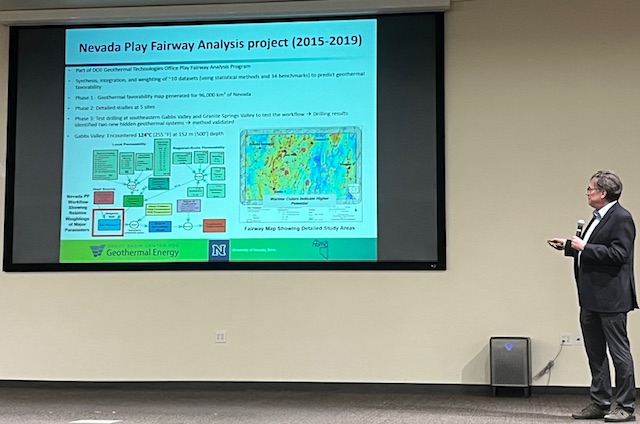 Jim Faulds, state geologist and member of UNR’s Great Basin Center for Geothermal Energy, speaks at a geothermal symposium April 16, 2024, at UNR. (Amy Alonzo/The Nevada Independent)
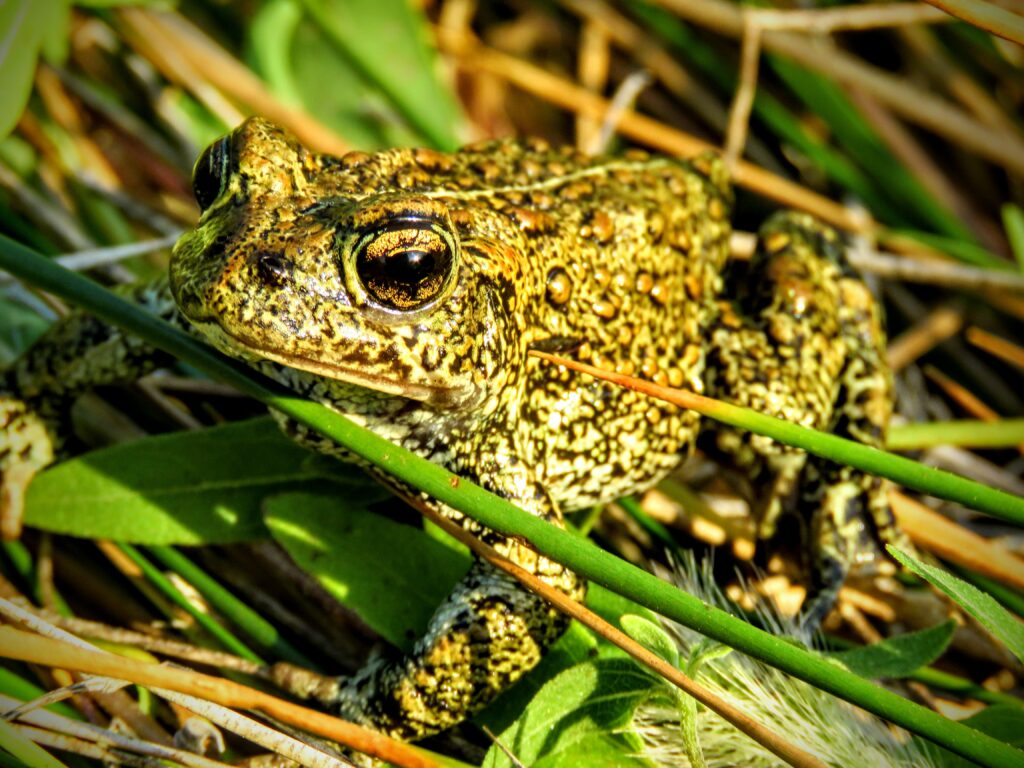 The Dixie Valley toad. (Patrick Donnelly/Center for Biological Diversity)

