Top Stories Daily Listen Now
RawStory

Science

U.S. braces for April 8 solar eclipse frenzy

U.S. communities along the path of the April 8 total solar eclipse are preparing for the year's biggest astronomic event, with millions of visitors expected to brighten local economies -- and snarl up logistics.

Near the US-Canada border in Burlington, Vermont, which is set to experience the totality just before 3:30 pm (1930 GMT), many hotels have been sold out for months.

Keep reading... Show less

Person in Texas infected with bird flu through dairy cattle

A person in the US state of Texas is recovering from bird flu after being exposed to dairy cattle, officials said Monday amid growing concern over the current global strain of the virus as it spreads to new species.

It is only the second case of a human testing positive for bird flu in the country, and comes after the infection sickened herds that were apparently exposed to wild birds in Texas, Kansas and other states over the past week.

Keep reading... Show less

A cosmic ‘speed camera’ just revealed the staggering speed of neutron star jets

Energetic cosmic beams known as jets are seen throughout our universe. They are launched when material – mainly dust and gas – falls in towards any dense central object, such as a neutron star (an extremely dense remnant of a once-massive star) or a black hole.

The jets carry away some of the gravitational energy released by the infalling gas, recycling it back into the surroundings on far larger scales.

Keep reading... Show less

‘The ghost has taken the spirit of the Moon’: how Torres Strait Islanders predict eclipses

It’s eclipse season. The Sun, Earth and Moon are aligned so it’s possible for the Earth and Moon to cast each other into shadow.

A faint lunar eclipse will occur on March 25, visible at dusk from Australia and eastern Asia, at dawn from western Africa and Europe, and for much of the night from the Americas. Two weeks later, on April 8, a total solar eclipse will sweep across North America.

These events are a good time to think about an infamous incident 520 years ago, in which an eclipse prediction was supposedly used to exploit an Indigenous population. The incident has shaped how we think about astronomy and Indigenous cultures – but the real story is far more complex.

Columbus and the eclipse

In June 1503, on his fourth voyage to the Americas, Italian explorer Christopher Columbus and his crew became stranded on Jamaica. They were saved by the Indigenous Taíno people, who gave them food and provisions.

As months passed, tensions grew. Columbus’s crew threatened mutiny, while the Taíno grew frustrated with providing so much for so little in return. By February, the Taíno had reached their breaking point and stopped providing food.

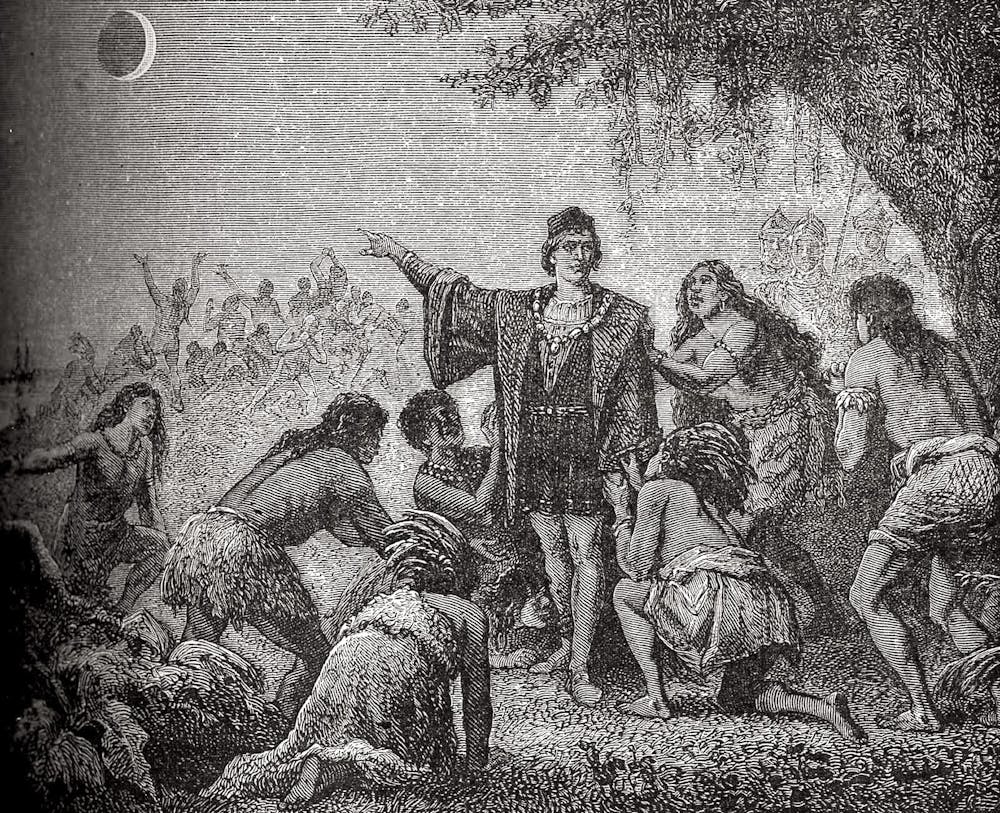
Supposedly, Columbus then consulted an astronomical almanac and discovered a lunar eclipse was forecast for February 29 1504. He took advantage of this knowledge to trick the Taíno, threatening to use his “magic power” to turn the Moon a deep red – “inflamed with wrath” – if they refused to provide supplies.

An old engraving showing a European man gesturing at a partially eclipsed Moon while others watch on.

An illustration of Columbus predicting a lunar eclipse to trick the Taíno people into providing his crew with food and supplies. Astronomie Populaire (1879) by Camille Flammarion, via Wikimedia

According to Columbus, this worked and the fearful Taíno continued to supply his crew until relief arrived months later. This incident inspired the idea of the “convenient eclipse”, which has become a familiar trope in works including Mark Twain’s A Connecticut Yankee in King Arthur’s Court (1889) and The Adventures of Tintin (1949).

But is there truth to the trope? How much did Indigenous peoples really know about eclipses?

Merlpal Maru Pathanu

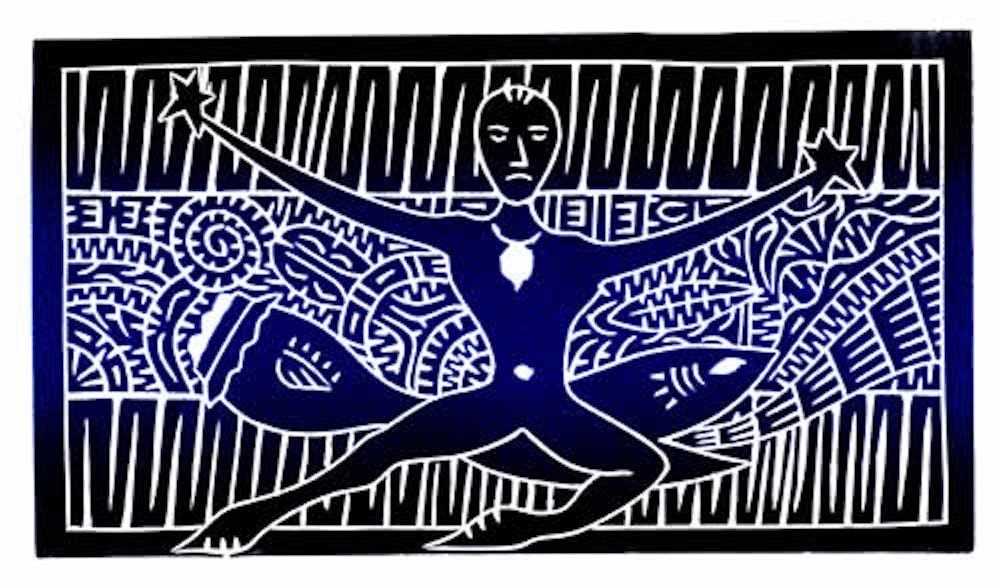
In the Torres Strait, knowledge of the stars is central to culture and identity. Traditionally, special people were chosen for years of intense instruction in the art of star knowledge, which occurred in a secretive place of higher learning called the kwod. They would be initiated as “Zugubau Mabaig”, a western Islander term meaning “star man” – an astronomer.

Detailed artwork of a man against a complex patterned background.

A Zugubau Mabaig, the keeper of constellations in the western Torres Strait, who reads the stars and passes knowledge down through song, dance, and story. David Bosun

Mualgal man David Bosun, a talented artist and son of a Zugubau Mabaig, explains that these individuals paid careful attention to all things celestial. They kept constant watch over the stars to inform their Buai (kinship group) when to plant and harvest gardens, hunt and fish, travel and hold ceremonies.

The final stage of Zugubau Mabaig initiation involved a rare celestial event. Initiates were required to prove their bravery as well as their mental skill by taking the head of an enemy, particularly a sorcerer. In this way they would absorb that person’s powerful magic.

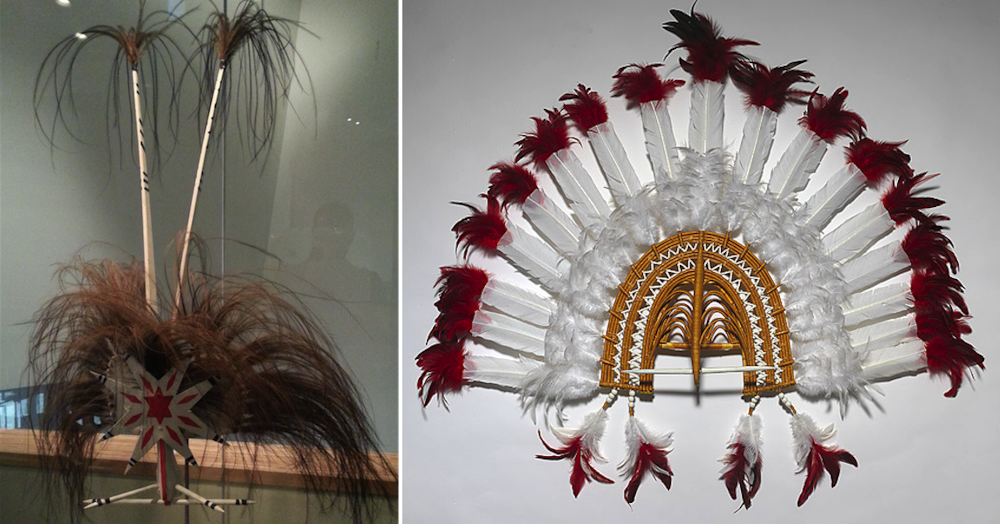
Headhunting raids occurred immediately after a total lunar eclipse, signalled by the blood red appearance of the Moon. During the eclipse, communities performed a ceremony in which dancers donned a special dhari (headdress) as they systematically chanted the names of all the surrounding islands.

Eclipse mask and headdress.

An eclipse mask by Sipau Gibuma (Boigu, 1990) and Madthubau Dhibal headdress by Jeff Waia (Saibai, 2008). National Gallery of Australia

The island named when the Moon emerged from the eclipse was the home of the sorcerers they planned to attack. Women and children sought shelter while the men prepared for war. The ceremony, named Merlpal Maru Pathanu (“the ghost has taken the spirit of the Moon”), was planned well in advance by the Zugubau Mabaig.

How was this done?

Predicting an eclipse

The Moon does not orbit Earth in the same plane Earth orbits the Sun. It’s off by a few degrees. The position of the Moon appears to zigzag across the sky over a 29.5-day lunar month. When it crosses the plane connecting Earth and the Sun, and the three bodies are in a straight line, we see an eclipse.

Lunar Analemma, by György Soponyai.

We know that ancient cultures including the Chinese and Babylonians possessed the ability to predict eclipses, and it is rather difficult to do. How did the Zugubau Mabaig accomplish it?

There are some things they would know. First, lunar eclipses only occur during a full moon, and solar eclipses during a new moon.

Second are the “eclipse seasons”: times when the planes of Earth, Moon and the Sun can intersect to form an eclipse. This happens twice a year. Each season lasts around 35 days, and repeats six months later.

Third is the Saros cycle: eclipses repeat every 223 lunar months (approximately 18 years and 11.3 days).

The details are highly complex. But it’s clear that predicting an eclipse requires careful, long-term observations and keeping detailed records, skills Torres Strait Islander astronomers have long possessed.

Flipping the narrative

The Zugubau Mabaig eclipse forecasts turn a common understanding of the history of science on its head. Indigenous peoples did, in fact, develop the ability to predict eclipses.

Perhaps the real situation is better captured in a short story called El Eclipse (1972), by Honduran writer Augusto Monterroso.

In the story, a Spanish priest is captured by Maya in Guatemala, who opt to sacrifice him. He tries to exploit his knowledge that a solar eclipse will occur that day to trick his captors, but the Maya look at the priest with a sense of incredulity. Two hours later, he meets his fate on the altar during the totality of the eclipse.

As the Sun goes dark and the priest’s blood is spilled, a Maya astronomer recites the dates of all the upcoming eclipses, solar and lunar. The Maya had already predicted them.

The truth behind this story is found in the Dresden Codex, a thousand-year-old book of Maya records that includes tables of eclipse predictions.

Keep reading... Show less

How period tracking could boost performance of female Olympians

French swimmer Caroline Jouisse has been keeping track of her periods using her phone over the last year, collecting information for her coaches ahead of competing in the Paris Olympics this summer.

The data helps her plan the best time to work on building her muscles, which is ideally in the middle and at the end of her menstrual cycle when her testosterone levels are at their highest.

Keep reading... Show less

Greece hit again by high temperatures, Saharan dust

Thick clouds of dust blown in from the Sahara once again covered Greek skies Monday, especially Athens and Thessalonika, with temperatures rising as high as 31°C (88°F).

The dust storms, which had already affected Greece last week as well as regions such as Switzerland and Southern France, made breathing difficult for many people.

Keep reading... Show less

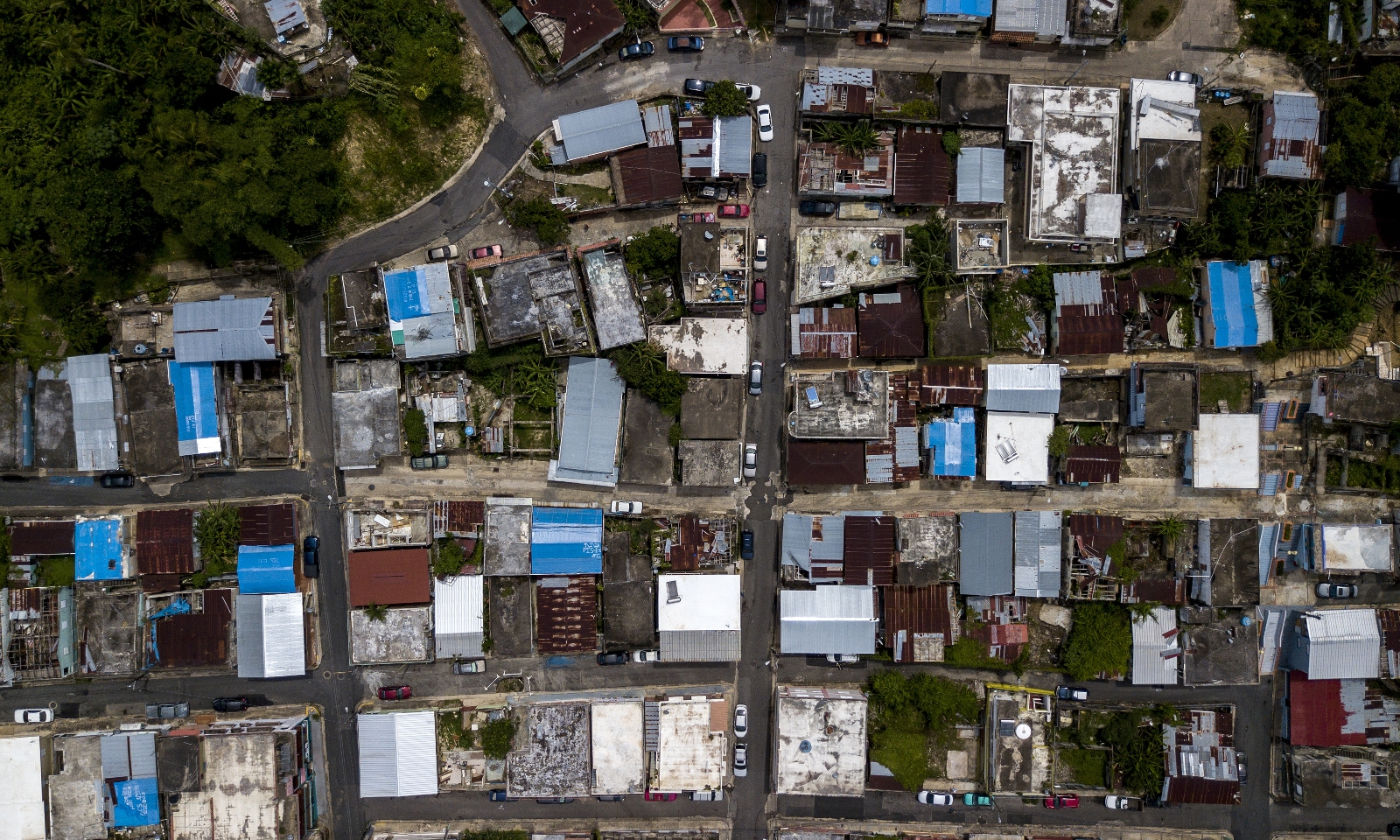
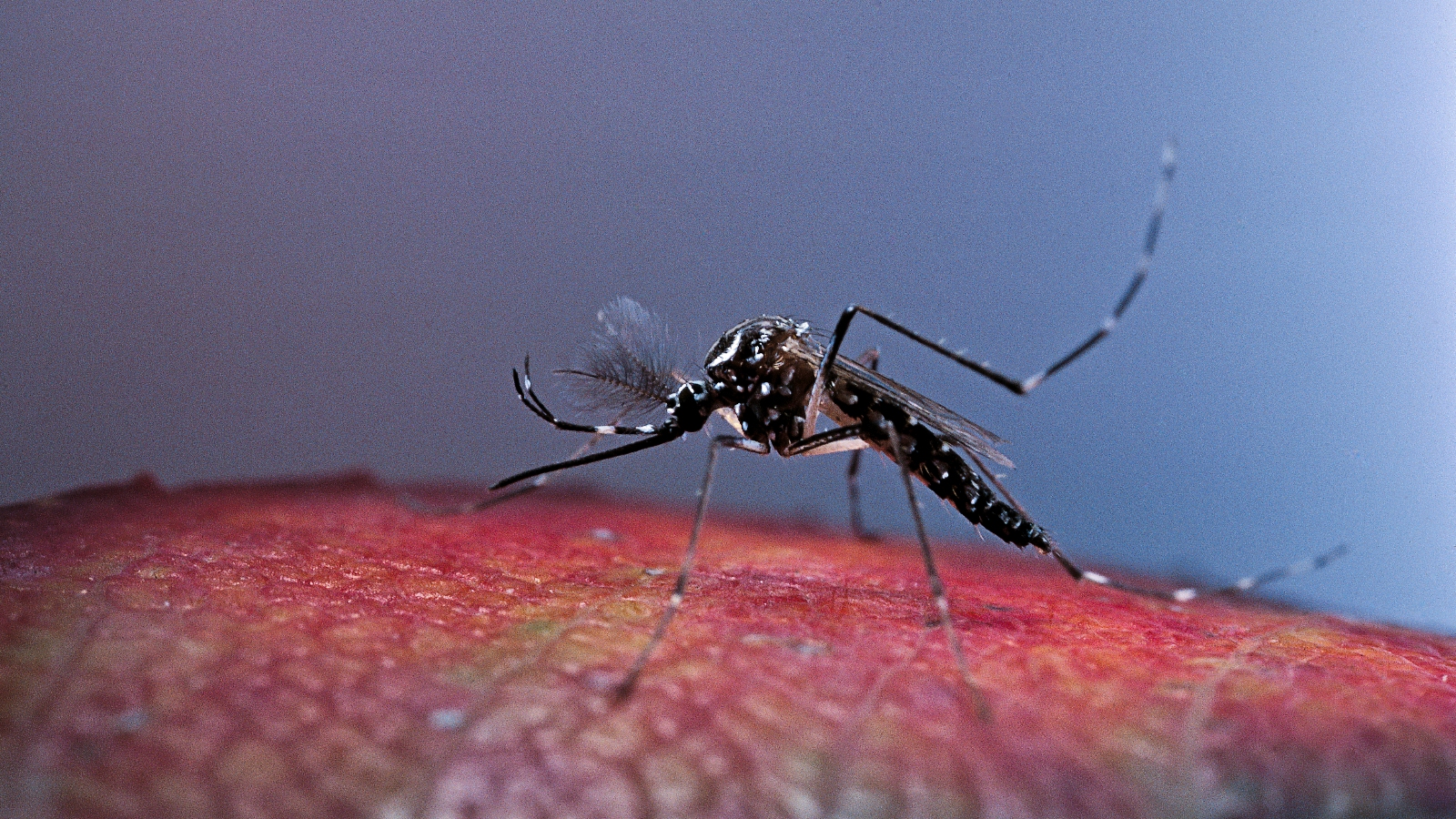
Puerto Rico declares an emergency as cases of dengue fever spike

This story was originally published by Grist. You can subscribe to its weekly newsletter here.

Warmer temperatures are driving outbreaks of dengue worldwide, with millions of cases already reported in 2024.

Keep reading... Show less

Climate change is slowing heat waves, prolonging misery

Climate change is causing heat waves to slow to a crawl, exposing humans to extreme temperatures for longer than ever before, a study published in Science Advances said Friday.

While previous research has found climate change is causing heat waves to become longer, more frequent and more intense, the new paper differed by treating heat waves as distinct weather patterns that move along air currents, just as storms do.

Keep reading... Show less

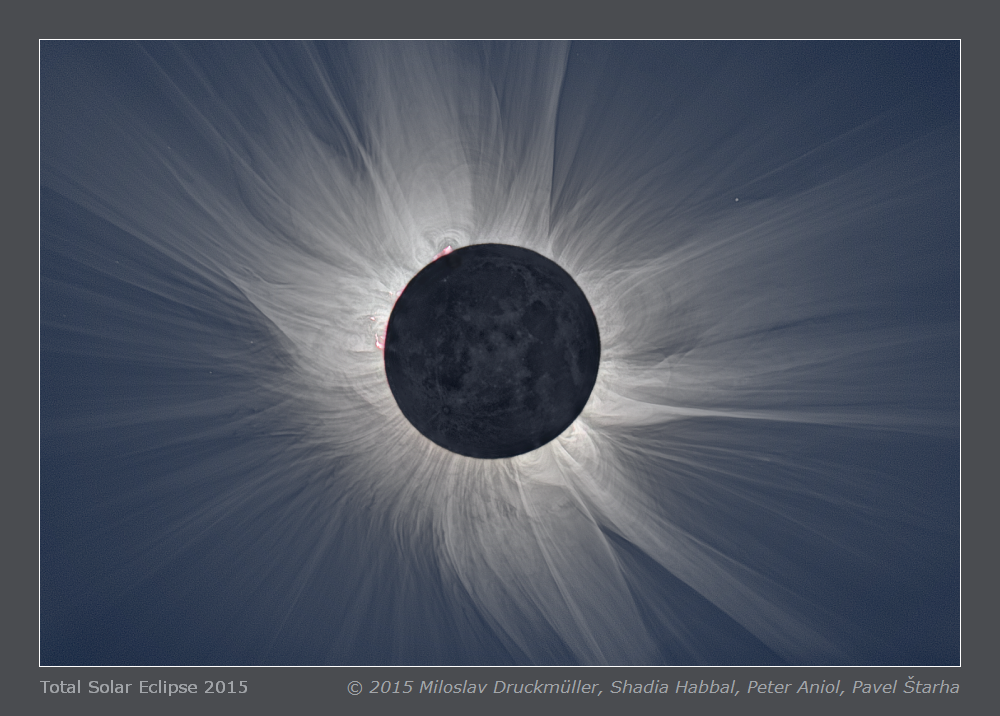
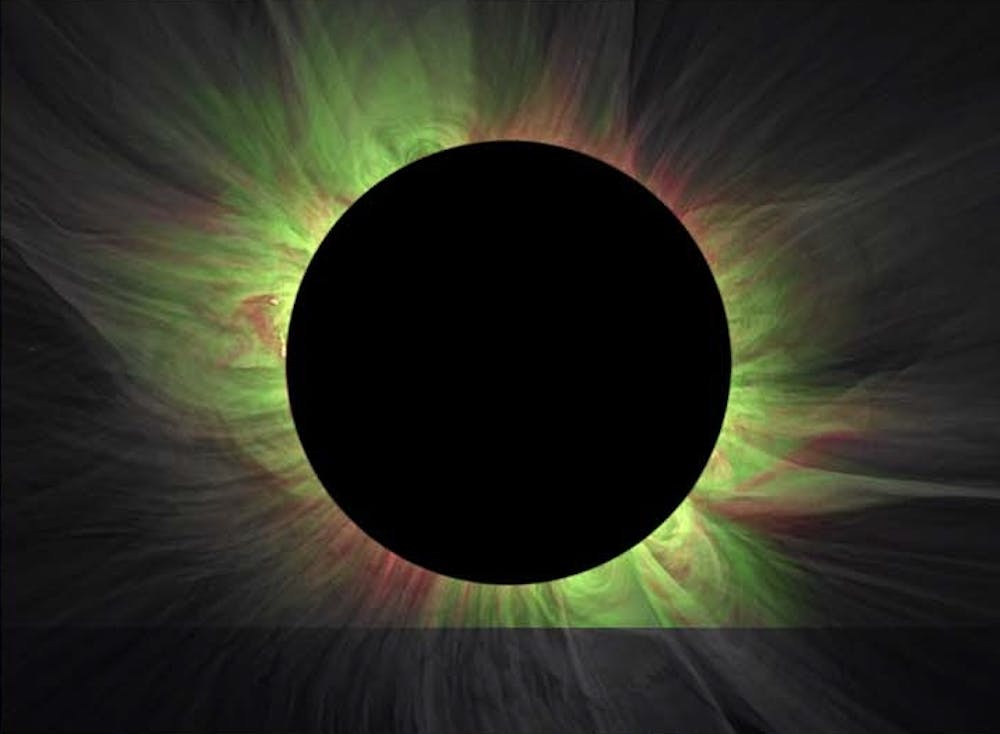
The April 8 eclipse provides a rare opportunity to witness the sun’s superhot corona

Being within a narrow path across Mexico, the United States and eastern Canada on April 8 will give a rare chance to see the hottest thing any human ever sees: the corona surrounding the sun.

The word “corona” means “crown” — during the eclipse, it becomes visible, and streaming plasma leaving the sun appears in amazing patterns.

Keep reading... Show less

How a balloon-borne experiment can do the job of the Hubble space telescope

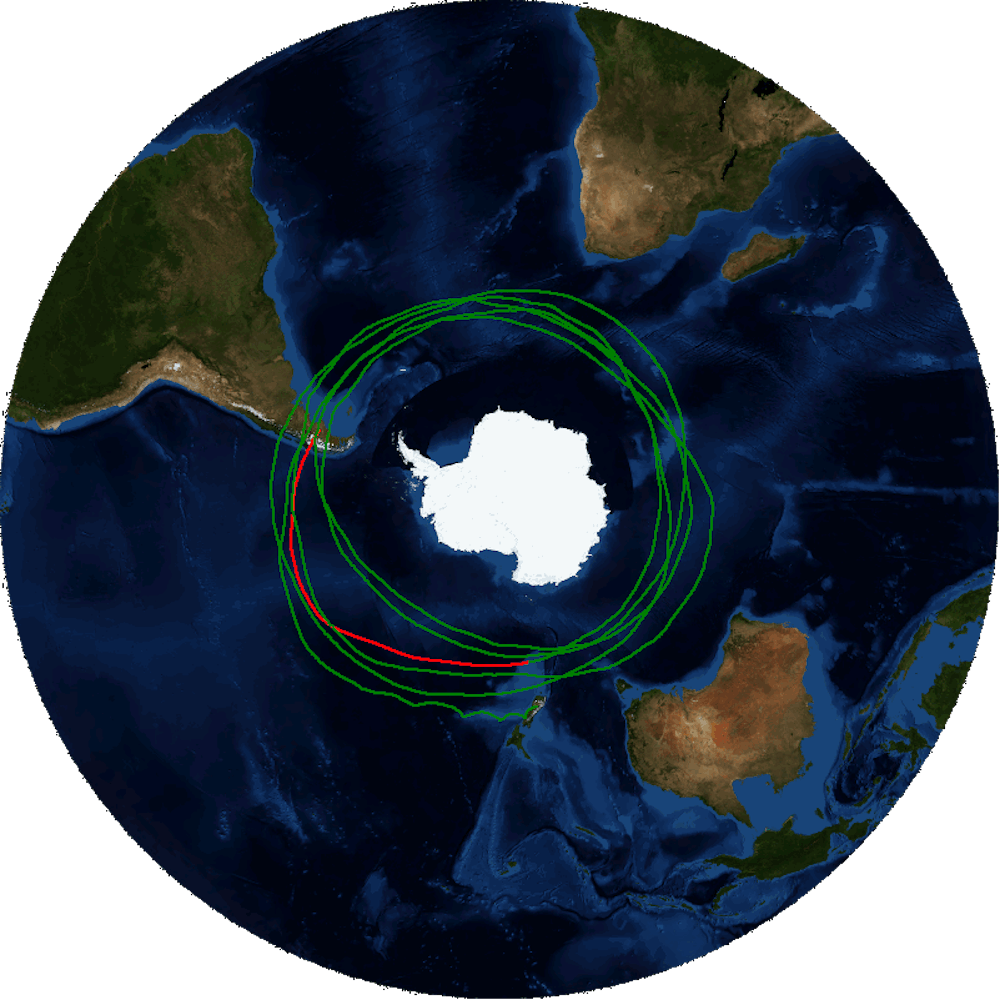
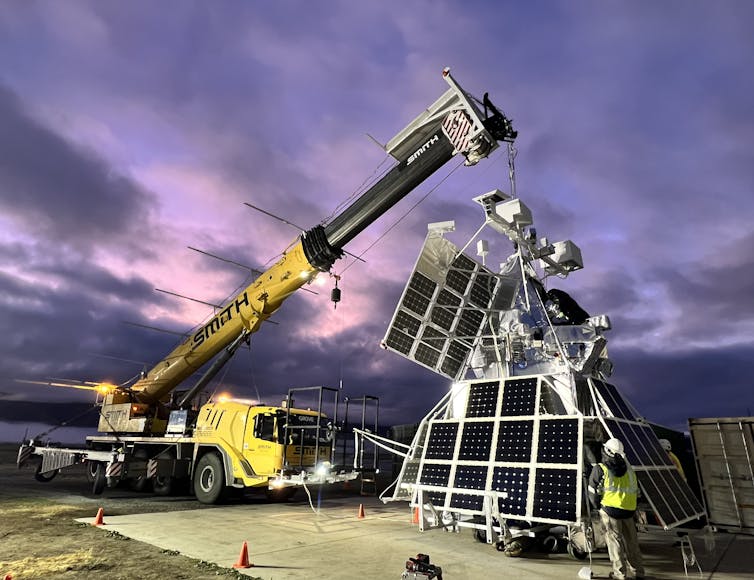
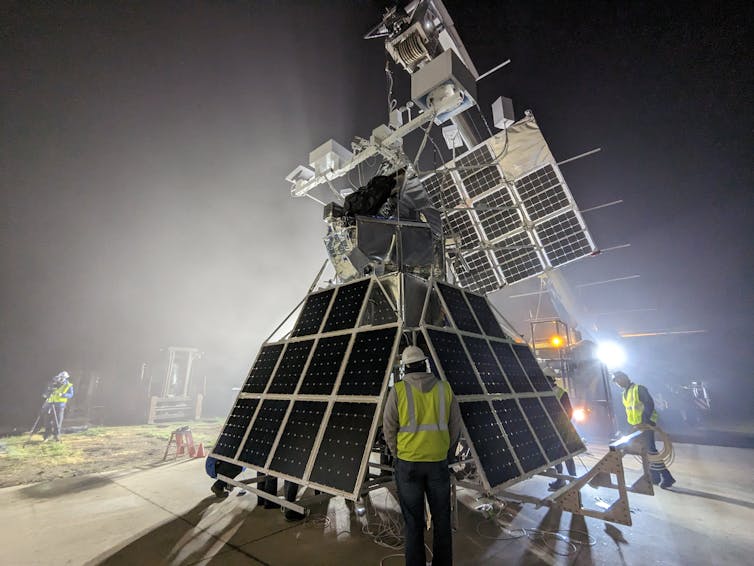
An astronomical telescope designed to complement the aging Hubble Space Telescope lifted off from New Zealand’s south island on April 16 2023. But as a sphere the size of a football stadium rose silently and slowly over the Tauhinukorokio mountains, calls started coming in from residents.

Local police and radio stations, however, had been briefed by Nasa that the giant helium balloon would lift the two-ton SuperBIT telescope to 40km above sea level, over the next three hours. The mission, in which we were involved, was to test whether a balloon-borne telescope could capture deep space images with high enough resolution to study the unknown substance, dubbed dark matter, that is 85% of all material in the universe.

Keep reading... Show less