A NASA satellite that will look at the tiniest parts of the air and ocean is set for an overnight launch from the Space Coast after a years-long path to the launch pad that staved off repeated attempts by the Trump administration to cancel the mission.
The Plankton, Aerosol Cloud Ocean Ecosystem (PACE) satellite was on the chopping block of Trump’s annual proposed NASA budgets several times as he sought to steer funds away from some climate-focused missions and shift money to deep-space efforts.
Europe's CERN laboratory revealed more details Monday about its plans for a huge new particle accelerator that would dwarf the Large Hadron Collider (LHC), ramping up efforts to uncover the underlying secrets of the universe.
If approved, the Future Circular Collider (FCC) would start smashing its first particles together around the middle of this century -- and start its highest-energy collisions around 2070.
Running under France and Switzerland, it would be more than triple the length of CERN's LHC, currently the largest and most powerful particle accelerator.
The idea behind both is to send particles spinning around a ring to smash into each at nearly the speed of light, so that the collisions reveal their true nature.
Among other discoveries, the LHC made history in 2012 when it allowed scientists to observe the Higgs boson for the first time.
But the LHC, which cost $5.6 billion and began operating in 2010, is expected to have run its course by around 2040.
The faster and more powerful FCC would allow scientists to continue pushing the envelope. They hope it could confirm the existence of more particles -- the building blocks of matter -- which so far have only been theorised.
Another unfinished job for science is working out exactly what 95 percent of the universe is made of. About 68 percent of the universe is believed to be dark energy while 27 percent is dark matter -- both remain a complete mystery.
Another unknown is why there is so little antimatter in the universe, compared to matter.
CERN hopes that a massive upgrade of humanity's ability to smash particles could shed light on these enigmas and more.
"Our aim is to study the properties of matter at the smallest scale and highest energy," CERN director-general Fabiola Gianotti said as she presented an interim report in Geneva.
The report laid out the first findings of a FCC feasibility study that will be finalised by 2025.
$17 billion first stage
In 2028, CERN's member states, which include the UK and Israel, will decide whether or not to go through with the plan.
If given the green light, construction on the collider would start in 2033.
The project is split into parts.
In 2048, the "electron-positron" collider would start smashing light particles, with the aim of further investigating the Higgs boson and what is called the weak force, one of the four fundamental forces.
The cost of the tunnel, infrastructure and the first stage of the collider would be about 15 billion Swiss Francs ($17 billion), Gianotti said.
The heavy duty hadron collider, which would smash protons together, would only come online in 2070.
Its energy target would be 100 trillion electronvolts -- smashing the LHC's record of 13.6 trillion.
Gianotti said this later collider is the "only machine" that would allow humanity "to make a big jump in studying matter".
After eight years of study, the configuration chosen for the FCC was a new circular tunnel 90.7 kilometres (56.5 miles) long and 5.5 metres (feet) in diameter.
The tunnel, which would connect to the LHC, would pass under the Geneva region and its namesake lake in Switzerland, and loop round to the south near the picturesque French town of Annecy.
Eight technical and scientific sites would be built on the surface.
CERN said it is consulting with the regions along the route and plans to carry out impact studies on how the tunnel would affect the area.
Your blood serves numerous roles to maintain your health. To carry out these functions, blood contains a multitude of components, including red blood cells that transport oxygen, nutrients and hormones; white blood cells that remove waste products and support the immune system; plasma that regulates temperature; and platelets that help with clotting.
Within the blood are also numerous molecules formed as byproducts of normal biochemical functions. When these molecules indicate how your cells are responding to disease, injury or stress, scientists often refer to them as biological markers, or biomarkers. Thus, biomarkers in a blood sample can represent a snapshot of the current biochemical state of your body, and analyzing them can provide information about various aspects of your health.
As a toxicologist, I study the effects of drugs and environmental contaminants on human health. As part of my work, I rely on various health-related biomarkers, many of which are measured using conventional blood tests.
Understanding what common blood tests are intended to measure can help you better interpret the results. If you have results from a recent blood test handy, please follow along.
Blood samples go through several processing steps after they’re drawn.
Normal blood test ranges
Depending on the lab that analyzed your sample, the results from your blood test may be broken down into individual tests or collections of related tests called panels. Results from these panels can allow a health care professional to recommend preventive care, detect potential diseases and monitor ongoing health conditions.
For each of the tests listed in your report, there will typically be a number corresponding to your test result and a reference range or interval. This range is essentially the upper and lower limits within which most healthy people’s test results are expected to fall.
Sometimes called a normal range, a reference interval is based on statistical analyses of tests from a large number of patients in a reference population. Normal levels of some biomarkers are expected to vary across a group of people, depending on their age, sex, ethnicity and other attributes.
So, separate reference populations are often created from people with a particular attribute. For example, a reference population could comprise all women or all children. A patient’s test value can then be appropriately compared with results from the reference population that fits them best.
Reference intervals vary from lab to lab because each may use different testing methods or reference populations. This means you might not be able to compare your results with reference intervals from other labs. To determine how your test results compare with the normal range, you need to check the reference interval listed on your lab report.
If you have results for a given test from different labs, your clinician will likely focus on test trends relative to their reference intervals and not the numerical results themselves.
Interpreting your blood test results
There are numerous blood panels intended to test specific aspects of your health. These include panels that look at the cellular components of your blood, biomarkers of kidney and liver function, and many more.
Rather than describe each panel, let’s look at a hypothetical case study that requires using several panels to diagnose a disease.
In this situation, a patient visits their health care provider for fatigue that has lasted several months. Numerous factors and disorders can result in prolonged or chronic fatigue.
Based on a physical examination, other symptoms and medical history, the health practitioner suspects that the patient could be suffering from any of the following: anemia, an underactive thyroid or diabetes.
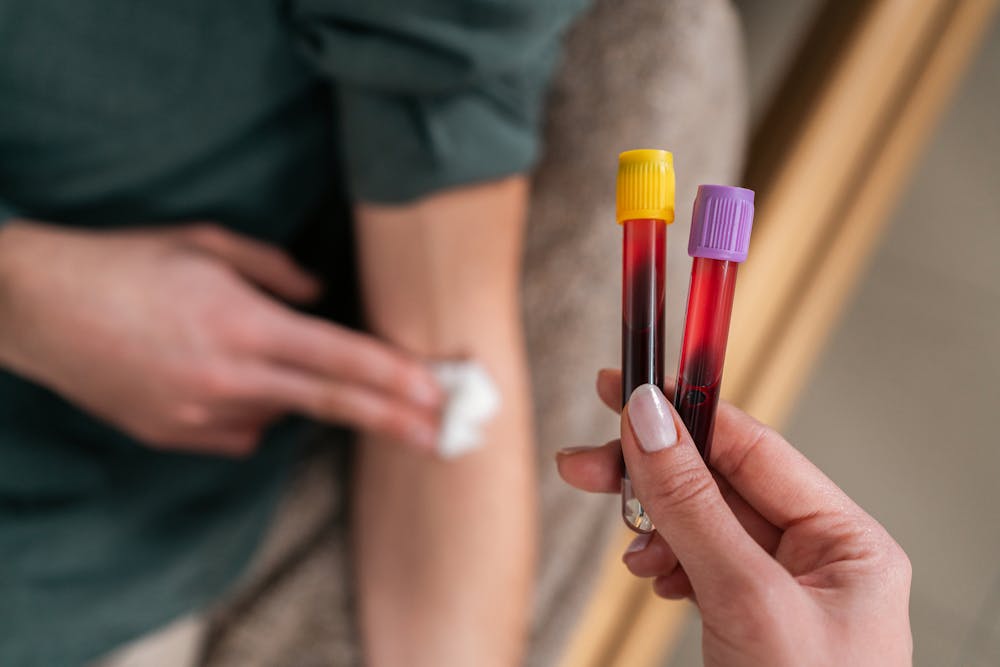
Blood tests provide clinicians with more information to guide diagnoses and treatment decisions. FluxFactory/E+ via Getty Images
Blood tests would help further narrow down the cause of fatigue.
Anemia is a condition involving reduced blood capacity to transport oxygen. This results from either lower than normal levels of red blood cells or a decrease in the quantity or quality of hemoglobin, the protein that allows these cells to transport oxygen.
A complete blood count panel measures various components of the blood to provide a comprehensive overview of the cells that make it up. Low values of red blood cell count, or RBC, hemoglobin, or Hb, and hematocrit, or HCT, would indicate that the patient is suffering from anemia.
Hypothyroidism is a disorder in which the thyroid gland does not produce enough thyroid hormones. These include thyroid-stimulating hormone, or TSH, which stimulates the thyroid gland to release two other hormones: triiodothyronine, or T3, and thyroxine, or T4. The thyroid function panel measures the levels of these hormones to assess thyroid-related health.
Diabetes is a disease that occurs when blood sugar levels are too high. Excessive glucose molecules in the bloodstream can bind to hemoglobin and form what’s called glycated hemoglobin, or HbA1c. A hemoglobin A1c test measures the percentage of HbA1c present relative to the total amount of hemoglobin. This provides a history of glucose levels in the bloodstream over a period of about three months prior to the test.
Providing additional information is the basic metabolic panel, or BMP, which measures the amount various substances in your blood. These include:
Glucose, a type of sugar that provides energy for your body and brain. Relevant to diabetes, the BMP measures the blood glucose levels at the time of the test.
Calcium, a mineral essential for proper functioning of your nerves, muscles and heart.
Creatinine, a byproduct of muscle activity.
Blood urea nitrogen, or BUN, the amount of the waste product urea your kidneys help remove from your blood. These indicate the status of a person’s metabolism, kidney health and electrolyte balance.
With results from each of these panels, the health professional would assess the patient’s values relative to their reference intervals and determine which condition they most likely have.
Understanding the purpose of blood tests and how to interpret them can help patients partner with their health care providers and become more informed about their health.
For the first time since 1972, NASA is putting science experiments on the Moon in 2024. And thanks to new technologies and public-private partnerships, these projects will open up new realms of scientific possibility. As parts of several projects launching this year, teams of scientists, including myself, will conduct radio astronomy from the south pole and the far side of the Moon.
NASA’s commercial lunar payload services program, or CLPS, will use uncrewed landers to conduct NASA’s first science experiments from the Moon in over 50 years. The CLPS program differs from past space programs. Rather than NASA building the landers and operating the program, commercial companies will do so in a public-private partnership. NASA identified about a dozen companies to serve as vendors for landers that will go to the Moon.
CLPS will send science payloads to the Moon in conjunction with the Artemis program’s crewed missions.
NASA buys space on these landers for science payloads to fly to the Moon, and the companies design, build and insure the landers, as well as contract with rocket companies for the launches. Unlike in the past, NASA is one of the customers and not the sole driver.
CLPS launches
The first two CLPS payloads are scheduled to launch during the first two months of 2024. There’s the Astrobotics payload, which launched Jan. 8 before experiencing a fuel issue that cut its journey to the Moon short. Next, there’s the Intuitive Machines payload, with a launch scheduled for mid-February. NASA has also planned a few additional landings – about two or three per year – for each of the next few years.
I’m a radio astronomer and co-investigator on NASA’s ROLSES program, otherwise known as Radiowave Observations at the Lunar Surface of the photoElectron Sheath. ROLSES was built by the NASA Goddard Space Flight Center and is led by Natchimuthuk Gopalswamy.
The ROLSES instrument will launch with Intuitive Machines in February. Between ROLSES and another mission scheduled for the lunar far side in two years, LuSEE-Night, our teams will land NASA’s first two radio telescopes on the Moon by 2026.
Radio telescopes on the Moon
The Moon – particularly the far side of the Moon – is an ideal place to do radio astronomy and study signals from extraterrestrial objects such as the Sun and the Milky Way galaxy. On Earth, the ionosphere, which contains Earth’s magnetic field, distorts and absorbs radio signals below the FM band. These signals might get scrambled or may not even make it to the surface of the Earth.
On Earth, there are also TV signals, satellite broadcasts and defense radar systems making noise. To do higher sensitivity observations, you have to go into space, away from Earth.
The Moon is what scientists call tidally locked. One side of the Moon is always facing the Earth – the “man in the Moon” side – and the other side, the far side, always faces away from the Earth. The Moon has no ionosphere, and with about 2,000 miles of rock between the Earth and the far side of the Moon, there’s no interference. It’s radio quiet.
For our first mission with ROLSES, launching in February 2024, we will collect data about environmental conditions on the Moon near its south pole. On the Moon’s surface, solar wind directly strikes the lunar surface and creates a charged gas, called a plasma. Electrons lift off the negatively charged surface to form a highly ionized gas.
This doesn’t happen on Earth because the magnetic field deflects the solar wind. But there’s no global magnetic field on the Moon. With a low frequency radio telescope like ROLSES, we’ll be able to measure that plasma for the first time, which could help scientists figure out how to keep astronauts safe on the Moon.
When astronauts walk around on the surface of the Moon, they’ll pick up different charges. It’s like walking across the carpet with your socks on – when you reach for a doorknob, a spark can come out of your finger. The same kind of discharge happens on the Moon from the charged gas, but it’s potentially more harmful to astronauts.
Solar and exoplanet radio emissions
Our team is also going to use ROLSES to look at the Sun. The Sun’s surface releases shock waves that send out highly energetic particles and low radio frequency emissions. We’ll use the radio telescopes to measure these emissions and to see bursts of low-frequency radio waves from shock waves within the solar wind.
Magnetic fields are important for life because they shield the planet’s surface from the solar/stellar wind.
In the future, our team hopes to use specialized arrays of antennas on the far side of the Moon to observe nearby stellar systems that are known to have exoplanets. If we detect the same kind of radio emissions that come from Earth, this will tell us that the planet has a magnetic field. And we can measure the strength of the magnetic field to figure out whether it’s strong enough to shield life.
Cosmology on the Moon
The Lunar Surface Electromagnetic Experiment at Night, or LuSEE-Night, will fly in early 2026 to the far side of the Moon. LuSEE-Night marks scientists’ first attempt to do cosmology on the Moon.
LuSEE-Night is a novel collaboration between NASA and the Department of Energy. Data will be sent back to Earth using a communications satellite in lunar orbit, Lunar Pathfinder, which is funded by the European Space Agency.
Since the far side of the Moon is uniquely radio quiet, it’s the best place to do cosmological observations. During the two weeks of lunar night that happen every 14 days, there’s no emission coming from the Sun, and there’s no ionosphere.
We hope to study an unexplored part of the early universe called the dark ages. The dark ages refer to before and just after the formation of the very first stars and galaxies in the universe, which is beyond what the James Webb Space Telescope can study.
During the dark ages, the universe was less than 100 million years old – today the universe is 13.7 billion years old. The universe was full of hydrogen during the dark ages. That hydrogen radiates through the universe at low radio frequencies, and when new stars turn on, they ionize the hydrogen, producing a radio signature in the spectrum. Our team hopes to measure that signal and learn about how the earliest stars and galaxies in the universe formed.
There’s also a lot of potential new physics that we can study in this last unexplored cosmological epoch in the universe. We will investigate the nature of dark matter and early dark energy and test our fundamental models of physics and cosmology in an unexplored age.
That process is going to start in 2026 with the LuSEE-Night mission, which is both a fundamental physics experiment and a cosmology experiment.
KFF Health News is a national newsroom that produces in-depth journalism about health issues and is one of the core operating programs at KFF — an independent source of health policy research, polling, and journalism. This article was produced in partnership with PolitiFact.
“IT’S BEEN REVEALED THAT FAUCI BROUGHT COVID TO THE MONTANA ONE YEAR BEFORE COVID BROKE OUT IN THE U.S!” — ad from the Matt Rosendale for Montana campaign
A fundraising ad for U.S. Rep. Matt Rosendale (R-Mont.) shows a photo of Anthony Fauci, former director of the National Institute of Allergy and Infectious Diseases, behind bars, swarmed by flying bats.
Rosendale, who is eyeing a challenge to incumbent Sen. Jon Tester, a Democrat, maintains that a Montana biomedical research facility, Rocky Mountain Laboratories in Hamilton, has a dangerous link to the pandemic. This claim is echoed in the ad:
“It’s been revealed that Fauci brought COVID to the Montana one year before COVID broke out in the U.S!,” it charges in all-caps before asking readers to “Donate today and hold the D.C. bureaucracy accountable!”
The ad, paid for by Matt Rosendale for Montana, seeks contributions through WinRed, a platform that processes donations for Republican candidates. Rosendale also shared the fundraising pitch on his X account Nov. 1, and it remained live as of early February.
Rosendale made similar accusations on social media, during a November speech on the U.S. House floor, and through his congressional office. Sometimes his comments, like those on the House floor, are milder, saying the researchers experimented on “a coronavirus” leading up to the pandemic. Other times, as in an interview with One America News Network, he linked the lab’s work to covid-19’s spread.
In that interview clip, Rosendale recounted pandemic-era shutdowns before saying, “And now we’re finding out that the National Institute of Health, Rocky Mountain Lab, down in Hamilton, Montana, had also played a role in this.”
Rosendale’s statements echo broader efforts to scrutinize how research into viruses happens in the United States and is part of a continued wave of backlash against scientists who have studied coronaviruses. Rosendale is considering seeking the Republican nomination to challenge Tester, in a toss-up race that could help determine which party controls the Senate in 2025. Political newcomer Tim Sheehy is also seeking the Republican nomination for the Senate.
Rosendale proposed amendments to a health spending bill that would ban pandemic-related pathogen research funding for Rocky Mountain Laboratories and cut the salary of one of its top researchers, virologist Vincent Munster, to $1. The House has included both amendments in the Health and Human Services budget bill that the Republican majority hopes to pass. A temporary spending bill is funding the health department until March.
We contacted Rosendale’s congressional office multiple times — with emails, a phone call, and an online request — asking what proof he had to back up his statements that the Montana lab infected bats with covid from China before the outbreak. We got no reply.
Kathy Donbeck, of the National Institute of Allergy and Infectious Diseases’ Office of Communications and Government Relations, said in an email that the ad’s claims are false. Interviews with virologists and a review of the research paper published shortly before Rosendale’s assertions support that position.
Where this is coming from
Rosendale’s statements seem to stem from a Rocky Mountain Laboratories study from 2016 that looked into how a coronavirus, WIV1-CoV, acted in Egyptian fruit bats. The work, published by the journal Viruses in 2018, showed that the specific strain didn’t cause a robust infection in the bats.
The study did not receive widespread attention at the time. But on Oct. 30, 2023, the study was highlighted by a blog called White Coat Waste Project, which says its mission is to stop taxpayer-funded experiments on animals. Some right-wing media outlets began to connect the Montana lab with the coronavirus that causes covid.
Rosendale’s office issued an Oct. 31 news release saying the Wuhan Institute of Virology in China “shipped a strain of coronavirus” to the Hamilton lab. “Our government helped create the Wuhan flu, then shut the country down when it escaped from the lab,” Rosendale said.
It’s a different virus
Rocky Mountain Laboratories is a federally funded facility as part of NIAID, the nation’s top infectious disease research agency, which Fauci led for nearly 40 years.
According to the study and Donbeck’s email, the Montana researchers focused on a coronavirus called WIV1-CoV, not the covid-causing SARS-CoV-2. They’re different viruses.
“The genetics of the viruses are very different, and their behavior biologically is very different,” said Troy Sutton, a virologist with Pennsylvania State University who has studied the evolution of pandemic influenza viruses.
In a review of media reports on the Montana study, Health Feedback, a network of scientists that fact-checks health and medical media coverage, showed the virus’s lineage indicated that WIV1 “is not a direct ancestor or even a close relative of SARS-CoV-2.”
Additionally, the description of the coronavirus strain as being “shipped” suggests that it physically traveled across the world. That’s not what happened.
The Wuhan Institute of Virology provided the WIV1 virus’s sequence that allowed researchers to make a lab-grown copy. A separate study, published in 2013 by the journal Nature, outlines the origins of the lab-created virus.
According to the study’s methodology, the researchers used a clone of WIV1. An NIAID statement to Lee Enterprises, a media company, said the virus “was generated using common laboratory techniques, based on genetic information that was publicly shared by Chinese scientists.”
Stanley Perlman, a University of Iowa professor who studies coronaviruses and serves on the federal advisory committee that reviews vaccines, said Rosendale’s claim is off-base.
He said Rosendale’s focus on where the lab got its materials is irrelevant and serves “only to make people wary and scared.”
Rosendale’s efforts to prohibit particular research at Rocky Mountain Laboratories appear ill-informed, too. Rosendale targeted banning gain-of-function research, which involves altering a pathogen to study its spread. In her email, NIAID’s Donbeck said the Rocky Mountain Laboratories study didn’t involve gain-of-function research.
This type of research has long been controversial, and people who study viruses have said the definition of “gain of function” is problematic and insufficient to show when research, or even work to create vaccines, could cross into that type of research.
But both Sutton and Perlman said that, any way you look at it, the Rocky Mountain Laboratories study published in 2018 didn’t change the virus. It put a virus in bats and showed it didn’t grow.
And it had no effect on the covid outbreak a year later, first detected in Washington state.
Our ruling
Rosendale’s ad said, “It’s been revealed that Fauci brought COVID to the Montana one year before COVID broke out in the U.S!” The campaign ad and Rosendale’s similar statements refer to research at the Rocky Mountain Laboratories involving WIV1, a coronavirus that researchers say is not even distantly close in genetic structure to SARS-CoV-2, the virus that caused covid-19.
Rosendale’s claim is wrong about when the scientists began their work, what they were studying, and where they got the materials. The researchers began their work in 2016 and, although they were studying a coronavirus, it wasn’t the virus that causes covid. The Montana scientists used a lab-grown clone of WIV1 for their research. The first laboratory-confirmed case of covid was not detected in the U.S. until Jan. 20, 2020. Rosendale’s ad is inaccurate and ridiculous. We rate it Pants on Fire!
KFF Health News is a national newsroom that produces in-depth journalism about health issues and is one of the core operating programs at KFF — an independent source of health policy research, polling, and journalism. Learn more about KFF.
Shark bites and fatalities ticked up worldwide last year, with Australia accounting for a disproportionate number of deaths resulting from heightened contact with humans even as the ancient predators face a wider extinction crisis
There were 69 unprovoked attacks in 2023, up slightly from 63 in 2022, and ten deaths, which is double the year before and a 12-year-high, according to the International Shark Attack File, an annual global report published Monday by the University of Florida.
Gavin Naylor, director of the Florida Program for Shark Research at the Florida Museum of Natural History who co-authored the study, told AFP that the uptick didn’t mean sharks were becoming more numerous or fierce.
Three of the deaths happened off the coast of southern Australia in a region called the Eyre Peninsula, where a rebounding seal population has brought great whites into closer proximity to surfers in a remote region.
"If you get nobbled by a white shark you're probably not going to have all of the helicopters being able to be there within five minutes and stretchers and all the medical infrastructure," he said.
In all, Australia saw four deaths, followed by two in the United States, and one each in the Bahamas, Egypt, Mexico and New Caledonia.
The US saw 36 unprovoked attacks -- just over half of the total number worldwide. Most of these are "test" bites when a shark mistakes a human for prey.
"Provoking" a shark was defined as intentionally approaching one or swimming in an area where bait was used to lure fish -- and such incidents were not included in the study's headline figures.
Data was collected through media reports then independently validated by Naylor and his co-author Joe Miguez.
Global numbers down
"Globally shark numbers are down," said Naylor, with a broad trend of sharks moving closer to coastal waters as overfishing causes the collapse of fish stocks in the ocean. A study in Nature in 2021 found the global abundance of oceanic shark and rays down 71 percent since 1970.
This in turn had led to a disconnect between what scientists are reporting globally and coastal fishermen say locally about increased encounters, added Naylor.
What's more, shark encounters are often a consequence of people spending more time in the water, with bites spiking during the summer time of the northern and southern hemispheres.
Improving water quality off the coast of New York had, for example, attracted more fish, which in turn had brought more sand tiger sharks.
Last summer, several people were bitten off Long Island, forcing increased shark patrols.
Increasing heat meanwhile was driving shark species to pursue prey in new waters.
"Coral trout are supposed to be on the Barrier Reef, we see them in Tasmania, which is super cold water," said Naylor, and "predators follow the food."
Practical advice to avoid sharks varies from place to place, said Naylor, and people should do local research.
For instance, off the coast of Florida, wearing jewelry that reflects light can look like fish scales and attract black tip sharks. People should also get out of the water if they see schools of bait fish.
PORTLAND, Ore. — Amber Pearson used to wash her hands until they bled, terrified by the idea of contamination from everyday items, a debilitating result of her obsessive compulsive disorder (OCD).
But the repetitive rituals of her condition are largely consigned to memory, thanks to a revolutionary brain implant that is being used to treat both her epilepsy and her OCD.
"I'm actually present in my daily life and that's incredible," the 34-year-old told AFP. "Before, I was just constantly in my head worrying about my compulsions."
In places where we need to protect valuable plants – whether for ecological or economic reasons – local herbivores can cause significant damage.
Current solutions often involve killing the problem animals. But this is increasingly unacceptable due to animal welfare concerns and social pressures. Physical barriers such as fences can be expensive, and aren’t always practical. We need other options.
Recently, our teamdiscovered that herbivores – plant-eating mammals – primarily use their sense of smell to tell which plants they want to eat or avoid.
In our study published today in Nature Ecology & Evolution, we show how we can use this reliance on smell to nudge wallabies away from vulnerable native tree seedlings. We artificially created and deployed the key smells of a shrub wallabies avoid.
Herbivore-induced headaches
Hungry plant eaters are a concern for conservationists, farmers and foresters alike. They can devastate revegetation efforts and post-fire recovery, destroying more than half the seedlings in these areas.
Every year, they cause billions of dollars of damage in forestry and agriculture. Herbivores also pose a risk to the long-term survival of many threatened plant species.
The most effective control strategies will likely work with a herbivore’s natural motivations – understanding and harnessing what drives the animal to find or avoid certain plants.
Previously, research had primarily focused on what herbivores were eating, but had never really asked how they find the food in the first place.
Our approach puts a new twist on “olfactory (smell) misinformation” or “chemical camouflage” approaches. In recent studies, these methods have substantially reduced invasive predators eating threatened bird eggs in New Zealand, and house mice eating agricultural wheat grain in Australia.
A swamp wallaby munching on some grass. Like other plant-eating mammals, they use their sense of smell to find delicious plants.Joshua Prieto/Shutterstock
With this in mind, we explored whether the smell of a plant they don’t like could be enough to nudge animals away from highly palatable native tree seedlings.
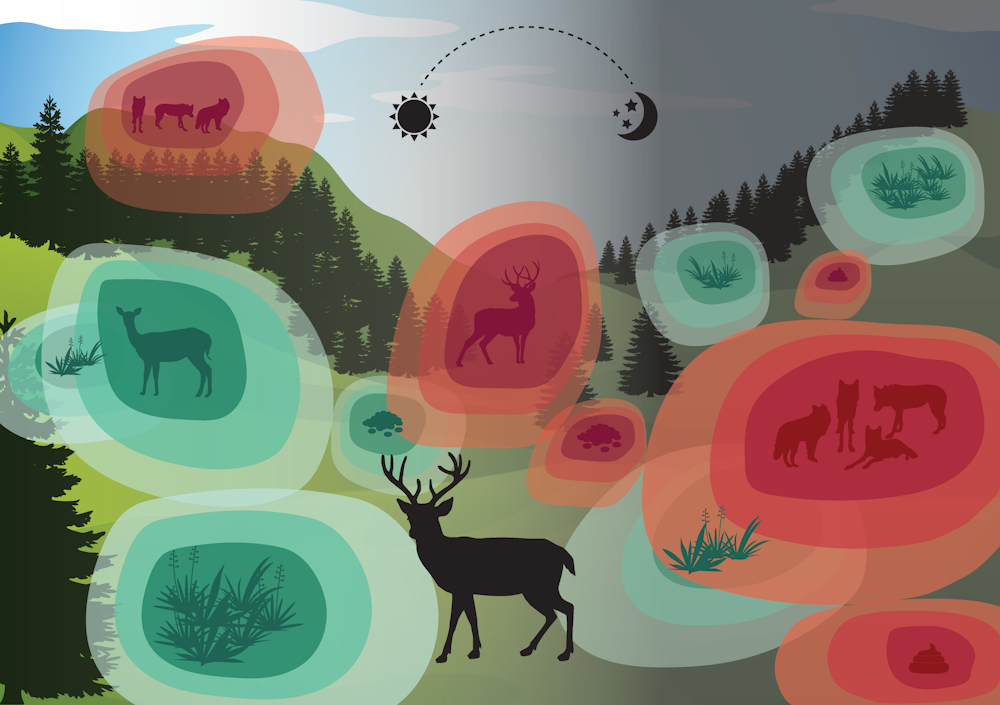
Mammalian herbivores use their noses to navigate complex smell landscapes where odor is emitted from food, predators, competitors and potential mates. Finnerty et al., BioScience, 2022
To test this idea, we focused on swamp wallabies foraging in a eucalypt woodland in eastern Australia. Studies have shown having too many swamp wallabies around can limit the number of eucalypt seedlings that survive to become trees. Swamp wallabies also have a fantastic sense of smell – they can find just a few eucalypt leaves buried underground among complex vegetation.
Using an approach we recently developed, we found the key scent compounds of a plant we know wallabies avoid – the native shrub Boronia pinnata.
We then mixed these compounds together to create “informative virtual neighbors”. They were “informative” as our mix of compounds mimicked what a wallaby would recognise as Boronia pinnata, “virtual” as we were not actually deploying the real shrub, and “neighbors” as we placed these smells in the bush next to eucalypt seedlings we were trying to protect.
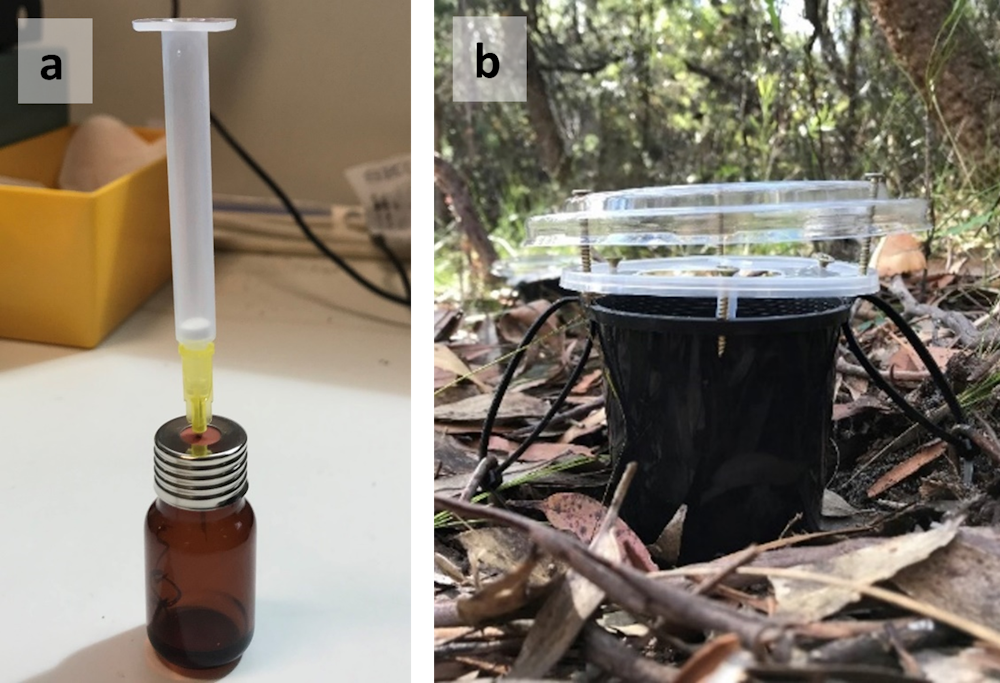
In our study, a virtual neighbor was a small glass vial with a few millilitres of the mixture, with a tube pierced through the lid so the smell could waft out.
Using odors instead of real plants is a type of olfactory misinformation – it sends a deceptive message to the animals.
We deployed the virtual neighbor vials in custom-built contraptions that secured vials to the ground and provided protection from the weather. Finnerty et al., Nature Ecology & Evolution, 2024
Real and virtual neighbours
We also compared if virtual neighbors were as good as the real thing in protecting eucalypt seedlings from being eaten by wallabies.
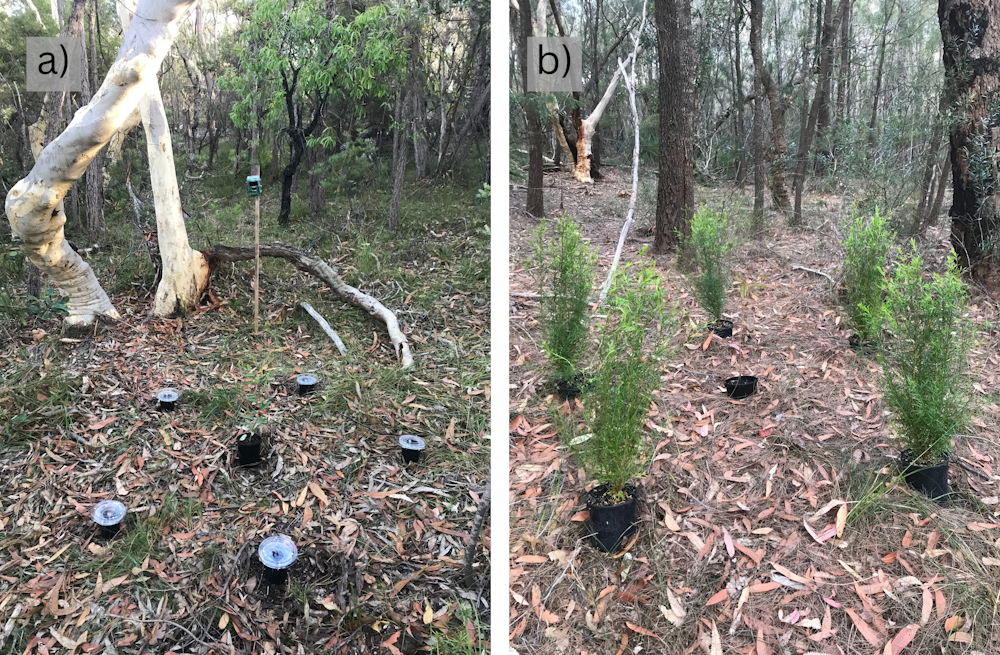
Five virtual neighbor vials or real Boronia pinnata plants were spaced evenly around single eucalypt seedlings the wallabies would find highly palatable. (We also had two types of controls: a seedling with nothing around it, and a seedling surrounded by five empty vials.)
Using remote cameras for 40 days, we recorded how long it took wallabies to find and munch on the eucalypt seedlings.
The results were staggering. Seedlings were 20 times less likely to be eaten when surrounded by virtual neighbours than for both controls. This was equivalent to using real B. pinnata plants, but better because vials don’t compete with seedlings for water and other resources.
A single eucalypt seedling surrounded by five virtual neighbors (a) and five real plant neighbors (b). Finnerty et al., Nature Ecology & Evolution, 2024
A highly effective approach
The success of our study indicates we could use this approach as a new management tool – one that works by influencing the animals’ behavior rather than trying to get rid of them.
We believe the concept behind developing virtual neighbors is directly transferable to any herbivore, mammal or otherwise, that uses plant odour to forage.
All herbivores avoid some plant species. With future development, we can deploy smelly virtual neighbors as a non-deadly and cost-effective tool to reduce the problems caused by overzealous herbivores.
We acknowledge all other co-authors who contributed to this work: Catherine Price, Malcolm Possell and Cristian Gabriel Orlando from the University of Sydney, and Adrian Shrader from the University of Pretoria. We thank Paul Finnerty for assistance in designing and constructing virtual neighbour holders.
Planets orbit their parent stars while separated by enormous distances – in our solar system, planets are like grains of sand in a region the size of a football field. The time that planets take to orbit their suns have no specific relationship to each other.
But sometimes, their orbits display striking patterns. For example, astronomers studying six planets orbiting a star 100 light years away have just found that they orbit their star with an almost rhythmic beat, in perfect synchrony. Each pair of planets completes their orbits in times that are the ratios of whole numbers, allowing the planets to align and exert a gravitational push and pull on the other during their orbit.
This type of gravitational alignment is called orbital resonance, and it’s like a harmony between distant planets.
I’m an astronomer who studies and writes about cosmology. Researchers have discovered over 5,600 exoplanets in the past 30 years, and their extraordinary diversity continues to surprise astronomers.
Harmony of the spheres
Greek mathematician Pythagoras discovered the principles of musical harmony 2,500 years ago by analyzing the sounds of blacksmiths’ hammers and plucked strings.
He believed mathematics was at the heart of the natural world and proposed that the Sun, Moon and planets each emit unique hums based on their orbital properties. He thought this “music of the spheres” would be imperceptible to the human ear.
Four hundred years ago, Johannes Kepler picked up this idea. He proposed that musical intervals and harmonies described the motions of the six known planets at the time.
To Kepler, the solar system had two basses, Jupiter and Saturn; a tenor, Mars; two altos, Venus and Earth; and a soprano, Mercury. These roles reflected how long it took each planet to orbit the Sun, lower speeds for the outer planets and higher speeds for the inner planets.
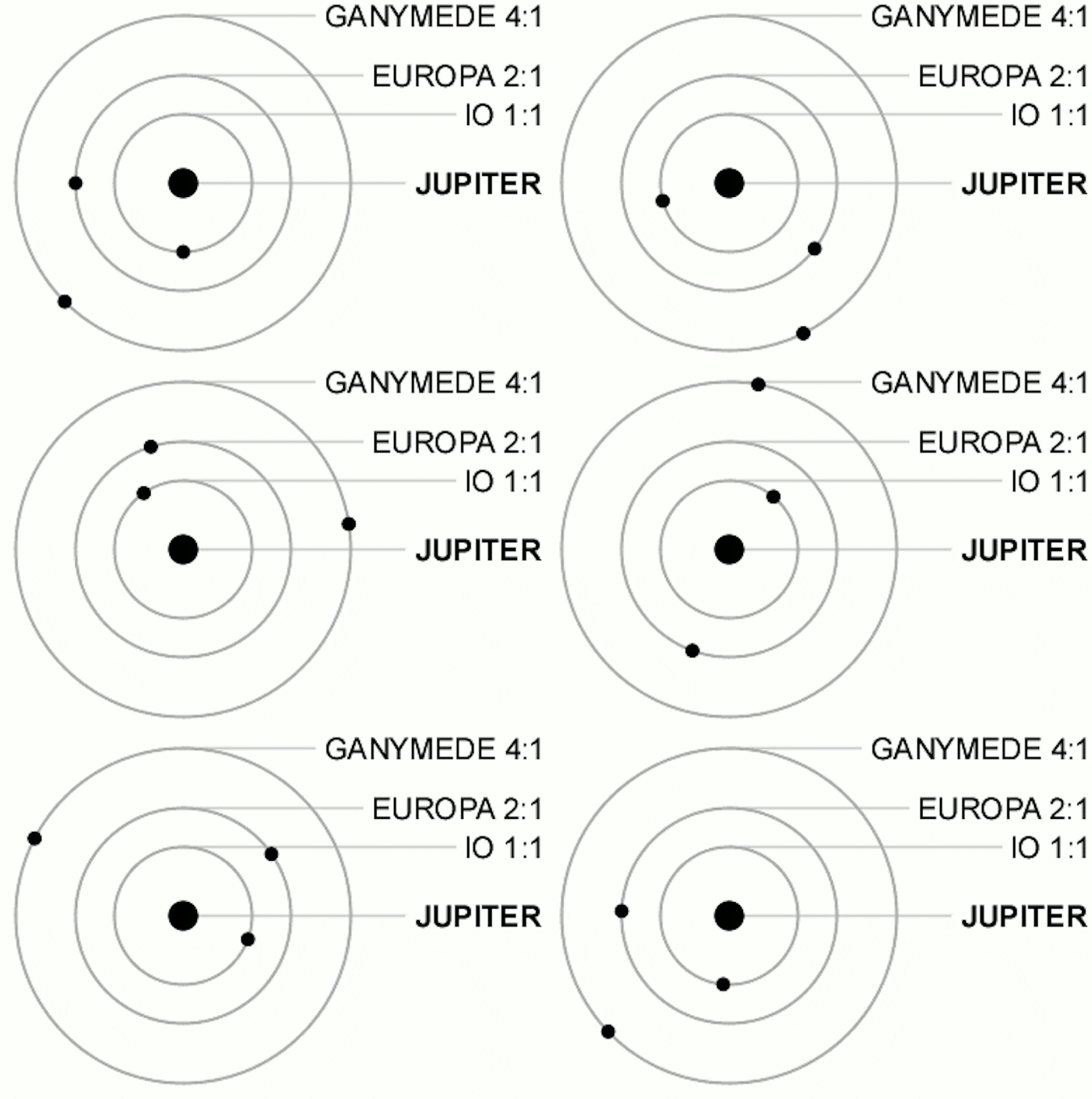
Resonance happens when planets or moons have orbital periods that are ratios of whole numbers. The orbital period is the time taken for a planet to make one complete circuit of the star. So, for example, two planets orbiting a star would be in a 2:1 resonance when one planet takes twice as long as the other to orbit the star. Resonance is seen in only 5% of planetary systems.
Orbital resonance, as seen with Jupiter’s moons, happens when planetary bodies’ orbits line up – for example, Io orbits Jupiter four times in the time it takes Europa to orbit twice and Ganymede to orbit once. WolfmanSF/Wikimedia Commons
In the solar system, Neptune and Pluto are in a 3:2 resonance. There’s also a triple resonance, 4:2:1, among Jupiter’s three moons: Ganymede, Europa and Io. In the time it takes Ganymede to orbit Jupiter, Europa orbits twice and Io orbits four times. Resonances occur naturally, when planets happen to have orbital periods that are the ratio of whole numbers.
Musical intervals describe the relationship between two musical notes. In the musical analogy, important musical intervals based on ratios of frequencies are the fourth, 4:3, the fifth, 3:2, and the octave, 2:1. Anyone who plays the guitar or the piano might recognize these intervals.
Musical intervals can be used to create scales and harmony.
Orbital resonances can change how gravity influences two bodies, causing them to speed up, slow down, stabilize on their orbital path and sometimes have their orbits disrupted.
Think of pushing a child on a swing. A planet and a swing both have a natural frequency. Give the child a push that matches the swing motion and they’ll get a boost. They’ll also get a boost if you push them every other time they’re in that position, or every third time. But push them at random times, sometimes with the motion of the swing and sometimes against, and they get no boost.
Orbital resonance can cause planets or asteroids to speed up or start to wobble.
For planets, the boost can keep them continuing on their orbital paths, but it’s much more likely to disrupt their orbits.
Exoplanet resonance
Exoplanets, or planets outside the solar system, show striking examples of resonance, not just between two objects but also between resonant “chains” involving three or more objects.
On Deception Island in Antarctica, steam rises from the beaches, and glaciers dot the black slopes of what is actually an active volcano -- a rare clash of ice and fire that provides clues to scientists about what life could look like on Mars.
The horseshoe-shaped isle in the South Shetland Islands is the only place in the world where ships can sail into the caldera of an active volcano.
In the waters here, some 420 kilometers (260 miles) from Chile's Port Williams, fish, krill, anemones and sea sponges survive, while unique species of lichen and moss grow on the surface in an ecosystem of extreme contrasts.
The island, uninhabited by people, is home to perhaps the world's largest colony of chinstrap penguins, seabirds, seals and sea lions.
The volcano has been active for thousands of years, with the most recent eruptions -- in 1967, 1969 and 1970 -- devastating British and Chilean bases and forcing the evacuation of an Argentine base.
Yet life always returns and thrives on an island where water temperatures in steam vents, or fumaroles, have been measured at around 70 degrees Celsius (158 degrees Fahrenheit), even as air temperatures can plummet to -28 degrees.
It is "similar to Mars because there what we have is a planet with (a past of) immense volcanic activity ... where currently there are very cold conditions," Spanish planetary geologist Miguel de Pablo told AFP.
"It is the best possible approximation that we can make to understand Mars without stepping on" that planet, added de Pablo.
A rich history
The analysis of rocks on Deception Island complements the work of engineers, scientists and astronomers who study Mars from afar.
In 2023, researchers with the US space agency NASA concluded that Mars once had a climate with cyclical seasons, conducive to the development of life, according to evidence found on the red planet by the Curiosity rover.
Scientists believe an immense volcanic eruption changed the planet's atmosphere and led to the appearance of oceans and rivers that later evaporated.
Even though temperatures on Mars are far lower now -- estimated by NASA at about -153 degrees Celsius -- "Antarctic conditions can help us understand if the conditions for the development of life could, or could have, existed on Mars," said de Pablo.
Another Mars rover, Perseverance, landed on the planet in February 2021 to look for signs of past microbial life.
The multitasking rover will collect 30 rock and soil samples in sealed tubes to be sent back to Earth sometime in the 2030s for lab analysis.
The South Shetlands are claimed by Britain, Chile and Argentina but are not administered by any one country. The 1959 Antarctic Treaty states they shall be used "for peaceful purposes" and guarantees "freedom of scientific investigation."
Deception Island, first visited by British sealers in 1820, has a rich history, with abandoned scientific bases and an old whaling station rusting in the icy air.
Wilson Andres Rios, a researcher and captain of a Colombian navy frigate conducting a scientific expedition in Antarctica, said the hunting of seals and whales from the island in the early 20th century was "indiscriminate."
In 1931, a Norwegian whaling station on the island closed when the price of whale oil slumped.
Then, in 1944, Britain established a base there as part of a secret wartime mission to occupy Antarctic territories.
After several evictions and eruptions, the island is now dedicated to scientific research.
VR provides entry into computer-generated 3D worlds and games with different environments and interactions. Sometimes this is loosely referred to as the “metaverse”.
But VR is increasingly used by young children, even of preschool age. These immersive technologies make it difficult to monitor children’s physical and emotional experiences and with whom they interact. So what are the dangers, and what can we do to keep the kids safe?
The good and the bad
VR allows children to dive into a digital world where they can immerse themselves into different characters (avatars). Thanks to the richness of the stimuli, VR can give the illusion of actually being in the virtual location – this is called “virtual presence”.
If children then interact with other people in the virtual world, the psychological realism is enhanced. These experiences can be fun and rewarding.
However, they can also have negative impacts. Children tend to have difficulty distinguishing between what occurs within VR and in the real world.
Children can even develop traumatic memories when playing in virtual worlds. Due to the immersive nature of VR, the sense of presence makes it feel as if the child’s avatar is actually “real”.
Research is still emerging, but it is known children can form memories from virtual experiences, which means sexual abuse that occurs virtually could turn into a real-world traumatic memory.
The rise of ‘cyber grooming’
Research has found that online predators use different grooming strategies to manipulate children into sexual interactions. This sometimes leads to offline encounters without the knowledge of parents.
Non-threatening grooming strategies that build relationships are common. Perpetrators may use friendship strategies to develop a relationship with children and to build trust. The child then views the person as a trusted friend rather than a stranger. As a result, the prevention messages about strangers learned through education programs are ineffective in protecting children.
A recent meta-analysis found that online sex offenders are usually acquaintances. Unsurprisingly, a proportion of adult predators pretend to be peers (that is, other children or teens).
Sexual approaches by adults occur more commonly on platforms that are widely used by children. “Sexual communication with a child” offences, according to police statistics from the United Kingdom, increased by 84% between 2017–18 and 2021–22.
Due to the hidden nature of cyber grooming, it is difficult to know the true prevalence of this issue. Some police reports in Europe indicate that approximately 20% of children have experienced online sexual solicitation, and up to 25% of children reported sexual interaction with an adult online.
Such encounters have the potential to create memories as if the virtual experience had happened in real life.
For parents it is important to know that cyber groomers are well versed in the use of extremely popular virtual worlds. These provide predators with anonymity and easy access to children, where they can lure them into sexual engagement.
Children can immerse themselves into virtual words, where interacting with others is fun, but potentially confusing. Frame Stock Footage/Shutterstock
Parents must try VR themselves
A recent report from the Internet Watch Foundation charity reports that a record number of young children have been manipulated into performing sexual acts online.
Through the metaverse, a sexual offender can be virtually brought into a child’s bedroom and engage in sexual behaviours through the child’s VR device. As VR worlds become more immersive, the danger for children only increases.
Grooming occurs where parents least expect it to happen. To mitigate this danger, parents need to be aware of online grooming patterns – such as isolating the child, developing their trust and asking them to hide a relationship.
Recognising the signs early can prevent the abuse from happening. But this can be difficult if parents aren’t familiar with the technology their child is using.
To help them understand what their children experience in extended reality environments, parents must familiarise themselves with VR and the metaverse.
If parents experience and experiment with the VR technology themselves, they can have conversations with their children about their experiences and understand with whom the child might interact with.
This will allow parents to make informed decisions and put tailored safeguarding measures in place. These safeguards include reviewing the parental controls and safety features on each platform, and actively learning what their children are playing and whom they are interacting with.
With such safeguards in place, parents can allow their children to have fun with VR headsets while keeping them protected.
If you believe your child is targeted by grooming or exploitation, or you come across exploitation material, you can report it via ThinkuKnow or contact your local police.
If you are a child, teen or young adult who needs help and support, call the Kids Helpline on 1800 55 1800.
If you are an adult who experienced abuse as a child, call the Blue Knot Helpline on 1300 657 380 or visit their website.
Earlier this week, Elon Musk announced his brain-computer interface company, Neuralink, had implanted a device in a human for the first time. The company’s PRIME study, approved by the US Food and Drug Administration last year, is testing a brain implant for “people with paralysis to control external devices with their thoughts”.
However, Neuralink’s challenges are far from over. Implanting a device is just the beginning of a decades-long clinical project beset with competitors, financial hurdles and ethical quandaries.
Decades of development
The first reported demonstration of a brain-computer interface occurred in 1963. During a lecture at the University of Oxford, neuroscientist William Grey Walter bewildered his audience by linking one of his patient’s brains to the projector, where they advanced the slides of his presentation using only their thoughts.
However, the current wave of exploration in using brain-recording techniques to restore movement and communication to patients with severe paralysis began in the early 2000s. It draws on studies from the 1940s which measured the activity of single neurons, and more complex experiments on rats and monkeys in the 1990s.
Neuralink’s technology belongs to the next generation of recording devices. These have multiple electrodes, greater precision, and are safer, longer-lasting, and more compatible with the body. The Neuralink implant is thinner, smaller and less obtrusive than the “Utah array” device, widely used in existing brain-computer interfaces, which has been available since 2005.
Neuralink’s device is implanted by a special robot which rapidly inserts polymer threads, each containing dozens of electrodes. In total, the device has 3,072 electrodes – dwarfing the 100 electrodes of the Utah array.
Competitors
Neuralink faces stiff competition in the race to commercialise the first next-generation brain-computer interface.
Arguably its most fierce competitor is an Australian company called Synchron. This Melbourne-based start-up recently used a microelectrode mesh threaded through the blood vessels of the brain. This allowed paralysed patients to use tablets and smartphones, surf the internet, send emails, manage finances (and post on X, formerly Twitter).
The Synchron implant is described as a “minimally invasive” brain-computer interface. It requires only a minor incision in the neck, rather than the elaborate neurosurgery required by Neuralink and most other brain-computer interfaces.
In 2021, Synchron received a “Breakthrough Device Designation” in the United States, and is now onto its third clinical trial.
Patient welfare
This competitive landscape raises potential ethical issues concerning the welfare of patients in the PRIME study. For one, it is notoriously difficult to recruit participants to neural implant studies. Patients must meet strict criteria to be eligible, and the trials are inherently risky and ask a lot of participants.
Musk’s public profile may help Neuralink find and enrol suitable patients. However, the company will need to be prepared to provide long-term support (potentially decades) to patients. If things go wrong, patients may need support to live with the consequences; if things go right, Neuralink may need to make sure the devices don’t stop working.
In 2022, a company called Second Sight Medical Product demonstrated the risks. Second Sight made retinal implants to treat blindness. When the company went bankrupt, it left more than 350 patients around the world with obsolete implants and no way to remove them.
If Neuralink’s devices are successful, they are likely to transform patients’ lives. What happens if the company winds up operations because it can’t make a profit? A plan for long-term care is essential.
What’s more, the considerable hype surrounding Neuralink may have implications for obtaining informed consent from potential participants.
Musk famously compared the implant to a “Fitbit in your skull”. The device itself, Musk recently revealed, is misleadingly named “Telepathy”.
This techno-futurist language may give participants unrealistic expectations about the likelihood and kind of individual benefit. They may also underappreciate the risks, which could include severe brain damage.
The way forward
In this next chapter of the Neuralink odyssey, Musk and his team must maintain a strong commitment to research integrity and patient care. Neuralink’s establishment of a patient registry to connect with patient communities is a step in the right direction.
Long-term planning and careful use of language will be necessary to preventing harm to patients and families.
The nightmare scenario for all neurotechnology research would be a repeat of Walter Freeman’s disastrous pre-frontal lobotomy experiments in the 1940s and 1950s. These had catastrophic consequences for patients and set research back by generations.









 The island is also home to perhaps the world's largest colony of chinstrap penguins, seabirds, seals and sea lions © JUAN BARRETO / AFP/File
 The volcano has been active for thousands of years, erupting most recently in 1967, 1969 and 1970, devastating British and Chilean bases and forcing the evacuation of an Argentine base © Juan BARRETO / AFP/File
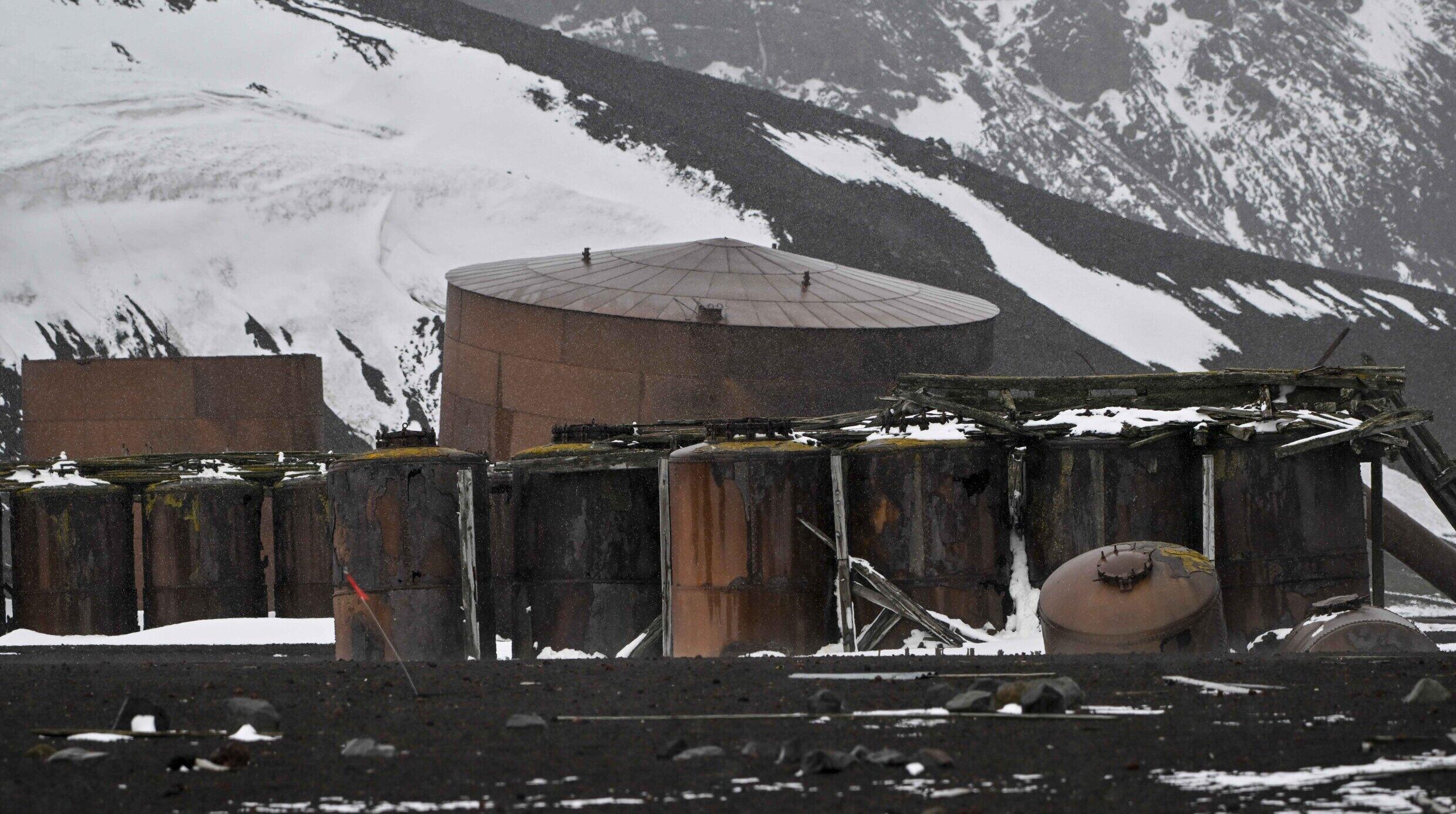 The island, first visited by British sealers in 1820, has a rich history, with abandoned scientific bases and an old whaling station rusting in the icy air © JUAN BARRETO / AFP/File
 Deception Island is a popular spot for tourist cruises to Antarctica © JUAN BARRETO / AFP/File


