



Raw Story is carbon-balanced. We invite you to join us.


You can learn more on how this works below, as well as read detailed descriptions of projects we support. Raw Story supported the conversion of a gas-powered paper mill to biomass, and helps families access clean cookstoves across rural India, reducing cooking-based carbon emissions by 80 percent. Clean cookstoves rank among the best practices for carbon mitigation, while improving socioeconomic outcomes and reducing deforestation.
To date, Raw Story has bought offsets to cover 500 metric tons of carbon emissions. An average American's carbon footprint is 16.6 tons, with about 7 tons produced by electricity usage. Our goal is to offset 3,000 tons by the end of 2020, and continue to offset at least 3,000 tons a year, the equivalent of taking 500 cars off the road. We'd only need 150 subscribers to sign up to achieve this goal.
Here's how we calculated our annual emissions. You can calculate your own here.
- Site: Raw Story has no central office, so we used the electricity footprint of our home offices. With 13 full-time employees, at $50/month, this came to $650 per month for electricity. (36 metric tons.)
- Air Travel: Liberally, we calculated employee travel at 50,000 miles per year. Raw Story employees rarely fly on business. (8 metric tons.)
- Commute: Raw Story employees do not commute.
- Shipping: Raw Story doesn’t ship products, but to be safe (for things we buy), we add in (3 metric tons.)
- Server: Raw Story uses Google Compute-Optimized Servers. All Google data centers are renewable-powered.
Total: 47 metric tons per year.
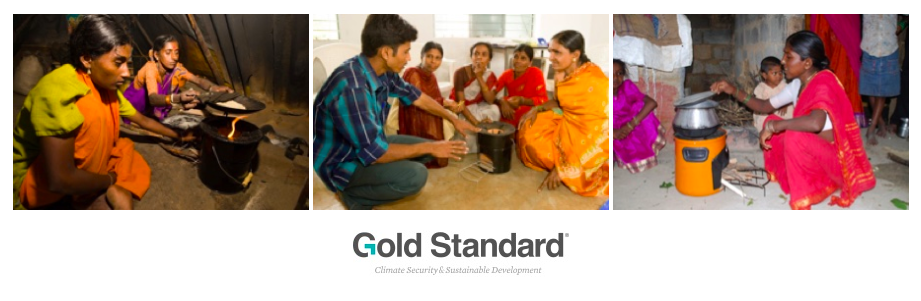
To offset our carbon footprint, Raw Story enlisted 3Degrees, a carbon offset consulting group that has helped many companies, including Lyft and Etsy, offset their carbon emissions. Raw Story's carbon offset purchase for 2019-2020 includes two projects: (1) a fuel switching effort that shifted steam production at a Mississippi paper mill from natural gas to biomass, and (2) The Breathing Space, which distributes improved, energy-efficient cooking stoves to households in India. The clean cookstove used reduces fuel use, smoke and toxic emissions up to 80 percent, and cuts in half the time spent on collecting wood, cooking, and cleaning. It has reached 500,000 families to date. At the paper factory, natural gas has now been replaced by wood chips and biomass byproducts, reducing carbon dioxide emissions. To learn more, click here.
Complete Offset Subscription: $19.99 / Annual $199
A Complete Offset Subscription includes Raw Story Investigates and ad-free access, as well as an offset for your entire carbon footprint, based on the average American's. The average American's entire carbon footprint is 16.6 metric tons. Raw Story deducts 1.4 tons for each month of your subscription. Each quarter (January, April, July and October), we'll send you updates on how much we've offset on behalf of subscribers, as well as new initiatives we support and tips for reducing your own emissions.


Existing subscribers who wish to upgrade their accounts should email elias@rawstory.com.
Carbon Offset Subscription: $14.99 / Annual $149
A Carbon Offset Subscription includes Raw Story Investigates and ad-free access, as well as an offset for your Internet and electricity usage. The average American's electricity use produces 6.7 metric tons of carbon pollution per year. Each month's subscription offsets .6 tons of carbon dioxide. Raw Story deducts .6 tons for each month of your subscription, meaning you'll offset 7.2 tons of carbon dioxide per year. Each quarter (January, April, July and October), we'll send you updates on how much we've offset on behalf of subscribers, as well as new programs we support and tips for reducing your own emissions.


Detailed descriptions of supported projects
Intrinergy Wiggins Fuel Switch from Natural Gas to Biomass at the Coastal Paper Facility
Project Activity: Intrinergy installed twin 800 hp biomass boiler systems on a site adjacent to Coastal Paper Company, which connect to Coastal’s existing distribution system. Biomass residues are sourced from local landowners, loggers, saw mills, and farmers within the 11 surrounding counties in south-central Mississippi and used to generate steam for thermal energy. Steam generated in the biomass system displaces the need to combust natural gas to generate steam. The natural gas boiler system remains in place as a backup.
Baseline: Natural gas was previously used to generate heat in the form of steam that was used in the paper manufacturing process. The natural gas boiler is owned directly by the Coastal Paper Facility.
Additionality: This project activity is not common practice for non-newsprint paper mills located in the southern U.S. Expected revenue from verified carbon units (offsets) allowed both parties – Intrinergy and Coastal Paper – to overcome barriers and implement the project activity. Financial barriers stood in the way of initiating construction in 2007 when traditional debt financing could not be secured. Without sufficiently high debt leverage, the projected IRR was below that required to finance a biomass energy project. Anticipating carbon offset revenue to supplement energy revenue, Intrinergy proceeded with construction despite the fact that no debt financing had been secured (secured in 2008).
Co-Benefits: In addition to carbon reduction benefits, collecting logging residues produces additional benefits such as:
- Increasing ground surface area available for replanting
- Improved site aesthetics
- Decreased use of merchantable wood in energy applications
- Reduced forest fire hazard
- Increased forest growth due to more silviculture subsidized by slash revenues
In addition, according to stakeholders, the project activity contributed significantly to post-Katrina economic recovery of the area. The project activity created roughly 16 permanent green collar jobs (6 in-plant and 10 upstream in the fuel supply chain).
The Breathing Space Improved Cooking Stoves Program
Project Type: Improved Cookstoves
Location: India
Project Description: Traditional inefficient cookstoves, commonly referred to as chulhas, are widely used throughout India, producing substantial GHG emissions due to burning of nonrenewable biomass. A large portion of the rural population in India is dependent on traditional biomass chulhas. Although the use of solid biomass fuels (e.g., wood) in these inefficient traditional chulhas meets domestic household needs, they release large amounts of particulate matter into the air. Replacing traditional chulhas improves indoor air pollution and reduces GHG emissions. With the goal of improving harmful traditional cooking methods, this project utilizes innovative, clean technology products and a unique service model to ensure products are accessible, affordable and easily adopted by households across India.
- Quick Facts: Families Reached: 500,000
- People Impacted: 2.5 million
- Income saved: Up to Rupees 20,100 annually
- Total Benefits: Up to Rupees 34,371 per stove per year
Targeting families in hard-to-access rural communities, the project not only reduces carbon emissions from rural households but also improves livelihoods, specifically families in need in Maharashtra and Orissa. The flagship clean cookstove used for this project reduces fuel use, smoke and toxic emissions up to 80 percent, and cuts in half the time spent on collecting wood, cooking, and cleaning. This reduces the exposure of women engaged in cooking in these households and small children who often accompany their mothers. This project employs an innovative mobile app to track cookstove usage, encourage behavioral change, and provide a real-time snapshot of impact. In addition, a new SmartGas pilot program is being implemented in India to support the deployment of new LPG (liquefied petroleum gas) systems at households, allowing families to pay for their gas as they use it and guaranteeing access to a safe and reliable cooking option. The SmartGas LPG systems are delivered directly to each household and installed for the family, and the family is provided with education and training on LPG use.
- Over 500 jobs were created (direct and indirect roles) as a result of this project.
- On average, each household experiences an 80% reduction in smoke and toxic emissions leading to a 50% reduction in risk of pneumonia and other respiratory illnesses.
- By freeing up the time spent collecting firewood for cooking, children have up to 50% more time to spend on educational activities.
- Up to 50% of women’s time is saved, allowing them to participate in income generating activities.
- Approximately 1M tons of wood saved over 8 years as a result of less firewood needed for fuel for cooking.
This page will regularly update with the total number of Carbon Offset Subscriptions as well as total carbon offsets purchased over time. As of today, Raw Story has offset 500 metric tons of carbon emissions.
Want more information about how to lower your carbon footprint? Check out this fact sheet created by the University of Michigan.