Racial Justice and Civil Liberties: An Inseparable History at the ACLU
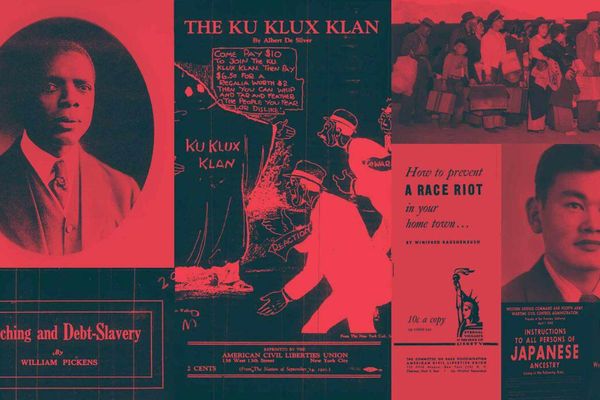
After World War I, it quickly became clear that the war to make the world “safe for democracy" had not made America safe for equality. Anti-Black race riots ripped through Chicago, New York, Washington D.C., and even Elaine, Arkansas. In October 1919, after Black sharecroppers in Elaine convened a union meeting, newspapers labeled the effort a “Negro uprising." The state mobilized troops and mobs to quell the rebellion. The result was “possibly the bloodiest racial conflict in the history of the United States," concluded the Encyclopedia of Arkansas History & Culture.
The American Civil Liberties Union's origin story is tied inextricably to the xenophobic Palmer Raids, but the lesser-known events in Elaine, Arkansas were also formative. Racial violence was an unavoidable issue for any organization dedicated to the rights and liberties of everyone. Ten years earlier, the NAACP had been established to advance justice in the wake of the Springfield, Illinois race riot. During its first summer, the ACLU denounced the lynching of three Black men in Duluth, Minnesota who had allegedly raped a 17-year-old white girl. ACLU co-director Albert DeSilver wrote to Minnesota's governor volunteering assistance in “the preservation of civil liberty."
Weeks later, Minnesota Gov. Joseph A. A. Burnquist informed DeSilver that several men had been arrested in connection with the lynching. He did not tell DeSilver that none was convicted of anything serious. ...