
Download Our App

All posts tagged "Privacy & Technology"

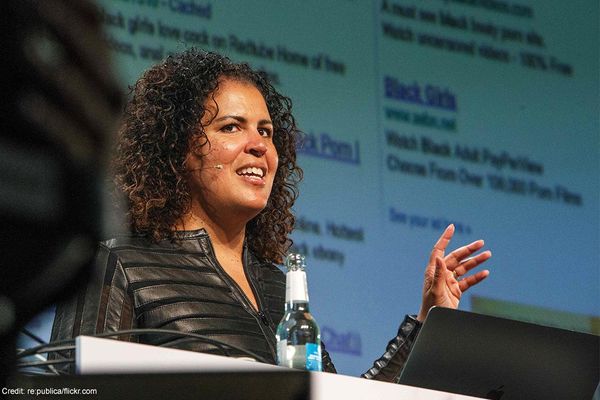
Google This: Algorithmic Oppression

Google This: Algorithmic Oppression

Imagine you've forgotten once again the difference between a gorilla and a chimpanzee, so you do a quick Google image search of “gorilla." But instead of finding images of adorable animals, photos of a Black couple pop up.

Is this just a glitch in the algorithm? Or, is Google an ad company, not an information company, that's replicating the discrimination of the world it operates in? How can this discrimination be addressed and who is accountable for it?

“These platforms are encoded with racism," says UCLA professor and best-selling author of Algorithms of Oppression, Dr. Safiya Noble. “The logic is racist and sexist because it would allow for these kinds of false, misleading, kinds of results to come to the fore…There are unfortunately thousands of examples now of harm that comes from algorithmic discrimination." ...

How Broadband Access Hinders Systemic Equality and Deepens The Digital Divide

How Broadband Access Hinders Systemic Equality and Deepens The Digital Divide

If you're reading this article, you're probably not one of the millions of people living without broadband access in America. People living without broadband access — who are disproportionately non-white people, low income, or rural — do not have access to equal opportunities in education, employment, banking, and other important components of connection and social mobility. That was the case before the pandemic, and it's even worse now.

The digital divide is what separates those without broadband from those with it, and it encompasses all the broader social inequalities associated with an increasingly digitized world. Along with discrimination in housing, banking, employment, and other areas of life, it is both a result of and contributes to systemic inequalities faced by people who are Black, Latinx, Indigenous, and other underserved groups.

What is broadband and why do we need it?

Broadband is the term used to describe high-speed, reliable internet — the kind of internet that allows us to stream movies, take part in Zoom calls, and connect with our social networks. Since 2015, the Federal Communications Commission has defined broadband as a minimum of 25 megabits per second (Mbps) download and 3 Mbps upload. But while internet upload and download speeds have changed significantly over the years, the FCC has not updated its definition. That makes it difficult to get an accurate picture of how many people are living without access to the internet that's usable given today's higher technology demands. ...