



Red state reeling as Trump's marquee law boots sick kids and pregnant moms off coverage
Vanessa Melendez had been going back and forth with the state over her family’s Medicaid and food assistance applications for months when the Houston mom learned she was pregnant with her third child. She submitted a new application for Medicaid for Pregnant Women, which covers care during pregnancy and for 12 months after giving birth, last December.
And then she waited.
She didn’t receive any update until she was more than four months pregnant — well into her second trimester — as anxiety over how her baby was doing became overwhelming.
It’s crucial for pregnant women to be seen in the first trimester, which is the first 13 weeks of pregnancy. It allows the doctor to confirm the pregnancy, detect a fetal heartbeat and do some early testing. It’s also when a majority of miscarriages occur.
“It was a lot and I felt like everything was going wrong and I wasn't going to get the help that I needed,” said Melendez, who delivered her son in July. “I'm going to have this baby, and I have no insurance.”
The Texas Health and Human Services Commission has long struggled to process Medicaid applications in a timely manner — within 30 to 45 days, under the federal definition, according to a Legislative Budget Board report released this month. The Centers for Medicare and Medicaid Services scrutinized Texas’ timeliness issues and the feds put the state on a corrective action plan to more quickly process Medicaid and the food assistance benefits, Supplemental Nutrition Assistance Program (SNAP). By the end of 2025, the state was improving its timeliness.
That was, until the One Big Beautiful Bill Act, which passed July 2025, started requiring Medicaid recipients to reapply every six months instead of annually, and prove they are working, trying to work or are volunteering in an effort to address fraud. Even though data from the Texas HHSC has not shown fraud is widespread in Texas, the state’s backlog is climbing back up.
In July, 65% of Medicaid applications were processed in a timely manner compared to 81% a year ago, according to most recent data from Texas Health and Human Services Commission, which administers Medicaid on the state level. The federal government wants 95% of them processed in a timely manner. In August, 211,000 applications were still waiting to be processed by the state.
This has come as Medicaid enrollment nationwide has also sharply declined. In the 11 months since OBBBA passed, there have been 252,000 fewer Texans enrolled in Medicaid, a 6% drop, according to preliminary state caseload data as of June. SNAP enrollment dropped 17% — 597,000 fewer Texans. Children accounted for almost two thirds of the declines.
There were more than 3.7 million Texans enrolled in Medicaid in June, according to latest Medicaid data from the state, and 1.3 million households on SNAP in July.
OBBBA also financially penalizes the state for having a high rate of underpaying or overpaying SNAP and Medicaid recipients, requiring Texas to be more meticulous in its application processing. In April, Texas HHSC officials told lawmakers that they will have to pay $700 million a year to participate in SNAP if they do not bring their error rate down starting in 2027. Similar changes for Medicaid start in 2029.
Together, these new requirements create more administrative burden on HHSC, which has had to provide new training to the 6,000 or so staff members who review both SNAP and Medicaid applications, according to Diane Forester, the director of health policy at Texans Care for Children, a nonprofit child advocacy group. And those changes put new demands on a technological system that was already struggling to keep up.
“Those demands are landing on a system that was already under strain,” she said. “It's not one single cause for the entire backlog, but clearly the system is falling further behind.”
The state health agency did not explain to The Texas Tribune the cause of the backlog or how the agency is addressing it. However, the agency said that the system it uses to process applications, Texas Integrated Eligibility and Renewal System, is not struggling.
“HHSC routinely updates the system to meet federal and state requirements and protect data,” Jennifer Ruffcorn, an agency spokesperson, said. “OBBBA included several provisions that modified eligibility for SNAP and Medicaid. HHSC provided training in these areas to ensure accuracy. TIERS remains a fully functioning eligibility system that supports application processing.”
State Sen. Lois Kolkhorst, who chairs the Senate health committee, said the agency is doing what it is supposed to do to root out and prevent fraud.
“As new tools are put into practice, we will naturally begin processing these applications more efficiently and address backlogs in the program to ensure Texas complies with all federal laws on welfare programs while providing for those who are truly eligible for aid,” Kolkhorst said.
The impact
When Jessica Ballek lost her job in December, she immediately applied for Medicaid and SNAP. Those benefits for her and for her two kids were approved within two days.
Ballek reapplied for SNAP in April, about a month before her deadline, and then she waited. The benefits didn’t arrive in May. This loss happened at a time when she was moving to Chandler, a small town near Tyler in East Texas, for her new job working nights as a private home nurse. Losing SNAP made that transition exceptionally difficult and she relied on food banks when possible. But the food banks sometimes didn’t have enough food, she said.
She called for an update on her application in June and in July. Finally, after nearly five months with no information, she learned her family had lost its SNAP benefits and was told her new job had disqualified her.
The timeliness rate of SNAP redeterminations dropped from 83% in January to 28% in July, the lowest rate in four years.
Now, as she wades through the reapplication process for both of her children’s Medicaid coverage she said she needs because her employer-sponsored insurance is limited, she worries those benefits will also be cut and that she won’t learn about it for months.
“My kids have been with the same pediatrician since they were born and I don’t plan on changing that anytime soon, but that self-pay is going to eat my lunch,” Ballek said.
The delays in Medicaid are contributing to more visits to hospitals and federally qualified health centers, according to officials who run those operations. To cope with the loss of Medicaid, many patients have turned to federally qualified health centers, which can provide healthcare at little to no cost, and emergency rooms.
Emergency rooms across the state have begun to see more people walk through their doors, according to the Texas Hospital Association. And an increasing number of those patients have no insurance whatsoever.
In 2024, Texas nonprofit hospitals gave $14.9 billion worth of medical care to uninsured Texans, according to the Texas Hospital Association. More than 5 million Texans are uninsured, which is more than any other state in the country, according to the latest census data available.
“It’s an expensive situation and not good for anyone,” said Carrie Williams, the chief communications officer for the Texas Hospital Association.
Rural hospitals, especially, rely on Medicaid funding and are always at risk of closure across the country, but changes to Medicaid will exacerbate that.
At a mental health center in East Texas, Keith Kirbow, a nurse practitioner, is worried about rural health across Texas as people lose access to Medicaid.
“I was the chief nursing officer when we closed the critical access hospital in Linden because of lack of funding,” Kirbow said. “I've seen this across the spectrum, from acute care to outpatient. Health care access has been so badly impacted by people not having the ability to pay.”
He’s grateful to work for a health center program that is able to see patients regardless of their ability to pay — thanks, in large part, to grants from organizations like the T.L.L. Temple Foundation and the Episcopal Health Foundation. But not all health clinics have this kind of support or access, Kirbow said.
OBBBA and outdated technology
There has been a longstanding fear that individuals are receiving benefits they don’t deserve from the U.S. entitlement programs, such as SNAP, CHIP and Medicaid — which largely serve poor families and disabled or elderly people.
In a recent Senate health committee hearing, Kolkhorst said HHSC had allowed some people to receive Medicaid benefits for more than 90 days without verifying their eligibility, which includes their citizenship status. She said there were more than 1,800 who received it that were ineligible. This is a small fraction of the millions enrolled in Medicaid.
“Those are real dollars lost and diverted from those who truly need them,” Kolkhorst said. “So of course, we need to be more careful in processing and screening these applications.”
Texas has been proactive about detecting fraud as early as possible, Forester said.
In a recent Office of Inspector General report, the benefits program integrity unit found the state had recovered more than $37.5 million in improper payments made between March 1 and May 31. Of the more than 3,800 cases opened against individuals, 30 were referred for prosecution and 300 were referred for disqualification from the program.
In 2025, the most recent data available, 9% of Texas’ SNAP payments had an error, better than the national rate of 11%. Fraud isn’t the only — or even largest — reason for errors. It was often mistakes, not intentional lies, that led to errors.
However, fears of fraudulent activity, like lying on application forms, have escalated in late 2025 and early 2026 thanks to scandals in Minnesota and California as well as information released from the now shuttered U.S. Department of Government Efficiency. Many states — including Texas — ramped up investigations into their own program administration.
Texas has one of the leanest Medicaid programs in the country, Forester said. This makes it incredibly difficult for her to believe there is widespread fraud in the system.
“We don't have anybody that's capable of holding down a job that is eligible for Medicaid,” Forester said. “I like to remind people: it is mostly poor kids and sick kids, our pregnant moms and some of our elderly.”
However, the system is backlogged, she said.
Every recipient of Medicaid and SNAP has to submit their applications to Texas’ review staff every six months. This means millions of applications are hitting the desks of Texas’ 6,000 or so review staff, Forester said.
They’re working through those applications using the TIERS that was fully operational statewide by 2012, Forester said. And the new requirements are like trying to make 2026 technology work well in a 1980 Honda Accord.
“It's not going to work great because we didn't even know that technology could exist back then. The system is not set up for that,” Forester said.
Texas lawmakers agreed in 2025 to invest more in technology upgrades to address these concerns, Forester said, but to see the full buildout will take years. For example, the HHSC asked to replace its payment system — which is different from the TEIRS system — because the current system would require staff to track more than $3.5 billion manually. That system is expected to be replaced by the end of 2027, according to the Legislative Budget Board report.
More problems on the horizon
Forester believes Texas lawmakers would have done well to develop solutions to upgrade state technology quicker and address the backlog during the interim legislative session. But with the end of 2026 quickly approaching with a hotly contested midterm election on the wings, she has no faith they will do anything.
“We would love to see lawmakers make reducing these delays a priority during the interim and going into the next legislative session,” Forester said. “But there just hasn't been any urgency around this, which is mind-boggling to me. It's great that we're investing in the new eligibility system; that's important. But in the meantime, families cannot wait years for that system to come online.”
While no new federal legislation is expected to affect Medicaid in the near future, there are pieces of the One Big Beautiful Bill Act that have yet to be fully rolled out.
Eligibility for non U.S. citizens will narrow in October, cutting humanitarian immigrants such as asylum seekers and human trafficking survivors from the list of people who are eligible. And funding overall will continue to slow over the next decade.
And these entitlement programs are just the beginning of major changes to the country’s social safety net.
Head Start, which provides education to low-income preschoolers, is facing one of the biggest overhauls since it was created in 1965. The changes could tighten eligibility requirements as well as change quality standards.
Ballek, the night nurse and mom of two who lost SNAP coverage, is facing a triple whammy.
She hopes to finish the Medicaid applications for her children soon. The process is complicated. She’s grateful her husband, who is disabled and on his own Medicaid plan, is taken care of.
Her son’s 10-year-old well child visit may get delayed if she doesn’t learn quickly whether his coverage is approved.
And she doesn’t know how she’ll pay for the specialist her 4-year-old daughter was seeing without help from Medicaid.
She’s grateful for the support from teachers and nurses at the Head Start program her daughter attends. They have been able to manage her care and resolve some regression issues she’s had. But one major change the feds want to make to the program is to increase the student teacher ratio.
Ballek said there are 19 kids for two teachers in their program. She’d hate to see teachers reduced to one.
“I fear, depending on how they overhaul the program, it is going to impact the students that are looking at coming into Head Start next school year and possibly change the way it is this year,” Ballek said.
Disclosure: Episcopal Health Foundation and Texas Hospital Association have been major financial supporters of The Texas Tribune. T.L.L. Temple Foundation and Texans Care for Children have been financial supporters within the past five years. The Texas Tribune is a nonprofit, nonpartisan news organization that is funded in part by donations from members, foundations and corporate sponsors. Financial supporters play no role in our journalism. Find a complete list of them and more information about our financial and disclosure policies here.
This article first appeared on The Texas Tribune.
 Santiago Quinonez, 25, refuels his car at a gas station in Austin on Aug. 26, 2026.
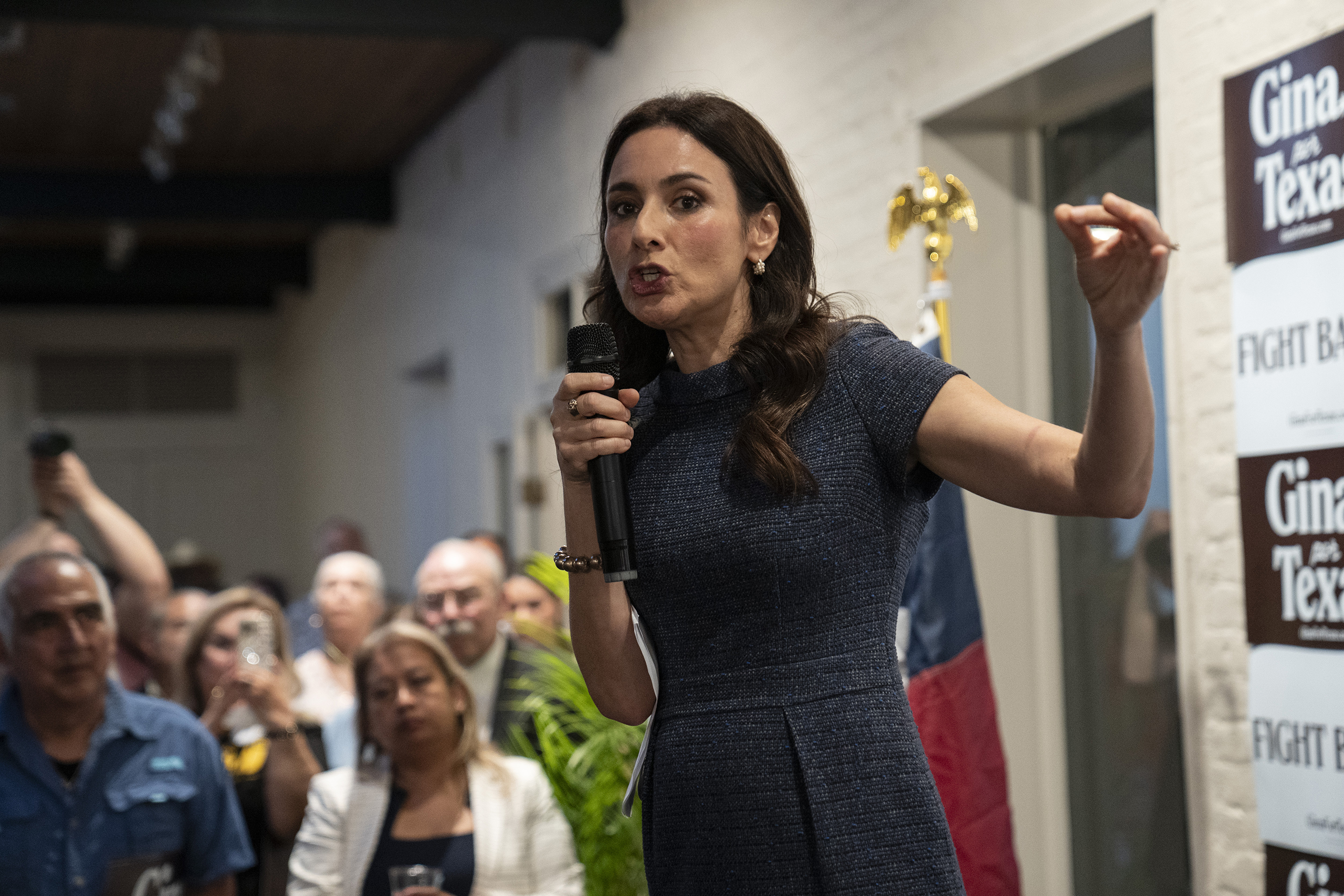 State Rep. Gina Hinojosa, Democratic candidate for governor, speaks during her campaign launch event in Brownsville on Oct. 15, 2025.
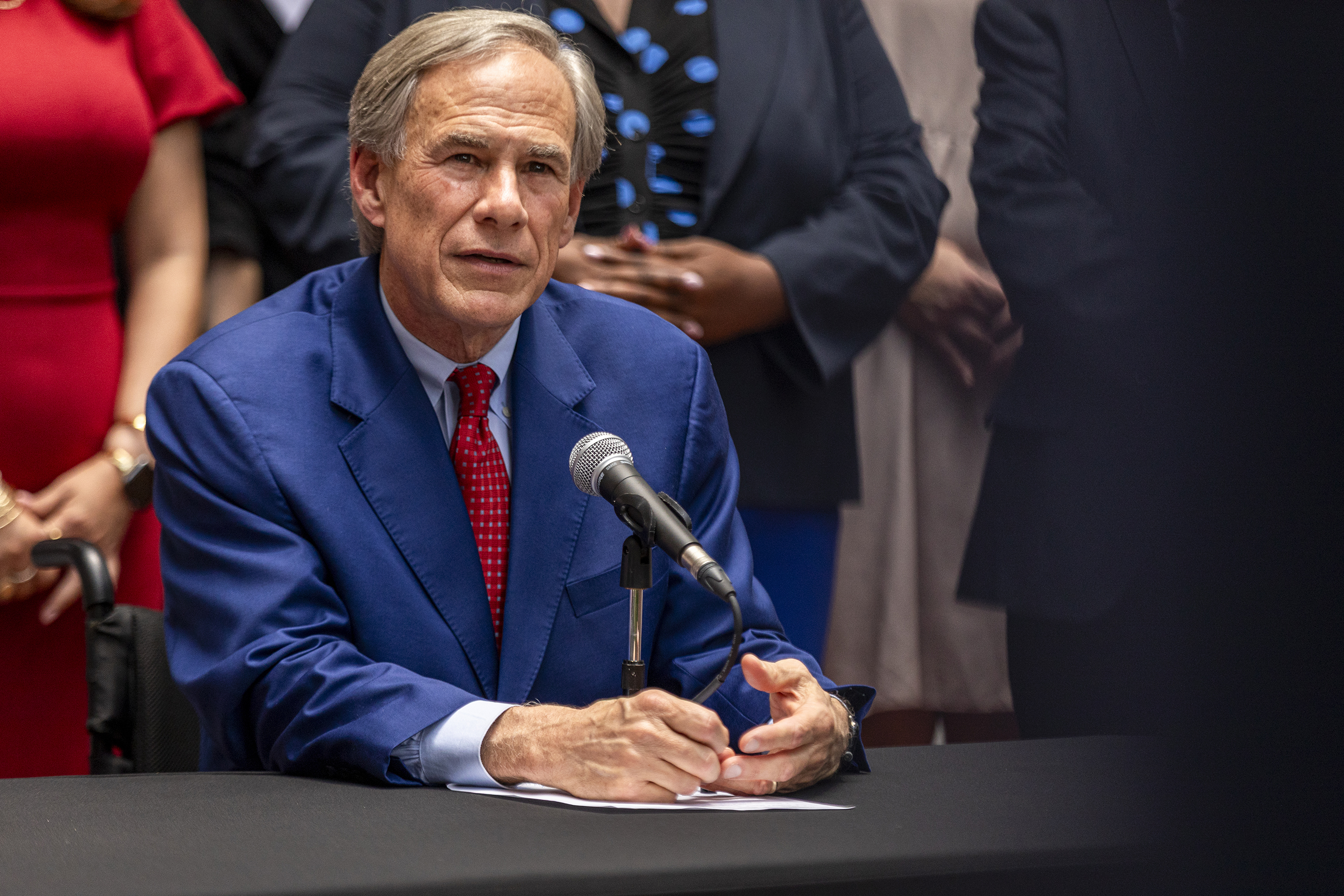 Gov. Greg Abbott answers questions from the media during a press conference in Austin on Aug. 10, 2026.
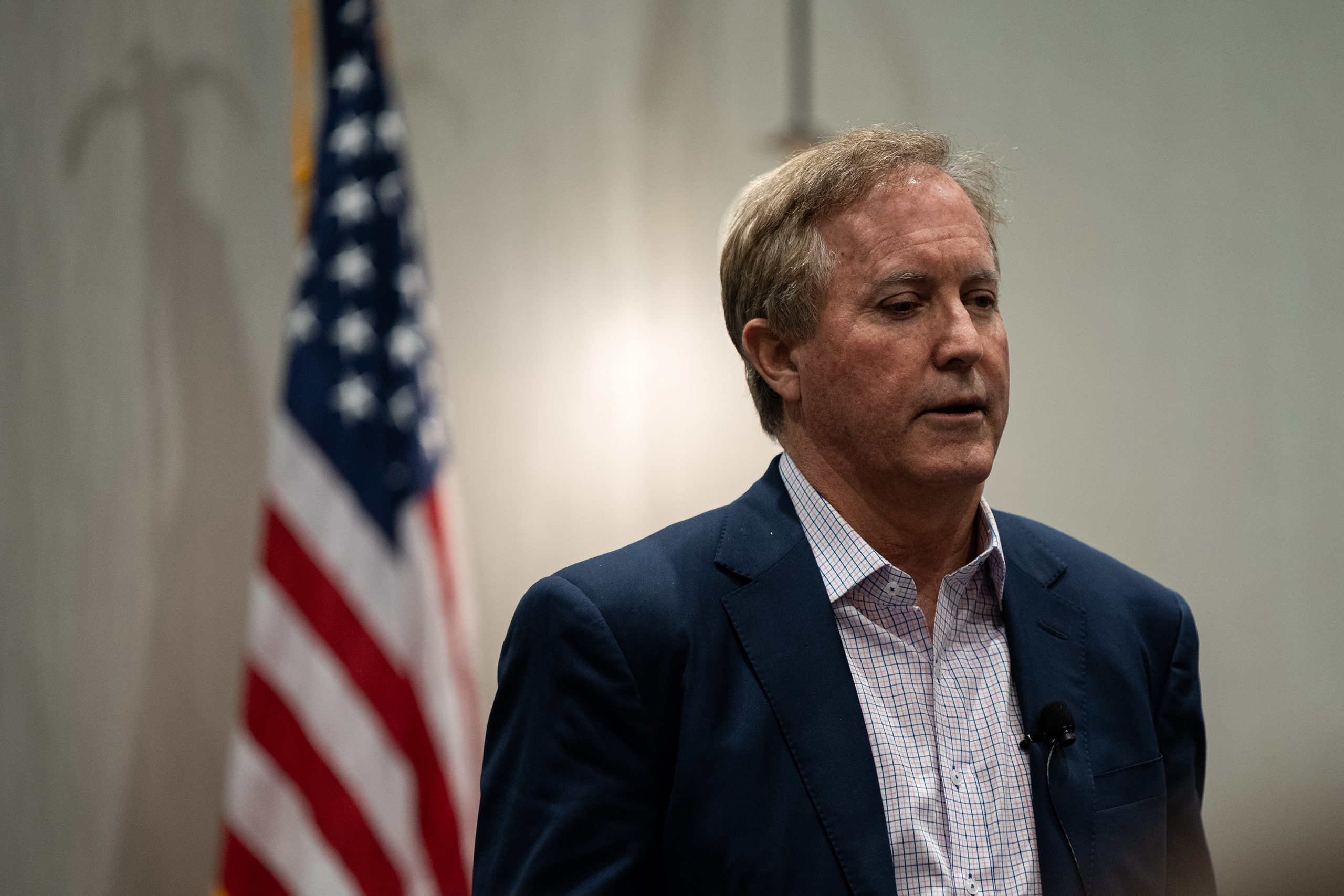 Texas Attorney General Ken Paxton, the Republican nominee for U.S. Senate, speaks at a campaign event in Amarillo on May 7, 2026.
 State Rep. James Talarico, the Democratic nominee for U.S. Senate, speaks at a campaign stop in Sanderson on July 13, 2026.
 Traffic moves around a CITGO gas station in Austin on Aug. 26, 2026.