Top Stories Daily Listen Now
RawStory
RawStory

Trump thanks deeply loyal red state by planning massive dump of nuclear waste

Here we go again, Idaho.

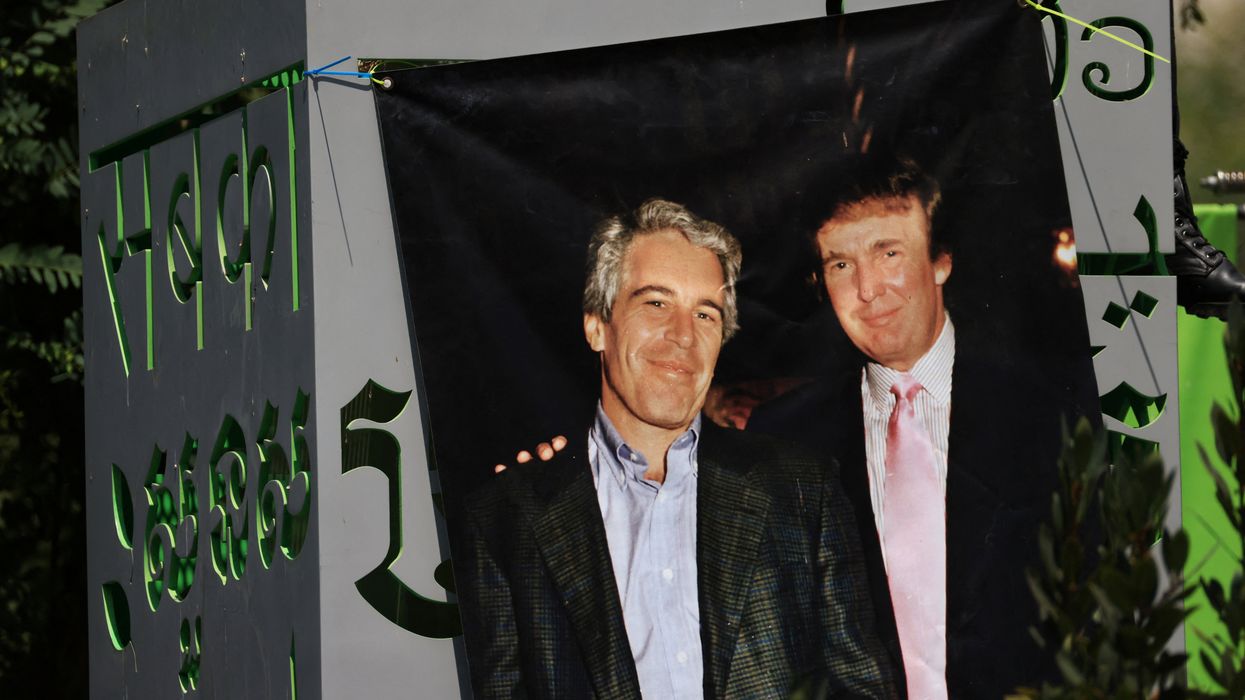
While most Americans have been preoccupied with rising food and fuel prices, an ongoing war in the Middle East and the various comings and goings of the Epstein Class, the Trump administration – and accomplices in a few very Trump friendly states – have been quietly concocting a plan to make three “willing” states home to the vast stockpile of the nation’s high-level nuclear waste.

The plan, in the works for months, was finally publicly revealed this week by the U.S. Department of Energy, innocuously described as a “Nuclear Lifecycle Innovation Campus.” The “campus” designation is promising billions in pie-in-the-sky economic benefits to states “lucky” enough to be named to the Trump administration’s short list.

But like all things from this administration, the breathless hype conceals an ill-conceived and reckless science-devoid blackmail scheme that seeks to entice Idaho to accept one-third of the country’s now homeless nuclear waste cache for a “promise” of a big payday.

Yet as audacious as the Nuclear Lifecycle Innovation Campus plot is – and it is truly and nakedly risky in its ambitions – it is even more outrageous that Idaho’s governor, its U.S. senators, eastern Idaho congressman and most of the state Legislature have embraced an Idaho nuclear waste disposal scheme masquerading as an economic windfall.

As the Idaho Statesman’s Mark Dee succinctly reported this week: “Idaho is on the shortlist to become the center of America’s nuclear energy industry — and a warehouse for much of its radioactive waste.”

One has to be living in the Trump DOE’s house of mirrors not to understand that creating a permanent waste storehouse is vastly more important to the administration and its political cheerleaders than any vague promise that Idaho, or Tennessee, Utah, Oklahoma or Louisiana will reap some huge financial windfall.

Becoming the center of a revitalized nuclear energy industry, an industry most clearly defined not by the jobs, energy or cash it generates but rather by the highly radioactive waste it produces carries an enormous caveat for Idaho – you might get some cash, but you must take the trash.

Idaho’s application for this “windfall,” signed by Gov. Brad Little and warmly endorsed by Sens. Mike Crapo and Jim Risch, Congressman Mike Simpson and most state legislators – sadly and astoundingly including most of the Democratic leadership – isn’t bashful about just how willing Idaho leaders are to warehouse the nation’s waste.

“Once Congress has acted to address and update the existing legal framework,” the Idaho proposal says, “Idaho is poised to engage in discussions about the eventual siting of a permanent national repository. Idaho intends to collaborate closely with the federal government and neighboring states that are interested in serving as long-term repository locations, ensuring the responsible disposition of waste streams.”

While the Idaho proposal hints that a “permanent” waste repository might be sited in Utah, Idaho’s cheerleaders also say more “temporary” storage in Idaho sounds just fine by them.

“While Idaho will not consider the establishment of a deep geologic repository below the INL site or above the Snake River Plain Aquifer … Idaho is willing to consider additional long-term monitored storage solutions for the DOE, possibly including deep bore hole storage, in exchange for significant financial consideration in anticipation of development of a recycling and reprocessing (R&R) capability near the INL site.”

Perhaps some of you are old enough to remember that Idaho has been here before.

From the early 1970s to the end of the 1990s, Idaho governors of both parties resisted repeated federal efforts to turn Idaho into what former Democratic Gov. Cecil Andrus called the nation’s “de facto nuclear waste dump.”

When Andrus became governor in 1971, the state had been quietly serving for decades as a convenient “out of sight, out of mind” location for “temporary” waste storage. Andrus famously closed the state’s borders to additional waste in 1988 when he became frustrated by DOE’s lies and incompetence in addressing waste issues, including failure to create a plan to clean up and remove waste already sitting in Idaho.

Andrus’s successor, Republican Phil Batt, carried the fight forward and secured a landmark agreement sharply restricting movement of new waste into Idaho and proscribing how existing waste would be treated and removed.

Both Batt and Andrus shamed their critics, including many Republican politicians and deep pocketed industry concerns, into submission because they were right on both the policy and the politics. Survey after survey over decades have shown that the state’s fight to avoid becoming a nuclear waste dump has enjoyed widespread public support. Batt’s agreement was immensely popular in part because the feisty, no-nonsense governor effectively told DOE to clean up its old mess and stop making a bigger mess in the future.

Now Idaho’s nuclear waste dump application clearly envisions junking Batt’s agreement, saying ‘future modifications will be discussed when relevant and appropriate.”

In other words, Little and the state’s political elite are poised to tear up Batt’s agreement and decades of bipartisan resolve, and for what? A promise to welcome more than 30,000 metric tons of the most dangerous material on the planet for at least “temporary” storage above the Snake River Aquifer in southeastern Idaho?

To make sure the Trump administration understands how completely prepared Idaho is to become a waste disposal site, Little’s proposal underscores that “Idaho is actively reforming its internal codes to consolidate authority and simplify the pathway for complex nuclear and hazardous waste facilities.”

In other words, we won’t bother with any public process around this wonderful scheme. We’ll short circuit any safeguards and make sure the decision-making is “consolidated.”

This fantastic scheme, like all things emanating from this administration, is full of bluster, wild promises, scientific and regulatory shortcuts (or abandonment) and utter disregard for basic common sense. If you think all this blue smoke is good for Idaho then you’ll probably making a killing trading Trump crypto currency.

Here’s the bottom line: American needs safe, reliable nuclear energy, and the industry needs a safe, scientifically sound basis for dealing with the vast waste stockpile that exists and that will only grow in the future.

Instead, the Trump administration has produced a jerry rigged, phantom economic development concept that is really just a plea to states like Idaho to take some garbage “temporarily,” while we kick the waste can down the road to places like Butte County, Idaho.

If this were a nuclear waste version of “The Apprentice,” the Idaho politicians endorsing this nonsense would be fired since they clearly have no idea what they are doing.

One GOP senator could shed light on Epstein's finances. Why won't he do it?

Early in 2024, during the Biden administration, Sen. Mike Crapo, (R-ID), had a chance to provide the world with financial information about disgraced sex trafficker and financier Jeffrey Epstein.

It only recently became known that Crapo was asked to join the senior Democrat on the U.S. Senate Finance Committee in a subpoena for the Epstein material held by the Treasury Department. For some reason he refused.

For years, and particularly before it became standard practice to refuse to work on virtually anything with anyone in the other party, Crapo and Sen. Ron Wyden (D-OR), now the ranking member of the Crapo-led Finance Committee, have annually teamed up to pass legislation to provide funding to rural schools. They did so again in June in an increasingly rare example of bipartisan legislating.

But bipartisanship clearly doesn’t extend to information the government, particularly the treasury department, has on Jeffrey Epstein. Crapo, it seems clear, has been stonewalling any effort to force release of material that members of his staff reviewed more than 18 months ago.

One of many mysteries about Epstein, who was in prison in 2019 awaiting trial at the time of his death, was how the guy amassed a fortune estimated at $550 million, as well as several lavish estates and a private island.

Where all that money came from and for what purpose are central questions in understanding Epstein’s crimes. Wyden has been on the case for months. When he asked Crapo to help him, Crapo refused.

After the New York Times recently reported that JP Morgan Chase, “arguably the world’s most prestigious bank,” had long treated Epstein as a “treasured client,” while essentially ignoring mounting questions about the vast sums of money flowing into and out of his accounts, Wyden insisted the bank provide information. The Oregon senator demanded an explanation as to why the bank continued to cover up Epstein’s “suspicious transactions for six years after firing him as a client.”

Earlier Wyden introduced legislation that would compel Treasury Secretary Scott Bessett to turn over his department’s Epstein record, while Crapo voted against a separate effort to compel release of Epstein documents.

But before Wyden introduced his Epstein legislation a curious thing happened, way back in February 2024, while Joe Biden was still president. As the Oregon Capital Chronicle reported earlier this month:

“For several hours on Valentine’s Day in 2024, staff from Oregon U.S. Sen. Ron Wyden’s office and the Senate Finance Committee sat in a room in the U.S. Treasury Department reviewing, thousands of suspicious financial transactions made by deceased and disgraced financier and sex offender Jeffrey Epstein.

The transactions totaled more than $1 billion and included payments to women from eastern European countries where many of Epstein’s alleged victims are from. Along with Wyden’s team, staff from the offices of Republican Sens. Mike Crapo of Idaho and Marsha Blackburn of Tennessee reviewed the documents, according to Wyden. Spokespersons for Crapo and Blackburn did not respond to requests for comment from the Capital Chronicle.

The Senate staffers we allowed to look at document and take notes but not allowed to make copies.

“And because you can’t take that stuff out of the room,” Wyden said, “I asked, particularly, if the Republicans would be willing to join me in a subpoena that would get the rest of the information that was crucial, and they wouldn’t do that. And that was during the Biden years.”

In a Sept. 2, 2025, letter to Bessent, the Treasury secretary, Wyden elaborated on one document his staff and Crapo’s reviewed in 2024.

“One of the documents,” Wyden wrote, “indicates that between 2003 and 2019, there were more than 4,725 wire transfers totaling $1.08 billion involving Jeffrey Epstein and his associates … These documents also contain details of hundreds of millions in payments to Epstein from Wall Street financiers, including $170 million Leon Black paid Epstein for purported tax and estate planning advice.”

Leon Black is a billionaire private equity investor. In 2023 Black reached a $62.5 million settlement with the government of the U.S. Virgin Islands that, as the Times reported, released Black “from any potential claims arising out of the territory’s three-year investigation into the sex trafficking operation” of Epstein. Black contends he did nothing wrong, but he sure did pay a lot of money to avoid further investigation of ties to Epstein.

“Furthermore,” Wyden wrote to Bessent, “records show that Epstein used correspondent accounts at multiple Russian banks, to process hundreds of millions of payments related to potential sex trafficking. Several of these Russian banks are now under U.S. sanctions and many of the women and girls Epstein targeted came from Russia, Belarus, Turkey and Turkmenistan. These records outline specific names of women and girls, correspondent bank account numbers in Russia used to process the payments, as well as details on Epstein associates who had signatory authority over Epstein’s accounts and signed off on payments related to sex trafficking.”

So why hasn’t Mike Crapo joined Ron Wyden in a quest to get this information from the Treasury Department? Why has Crapo put on ice his committee’s oversight jurisdiction over the Treasury Department? Why wouldn’t he pursue Epstein documents while Biden was in office?

I emailed Crapo’s press office, as well as person who handles communication for the Finance Committee. No response. Nothing.

Specifically I asked:

  • Did Crapo’s staff review the Epstein documents?
  • Who specifically was involved in the review?
  • Why has Crapo not joined Wyden in pressing for the release of these materials?

I wanted to know — perhaps his constituents would like to know — why Crapo wasn’t demanding answers about Epstein’s finances. Opinion polls clearly indicate the American public, people in both parties, believe answers are necessary.

There are at least three plausible reasons Crapo refused when he had the chance to get Epstein information to the public.

Perhaps he thinks it’s not important.

Perhaps he thinks there is some privacy question involved, even though Epstein is long dead and his chief accomplice is in jail.

Or perhaps those records Crapo’s staff saw in 2024 get too close to someone Crapo doesn’t want to offend, a big campaign contributor or Wall Street banker or CEO.

Had Crapo agreed to that subpoena last year, we’d likely know a whole lot more about Jeffrey Epstein today.

  • Marc C. Johnson is a former Idaho broadcast journalist and was a top aide to Idaho Gov. Cecil D. Andrus. His most recent books include "Mansfield and Dirksen; Bipartisan Giants of the Senate" and "Tuesday Night Massacre: Four Senate Elections and the Radicalization of the Republican Party."

After Patriot Front arrests in North Idaho, meet the new right-wing ‘Conflict Entrepreneurs’

“It is clear to us based on the gear that the individuals had with them, the stuff they had in their possession and in the U-Haul with them, along with paperwork that was seized from them, that they came to riot downtown,” said Coeur d’Alene Police Chief Lee White.

It’s not every day you see a Pacific Northwest law enforcement official make such a statement. Get used to it. You’ll see something similar again soon, likely many similar things.

The 31 members of the white supremacist group calling itself Patriot Front who were arrested last week at a northern Idaho Pride Day celebration may seem, at least at first blush, to be little more than a handful of neo-Nazi losers and cranks, White men who hate the idea that the United States is a nation of ethnic and religious diversity. But it would be a mistake to dismiss these dangerous men as anything less than what they are, domestic terrorists.

Patriot Front’s “manifesto” states the group’s aspirations in language that would please the old Aryan Nation’s bigot, Richard Butler. “A nation within a nation is our goal. Our people face complete annihilation as our culture and heritage are attacked from all sides.”

The leader of the group – its membership is estimated at a few hundred young men spread across the country – is a Texan named Thomas Ryan Rousseau. Rousseau first came to prominence in Charlottesville, Virginia, in August 2017 when some of his followers participated in the infamous “Unite the Right” rally.

Not long after that shameful racist gathering – then-President Donald Trump excused the violence as a protest against removal of Confederate monuments even as one life was lost as torch bearing marchers chanted anti-Semitic slogans – Rousseau said: “America our nation stands before an existential threat. The lives of your children, and your children’s children, and your prosperity beyond that, dangle above a den of vipers. A corrupt, rootless, global, and tyrannical elite has usurped your democracy and turned it into a weapon, first to enslave and then to replace you.”

Trump’s comment that at Charlottesville there were “some very bad people … but you also had people that were very fine people, on both sides” was widely condemned, but also entirely excused by most Republican politicians. Since Charlottesville, Patriot Front and similar groups – the Proud Boys and Oath Keepers, for example, who led the January 6 attack on the Capitol – have grown more aggressive and more violent.

These radical, rightwing groups have become, as political scientist Barbara F. Walters has written, “conflict entrepreneurs,” who exist to create the kind of confrontation, provocative and potentially violent, that was barely avoided in Coeur d’Alene.

Walters, in her recent book “How Civil Wars Start and How to Stop Them,” writes alarmingly of the United States nearing the point where radical right groups engage in sustained violence, often marked by assassination attempts, ambushes and attacks on police or the military. They seek chaos, Walters believes, to destabilize a fractious and already troubled democratic system.

Walters and other scholars have documented the rise of such groups and their tactics around the world and contend the U.S. is entering a period of sustained rightwing violence, something the FBI has issued warnings about for years. Think of the sectarian “troubles” in Northern Ireland that fractured that divided land for a generation, or the tribal violence in Rwanda, or the still raging civil war in Syria.

Only a failure of imagination based on a clear-eyed understanding of what rightwing terrorism is capable of prevents most Americans from understanding the depth of this threat.

Patriot Front has demonstrated in Philadelphia, leafleted in Vermont and the campus of the University of West Virginia and led anti-immigrant protests in California. In Brooklyn a year ago, members vandalized a George Floyd statue and defaced a mural in Richmond commemorating Black tennis great Arthur Ashe. Patriot Front members have been involved in anti-abortion rallies, as well.

The group’s national reach and level or coordination is obvious given that those arrested in northern Idaho came from at least 11 states and just happened to show up packed into a rented U-Haul truck wearing hoods and carrying shields and apparently some weapons. The objective was clearly to provoke a confrontation, create chaos, grab headlines and then slink out of town.

So, what should Idaho officials be doing about these dangerous radicals? First, take them seriously – absolutely seriously. No longer ignore them. Do not fail to name what they are doing or denounce what they profess to stand for. This demands a full-on mobilization of state and local law enforcement and aggressive prosecution.

Instead, Idaho Gov. Brad Little issued a mealy-mouthed statement extolling everyone’s right to peaceful protest and praised the police response. Little did not deplore the white supremacist agenda of Patriot Pride. The governor did not link the radicals to a growing national movement to disparage members of the LGBTQ community. And Little did not summon the courage to be outraged by members of his own party cheering on white supremacists and hate spreaders.

As Rebecca Boone of the Associated Press reported, “a lawmaker from the northernmost region of the state, Republican Rep. Heather Scott, told an audience that drag queens and other LGBTQ supporters are waging ‘a war of perversion against our children.’” That is an outrageous, untrue and dangerous accusation that deserves only censure.

The non-response by Idaho conservatives is a big tell. Little and most Republicans are afraid of the radical right because they realize they constitute the growing racist and hateful wing of the GOP. They will come to rue their inaction because inaction will foster more hate.

Consider this: One of those arrested in Coeur d’Alene came all the way from Alabama. Doug Jones, a former Alabama senator and one-time prosecutor who finally brought to justice the racist Klan murderers of four little Black girls in a Birmingham church in 1963, issued a stern warning during an interview with the Idaho Capital Sun.

“There’s a reason they felt like they could do this. There’s a reason that a guy from Alabama went all the way out there,” Jones said. “There are gay pride events going on all over the country. Why did they pick Idaho? It’s because of a conservative government that they felt like they could do it and they would be part of the community as opposed to being an outlier. And … I believe all people in Alabama and Idaho are much better than that, and they believe in decency, civility and giving everybody equal opportunities.”

Maybe. We should hope so. But it’s equally possible the opposite is true. It was once said that “Idaho is too great for hate,” but hate now seems to be the state’s brand and Republican elected officials are empowering the hate.


Idaho Capital Sun is part of States Newsroom, a network of news bureaus supported by grants and a coalition of donors as a 501c(3) public charity. Idaho Capital Sun maintains editorial independence. Contact Editor Christina Lords for questions: info@idahocapitalsun.com. Follow Idaho Capital Sun on Facebook and Twitter.