Top Stories Daily Listen Now
RawStory
RawStory

Trump unlikely to invade Venezuela as U.S. tightens economic pressure on oil exports

Speculation in Washington has grown over whether President Donald Trump might pursue a military intervention in Venezuela. Analysts say that is unlikely — not because of humanitarian concerns, but because the administration appears to be relying on a strategy it views as less risky: intensified economic pressure.

Venezuela has endured years of U.S. sanctions targeting its economy, particularly its oil sector, the country’s primary source of revenue. Despite those measures, the government has continued exporting oil through alternative channels. Critics argue the Trump administration is now attempting to shut those pathways down.

Rather than launching a military operation that would face public opposition and congressional scrutiny, the administration has tightened restrictions on Venezuelan oil exports. Humanitarian groups warn the move could deepen shortages of food, medicine, electricity, and other essentials funded by oil revenue.

Recent U.S. actions in the Caribbean, including the interception or rerouting of oil tankers linked to Venezuela, suggest a shift toward more aggressive enforcement. Legal experts note that interfering with civilian commercial vessels without a United Nations mandate raises serious international law concerns.

The United Nations Convention on the Law of the Sea guarantees freedom of navigation, and scholars argue that enforcing U.S. sanctions against third countries engaged in lawful trade may amount to collective punishment — which is prohibited under international humanitarian law.

Analysts say the goal is to create economic conditions severe enough to destabilize the Venezuelan government. Past U.S. efforts in countries such as Cuba, however, have shown that prolonged economic pressure often entrenches political leadership while harming civilians.

Humanitarian organizations warn that tighter sanctions could accelerate migration, placing additional strain on neighboring countries including Colombia, Brazil, and Chile. Millions of Venezuelans have already fled amid economic collapse.

While most Americans oppose military intervention in Venezuela, sanctions are often seen as a less violent alternative. Research published in The Lancet suggests otherwise, finding that broad economic sanctions can increase mortality rates comparable to armed conflict, with children and the elderly most affected.

Observers warn that economic pressure, though less visible than war, can produce equally devastating consequences.

Trump unlikely to invade Venezuela as U.S. tightens economic pressure on oil exports

Documents show FBI received explosive tip naming Trump and Epstein

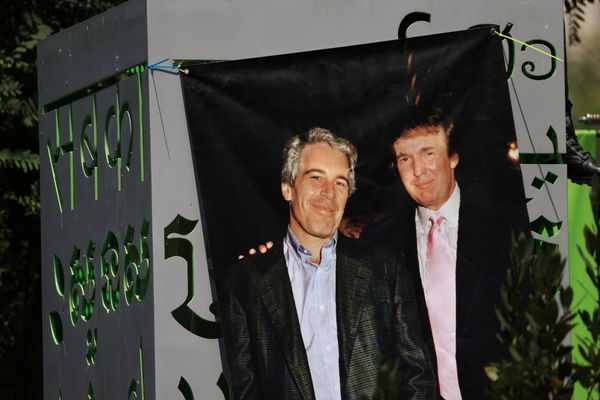
The Justice Department on Tuesday released a previously undisclosed FBI report documenting a tip submitted in October 2020 that included unverified allegations involving then-President Donald Trump and convicted sex trafficker Jeffrey Epstein.

The report was made public as part of the DOJ’s ongoing release of Epstein-related records. It summarizes claims from at least two individuals concerning an alleged incident said to have occurred in the 1990s. The allegations were not verified, and there is no public record indicating that law enforcement substantiated or pursued them.

According to the FBI report, the tip originated from an individual identified as a limousine driver in the Dallas–Fort Worth area. The driver recounted a conversation that took place on Christmas Eve in 1999, during which the driver told a passenger about a prior encounter involving Trump in 1995, when the driver said he transported Trump to Dallas–Fort Worth International Airport.

The driver claimed that during that earlier ride, Trump spoke on a cellphone in a manner the driver described as disturbing. The report states that Trump repeatedly referenced the name “Jeffrey” and made remarks that the driver interpreted as references to abuse involving a girl. The driver said he did not know whom Trump was speaking to or who was being referenced.

After hearing the story, the passenger allegedly reacted strongly. According to the report, the passenger told the driver that Trump and Epstein had raped her. The passenger also described being taken by a woman with “a funny name” to a hotel or similar location. Earlier portions of the report suggest that the woman may have been Ghislaine Maxwell, Epstein’s longtime associate, who is currently serving a 20-year federal sentence for sex trafficking.

The driver reportedly urged the passenger to contact authorities, but she declined, saying she feared for her life. The report later claims that the driver attempted to follow up, only to learn that the passenger had died. The death was described in the report as a suicide, though no additional details were provided.

In a statement released Tuesday, the Department of Justice emphasized that the claims contained in the documents are unproven.

“The Department of Justice has officially released nearly 30,000 more pages of documents related to Jeffrey Epstein,” the statement said. “Some of these documents contain untrue and sensationalist claims made against President Trump that were submitted to the FBI right before the 2020 election. To be clear: the claims are unfounded and false.”

The DOJ said it released the documents to comply with transparency requirements and emphasized that legally required protections for Epstein’s victims remain in place.

The allegations described in the FBI report bear some similarity to claims made in lawsuits filed in 2016 by a woman identified as “Jane Doe,” who accused Trump and Epstein of raping her when she was 13 years old. Those lawsuits were later withdrawn or dismissed, and Trump’s attorneys denied the claims as “categorically untrue.”

Documents show FBI received explosive tip naming Trump and Epstein

JD Vance’s Navy SEAL appearance prompts criticism amid shifting GOP polls

Vice President JD Vance drew criticism this week after publicly boasting about completing a 90-minute training session with Navy SEALs, an episode that sparked ridicule online and prompted sharp commentary from political observers.

In an op-ed published Tuesday in The New Republic, journalist Edith Olmsted characterized Vance’s appearance with the elite military unit as performative, describing it as a “cosplaying adventure.” Olmsted questioned the timing of the high-profile display, suggesting it may have been motivated by recent political pressures, including shifting poll numbers and the vice president’s efforts to consolidate support within conservative circles.

Shortly after completing the training session at Naval Base Coronado in California, Vance posted on social media that he planned to share photos from the experience. Online reaction to the announcement was swift, with critics mocking the spectacle. Vance later followed through, posting several images showing him jogging, carrying a heavy log, and climbing an obstacle-course cargo net alongside service members.

The following day, Vance appeared to lean into the criticism by reposting one of the photos — this time edited to replace his face with a viral meme version of himself — and captioned it simply, “Fixed it.”

Despite the self-deprecating gesture, Olmsted argued that the display was unlikely to achieve what she suggested was Vance’s broader objective: appealing to online hyper-masculine political subcultures sometimes referred to as the “manosphere.”

“No, JD Vance will not be our first ‘Chad’ president,” Olmsted wrote.

The episode comes as Vance remains a leading contender among potential Republican presidential hopefuls for 2028. However, recent polling suggests his support may be softening. A survey conducted by AtlasIntel found that fewer than 47% of Republican voters currently list Vance as their top choice, down from 54.6% in September.

JD Vance’s Navy SEAL appearance prompts criticism amid shifting GOP polls

Trump dismisses Epstein files backlash as critics say DOJ missed legal deadline

President Donald Trump’s response to the release of court-ordered Jeffrey Epstein files suggests he is operating in an “alternate reality,” according to a USA Today column by Chris Brennan.

Brennan pointed to Trump’s public comments downplaying the controversy, including remarks such as “I thought that was finished” and claims that there was “tremendous backlash” because images were being released of people who “really had nothing to do with Epstein.”

While Trump was correct that the document release has triggered public outrage, Brennan argued that the anger is not directed at the individuals named — but at the Department of Justice itself. Congress passed a law in November requiring the full release of the Epstein files by Dec. 19, a deadline the DOJ failed to meet.

“Trump was right that the Epstein files have prompted a backlash,” Brennan wrote. “But that anger is directed at the Department of Justice for not obeying the law.”

Trump has sought to portray the controversy as a partisan attack driven by “mostly Democrats and a couple of bad Republicans.” Brennan noted that this claim conflicts with the voting record: nearly every Republican in both the House and Senate voted alongside Democrats in favor of the legislation mandating the release of the files. Trump ultimately signed the bill into law on Nov. 19, after months of reportedly pressuring Republicans to abandon their support — an effort that became increasingly untenable as Epstein survivors testified before Congress.

The issue resurfaced this week with the release of additional documents, including an alleged letter from Epstein to disgraced sports doctor Larry Nassar that names Trump as a companion of underage girls. The Department of Justice has stated that the letter is not authentic.

Brennan contrasted Trump’s reaction with that of former President Bill Clinton, who also had documented social ties to Epstein. Clinton spokesperson Ángel Ureña criticized the DOJ for selectively releasing materials while failing to comply with the law.

“Someone or something is being protected,” Ureña said in a public statement, adding, “We need no such protection.”

Trump dismisses Epstein files backlash as critics say DOJ missed legal deadline

Epstein received “I have a female for him” call days before reported Trump messages

Jeffrey Epstein received a troubling phone message in 2004 from an unidentified caller stating, “I have a female for him,” according to newly released Justice Department documents. The message was recorded just days before Epstein reportedly received calls from Donald Trump during a high-stakes bidding war over a luxury Florida property.

The timing of the messages was highlighted Friday by retired journalism professor and former prosecutor Seth Abramson, who said their proximity raises unresolved questions about Epstein’s activities during that period.

“As a former investigator, I would have questions,” Abramson wrote on X. “In the same week Epstein and Trump were reportedly playing phone tag and Trump wanted a significant favor, Epstein received a message saying someone had a woman for him.”

The handwritten note containing the unidentified caller’s message was dated Nov. 8, 2004, and addressed to “J.E.,” an apparent reference to Epstein. While the caller’s name was redacted by the Justice Department, the message itself was left unredacted in the latest release of thousands of Epstein-related files.

In July, The Palm Beach Post reported that phone messages documenting calls from Trump to Epstein were discovered during a 2005 police raid on Epstein’s Palm Beach home. Those notes included Trump’s name and phone number and were dated between Nov. 11 and Nov. 20, 2004 — days after the unidentified message referencing a woman.

At the time, Trump and Epstein were competing to purchase a 43,000-square-foot waterfront estate in Palm Beach. Trump ultimately won the bidding war, acquiring the property for more than $41 million.

Trump is not facing criminal charges related to Epstein, nor has he been accused of wrongdoing in connection with the newly released documents.

Epstein received “I have a female for him” call days before reported Trump messages

Alex Jones warns Trump is mishandling Epstein files and walking into a political trap

Far-right conspiracy theorist and InfoWars host Alex Jones is warning that President Donald Trump is mishandling the release of Justice Department files related to Jeffrey Epstein—and, in Jones’ view, playing directly into the hands of Democrats.

Speaking on his program Friday, Jones described the Epstein files rollout as a “disaster” for Trump, arguing that partial disclosures and redactions have created political vulnerabilities rather than putting the issue to rest. Jones claimed Democrats are selectively using the material to tie Trump to Epstein-era imagery while avoiding broader disclosures that could implicate other powerful figures.

Jones alleged that Democrats released only a small subset of the material—out of what he said were tens of thousands of files—to frame Trump in a damaging light, regardless of context. While Jones acknowledged that some claims circulating in the media have been quickly debunked, he argued that the political damage persists because of how the issue is being handled.

According to Jones, Trump now faces a stark choice: fully release the information and allow consequences to fall where they may, or continue limiting disclosures and risk ongoing political fallout. Jones warned that dismissing the Epstein controversy outright—as Trump has done at times by comparing it to “Russiagate”—is angering voters already frustrated by economic conditions.

Jones also claimed that Democrats are preparing to make the Epstein files a major political issue, predicting hearings and prolonged scrutiny. In his telling, Democrats are less interested in full transparency than in maximizing political leverage, while Trump, he said, is underestimating the strategic implications.

Although Jones’ commentary is known for its conspiratorial framing and inflammatory language, his remarks underscore how the Epstein files continue to reverberate across the political spectrum. As questions remain about what material has been released, what remains sealed, and why, the controversy shows little sign of fading—posing ongoing challenges for the Trump administration as it navigates public trust, transparency, and political pressure.

Alex Jones warns Trump is mishandling Epstein files and walking into a political trap

GOP rift emerges as Mike Johnson blocks ACA subsidy extension vote

House Speaker Mike Johnson is drawing a firm line against action on health care this year, refusing to advance legislation that would extend enhanced Affordable Care Act subsidies set to expire and potentially raise premiums for millions of Americans. But his stance is fueling growing frustration among vulnerable House Republicans, some of whom are openly considering breaking with party leadership to force a vote.

According to Axios, several swing-district GOP lawmakers facing tough reelection fights believe inaction on the subsidies could carry serious political consequences. While the House is scheduled to vote on a Republican-backed health care package this week, an extension of ACA subsidies is not expected to be included, leaving moderates searching for alternative paths.

House Democrats are pushing a three-year extension and have launched a discharge petition to bring the measure directly to the floor without Johnson’s approval. No Republicans have formally signed on yet, but a handful—including Reps. Mike Lawler of New York, Brian Fitzpatrick of Pennsylvania, and Kevin Kiley of California—have not ruled out doing so. Lawler sharply criticized Johnson’s refusal to allow a vote, calling it “political malpractice.”

Other vulnerable Republicans remain hesitant, citing the slim chances the proposal would survive the Senate, where GOP lawmakers recently blocked a similar plan. Meanwhile, President Donald Trump, who briefly floated the idea of supporting a subsidy extension before backing off under pressure from House leadership, is now staying on the sidelines.

As the subsidy deadline approaches, the standoff highlights growing tension between Republican leadership and moderates caught between party loyalty and the political risks of rising health care costs for their constituents.

GOP rift emerges as Mike Johnson blocks ACA subsidy extension vote

Hegseth and Sen. Mark Kelly clash in classified briefing over Caribbean boat strikes

Defense Secretary Pete Hegseth clashed sharply with Sen. Mark Kelly during a classified congressional briefing Tuesday, erupting into a heated exchange over the Trump administration’s controversial lethal boat strikes in the Caribbean near Venezuela.

According to Punchbowl News, the confrontation unfolded after Kelly, a Democratic senator from Arizona and a Navy veteran, questioned officials about the ongoing military operations. Hegseth responded by referencing a separate Department of Defense investigation into Kelly, which stems from a video the senator recorded with other Democratic veterans warning active-duty service members not to follow unlawful orders.

Kelly pushed back, interrupting Hegseth and stressing that his question had nothing to do with the video or the investigation. Witnesses described the exchange as tense and combative, with Punchbowl founder Jake Sherman characterizing it as a “heated dust up” inside the briefing room.

The dispute comes as Hegseth faces mounting scrutiny over the Caribbean boat strikes, which some legal experts and lawmakers have warned could constitute war crimes or unlawful killings. Critics have raised alarms about civilian casualties, rules of engagement, and whether proper oversight was in place during the operations.

Adding to the pressure, Kelly’s attorney sent a letter to the Defense Department earlier this week warning that the senator is prepared to pursue legal action if the investigation into him continues, calling it politically motivated and unlawful. The clash highlights escalating tensions between the Pentagon and Democratic lawmakers as questions intensify over accountability, legality, and civilian harm tied to U.S. military actions in the region.

Hegseth and Sen. Mark Kelly clash in classified briefing over Caribbean boat strikes

WWE legend Mick Foley says Trump ties and “cruel” remarks pushed him to leave company

Wrestling legend Mick Foley says he is walking away from WWE after three decades with the company, citing its close ties to Donald Trump and what he described as the president’s increasingly “cruel” rhetoric as the breaking point.

Foley, 60, confirmed he will not renew his WWE contract when it expires in June, according to The Daily Beast. While he said he had been troubled for months by WWE’s longstanding relationship with Trump, Foley pointed to Trump’s recent comments following the deaths of filmmaker Rob Reiner and his wife, Michele, as the final catalyst for his decision.

In a statement, Foley condemned Trump’s remarks as “incredibly cruel” and said he could no longer represent an organization that continues to align itself with someone he believes lacks basic compassion and is steering the country toward authoritarianism. He also referenced Trump-era immigration policies, which Foley described as inhumane, as part of his broader concerns.

Despite his departure, Foley emphasized that the decision was not rooted in bitterness toward WWE itself. He expressed gratitude for his 30-year career with the company and said he would always cherish the opportunities it provided. Still, he made clear that his personal values now outweigh any professional ties.

Ahead of his announcement, Foley publicly criticized Trump on social media, questioning how WWE colleagues could continue to associate with him. The move marks a rare and highly public break between a major wrestling figure and WWE over political and ethical objections.

WWE legend Mick Foley says Trump ties and “cruel” remarks pushed him to leave company

Jeffrey Epstein’s ex-girlfriend reveals how he manipulated women for power and control

In a rare public account, Jeffrey Epstein’s former girlfriend Patricia Schmidt has offered a detailed glimpse into her relationship with the late financier, describing how he used intimacy and emotional manipulation to maintain control and extract social and professional advantage.

Schmidt, who was 23 and working at Bear Stearns when she first met Epstein in 1987, shared excerpts from her personal diaries with The New York Times Magazine and spoke publicly for the first time about their time together. The diary entries chronicle their interactions throughout the late 1980s, revealing a relationship marked by power imbalances, deception, and psychological control.

According to Schmidt, Epstein frequently lied, including to his longtime girlfriend Eva Andersson, and placed Schmidt in uncomfortable situations to assert dominance and reinforce her lower status in his life. She recalled moments that felt like deliberate power plays, designed to remind her that he was in control and that she was replaceable.

The diaries also describe how Epstein alternated between physical intimacy and emotional distance, behavior Schmidt later recognized as manipulative. In one instance, she wrote about feeling guilty after mentioning that another man was interested in her—an exchange that ended with Schmidt blaming herself, despite Epstein’s dismissive and controlling response.

Taken together, Schmidt’s account illustrates how Epstein leveraged relationships “for connections, for money and for social capital,” leaving her—and others—questioning their own worth while he maintained the upper hand.

Jeffrey Epstein’s ex-girlfriend reveals how he manipulated women for power and control

Charlie Kirk’s widow sidesteps call to condemn Trump rhetoric at CBS town hall

Erika Kirk, the widow of slain conservative commentator Charlie Kirk, faced an emotional and pointed question during a CBS News town hall on Saturday night when a Utah student urged her to condemn violent political rhetoric from President Donald Trump. The question came from Hunter Kozak, the last person to speak to Kirk before his assassination at a campus event. Kozak acknowledged Erika Kirk’s calls for peace but pressed her to use her platform to urge Trump — whom he described as “the most powerful and influential person on earth” — to lower the temperature surrounding political violence.

Asked directly whether she would condemn Trump’s rhetoric, Erika Kirk declined to single out the president, instead emphasizing her personal opposition to violence and shifting the focus to family and individual responsibility. “No, I will never agree with political violence,” she said, adding that what people absorb from the outside world can influence behavior. Her response, while reiterating a rejection of violence, stopped short of addressing Trump’s specific statements, highlighting the ongoing tension over political rhetoric in the aftermath of her husband’s killing.

Charlie Kirk’s widow sidesteps call to condemn Trump rhetoric at CBS town hall

DOJ weighs rare federal charges in Charlie Kirk killing, sparking prosecutor backlash

State and federal prosecutors are clashing over reports that the Justice Department under President Donald Trump is weighing unprecedented federal charges in the killing of conservative activist Charlie Kirk. Although the suspect already faces serious state charges, including aggravated murder, DOJ officials are reportedly exploring whether to frame the attack as an “anti-Christian hate crime,” a move that has drawn sharp internal resistance. According to NBC News, career prosecutors argue the legal theory is deeply flawed and unlikely to hold up in court, noting that available evidence suggests the suspect targeted Kirk over his political rhetoric rather than his religious identity.

DOJ weighs rare federal charges in Charlie Kirk killing, sparking prosecutor backlash

Leaked memo reveals VA plan to cut up to 35,000 jobs, raising fears of longer care delays

A leaked Veterans Affairs memo reveals plans for major staffing reductions that could further strain an already overburdened health care system serving millions of veterans. Under the leadership of VA Secretary Doug Collins, the department is preparing to cut as many as 35,000 positions, many of them currently vacant, according to reporting by The Washington Post. The Veterans Health Administration has instructed managers to cancel thousands of job openings, including roles for doctors, nurses, and support staff — a move employees warn will worsen wait times and limit access to care for former service members.

The proposed cuts come on top of roughly 30,000 positions already eliminated and could shrink the VA health care workforce by about 10 percent, reducing staffing levels to as few as 372,000 employees. Union officials and frontline workers say the reductions risk pushing the system past its breaking point. “The VA has been chronically understaffed for years,” said Thomas Dargon Jr. of the American Federation of Government Employees, while Colorado VA nurse Sharda Fornarino warned staff are being asked to “do more with less.” The staffing overhaul is expected to coincide with a broader reorganization that may also reduce the VA’s regional office structure overseeing hospitals and medical centers nationwide.

Leaked memo reveals VA plan to cut up to 35,000 jobs, raising fears of longer care delays

Ghislaine Maxwell may be angling for Trump pardon after prison transfer, reporter says

Ghislaine Maxwell, the longtime associate of disgraced financier and convicted sex trafficker Jeffrey Epstein, may be positioning herself for a presidential pardon after receiving what critics describe as preferential treatment in federal prison. Maxwell was recently transferred to a minimum-security prison camp in Texas following an unusual interview with the Justice Department in which she reportedly sought to distance President Donald Trump from Epstein’s crimes. The move has raised eyebrows among legal observers and advocates for Epstein’s victims, particularly as no administration officials have ruled out the possibility of a sentence commutation or pardon.

Speaking with MSNBC’s Ali Velshi, Miami Herald investigative reporter Julie Brown said Maxwell appears to be calculating her next steps carefully. Brown suggested Maxwell is acutely aware of the sensitive information she possesses about Epstein’s network and those who enabled his crimes. If a pardon does not materialize, Brown speculated that Maxwell could begin leaking damaging details as leverage, signaling to powerful figures that she “knows where the skeletons are buried.” According to Brown, Maxwell may be waiting to see how the political and legal landscape evolves before making her most aggressive move.

Ghislaine Maxwell may be angling for Trump pardon after prison transfer, reporter says

Gene Simmons blasts Congress, demands AM/FM radio pay royalties to musicians

Gene Simmons, legendary frontman and bassist for KISS, sharply criticized lawmakers on Tuesday while testifying before the Senate Judiciary Subcommittee on Intellectual Property.

Speaking in support of the American Music Fairness Act — a bill that would require AM/FM radio stations to pay royalties for sound recordings — Simmons argued that a decades-old loophole has deprived generations of American artists, from Bing Crosby to Elvis Presley, of fair compensation whenever their songs are played on the radio.

Calling the situation “an injustice that has been going on for many decades,” he urged Congress to act, noting that even countries with authoritarian governments compensate performers more fairly than the U.S.

“Our children are tomorrow’s stars,” he said. “If you work hard and get to the top, you shouldn’t get nothing. That’s not the American way. If you are against this bill, you are un-American.”

Simmons’ push echoes past bipartisan efforts, including President Donald Trump’s 2018 Music Modernization Act, which updated copyright laws for the streaming era.

Watch the video below:

roar-assets-auto.rbl.ms