Four billion miles from the sun floats Ultima Thule, an icy celestial body that NASA scientists announced Wednesday is aptly shaped like a giant snowman.
The first detailed images beamed back from the US agency's New Horizons mission allowed scientists to confidently determine the body was formed when two spheres, or "lobes," slowly gravitated towards each other until they stuck together -- a major scientific discovery.
The New Horizons spacecraft on Tuesday flew past Ultima Thule, which was discovered via telescope in 2014 and is the farthest and potentially oldest cosmic body ever observed by a spacecraft.
Before that flyby, the only image scientists had was a blurry one showing Ultima Thule's oblong shape, resembling something like a bowling pin or a peanut.
NASA/Johns Hopkins University Applied Physics Laboratory/Southwest Research Institute/AFP / HO NASA rang in the New Year with a historic flyby of the farthest, and quite possibly the oldest, cosmic body ever explored by humankind -- a tiny, distant world called Ultima Thule -- in the hopes of learning more about how planets took shape
"That image is so 2018... Meet Ultima Thule!" said lead investigator Alan Stern, doing little to hide his joy as he revealed a new sharper image of the cosmic body, taken at a distance as close as 17,000 miles (about 27,000 kilometers) with a resolution of 140 meters per pixel.
"That bowling pin is gone -- it's a snowman if anything at all," Stern said during a NASA briefing.
"What this spacecraft and this team accomplished is unprecedented."
Ultima Thule's surface reflects light about as much as "garden variety dirt," he said, as the sun's rays are 1,600 times fainter there than on Earth.
The body is roughly 19 miles long and completes its own rotation in about 15 hours. NASA dubbed the larger lobe Ultima, and the other, which is about three times smaller, Thule.
Carly Howett, another researcher of the mission, noted that "we can definitely say that Ultima Thule is red," perhaps due to irradiation of ice.
CNN intelligence analyst and former CIA operative Bob Baer said on Wednesday that Russia was holding American Paul Whelan hostage, as a 'furious' Vladimir Putin exacted revenge for the arrest of convicted Russian spy Maria Butina.
"I think it's a diplomatic crisis for Trump and this administration," Baer said after host Brianna Keilar noted the State Department had been "tight-lipped" about the arrest. "Frankly I believe this man is a hostage, and so they are asking themselves 'why have the Russians at this point taken in an innocent American and holding him as a spy?' It makes no sense."
Baer also said he didn't think Whelan was a spy.
"I know Russian operations and I know they're run very carefully," he said. "They do not take contractors, send them to Moscow to commit an act of espionage. It doesn't happen."
Keilar noted that Whelan's arrest came two weeks after Butina pled guilty to conspiring against the United States, and asked if there might be some connection. Baer agreed wholeheartedly.
"I think Putin is furious about her," Baer said, laughing at the Russian president's claim that he didn't even know Ms. Butina. "She wasn't an agent so to speak, and she didn't have diplomatic immunity, and she wasn't a proper spy."
"But the relationship with Russian intelligence is tenuous and he's mad about it," he added.
The United States is demanding the immediate return of a retired U.S. Marine detained by Russia on spying charges, and wants an explanation of why he was arrested, U.S. Secretary of State Mike Pompeo said on Wednesday.
Pompeo, in Brasilia for the inauguration of Brazil’s new president, said the U.S. government hoped to gain consular access to Paul Whelan within hours.
“We’ve made clear to the Russians our expectation that we will learn more about the charges, come to understand what it is he’s been accused of and if the detention is not appropriate, we will demand his immediate return,” Pompeo said.
In Moscow, RIA news agency cited a foreign ministry spokesman as saying Russia has allowed consular access to Whelan. Russia’s FSB state security service detained Whelan on Friday and opened a criminal case against him.
The State Department did not immediately confirm that Moscow had provided consular access.
Whelan was visiting Moscow for the wedding of a former fellow Marine and is innocent of the espionage charges against him, his family said on Tuesday.
He had been staying with the wedding party at Moscow’s Metropol hotel when he went missing, his brother, David, said.
“His innocence is undoubted and we trust that his rights will be respected,” Whelan’s family said in a statement released on Twitter on Tuesday.
Russia’s FSB state security service said Whelan had been detained on Friday, but it gave no details of his alleged espionage activities. Under Russian law, espionage can carry a prison sentence of between 10 and 20 years.
David Whelan told CNN that his brother, who had served in Iraq, has been to Russia many times in the past for both work and personal trips, and had been serving as a tour guide for some of the wedding guests. His friends filed a missing persons report in Moscow after his disappearance, his brother said.
He declined to comment on his brother’s work status at the time of his arrest and whether his brother lived in Novi, Michigan, as address records indicate.
BorgWarner, a Michigan-based automotive parts supplier, said Whelan is the “company’s director, global security. He is responsible for overseeing security at our facilities in Auburn Hills, Michigan, and at other company locations around the world.”
BUTINA CASE
Daniel Hoffman, a former CIA Moscow station chief, said it was “possible, even likely” that Russian President Vladimir Putin had ordered Whelan’s arrest to set up an exchange for Maria Butina, a Russian citizen who pleaded guilty on Dec. 13 to acting as an agent tasked with influencing U.S. conservative groups.
Russia says Butina was forced to make a false confession about being a Russian agent.
Putin told U.S. President Donald Trump in a letter on Sunday that Moscow was ready for dialogue on a “wide-ranging agenda,” the Kremlin said following a series of failed attempts to hold a new summit.
At the end of November, Trump canceled a planned meeting with Putin on the sidelines of a G20 summit in Argentina, citing tensions about Russian forces opening fire on Ukrainian navy boats and then seizing them.
Trump’s relations with Putin have been under a microscope as a result of U.S. Special Counsel Robert Mueller’s investigation into alleged Russian meddling in the 2016 U.S. presidential election and possible collusion with the Trump campaign.
Moscow has denied intervening in the election. Trump has said there was no collusion and characterized Mueller’s probe as a witch hunt.
Russia’s relations with the United States plummeted when Moscow annexed the Crimean peninsula from Ukraine in 2014. Washington and Western allies have imposed a broad range of sanctions on Russian officials, companies and banks.
Additional reporting by Vladimir Soldatkin in Moscow and Barbara Goldberg in New York; Editing by Jonathan Oatis
Acting U.S. Defense Secretary Patrick Shanahan told civilian leaders of the U.S. military on Wednesday to remember “China, China, China” even as America fights militants in places like Syria and Afghanistan, a U.S. defense official said.
The comments underscoring Shanahan’s focus on China came during his first meeting with secretaries of the U.S. military branches since taking over for Jim Mattis, who resigned as defense secretary over policy differences with President Donald Trump.
The U.S. official, who spoke on condition of anonymity, did not elaborate on Shanahan’s views on China. But other officials have described him as a driving force behind the Pentagon’s toughening stance toward Beijing, which includes branding China as a strategic competitor in the 2018 National Defense Strategy.
Shanahan, a former Boeing executive, had been Mattis’ deputy and it was unclear how long he will remain in the role of acting secretary. Trump could face an uphill battle finding someone who can be confirmed by the Senate in the wake of Mattis’ acrimonious departure.
Several candidates long rumored to be interested in the post had indicated in recent days, some publicly, that they did not want to succeed Mattis, who was respected in the Pentagon and enjoyed bipartisan support when he departed on Dec. 31.
Trump acknowledged that Shanahan could be in the job for a long time and the Pentagon appeared to be taking steps to prepare for an extended tenure — including naming someone to fulfill the role of deputy defense secretary provisionally.
David Norquist, the Pentagon’s comptroller, will perform the duties of the deputy as well as retain his current title.
Shanahan, in a statement on Tuesday shortly after taking over the job, said he looked “forward to working with President Trump to carry out his vision” which includes a surprise withdrawal from Syria and an expected drawdown in Afghanistan, America’s longest war.
Shanahan, best known for his focus on internal Pentagon reform and his private-sector experience, had spent three decades at Boeing and was the general manager for the 787 Dreamliner passenger jet before he joined the Pentagon last year.
“Acting Secretary Shanahan told the team to focus on the national defense strategy and to keep this effort moving forward,” the U.S. defense official told reporters.
“While we’re focused on ongoing operations, acting Secretary Shanahan told the team to remember China, China, China.”
Shanahan was due to participate in a cabinet meeting later on Wednesday.
Reporting by Phil Stewart and Idrees Ali; Editing by Chizu Nomiyama and David Gregorio
A federal judge has dismissed lawsuits seeking to hold Facebook, Google and Twitter liable to victims of the December 2015 mass shooting in San Bernardino, California for letting Islamic State flourish on their social media platforms.
In a decision late Monday, U.S. Magistrate Judge Laurel Beeler in San Francisco said the attack, which killed 14 people and injured 22 others, was not the direct result of the companies’ alleged providing of resources to Islamic State.
“A contrary conclusion poses boundless litigation risk and is not tenable given how interconnected communication services are with modern economic and social life,” the judge wrote.
Beeler also found no liability for aiding and abetting terrorism under the 2016 Justice Against Sponsors of Terrorism Act (JASTA), finding allegations only that the companies were “generally aware” that Islamic State used their services.
The plaintiffs included victims and relatives of victims of the Dec. 2, 2015 attack at a government building by Syed Farook, 28, a U.S.-born son of Pakistani immigrants, and his wife Tashfeen Malik, 29, a native of Pakistan.
Authorities have said the couple was inspired by Islamist militants. Both died soon after the attack in a police shootout. Islamic State said Farook and Malik were two of its followers.
Beeler dismissed the lawsuits with prejudice, meaning they cannot be filed again, citing other courts’ rejections of similar claims in other cases.
Federal law gives internet companies broad immunity from liability for content posted by users.
Keith Altman, a lawyer for the plaintiffs, on Wednesday said the decision was “not a surprise,” and that issues including the impact of JASTA and what constitutes direct liability should be addressed at the appellate level.
Facebook, Google and Twitter did not immediately respond to requests for comment. Google is a unit of Alphabet Inc.
Altman plans on Jan. 15 to ask the federal appeals court in Cincinnati to revive a similar lawsuit against the three companies over the June 2016 shooting at the Pulse nightclub in Orlando, Florida, which killed 49 people.
The shooter, New York-born Omar Mateen, who was later killed by police, had pledged allegiance to Islamic State’s leader.
The cases are Clayborn et al v Twitter Inc et al, U.S. District Court, Northern District of California, No. 17-06894; and Megalla et al v Twitter et al in the same court, No. 18-00543.
Reporting by Jonathan Stempel in New York; Editing by David Gregorio
TerraPower LLC, a nuclear energy venture chaired by Microsoft Corp co-founder Bill Gates, is seeking a new partner for early-stage trials of its technology after new U.S. rules forced it to abandon an agreement with China, company officials told the Wall Street Journal.
TerraPower reached an agreement with state-owned China National Nuclear Corp in 2017 to build an experimental nuclear reactor south of Beijing. But Gates wrote in an essay published late last week that TerraPower is unlikely to follow through on its plans in the face of new U.S. restrictions on technology deals with China.
The Bellevue, Washington-based company is now unsure which country it will work with to conduct trials of its technology, which is designed to use depleted uranium as fuel for nuclear reactors in a bid to improve safety and costs, company officials told the Journal.
“We’re regrouping,” Chief Executive Chris Levesque told the Journal in an interview. “Maybe we can find another partner.”
The U.S. Department of Energy in October announced new restrictions on nuclear deals with China, in keeping with a broader plan by the Trump administration to limit China’s ability to access U.S-made technologies it considers to be of strategic importance.
Gates, who co-founded TerraPower, said in his essay that regulations in the United States are currently too restrictive to allow the reactor prototype to be built domestically.
Reporting by Carl O'Donnell; editing by Jonathan Oatis
Unlike the effervescent bubbles that stream to the top of champagne flutes on New Year’s Eve, what I call brain bubbles are far from celebratory. These bubbles are metaphorical rather than physical, and they distort the stream of reality processed by our brains. Like a real estate bubble that reflects an inflated perception of home values, a brain bubble twists your perception of the world around you. And when either of these bubbles bursts, the results can be devastating.
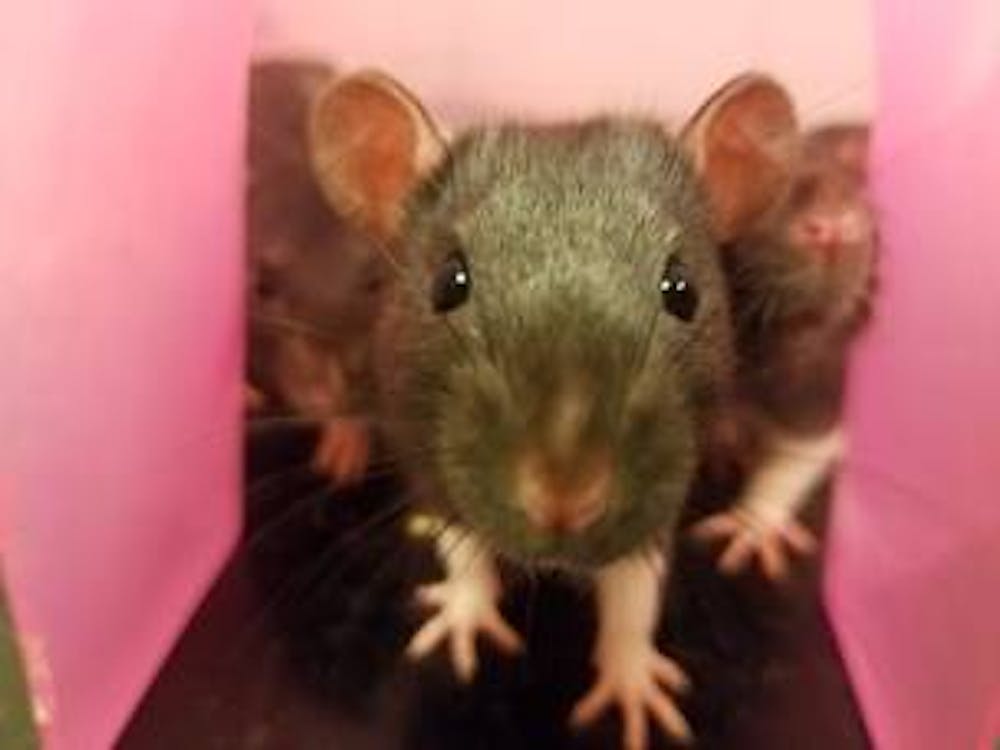
Problems arise when distorted information results in flawed decisions that negatively affect our lives. As a neuroscientist who’s worked closely with laboratory rats for over three decades, I’ve gleaned from them a few good strategies people can use to burst brain bubbles and enhance well-being in the year ahead. Rat brains are small but have the same general areas and neurochemicals we have, so these rodents are valuable laboratory models for human behavior.
Plugging in can mean you’re untethered from reality.
Psychoactive drug use, aspects of privilege and poverty, psychiatric illness and, in some cases, religious and political beliefs can all create brain bubbles. Even daily excursions to the virtual world of apps, social media and cybergames sever our connections to concrete aspects of the real world and let distorting brain bubbles develop.
This is especially problematic for children’s brains that are still developing. An ongoing National Institutes of Health study suggests that two hours of screen time each day distorts language and thinking abilities in these junior digital users.
As our attention is hijacked by the closest screen while a Roomba cleans the floor and Alexa orders pizza to be delivered to the front door, what’s left for our brains to do? Sure, we likely face cognitive challenges at work each day, but human brains are built for sophisticated and complex activity – even though we’re often lulled into mindlessly scrolling through a virtual feed. In fact, a brain area often associated with reward and pleasure, the nucleus accumbens, is smaller in people who spend more time checking Facebook posts on their smartphones.
Obviously, some of these distortion-generating circumstances are out of our control. But a heightened awareness of our authentic world can move us toward a more reality-based, well-grounded brain – free of those brain bubbles.
The rats that my students and I train in our studies to physically work for coveted treats (Froot Loops cereal is a favorite) develop healthier emotional responses than the animals we call “trust-fund rats” because they’re merely given their sweet rewards. The harder-working rats have healthier stress hormone levels and engage in more sophisticated search strategies when they encounter a surprise challenge – such as when we move their expected Froot Loop rewards. They’re more persistent as they spend time trying to solve the problem, rather than quickly giving up and walking away.
So whereas one popular New Year’s resolution involves saving up to build financial capital, we can keep our brains in peak condition for the year ahead by building up experiential capital. Real-world experiences represent the best currency for our brain circuits, providing neural security for our future decisions in the coming year. Spending time engaged in hobbiessuch as knitting or gardening, for example, with complex movements and rich sensory experiences, provides a valuable yield for our brains.
Looking forward to it can be just as good as the experience.
When the calendar flips to a new year, it’s common to reflect on the past and look to the future. According to the neuroscience literature, this anticipation could be one of the most pleasurable – and healthy – tasks our brains engage in all year long.
Dopamine is the poster neurotransmitter for the cognitive endeavor of anticipating. Traditionally known for its role in pleasure, this neurochemical system can be hijacked by psychoactive drugs such as cocaine that serve as potent creators of reality-distorting brain bubbles.
Rodent research provides fascinating insights here, however. Researchers use sophisticated techniques to measure dopamine activity as rats press laboratory levers that reward them with drugs. Surprisingly, this neurochemical system surges when the animal merely anticipates taking the drug as it approaches the drug lever, as well as when the drug is actually infused into the brain.
Anticipating a new start and a new year may be a scaled-down version of approaching the experimental lever for a hit of cocaine – a legal and healthy dopamine dose in this case. You can try to keep this emotional high going through the year by amping up the anticipation in your daily life: Focus more on delayed than immediate gratification. Buying and planning for experiences is more satisfying than material purchases. Mapping out a menu, shopping for ingredients and cooking a meal provides more dopamine time – and brain-engaging behaviors – than nuking a frozen meal and eating it three minutes later.
Rats in the lab suggest active minds are better able to overcome stress and surprise adversity.
Another way to enhance our well-being through the year is to gain some sense of control over the stress in our lives. Real-time and authentic interactions with the environment can help us gain a sense of control over the inevitable uncertainty and unpredictability we face each day.
I see evidence of this in the lab. When I furnish my rats’ housing with natural elements such as dirt, hollowed-out logs and rocks, they’re busier and less likely to sit around the edge of the cage than animals in boring empty cages. After building their experiential capital, these enriched rats have healthier stress and resilience hormone profiles and engage in bolder behaviors, such as diving to the bottom of swim tanks instead of staying on the top doing their best impression of a dog paddle. As I watch these animals in various tasks, they appear to be gaining control over the challenges they encounter.
Perhaps this is why retired U.S. four-star admiral William McRaven emphasized simple life strategies in his 2014 University of Texas commencement speech, declaring that “if you want to change your life and maybe the world, start off by making your bed.” Then, even if you have a terrible day, you will come home to a made bed, evidence that you had a positive impact in at least one area of your life that day.
Lessons from the laboratory rats also provide potential explanations for some of my own personal favorite New Year’s Day traditions – including the mundane tasks of cooking a familiar southern meal, cleaning my closet and watching HGTV’s Dream House giveaway with my family while we all declare what we would do if we won the beautiful house. Move in? Sell it? Make it an Airbnb rental?
Thinking like a neuroscientist, I know that cooking and cleaning are active endeavors with clear outcomes that allow me to gain a small sense of control, decreasing stress hormones. Playfully anticipating winning a new home taps into that feel-good dopamine system as we contemplate more serious options for the new year. And, perhaps the best neurochemical hit of all is the spike in oxytocin, the neurochemical involved in positive social connections, as I spend time with loved ones.
Although it’s common to turn to pharmaceuticals to lift our emotions and improve our mental health, the emotional benefits of many New Year’s traditions remind me that basic responses can serve as what I call “behaviorceuticals” that enhance well-being. New Year’s resolutions may take the form of New Year’s Rx’s as we consider healthy lifestyle choices for the coming year: Shrink those distorting brain bubbles and build realistic connections to enrich life’s simple pleasures.
NASA rang in the New Year on Tuesday with a historic flyby of the farthest, and quite possibly the oldest, cosmic body ever explored by humankind -- a tiny, distant world called Ultima Thule -- in the hopes of learning more about how planets took shape.
A series of anxiously awaited "phone home" signals arrived after 10:30 am (1530 GMT), indicating that the spacecraft had made it, intact, through the risky, high-speed encounter.
"We have a healthy spacecraft," said mission operations manager Alice Bowman, as cheers erupted in the control rooms at Johns Hopkins Applied Physics Laboratory in Maryland.
About 10 hours earlier, NASA celebrated the New Year's flyby, as mission managers -- alongside kids dressed in space costumes -- blew party horns to mark the moment at 12:33 am (0533 GMT) when the New Horizons spacecraft aimed its cameras at the space rock four billion miles (6.4 billion kilometers) away in a dark and frigid region of space known as the Kuiper Belt.
More images and data will start arriving later Tuesday, offering scientists the first up-close look at an ancient building block of planets, Bowman said.
The flyby took place about a billion miles beyond Pluto, which was until now the most faraway world ever visited up close by a spacecraft.
Hurtling through space at a speed of 32,000 miles per hour, the spacecraft made its closest approach within 2,200 miles of the surface of Ultima Thule.
"This is a night none of us are going to forget," said Queen guitarist Brian May -- who also holds an advanced degree in astrophysics -- and who recorded a solo track to honor the spacecraft and its spirit of exploration.
Lead planetary scientist for New Horizons, Alan Stern, said Ultima Thule is unique because it is a relic from the early days of the solar system and could provide answers about the origins of other planets.
"The object is in such a deep freeze that it is perfectly preserved from its original formation," he said.
"Everything we are going to learn about Ultima -- from its composition to its geology to how it was originally assembled, whether it has satellites and an atmosphere and those kinds of things -- are going to teach us about the original formation conditions of objects in the solar system."
- Coming into focus -
AFP / Jonathan WALTER NASA's New Horizons spacecraft is heading for a January 1 flyby of Ultima Thule, an icy object in the Kuiper Belt on the outer limits of the solar system
Scientists are not sure exactly what Ultima Thule (pronounced TOO-lee) looks like -- whether it is cratered or smooth, or even if it is a single object or a cluster.
But a new, though still blurry image released Tuesday showed its oblong shape resembles something like a bowling pin or a peanut, and its dimensions are about 22 miles long and nine miles wide (35 by 15 kilometers).
Stern said his bet is that the object is a single body, not two pieces orbiting each other, but he would wait until more, clearer images arrive Wednesday to say for sure.
The highest resolution images are expected in February, Stern said.
Ultima Thule was discovered in 2014 with the help of the Hubble Space Telescope.
Scientists decided to study Ultima Thule with New Horizons after the spaceship, which launched in 2006, completed its main mission of flying by Pluto in 2015, returning the most detailed images ever taken of the dwarf planet.
Stern said the goal was to take images of Ultima that are three times the resolution the team had for Pluto.
- Frontier of planetary science -
Ultima Thule is named for a mythical, far-northern island in medieval literature and cartography, according to NASA.
Project scientist Hal Weaver of the Johns Hopkins Applied Physics Laboratory said humans didn't even know the Kuiper Belt -- a vast ring of relics from the formation days of the solar system -- existed until the 1990s.
"This is the frontier of planetary science," said Weaver.
Another NASA spacecraft, OSIRIS-REx, also set a new record on Monday by entering orbit around the asteroid Bennu, the smallest cosmic object -- about 1,600 feet (500 meters) in diameter -- ever circled by a spacecraft.
NASA said the orbit some 70 million miles (110 million kilometers) away marks "a leap for humankind" because no spacecraft has ever "circled so close to such a small space object -- one with barely enough gravity to keep a vehicle in a stable orbit."
The twin planetary feats coincided with the 50th anniversary of the first time humans ever explored another world, when US astronauts orbited the Moon aboard Apollo 8 in December, 1968.
"As you celebrate New Year's Day, cast an eye upward and think for a moment about the amazing things our country and our species can do when we set our minds to it," Stern wrote in the New York Times on Monday.
Brazil's new far-right President Jair Bolsonaro declared a crusade against crime, corruption and leftwing ideology as he took office Tuesday for a four-year term at the helm of Latin America's biggest nation.
In his first public speech wearing the presidential sash, Boslonaro said Brazil will "start to free itself of socialism" and "political correctness," breaking with policies brought in under decades of leftist rule.
The 63-year-old former paratrooper and veteran lawmaker received swift congratulations via Twitter from US President Donald Trump, with whom he shares a similar, brash style and outlook.
"Congratulations to President @jairbolsonaro who just made a great inauguration speech - the U.S.A. is with you!" Trump wrote.
Bolsonaro responded by saying: "I truly appreciate your words of encouragement. Together, under God's protection, we shall bring prosperity and progress to our people!"
In his inauguration speech before Brazil's Congress, Bolsonaro called for "a true national pact" to restore his country's lackluster economy, "without ideological bias."
AFP/File / Carl DE SOUZA Brazil's new president has vowed to streamline government and prioritize business interests
While Bolsonaro enjoys sky-high approval ratings, many in Brazil fear his nostalgia for the military dictatorship that reigned from 1964 to 1985, his hardline approach to fighting crime and his record of disparaging women and minorities could herald a harsh shake-up.
Even before being sworn in, Bolsonaro tweeted he would issue a decree easing gun laws to let "good" citizens own firearms to counter armed criminals -- a measure opposed by 61 percent of Brazilians, according to a Datafolha survey.
His promise to extend immunity to security forces who use lethal force against suspected wrongdoers has also sparked unease in a country where some 5,000 people a year are already killed by police.
AFP/File / Carl DE SOUZA The presidential investiture is marked by pomp and high security
In his speech to Congress, Bolsonaro repeatedly hammered leftwing "ideology" that he said had brought Brazil low.
His past remarks made it clear he was referring to policies implemented by the Workers Party, which governed between 2003 and 2016 but ended up reviled for a string of corruption scandals.
Brazil "will return to be a country free of ideological bonds," he said.
He later told a crowd of supporters in front of the presidential palace: "We will re-establish order."
Bolsonaro has already said he will do all he can to challenge the leftist governments of Venezuela and Cuba.
AFP / NELSON ALMEIDA Israel's Prime Minister Benjamin Netanyahu and Boslonaro have talked up their budding "brotherhood"
In a sign of his leanings and alliances, Bolsonaro warmly welcomed Israeli Prime Minister Benjamin Netanyahu to Brazil for his inauguration, and both leaders spoke of their "brotherhood."
Netanyahu said Bolsonaro had assured him Brazil's embassy will be moved to Jerusalem.
Bolsonaro also admires Trump, with whom he shares nationalist instincts and a disdain of multilateral organizations. He has vowed to pull Brazil out of a UN global migration pact, and is considering doing the same with the Paris climate accord.
The new leader's open hostility to the left prompted leftwing deputies to spurn his investiture.
Bolsonaro took over the presidency from a center-right figure, Michel Temer, who succeeded the Workers Party Dilma Rousseff -- impeached in 2016 -- but who made little headway with needed fiscal reforms. Temer, Brazil's most unpopular leader ever, faces a number of corruption accusation on leaving office.
Bolsonaro supporters hope their man will do better, politically and economically.
He has promised to govern for all of the country's 210 million Brazilians, though his initial declaration suggests it will be on his terms, as he seeks to remake the country around his agenda.
- 'Change' -
AFP / EVARISTO SA Bolsonaro is an open admirer of US President Donald Trump
While his government, which takes over on Wednesday, features a US-trained free market advocate as economy minister, and a star anti-corruption judge as justice minister, nearly a third of the 22 ministerial posts are held by ex-military men.
There are also concerns for Brazil's extensive and diverse natural environment, with Bolsonaro's pro-business push sidelining preservation -- especially in the Amazon, sometimes called "the lungs of the planet," which is at risk from increasing deforestation.
Bolsonaro, meanwhile, has said his education ministry will stop "Marxist trash" being taught in schools and universities -- another swipe at the Workers Party, which greatly boosted access to education for the poor and blacks.
Tens of thousands of people attended Bolsonaro's inauguration ceremony in Brasilia, which was held under tight security that included warplane patrols, anti-drone technology and multiple crowd barriers.
Precautions were more stringent than in years past, in part because Bolsonaro survived a stabbing attack by a mentally unstable man when he was campaigning for the presidency in September.
"This inauguration is a turning point," said one in the crowd, 36-year-old teacher Mauro Penna. "We are very optimistic -- this time our country is going to change.
Netfilx pulled an episode of the comedy show “Patriot Act with Hasan Minhaj” from its Internet streaming service in Saudi Arabia after kingdom officials complained, multiple media outlets reported Tuesday.
The episode of the news-comedy program in question criticized the country over the slaying of Washington Post journalist Jamal Kashoggi last year at the kingdom’s consulate in Turkey.
Kashoggi had been an outspoken critic of the kingdom and of Crown Prince Mohammed bin Salman, the Financial Times and other media reported. The kingdom has since acknowledged publicly that the reporter, who was a permanent U.S. resident, died in its custody.
Netflix officials were not immediately available for comment and no statement was posted on its official corporate, Facebook or Twitter sites.
A little girl entered the rhinoceros exhibit at a Florida zoo by slipping between two poles, and at least one of the massive pachyderms touched the child with its snout, officials said on Tuesday.
Both the child, a toddler about 2 years old, and her mother were taken to hospitals but it was not immediately clear whether any injuries were related to contact with the 4,500-pound (2,000-kg) animals, zoo officials said.
“According to witnesses, the child stumbled and fell between two of the poles and at this point, the snout of at least one of the rhinoceroses made contact with the child,” zoo spokesman Elliot Zirulnik said in a statement.
The snout refers to the area near the rhino’s mouth, not the horn, zoo spokeswoman Andrea Hill said.
The family was participating in a twice-daily public encounter with the rhinos, in which people pet and touch the animals with a brush at ground level. The exhibit had been functioning since 2009 without incident but has been suspended pending a review of operating procedures, Hill said.
The child was in her father’s grasp when she somehow slipped between poles that are 11 inches (28 cm) apart near where the female rhinos were eating, Hill said. Both parents reached into the pen and were able to retrieve the girl, who had an abrasion on her cheek. The mother complained of arm pain, Hill said.
The zoo is in Melbourne, on the east coast of Florida about 60 miles (100 km) southeast of Orlando.
The girl and her mother were taken to hospitals, Brevard County Fire Rescue said on Twitter. The girl was taken to Arnold Palmer Hospital for Children in Orlando, local media reported. A hospital spokeswoman said she could not comment without the girl’s name, which zoo officials did not provide.
The incident was reminiscent of one in 2016 when small boy climbed into the gorilla enclosure at the Cincinnati Zoo and was grabbed by a gorilla named Harambe. In that case, however, zoo officials shot Harambe dead in order to retrieve the boy.
Reporting by Daniel Trotta; editing by Jonathan Oatis
Honduras will hold talks with Israel, joined by the United States, aimed at opening an embassy in Jerusalem, the countries said on Tuesday, as the small Central American nation looks to follow U.S. President Donald Trump’s much-criticized move.
U.S. Secretary of State Michael Pompeo, Israeli Prime Minister Benjamin Netanyahu and Honduran President Juan Orlando Hernandez held a meeting in the Brazilian capital on the sidelines of the inauguration of right-wing Brazilian President Jair Bolsonaro
The three agreed to hold meetings in the capitals of each country “to advance the decision process to open embassies in both Tegucigalpa and Jerusalem,” as well as “strengthen political relations and coordinate development cooperation in Honduras,” the countries said in a joint statement.
The right-leaning Hernandez is the latest leader to consider following Trump’s decision to move the U.S. embassy from Tel Aviv to the contested city of Jerusalem, which infuriated Palestinians and drew international condemnation.
Hernandez told reporters the trilateral talks represented “an important political alliance.”
Trump has repeatedly threatened to cut off aid to Honduras, a poor nation of less than 10 million people, over caravans of migrants crossing Mexico heading for the U.S. border.
Guatemala, another country seeking closer U.S. ties, quickly joined Trump’s decision and moved its embassy to Jerusalem just two days after the U.S. opened offices in May. Paraguay also followed, but a new government backtracked in September.
Netanyahu said on Sunday that Bolsonaro told him it was a question of “when, not if” Brazil would move its embassy in Israel from Tel Aviv to Jerusalem.
Reporting by Mary Milliken in Brasilia and Gustavo Palencia in Tegucigalpa. Writing by Michael O'Boyle; Editing by Simon Cameron-Moore
On the 60th anniversary of Cuba’s revolution, ruling Communist Party leader Raul Castro blasted the Trump administration for returning to an outdated path of confrontation with the island nation and of intervening in Latin America.
Castro and his late, elder brother Fidel Castro led the rebel band that in 1959 overthrew a U.S.-backed dictator and installed a Communist-run country on the doorstep of the United States, setting the scene for decades of Cold War hostility.
At the time, their revolution inspired leftist movements throughout Latin America, but the celebrations on Tuesday came as the region is shifting rightwards, coinciding with the inauguration of Brazil’s far-right President Jair Bolsonaro.
Some of Cuba’s closest allies, Venezuela and Nicaragua, are mired in political crises, and U.S. President Donald Trump has tightened the decades-old U.S. embargo on the island, after his predecessor, Barack Obama, had sought to normalize relations.
“Once again, the North American government is taking on the path of confrontation with Cuba,” Castro said in the southeastern city of Santiago de Cuba where Fidel Castro proclaimed victory six decades ago.
The speech by Castro, who stepped down as president in April but remains head of the Communist Party until 2021, was part of a solemn, sunset ceremony in a cemetery where both Fidel Castro and independence hero Jose Marti are buried.
“Increasingly, high-ranking officials of this administration are ... trying to blame Cuba for all the region’s ills,” he said, adding that they stemmed instead from “ruthless neoliberal policies”.
Trump’s national security adviser, John Bolton, said in November that Washington would take a tougher line against Cuba, Venezuela and Nicaragua, calling them a “troika of tyranny.”
Clad in military fatigues and cap, the 87-year old Castro said on Tuesday that Cuba had proven throughout six decades of revolution it could not be intimidated by threats. Instead it remained open, he said, to a peaceful and respectful coexistence.
Cuba’s true battle this year was an economic one, he added, reiterating comments made at the national assembly in late December by his successor, President Miguel Diaz-Canel, who announced increased austerity for the fourth year running in 2019 in the face of a cash crunch.
“We need first of all to reduce all non-necessary expenses and to save more,” said Castro.
A decade ago, as president, he introduced a series of reforms to liberalize and boost the centrally planned economy, yet it remains heavily state-dominated and bound in red tape.
A series of external shocks such as a decline in aid from Venezuela and devastation wrought by hurricanes have also dented growth, which is sluggish at best.
Nonetheless, the Cuban revolution is on a secure footing thanks to the transition to a competent younger generation of leaders such as the 58-year old Diaz-Canel, Castro said.
“It is opportune to express the fact that the Cuban Communist Party decidedly backs the words and actions of Diaz-Canel since he took office,” Castro said.
“The revolution has not aged, it remains young,” he said.
Reporting by Sarah Marsh; editing by Jonathan Oatis




 NASA/Johns Hopkins University Applied Physics Laboratory/Southwest Research Institute/AFP / HO NASA rang in the New Year with a historic flyby of the farthest, and quite possibly the oldest, cosmic body ever explored by humankind -- a tiny, distant world called Ultima Thule -- in the hopes of learning more about how planets took shape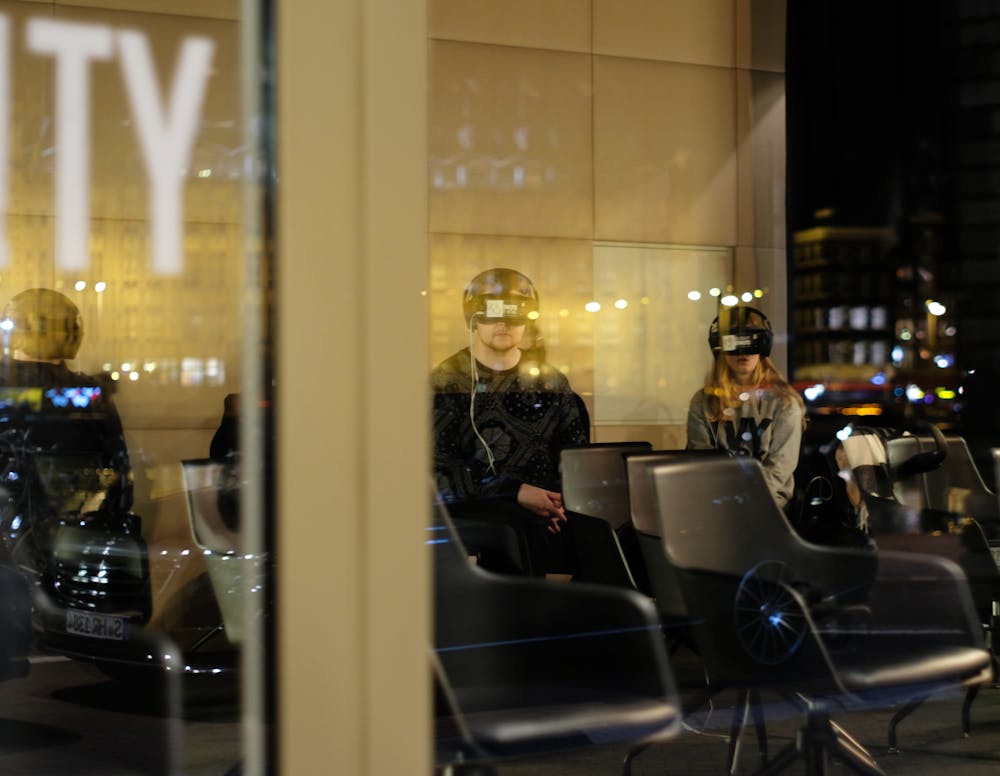



 AFP / Jonathan WALTER
  AFP/File / Carl DE SOUZA
  AFP/File / Carl DE SOUZA
  AFP / NELSON ALMEIDA
  AFP / EVARISTO SA