In the White House this week, Trump's the boss. Melania Trump, that is.
After two years of being American politics's biggest enigma, the first lady has broken cover with her startling demand to get a senior advisor to the president thrown out.
First ladies often wield power -- they have the ear of the president, and more, after all -- but they rarely intervene so directly. And never publicly.
So Melania's demand on Tuesday that deputy national security advisor Mira Ricardel step aside gave the White House a shake.
Donald Trump's entire leadership style is based on him being the center of attention.
Suddenly, Washington's focus was on his wife and her declaration that Ricardel "no longer deserves the honor of serving in this White House."
What would he do?
A little more than 24 hours passed before the answer came: Ricardel was leaving the White House for an unspecified job somewhere else.
Ricardel wasn't some minor player. She was deputy to the powerful national security advisor John Bolton.
Her sin? Reportedly rowing with Melania Trump's staff over seating allocations on the plane taking the first lady on an Africa tour in October, as well as being blamed for negative news coverage.
- 'Jaw dropping' -
"It's not unusual" for a first lady to weigh in on a president's staff, said Kate Andersen Brower, author of "First Women: The Grace and Power of America's Modern First Ladies."
AFP/File / SAUL LOEBMelania Trump's African tour in October 2028 served to bring her out of her husband's shadow, but still left many mysteries about the first lady
She recalled a famous incident when Nancy Reagan got Ronald Reagan's chief of staff Don Regan axed. But that was done behind the scenes.
"It is unprecedented for a first lady to issue a statement demanding that her husband fire someone. That is jaw dropping," Brower said.
Melania Trump's move was notable not just for how high up and how decisively she struck but the timing.
Bolton, one of the most powerful members of Trump's inner circle, had reportedly been trying to shield his deputy. So Melania Trump waited until Bolton was safely away on a trip in Asia.
- Who is Melania? -
Brower calls Melania Trump "private to the point of being reclusive."
That has left others to define her, often based on absurdly tiny scraps of information.
Some claim to detect cryptic signals in which she seeks rescue from her marriage. Or that she is primed to rebel against a man who went through two marriages before finding the Slovenian former fashion model 23 years his junior.
AFP/File / Mandel NganMelania Trump's decision to wear a jacket inscribed with the phrase "I really don't care do U?" while visiting detained immigrants on the Mexican border completely threw the public and media
This year, Melania Trump began putting some of her own markers down.
Even then, though, confusion reigned.
Her decision to wear a jacket inscribed with the phrase "I really don't care do U?" while visiting detained immigrants on the Mexican border completely threw the public and media.
Speculation erupted that Melania was trolling her husband over his hardline anti-immigrant policies. Later she stated that she was actually aiming at hostile media coverage.
In October, she toured four African countries on a voyage ostensibly to promote her anti-bullying and child welfare campaign "Be Best."
Clearly the trip clearly also served to bring her out of her husband's shadow, but it still left many mysteries about the first lady's views and character -- a point neatly illustrated when she posed in front of the original Sphinx in Egypt.
- Cool v bombastic -
Returning from Africa, Melania Trump made a splash with a lengthy ABC television interview in October in which she continued to shape her public profile.
AFP/File / Alain JOCARDQuestions are being raised about how a more assertive Melania Trump can work in an institution so thoroughly dominated by her husband
Pushing back against the idea of there being any division between her and Donald Trump, she said that infidelity allegations against him were not "a concern."
She instead blamed the media for the controversies around her, calling herself "the most bullied person in the world."
This week, she transformed her image again, looking not so much persecuted as powerful.
But questions are being raised about how a more assertive Melania Trump can work in an institution so thoroughly dominated by her husband.
CNN claimed Thursday that Trump was angered by the Ricardel row because "he was made to look like a boss-around husband."
And Katherine Jellison, a historian specializing in first ladies at Ohio University, warns that Melania risks losing her best attribute -- her coolness "in contrast to her husband's bombastic personality."
"She might end up being more of a hindrance than an asset to her husband," Jellison said. "In the current environment, the Trump family can use all the good will they can get."
Facebook announced Thursday it is creating an independent body to make potentially precedent-setting calls on what content should be yanked from the social network.
The announcement came as Facebook reported it has ramped up its ability to quickly detect "hate speech" and other posts violating community rules, with the leading social network under pressure from regulators in various countries and activists to root out abusive and inappropriate content.
"I have come to believe that we shouldn't be making so many decisions about free expression and safety on our own," Facebook chief executive Mark Zuckerberg said in a media briefing.
Content spied by artificial intelligence software or reported by users is now reviewed by an internal system that Facebook has been ramping up.
An independent body to be constituted in the coming year will act as a "higher court" of sorts, considering appeals of content removal decisions made by the social network, Zuckerberg said.
The composition of the appeals body along with how to keep it independent while remaining in line with Facebook principles and policies was to be determined in the coming year.
Facebook also planned next year to begin releasing content removal summaries quarterly in a tempo on par with earnings reports, according to executives.
"We have made progress getting hate, bullying and terrorism off our network," Zuckerberg said.
"It's about finding the right balance between giving people a voice and keeping people safe."
Challenges faced by the California-based social network include the fact that people naturally tend to engage with more sensational content that, while perhaps at the edge of violating Facebook policies, are unhealthy for civilized discourse, according to Zuckerberg.
"We see this in cable news and tabloids too," Zuckerberg said.
"A lot of our work is to insure that borderline content that comes close to violating our content gets less attention not more."
Bullying represents a tougher challenge to AI systems, because it tends to be personal and subjective. For example, someone might playfully mock a friend in a post that could also be interpreted to be mean.
Detecting bullying or hate can also require understanding of the gamut of languages used at Facebook, along with cultural contexts.
"We are getting better at proactively identifying violating content before anyone reports it, specifically for hate speech and violence and graphic content," Facebook said in the new transparency report.
"But, there are still areas where we have more work to do."
Facebook said that since its last transparency report, the amount of hate speech detected proactively, before anyone reported it, has more than doubled.
"The single biggest improvement comes from AI and machine learning," said product management vice president Guy Rosen.
Israeli Prime Minister Benjamin Netanyahu was battling to keep his government afloat on Friday after Defense Minister Avigdor Lieberman quit over a ceasefire deal for Gaza.
Left with a single seat majority in parliament after the walkout by Lieberman and his hawkish Yisrael Beitenu party, most media saw little way for Netanyahu to avoid calling a snap general election.
The veteran prime minister was expected to hold crunch talks later on Friday with his other main right-wing rival, Education Minister Naftali Bennett, whose religious nationalist Jewish Home party has threatened to quit unless he is given Lieberman's job.
The Gaza ceasefire, which ended the worst flare-up between Israel and the territory's Islamist rulers Hamas since a 2014 war, faced its first major test later on Friday as Palestinian demonstrators were expected to gather along the border for mass protests that have triggered deadly violence in previous weeks.
The deal has already drawn heavy criticism, however, in Israeli communities near the border that faced barrages of rockets earlier this week.
AFP / MENAHEM KAHANA Hundreds of Israelis join a demonstration in Tel Aviv against the Gaza ceasefire despite a promise from Prime Minister Benjamin Netanyahu of more public money for emergency services in communities near the border
Hundreds joined a demonstration in Tel Aviv on Thursday despite a promise from Netanyahu of more public money for emergency services.
Pro-Netanyahu freesheet Yisrael Hayom daily predicted that the prime minister would do all he could to avoid a general election while his hard-won security credentials were at issue.
"Holding elections with the fiasco in Gaza in the background cracks the image of the ultimate leader that he has built over the course of years," it said.
"The chances of stopping this speeding train appear impossible, but Netanyahu is still trying."
The eight lawmakers of Bennett's far-right Jewish Home party are not the only threat to Netaynahu's razor-thin parliamentary majority.
AFP / L. Saubadu/K. Tian, dmk/vl/jmc/fh The Israeli parliament
Finance Minister Moshe Kahlon, whose centre-right Kulanu party hold 10 seats, has reportedly told Netanyahu that a snap election is necessary to provide a stable government to keep the economy on track.
But Yisrael Hayom said Bennett was key to efforts to avoid an early election and could yet prove Netanyahu's political salvation.
"Naftali Bennett as defence minister and Netanyahu as prime minister could together project stability and embark on a coordinated offensive against anyone who gets in the way," it said.
In a speech on Thursday, Bennett did not reiterate the resignation threat but made his case for why he should get the defence post.
"The most dangerous thing for the state of Israel is that we begin to think that there is no solution to terrorism, to terrorists, to missiles," he said.
"There is a solution. When Israel wants to win, we will win."
AFP / MENAHEM KAHANA Israeli Education Minister Naftali Bennett, one of Prime Minister Benjamin Netanyahu's main right-wing rivals, gives a speech in Ramat Gan on November 15, 2018
There were no official details of when or where Bennett would meet Netanyahu on Friday or what public statements if any would be made.
Hundreds of people demonstrated in Tel Aviv on Thursday evening calling for tougher action against Hamas which has portrayed the ceasefire and Lieberman's resignation as a victory.
Netanyahu -- flanked by Kahlon, Interior Minister Arie Deri and army top brass -- met with the leaders of Israeli border communities.
He briefed them on military efforts to quell Hamas attacks and also announced a 500 million shekel ($139 million, 119 million euro) two-year package to improve emergency medical and social services, a government statement said.
With a major domestic political battle on his hands, Netanyahu cancelled a planned two-day visit to Austria next week for a conference on anti-semitism and anti-Zionism.
There has long been speculation that Netanyahu would call a general election before its scheduled date of November 2019.
Police have recommended he be charged in two separate corruption cases and the attorney general is expected to announce in the coming months whether to put him on trial.
Analysts say the prime minister would be better positioned to fight any charges with a fresh mandate from the voters.
But he would not have chosen to go the polls with voters' attention focused on the Gaza ceasefire and his rivals' efforts to outbid his security credentials.
The former top national security aide to Dick Cheney has fallen under scrutiny by special counsel Robert Mueller.
Two sources with knowledge of the probe say Mueller is examining possibly suspicious contacts by John Hannah, who served as a Cheney adviser and worked on Trump’s State Department transition team, reported The Daily Beast.
“Mueller might be opening another front here,” said John McLaughlin, former acting director of the CIA. “His mandate is to examine Russian collusion, but there’s the clause in his mandate that’s very open-ended—to the effect of ‘and any associated matters.’ It could be a separate line of inquiry about efforts to influence the election by foreigners.”
Hannah has not been accused of any wrongdoing, but investigators are interested in his interactions with Lebanese-American businessman George Nader, who arranged meetings between Trump associates and foreign dignitaries, and Joel Zamel, a social media expert with deep ties to Israeli intelligence.
Hannah, Nader and Zamel reportedly met with a top Saudi general shortly before President Donald Trump was inaugurated to discuss plans to overthrow the government of Iran.
Nader worked with Hannah on Iraq policy during the Bush administration, and Hannah is listed as an advisory council for Zamel's tech firm Wikistrat.
Hannah now serves as a senior counselor for the Foundation for Defense of Democracies, a pro-Israel think tank highly critical of Iran.
Nader and Zamel have each been questioned by Mueller's team and are reportedly cooperating with the Russiainvestigation.
When people hear the word “Jonestown,” they usually think of horror and death.
Located in the South American country of Guyana, the Peoples Temple Agricultural Project was supposed to be the religious group’s “promised land.” In 1977 almost 1,000 Americans had moved to Jonestown, as it was called, hoping to create a new life.
Instead, tragedy struck. When U.S. Rep. Leo J. Ryan of California and three journalists attempted to leave after a visit to the community, a group of Jonestown residents assassinated them, fearing that negative reports would destroy their communal project.
A collective murder-suicide followed, a ritual that had been rehearsed on several occasions.
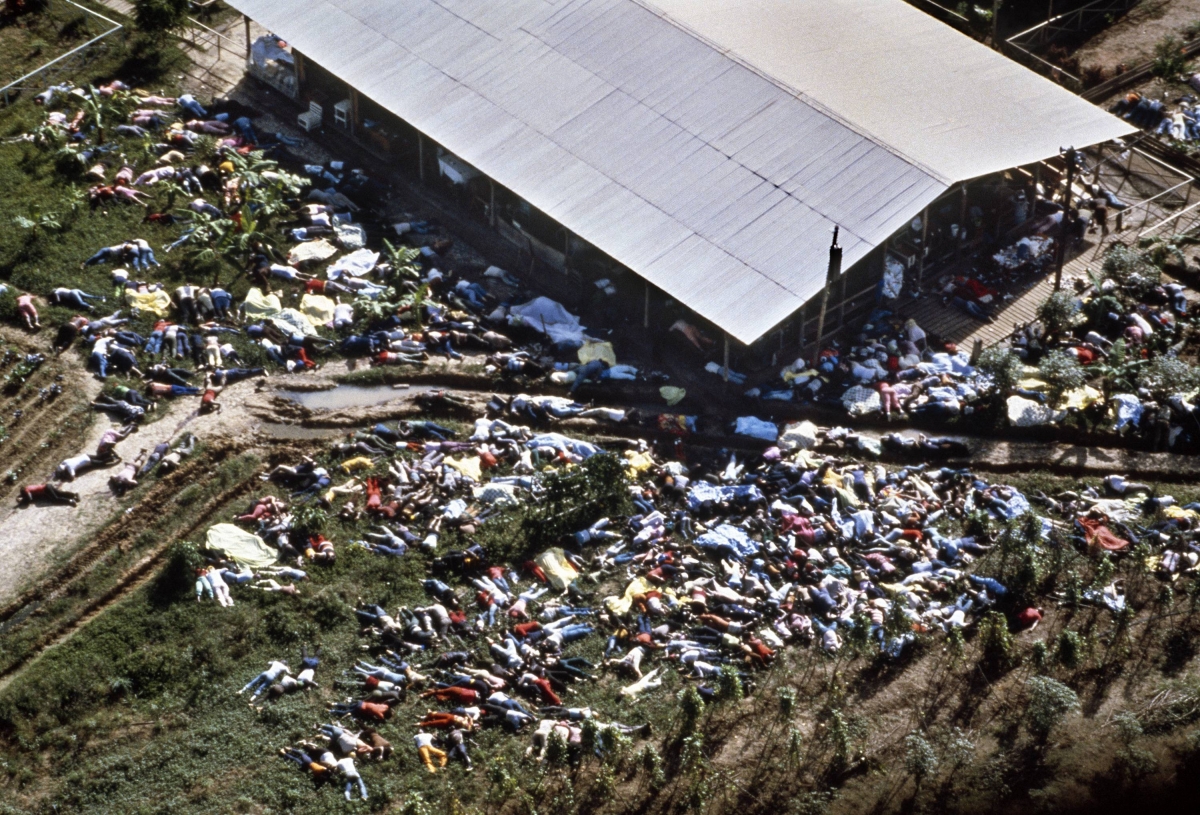
This time it was no rehearsal. On Nov. 18, 1978, more than 900 men, women and children died, including my two sisters, Carolyn Layton and Annie Moore, and my nephew, Kimo Prokes.
Photojournalist David Hume Kennerly’s aerial photograph of a landscape of brightly clothed lifeless bodies captures the magnitude of the disaster of that day.
In the 40 years since the tragedy, most stories, books, films and scholarship have tended to focus on the leader of Peoples Temple, Jim Jones, and the community that his followers attempted to carve out of the dense jungles of northwest Guyana. They might highlight the dangers of cults or the hazards of blind obedience.
But by fixating on the tragedy – and on the Jones of Jonestown – we miss the larger story of the Temple. We lose sight of a significant social movement that mobilized thousands of activists to change the world in ways small and large, from offering legal services to people too poor to afford a lawyer, to campaigning against apartheid.
It is a disservice to the lives, labors and aspirations of those who died to simply focus on their deaths.
I know that what happened on Nov. 18, 1978 doesn’t tell the complete story of my own family’s involvement – neither what happened in the years leading up to that dreadful day, nor the four decades that followed.
The impulse to learn the whole story prompted my husband, Fielding McGehee, and me to create the website Alternative Considerations of Jonestown and Peoples Temple in 1998 – a large digital archive documenting the movement primarily in its own words through documents, reports and audiotapes. This, in turn, led the Special Collections Department at San Diego State University to develop the Peoples Temple Collection.
The problems with Jonestown are self-evident.
But that single event shouldn’t define the movement.
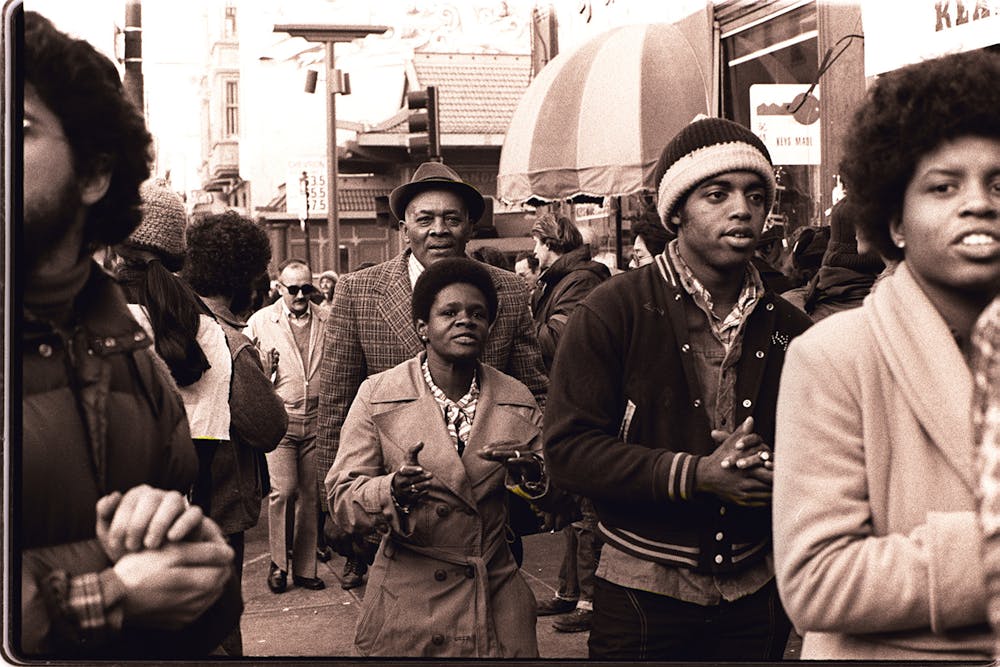
In a deeply segregated city, it was one of the few places where black and white working-class congregants sat together in church on a Sunday morning. Its members provided various kinds of assistance to the poor – food, clothing, housing, legal advice – and the church and its pastor, Jim Jones, gained a reputation for fostering racial integration.
Marceline Jones, the wife of Jim Jones, administered licensed care homes.
Investigative journalist Jeff Guinn has described the ways early incarnations of the Temple served the people of Indianapolis. The income generated through licensed care homes, operated by Jim Jones’ wife, Marceline Jones, subsidized The Free Restaurant, a cafeteria where anyone could eat at no cost.
Church members also mobilized to promote desegregation efforts at local restaurants and businesses, and the Temple formed an employment service that placed African-Americans in a number of entry-level positions.
While it’s the kind of action some churches engage in today, it was innovative – even radical – for the 1950s.
In 1962, Jones had a prophetic vision of a nuclear catastrophe, so he urged his Indiana congregation to relocate to Northern California.
Scholars suspect that an Esquire magazine article – which listed nine parts of the world that would be safe in the event of nuclear war, and included a region of Northern California – gave Jones the idea for the move.
In the mid-1960s, more than 80 members of the group packed up and headed west together.
Under the guidance of Marceline, the Temple acquired a number of properties in the Redwood Valley and established nine residential care facilities for the elderly, six homes for foster children, and Happy Acres, a state-licensed ranch for mentally disabled adults. In addition, Temple families took in others needing assistance through informal networks.
Sociologist of religion John R. Hall has studied the various ways the Temple raised money at that time. The care homes were profitable, as were other moneymaking ventures; there was a small food truck the Temple operated, and members were also able to sell grapes from the Temple’s vineyards to Parducci Wine Cellars.
These fundraising schemes, along with more traditional donations and tithes, helped underwrite free services.
A food truck was one of several moneymaking operations the Temple ran in Northern California.
It was at this time that young, college-educated white adults began to trickle in. They used their skills as teachers and social workers to attract more members to a movement they saw as preaching the social gospel of redistribution of wealth.
My younger sister, Annie, seemed to be drawn to the Temple’s ethos of diversity and equality.
“There is the largest group of people I have ever seen who are concerned about the world and are fighting for truth and justice for the world,” she wrote in a 1972 letter to me. “And all the people have come from such different backgrounds, every color, every age, every income group.”
Rebecca Moore reads from a letter her sister Annie Moore wrote to her, in which Annie explains why she joined Peoples Temple.
But the core constituency comprised thousands of urban African-Americans, as the Temple expanded south to San Francisco, and eventually to Los Angeles.
Frequently depicted as poor and dispossessed, these new African-American recruits actually came from the working and professional classes: They were teachers, postal clerks, civil service employees, domestics, military veterans, laborers and more.
The promise of racial equality and social activism operating within a Christian context enticed them. The Temple’s revolutionary politics and substantial programs sold them.
Regardless of the motives of their leader, the followers wholeheartedly believed in the possibility of change.
During an era that witnessed the collapse of the civil rights movement, the decimation of the Black Panther Party and the assassinations of black activists, the group was especially committed to a program of racial reconciliation.
But even the Temple couldn’t escape structural racism, as “eight revolutionaries” pointed out in a letter to Jim Jones in 1973. These eight young adults left the organization, in part, because they watched new white members advance into leadership ahead of experienced, older black members.
Nevertheless, throughout the movement’s history, African-Americans and whites lived and worked side by side. It was one of the few long-term experiments in American interracial communalism, along with Father Divine’s Peace Mission Movement, which Jim Jones emulated.
Members saw themselves as battling on the front lines against colonialism, as they listened to guests from Pan-African organizations and from the recently deposed Marxist Chilean government speak in their San Francisco gatherings. They joined coalition groups that were agitating against the Bakke case, which ruled that race-based admissions quotas were unconstitutional, and demonstrating in support of the Wilmington Ten, 10 African Americans who were wrongfully convicted of arson in North Carolina.
Members of Peoples Temple join the picket line in an anti-eviction protest at San Francisco’s International Hotel in January 1977.
Members and nonmembers received a variety of free social services: rental assistance, funds for shopping trips, health exams, legal assistance and student scholarships. By pooling their resources, in addition to filling the collection plates, members received more in goods and services than they might have earned on their own. They called it “apostolic socialism.”
Living communally not only saved money, but also built solidarity. Although communal housing existed in Redwood Valley, it was greatly expanded in San Francisco. Entire apartment buildings in the city were dedicated to accommodating unrelated Temple members – many of them senior citizens – who lived with and cared for one another.
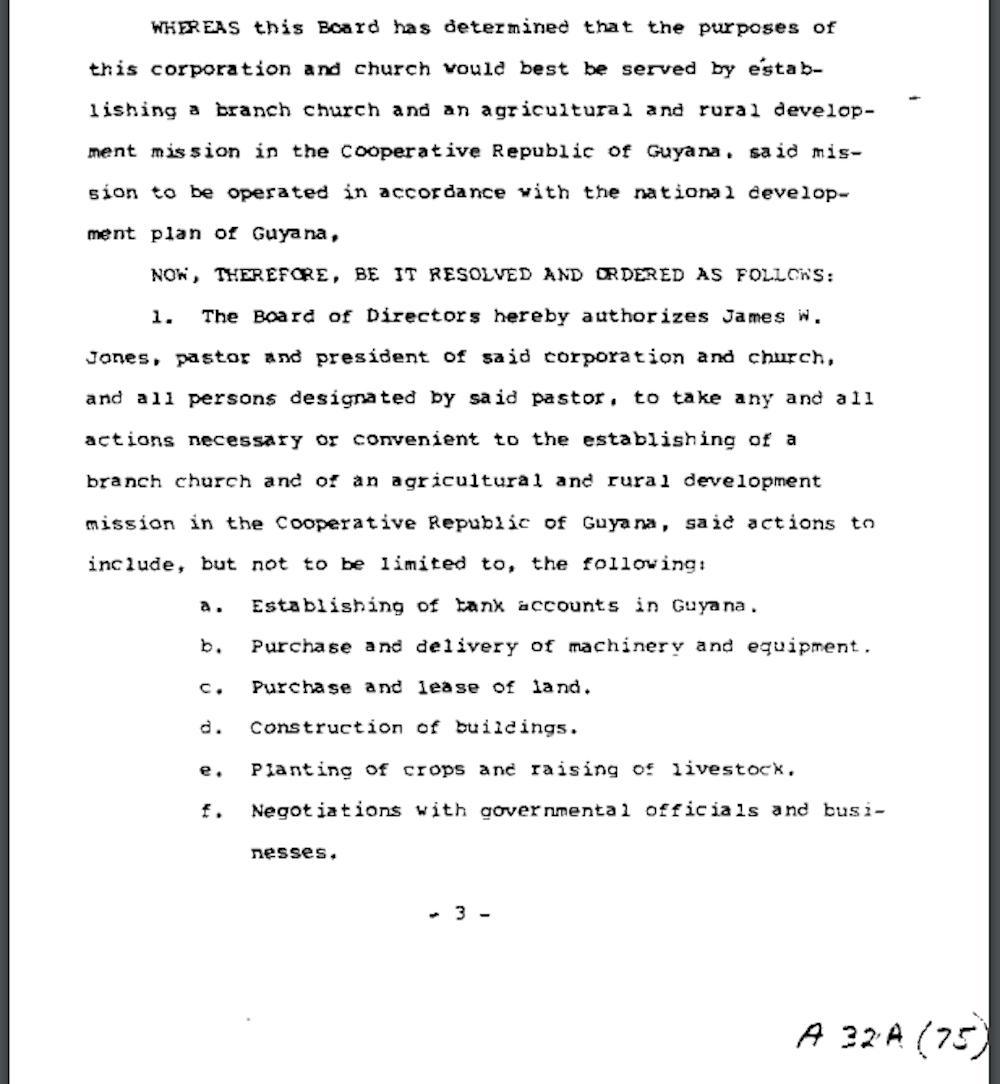
As early as 1974, a few hardy volunteers began clearing land for an agricultural settlement in the Northwest District of Guyana, near the disputed border with Venezuela.
A page from the October 1973 resolution establishing an agricultural mission in Guyana.
While the ostensible reason was to “provide food for the hungry,” the real reason was to create a community where they could escape the racism and injustice they experienced in the United States.
Even as they toiled to clear hundreds of acres of jungle, build roads and construct housing, the first settlers were filled with hope, freedom and a sense of possibility.
“My memories from 1974 till the beginning of ‘78 are many and full of love, and to this day they still bring tears to my eyes,” recalled Peoples Temple member Mike Touchette, who was working on a boat in the Caribbean as the deaths were occurring. “Not only the memories of building of Jonestown, but the friendships and camaraderie we had before 1978 is beyond words.”
But Jim Jones arrived 1977, and an influx of 1,000 immigrants – including more than 300 children and 200 senior citizens – followed. The situation changed. Conditions were primitive, and though the residents of Jonestown were no worse off than their Guyanese neighbors, it was a far cry from the lives they were used to.
The community of Jonestown is best understood as a small town in need of infrastructure, or, as one visitor described it, an “unfinished construction site.”
Everything – sidewalks, sanitation, housing, water, electricity, food production, livestock care, schools, libraries, meal preparation, laundry, security – had to be developed from scratch. Everyone but the youngest of children needed to pitch in to develop and maintain the community.
Jonestown residents work at the community sawmill.
Undoubtedly it was both; it depends on who – and when – you ask.
But then there is the final day, which seems to erase all the promise of the Temple’s utopian experiment. It’s easy to identify the elements that contributed to the final tragedy: the anti-democratic hierarchy, the violence used against members, the culture of secrecy, the racism, and the inability to question the leader.
The failures are apparent. But the successes?
For years, Peoples Temple provided decent housing for hundreds of church members; it ran care homes for hundreds of mentally ill or disabled individuals; and it created a social and political space for African-Americans and whites to live and work together in California and in Guyana.
Most importantly, it mobilized thousands of people yearning for a just society.
To focus on the leader is to overlook the basic decency and genuine idealism of the members. Jim Jones would have accomplished nothing without the people of Peoples Temple. They were the activists, the foot soldiers, the letter writers, the demonstrators, the organizers.
Don Beck, a former Temple member, has written that the legacy of the movement is “to cherish the people and remember the goodness that brought us together.”
In the face of all those bodies, that’s a difficult thing to do.
But it’s worth a try.
Ronnie Beikman, Tommy Kice and David George, three boys who lived – and died – at Jonestown.
Two top leaders of Cambodia's Khmer Rouge regime were found guilty of genocide on Friday, in a landmark ruling almost 40 years after the fall of a brutal regime that presided over the deaths of a quarter of the population.
The Khmer Rouge's former head of state Khieu Samphan, 87, and "Brother Number 2" Nuon Chea, 92, are the two most senior living members of the ultra-Maoist group that seized control of Cambodia from 1975-1979.
The reign of terror led by "Brother Number 1" Pol Pot left some two million Cambodians dead from overwork, starvation and mass executions but Friday's ruling was the first to acknowledge a genocide.
The defendants were previously handed life sentences in 2014 over the violent and forced evacuation of Phnom Penh in April 1975.
But Friday's judgement at the Extraordinary Chambers in the Courts of Cambodia (ECCC) also found Nuon Chea guilty of genocide against the ethnic Vietnamese and Cham Muslim minority group, among a litany of other crimes.
"The chamber finds that Nuon Chea exercised ultimate decision-making power with Pol Pot and... therefore finds Nuon Chea is responsible as a superior for all the crimes," presiding judge Nil Nonn said.
"This includes the crime of genocide by killing members of Cham ethnic and religious group."
AFP / GAL ROMA, Laurence CHU
Khieu Samphan was also found guilty of genocide against ethnic Vietnamese, though not against the Cham, he added.
Both parties were sentenced to "life in prison", merging the two sentences into a single term, Nil Nonn said.
Hundreds of people, including dozens of Cham Muslims and Buddhist monks, were bussed into the tribunal, located in the outskirts of Phnom Penh to attend the hearing.
- Cambodia's 'Nuremberg' -
The events covered by the verdict span the four years of the Pol Pot regime, and include extensive crimes against humanity.
"The verdict is essentially the Nuremberg judgement for the ECCC and thus carries very significant weight for Cambodia, international criminal justice, and the annals of history," said David Scheffer, who served as the UN secretary general's special expert on the Khmer Rouge trials from 2012 until last month.
The revolutionaries who tried to recreate Buddhist-majority Cambodia in line with their vision of an agrarian Marxist utopia attempted to abolish class and religious distinctions by force.
ECCC/AFP / NHET SOK HENGKhmer Rouge former head of state Khieu Samphan, 87 -- seen here in 2017 -- and his co-defendant are the two most senior living members of the group
Forced marriages, rape, the treatment of Buddhists, and atrocities that were carried out in prisons and work sites throughout the country fall under the additional list of charges -- which the two men were found guilty of as well.
"(The verdict) will affirm the collective humanity of the victims and give recognition to the horrible suffering," said Youk Chhang, head of the Documentation Center of Cambodia -- a research organisation that has provided the court with evidence.
It could also "provide a sense of closure to a horrible chapter in Cambodian history".
The hybrid court, which uses a mix of Cambodian and international law, was created with the backing of the UN in 2006 to try senior Khmer Rouge leaders.
Only three people have been convicted by the court, which has cost more than $300 million.
Former Khmer Rouge foreign minister Ieng Sary and his wife died without facing justice, while "Brother Number 1" Pol Pot passed away in 1998.
The number of allegations against Nuon Chea and Khieu Samphan was so vast the court split the trials into a series of smaller hearings in 2011.
AFP / NICOLAS ASFOURIThe nearly four-year reign of terror by the Khmer Rouge left around two million Cambodians dead from overwork, starvation and mass executions
Many believe Friday's decision will be the last for the tribunal, which has been marred by allegations of political interference.
Prime Minister Hun Sen -- himself a former Khmer Rouge cadre -- has repeatedly warned he would not allow more investigations to proceed, citing vague threats to stability.
The court has launched investigations into four more Khmer Rouge cadres, though one was dismissed in February 2017, highlighting the difficulties of bringing lower level members of the brutal regime to justice.
Scheffer said that "challenges of efficiency, funding, and access to evidence" are issues that plague all international criminal courts, but argued the successes of the Cambodian tribunal should not be diminished.
Before he pulled the trigger that ended the life of rock icon John Lennon nearly 38 years ago, his killer remembers being in a “tug of war” with himself over what he was about to do, and even praying for a way out of carrying out his plan.
In the end, the compulsion to gain notoriety by killing one of the most famous people in the world proved too powerful, a remorseful Mark David Chapman told parole officials at an Aug. 22 hearing that ended in a decision not to release him.
“I was too far in,” Chapman, 63, said in a transcript of the hearing released on Thursday by the New York Department of Corrections and Community Supervision.
On the afternoon of Dec. 8, 1980, the former member of the Beatles left his New York apartment building on his way to a recording session when he stopped to autograph an album that Chapman, then a pudgy, bespectacled 25-year-old, was holding. It is a moment captured in a now-eerie photograph.
“I do remember having the thought of, hey, you have got the album now, look at this, he signed it, just go home, but there was no way I was going to go home,” Chapman, now leaner and grayer, told the parole board.
But when Lennon returned to his home on Manhattan’s Upper West Side later that evening, Chapman was waiting for him, and fired a five-shot .38 caliber Charter Arms revolver at him, hitting him four times in front of his wife Yoko Ono.
The assassination-style murder stunned the music world, a generation that had grown up with “Beatlemania” and the city the British-born musician had adopted as his home.
From his confinement at the Wende Correctional Facility in Alden, New York, just east of Buffalo, Chapman told the two parole board members at his hearing his sense of shame grows constantly over the murder, the impact of which he realizes will outlive him.
“A hundred years from now they’re going to remember him and they’re going to remember him as someone that’s been murdered and it’s going to be negative,” he said.
Chapman was sentenced to 20 years to life after pleading guilty to second-degree murder in 1981. He has been denied parole 10 times since 2000 and will not have another opportunity for release until August 2020.
At the hearing, Chapman said he was a changed man who would welcome being released but said he didn’t deserve it.
He denied a suggestion by a parole board member that he had channeled his obsession with fame into a ministry he runs with his wife that supplies Christian pamphlets to churches in Africa.
“I honestly have to disagree with that,” he said. “We’re sustaining Jesus.”
Reporting by Peter Szekely in New York; Editing by Chris Reese
North Korea will deport a U.S. citizen detained since October after he entered illegally from China and told his captors he was manipulated by the U.S. Central Intelligence Agency (CIA), the North Korean state news agency reported on Friday.
The KCNA news agency identified the American as Bruce Byron Lowrance and said he was detained on Oct. 16 as he crossed the border.
An American man of the same name was deported from South Korea in November 2017 after being found wandering near the heavily fortified border with North Korea, but there was no immediate confirmation of the identity of the man held by North Korea.
A spokesman for the U.S. Embassy in the South Korean capital, Seoul, said he could not comment because of privacy concerns, and would not confirm whether American officials were aware that the man was being held.
Using the initials of North Korea’s official name, the Democratic People’s Republic of Korea, KCNA said the man had told his captors “he illegally entered the DPRK under the manipulation of the CIA”.
North Korea’s treatment of U.S. citizens has been highly contentious at times over the years, sometimes holding them as prisoners for extended periods.
In 2017, the death of American student Otto Warmbier after having been detained in North Korea for 17 months helped spark nearly a year of tension as Pyongyang and Washington traded threats of war.
In September 2017, the United States imposed a ban on its citizens traveling to North Korea, with a few exceptions for humanitarian workers or journalists.
In May, North Korea released three American prisoners and handed them over to U.S. Secretary of State Mike Pompeo, clearing a major obstacle ahead of an unprecedented summit between President Donald Trump and North Korean leader Kim Jong Un in June.
Talks between North Korea and the United States have since stalled, with North Korean state media announcing on Friday that Kim had inspected the test of an unidentified new weapon for the first time in almost a year.
Reporting by Josh Smith; Editing by Clarence Fernandez, Robert Birsel
A captain with the U.S. forces deployed in San Diego to fortify the southern border said he does not view the migrants from a Central American caravan amassing in Mexico as “enemies” after President Donald Trump described them as an “invasion.”
“I don’t consider them a military enemy, nor does the United States military doing this job. They’re simply migrants in a caravan moving towards the United States to seek a better way of life and asylum,” Army Captain Guster Cunningham III told Reuters on Thursday.
“The military is not classifying them as the enemy in any way, shape or form,” said Cunningham, who is the spokesman for the Special Purpose Marine Ground- Air Taskforce 7.
Trump’s politically charged decision to send troops to the border with Mexico came ahead of U.S. congressional elections last week. He was seeking to strengthen border security as part of a crackdown on illegal immigration.
The number of U.S. troops at the border with Mexico may have peaked at about 5,800, the U.S. commander of the mission told Reuters, noting he would start looking next week at whether to begin sending forces home or perhaps shifting some to new border positions.
The Pentagon says there are no plans for U.S. forces to interact with migrants and that they had been carrying out support tasks for U.S. Customs and Border (CBP), such as stringing up concertina wire and building temporary housing for themselves and CBP personnel.
“As far as us being confronted with migrants, the possibility still remains zero because that’s not our job. Our job again is to fortify the fence and enable CBP to do their enforcement job,” Cunningham said.
Up to 1,000 migrants linked to the caravans have arrived in the Mexican border city of Tijuana in recent days, with a similar number expected to arrive in the next few days. Thousands more could then arrive in border towns as the bulk of the caravans arrive.
Many of the migrants in the caravans, which include women and children, say they are fleeing gang violence and poverty. However. Trump suggested, without providing proof, the caravans could be hiding extremists.
British Prime Minister Theresa May was fighting for survival on Friday after a draft divorce deal with the European Union provoked the resignations of senior ministers and mutiny in her party.
More than two years after the United Kingdom voted to leave the EU, it is still unclear how, on what terms or even if it will leave the EU as planned on March 29, 2019.
May, who won the top job in the turmoil that followed the 2016 referendum, has sought to negotiate a Brexit deal that ensures that the United Kingdom leaves in the smoothest way possible.
But Brexit minister Dominic Raab resigned on Thursday over her deal, sending the pound tumbling. Mutinous lawmakers in her own party openly sought to challenge her leadership and bluntly told her that the Brexit deal would not pass parliament.
May, who has vowed to stay on as prime minister, was asked by a caller on an LBC radio phone-in on Friday to “respectfully stand down”. She did not immediately address that part of the caller’s question.
“I haven’t appointed a new Brexit Secretary yet but of course I will be doing that over the course of the next day or so,” May said when asked if she had offered it to Michael Gove, the most prominent Brexit-supporting minister in her government.
Gove, 51, gave no comment when asked outside his house whether he would support May. The BBC said May had offered him the job of Brexit minister but he had rejected the job.
Media reports, citing sources close to Gove who torpedoed former foreign minister Boris Johnson’s leadership bid in 2016 at the last minute, will stay as environment minister.
Sterling, which has see-sawed on Brexit news since the referendum, was flat at $1.2783 on Friday, down almost three cents since a deal was struck on Tuesday.
Brexit will pitch the world’s fifth largest economy into the unknown. Many fear it will divide the West as it grapples with both the unconventional U.S. presidency of Donald Trump and growing assertiveness from Russia and China.
Amid the deepest political turmoil since the Suez canal crisis, when in 1956 Britain was forced by the United States to withdraw its troops from Egypt, the ultimate outcome remains uncertain.
BREXIT CHALLENGE
Scenarios include May’s deal ultimately winning approval; May losing her job; Britain leaving the bloc with no agreement; or even another referendum.
To leave the EU on the terms of her deal, May would need to get the backing of about 320 of parliament’s 650 lawmakers. The deal is due to be discussed at an EU summit on Nov. 25.
Some lawmakers in May’s Conservative Party have said they have submitted letters of no confidence. When 48 letters are submitted to the party’s so-called 1922 committee, she will face a leadership challenge.
Politicians, officials and diplomats in London openly questioned how long May had left as speculation swirled around London that a leadership challenge could come soon.
Sky said government whips, who enforce discipline in the party, had been summoned to parliament as a challenge was close. If a confidence vote is called among her lawmakers, May would need a simple majority of the total votes in order to win.
By seeking to preserve the closest possible ties with the EU, May has upset her party’s many advocates of a clean break, and Northern Ireland’s Democratic Unionist Party (DUP), which props up her minority government.
The Daily Telegraph newspaper reported that the DUP had demanded May be replaced as prime minister.
“Oh I haven’t had a testy exchange with Arlene,” May said. “They’ve raised some questions with us, they’ve raised some concerns with us and yes we are looking at those.
“We are still working with the DUP,” she said.
NIGHTMARE FOR BUSINESS?
The EU and Britain need an agreement to keep trade flowing between the world’s biggest trading bloc and the United Kingdom, home to the biggest international financial center.
May said she felt the threat of a no deal Brexit personally as she was Type 1 diabetic: “I depend on insulin every day. My insulin is produced by a country elsewhere in the European Union.”
British aero-engine maker Rolls-Royce said it was continuing with its contingency plans.
The plans include “buffer stocks so that we have all the logistical capacity that we need to carry on running our business,” said Chief Executive Warren East.
Supporters of Brexit say that while the divorce might bring some short-term instability, in the longer term it will allow the United Kingdom to thrive and also enable deeper EU integration without such a powerful reluctant member.
Meanwhile, proponents of closer relations with the EU in her own party and the Labour opposition say the deal squanders the advantages of membership for little gain.
“It is ... mathematically impossible to get this deal through the House of Commons. The stark reality is that it was dead on arrival,” said Conservative Brexit-supporting lawmaker Mark Francois.
Additional reporting by Andrew MacAskill, Andy Bruce and Alistair Smout; writing by Michael Holden and Guy Faulconbridge. Editing by Matthew Mpoke Bigg, William Maclean
The United States government has charged -- under seal -- Wikileaks founder Julian Assange, The Washington Postreported late Thursday evening.
The disclosure came in an unrelated case.
While urging a judge to keep a matter sealed, Assistant U.S. Attorney Kellen S. Dwyer, wrote "due to the sophistication of the defendant and the publicity surrounding the case, no other procedure is likely to keep confidential the fact that Assange has been charged."
The prosecutor added that the charges would "need to remain sealed until Assange is arrested."
“The court filing was made in error," explained Joshua Stueve, a spokesman for the U.S. Attorney's Office in the Eastern District of Virginia. "That was not the intended name for this filing."
North Korean leader Kim Jong Un visited the test site of a new tactical weapon in his first such public inspection since last year, hailing it as a “display of our rapidly-growing defense capabilities,” state media said on Friday.
North Korean leader Kim Jong Un visited the test site of a new tactical weapon in his first such public inspection since last year, hailing it as a “display of our rapidly-growing defense capabilities,” state media said on Friday.
“This result today is a justification of the party’s policy focused on defense science and technology, another display of our rapidly-growing defense capabilities to the whole region, and a groundbreaking change in strengthening our military’s combat capabilities,” Kim said.
The test was successful and the weapon could protect North Korea like a “steel wall,” its KCNA news agency said, adding that Kim had observed “the power of the tactical weapon”.
The only picture released by state media showed Kim standing on a beach surrounded by officials in military uniforms, but no weapons were visible.
International weapons experts said the officials around Kim included a leader of the artillery corps of the Korean People’s Army.
In Washington, in response to the North Korean announcement, a U.S. State Department spokesman said, “We remain confident that the promises made by President Trump and Chairman Kim will be fulfilled.”
The official was referring to an unprecedented summit of U.S. President Donald Trump and Kim in Singapore in June, where they agreed to work toward denuclearization and peace on the Korean peninsula, and establish new relations with each other.
But the agreement was short on specifics, and negotiations have made little headway since.
South Korea’s defense ministry said it did not have an immediate comment but was preparing a statement on the North Korean test.
Friday’s understated announcement was more likely aimed at reassuring the North Korean military rather than trying to torpedo diplomatic talks, however, said Choi Kang, vice president of the Asan Institute for Policy Studies in Seoul.
“North Korea is trying to show its soldiers that they are becoming high-tech and keeping a certain level of military capability, while trying to eliminate dissatisfaction and worries inside its military,” he added.
The test may also have been a response to recent joint military drills by the United States and South Korea, which Pyongyang said violated recent pacts to halt to “all hostile acts,” said Yang Uk, an analyst at the Korea Defence and Security Forum.
Kim said the weapons system tested was one in which his father, Kim Jong Il, had taken a special interest during his lifetime, personally leading its development.
Kim’s last publicized military inspection was the launch of the Hwasong-15 intercontinental ballistic missile (ICBM) on November 29 last year, though he engaged in at least eight other military related activities this year, the South’s Unification Ministry said.
STALLED TALKS
Kim this year declared his nuclear force “complete” and said he would focus on economic development.
North Korea has continued to showcase its conventional military capabilities, including at a large military parade in Pyongyang, its capital, on September 9.
But any testing of new weapons threatens to raise tension with Washington, which has said there will be no easing in international sanctions until North Korea takes more concrete steps to abandon its nuclear weapons or long-range missiles.
Pyongyang has increasingly expressed frustrations at Washington’s refusal to ease sanctions, and recently threatened to restart development of its nuclear weapons if more concessions were not made.
“They’re trying to signal that they are willing to walk away from talks and restart weapons testing,” said Adam Mount of the Federation of American Scientists. “It is the most explicit in a series of escalating statements designed to send this message.”
A meeting in New York planned this month between U.S. Secretary of State Mike Pompeo and North Korea’s Kim Yong Chol, a senior aide to Kim, was postponed.
On Thursday, U.S. Vice President Mike Pence said Trump planned to meet Kim again in 2019 and will push for a concrete plan outlining Pyongyang’s moves to end its arms programs.
Reporting by Joyce Lee and Josh Smith; Additional reporting by Jeongmin Kim in Seoul, and Matt Spetalnick and David Brunnstrom in WASHINGTON; Editing by Sonya Hepinstall and Clarence Fernandez
North Korea’s state media said on Friday that leader Kim Jong Un had inspected a site testing a “high-tech tactical weapon”, South Korean Yonhap news service reported, the first mention by state media of a new development in weapons in months.
North Korea’s Korea Central Broadcasting Station (KCBS) did not say exactly what kind of weapon Kim inspected, but noted that the test was successful, Yonhap said.
North Korea has not tested a nuclear weapon or ballistic missile since last year. In public Kim has focused almost entirely on visits to economic rather than military projects.
“The state-of-the art weapon that has been long developed under the leadership of our party’s dynamic leadership has a meaning of completely safeguarding our territory and significantly improving the combat power of our people’s army,” Yonhap cited KCBS as reporting.
This is Kim’s first field visit to a testing site since his unprecedented summit with U.S. President Donald Trump in June, when the two leaders agreed to work toward denuclearization and peace on the Korean peninsula, and to establish new relations between the United States and North Korea.
The agreement was short on specifics, and negotiations have made little headway since, however.
Reporting by Joyce Lee; Editing by Sonya Hepinstall




 AFP/File / SAUL LOEBMelania Trump's African tour in October 2028 served to bring her out of her husband's shadow, but still left many mysteries about the first lady
 AFP/File / Mandel NganMelania Trump's decision to wear a jacket inscribed with the phrase "I really don't care do U?" while visiting detained immigrants on the Mexican border completely threw the public and media
 AFP/File / Alain JOCARDQuestions are being raised about how a more assertive Melania Trump can work in an institution so thoroughly dominated by her husband
 AFP / MENAHEM KAHANA
  AFP / L. Saubadu/K. Tian, dmk/vl/jmc/fh
  AFP / MENAHEM KAHANA




 AFP / GAL ROMA, Laurence CHU
 ECCC/AFP / NHET SOK HENG
 AFP / NICOLAS ASFOURI