Raw Exclusives
Antifa expert hounded out of US by death threats returns with defiant message
October 28, 2026 7:57AM ET
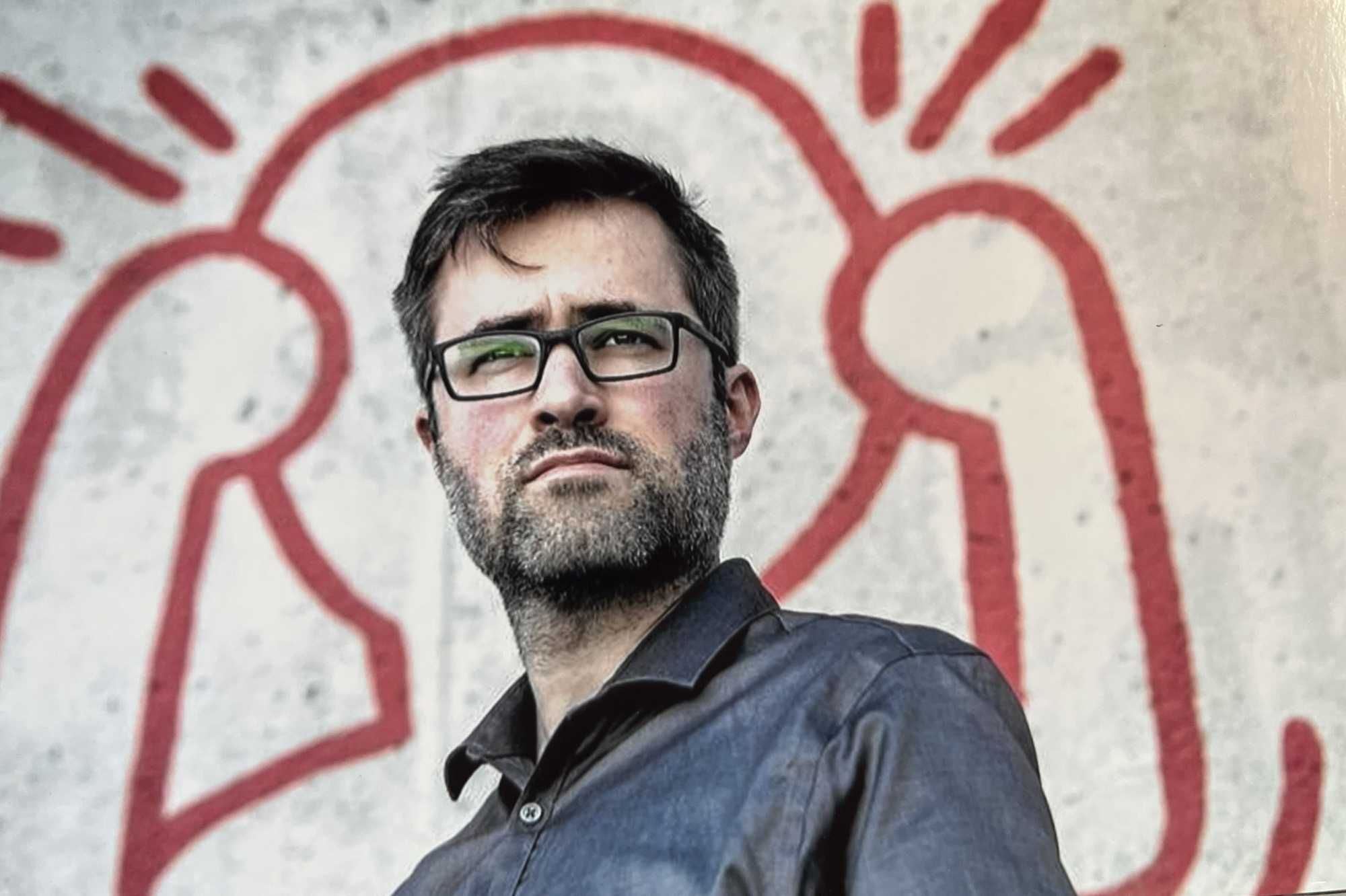
Mark Bray (provided photo/used with permission)
A year after far-right activists forced historian Mark Bray to flee New Jersey with his family due to death threats and doxxing, the Rutgers University professor is back in the United States with a defiant message — and a new book.
“Turning Point and their allies tried to run me out of my job and out of my country, and I didn't want to let them win,” Bray told Raw Story.
“I wanted to do what I can to make this place a better place.”
Bray's book, "Unpunctuated Death Threats," is coming out in January. It describes how he was targeted for writing the bestselling book “Antifa: The Antifascist Handbook” after President Donald Trump issued an executive order declaring “antifa” a terrorist organization.
Despite “antifa” being shorthand for “anti-fascist” and referring to a decentralized political ideology focused on opposing fascism, white supremacy and racism — rather than an organization with a figurehead — Bray was targeted by the conservative student group, Turning Point USA, which pushed for him to be fired.
“This is not a new story that something that's decentralized and bottom-up is being portrayed by the right as top-down, paid, George Soros-money, secret leadership," Bray said about the right's attacks on antifa.
"That's a playbook that's even older than Occupy [Wall Street], but that has come back around now, and it's not accurate.
“The game seemed to be establishing the notion that antifa is terrorism, then introducing the concept of the antifa-aligned, and trying to spread this bogeyman term as broadly as possible in order to be able to say more and more and more of the left and the Democratic Party are antifa or are aligned to antifa or adjacent to antifa.”
When Fox News reported on Turning Point's push, Bray said he started receiving death threats, one including his home address. Then his address was posted publicly to X.
"We were concerned about the larger political situation and concerned that there might be some sort of bogus charges thrown at me,” Bray said.
When Bray and his family arrived at the airport in Newark, New Jersey, in an attempt to head to Spain, he was notified their reservations had been canceled right before boarding.
“I do believe it was a politically motivated act, even if I don't know who did it,” Bray said.
After staying at an airport hotel, the family returned to the airport the next day. Bray and his wife were then questioned by U.S. Customs and Border Protection agents for an hour, he said.
“I think part of it was intimidation, part of it was phishing,” Bray said. “I think they really very much would have liked to have found something illegal on my possession to have charged me with, but fortunately, we've not reached the point in authoritarianism where they planted something, so I was allowed to go.”
Bray and his family made it to Spain, a "second home" to them after living there on a sabbatical two years prior, but the story of his attempt to flee blew up in the press around the world.
Turning Point USA did not immediately respond to Raw Story's request for comment.
With the Trump administration being “unpredictable,” Bray said he isn’t sure what will happen in next week's midterms — whether it’s immigration agents at the polls to intimidate voters or Republicans claiming Democrats stole the election, again.
“What I say in the book is the ingredients for a more formally authoritarian structure are largely in place, but not all of the criteria have been satisfied, and so we're in this kind of strange in-between position, and the midterms may help clarify just which way we're leaning,” Bray said.
While Bray said he doesn’t take much "umbrage" when people call Trump a fascist, he considers him to be “very fascistic,” rather than a full-out fascist leader.
“I think that Trump, more than anything, is someone who seeks his own self-aggrandizement, and in the context that his political career emerged, he rightly diagnosed the far-right as a good vehicle for that,” Bray said.
“I don't think he actually deeply cares about long-term political outcomes so much as he cares about what works for him, and a part of what fascism has meant historically is this vision of radically transforming society in a fascist direction. I'm not so sure how much he cares about that as long as he has power and money and influence.”
On the other hand, Bray said Trump’s Make America Great Again movement aligns with the traits of fascism, which historically seeks “to return to a past before what they considered to be natural values and hierarchies were perverted by fill in the blank — feminists, Jews, leftists, what have you. It is this pursuit of this imagined past through a redemptive violence, and often builds on the occult of personality of the key leader," Bray said.
“The MAGA movement … by virtue of its interest in returning to this past, its glorification of violence, its anti-democratic and conspiratorial mindset, I would call a fascist movement."
Other members of the Trump administration like White House Deputy Chief of Staff Stephen Miller could be more directly called fascist, Bray said. And U.S. Immigration and Customs Enforcement has “essentially created a jobs program for fascists,” he added.
After spending about nine months in Spain, the threats reduced to a trickle, and Bray felt comfortable coming back to the U.S to resume his university job.
His family sold their house, and Bray said he’s optimistic they can “let the storm pass and move on” if the threats start again.
“I wanted to make lemonade out of lemons. I wanted to take this difficult, traumatic experience and make a work of art from it, and that's what I see this book as, primarily as an artistic expression. It also has political argumentation, historical analysis, and other things,” Bray said.
“It was therapeutic and cathartic to write it, and it's what happened on my terms.”
