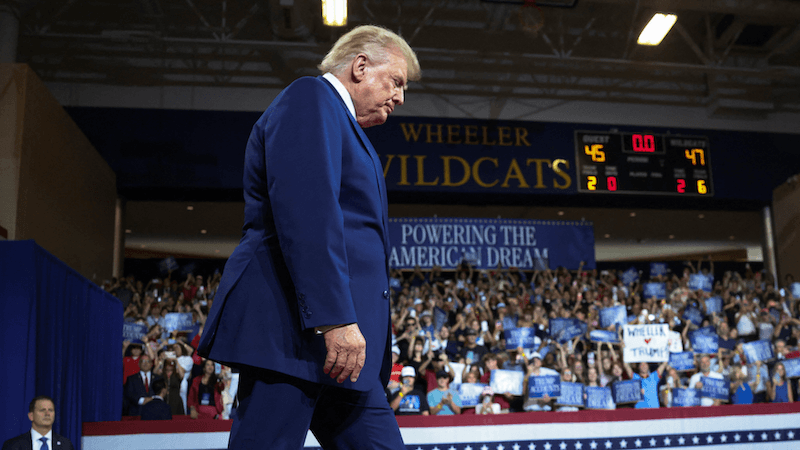
CNN's Audie Cornish warned that President Donald Trump Thursday that he was falling into the same economic trap as his predecessor when he declared the U.S. did not need the Strait of Hormuz to remain open.
The 80-year-old president insisted that the U.S. already controlled much of the global oil market, specifically pointing to Venezuela's oil reserves, so commercial shipping through the Middle East waterway now effectively controlled by Iran was not crucial to American interests, but panelists on "CNN This Morning" disagreed.
"Any oilexecutive will tell you youcannot – it's not it's not likea faucet," said Axios correspondent Alex Thompson. "You can't justsuddenly have tons of oilflowing. It takes years ofbuilding up infrastructure. Alot of infrastructure had beendegraded in Venezuela."
Mike Dubke, who briefly served as White House communications director early in Trump's first term, pointed out the U.S. does not import oil through the Strait of Hormuz, but Cornish called out his argument as irrelevant.
"When the presidentannounced a cease fire, thething he said is if we didn'tstop, there might be a globalrecession," she said. "Like, he said thatwhen he explained to everyonewhy he wanted a pause infighting, so it's hard not topicture a return to fightingleading to the scenario he introduced, which is a globalrecession."
Dubke agreed, saying that global oil reserves were already running perilously low, and he added the U.S. remained a net exporter despite shortages in Europe and elsewhere, but Cornish said that only went so far in public opinion.
"I'm fascinatedbecause I think from the Bidenera, we learned that the White House can say all it wants abouthow well things are going," Cornish said, "butif people don't think it'sfeel it's going well, nothingcan save you."
- YouTubeyoutu.be