'Everything happens for a reason': The harmful psychology behind shaming a victim
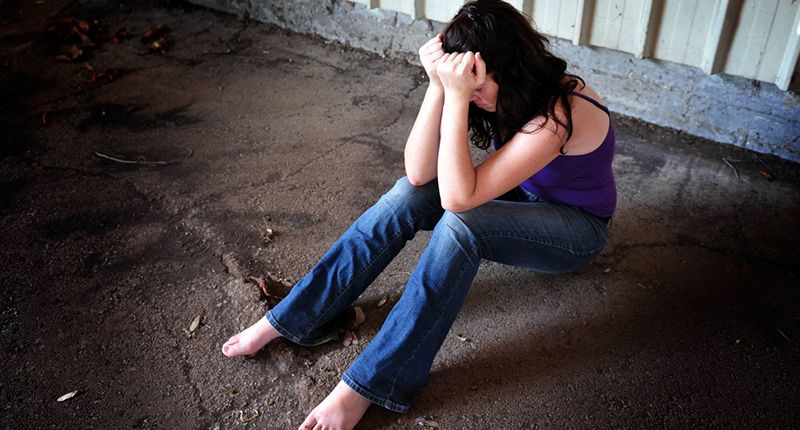
Friday night, attorney Lisa Bloom announced that her client, who was suing Donald Trump for raping her when she was 13 years old, would be dropping her lawsuit out of fear. Jane Doe was scheduled this week to come forward at a press conference but reportedly received so many death threats she decided not to go forward with it.
Doe isn't the first accuser to be attacked after coming forward. Many women and children who survive crimes are often questioned on their allegations. But having a story be believed isn't the only challenge survivors face. They must also endure attacks from those who don't believe their story.
The idea that this is somehow acceptable comes from a "just-world hypothesis," whereby people assume that we live in a fair and just world that always rewards good people and punishes bad people. "If it's meant to be, it will be." "Everything happens for a reason," is the conventional saying. The end result of such a hypothesis is that victims deserve what they got because somehow they caused it to occur.
"People have a strong desire or need to believe that the world is an orderly, predictable, and just place, where people get what they deserve," the Markkula Center for Applied Ethics at Santa Clara University outlined. "Such a belief plays an important function in our lives since in order to plan our lives or achieve our goals we need to assume that our actions will have predictable consequences. Moreover, when we encounter evidence suggesting that the world is not just, we quickly act to restore justice by helping the victim or we persuade ourselves that no injustice has occurred."
As people, we want to believe that there is a valid reason for people's actions. Either the shop owner that got robbed was mean to customers so he deserved to get robbed or the girl wasn't wearing underwear under her dress so she deserved to be raped. If bad things happen to good people there is no security for anyone. None of us is safe, and that concept is a destabilizing concept for anyone to accept. It plunges one into a world filled with chaos where disasters happen to people irrespective of their goodness, morality or even purity.
The world isn't fair nor is it just. One need only look at the scandals that plagued the Catholic church over the last decade.
Brian Gergely was a 10-year-old altar boy when Monsignor Francis McCaa pinned him to a desk and molested him. Brian wasn't dressed in a revealing outfit. Brian wasn't a bad kid or a "slut," he was a child, who volunteered to help his church by serving as an altar boy. It wasn't Brian's fault.
At least 271 priests as of last November had made it into the Boston abuser database with hundreds of victims of their pedophilia and molestation. If one truly believes that only bad things happen to bad people and the "just-world hypothesis" is valid, then these children were bad, they deserved to be raped or fondled and they might have even caused it.
If just reading that disgusted you as much as it did while I wrote then you are on the path to understanding that just-world theory doesn't hold up under scrutiny.
Blame the victim is a tactic used to justify not just child molestation but also raping or sexually harassing women too. You've heard people rationalizing it before: She wore a short skirt, so she was just asking for it. Well, she was walking home so late, what did she think was going to happen? She should have controlled herself and stopped drinking after just a few beers. She got what's coming to her because she wasn't a good person.
The problem with this logic, other than it lacks empathy and borders on sociopathy is that it doesn't hold up to data and reserach. Rape is rarely sexually motivated. Rape isn't caused by pornography, "typical" male aggression or even prompted by so-called locker room banter.
As with most crimes, the reasons vary because the people who commit the crimes vary. Some come from abusive backgrounds, some abuse because they need a situation where they are dominant over someone, some have sexual dysfunctions, some are abusers in general and even use it as revenge. It takes a deeper dive into who the rapist is to fully understand. It isn't simply the reason a rapist gives for raping, it's also the part of their psychology that rationalizes that it is acceptable for them to rape.
Regardless of the reason, however, the rapist is the one who rapes. There aren't degrees of rape like involuntary rape or accidental rape, the crime is a binary because the accused makes a choice to violate someone. No rapist has ever tripped over something and involuntarily inserted his penis into a victim.
"We want to feel safe so we want to believe that rapists have a particular profile in terms of they're easy to identify -- they wear trench coats, they live under the viaduct or hang out in vacant buildings and have crazed looks in their eyes," says Abby Maestas, executive director of the Rape Recovery Center. "And that's not true. What we have found through the clients that are served at the Rape Recovery Center and through studies, is that a rapist can be anyone -- a father, a grandfather, an uncle, a neighbor, a brother, a son."
The Markkula Center cites Zick Rubin of Harvard University and Letitia Anne Peplau of UCLA, who conducted surveys looking at the characteristics of those who possess "just-world" theories about crime or policies. Their findings won't be shocking to a typical Raw Story reader. Those who favor "a just world also tend to be more religious, more authoritarian, more conservative, more likely to admire political leaders and existing social institutions, and more likely to have negative attitudes toward underprivileged groups."
What is shocking is that they found most believers in a just world tend to not seek out ways to change the way things work. They don't want to change government but they are also less likely to "engage in activities to change society or to alleviate plight of social victims."
If anything comes of the Brock Turner case, the Jerry Sandusky case or the coverup by the Catholic church protecting child molesters, let it include the death of the theory that bad things only happen to bad people. There are real victims to crimes and when a crime is found to have been committed, we shouldn't search for reasons to excuse the perpetrator and shame those who attempt to.