MSN
‘Want some crack?’ Alarms blare as Republicans unleash tsunami of deepfaked attack ads
October 19, 2026 7:27AM ET
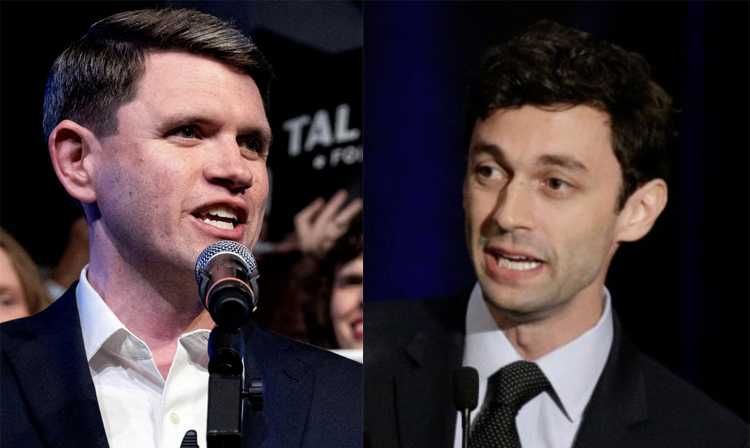
James Talarico (Photo by Joel Angel Juarez for Reuters), Jon Ossoff (Photo by Marvin Gentry for Reuters)
Republicans and their allies are flooding the 2026 midterms with attack ads made with artificial intelligence, and election laws are struggling to keep pace.
The Wesleyan Media Project found that $137 million had been spent on 220 AI-generated political ads through Oct. 11, and most of that came from Republicans, reported Axios.
Many of the ads put made-up words in Democrats’ mouths or show scenes that never happened, and some don’t disclose that AI was used at all.
No federal law specifically regulates AI-generated political ads, and only four states ban certain uses of deepfakes in campaign advertising, while 27 others require some form of disclosure.
Georgia has no disclosure requirement. There, the Senate Leadership Fund, a super PAC aligned with Senate Republicans, has run a series of undisclosed deepfake ads showing Democratic Sen. Jon Ossoff getting beauty treatments. Ossoff called the spots “a slippery slope toward the destruction of truth in political debate” and said they “should come down immediately.”
In Texas, Republican Senate candidate Ken Paxton’s campaign used AI to show Democrat James Talarico defacing a Bible with crayon while declaring that God was “non-binary.” Talarico told NBC that as a state legislator he had tried to ban deepfakes in political campaigns “because they are misleading.”
In Michigan, a super PAC called Front Line Action made AI scenes of Democratic Senate candidate Abdul El-Sayed playing a board game with cards reading “Death to America” and “Celebrate 9/11.” The group defended the ad as “grounded” in El-Sayed’s public statements.
Pennsylvania Republican Stacy Garrity’s campaign released an ad featuring an AI-generated Gov. Josh Shapiro admitting he fast-tracked data centers after receiving $5 million in contributions. A Shapiro spokesperson denounced the spot as “cheap, dishonest AI bulls---.”
In New York, Republican gubernatorial candidate Bruce Blakeman’s campaign released a spot billed as “what a truthful Kathy Hochul ad would look like.” It shows an AI Hochul outside a police precinct as a man asks her, “Want some crack?”
In Kentucky, a PAC backed by President Donald Trump’s MAGA Inc. ran several deepfakes of Democratic House candidate Zach Dembo.
“I expected them to lie about my record, but I did not expect them to lie about my appearance,” Dembo told Axios. He warned that fake images are “the beginning of a very dangerous path for our democracy.”