These Trump challenges to justice should alarm every American — not just former judges
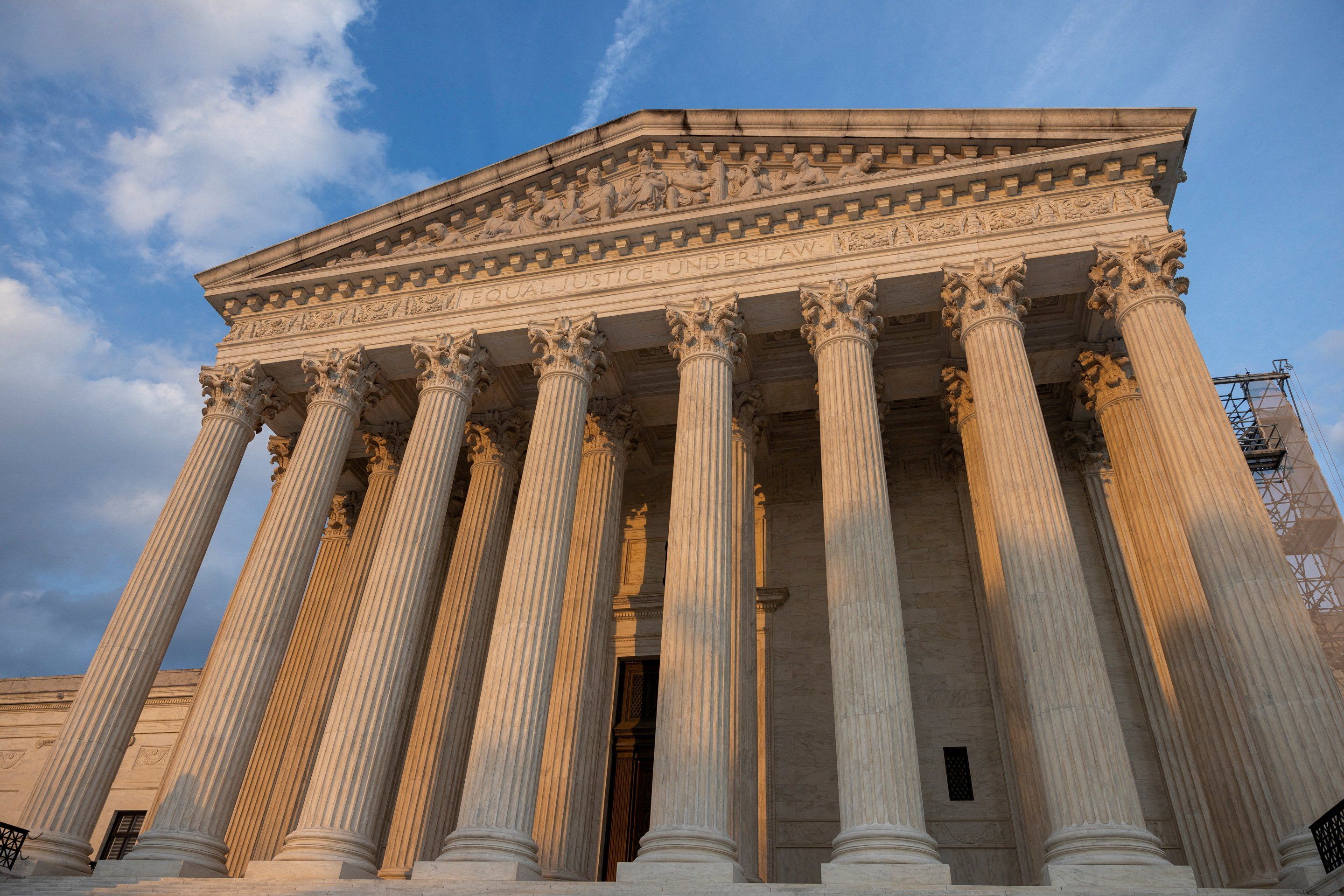
A view of the U.S. Supreme Court in Washington. REUTERS/Kevin Mohatt
December 14, 2025
The public has been hearing from a lot of federal judges over the past year, much more than normal. That’s because many of them are concerned about the Trump administration’s commitment to the rule of law.
Dickinson College President John E. Jones III was appointed as a federal judge by President George W. Bush and spent 20 years on the bench after being confirmed unanimously by the U.S. Senate in 2002. Jones spoke with The Conversation U.S. senior politics editor, Naomi Schalit, about America’s legal landscape after almost a year of Donald Trump’s presidency.
We’ve seen a progression over time, with both Republican and Democratic presidents, where there’s been a stronger and stronger chief executive. But there’s been nothing like this administration, where the president has fired members of heretofore independent agencies. Having listened to oral arguments, which at times can be misleading, there’s very little question that the Supreme Court is going to overturn the “Humphreys Executor” precedent.
What it means is that this president will have the opportunity to utterly remake all of these independent agencies now. He’s going to take people out, root and branch, and put folks in who are either with the program or they’re not going to get appointed.
He does not recognize and does not want among his appointees — certainly we see this in the Cabinet — any modicum of independence. You’re either with him 100 percent or you’re against him. Now that will extend to these independent agencies, and that means that the measured sort of regulations that have existed for a long time are going to be disrupted and maybe even eliminated.
This is the court’s emergency docket. If the court takes these cases, they order a very abbreviated briefing and they decide the matter very quickly. Typically, this is a problem for lower court judges, as the cases are decided with very little explanation.
Sometimes months and months intervene before the court gets back to that case and renders a full and complete determination. One example would be the birthright citizenship case that came up to the court on the shadow docket. The court rendered an interim decision about whether U.S. District Court judges could issue orders stopping nationwide enforcement of Trump policies. They didn’t rule on the merits of the birthright citizenship case.
Since then, there have been conflicting decisions across the country. You have circuits that have ruled on the question and other circuits that haven’t ruled on it at all. So depending on where you live in the United States, you may or may not be subject to what heretofore has been the accepted interpretation of the 14th Amendment.
This administration’s clear strategy — to flood the zone by simply challenging every adverse decision against it in the lower courts — means there are an unprecedented number of cases coming up to the Supreme Court. It just means that there’s utter confusion in the lower courts, and it’s been the subject of a lot of dissatisfaction among lower court judges. It really puts the federal court system into a state of uncertainty and chaos, and obviously it’s not good for the public.
What the president has attempted to do flies in the face of legislation that says that these interim appointments are limited to 120 days. Every court has found that the president’s appointment or attempted appointment beyond the first 120 days is unlawful and unconstitutional. It is a limitation on the president’s power.
If the president’s version were correct, you could just have endless interim appointments without any involvement by the Senate. This is a place where the courts have, in effect, upheld the integrity of the advice-and-consent system and the constitutional role of the Senate.
My takeaway as an American citizen and as a former judge is that at bottom, President Trump simply lacks respect for our system of justice.
I don’t think you can find otherwise when on your first day in office you issue over 1,000 pardons for people who were justifiably convicted or pled guilty to what was, by any account, an insurrection on Jan. 6, 2021. He has pardoned countless people since then, including a former president of Honduras who his own administration prosecuted and for which there was abundant evidence that he was a drug trafficker. He’s blowing up boats in the Caribbean without, in my view, any rationale that’s grounded in law. The president believes the law is whatever he says it is at any given moment.
As to the Department of Justice, I think that’s one of the most worrisome things about this administration. There is a seamless interface between the White House and the Department of Justice that is problematic, and it is quite clear that the Department of Justice will do anything that the president wants.
I think we’re in a very, very difficult and dark place when the president by fiat can simply order his attorney general to prosecute a person. And I think every American should worry about a world where that takes place without any buffer.
The way our system is supposed to work is that people can disagree with lower court decisions, but they have to obey them, unless they’re stayed by application to a higher court. The administration seems to have decided that they’re going to write U.S. district judges out of the picture and simply disregard their orders.
When I served as a U.S. District Court judge, I always understood that I had pretty awesome power to do things. That power was to be used sparingly and carefully, but when I ordered something, I expected that that order would be followed.
That is the nature of the rule of law and our system of justice that now has been turned on its head by this administration.
The second point is that I would wish that our Supreme Court would take a stronger stand against this kind of gamesmanship in the lower courts. Those who serve in the third branch — the nation’s courts — are all in this together. There has to be more attention given to an administration that has really gone rogue in terms of how they treat the orders of U.S. District Court judges.
What’s happening is that judges who come from all stripes, philosophically and party affiliations, are deeply concerned and offended about the tenor of the times, and they feel the need, as I do, to become active and to rally to the support of our system of justice. Imperfect though it may be, I’ve always regarded it as the fairest and best system in the world.