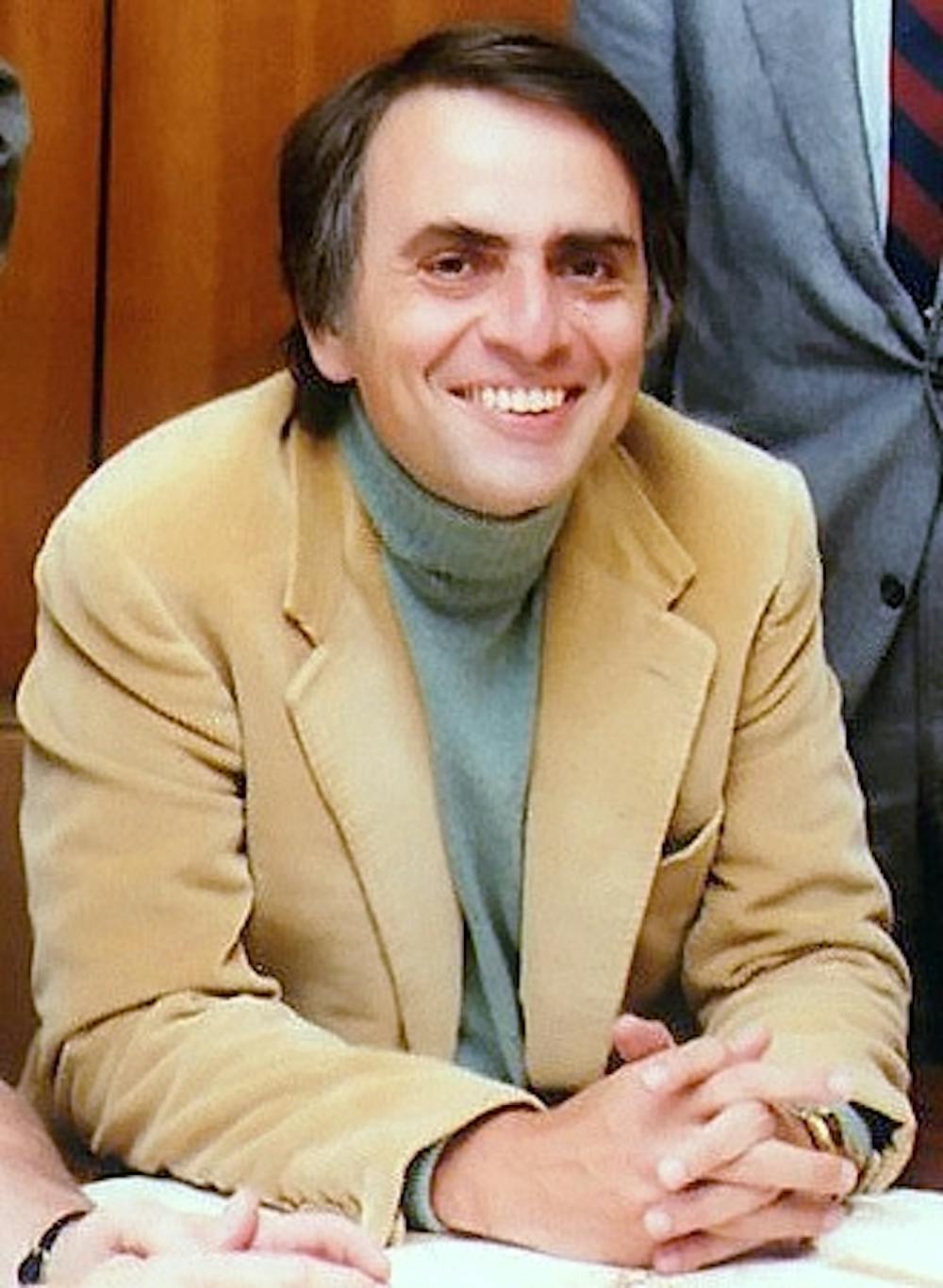
Twitter co-founder and chief executive Jack Dorsey said Tuesday he was committing $1 billion of his personal fortune to coronavirus relief through his philanthropic fund.
Dorsey said in a series of tweets that he would transfer his equity in his digital payments group Square to his limited liability corporation Start Small, contributing around 28 percent of his overall wealth.
"Why now? The needs are increasingly urgent, and I want to see the impact in my lifetime," Dorsey said.
"I hope this inspires others to do something similar. Life is too short, so let's do everything we can today to help people now."
The move could be the largest from a single individual for coronavirus relief and comes with the pandemic spanning the globe and inflicting a heavy toll in lives and economic devastation on the United States.
Dorsey said that after the pandemic ends, the fund would focus on health and education for girls and "universal basic income" efforts.
Dorsey, who is CEO of both Twitter and Square, has created a foundation as well as the Start Small LLC -- a model similar to that established by Facebook founder Mark Zuckerberg in his Chan-Zuckerberg Initiative, to allow for flexibility in funding startups and efforts a foundation may be ineligible to fund.
"Why is #startsmall a LLC? This segments and dedicates my shares to these causes, and provides flexibility," Dorsey said.
A document link tweeted by Dorsey showed the new fund had already pledged $100,000 to a new initiative called America's Food Fund launched by Laurene Powell Jobs, the widow of Steve Jobs, and actor Leonardo DiCaprio.
Dorsey's net worth is estimated at about $3 billion including his stake in Twitter and Square.
He said he chose to use his equity from the payments group because "I own a lot more Square."
"The impact this money will have should benefit both companies over the long-term because it's helping the people we want to serve," he said.
Other technology entrepreneurs have pledged relief efforts in varying amounts.
Amazon founder Jeff Bezos has pledged $100 million to help food relief efforts during the pandemic, and Zuckerberg has offered more than $25 million to help research through the Bill & Melinda Gates Foundation.
The Gates Foundation last month pledged $125 million for research but is believed to be investing more in a variety of projects.
Apple has said it will soon be producing one million face shields a week for medical workers battling the coronavirus pandemic.
The tech giant had already sourced 20 million surgical masks from around the world to help address a global shortage, chief executive Tim Cook said in a video posted to Twitter on Sunday.
But the company had also designed its own transparent protective face shield and begun mass production at its factories in the US and China, he added.
"We plan to ship over one million by the end of this week," said Cook.
Initial distribution would be focused on the US but the company hoped to "quickly expand distribution" to other countries, he said.
Apple joins several global firms that have modified their production lines to meet demand for protective gear, including Italian luxury brand Prada.
US President Donald Trump last month issued a federal order forcing auto giant General Motors to manufacture ventilators after a shortage of the hospital equipment, which is crucial for treating critical COVID-19 cases.
What does British Prime Minister Boris Johnson have in common with virtual happy hour celebrants and thousands of students around the world?
All use the Zoom videoconferencing application to get together while staying apart during the deadly coronavirus pandemic.
But amid its newfound fame, the Silicon Valley-based company has come under stepped-up scrutiny over how it handles privacy and security -- including allowing uninvited guests to barge in on sessions.
Created by engineer Eric Yuan in 2011 and listed on the Nasdaq a year ago, Zoom has seen its market value skyrocket to some $35 billion.
Yuan has spoken of a passion for communication technologies that dates back to the 1990s when, as a university student in mainland China, he longed for a way to see his girlfriend without needing to travel hours by train.
Zoom hit the market as a tool for people working apart to collaborate on business, competing with offerings from the likes of Microsoft, Facebook, Google and others.
- Poker and funerals -
AFP/File / Olivier DOULIERY Lauryn Morley, a lower school substitute teacher for the Washington Waldorf School in Bethesda, Maryland, talks to a student on a Zoom conference
As people around the world stay home due to coronavirus risk, Zoom has become a go-to service for remote education, exercise classes, poker games, church services and happy hour celebrations.
Couples have gotten married in "zoomed" ceremonies. Birthdays have been celebrated. Funerals have been virtually attended.
"It's really easy to use, and free; that's nice," said US school teacher Justin Minkel, who instructs students remotely using Zoom. "Just click a link."
Home chaos such as dogs barking or outbursts from siblings can be disruptive, but Minkel cures that by "muting" students' microphones until he needs to hear them.
According to Yuan, the number of people taking part in Zoom meetings daily eclipsed 200 million in March, up from just 10 million at the end of last year.
Video calls have surged on all messaging platforms including WhatsApp, Messenger, and Google Hangouts, but Zoom has become a star.
It lets as many as 100 people simultaneously attend a video-conference, allowing 40 minutes free and then charging for premium accounts that provide more time and features for $15 monthly.
Zoom lifted the 40-minute limit on free accounts for teachers in an array of countries.
Among Zoom settings is an option to chose a backdrop image, such as the Golden Gate Bridge or tropical beach, hiding what is really behind a user.
- Zoombombing -
GETTY IMAGES/AFP/File / KENA BETANCUR Zoom founder and CEO Eric Yuan (right) is seen at the Nasdaq market debut of the company in April 2019
Digital learning coach Stephanie DeMichele credits the surge in Zoom use to fear of being disconnected from schools, friends, families and others in our lives.
"And here comes Zoom saying 'It's free, available, and you won't feel isolated,'" said DeMichele. "So people grabbed onto it."
A "Zoombombing" phenomenon has sparked warnings about lax security, however.
Virtual intruders have interrupted religious ceremonies, remote classes, and other Zoom gatherings. In some cases, pornographic images have been displayed.
US media has reported that Zoom shares some data with third parties and questioned how well virtual meeting data is defended.
Prosecutors from several US states including Connecticut, New York, and Florida are investigating the company's privacy and security practices. The FBI has warned of Zoom sessions being hijacked.
Yuan vowed this week to step up data security, and apologized.
"We recognize that we have fallen short of the community's -- and our own -- privacy and security expectations," Yuan said in a message posted online.
"For that, I am deeply sorry."
AFP/File / Anthony WALLACE Chaukei Ngai conducts a class from Hong Kong on her YogaUP service via Zoom videoconference
Zoom was designed primarily for use by large businesses with their own tech teams to provide support and protection, according to Yuan.
"We did not design the product with the foresight that, in a matter of weeks, every person in the world would suddenly be working, studying, and socializing from home," Yuan said.
"These new, mostly consumer use cases have helped us uncover unforeseen issues with our platform."
While encouraged that Zoom is admitting it has security problems, it still has "a ton of work" to do to fix them and restore trust in the platform, according to Electronic Frontier Foundation associate director of research Gennie Gebhart.
While tending to its immediate concerns, Zoom would be wise to keep on eye on the future, said Creative Strategies analyst Carolina Milanesi.
"Replicating what Zoom has is not too difficult," Milanesi said.
"They need to think about what else they want to be."
Internet users have seen a surge in COVID-related cyberattacks and fraud schemes which could add to the misery of the pandemic, even as some hackers have called for dialing back their criminal efforts.
A deluge of attacks has included phishing emails purported to be from health agencies, counterfeit product offers and bogus charity donation requests, according to security analysts.
Over the past month, at least 100,000 new web domain names were registered containing terms like covid, corona, and virus, many of which are considered "malicious," according to a report prepared for the global internet registry agency ICANN.
"The pandemic has led to an explosion of cybercrime, preying upon a population desperate for safety and reassurance," said the report released this week by Interisle Consulting Group.
The number of "spoofed" websites used for phishing to steal people's private credentials rose by 350 percent since January to more than 500,000, according to Atlas VPN, which provides secure connection services.
- Stimulus fraud coming? -
AFP/File / FRED TANNEAU Most of the fraud and ransomware schemes being circulated are linked to the COVID-19 pandemic, security analysts say
These schemes could lead to unprecedented amounts of theft, identity hijacking and ransomware to extract money from vulnerable organizations, some analysts fear.
In just the past few weeks, US consumers have lost nearly $5 million to coronavirus-themed scams, according to the Federal Trade Commission.
The potential for fraud could rise further, notably as a result of the $2 trillion economic relief package approved by Congress this month, according to an FTC warning to watch for stimulus-related fraud schemes.
Because of the global nature of the pandemic, hackers are taking advantage of all the attention being paid to the health crisis to lure people into opening malicious emails and links.
The security firm Proofpoint said this week it is seeing a wave of email scams themed around stimulus payments, Australian government "coronavirus tax relief" or even a fictitious "relief offer" from the World Health Organization and the International Monetary Fund.
"More than 80 percent of all the attacks Proofpoint now intercepts have something to do with the pandemic, a level that is unprecedented," the company said.
"These attacks appear to be working, and now they are leveraging news of the stimulus package to ensnare more victims."
- Hackers find religion? -
AFP/File / Angela Weiss Hospitals and health organizations dealing with the outbreak are still being hit by ransomware despite a move by some hackers to dial back attacks
But even with the unprecedented opportunity, some hackers are considering pulling back on their attacks on people during the crisis, according to researchers who monitor "dark web" forums.
"There seems to be an even split. I wasn't expecting so many people expressing concern," said Alex Guirakhoo, a threat researcher with the security firm Digital Shadows who monitors hacker forums globally.
"There are some people (in hacker forums) saying 'I'm really concerned for my family,' or 'I can't see my girlfriend.' This is a situation affecting everyone."
After some reports indicated hospitals had been hit by ransomware, some hacker groups pledged to avoid hitting health care organizations, according to researchers.
One hacker group known as Maze promised to halt attacks on hospitals and provide encryption keys to ones that have been hit, according to Filip Truta of the security firm BitDefender.
"Perhaps they want to avoid provoking the white-hot rage of an already wounded public," Truta said in a blog post. "Or, just possibly, some black hats do have a smidgen of ethics. At least in grim times like these."
The security firm Emsisoft, which specializes in ransomware, made an unusual plea to hackers last month to spare health care firms.
"We also know you are humans, and that your own family and loved ones may find themselves in need of urgent medical care," the group said in a blog post.
"We ask for your empathy and cooperation. Please do not target healthcare providers during the coming months and, if you target one unintentionally, please provide them with the decryption key at no cost."
But Emsisoft spokesman Brett Callow said the plea may not be working.
"Any claims that these ransomware groups make should be taken with a grain of salt," Callow told AFP, noting that ransomware attacks are continuing against health organizations.
"These groups have attacked hospitals in the past. They have put lives at risk and it would be a mistake to assume they wouldn't do so again."
Google will publish location data from its users around the world from Friday to allow governments to gauge the effectiveness of social distancing measures put in place to combat the COVID-19 pandemic, the tech giant said.
The reports on users' movements in 131 countries will be made available on a special website and will "chart movement trends over time by geography," according to a post on one of the company's blogs.
Trends will be display "a percentage point increase or decrease in visits" to locations like parks, shops, homes and places of work, not "the absolute number of visits," said the post, signed by Jen Fitzpatrick, who leads Google Maps, and the company's chief health officer Karen DeSalvo.
"We hope these reports will help support decisions about how to manage the COVID-19 pandemic," they said.
"This information could help officials understand changes in essential trips that can shape recommendations on business hours or inform delivery service offerings."
Like the detection of traffic jams or the measurement of traffic on Google Maps, the new reports will use "aggregated, anonymised" data from users who have activated their location history.
No "personally identifiable information," such as a person's location, contacts or movements, will be made available, the post said.
The reports will also employ a statistical technique that adds "artificial noise" to raw data, making it harder for users to be identified.
From China to Singapore to Israel, governments have ordered electronic monitoring of their citizens' movements in an effort to limit the spread of the virus, which has infected more than a million people and killed over 50,000 worldwide.
In Europe and the United States, technology firms have begun sharing "anonymized" smartphone data to better track the outbreak.
Even privacy-loving Germany is considering using a smartphone app to help manage the spread of the disease.
But activists say authoritarian regimes are using the coronavirus as a pretext to suppress independent speech and increase surveillance.
And in liberal democracies, others fear widespread data harvesting and intrusion could bring lasting harm to privacy and digital rights.
"Your boss is the richest person on Earth, and he just became $3.4 billion richer last month dumping stock in anticipation of this pandemic. How much does he pay you to pretend he can't afford to give his workers PPE and a sane paid sick leave policy?"
Jay Carney, the former White House press secretary who now serves as Amazon's senior vice president of global corporate affairs, came under fire overnight for defending the retail behemoth's firing this week of a warehouse employee who had organized a worker protest demanding safer conditions amid the coronavirus outbreak.
In a tweet Wednesday night, Carney went after Sen. Bernie Sanders (I-Vt.), a candidate for the Democratic Party's 2020 presidential nomination, after the Vermont lawmaker defended Chris Smalls, a team manager at a fulfillment center in Staten Island who was terminated just a day after helping stage a walkout at the facility.
"That is absolutely immoral," Sanders said on Twitter Wednesday of Amazon's firing of worker Chris Smalls.
Carney, in response, claimed that Smalls was let go for violating social distancing rules put in place by Amazon for its workers and endangering the company's staff from the coronavirus, or COVID-19.
"Knowingly putting our team at risk is unacceptable," said Carney, who served in former President Barack Obama's White House as press secretary from 2011-2014.
But, as a number of observers pointed out, that reasoning rings hollow in the face of both the impetus for the strike—unsafe conditions, a lack of cleaning of the facilities, and little to no personal protective equipment (PPE) for employees—and an avalanche of reports indicating the company is putting profits over people as much as possible in its warehouses and distribution centers around the world.
"Why are you attacking your own workers for putting each other at risk of infection when your company is the one doing that?" asked economist Marshall Steinbaum.
One week ago, on March 26, HuffPostreported on the conditions in Amazon warehouses and the company's reluctance to take proactive measures to protect workers:
At least 10 Amazon warehouse workers have been diagnosed with COVID-19 as of Thursday, according to public reports. Employees say many more are likely sick. The company is not making cases public; news about cases have filtered out via warehouse workers. The company just shut down a Kentucky warehouse because of the outbreak, only after staffers protested because three workers tested positive for coronavirus.
The retail giant's safety record has been the subject of in-depth reporting over the past year, including:
ProPublica and Buzzfeedrevealed Amazon ignored concerns over delivery drivers' safety, including fatal crashes, in favor of speed.
The Guardianreported that the company let a man dying of a heart attack lie on the floor alone with no assistance for 20 minutes.
Mother Jonesshowed in March how the company has become one of the most dangerous employers in the U.S., with little worker protections after injury.
The Atlantic in December found that conditions had hardly improved, with workers reporting maiming and other physical issues fromt eh company's breakneck, "sweatshop" pace.
Amazon CEO Jeff Bezos is the richest man in the world, which observers noted in their tweets to Carney after his comments on Smalls' firing.
"Your boss is the richest person on Earth, and he just became $3.4 billion richer last month dumping stock in anticipation of this pandemic," said Claire Sandberg, national organizing director for the Sanders campaign. "How much does he pay you to pretend he can't afford to give his workers PPE and a sane paid sick leave policy?"
Smalls, in an open letter published at the Guardian Thursday to Bezos, wrote that it was clear his firing was related to the walkout. But, Smalls said, he remained undeterred in his efforts to help the company's workers ensure safe working conditions and promised there was more action to come.
"I believe they targeted me because the spotlight is on me," wrote Smalls. "The thing is, it won't work. I am getting calls from Amazon workers across the country and they all want to stage walk-outs, too. We are starting a revolution and people around the country support us."
"Taking action cost me my job," said Chris Smalls. "Because I tried to stand up for something that's right, the company decided to retaliate against me."
New York Attorney General Letitia James late Monday condemned as "immoral and inhumane" Amazon's firing of a Staten Island fulfillment center employee who organized a walkout protesting the retail giant's failure to provide workers with adequate protections against the coronavirus outbreak.
James said in a statement that her office is considering taking legal action against Amazon and called on the National Labor Relations Board to investigate the firing of Chris Smalls, who accused the company of retaliating against him for Monday's demonstration.
"The conditions there are horrific. The items that we use to clean up the building are scarce... We don't have the proper masks, we don't have the latex gloves."
—Chris Smalls, fired Amazon employee
"It is disgraceful that Amazon would terminate an employee who bravely stood up to protect himself and his colleagues," said James. "At the height of a global pandemic, Chris Smalls and his colleagues publicly protested the lack of precautions that Amazon was taking to protect them from COVID-19. Today, Chris Smalls was fired."
Amazon, owned by world's richest man Jeff Bezos, said in a statement that it terminated Smalls for "violating social distancing guidelines" by returning to the Staten Island fulfillment center after he was asked to self-quarantine for 14 days following his exposure to a worker infected by COVID-19.
In an interview with Bloomberg Monday, Smalls called Amazon's claim "ridiculous."
"Taking action cost me my job," said Smalls, who was an assistant manager. "Because I tried to stand up for something that's right, the company decided to retaliate against me."
Thus far, only one worker at the Staten Island fulfillment center has officially tested positive for the novel coronavirus, but Smalls told Bloomberg he believes more employees have been infected and condemned the company's failure to take necessary precautions.
"The conditions there are horrific," said Smalls. "The items that we use to clean up the building are scarce... We don't have the proper masks, we don't have the latex gloves."
"It's all false, it's all sugarcoated," Smalls said of Amazon's insistence that it has put in place adequate safety procedures. "We have plenty of workers that haven't been to work for the entire month of March because they're scared for their lives... We have people that have Lupus, we have people that have asthma, we have people that have infants at home, that have people that's pregnant."
As Common Dreamsreported, dozens of employees at Amazon's Staten Island warehouse walked off the job Monday afternoon to protest the facility's unsanitary conditions.
"We're not asking for much," Smalls told CNN ahead of the protest. "We're asking the building to be closed and sanitized, and for us to be paid [during that process]."
Grocery delivery startup Instacart's delivery workers were set to begin a work stoppage Monday to press safety demands, as a walkout was planned by employees at an Amazon warehouse said to be the site of coronavirus infections.
The labor actions point to growing concerns about health risks for key workers delivering food and supplies to Americans largely sheltering at home due to the COVID-19 pandemic.
A group calling itself the Gig Workers Collective said it was maintaining its strike call made Friday despite new safety measures announced late Sunday.
"Workers aren't filling orders until our full demands are met," a spokesperson told AFP. "This isn't just about us, we want to also protect our customers."
It was not immediately clear how many of Instacart "shoppers" who are independent "gig" workers, were participating in the stoppage.
The San Francisco-based firm said it would provide new health and safety supplies to full-service "shoppers" and would set a "default" tip based on customers' prior orders.
The labor group, whose numbers were not known, called the Instacart moves "a sick joke."
"We had been asking for hand sanitizer for many, many weeks. But apparently the company is capable of sourcing some with two days of work? Where was this before," the group said in a Medium post.
The blog post said the new tipping policy was unlikely to increase compensation for delivery workers and fell short of demands for "hazard" pay.
Separately, an Amazon worker at a warehouse in the New York borough of Staten Island called for a walkout, claiming the e-commerce giant failed to adequately deal with infected employees.
"There are positive cases working in these buildings infecting thousands," Christian Smalls wrote on Twitter, including videos from the warehouse depicting what he said were inadequate safety measures.
The New York Post reported that about 200 workers were planning to demonstrate outside the facility around 1700 GMT.
Amazon, responding to an AFP query, said Smalls made "misleading" statements about conditions and was supposed to be on quarantine.
"Like all businesses grappling with the ongoing coronavirus pandemic, we are working hard to keep employees safe while serving communities and the most vulnerable," Amazon said.
"We have taken extreme measures to keep people safe."
A separate group of workers at the Amazon-owned grocery chain Whole Foods meanwhile called for a one-day stoppage or "sickout" on Tuesday to press demands for improved health measures.
The group calling itself "Whole Worker" said it was seeking guaranteed paid leave for quarantined workers, among other things.
Two tweets by Brazilian president Jair Bolsonaro in which he questioned quarantine measures aimed at containing the novel coronavirus were removed Sunday, on the grounds that they violated the social network's rules.
The far-right leader had posted several videos in which he flouted his government's social distancing guidelines by mixing with supporters on the streets of Brasilia and urging them to keep the economy going.
Two of the posts were removed and replaced with a notice explaining why they had been taken down.
Twitter explained in a statement that it had recently expanded its global rules on managing content that contradicted public health information from official sources and could put people at greater risk of transmitting COVID-19.
In one of the deleted videos, Bolsonaro tells a street vendor, "What I have been hearing from people is that they want to work."
"What I have said from the beginning is that 'we are going to be careful, the over-65s stay at home,'" he said.
"We just can't stand still, there is fear because if you don't die of the disease, you starve," the vendor is seen telling Bolsonaro, who responds: "You're not going to die!"
In another video, the president calls for a "return to normality," questioning quarantine measures imposed by governors and some mayors across the giant South American country as an effective containment measure against the virus.
"If it continues like this, with the amount of unemployment what we will have later is a very serious problem that will take years to be resolved," he said of the isolation measures.
"Brazil cannot stop or we'll turn into Venezuela," Bolsonaro later told reporters outside his official residence.
On Saturday, Health Minister Luiz Henrique Mandetta highlighted the importance of containment as a means of fighting the coronavirus, which has already infected 3,904 people in Brazil, leaving 114 dead, according to the latest official figures.
"Some people want me to shut up, follow the protocols," said Bolsonaro. "How many times does the doctor not follow the protocol?"
"Let's face the virus with reality. It is life, we must all die one day."
In the four videos posted on his Twitter account, Bolsonaro is seen surrounded by small crowds as he walked about the capital.
Bolsonaro has described the coronavirus as "a flu" and advocated the reopening of schools and shops, with self-isolation necessary solely for the over-60s.
The biggest reputational risk Facebook and other social media companies had expected in 2020 was fake news surrounding the US presidential election. Be it foreign or domestic in origin, the misinformation threat seemed familiar, perhaps even manageable.
The novel coronavirus, however, has opened up an entirely different problem: the life-endangering consequences of supposed cures, misleading claims, snake-oil sales pitches and conspiracy theories about the outbreak.
So far, AFP has debunked almost 200 rumors and myths about the virus, but experts say stronger action from tech companies is needed to stop misinformation and the scale at which it can be spread online.
"There's still a disconnect between what people think is true and what people are willing to share," Professor David Rand, a specialist in brain and cognitive sciences at the MIT Sloan School of Management, told AFP, explaining how a user's bias toward content he or she thinks will be liked or shared typically dominates decision-making when online.
AFP / GREG BAKER Experts say stronger action from tech companies is needed to stop misinformation and the scale at which it can be spread online
Part of the reason is that social media algorithms are geared to appeal to someone's habits and interests: the emphasis is on likability, not accuracy. Changing that would require Facebook, Twitter and other such companies to alter what people see on screen.
Prompts urging users to consider the accuracy of content they are spreading on social networks are needed, said Rand, co-author of a study on COVID-19 misinformation that was published earlier this month.
- Deadly consequences -
Using controlled tests with more than 1,600 participants, the study found that false claims were shared in part simply because people failed to think about whether the content was reliable.
In a second test, when people were reminded to consider the accuracy of what they are going to share, their level of truth awareness more than doubled.
That approach -- known as "accuracy nudge intervention" -- from social media companies could limit the spread of misinformation, the report concluded.
"These are the kind of things that make the concept of accuracy top of the minds of people," said Rand, noting that news feeds are instead filled by users' own content and commercial advertisements.
AFP / INDRANIL MUKHERJEE Although US, French and other scientists are working to expedite effective treatments, false reports have appeared in numerous countries
"There probably is a concern from social networking companies about accuracy warnings degrading the user experience, because you're exposing users to content that they didn't want to see. But I hope by talking about this more we'll get them to take this seriously and try it."
What is undoubted is that misinformation about the novel coronavirus has been deadly. Although US, French and other scientists are working to expedite effective treatments, false reports have appeared in numerous countries.
In Iran, a fake remedy of ingesting methanol has reportedly led to 300 deaths, and left many more sick.
Dr. Jason McKnight, assistant clinical professor in the Department of Primary Care and Population Health at Texas A&M University, said the sharing of false information has an impact beyond the immediate risk of the virus itself.
"I have seen posts related to 'treatments' that are not proven, techniques to prevent exposure and infection that are either not proven and/or filled with a lot of misleading information, and instruction for individuals to stock up on supplies and food," he said.
McKnight highlighted two types of danger posed by inaccurate information on the virus: that it "could incite fear or panic," and "the potential for individuals to do harmful things in hope of 'curing the illness' or 'preventing' the illness."
- 'Immediate positive impact' -
Facebook took a hammering over Russia's interference in the 2016 US election. Having been accused on Capitol Hill of ignoring the allegations, Facebook conceded the following year that up to 10 million Americans had seen advertisements purchased by a shadowy Russian agency. As evidence mounted about how Russia had used Facebook to sow division, company CEO Mark Zuckerberg apologized.
Facebook has placed authoritative coronavirus information at the top of news feeds and intensified its efforts to remove harmful content, including through the use of third-party fact checkers.
AFP / Farooq NAEEM AFP and other media companies work with Facebook's fact checking program, under which content rated false is downgraded in news feeds so that fewer people see it
Zuckerberg also said earlier this month that a public health crisis is an easier arena than politics to set policies and to take a harder line on questionable content.
AFP and other media companies, including Reuters and the Associated Press, work with Facebook's fact checking program, under which content rated false is downgraded in news feeds so that fewer people see it. If someone tries to share such a post, he or she is presented with an article explaining why the information is not accurate.
However, a Facebook spokeswoman declined to comment on the potential for adding accuracy prompts to its platform.
A Twitter spokesman, in a statement to AFP, also did not address whether the company might consider using prompts.
"Our goal has been to make certain everyone on our service has access to credible, authoritative health information," he said.
"We've shifted our focus and priorities, working extensively with organizations like the WHO, ministries of health in a number of countries, and a breadth of public health officials."
The COVID-19 misinformation study mirrored past tests for political fake news, notably in that reminders about accuracy would be a simple way to improve choices about what people share.
"Accuracy nudges are straightforward for social media platforms to implement on top of the other approaches they are currently employing, and could have an immediate positive impact on stemming the tide of misinformation about the COVID-19 outbreak," the authors concluded.
"First thing you should note is the importance of social distancing. The second is how much data your phone gives off."
A viral video showing cell phone data collected by location accuracy company X-Mode from spring break partiers potentially spreading the coronavirus around the U.S. has brought up questions of digital privacy even as it shows convincingly the importance of staying home to defeat the disease.
"I don't know what scares me more, the spread of Florida beach revelers or that this data is being tracked."
—Roberto Rocha, CBC News
"First thing you should note is the importance of social distancing," tweeted Daily Dot journalist Mikael Thalen of the video. "The second is how much data your phone gives off."
The data in the video, which X-Mode fed into mapping platform Tectonix, shows people from one Florida beach over spring break departing the Sunshine State and spreading around the country, mostly to the Northeast.
The company also tracked people fleeing the outbreak from New York City.
"It's a glimpse into the power and scope of mobile tracking data, which the tech companies claim is anonymized to not reveal information about the owner of the device," wroteNewsweek's Jason Murdock.
According to Thalen's report on the data for the Daily Dot:
X-Mode states that the data used is "anonymized," meaning a cellphone’s location is not linked to its user's identity. Tectonix took that raw data and honed in specifically on devices moving between 3 and 10 miles per hour in an attempt to pinpoint cellphone owners believed to be walking or traveling with bikes or scooters.
"I don't know what scares me more," tweetedCBC News reporter Roberto Rocha, "the spread of Florida beach revelers or that this data is being tracked."
In a report Wednesday on the outbreak, the Guardianrevealed that the cell phone industry's international regulatory body the GSMMA is considering developing a global data-sharing system to track people from their devices in order to help contain the coronavirus outbreak.
Such a move would come with myriad privacy and security concerns and would be sure to generate intense backlash from civil liberty advocates around the world.
As the Guardian reported:
Until now the use of mobile phone tracking in the fight against Covid-19 has been restricted to national governments, which are either monitoring data within their borders or in discussions with mobile operators and technology companies about doing so.
They include the US, India, Iran, Poland, Singapore, Israel, and South Korea. The British government is engaged in talks with BT, the owner of the UK mobile operator EE, about using phone location and usage data to determine the efficacy of isolation orders.
The concept of an international mobile tracing scheme would go further, enabling authorities to monitor movements and potentially track the spread of the disease across borders.
The risks of letting state and corporate powers overrun civil liberties is real in a moment of crisis, warned the Electronic Frontier Foundation's Cindy Cohn on Monday.
"We already see calls from companies seeking to cash in on this crisis for unchecked face surveillance, social media monitoring, and other efforts far beyond what medicine or epidemiology require," said Cohn.
While there is a need to keep safe and healthy for the good of the community, Cohn continued, that should not come at the expense of vigilance over freedom and civil rights.
"Right now, when real science is so often under attack, those of us who care about truth, health, and each other need to take seriously the things that science and medicine are telling us about how to keep this virus from spreading," wrote Cohn. "And we also need to be vigilant so that we come out the other side of this crisis with a society we want to live in and hand down to our kids. We can—and must—do both."
Google on Friday pledged $800 million worth of support in response to the coronavirus pandemic for health organizations, researchers and businesses impacted by the crisis.
The aid will come in the form of cash, ad credits, and cloud services from the California-based internet colossus, according to chief executive Sundar Pichai.
Google will provide $250 million in ad grants to the World Health Organization and more than 100 other public agencies around the world providing information to stem the spread of the coronavirus, according to Pichai.
Some $340 million worth of free advertising will be made available to small- or medium-sized businesses in Google's network that are taking financial hits as people stay home due to virus risk.
"We hope it will help to alleviate some of the cost of staying in touch with their customers," Pichai said in a blog post.
A pool of $20 million world of credits for services hosted in the Google "cloud" will be available to researchers and academic institutions exploring ways to combat the deadly pandemic or that are tracking critical data about its spread.
Google will also match as much as $10,000 in donations its employees make to organizations in their communities this year, increasing the amount from $7,500.
"Together, we'll continue to help our communities -- including our businesses, educators, researchers, and nonprofits -- to navigate the challenges ahead," Pichai said.
Google has been pouring month into working with partners to ramp up production of protective gear such as face masks for health care providers
Employees from Alphabet divisions including Google, Verily and X are providing engineering, supply chain and healthcare are working with equipment makers to increase production of ventilators needed to keep some COVID-19 sufferers alive, according to Pichai.
It’s tempting to blame bots and trolls for these problems. But really it’s our own fault for sharing so widely.
Research has confirmed that lies spread faster than truth – mainly because lies are not bound to the same rules as truth.
As a psychological scientist who studies propaganda, here is what I tell my friends, students and colleagues about what to watch out for. That way, they can protect themselves – and each other – from lies, half-truths and misleading spins on current events.
Does this make you angry?
1. Did a post spark anger, disgust or fear?
If something you see online causes intense feelings – especially if that emotion is outrage – that should be a red flag not to share it, at least not right away. Chances are it was intended to short-circuit your critical thinking by playing on your emotions. Don’t fall for it.
Instead, take a breath.
The story will still be there after you verify it. If it turns out to be real, and you still want to share it, you may also want to consider the fire you may be contributing to. Do you need to fan the flames?
During these unprecedented times we have to be careful about not contributing to emotional contagions. Ultimately, you are not in charge of alerting the public to breaking news, and you’re not in any race to share things before other people do.
2. Did it make you feel good?
A new tactic being adopted by misinformation warriors is to post feel-good stories that people will want to share. Those pieces may be true or may have as much truth as urban legends. But if lots of people share those posts, it lends legitimacy and credibility to the fake source accounts that originally post the items. Then those accounts are well positioned to share more malicious messages when they judge the time is right.
These same agents use other feel-good ploys as well, including attempts to play on your vanity or inflated self-image. You’ve probably seen posts saying “Only 1% of people are brave enough to share this” or “take this test to see if you are a genius.” Those aren’t benign clickbait – they’re often helping a fraudulent source get shares, build an audience, or in the case of those “personality quizzes” or “intelligence tests” they are trying to get access to your social media profile.
If you encounter a piece like this, if you can’t avoid clicking then just enjoy the good feeling it gives you and move on. Share your own stories rather than those of others.
If you’re reading something that matches so well with what you had already thought, you might be inclined to say “Yep, that’s true” and share it widely.
We are strongly motivated to confirm what we already believe and avoid unpleasant feelings associated with challenges to our beliefs – especially strongly held beliefs.
It is important to identify and acknowledge your biases, and take care to be extra critical of articles you agree with. Try seeking to prove them false rather than looking for confirmation they’re true. Be on the lookout because the algorithms are still set up to show you things they think you will like. Don’t be easy prey. Check out other perspectives.
5. Am it heard too reed?
Posts that are riddled with spelling and grammatical errors are prime suspects for inaccuracies. If the person who wrote it couldn’t be bothered to spell-check it, they likely didn’t fact-check it either. In fact, they may be using those errors to get your attention.
Similarly, a post using multiple fonts could unintentionally reveal that it had material added to the original – or be trying to deliberately catch your eye. (Yes, the errors in the heading for this tip were intentional.)
In 2005, Tom Cruise jumped on Oprah’s couch. The moment became a cultural touchstone – and the image became a meme.
Memes are usually one or more images or short videos, often with text overlaid, that quickly convey a single idea.
While we may all enjoy a good laugh with a new “Ermahgerd” meme, memes – particularly those sowing political discord – have actually been identified as one of the emerging mediums for propaganda. In recent years, the practice of using memes to incite divisiveness has rapidly escalated, and extremist groups are using them with increasing effectiveness.
Their origins as benign, humorous images about grumpy cats, cats who want cheeseburgers or calls to “keep calm and carry on” have led our brains to classify memes as enjoyable or, at worse, harmless. Our guards are down. Plus their short nature further subverts critical thinking. Stay alert.
7. What’s the source?
Was the post from an unreliable media outlet? The Media Bias/Fact Check website is one place to look to find out whether a particular news source has a partisan bias. You can also assess the source yourself. Use research-based criteria to judge the quality and balance of the evidence presented. For instance, if an article expresses an opinion, it may present facts slanted in a way favorable to that opinion, rather than fairly presenting all the evidence and drawing a conclusion.
If you find that you’re looking at a suspect site, but the specific article seems accurate, my strong suggestion is to find another credible source for the same information, and share that link instead. When you share something, social media and search-engine algorithms count your sharing as a vote for the overall site’s credibility. So don’t help misinformation sites take advantage of your reputation as a cautious and careful sharer of reliable information.
8. Who said it?
It may be surprising, but politicians and other public figures don’t always tell the truth. It may be accurate that a particular person said a particular sentence, but that doesn’t mean the sentence is correct. You can double-check the alleged fact, of course, but you can also see how truthful particular people are.
If you’re hearing information from a friend, of course, there’s no website. You’ll have to rely on old-fashioned critical thinking to evaluate what she says. Is she credible? Does she even have sources? If so, how reliable are those sources? If evaluating the message is too much work, maybe just stick with the “like” button and skip the “share.”
Learn about the Media Bias Chart.
9. Is there a hidden agenda?
If you find something that seems compelling and true, check out what nonpartisan sources say on the subject. For a view of media outlets’ perspectives, take a look at the Media Bias Chart.
Finding no mention of the topic in nonpartisan media may suggest the statement or anecdote is just a talking point for one side or the other. At minimum, ask yourself why the source chose to write or share that piece. Was it an effort to report and explain things as they were happening, or an attempt to influence your thinking or actions – or your vote?
10. Have you checked the facts?
There are a lot of reputable fact-checking organizations, like Snopes and FactCheck. There is even a dedicated meme-checking site. It doesn’t take long to click over to one of those sites and take a look.
But it can take a very long time to undo the harm of sharing misinformation, which can reduce people’s ability to trust evidence and their fellow humans.
To protect yourself – and those in your social and professional networks – be vigilant. Don’t share anything unless you’re sure it’s true. Misinformation warriors are trying to divide American society. Don’t help them. Share wisely.




 AFP/File / Olivier DOULIERY
  GETTY IMAGES/AFP/File / KENA BETANCUR
  AFP/File / Anthony WALLACE
  AFP/File / FRED TANNEAU
  AFP/File / Angela Weiss
  AFP / GREG BAKER Experts say stronger action from tech companies is needed to stop misinformation and the scale at which it can be spread online
 AFP / INDRANIL MUKHERJEE Although US, French and other scientists are working to expedite effective treatments, false reports have appeared in numerous countries
 AFP / Farooq NAEEM AFP and other media companies work with Facebook's fact checking program, under which content rated false is downgraded in news feeds so that fewer people see it