Hopeless Trump is just a step away from committing the unthinkable
It isn’t catastrophizing to assume that Donald Trump is going to do everything we fear he may do to threaten the midterms, if for no other reason than every one of his actions lately demonstrates his belief that no rule or law applies to him — and losing in Congress obviously threatens his base of absolute power.
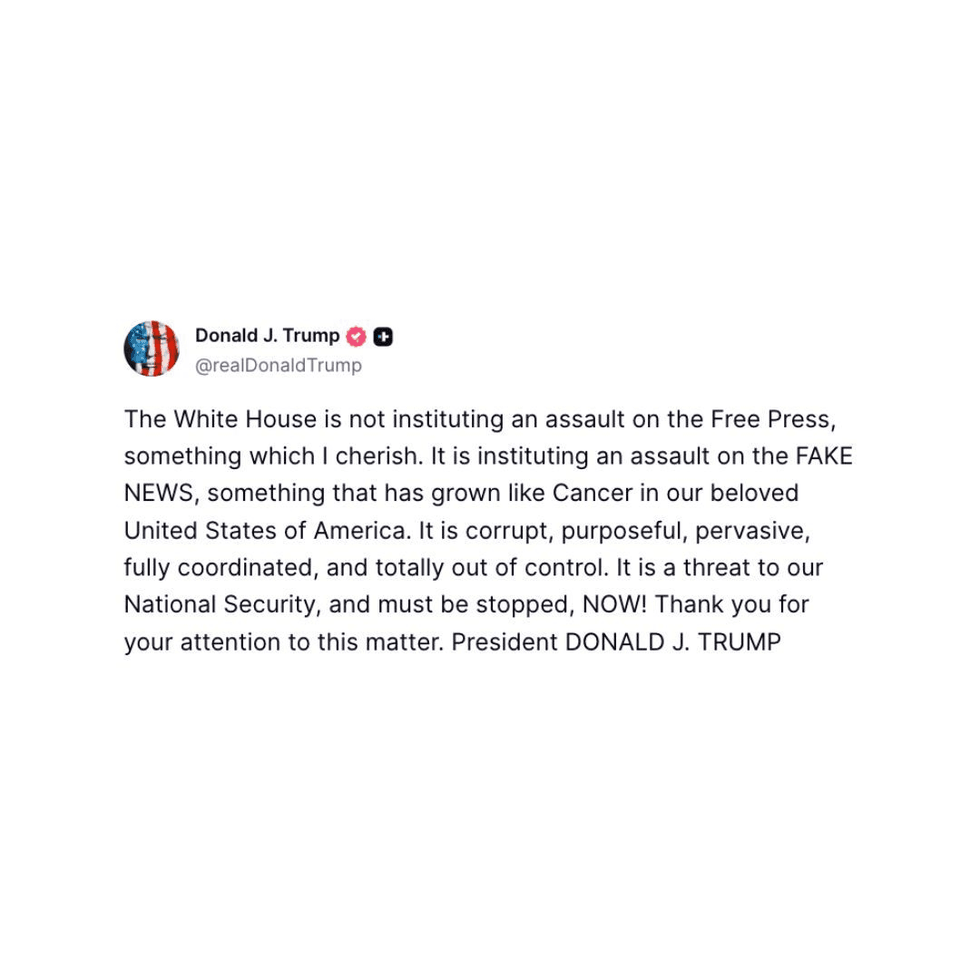
What Trump has gotten really good at lately is whining, as his Time magazine cover interview last week makes abundantly clear. Wah! You only write bad stories about me! Wah! Your numbers about my polling are fake and the pollsters are corrupt! Wah! You haven’t asked me one positive question! Wah! The Supreme Court votes against me unfairly! I give those guys the position of a lifetime and look what they do to me! Wah! They blame me for the deficit when it’s all Biden’s fault!
Yes, we know. Poor, poor, abused Donnie. It’s all so very unfair.
But even though his approval rating hovers around 30% and he’s roughly as popular as a cockroach found crawling under your sheets at 2:30 AM, that hardly means the president isn’t as dangerous as he’s ever been, if not more so. Rejection makes him only more desperate. It isn’t as if he’s going to change up the narrative by listening to his detractors and becoming more reasonable.
We still hang on his every word and what it means, despite this guy’s ever-increasing detachment from reality. In that same Time interview, he declined to rule out an emergency before the midterms that would force his hand to invoke the Insurrection Act. Asked about the deployment of armed ICE thugs at polling places, he claimed not to have given it any thought — which of course means he’s given it nothing but thought.
Let’s unpack this a step at a time.
First, what would an invocation of the Insurrection Act actually mean? While it could give Trump substantial power to deploy federal troops in the streets, it wouldn’t grant him legal authority to cancel the November 3 elections, take over election administration, station troops at polling places, seize ballots or decide which election results count.
If he attempted some of those things anyway — and we know he very well might, since he no longer distinguishes between what’s legal and what isn’t, and we can’t rely on Congress to stop any of it — the country would face a constitutional and legal crisis of immense magnitude.
The Insurrection Act does again permit the president the use of federal troops or federalized National Guard forces to suppress an insurrection, domestic violence or purportedly unlawful conspiracy that obstructs federal law or deprives people of federally protected rights.
The civilian government, however, continues operating. Governors remain governors. Courts remain courts. Elections remain in force under civilian administration, and ordinary constitutional protections would likewise stay put.
We can imagine that the only genuine threat under an Insurrection Act order would come from the presence of those very troops, or, of course, from groups like the Proud Boys doing their best to manufacture chaos, mayhem and carnage.
However, deploying the Insurrection Act isn’t the same as declaring martial law, nor would martial law automatically follow. Martial law is considerably more extreme. In its conventional meaning, military authority would temporarily replace, rather than merely assist, civilian authority and assume all government functions.
No existing federal statute authorizes the president simply to declare martial law absent an emergency pretext. But that naturally wouldn’t stop Trump from simply concocting one out of thin air.
It is, frighteningly, a small but significant step from Insurrection Act to martial law.
Suppose Trump invoked the act on November 1 or 2 and ordered thousands of troops into several cities. That alone wouldn’t be martial law. But imagine if the administration subsequently commanded military forces to take control of government buildings; imposed broad curfews preventing ordinary civilian activity (like organizing street protests); interfered with election administration; or disregarded orders from federal courts.
Then we would be in the throes of martial law. At that point, the issue wouldn’t simply be, “Has Trump formally declared martial law?” but “Has the government substituted military power for civilian government in defiance of lawful authority?”
The courts would almost certainly become involved immediately. But their actual authority would only be as recognized as is the rule of law itself. And if the administration has already declared itself all-powerful and immune from being held to account — the executive branch having rendered the legislative and judicial functions of government inert — then it wouldn’t matter.
On some level, we’re all still somewhat assuming that conventional law would be followed simply because it’s difficult for us to envision what an actual government takeover looks like. But there is, in fact, little evidence at present that if it’s clear the Republicans are about to lose the House and quite possibly the Senate as well, Trump’s hopelessness wouldn’t lead to the unprecedented.
And yeah, suddenly the unthinkable is thinkable.
We have already seen what happens when Trump refuses to accept the results of an election. On January 6, 2021, a mob attacked the Capitol to obstruct the certification of a defeat, inspiring havoc, violence, destruction and a grave threat to our ongoing experiment in democracy. And trust me, it is still very much an experiment.
January 6 was the time when the Insurrection Act should have been invoked. Instead, the perpetrators were pardoned, and that Get Out of Jail Free Card they were furnished with that day remains valid.
What makes us think the assault on democracy won’t be 100 times worse should they lose? This is a president who rewards loyalty and uncivil disobedience. Anyone who believes that it happened once but it can’t happen again is living in denial.
Get ready to fight for our country, because this is probably going to get very ugly. But while they have only power hunger and rebellion on their side, we have integrity, justice, the law and history on ours.
Let’s hope that’s enough this time.
(Ray Richmond is a longtime journalist/author and an adjunct professor at Chapman University in Orange, CA.)