Opinion
This terrifying Trump plot to steal elections is already underway
Recently, Steve Bannon told an audience:
“And I will tell you right now, as God is my witness, if we lose the midterms … some in this room are going to prison — myself included.”
Now, it looks like Donald Trump and the people around him are seriously considering declaring an emergency to let them seize control of this November’s elections, according to reporting in the Washington Post:
“Pro-Trump activists who say they are in coordination with the White House are circulating a 17-page draft executive order that claims China interfered in the 2020 election as a basis to declare a national emergency that would unlock extraordinary presidential power over voting.”
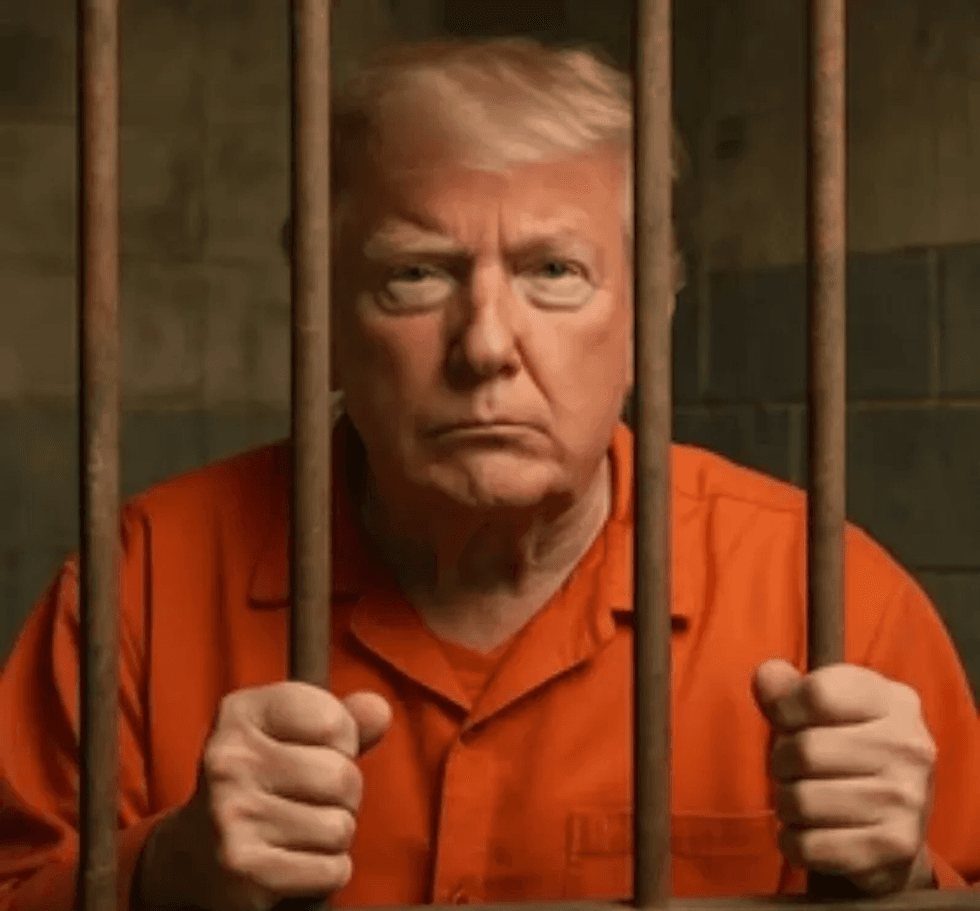
Trump and the lickspittles and criminals he’s surrounded himself with are in a panic. If Democrats take the House and/or Senate in this November’s elections, they’ll have the power of subpoena so the regime’s crimes and corruption will be laid out for everybody to see. Some could even go to prison, including Trump himself.
He’s been basically screaming, “Do something!!!” at Republicans for the past year. It started publicly with his demanding that Texas and then other red states further gerrymander their elections to reduce the number of Democrats in the House.
In red states they’re purging voters in Blue cities from the rolls like there’s no tomorrow, and the GOP is trying to recruit “election observers” to challenge signatures on mail-in ballots on an industrial level. As reporter Greg Palast pointed out, this is how Trump took the White House in 2024; if it hadn’t been for over 4 million (mostly Black) fully qualified US citizens being purged or having their ballots rejected after technical challenges, Kamala Harris would be our president today.
But given how badly Trump’s doing in the polls today, even all these efforts don’t look like they’ll be enough to keep the House and Senate in Republican hands.
So now Trump toadies like Jerome Corsi (the creator of the Birther movement and the Swift Boat slurs, who’s been a guest on my program multiple times) have an idea: just imitate what Putin, Orbán, Hitler, and other dictators have done to hang onto power when they get unpopular: declare an emergency and use it to rig the election.
Yesterday, the Post detailed how MAGA-aligned activists are now openly discussing manufacturing or exaggerating a national emergency to justify Trump’s agents in the federal government to interfere in this November’s elections.
These aren’t fringe anonymous trolls on some obscure message board; they’re people operating in proximity to the president of the United States. Corsi arguably destroyed John Kerry’s chances in 2004 and lit the Birther fuse that catapulted Trump into political fame.
And they’re floating the idea that if normal democratic processes don’t produce the “right” outcome, they could help create a fake crisis to seize control of the election nationally.
If you’ve studied history — and you know I have — that’s the moment when the hair on the back of your neck should stand up.
Because this isn’t new, creative, or even uniquely American: it’s straight out of the authoritarian playbook.
In 1933, Germany’s parliament building, the Reichstag, went up in flames at the hands of a mentally ill Dutch communist who was probably maneuvered into the act by the Nazis. Adolf Hitler declared it “proof” of an existential communist threat. Civil liberties were suspended overnight. Gone in the blink of an eye were freedom of speech, freedom of the press, and the right to assemble as Hitler’s goons began to round up his political opponents and throw them into his new concentration camp at Dachau.
Elections were technically still held, but under conditions so distorted they no longer qualified as free or fair in any meaningful sense, and the so-called “temporary” emergency became Hitler’s legal bridge to a permanent dictatorship.
Similarly, in Turkey in 2016, elements of the military tried to pull off a coup against Recep Tayyip Erdoğan while he was out of town. Erdoğan declared a national state of emergency and then kept it in place permanently. Tens of thousands of protesters were arrested. Judges and teachers were purged from their jobs, and media outlets were closed down for being “fake news.”
While emergency rule was in effect, Turkey held an election that transformed its parliamentary democracy into a hyper-presidential system tailored to give virtually all federal power to Erdoğan himself. It was the end of democracy in Turkey.
Vladimir Putin’s rise offers another variation. In 1999, a series of apartment bombings killed hundreds of Russians and the Kremlin blamed Chechen terrorists. The attacks propelled Putin, then a relatively unknown prime minister, into the presidency on a wave of fear and fury.
Putin then declared a state of emergency that expanded his police powers, gave him tighter media control, and let him seize control of the elections process. In the years since then, elections in Russia have become ritual rather than reality. The ballots are printed every few years, and the votes are counted, but the outcome is never in doubt.
Viktor Orbán in Hungary shows yet another model. He declared a “state of crisis” over migration by Syrian refugees in 2015 and kept renewing it long after migration levels collapsed. During the COVID pandemic, he got the parliament to give him the authority to rule by decree on an indefinite basis; it’s still in effect.
As a result, elections still happen (there’s one coming up), but the media landscape was completely taken over by Orbán-friendly billionaires (see: CBS, WaPo, LA Times, Fox “News,” Sinclair, Wall St. Journal, NY Post, and 1,500 rightwing radio stations). Orbán didn’t need to cancel Hungary’s elections; he simply reshaped the legal and political environment in which they happened.
There’s a common thread in all of this. The crisis wannabe dictators inevitably declare — real, exaggerated, or cynically manipulated — become the justification for seizing extraordinary powers. Those powers narrow dissent, intimidate opponents, and functionally rig the elections.
That’s why this shocking new reporting in the Washington Post is so alarming. When political actors like Corsi begin talking openly about declaring an emergency to override or interfere with elections, they’re not blowing smoke: they’re testing a classic dictator’s narrative.
They’re trying to figure out — and will learn from the national reaction to this Post reporting — whether they can persuade the public that normal election processes are too dangerous to trust. After all, in each of the cases I listed above, the machinery of democracy was used to hollow out democracy itself.
And they may not even have to manufacture an emergency: if Trump can sufficiently provoke Iran, they may activate their proxy network around the world and in the United States, and we could be facing a genuine crisis on the order of 9/11. This is one of the few ways to make sense of today’s massive military buildup in the Middle East.
The danger here isn’t just a fabricated catastrophe or a retaliatory strike by Iran, although those are pretty damn severe. It’s the normalization of the idea that if the electorate appears likely to choose “wrongly,” an emergency can justify changing the rules of democracy.
History shows us, over and over again, that when a nation loses its democracy to an aspiring autocrat, the language and strategy used is always the same. “The nation is under threat.” “The moment is an emergency.” “Normal rules must be suspended — just temporarily — to save the country.”
And in every case, “temporary” turned out to be the most dangerous word of all.
We’re now at that moment where influential figures are publicly contemplating that path, and the lesson from history isn’t subtle. The real emergency, in a constitutional republic, begins when leaders like Putin, Orbán, Erdoğan and Trump — and their toadies like Corsi, Bondi, Noem, and Gabbard — decide that elections themselves are the problem.
Multiple observers have noted that this plan is grossly unconstitutional. But so were Trump’s tariffs (which also used IEEPA emergency authority as their rationale), and the Supreme Court let him run with them for almost a year before stopping him.
Similarly, ICE goons kicking in people’s front doors and smashing their car windows to drag them off without a judicial warrant is a blatant violation of the Fourth Amendment to the Constitution, but Trump’s agents continued to do it every day. Something being against the law or the Constitution has never stopped our convicted felon/rapist/insurrectionist president in the past.
This plot will only be stopped if it’s widely reported and an outraged public rises up in opposition. Call (202-224-3121) your elected representatives — Democratic and Republican — and let them know you’re onto this plot and won’t tolerate it. And that if they have any fidelity left to the Constitution and American values, they won’t either.
- Thom Hartmann is a New York Times best-selling author and SiriusXM talk show host. His Substack can be found here.
Keep reading...
Show less
Trump and Netanyahu don't want you to see the true reasons for their attack on Iran
Donald Trump and Benjamin Netanyahu’s attack on Iran is premised on a gossamer web of assumptions and inferences.
Trump says Iran has enough nuclear material to build a bomb within days, will soon have long-range missiles capable of hitting the United States, and plans an attack. But he has offered no evidence. Most experts say he’s wrong.
Here’s the real reason for this war. Trump wants it to divert Americans’ attention from everything that’s gone to s--- on his watch: the economy, ICE’s cruel raids and murders, the crisis in public health as exemplified by the measles epidemic, our loss of friends and allies around the world, his boundless corruption, and his increasing unpopularity as shown in plummeting polls.
Oh, and there are the Epstein files, rapidly closing in on the man whose history of sexual assaults and braggadocio make his complicity highly likely.
Netanyahu is also using this war as a giant diversion. He doesn’t want the world to dwell on the genocide in Gaza and the West Bank.
As former Israeli prime minister Ehud Olmert wrote recently, “A violent and criminal effort is under way to ethnically cleanse territories in the West Bank. Gangs of armed settlers persecute, harm, wound and even kill Palestinians living there.”
Like Trump, Netanyahu has been trampling constitutional rights — seeking a judicial coup to eliminate the separation of powers, purging Israel’s independent attorney general of his powers, trying to dismiss his own corruption trial, and politicizing appointments to what had been a neutral civil service.
Trump and Netanyahu are using the same authoritarian playbook.
A big part of that playbook is war. War takes over the news. War blots out criticism. War divides a nation’s people, subjecting those against it to being called unpatriotic. War grants leaders all sorts of emergency powers. War consumes everything else.
We mustn’t let this war do so.
I finally watched a tape of Trump’s State of the Union address (I couldn’t bring myself to watch it at the time). It was even more horrendous than I’d imagined.
What stood out for me was all the important problems Trump didn’t mention, as if they didn’t exist. Climate change. Widening inequality. Monopolies driving up prices. Declining real incomes. The growing scourges of poverty — homelessness, hunger, disease, and violence — in America and around the world. Unregulated AI.
If and when he ever mentions them, he calls them “hoaxes.”
Instead, he’s worsened all of them — helping fossil fuels while killing off wind and solar, eviscerating antitrust enforcement and letting monopolies consume entire industries, giving the rich more tax cuts while cutting back Medicaid and food stamps, destroying USAID and discouraging lifesaving vaccines while letting measles run rampant.
And he’s trying to divert attention to fake problems: non-Americans voting in elections (they don’t), Greenland and Venezuela (they pose no threat), “disloyal” Americans who criticize him or judges who try to hold him accountable (thank goodness they’re still trying).
And now, the biggest diversion of all: full-scale war in the Middle East.
Hopefully, the casualties will be limited. Hopefully, Americans will see through this. Hopefully, this will strengthen the resistance to Trump. Hopefully, it will lead to an even greater landslide victory for Democrats and independents in the midterm elections — if Trump allows midterm elections.
Please remain hopeful. Don’t give in to war fever. Stay strong. Be safe. Hug your loved ones.
- Robert Reich is an emeritus professor of public policy at Berkeley and former secretary of labor. His writings can be found at https://robertreich.substack.com/. His new memoir, Coming Up Short, can be found wherever you buy books. You can also support local bookstores nationally by ordering the book at bookshop.org
Keep reading...
Show less
These MAGA women call out an alleged GOP sexual predator. It’s not who you hope it is
Amid the Tony Gonzales scandal, three of the Texas Republican’s female colleagues are demanding his resignation. Rep. Nancy Mace (R-SC), Rep. Lauren Boebert (R-CO), and Rep. Anna Paulina Luna (R-FL) all voted to release the Epstein Files too. But in a not-very-odd disconnect, none of them are speaking out against the person who appears in those files nearly as often as Jeffrey Epstein and Ghislaine Maxwell.
All three Republican women have picked up the fully false narrative that Donald Trump has been “exonerated” in relation to Epstein — his language, which they repeat. Trump hasn’t been exonerated at all, because he has yet to see the inside of a courtroom in connection with the Epstein Files.
As part of my endless pursuit of the truth, I continue to try to annoy Mace enough that she’ll finally give me a real answer as to why she won’t say that Trump is in the Epstein Files. I emailed her comms director twice this week. Since they don’t like my questions, I got the same answer twice:
It irritates me that these people think I’m as stupid as they are.
This is Russian Propaganda 101: Keep repeating the lie until everyone believes it. But consider the Epstein bombshells that have detonated just this week, prominently including an allegation, apparently deemed credible enough to have been investigated, that Trump committed a crime against a child, as part of the Epstein-Maxwell sex trafficking ring.
So if these Republican women are capable of seeing that Rep. Gonzales is alleged to have done terrible things involving a grown woman who then killed herself — allegations he denies — why can’t the same women hold Trump to the same sort of standards, especially since the terrible things he is alleged to have done involved a child?
Along those lines, why didn’t any Republicans travel with Democrats for the billionaire Les Wexner’s Epstein deposition, but then all managed to clear their schedules to be in the room where Hillary Clinton and Bill Clinton gave their sworn testimonies?
I know, we KNOW why. I just want them to admit it.
When it comes to Head Case Mace, I’m guessing she’s holding back because she doesn’t want to lose Trump’s endorsement for her flailing gubernatorial campaign in South Carolina. There’s a reason she hasn’t resigned her House seat. She has to keep playing the favorite now that Marjorie Taylor Greene has been banished from MAGAville forever.
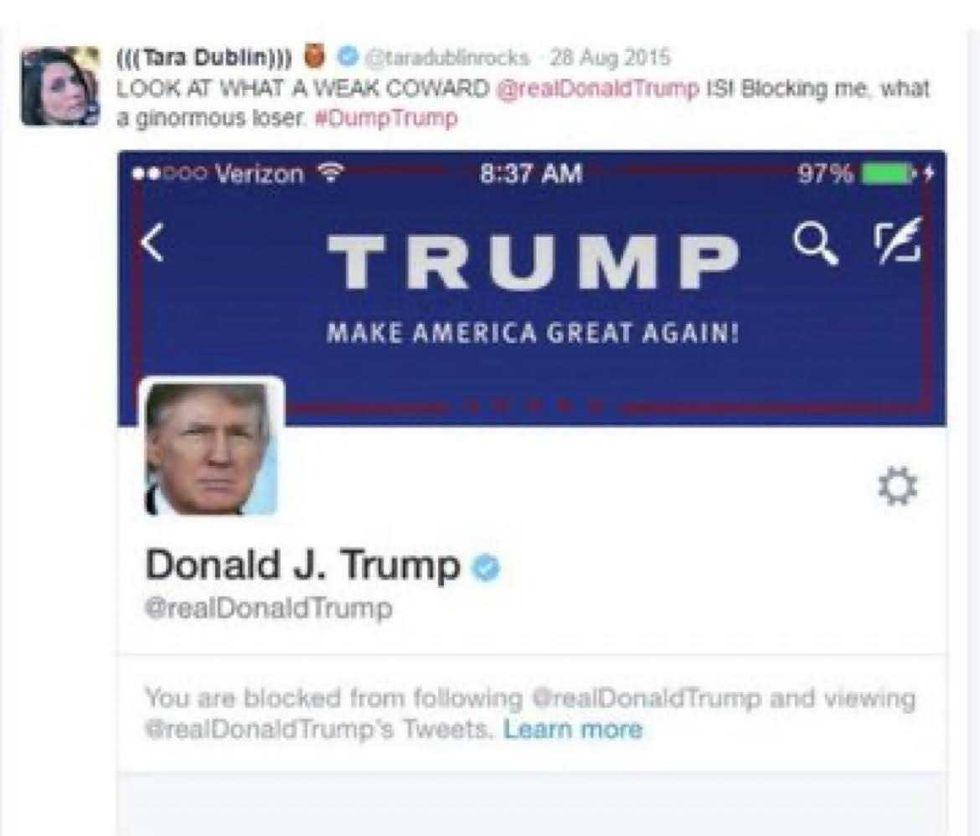
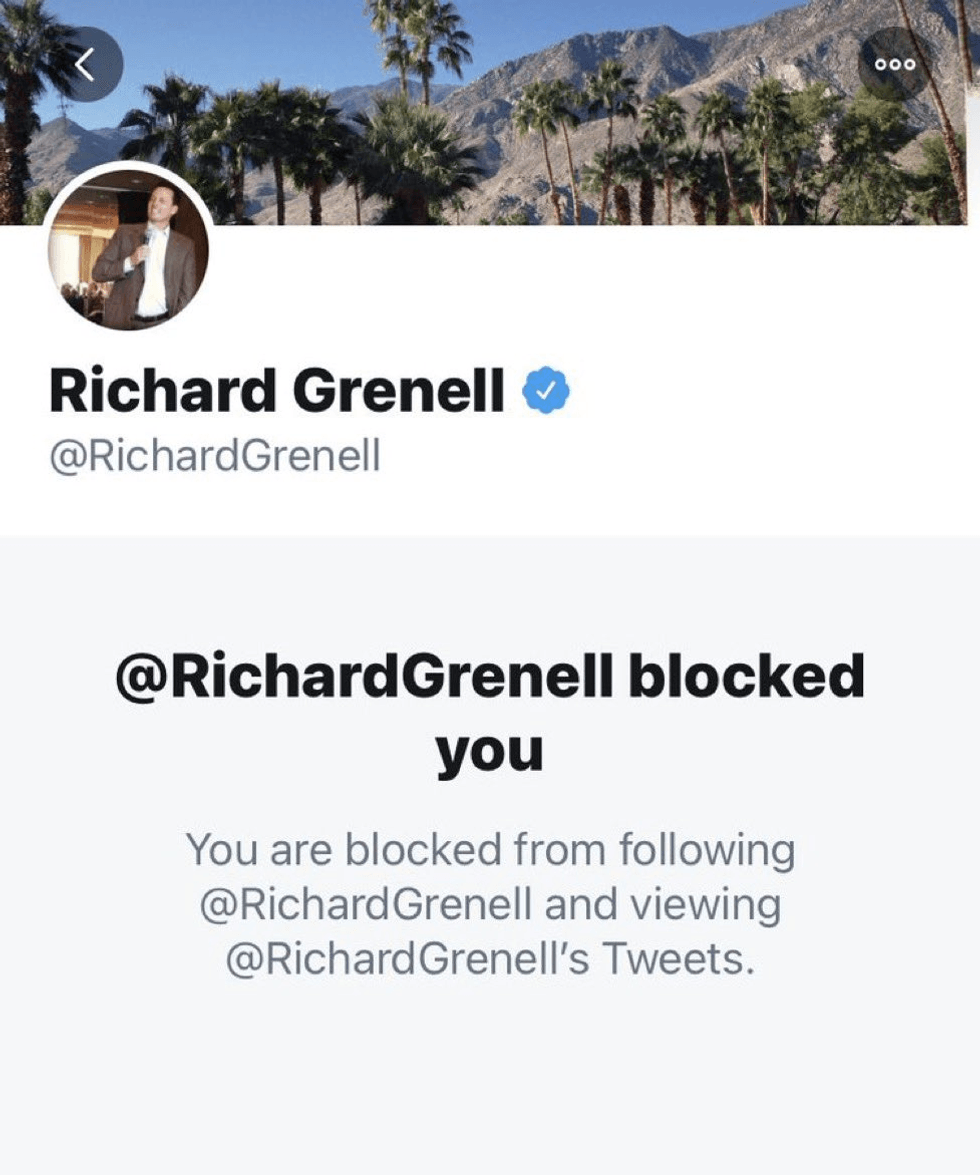
I sent the same emails to the comms directors for Anna Paulina Luna-tic and Grandmother of the Year Lauren Boebert, but neither responded. It’s a frustrating endeavor to try to get anyone to say anything truthful about Trump, because they’re scared of retribution. But again, he blocked me on Twitter more than a decade ago and I’m fine, so I really don’t understand why anyone is afraid of such a thin-skinned, lying Friend of Jeffrey.
What makes it more difficult to comprehend is watching Republican men hold Trump accountable, instead of GOP women. Rep. Thomas Massie (R-KY) has been in full lockstep with a Democratic colleague, Rep. Ro Khanna (D-CA), when it comes to Epstein. If Massie can do it, why can’t the rest of the party? I’m not a big fan of Massie in general, particularly regarding January 6th, but he’s on the correct side of history when it comes to the Epstein Files.
I also reached out to Massie’s office. The guy who answers his DC office phone and I shared a little chuckle over the “exonerated” line being parroted by those women and the rest of the MAGA cult. There was no reply from Massie’s comms guy by press time, but that’s okay. I got a corker of a quote from someone else who knows a thing or two about the Epstein Files, because he’s been investigating the financials for years: my home-state senator, Sen. Ron Wyden (D-OR).
As the ranking Democrat on the Senate Finance Committee, Sen. Wyden (or, as I like to call him, “Senator Chutzpah,” a reference to his latest book) has been looking into the Russian and American banks that financed the international sex trafficking ring run by Epstein and Maxwell. He always stresses that the key to nailing Trump is to follow the money, which is why I keep this screenshot on my phone. It’s of a Twitter thread Sen. Wyden wrote in July last year as a handy way to clap back at the MAGA trolls who still try to false equivalence their way out of every Trump-Epstein accusation.
Feel free to save it to your device. There’s always room for the truth next to those cute cat pics and whatever you ate last night.
Anyway, the Senate Finance Committee is hitting the same wall as House Oversight: Treasury Secretary Scott “What Epstein Files?” Bessent won’t allow them full access to his department’s own Epstein Files, which too many people don’t know exist. I don’t know why — or indeed why Bessent doesn’t care that Trump thinks Bessent’s marriage to a man isn’t real — because Bessent won’t respond to me, just like he won’t respond to my senator. It’s good company to be in, at least.
I got to spend a few moments on Friday with Senator Chutzpah, after his press conference at Portland Coffee Roasters to highlight the impact of Trump’s tariffs on small businesses. I asked what he would say to the MAGA cult about the lies they’re being fed about Trump being “exonerated.”
“Some of these people have as much interest in justice as Bonnie and Clyde,” he said, tipping me a wink.
Great line — but unfortunately, it might just make Nancy Mace show up to work on Monday cosplaying as a gun moll, instead of Hester Prynne.
- Tara Dublin is a political writer/commentator based in Portland, OR, who has been blocked by Donald Trump on Twitter since August 2015 and can occasionally be heard as a fill-in host on SiriusXM Progress. She is also the author of The Sound of Settling, a rock ‘n’ roll love story available at taradublinrocks.com
Keep reading...
Show less
This laughable ending to an ugly Epstein scandal laid bare a dark reality
By Yana van der Meulen Rodgers, Professor of Labor Studies, Rutgers University.
Economist Larry Summers will resign from his tenured job as a professor at Harvard University, the school announced on Feb. 25, 2026, following heightened scrutiny of his ties with the late convicted sex offender Jeffrey Epstein. Summers will leave at the end of the 2025-26 academic year, with a new title: president emeritus.
It’s a soft landing for his fall from grace.
In November 2025, Harvard launched an investigation of Summers, a former U.S. treasury secretary who previously served as Harvard’s president.
The probe looked into whether Summers and other members of Harvard’s faculty and administration had interactions with Epstein that violated its guidelines on accepting gifts and should be subject to disciplinary action. Summers’ resignation is connected with this ongoing investigation, a Harvard spokesperson told The Hill.
Despite repeated calls by students for Harvard to revoke Summers’ tenure, he held onto his teaching and academic appointments at Harvard until he chose to retire. Students and staff also called for his resignation in 2005 following his disparaging comments about women in science.
“Free of formal responsibility, as President Emeritus and a retired professor, I look forward in time to engaging in research, analysis, and commentary on a range of global economic issues,” Summers said in a statement released on Feb. 25.
Not surprised
As a female economist and a board member of the Committee on the Status of Women in the Economics Profession — a standing committee of the American Economic Association — I wasn’t surprised by the revelations of Summers’ apparent chumminess with Epstein, shocking as they may appear.
After all, it was Summers’ disparaging remarks about what he said was women’s relative inability to do math that led him to agree to relinquish the Harvard presidency in 2006.
And for years, researchers have documented the gender bias that pervades the field of economics.
The title of president emeritus is honorary. It brings with it symbolic recognition and the opportunity to maintain a formal connection to the university. Emeritus status is selective and requires approval at most universities. It’s usually bestowed on retiring professors.
In my view, by conferring this title on Summers, Harvard is signaling that powerful men can outlast gross misconduct with their honorifics intact.
Summers’ ties to Epstein
Summers, until his entanglement in the Epstein scandal came to light, was among the nation’s most influential economists.
But his history of public controversy stretches back to at least 1991, when a memo he wrote while serving as the World Bank’s chief economist appeared to justify sending toxic waste to poorer countries.
Criticism of Summers surged after the House of Representatives released damning messages between Summers and Epstein as part of a dump of more than 20,000 public documents from Epstein’s estate in November 2025.
A series of emails and texts documented how Summers repeatedly sought Epstein’s advice while pursuing an intimate relationship with a woman he was mentoring — while the economist was married to someone else.
Summers was close enough to Epstein that in 2014, the sex offender named the economist as a backup executor for his estate.
The Department of Justice released a much larger tranche of documents in January 2026 in compliance with a law passed by Congress. So far, no major media outlet has reported on any new Summers materials discovered as a result.
Harvard’s slow response
The Summers-Epstein exchanges released in November ignited a new round of scrutiny and led to the unraveling of Summers’ prestigious career.
Summers went on leave from teaching at Harvard on Nov. 19 and stepped down from several high-profile boards.
But beyond launching the investigation, Harvard took no decisive action to discipline or sanction Summers. This calculated hesitation, which reflects the institution’s efforts to court funding, power and influence among top donors, appears to have put donor politics above basic accountability.
By contrast, the American Economic Association, the primary professional association for economists, did take swift and harsh action. In an unprecedented move, on Dec. 2, 2025, the AEA announced that it had placed a lifetime ban on Summers from all its conferences and other activities.
Having lots of company
To be sure, Harvard is not the only prestigious university dealing with the aftermath of the Epstein revelations.
The Epstein documents include evidence that administrators and professors at other prestigious colleges and universities like Duke, Yale, Bard, Princeton and Columbia also exchanged messages with Epstein.
As public funding for higher education has eroded, universities have increasingly turned to wealthy donors to underwrite major projects and supplement budgets by endowing professorships and research centers. Epstein appears to have taken advantage of this dependence on rich supporters by presenting himself as someone who could deliver both his own money and access to other affluent donors.
The Epstein files uncovered many email exchanges, meetings and discussions with the sex offender about research and funding opportunities, and they demonstrated how thoroughly the man had embedded himself in academic circles.
Disturbingly, Summers was hardly the only scholar to solicit Epstein’s help in pursuing women.
Among others, Duke University economist Dan Ariely asked him for the contact information of a “redhead” he had met, and Yale computer scientist David Gelernter told Epstein about a woman he called a “v small goodlooking blonde.”
An economics problem
While Summers’ behavior and the reported dynamics between him and a woman he mentored may appear shocking, they are all too common in economics. For years, researchers have been documenting the gender bias that pervades the profession.
The data shows that abuse of power is common among male economists.
A 2019 survey by the AEA documented widespread sexual discrimination and harassment. Almost half of the women surveyed said that they had experienced sexual discrimination, and 43 percent reported having experienced offensive sexual behavior from another economist – almost always men.
Also, a 2021 study published by the National Bureau of Economic Research documented hostile environments in economics seminars, with female presenters experiencing more interruptions and encountering more patronizing behavior.
In 2024, according to the National Science Foundation, about 1 in 3 newly minted economics Ph.D.s in the U.S. were women, a considerably lower share than in other social sciences, business, the humanities and scientific disciplines. This ratio has changed very little since 1995.
After earning doctoral degrees in economics, women face a leaky pipeline in the tenure track, which represents the highest-paid, most secure and prestigious academic jobs. The higher the rank, the lower the representation of women.
The gender gap is wider in influential positions, such as economics department chairs and the editorial board members of economics journals. Women are also substantially underrepresented as authors in the top economics journals.
This bias not only hurts women who are economists; it can also hamper policymaking by limiting the range of perspectives that inform economic decisions.
Allowing a soft landing
Allowing Summers to commence a dignified retirement while continuing to hold honorifics risks signaling that there are ultimately few consequences at the very top in higher education.
I believe that if colleges and universities want to prove that they are serious about confronting abuses of power within their ranks, they must show that prestige does not entitle anyone, however accomplished, to a soft landing.
- Yana Rodgers is Professor and Chair in the Department of Labor Studies and Employment Relations in the School of Management and Labor Relations at Rutgers University. She also works regularly as a consultant for the World Bank, the United Nations, and the Asian Development Bank.Yana specializes in using quantitative methods to conduct research on women's health, labor market status, and well-being. Yana recently served as Faculty Director of the Center for Women and Work at Rutgers, and she was President of the International Association for Feminist Economics. She serves as an Associate Editor with the journals World Development; Feminist Economics; and Gender, Work & Organization.Yana earned her PhD in economics from Harvard University and her BA in economics from Cornell University.
- Portions of this article appeared in a related article published on Dec. 2, 2025
Keep reading...
Show less
This Trump goon's bizarre threat sounds like it came from a drunk guy on a barstool
On Friday, Trump barred an American AI developer, Anthropic, from doing further business with the federal government, and barred all contractors from doing business with Anthropic — an extreme punishment typically reserved for adversarial countries.
Anthropic’s crime? Refusal to let the Department of Defense use its AI system, Claude, for surveilling American citizens or in autonomous weaponry that removes humans from decisions to kill.
Defense Secretary Pete Hegseth — the man who group texted attack plans to a reporter, wanted to punish an astronaut for stating the law, then shot party balloons with potent lasers despite FAA warnings that the lasers could blind pilots while they were in the sky with passengers — demanded that Anthropic let him use its AI system without contractual restrictions. When Anthropic said no, Trump blacklisted them.
It’s hard to say what’s more appalling — that the Trump administration is building tools for mass public surveillance like China’s, or that an undisciplined dry drunk like Hegseth has access to lethal toys.
Keeping up with China … in the worst way
Trump has said he wants to keep up with China through “global technological dominance” and the “widespread use of AI.” China’s authoritarian government uses one of the most advanced public surveillance systems in the world, collecting extensive facial recognition, biometric data, and personal profiles from private citizens against their wishes.
China captures these data from citizens’ faces, conversations, social media posts, phones and other devices while people stand at crosswalks, ride the bus, and go to the store, then feeds the data into an AI database used for oppression: for law enforcement, “monitoring social behavior,” and controlling access to services.
China’s system is similar to what Trump oligarch-supporting Peter Thiel’s Palantir is building, namely, a high-level data integration platform that will enable U.S. law enforcement, ICE, the IRS, DHS, DOJ, the military, and any other rogue agency Trump wants to weaponize to collect facial recognition, license plate readers, and other biometric data for mass surveillance.
Poor Pete, nobody believes him
There were clauses in Anthropic’s contract with the DOD that prevented Claude from being used for either mass surveillance of Americans or autonomous weaponry. While Anthropic had integrated Claude into some classified military networks, that $200 million contract expressly prohibited using it for mass surveillance of Americans as well as autonomous weaponry, “killer robots” that can identify, select, and kill targets without a human in the decision-making loop.
These were the contractual restrictions Hegseth’s DOD demanded be removed. But Anthropic wasn’t having it.
Just before Trump blacklisted them, Anthropic’s CEO, Dario Amodei said the company could not, “in good conscience” agree to the Pentagon’s request. Amodei has expressed concern that Claude could be used for mass surveillance by automatically assembling “scattered, individually innocuous data into a comprehensive picture of any person's life,” which seems to be exactly what Trump is trying to do.
In a series of angry social media posts, Undersecretary of Defense Emil Michael accused Anthropic of “lying” about using Claude for mass surveillance because the Dept. of Defense “doesn’t do mass surveillance as that is already illegal.”
Apparently the DOD does do comedy, because the suggestion that this regime will follow the law is a joke.
Forget about the hundreds of court orders Trump has already violated. How many people have been murdered off the coast of Venezuela with zero legal justification? Claiming without evidence that we’re in an "armed conflict" with "narco-terrorists" is not a legal justification; it’s a dictator’s “shoot now, ask questions never” strategy for breaking the law.
What can the AI do?
Most Americans are blissfully unaware of how the emerging AI landscape could change their lives, and not for the better. Since I’m no AI expert, I asked Google AI to explain in simple terms how Anthropic’s Claude, if left to Hegseth’s command, could be used to spy on Americans. Here’s how AI described Claude’s functional capacity, verbatim:
- Mass Data Synthesis (Sorting Huge Amounts of Info): Imagine a super-fast robot reading billions of text messages, emails, and internet posts all at once. It looks for "moods" (like who is angry or unhappy) and makes a map of where those people live.
- Intelligence Dossiers (Digital Secret Files): Using smart computer programs to read thousands of pages of documents about one person instantly. It acts like a digital detective, putting together a secret file on someone's whole life.
- Automated Tracking (Digital Footprints): Looking at where people drive, what websites they visit, and who they talk to. This combines records to draw a map of where someone goes, like cameras on streets tracking cars.
- Law Enforcement Support (Police Tech Tools): Companies like Palantir create software for the police. This software combines information from cameras, bank records, and phone calls to track suspects and help police find them quickly.
The dispute has put Silicon valley on edge. If Trump and Hegseth can change the terms of AI contracts after the fact, why sign contracts at all?
The regime’s dishonesty isn’t helping. Before Trump blacklisted Anthropic, Pentagon officials said they had “no interest” in using the illegal surveillance tools outlined above, while seeking unfettered access to them. Color me, and anyone with half a brain, skeptical.
- Sabrina Haake is a columnist and 25+ year federal trial attorney specializing in 1st and 14th A defense. Her Substack, The Haake Take, is free.
Keep reading...
Show less
This Trump cover-up is appalling — and may have met its match
The federal judiciary has stiffened its resolve toward the Trump administration.
The Supreme Court ruled 6-3 last week against the authority that President Donald Trump asserted in imposing tariffs. The decision drew Trump’s condemnation. On Tuesday, during the State of the Union address, the justices did not look comfy while sitting front and center in the House chamber.
Also, a federal judge held a lawyer for the Justice Department in contempt of court — for the first time during Trump’s second term. The New York Times found at least 34 other instances in which federal judges issued orders requiring the government to explain why it “should not be similarly punished for violating court orders.”
Even so, a different recent decision caught my eye.
Since last fall, I have been tracking the Trump administration’s brazen attempts to change what visitors learn at places managed by the National Park Service. A nationwide review of national park signage signaled that some of these displays, posters, signs and exhibits would be eliminated.
At the time, I wondered who would have leverage to prevent these acts of civic censorship. Even more, I couldn’t imagine who would have sufficient legal standing to sue — let alone win. Who could sue to prevent the whitewashing of national parks, if it happened?
As if in response to my question, I heard the bad news … and the good news this week.
The bad news came in the form of brutish attempts by the National Park Service to alter the history of George Washington by removing references to his enslavement of people at his home in Philadelphia, a location that is now a national monument. The changes — to the President’s House Site — happened in January, but headlines reemerged this week.
An informational panel at the President's House Site in Philadelphia, Pennsylvania. Picture: Kreuz und quer/Wiki Commons
Those headlines trumpeted the good news: a federal judge, appointed by George W. Bush, ordered that the history be restored to tell the truth about Washington. Indeed, our first president was not only a slave owner, but he also strategically moved enslaved people from state to state so they would never gain freedom.
In Washington’s time, an enslaved person was considered free after spending six months in Pennsylvania. The website for Washington’s home, Mount Vernon, explains that to “evade the statute, Washington sent the enslaved cook, waiters, and maids out of state every six months, instructing his secretary to move the slaves ‘in a way that will deceive both them and the public.’ ”
It seems perverse to be grateful that Mount Vernon isn’t a National Park — but in this case, it likely shields the site from censorship.
In her opinion about Washington’s home in Philadelphia, Judge Cynthia Rufe blasted the whitewashing of presidential and national history by invoking the altered history created by the omnipotent government in George Orwell’s Nineteen Eighty-Four.
She wrote: “Each person who visits the President’s House and does not learn of the realities of founding-era slavery, receives a false account of this country’s history.”
(It’s easy to imagine a censorship case about one of the national parks in Kansas arriving in a nearby courtroom, if history is erased at one of the six sites. Let’s hope that the three Kansans nominated last week to the U.S. District Court will show similar mettle as Rufe, if they decide such a case.)
We are rightfully concerned about histories that are changed and erased because of the impact on what we learn about the past.
With gratitude to Rufe, I want to take her argument further.
By editing the embarrassing, amoral and ignorant acts of the past, our federal government provides cover for a broad spectrum of today’s misdeeds.
How does the administration’s historical whitewashing affect the actions of Trump’s emissaries today? His appointees, including Doug Burgum, who has overseen the national parks censorship, have created a shameful resume of thuggery that could guide future generations.
For instance, deleting the truth about climate change from a plaque emboldens a government worker to further shred environmental protections. Forgiving a past president for his subjugation of slaves signals acceptance of racism. Waving away the 1940s internment of Japanese Americans provides psychic cover for suburban Kansas City warehouses to be converted into immigration detainment centers.
The administration’s censorship of history has become a dog whistle — if not a rallying cry — to Trump’s acolytes.
You have our permission, they hear the dog whistle chirp. Your moral failings will likely be forgotten, just like those of President Washington! Future generations will never know our cruelty.
Overlay the administration’s stated policy goals with the content being censored at national parks and you can see uncomfortable overlap. Save Our Signs, a guerrilla effort to document park signs before they vanish, provides a growing spreadsheet of alterations reported in the press.
(Note that 12 of the 16 items have appeared since the start of 2026.)
The administration’s hostility toward climate change happens by dismantling the power of the U.S. Environmental Protection Agency — but also through the signage at Muir Woods National Monument and Glacier National Park. Removing signage that references “women’s rights and liberty” at the Gateway National Recreation Area aligns conveniently with the scaling back of affirmative action and diversity, equity and inclusion programs that benefited women.
Changing the available history of Native Americans at national parks tracks with last year’s cuts to grant funding that helped tribes. Eliminating the pride flag from the Stonewall National Monument extends Trump’s animosity toward folks in the LGBTQ+ community.
Seen like this, the administration’s animus — rhetorical, historical, political and administrative — appears comprehensive.
If Rufe’s order doesn’t seem like enough to reverse this tide, have faith. Citizens have rhetorical and political power too: power to tell our true histories.
We can each counter the whitewashed history of national parks as we tell more complete accounts in our homes, our classrooms or our faith communities.
Even more urgent is accurately describing what is happening around us each day remaining in the Trump administration — writing the first draft of history as completely and courageously as we can.
This does not mean that citizens should shovel out overheated rhetoric that blindly brands every federal action as racist, sexist, violent or corrupt. This degrades history as effectively as Trump’s efforts, just from the opposite extreme. Avoid being polemic simply for the sake of scoring points.
Instead, each one of us has a role to play by describing the administration’s actions as they are, remaining rooted in facts.
After all, that’s what we expect from our history: a full recounting, regardless of its inconvenient truths.
- Eric Thomas teaches visual journalism and photojournalism at the William Allen White School of Journalism and Mass Communication at the University of Kansas in Lawrence. Through its opinion section, Kansas Reflector works to amplify the voices of people who are affected by public policies or excluded from public debate. Find information, including how to submit your own commentary, here.
Keep reading...
Show less
This sweeping Trump assault has us headed for a hellscape of unimaginable dimensions
The first days of a bombing campaign almost always look successful. Targets are hit. Explosions dominate headlines. Leaders declare strength. But wars are judged by what follows: retaliation, escalation, unintended consequences that unfold in days, weeks, months, and years.
For example, Israeli sources said on Saturday that Iran’s Supreme Leader Ayatollah Ali Khamenei was killed in the initial bombings. But if he is dead, who comes next? His death after 35 years in power would likely trigger a prolonged, ugly and tumultuous struggle.
Further back, remember George W. Bush and his rush to declare “Mission Accomplished," shortly after the attack on Iraq in 2003?
That pattern of not thinking and planning ahead for what comes next mirrors Donald Trump’s life of losing. His deals and grand ideas often look triumphant at the start. Later, collapse, chaos, and damage become clear.
Trump’s decision to join Israel in bombing Iran is shocking the world. It feels reckless and ego-driven — both for Trump and Benjamin Netanyahu — undertaken without fully reckoning with the grave consequences such action could unleash.
Yes, Iran is dangerous. Yes, it should never have nuclear weapons. Yes, the regime’s mass killing of protesters is abominable. But behind the curtain of cruelty is an entrenched military and ruthless theocratic leadership capable of spreading unimaginable horror throughout the Middle East.
It’s already begun.
But let’s start in the U.S., with a president who campaigned in 2024 on ending wars through dealmaking.
Trump has ended nothing. He has built nothing. He has stabilized nothing. That assessment isn’t limited to what’s happening now. It reflects how he has carried himself throughout his life. He is not a winner. He is a loser. He does not create peace. He creates chaos.
Now he has detonated that chaos in the most volatile region on Earth. Why now? For what purpose? For how long?
Trump repeatedly claimed that last year’s U.S. strikes on Iranian nuclear facilities “obliterated” them. Obliterated. He has insisted on that word, dismissing experts who said otherwise.
So why are American bombs once again falling on Iranian soil? You don’t obliterate something and then have to obliterate it again.
There has been no publicly presented evidence that bombing Iran is in America’s best interest. None. No imminent attack disclosed. No ticking-clock intelligence, laid before Congress.
And what of Congress? Article I of the Constitution is clear: Congress has the power to declare war. Trump didn’t seek it. He didn’t secure it. He didn’t build bipartisan consensus. He simply acted. Congress represents the voice of the American people. We, and our elected officials, should decide whether to put American troops in harm’s way.
Trump failed to rally NATO. After years of threatening to weaken the alliance, flirting with abandoning European partners, even floating the absurd notion of invading Greenland, he has left the United States diplomatically diminished.
Rather than assembling a coalition, he has tethered America’s fate to another leader who thrives on confrontation: Israeli Prime Minister Benjamin Netanyahu.
Netanyahu has long viewed Iran as Israel’s existential enemy. Iran harbors deep hostility toward Israel and Netanyahu. Netanyahu is polarizing in the Middle East, controversial at home. Trump is viewed globally as erratic, incapable of restraint.
Two unpredictable leaders do not create stability. They do not project peace. And if these two have rid Iran of the equally unpredictable Khamenei, God knows what lies ahead.
This is a sweeping assault with no clearly articulated endgame against an adversary as hardened as it is brutal. If Khamenei is dead, his revolutionary forces will surely retaliate to an extreme.
There has been no serious explanation of what victory looks like, only assurances that bombing will continue. Escalation feels inevitable. Regional war is plausible.
Experts have warned for weeks that a full-scale attack on Iran could ignite the Middle East.
Iran is not isolated. It has a network of proxies: Hezbollah in Lebanon, militias in Iraq, the Houthis in Yemen. They are all capable of striking American assets and allies. Retaliation could be relentless, U.S. troops potential targets.
Shipping lanes could be disrupted. The Strait of Hormuz, through which flows a significant share of the world’s oil, could become a choke point. Energy markets would convulse. Inflation would spike. A fragile global economy, rattled by Trump’s erratic tariff obsession, could tip toward crisis.
And then there’s Russia, which was blunt in response to the bombing, saying it was an “unprovoked act of armed aggression.”
Moscow has deepened ties with Tehran. Iran has supplied Russia with drones. Russia has offered diplomatic cover. By attacking Iran in a sustained way, Trump risks entangling the U.S. in a broader dynamic that could spiral beyond control.
When military powers circle the same battlefield, miscalculation is a real probability.
Even within U.S. military leadership, alarm bells have been ringing. Joint Chiefs Chairman Dan Caine has warned that a full-scale confrontation with Iran would come with “acute risks,” along with being extraordinarily costly and unpredictable.
This is not Venezuela. Iran is no pushover. It is one of the most volatile regimes in the world, rivaling North Korea.
And now we have added another unpredictable actor — the habitual liar that is the President of the United States.
This is the man who has failed at virtually every major endeavor he has led, too many to list. He is not a steady leader. He is a coddled billionaire who has never faced meaningful consequences for his mistakes.
Trump, who thrives on confusion, lies, and chaos, has not clearly articulated objectives, sought congressional authorization, or built a multinational framework. And we are supposed to trust him?
We are headed for a hellscape of unimaginable dimensions.
What unfolds next could reshape the global order: regional war, confrontation with major powers, economic shockwaves hitting American families, gas stations and grocery stores, terror retaliation, cyberattacks … the “acute risks” falling like dominos.
Trump falsely bills himself as the man who would keep America out of endless wars. He foams at the mouth for a Nobel. He launched a farcical “Board of Peace.” Yet he has now lit the fuse in one of the world’s most combustible regions.
Unlike his past failures, his latest bomb is far worse than a bankruptcy. Far, far worse.
- John Casey was most recently Senior Editor, The Advocate, and is a freelance opinion and feature story writer. Previously, he was a Capitol Hill press secretary, and spent 25 years in media and public relations in NYC. He is the co-author of LOVE: The Heroic Stories of Marriage Equality (Rizzoli, 2025), named by Oprah in her "Best 25 of 2025.”
Keep reading...
Show less
This is Trump's war — and he will own all that comes next
The United States is now at war with Iran.
A single person — Donald J. Trump — has released the dogs of war on one of the most dangerous countries in the world, and done it without the consent of Congress or our allies, or even a clear explanation to the American people.
Just four days after delivering a State of the Union address in which he spoke of ending eight wars — spending just three minutes discussing Iran and a preference for “diplomacy.”
Anyone who has doubted Trump’s intention to replace American democracy with a dictatorship should now be fully disabused.
I share your despair, sadness, and fear. Even if our president was a wise and judicious man, surrounded by thoughtful advisers with impeccable integrity and wisdom, this would be a highly dangerous move.
Trump is facing the consequences of his decision in his first term to abandon the Joint Comprehensive Plan of Action negotiated with Iran by Barack Obama and backed by France, Germany, the United Kingdom, Russia, and China.
Trump walked away from that treaty because it was Obama’s — and he hates Obama because Obama negotiated safeguards against Iran enriching uranium to weapons grade. Obama also got Obamacare through Congress, addressed climate change and nuclear proliferation, and was rewarded the Nobel Peace Prize.
Obama was a winner. Trump is a loser. Trump cannot stomach this.
But why should America and thousands if not millions of innocent people pay the price of Trump’s egomaniacal stupidity?
Trump claimed in June to have disarmed Iran. He claimed again in his State of the Union last Tuesday to have “obliterated” the Iranian nuclear weapons program (an assertion rejected by the International Atomic Energy Agency).
Since then, Iran has taken steps to dig out the nuclear facilities hit during those strikes and it has resumed work at some sites long known to American spy agencies.
But those same spy agencies say there’s no evidence that Iran has made active efforts to resume enriching uranium or trying to build a mechanism to detonate a bomb.
Iran’s stockpiles of enriched uranium remain buried after June’s strikes, making it nearly impossible for Iran to build a bomb “within days,” as Trump and his lapdogs claim.
Trump says he wants “regime change.” But unlike Venezuela, the Islamic Republic has nearly a million men under arms. Any attempt to overthrow that regime will require American troops on the ground, and almost surely inflict mass casualties on Americans and on Iranians.
Besides, Trump won a second term promising “no regime change” and in 2024 he campaigned as “the first president in decades who started no new wars.”
He hasn’t prepared the American people for this. In his State of the Union he bragged again about having ended eight wars. He spent just three minutes discussing Iran and his preference for “diplomacy.”
He said Iran has refused to foreswear any nuclear weapons ambitions. Yet just hours before his address, Iran’s foreign minister reaffirmed on X that his country would "under no circumstances ever develop a nuclear weapon."
Trump noted the Iran regime’s killing of thousands of protesters, but this hardly justifies a war that may cause the deaths of thousands more innocent civilians. (On Saturday morning, Iran’s Red Crescent said more than 60 children were killed in the strike on Shajarah Tayyebeh school in the southern town of Minab (a toll that has since been raised to 85.)
Make no mistake. The costs of this war — mayhem and deaths in the Middle East, higher oil prices (as Iran closes the Straight of Hormuz), increased risk of terrorism in Europe and the United States — could be catastrophic.
Yet Americans don’t support this war. They haven’t been told why we’re waging it. Trump’s MAGA base doesn’t want him to engage in regime change. Congress hasn’t approved this war.
Trump is going to war for himself and his boundless, malicious ego.
- Robert Reich is an emeritus professor of public policy at Berkeley and former secretary of labor. His writings can be found at https://robertreich.substack.com/. His new memoir, Coming Up Short, can be found wherever you buy books. You can also support local bookstores nationally by ordering the book at bookshop.org
Keep reading...
Show less
This major news outlet completely whiffed declaring 'worst' moment of Trump's presidency
The Wall Street Journal Editorial Board recently declared Donald Trump’s public meltdown in the wake of the Supreme Court’s tariff decision “arguably the worst moment of his presidency.”
I beg to differ. There have been countless others for which notable commentators have argued strongly that he surely can’t go any lower than this. They identify a moment, action, or post that they contend is the “worst of the worst,” the nadir of presidential leadership.
For my part, a strong case can be made for establishing a national competition in which all citizens can participate and advocate for what they consider the absolute “bottom-feeding” moment of Trump’s presidency. Many benefits would accrue from such a competition.
One of the most consequential benefits is the aggregation in one place of the thousands of “worst moments” that citizens will cite. Amassed together, they would inform our collective consciousness about the quality of leadership that the nation is experiencing.
Perhaps an appropriate national advocacy organization could take on the task of creating a giant display. Viewers would walk through a museum-like presentation, offering a sequenced timeline of these juried “worst moments.” Each one would be set apart and include explanatory text on why it was chosen and who nominated it.
The display would also provide another critical benefit. It would remind us all of the assault on our moral compass that these last years have wreaked.
It is not accidental or incidental that the unfolding saga surrounding the Epstein files has not produced the moral outrage in this country that it has in Great Britain. We have become numb to moral transgressions because we are drowning in them. This is an extremely hazardous place to be. A “worst of the worst” display will help us regain perspective and moral equilibrium. Without something like this, our status as ethical beings will be nullified.
Here are three of the “worst of the worst” that I believe warrant serious consideration for the display. I have chosen ones in particular that involve Trump’s blatant attempts to dominate other persons in a way that diminishes their basic humanity. These speak eloquently of his motivation to harm his fellow human beings and encourage followers to violence.
- The president’s recent posting of the Obamas as jungle apes ranks high on my list. Denigrating a predecessor in such a blatantly racist fashion, while also including his wife who is revered by a good proportion of the citizenry, makes this a good fit for the “worst of the worst.” Unlike the Supreme Court’s tariff decision, there was not even a wisp of policy implication here. Rather, it concerned the basic regard we owe other people.
- When Rob Reiner and his partner were killed by his drug-addicted son, Trump disparaged Reiner, calling him “deranged.” As with his treatment of Sen. John McCain, he expressed disdain for a highly regarded individual, who through no fault of his own had become a victim.
- The most legendary “worst of the worst” is the “grab them by the p----” assertion. Here Trump objectifies and denigrates over half the world’s population, displaying for all to see how threatened he is by the power of women. He leaves no doubt of his inclination toward sexual abuse and intimidation.
So, my fellow Americans, I urge you to identify the moment you think qualifies for the “worst of the worst.” There is an endless array from which to choose. Our qualification as a caring and right-minded people depends on your thoughtful deliberation.
- Steve Kaagan is an octogenarian, writer, wooden whale craftsman, teacher, and consultant.
Keep reading...
Show less
America's crazed new obsession is nothing more than a tall tale
I’m very short. At my zenith I was 4 feet, 11 inches.
From time to time, worried parents of abnormally short children phone or email me seeking reassurance. I tell them that if they or their children are desperate, they can resort to limb-lengthening surgeries, growth hormone treatments — humatrope — with unknown and potentially dangerous side effects, or a wide variety of homeopathic and crank remedies. But I discourage this.
The newest craze is height surgery, a procedure in which the leg bones are fractured and implanted with devices that slowly stretch them over several months. It can add three or so inches per procedure to a person’s height.
Mario Moya, chief executive at the LimbplastX Institute in Las Vegas, says demand for height surgery has been surging. Dr. S. Robert Rozbruch, an orthopedic surgeon at Hospital for Special Surgery in New York, says he used to see about 10 cases a year; last year, his clinics had 155 cases.
Last week, the New York Times ran a long feature on height surgery. The procedure was even used recently as a plot point in the film Materialists.
Why are so many parents worried about their child’s height these days? Maybe because, in this era of record-breaking inequality, they believe greater height will give their kid a leg up.
I gently urge the parents of short children not to seek height surgery or anything else to make their children taller.
I tell them to love their short kids, to inundate them with affection, and they’ll be okay.
I should know. I was bullied and ridiculed as a young kid, as I’ve recounted in my memoir, Coming Up Short.
Starting when I was around six years old, my mother and grandmother Minnie told me not to worry that I was at least a head shorter than other kids my age because I’d “shoot up” when I got to be 13 or 14 years old. I pictured a magic beanstalk; one morning, I’d wake up and be 6-foot-10. But by the time I was 15, I remained an inch under five feet, and I never got any taller.
Soon after John F. Kennedy’s inauguration in 1961, when the whole country seemed to be bubbling with optimism, my optimistic mother took me to see a doctor in New York who specialized in bone growth. He took a bunch of measurements, asked questions about the heights of my grandparents and great-grandparents (they were all normal), made some X-rays, drew some blood samples, and three weeks later phoned to say he had no idea why I was so short.
Reluctantly, I gave up waiting to shoot up. By that time I wasn’t particularly worried about being bullied or ridiculed. But being a very short man wasn’t especially helpful when it came to dating. A few years later, Dartmouth College, which was then all-male, seemed comprised almost entirely of big young men able to swoop the inhabitants of women’s colleges literally off their feet. (When I swooped in, they seemed to flee.)
That’s where things stood, as it were, until I was in my 30s, when my then wife (about five inches taller than I) and I contemplated having children. Medical science had advanced considerably over the two decades, because there was an answer to why I was so short.
I inherited a mutation called Fairbanks Disease, or multiple epiphyseal dysplasia, a rare genetic disorder that slows bone growth. (The actor Danny DeVito also has this condition.) Normal bones grow when cartilage is deposited at their ends. The cartilage then hardens to become additional bone. But my cartilage didn’t work that way.
Not only were my bones short, but the experts predicted I’d also have pain in my joints. I’d often tire, they said, and have problems with my spine. I’d have arthritis all over, and I’d waddle when I walked. Other things would go wrong as well.
Their predictions were accurate. I have had problems with my hips, and in my late 30s had to replace both. I had a bout of grand mal seizures in my late 30s, which neurologists couldn’t explain. There’s no need to bore you with my aches and pains. But the geneticist I consulted explained that the odds of passing this mutation to my children were very small. Even if they had it, the odds that it would slow their bone growth or cause any other irregularities, or be passed on to their own children, were minuscule.
We decided to have kids. And our sons turned out perfectly normal. But what’s “normal” anyway? And why is normal so important? I’ve had a wonderful life. I have a loving family. I’ve had good friends, work that I consider satisfying and important, reasonably good health except for the above-mentioned problems. So what if I’m very short?
Researchers have correlated being taller with greater income, high-status jobs, and positive perceptions of leadership. And it can be a tricky issue in an era of dating apps that can filter for height preferences.
Yet David Sandberg, a psychologist at the University of Michigan, studied hundreds of children in the Buffalo area and found no real problem with being short and little benefit to being tall. In fact, height didn’t affect the number of friends those kids had, or how well they were liked by others, what others thought of them, or even their own perception of their reputation. But when psychologists Leslie Martel and Henry Biller asked several hundred university students to rate the qualities of men of varying heights on 17 criteria, short men were assumed to be less mature, less positive, less secure, less masculine, less successful, less capable, less confident, less outgoing, more inhibited, more timid, and more passive. In another study, only two of 79 women said they’d go on a date with a man shorter than themselves (the rest, on average, wanted to date a man at least 1.7 inches taller).
Heightism has even infected our language. Respected people have “stature” and are “looked up to.” People are more likely to make disparaging cracks about short people because nobody gets pulled up short for doing it — except for Randy Newman, who went too far with his “Short People (Got No Reason to Live)” song, which he has apparently regretted ever since.
When it comes to choosing leaders, our society is exceptionally heightist and seems to be getting more so. My dear friend and mentor, the late economist John Kenneth Galbraith, was 6-foot-8. He once said that favoring the tall was “one of the most blatant and forgiven prejudices in our society.” (When we walked around together, chatting away, people stared at us as if we were a carnival act. We laughed it off.)
When I ran for the Democratic nomination for governor of Massachusetts in 2002, it seemed that the only attribute reporters wanted to cover was my height. Regardless of what I said in my speeches, the Boston Globe ran photos of me standing on boxes so I could see over the podium. The right-wing Boston Herald ran a headline on its front page charging “Short People Are Furious with Reich” because I had joked about my height on the campaign trail. None of it helped me with that election. But I didn’t lose because of my height. I lost because I was a lousy campaigner.
Research shows that voters do prefer taller candidates. A paper published in 2013 by psychologists at the University of Groningen in the Netherlands analyzed the results of American presidential elections dating back to 1789. They found that taller candidates received more votes than shorter ones in roughly two-thirds of those elections. And the taller the candidates were relative to their opponents, the greater the average margin of their victory. Among presidents who have sought a second term, winners have been two inches taller, on average, than losers. The authors conclude that height may explain as much as 15 percent of the variation in election outcomes. Presidents are becoming taller relative to average Americans (as measured by army records of recruits of the same age cohort). The last president shorter than this average was William McKinley, elected in 1896.
A survey of the heights of CEOs of Fortune 500 companies showed they were on average six feet tall, about 2.5 inches taller than the average American man.
Why are we so heightist? Probably because of some genetic trigger in our brain that told early humans they needed the protection of very big men. Other things being equal, large males are more to be feared, and they live longer. An impulse to defer to them, or prefer them as mates, makes evolutionary sense.
In Size Matters, Stephen S. Hall writes that in the 18th century, Frederick William of Prussia paid huge sums to recruit giant soldiers from around the world, thereby giving tangible value to matters of inches, and revealing “the desirability of height for the first time in a large, post-medieval society.”
But hey, I’m okay with being protected by giant soldiers, big security guards, and massive first responders. I don’t want to do these sorts of jobs anyway. I’m fortunate to have grown up (or at least grown upward) in a society that values brains at least as much as brawn. And to have had parents who loved me for who I was.
- Robert Reich is an emeritus professor of public policy at Berkeley and former secretary of labor. His writings can be found at https://robertreich.substack.com/. His new memoir, Coming Up Short, can be found wherever you buy books. You can also support local bookstores nationally by ordering the book at bookshop.org
Keep reading...
Show less
This GOP farce just proved the net is closing on Trump
For the better part of 40 years, the Republican Party has chased Bill and Hillary Clinton with fervor bordering on obsession. From Whitewater to Benghazi, from emails to impeachment, the pursuit has been relentless, and always ridiculous.
After Hillary Clinton lost the Electoral College in 2016 (while winning the popular vote), it seemed possible the GOP might finally loosen its grip.
Nope. This week, the GOP tried to light the Clintons on fire again. And as usual, the Clintons proved flame retardant.
In the Epstein affair, James Comer, Chair of the House Oversight Committee, tried to use closed-door depositions to make the former first couple look guilty — or at least more guilty than Donald Trump.
But if Comer and his allies believed they would finally corner the Clintons, they miscalculated badly. The depositions produced no bombshells, no dramatic unravelings — nothing, unless you count the bizarre spectacle of a bunch of clowns asking Hillary about UFOs, and Rep. Lauren Boebert (R-CO) managing to torpedo the whole thing by leaking photos to the press.
If this two-day Chappaqua farce did anything, it made it more obvious that the current president and first lady should testify.
Anyone with documented ties to Jeffrey Epstein, and that includes Bill Clinton, should answer questions under oath. He did. Survivors deserve nothing less than full transparency. All this innuendo and all these flimsy excuses — “bad judgment,” “mistake,” “just business” — need to end. Now.
But if Republicans insist on dragging Hillary Clinton into the room, despite zero evidence she ever met or interacted with Epstein, then fairness demands the standard apply to Melania Trump.
Melania moved in overlapping social circles with Epstein and Ghislaine Maxwell. She was photographed at events where Epstein was present. Maxwell reportedly referred to her affectionately — as “sweet pea.”
If Hillary Clinton can be questioned to eliminate doubt, Melania should be too. But don’t bet on it. She’ll hide under her shady hats, and refuse to step forward in her five-inch stilettos.
It shouldn’t stop there. It’s time to pick up the pace. Honestly, if Republicans want to stop Epstein haunting the entire midterms campaign, they need to get down to business.
Why has there been so little urgency to pursue testimony from figures far more substantively tied to Epstein than the Clintons? It’s starting to bother voters, and it’s only going to get worse.
Les Wexner, the billionaire who financed Epstein, did testify — and not a single GOP member of Comer’s committee dared participate in full.
Wexner said he was “deceived,” that Epstein “misappropriated vast sums of money from me and my family.”
Speaking of money, what the hell did Bill Gates need Epstein for?
The Microsoft founder has called meetings with Epstein after his 2008 conviction for child prostitution a “huge mistake” and a “serious error in judgment.”
But a “mistake” is not enough. Epstein was a registered sex offender. His crimes were public knowledge. Why continue meeting with him?
What was so valuable that it justified the reputational and moral risk? Gates has more money than God. It doesn’t make sense. That’s why Gates should testify under oath, and answer questions from the FBI.
So should Alex Acosta, the U.S. Attorney who approved Epstein’s 2008 Florida plea deal, then later became Trump’s secretary of labor.
Acosta later claimed he was told Epstein “belonged to intelligence.”
The full context of how Epstein secured such an extraordinary deal remains disturbingly unresolved.
The lawyer Alan Dershowitz needs to be grilled. He strenuously denies wrongdoing, stating, “I never had sex with any of Epstein’s accusers,” calling allegations “fabricated.”
So why did he hang out with Epstein? Seriously.
Then there’s Woody Allen. In light of all the allegations that have dogged the comic and director, his association with Epstein remains extremely dubious. As recently as September, Allen defended his attendance at Epstein’s dinners, saying Epstein "couldn't have been nicer" and was "charming and personable". And that he “told us he’d been in jail.”
Woody. You of all people should have run for the hills.
Steve Bannon, who spent hours interviewing Epstein after his conviction, says Epstein was “trying to rehabilitate his image.”
Can’t someone subpoena Bannon’s tapes? We’re talking about serious crimes.
And what of figures in proximity to Epstein who overlap directly with Trumpworld — including Commerce Secretary Howard Lutnick?
Above all, if Bill Clinton can be compelled to testify a quarter-century after leaving office, then Donald Trump must be called to testify under oath and to be interviewed by the FBI. He was in way deeper.
It is not enough for Trump to toss half-answers at press gaggles or dismiss legitimate questions as “old news” or a “hoax.” Trump once called Epstein a “terrific guy” who liked women “on the younger side.”
That remark has no expiration date. There are photos, footage, flight logs, and overlapping Palm Beach connections. If Congress and the Justice Department truly believe no one is above scrutiny, that principle must begin with the man at the center of their universe.
Here is a starting point: anyone who chose to associate with Epstein after his 2008 conviction should testify. Period. No exceptions. Everyone. If you were really innocent, you should be jumping forward.
Ask yourself a simple question. If you were running a business and a man who had served time for sex crimes against minors offered to help, would you welcome him in? Would you schedule meetings? Would you board his plane? Would you strategize about philanthropy or public image?
Most Americans would recoil.
Yet an astonishing number of powerful people did not. They proceeded as if the conviction were a small inconvenience. And some are lying now.
Why?
The path forward is not complicated. Call everyone who associated with Epstein after his conviction. Put them under oath. Follow the money. Release the files, clean. Apply the same standard to Democrats and Republicans, billionaires and celebrities, former presidents and private citizens alike.
The survivors have waited long enough. And they deserve far better than they’re getting.
- John Casey was most recently Senior Editor, The Advocate, and is a freelance opinion and feature story writer. Previously, he was a Capitol Hill press secretary, and spent 25 years in media and public relations in NYC. He is the co-author of LOVE: The Heroic Stories of Marriage Equality (Rizzoli, 2025), named by Oprah in her "Best 25 of 2025.”
Keep reading...
Show less
This gruesome Trump allegation cannot go unpunished
At the risk of taking a political stand within the context of a vicious criminal attack on girls and women, it is time for Democrats to push much harder on all matters connected to Jeffrey Epstein. Political fortunes align with doing far more than the less-than-minimal action currently undertaken.
With the arrest of Andrew Mountbatten-Windsor and congressional heat on billionaire Les Wexner, members of the public around the world want to see a real investigation and consequences. Indeed, other nations are initiating their own investigations. Momentum is building.
Meanwhile, President Donald Trump, Attorney General Pam Bondi, and FBI Director Kash Patel are far angrier at the people wanting answers than at the people who raped girls. It's time to use that fury against them.
In the name of the victims, Democrats must push for America to undergo "De-Epsteinification.”
DOJ must be pressed to release all the files. Given its obvious reluctance and obfuscation, along with Trump's demand that the nation "move on," Democrats must be actively preparing contempt and impeachment proceedings, to initiate the moment they have control of Congress next year (presuming, of course, that they gain it. Polling suggests that they will.)
But this isn't about just releasing the files. It is more about putting people in prison.
Congressional Democrats must now start to call for De-Epsteinification through a special prosecutor's office, sitting outside Bondi and Trump's control, staffed with prosecutors from any or no party and given four directives:
- Rid the nation of this stench and suspicion.
- Punish rapists and their enablers.
- Publish a 9/11-like report on the entirety of what is found.
- Find justice for the victims.
The British chose to prosecute a member of their own monarchy. American legitimacy rides on this nation's willingness to deal with ours, formerly the untouchables.
As an attorney, I understand there are constitutional considerations, but given that Congress can apply overwhelming pressure for the appointment of special prosecutors, there is likely a means — once Democrats regain control.
Of course, it shouldn't have to be this way. The attorney general and FBI director used to be fiercely independent. But like so much else in the Trump era, it's now all about loyalty, and if we've learned anything about this regime, it is that loyalty to the king trumps all.
This is made especially true in light of the recent shocking allegations that DOJ actively suppressed one of the most gruesome allegations arising out of an alleged attack by Trump on a girl then aged around 13, in 1983. A nation dedicated to the rule of law cannot survive if such a gruesome allegation goes without real investigation, never mind is actively hidden.
So take it out of their hands. Establish a congressional De-Epstenification Office, give it a pile of money, and let it work.
When even the Joe Rogans and Shawn Ryans of the world recognize the current investigation is a sham, it's time to do more and do it around the administration. The American public is ready for someone to take control. It should be Democrats in Congress.
There is literally no one else.
The push has to start before the power is secured, there may be enough Republicans who might crossover prior to the election, but, if not, it can and should be a campaign issue. Outside the pursuit of a true sense of justice, the political advantages are clear.
The public will hear Trump's fury and panic, forcing him to daily confront questions as to why he doesn't want rapists brought to justice. And even the push will act as a major incentive for Bondi, her deputy Todd Blanche and Patel to move forward in a way that convinces the public that such a prosecutorial group isn't necessary.
To be sure, a special prosecutor's office is never an ideal solution. Investigation would be done behind closed doors instead of through congressional hearings. Additionally, as we saw with both Robert Mueller and Jack Smith's prosecutions, such investigations take an immense amount of time. There would also be some pretty valid constitutional challenges.
Push it anyway. Yes, justice delayed is justice denied. But justice redacted, covered up, and politicized is no justice at all.
If Trump committed crimes in relation to Epstein, it will be all but impossible to prosecute him personally. He will pardon himself for everything while on the way out the door, no matter what happens. But we can at least attempt to ensure that the "Trump Kennedy Center" loses a sponsor, no airports will ever bear his name, victims can seek restitution, and his legacy will lie in history's landfill. Meanwhile, even billionaires can face the threat of prison.
It is the right thing to do. This is the time to start to do it. And to the extent that politics should play a role in any of this, let it do so in a way that punishes those who seek to evade punishment. The "De-Epsteinification of America" should start now.
Never again.
- Jason Miciak is a former Associate Editor of Occupy Democrats, author, American attorney, and single parent girldad. Please follow @JasonMiciak and on Bluesky. Currently seeking beta readers for his latest soon-to-be-published novel, he can be reached at jasonmiciak@gmail.com
Keep reading...
Show less
Copyright © 2026 Raw Story Media, Inc. PO Box 21050, Washington, D.C. 20009 |
Masthead
|
Privacy Policy
|
Manage Preferences
|
Debug Logs
For corrections contact
corrections@rawstory.com
, for support contact
support@rawstory.com
.