"My heart breaks," one biodiversity advocate said Monday as the U.S. Fish and Wildlife Service announced that 21 species would be removed from the endangered species list due to their extinction.
The agency said it had conducted "rigorous reviews of the best available science" and determined that the animal species are no longer in existence, having been protected under the Endangered Species Act (ESA) starting in the 1970s and '80s, when they were already in very low numbers—or potentially already extinct in some cases.
"These plants and animals can never be brought back," said Noah Greenwald, endangered species director at the Center for Biological Diversity (CBD). "We absolutely must do everything we can to avert the loss of even more threads in our web of life."
CBD noted that human exploitation of wildlife and the resulting spread of invasive species was directly linked to at least one of the species losses.
Eight types of the Hawaiian honeycreeper bird species are among the extinct animals, after "their forest habitats were razed by development and agriculture," said CBD.
"The introduction to the islands of mosquitoes, which are not native and carry both avian pox and avian malaria, provided the nail in the coffin," said the group. "Now several other native Hawaiian birds are on the brink, including the 'akikiki, which is down to as few as five pairs in the wild because climate change is allowing mosquitoes to reach further up into their mountain habitat."
Martha Williams, director of the FWS, said federal protections "came too late to reverse these species' decline."
"It's a wake-up call on the importance of conserving imperiled species before it's too late," said Williams. "As we commemorate 50 years of the Endangered Species Act this year, we are reminded of the Act's purpose to be a safety net that stops the journey toward extinction. The ultimate goal is to recover these species."
Other bird species that the FWS confirmed as extinct include the Bachman's warbler and the bridled white-eye. The Little Mariana fruit bat was also delisted as well as at least two fish species—the San Marcos gambusia and the Scioto madtom—and eight freshwater mussel species.
"It's not too late to stop more plants and animals from going extinct, but we have to act fast," said Greenwald.
The FWS noted that the ESA has been credited with saving 99% of listed species from becoming extinct, with more than 100 plant and animal species being delisted and reclassified due to recovery and improved conservation status.
"Extinction is a very real and permanent consequence of leaving the joint biodiversity and climate crises unhindered," said Lindsay Rosa, vice president of conservation research and innovation at Defenders of Wildlife. "It is also a reminder to support the greatest tool we have in the fight against species loss—the Endangered Species Act. Many of these species were added to the Endangered Species Act when they were too far gone to truly benefit from its life-saving protections."
"This announcement reinforces the need for fully funding the Act so that future species listings aren't delayed or falling through the cracks."
New research provides evidence that individuals with avoidant attachment styles exhibit distinct patterns of emotional processing. Just like in the sci-fi movie “Blade Runner,” where characters use pupillometry to distinguish between humans and androids, this real-world research measures changes in pupil size to investigate underlying personality characteristics. The study was published in the International Journal of Psychophysiology. “Phasic pupil dilation (i.e., stimulus-evoked fluctuation in pupil size) is a sensitive marker of several neurocognitive processes, especially orienting/directe...
Heather Avant always dresses up when she goes to the emergency room.
“I’ve been conditioned to act and behave in a very specific way,” said Avant. “I try to do my hair. I make sure I shower, have nice clothes. Sometimes I put on my University of Michigan shirt.”
It’s a strategy to combat discrimination the 42-year-old photographer in Mesquite, Texas, has developed over a lifetime of managing her sickle cell disease, a rare blood disorder that affects an estimated 100,000 Americans.
ORLANDO, Fla. — A therapy session with Patricia Brown starts like any other.
She leads her clients into a peaceful, quiet room, draped in beige and generic, calming artwork.
Then her clients lie down, close their eyes, put on a blindfold and headphones, and trip for six hours on psilocybin, the psychoactive chemical found in magic mushrooms. Brown is a psychiatric nurse practitioner and head of clinical operations at CNS Healthcare.
With his theory of General Relativity in 1915, Albert Einstein revolutionized how we think about our universe. Rather than the cosmos simply providing the room for the planets and stars to orbit each other, space and time themselves were now dynamical entities in one ever-evolving play with matter and light.
With the help of modern telescopes, we can watch this dance and compare it to the choreography scripted by the two giants of science, Einstein and Euler. But can we differentiate a universe where Einstein’s equations were violated from a universe where Euler’s equation were modified? In other words, if what we observed with telescopes disagreed with what Einstein and Euler prescribed, would we be able to tell which one of the two was wrong?
A universe filled with unknowns
You may wonder why one would want to doubt Einstein or Euler in the first place. After all, existing observations have beautifully confirmed the validity of their theories. The reason to put those to the test comes from the fact that our universe is filled with unknowns.
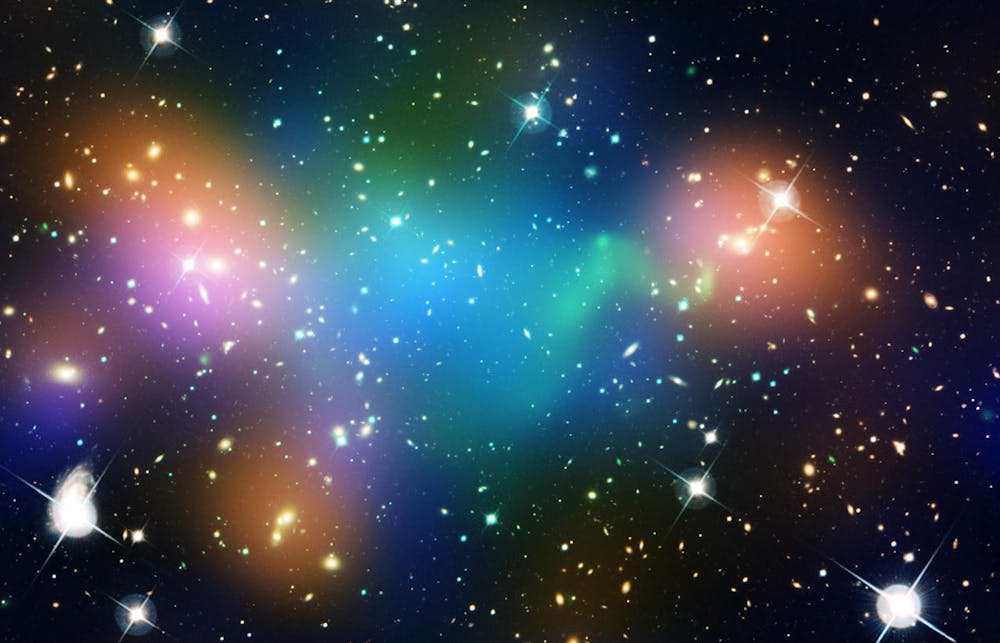
In the 1930s, the Swiss-American astrophysicist Fritz Zwicky observed that there was five times more matter in the universe than we can detect with our telescopes. He called this new matter “dark matter.”
Nearly 100 years later, we still don’t know what dark matter is: we have never detected a particle of dark matter and we don’t know how it moves. It is therefore legitimate to question if it behaves as ordinary matter and obeys Euler’s law. Could it be affected by other forces and interactions, which would change the Euler equation?
Then, in 1998, two groups of astrophysicists observed that the expansion of our universeis accelerating, contrary to the deceleration expected because of the gravitational attraction between galaxies.
As of today, we don’t know what causes this strange behaviour: is it due to the presence of yet another “dark” substance that has repulsive gravity? Or is it due to gravity itself, meaning Einstein’s predictions of how it behaves over very large distances would be wrong? Testing Einstein’s and Euler’s equations is therefore the logical consequence of the mysteries we face.
Checking if Einstein’s gravity works over the vast distances of the universe has become an active field of research. Theoreticians propose new ideas for how gravity could work differently, while astronomers use increasingly advanced facilities to provide the data needed to test them.
Researchers have identified a particular “smoking gun” signature of modified gravity known as the “gravitational slip.” General Relativity predicts that the pathways of light and matter should bend in the same way when traveling through the same distorted space-time.
This is much like the fact that different objects fall at the same rate in Earth’s gravity (if the air resistance could be neglected) — something Galileo famously demonstrated from the tower of Pisa. By comparing the way galaxies fall into gravitational wells to how the light from these galaxies is deflected by gravitational lensing, one can deduce if they feel the same gravity.
But what if Euclid found that there was a slip? Could we be certain that it occurs due to a modification of gravity, or could it also be due to a modification of Euler’s equation? The latter would be different if, for example, the dark matter in the galaxies were subject to a new force.
Gravitational slips
The two of us approached this question from different perspectives: one involved developing tests of modified gravity, while the other investigated the subtle corrections General Relativity adds to what we measure with galaxy surveys.
To our surprise, while both of us came into this thinking that the answer would be obvious, our initial answers were opposite to each other. After intensive discussion, we eventually came to an agreement, resulting in a paper published in Nature Astronomy.
Our conclusion was that, despite the common expectation, measuring the gravitational slip would not allow one to distinguish a modification of Einstein’s laws from a modification of Euler’s equation.
However, the distinction may be possible if one could measure the effect called “gravitational redshift,” which should be possible with telescopes such as the Dark Energy Spectroscopic Instrument and the upcoming Square Kilometer Array.
One of our key realizations was that to determine if the measured gravitational slip signals a breakdown of General Relativity, one would need to measure the velocity of normal matter when it is not confined to a galaxy. In practice, however, we can only observe the light from stars that reside in galaxies, and hence move together with the dark matter.
Telescopes can only measure the collective motion of a galaxy that contains both normal matter and dark matter. So, if a galaxy were to fall into a gravitational potential in a way that was not consistent with our expectations, we would be unable to tell if it’s because the dark matter is doing something, or because gravity was modified.
Light and gravity
There is a way to probe the gravitational potential directly through the way it distorts time via gravitational redshift.
When the light from a galaxy escapes the gravitational potential it is falling into, its color shifts closer to red. This gravitational redshift is solely due to time distortion. Gravitational lensing, which differs from redshift, is due to both space and time distortions, as opposed to just time.
We need to have both lensing and redshift in order to isolate the gravitational slip. It is this ability to separate the distortion of space and time from the distortion of time alone that is key to measuring true gravitational slip.
Swiss cosmologists explain how the distortion of time, an effect predicted by General Relativity, can be measured.
A measurement of the gravitational redshift is impossible if one cannot easily keep track if a pair of galaxies swapped their positions. While it’s not that hard to tell any two galaxies measured by a telescope apart, when running a statistical analysis on a catalogue of millions of galaxies, you can quickly lose the ability to assign any identity to the galaxies; at some point they are all treated as points on the sky.
Techniques have, however, been developed to split galaxies into different populations and keep track of swaps between them. In time, new technologies will be able to detect the tiny effects of gravitational redshift, and consequently distinguish a modification of Euler’s equation for dark matter from a modification of gravity.
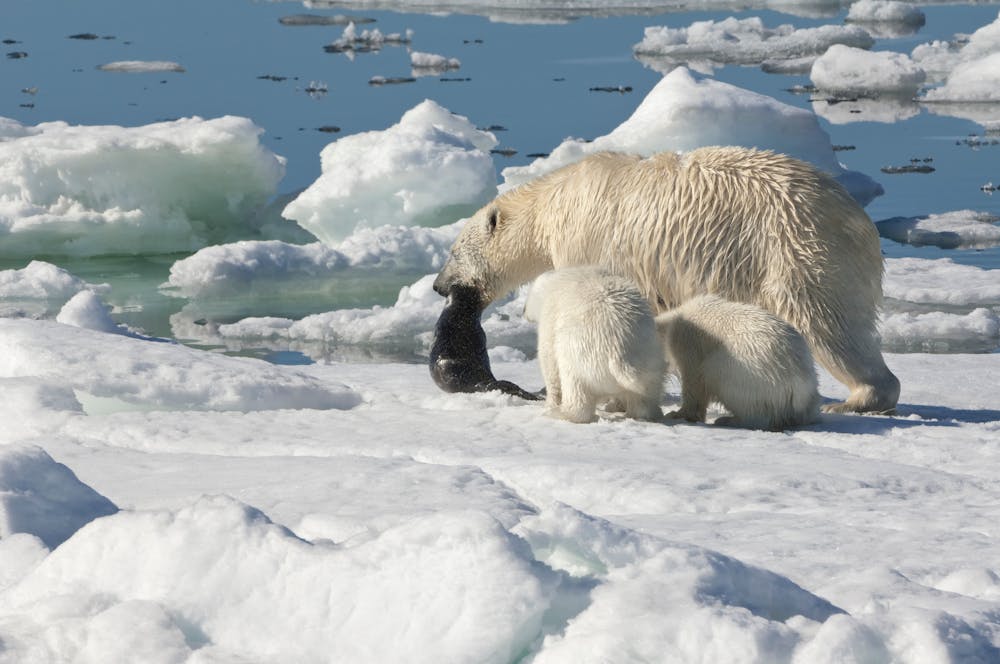
When sea ice melts, polar bears must move onto land for several months without access to food. This fasting period is challenging for all bears, but particularly for polar bear mothers who are nursing cubs.
Impaired lactation has likely played a role in the recent decline of several polar bear populations. This research also indicates how polar bear families might be impacted in the future by continued sea-ice loss caused by climate warming.
Challenges of rearing cubs
While sea ice might appear as a vast and perhaps vacant ecosystem, the frozen Arctic waters provide an essential platform for polar bears to hunt energy-rich seals — the bread and butter of their diet.
Sea ice is a dynamic environment that can vary through time and in different regions of the Arctic. Polar bears in Canada’s western Hudson Bay area experience seasonal sea ice, which melts in the warmer summer months, forcing the polar bears to move onto land until cooler winter temperatures cause the sea ice to refreeze.
On shore, polar bears often remain in a fasting state, using their body stores of fat for fuel. (Shutterstock)
While on shore, hunting opportunities are rare and polar bears generally spend their time in a fasting state. Polar bears rely on their immense body fat stores to fuel them during these leaner months, with some individuals measuring almost 50 per cent body fat when they come onshore in early summer.
While on land, polar bears can lose around a kilogram of body mass per day, so making it to the end of the ice-free season requires them to carefully manage their energy. For most polar bears, this means reducing activity levels and conserving energy until the sea ice returns and seal hunting can resume.
Females with cubs must also factor in the additional burden of lactation. Polar bears produce high-energy milk, which — at up to 35 per cent fat — is like whipping cream. This high-fat milk allows cubs to grow quickly, increasing from just 600 grams at birth to well over 100 kilograms by the time they are around two-and-a-half years old and leave their mothers to become independent.
During the onshore fasting period, polar bear mothers face a difficult trade-off: Stop lactating and risk the health of her growing cubs or continue nursing and risk her own survival as her energy reserves are depleted.
Polar bear cubs remain with their mothers for up to two-and-a-half years. (Shutterstock)
Moderating lactation
Although lactation is important to both mothers and cubs, studies on polar bear lactation are relatively rare.
To better understand how females manage their lactation investment, our research team revisited a data set of polar bear milk samples collected in the late 1980s and early 1990s from polar bears on land during the ice-free period.
We estimated how long each polar bear mom had been fasting based on annual sea-ice breakup dates and found that the energy content of their milk declined the more days spent onshore. Some bears had stopped producing milk entirely. Both milk energy content and lactation probability were negatively related to the mother’s body condition, meaning females in poor body condition had to prioritize their own energetic needs over their cubs.
The bears who reduced their investment in lactation benefited by using up less of their body reserves, meaning they could fast for longer. Yet the cubs who received lower energy milk grew more slowly than offspring of females that maintained their lactation effort. In the long term, this may reduce cub survival and, ultimately, negatively affect population dynamics.
Climate change and population declines
After around three months on land, the probability of a female with cubs lactating was 53 per cent. This dropped to 35 per cent for a female with yearlings (older cubs from the previous year).
The data in our study were collected around three decades ago. Since then, climate warming has meant that the ice-free season in western Hudson Bay has been extending by around seven days per decade. Polar bears are now regularly forced to spend more than four months on land.
As the ice-free season has increased and polar bears must go for longer without food, their average body condition has declined. The ability of female polar bears to nurse their cubs has probably also become increasingly impaired.
This research adds another piece to our understanding of polar bear resilience to climate change. Without action to halt climate warming and sea-ice loss, survival of cubs will be at risk across the Arctic.
After spending more than a year in space, Frank Rubio now has to get used to that pesky thing Earthlings call gravity.
"Walking hurts a little bit the first few days, the soles of your feet and lower back," he said at a news conference Friday at NASA's Johnson Space Center in Houston, Texas.
"I think there is a certain level of pain that comes with the fact that your lower back now supports half your weight."
Rubio returned to Earth two weeks ago after spending 371 days in space, having taken off in September of last year aboard a Russian rocket for what was supposed to be a routine, six-month mission.
The Soyuz spacecraft that was supposed to bring them back was docked at the International Space Station to be used as an emergency backup vehicle. But then it sprung a coolant leak in December, probably due to a micrometeoroid.
So as a precaution, the Russian space agency, Roscosmos, returned the vessel to Earth.
It sent another, empty one -- which meant there would be space for Rubio and company to return, but they'd have to pick up the mission slated for the crew originally meant to be on that second ship.
"The fact that I was going to spend a whole year cooped up was a kind of torture for me, because I love being outside," Rubio said.
"But that's part of the mission. It took a little bit of a mental shift and saying, 'Hey, this is my world for the next 12 months and I have to deal with that.'"
But the misadventure allowed this son of Salvadoran immigrants to grab the record for the longest time an American has spent in space, breaking the 2022 record set by Mark Vande Hei, at 355 consecutive days.
The world record is held by Russian cosmonaut Valeri Poliakov, at 437 days.
"For the first few days (back on Earth) you drift to the right or to the left as you try to walk straight," he says.
"Your mind is perfectly clear, but your body just doesn't respond the way you expect it to."
During his stay at the ISS, Rubio notched another potential first when he grew a tomato.
"I think what was the first tomato in space," he said.
He put it in "a little bag" and fastened it down with Velcro, but ended up losing track of it.
Rubio spent hours looking for it to no avail. It may have dried out and been mistaken for garbage.
But "some people will say I probably ate it," he jokes.
KENNEDY SPACE CENTER, Fla. — The Space Coast witnessed a rare launch of the SpaceX Falcon Heavy rocket Friday on a mission for NASA that also featured the double sonic booms of its returning first-stage boosters. Flying for only the eighth time ever, and its ever launch for NASA, the Falcon Heavy, which is essentially three Falcon 9 boosters strapped together, avoided weather concerns for a 10:19 a.m. liftoff from Kennedy Space Center’s Launch Pad 39-A. The rocket blasted through the haze of heavy cloud cover popping in and out of view through slivers of blue sky on its way into space. Teams b...
Following another month of record-breaking temperatures throughout the globe in September, the year 2023 is all but certain to be the warmest on record, a US agency said Friday.
The unwelcome news comes as world leaders prepare to meet for crunch talks in Dubai in late November where phasing out fossil fuels, the main driver of human-caused climate change, will be top of the agenda.
"There is a greater than 99 percent probability that 2023 will rank as the warmest year on record," said the US National Oceanic and Atmospheric Administration in its monthly update.
The calculation was based on data gathered through September and on simulations of possible outcomes based on the historical record, from 1975 to present.
"September 2023 was the fourth month in a row of record-warm global temperatures," said NOAA chief scientist Sarah Kapnick in a statement.
"Not only was it the warmest September on record, it was far and away the most atypically warm month of any in NOAA's 174 years of climate keeping. To put it another way, September 2023 was warmer than the average July from 2001-2010."
Significant climate anomalies and events included Storm Daniel, which brought strong winds and unprecedented rainfall to eastern Libya, triggering widespread destruction including burst dams that killed more than 10,000 people.
An extratropical cyclone dumped more than 300 millimeters (12 inches) of rain in 24 hours over Brazilian states, triggering landslides and flooding that killed 30.
The average global temperature for September was 2.59 degrees F (1.44 degrees C) above the 20th-century average of 59.0F (15.0C), according to the NOAA data. It was 0.83F (0.46C) above the previous record from September 2020.
Holding long term warming to 1.5C above pre-industrial levels is seen as essential to avoid the most catastrophic consequences of climate change.
Africa, Europe, North America and South America each had their warmest September on record; Asia had its second-warmest, while Oceana had its third warmest, according to the NOAA data.
In the poles, Antarctica had its warmest September, while the Arctic saw its second warmest.
September 2023 also set a record for the lowest global September sea ice extent on record.
The oceans too experienced record-high monthly global ocean surface temperatures for the sixth consecutive month.
Despite increasing extreme weather events and record-shattering global temperatures, greenhouse gas emissions continue to rise and fossil fuels remain subsidized to the tune of $7 trillion annually.
When I was a child in the 1970s, seeing a satellite pass overhead in the night sky was a rare event. Now it is commonplace: sit outside for a few minutes after dark, and you can’t miss them.
Thousands of satellites have been launched into Earth orbit over the past decade or so, with tens of thousands more planned in coming years. Many of these will be in “mega-constellations” such as Starlink, which aim to cover the entire globe.
These bright, shiny satellites are putting at risk our connection to the cosmos, which has been important to humans for countless millennia and has already been greatly diminished by the growth of cities and artificial lighting. They are also posing a problem for astronomers – and hence for our understanding of the universe.
In new research accepted for publication in Astronomy and Astrophysics Letters, we discovered Starlink satellites are also “leaking” radio signals that interfere with radio astronomy. Even in a “radio quiet zone” in outback Western Australia, we found the satellite emissions were far brighter than any natural source in the sky.
An animation showing the increase in the number of satellites in Earth orbit, over the course of the space age, so far.
We found expected radio transmissions at designated and licensed radio frequencies, used for communication with Earth.
Starlink satellites emit bright flashes of radio transmission (shown in blue) at their allocated frequency of 137.5 MHz.
However, we also found signals at unexpected and unintended frequencies.
We found these signals coming from many Starlink satellites. It appears the signals may originate from electronics on board the spacecraft.
Here we see constant, bright emissions from Starlink satellites at 159.4 MHz, a frequency not allocated to satellite communications.
Why is this an issue? Radio telescopes are incredibly sensitive, to pick up faint signals from countless light-years away.
Even an extremely weak radio transmitter hundreds or thousands of kilometers away from the telescope appears as bright as the most powerful cosmic radio sources we see in the sky. So these signals represent a serious source of interference.
And specifically, the signals are an issue at the location where we tested them: the site in WA where construction has already begun for part of the biggest radio observatory ever conceived, the Square Kilometre Array (SKA). This project involves 16 countries, has been in progress for 30 years, and will cost billions of dollars over the next decade.
Huge effort and expense has been invested in locating the SKA and other astronomy facilities a long way away from humans. But satellites present a new threat in space, which can’t be dodged.
What can we do about this?
It’s important to note satellite operators do not appear to be breaking any rules. The regulations around use of the radio spectrum are governed by the International Telecommunications Union, and they are complex. At this point there is no evidence Starlink operators are doing anything wrong.
The radio spectrum is crucial for big business and modern life. Think mobile phones, wifi, GPS and aircraft navigation, and communications between Earth and space.
However, the undoubted benefits of space-based communications – such as for globally accessible fast internet connections – are coming into conflict with our ability to see and explore the universe. (There is some irony here, as wifi in part owes its origins to radio astronomy.)
Regulations evolve slowly, while the technologies driving satellite constellations like Starlink are developing at lightning speed. So regulations are not likely to protect astronomy in the near term.
But in the course of our research, we have had a very positive engagement with SpaceX engineers who work on the Starlink satellites. It is likely that the goodwill of satellite operators, and their willingness to mitigate the generation of these signals, is the key to solving the issue.
In response to earlier criticisms, SpaceX has made improvements to the amount of sunlight Starlink satellites reflect, making them one-twelfth as bright in visible light as they used to be.
We estimate emissions in radio wavelengths will need to be reduced by a factor of a thousand or more to avoid significant interference with radio astronomy. We hope these improvements can be made, in order to preserve humanity’s future view of the universe, the fundamental discoveries we will make, and the future society-changing technologies (like wifi) that will emerge from those discoveries.
Information is a valuable commodity. And thanks to technology, there are millions of terabytes of it online.
Artificial intelligence (AI) tools such as ChatGPT are now managing this information on our behalf – collating it, summarising it, and presenting it back to us.
But this “outsourcing” of information management to AI – convenient as it is – comes with consequences. It can influence not only what we think, but potentially also how we think.
What happens in a world where AI algorithms decide what information is perpetuated, and what is left by the wayside?
The rise of personalized AI
Generative AI tools are built on models trained on hundreds of gigabytes of preexisting data. From these data they learn how to autonomously create text, images, audio and video content, and can respond to user queries by patching together the “most likely” answer.
ChatGPT is used by millions of people, despite having been publicly released less than a year ago. In June, the addition of custom responses made the already-impressive chatbot even more useful. This feature lets users save customised instructions explaining what they are using the bot for and how they would like it to respond.
This is one of several examples of “personalized AI”: a category of AI tools that generate content to suit the specific needs and preferences of the user.
Another example is Meta’s recently launched virtual assistant, Meta AI. This chatbot can have conversations, generate images and perform tasks across Meta’s platforms including WhatsApp, Messenger and Instagram.
Artificial intelligence researcher and co-founder of DeepMind, Mustafa Suleyman, describes personalised AI as being more of a relationship than a technology:
It’s a friend. […] It’s really going to be ever present and alongside you, living with you – basically on your team. I like to think of it as like having a great coach in your corner.
Tech companies are trying to find ways to combat these issues. For instance, Google has added source links to AI-generated search summaries produced by its Search Generative Experience (SGE) tool, which came under fire earlier this year for offering up inaccurate and problematic responses.
Technology has already changed our thinking
How will generative AI tools – and especially those personalized to us – change how we think?
To understand this, let’s revisit the early 1990s when the internet first came into our lives. People could suddenly access information about pretty much anything, whether that was banking, baking, teaching or traveling.
Nearly 30 years on, studies have shown how being connected to this global “hive mind” has changed our cognition, memory and creativity.
For instance, having instantaneous access to the equivalent of 305.5 billion pages of information has increased people’s meta-knowledge – that is, their knowledge about knowledge. One impact of this is the “Google effect”: a phenomenon in which online search increases our ability to find information, but reduces our memory of what that information was.
Research also shows online searching – regardless of the quantity or quality of information retrieved – increases our cognitive self-esteem. In other words, it increases our belief in our own “smarts”.
Couple this with the fact that questioning information is effortful – and that the more we trust our search engine, the less we critically engage with its results – and you can see why having access to unprecedented amounts of information is not necessarily making us wiser.
Should we be ‘outsourcing’ our thinking?
Today’s generative AI tools go a lot further than just presenting us with search results. They locate the information for us, evaluate it, synthesize it and present it back to us.
What might the implications of this be? Without pushing for human-led quality control, the outlook isn’t promising.
Generative AI’s ability to produce responses that feel familiar, objective and engaging means it leaves us more vulnerable to cognitive biases.
The automation bias, for instance, is the human tendency to overestimate the integrity of machine-sourced information. And the mere exposure effect is when we’re more likely to trust information that is presented as familiar or personal.
Research on social media can help us understand the impact of such biases. In one 2016 study, Facebook users reported feeling more “in the know” based on the quantity of news content posted online – and not how much of it they actually read.
We also know that “filter bubbles” created by social media algorithms – wherein our feeds are filtered according to our interests — limit the diversity of the content we’re exposed to.
This process of information narrowing has been shown to increase ideological polarization by reducing people’s propensity to consider alternative perspectives. It’s also been shown to increase our likelihood of being exposed to fake news.
Using AI to wise up, and not dumb down
Generative AI is, without a doubt, a revolutionary force with the potential to do great things for society. It could reshape our education system by providing personalized content, change our work practices by expediting writing and information analysis, and push the frontiers of scientific discovery.
It even has the potential to positively alter our relationships by helping us communicate and connect with others and can, at times, function as a form of synthetic companionship.
But if our only way to judge the future is by looking to the past, maybe now is the time to reflect on how both the internet and social media have changed our cognition, and apply some precautionary measures. Developing AI literacy is a good place to start, as is designing AI tools that encourage human autonomy and critical thinking.
Ultimately, we’ll need to understand both our own and AI’s strengths and weaknesses to ensure these “thinking” companions help us create the future we want – and not the one that happens to be at the top of the list.
Since gay couples have fewer children, the high frequency of same-sex relationships in humans is puzzling from an evolutionary point of view. Perhaps there are social advantages such relationships confer on a group, or perhaps “gay genes” are selected for other reasons.
A group of Spanish researchers have studied same-sex sexual behaviour and social relationships in more than 250 species of mammals – and in a recent paper in Nature Communications, they conclude it arose independently many times, and is related to other kinds of social behavior.
Darwin’s paradox
Research has shown the basis of male homosexuality in humans is at least partially genetic. I know of no work on a genetic basis for female–female sexual behavior.
Why then is male–male sexual behavior so common? You’d think, because gay couples have fewer children, these gene variants would be passed on rarely, and their frequency would decline over time.
Geneticists, sociologists and psychologists have advanced many possible explanations for this conundrum.
One is that gay genes are really “male-loving genes”. In this case, though gay males have fewer children, their female relatives who share these gene variants may be more inclined to mate earlier and have more children, making up the deficit.
Other hypotheses referenced in the new paper propose that same-sex behavior has beneficial effects for human groups. One idea is that same-sex relationships are important for forming and maintaining bonds and alliances within the group. This predicts same-sex behaviour should be more frequent in social species than in non-social species.
Alternatively, same-sex behavior may help to diminish conflict between members of the same sex, and contribute to establishing social hierarchies. If this is so, we would expect same-sex behavior to be more common in species where aggression and killing among members is also common.
The big picture of same-sex relationships
Human aren’t the only mammals to show a high frequency of same-sex relationships. There are reports of same-sex behavior (courtship, mounting, genital contact and copulation, pair bonding) in 261 (out of 5,747) mammal species.
Mostly this behavior is frequent and overt, occurs in the wild, and in half the species is displayed by both sexes. It is very widespread. These species represent about half of all mammal families.
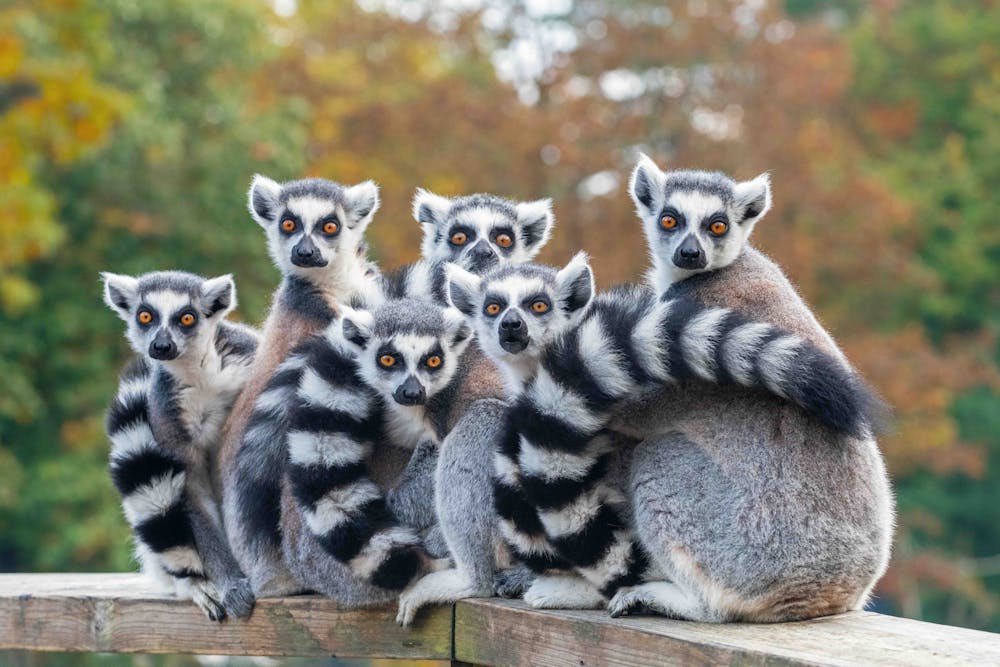
Primates are strongly represented. Fifty-one species, from lemurs to great apes, show same-sex sexual behavior.
Same-sex sexual behaviour has been observed in 51 primate species, including lemurs. Shutterstock
The even bigger picture is given by studies on many other animals, which reveal same-sex behavior in birds, reptiles, frogs and fish, as well as many invertebrates.
Most studies of same-sex relationships focus on a particular species, which makes it hard to test these competing hypotheses.
The new research explores same-sex relationships across a wide range of mammals. It asks whether this behavior was ancestral to all mammals, or whether it evolved independently in response to the establishment of different social systems.
Same-sex sexual behavior evolved many times and quite recently
It has been proposed that the common ancestor of mammals indulged in indiscriminate sexual behaviour, which manifested as a mix of same-sex and heterosexual relationships. The new study contradicts this.
Using a tree of relationships of mammals to each other – confirmed with DNA sequence comparisons – the patterns of same-sex sexual behavior were mapped onto the relationships between species. The distribution of same-sex behaviour over all mammals didn’t fit the pattern we would expect if it were present in the common ancestor of all mammals, and was retained in some lineages but not others.
A better explanation for the evidence is that same-sex sexual behavior was rare in mammalian ancestors overall, but evolved independently many times in many different families. Species exhibiting same-sex sexual behaviour had shared ancestors much more recently than species not showing the behaviour. This suggests same-sex sexual behaviour has been gained and lost many times, and quite recently, during mammalian evolution.
Different lineages showed different times at which same-sex sexual behavior evolved. It became more frequent in Old World monkeys (those found in Africa and Asia today) and increased again during the evolution of the great apes.
Same-sex sexual behaviour and social organisation
Next, the researchers examined the correlation of same-sex sexual behaviour to different measures of social organization in different mammal species. They compiled information about sociality (how the animals live together) and aggression between members of the same species, and tested for correlations with male or female same-sex sexual behavior.
The study found same-sex sexual behavior, both male and female, was more common in more social species. This suggests same-sex sexual behavior was selected for in social species.
The frequency of male, but not female, same-sex sexual behavior was also correlated with the frequency with which animals of the same sex attacked and killed each other. This supports the hypothesis that homosexuality evolved to mitigate male–male aggression in mammals.
We conclude from this study that same-sex sexual behavior in both males and females evolved as species shifted from solitary living to sociality. It helps to establish and maintain social relationships and alliances, resolve conflicts and avoid aggression.
The high frequency of same-sex sexual behavior in ape and monkey species suggests it was present in a social great ape ancestor, and maintained in present day social species, including humans.
Everybody might be right
Establishing that homosexuality confers selective advantages in social species such as humans and other great apes does not rule out other explanations.
There may still be fertility advantages accruing to the other sex who inherit “male-loving” or “female-loving” gene variants, for example. These benefits are not necessarily the same in different mammal lineages, and may include others that have not yet been investigated.
In any case, the ubiquity and frequency of same-sex sexual behavior in mammals means homosexuality cannot be considered aberrant or maladaptive in humans, or any other species. It was selected because it confers different and overlapping social and fertility benefits.
It's a world like no other: a metal-rich asteroid that could be the remnants of a small planet, or perhaps an entirely new type of celestial body unknown to science.
A NASA probe is set to blast off Friday bound for Psyche, an object 2.2 billion miles (3.5 billion kilometers) away that could offer clues about the interior of planets like Earth.
"We've visited either in person or robotically worlds made of rock, worlds made of ice and worlds made of gas... but this will be our first time visiting a world that has a metal surface," lead scientist Lindy Elkins-Tanton told reporters during a briefing this week.
NASA and SpaceX are targeting Friday at 10:19 am Eastern Time (1419 GMT) for launch from Kennedy Space Center, aboard a SpaceX Falcon Heavy rocket, with a backup window on Saturday if weather conditions are unfavorable.
Trailing a blue glow from its next-generation electric propulsion system and flanked by two large solar arrays, the van-sized probe should arrive at its destination in the Asteroid Belt, between Mars and Jupiter, in July 2029.
- Studying cores of rocky planets -
Over the following two years, it will deploy its suite of advanced instruments to look for evidence of an ancient magnetic field, probe its chemical composition, and study the minerals and topography of Psyche.
Scientists think Psyche, named after the goddess of the soul in Greek mythology, could be part of the iron-rich core of a "planetesimal," a building block of all rocky planets.
It could also be something else -- a leftover piece of an iron-rich, primordial solar system object that's not yet been documented.
"This is our one way to see a core," said Elkins-Tanton. "We say tongue in cheek that we're going to outer space to explore inner space."
Psyche is thought to have an irregular, potato-like shape, measuring 173 miles (280 kilometers) across at its widest point -- though it's never actually been seen up close.
Until recently, scientists thought it was overwhelmingly composed of metal -- but analyses based on reflected radar and light now indicate that metal probably comprises between 30-60 percent, with the rest being rock.
- Solar electric propulsion -
The mission will include several technological innovations.
The Psyche spacecraft, named after the asteroid, will test out next generation communications based on lasers, rather than radio waves -- a step NASA compares to upgrading old telephone lines on Earth to fiber optics.
Deep Space Optical Communications, as the system is called, "was designed to demonstrate 10 to 100 times the data-return capacity of state-of-the-art radio systems used in space today," said Abi Biswas of NASA's Jet Propulsion Laboratory in a statement.
Psyche also uses a special kind of propulsion system called "Hall-effect thrusters" that harnesses the energy from solar panels to create electric and magnetic fields that, in turn, expel charged atoms of xenon gas.
The thrust it exerts is roughly equal to the weight of an AA battery in your hand. But in the void of space, the spacecraft will accelerate continuously to tens of thousands of miles per hour.
Such systems avoid the need to carry thousands of pounds of chemical fuel into space, and Psyche will be the first time they are used beyond lunar orbit.