



Nobody knows how consciousness works – but top researchers are fighting over which theories are really science
The results were inconclusive, with some favouring “integrated information theory” and others lending weight to the “global workspace theory”. The outcome was covered in both Science and Nature, as well as larger outlets including the New York Times and The Economist.
And that might have been that, with researchers continuing to investigate these and other theories of how our brains generate experience. But on September 16, apparently driven by media coverage of the June results, a group of 124 consciousness scientists and philosophers – many of them leading figures in the field – published an open letter attacking integrated information theory as “pseudoscience”.
The letter has generated an uproar. The science of consciousness has its factions and quarrels but this development is unprecedented, and threatens to do lasting damage.
What is integrated information theory?
Italian neuroscientist Giulio Tononi first proposed integrated information theory in 2004, and it is now on “version 4.0”. It is not easily summarised.
At its core is the idea that consciousness is identical to the amount of “integrated information” a system contains. Roughly, this means the information the system as a whole has over and above the information had by its parts.
Many theories start by looking for correlations between events in our minds and events in our brains. Instead, integrated information theory begins with “phenomenological axioms”, supposedly self-evident claims about the nature of consciousness.
Notoriously, the theory implies consciousness is extremely widespread in nature, and that even very simple systems, such as an inactive grid of computer circuitry, have some degree of consciousness.
Three criticisms
This open letter makes three main claims against integrated information theory.
First, it argues this is not a “leading theory of consciousness” and has received more media attention than it deserves.
Second, it expresses concerns about its implications:
If [integrated information theory] is either proven or perceived by the public as such, it will not only have a direct impact on clinical practice concerning coma patients, but also a wide array of ethical issues ranging from current debates on AI sentience and its regulation, to stem cell research, animal and organoid testing, and abortion.
The third claim has provoked the most outcry: integrated information theory is “pseudoscience”.
Is integrated information theory a leading theory?
Whether you agree with integrated information theory or not – and I myself have criticised it – there is little doubt it is a “leading theory of consciousness”.
A survey of consciousness scientists conducted in 2018 and 2019 found almost 50% of respondents said the theory was either probably or definitely “promising”. It was one of four theories featured in a keynote debate at the 2022 meeting of the Association for the Scientific Study of Consciousness, and was one of four theories featured in a review of the state of consciousness science that Anil Seth and I published last year.
By one account, integrated information theory is the third-most discussed theory of consciousness in the scientific literature, out-stripped only by global workspace theory and recurrent processing theory. Like it or not, integrated information theory has significant support in the scientific community.
Is it more problematic than other theories?
What about the potential implications of integrated information theory – its impact on clinical practice, the regulation of AI, and attitudes to stem cell research, animal and organoid testing, and abortion?
Consider the question of fetal consciousness. According to the letter, integrated information theory says “human fetuses at very early stages of development” are likely conscious.
The details matter here. I was the co-author of the paper cited in support of this claim, which in fact argues that no major theory of consciousness – integrated information theory included – posits the emergence of consciousness before 26 weeks gestation.
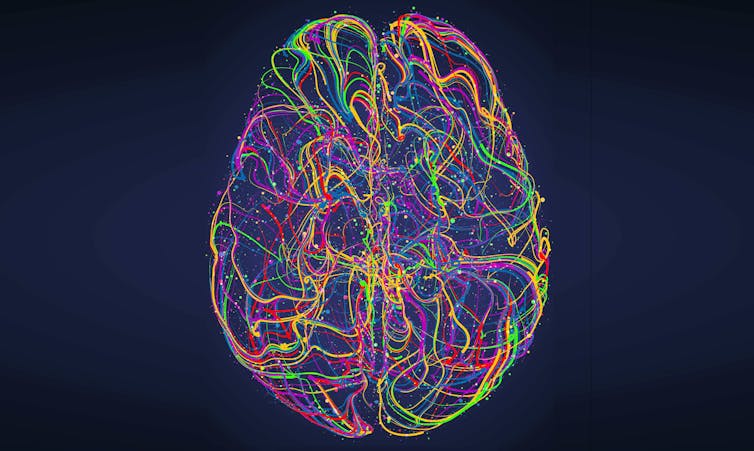
All theories of consciousness inevitably have ethical and legal implications. Shutterstock
And while we should be mindful of the legal and ethical implications of integrated information theory, we should also be mindful of the implications of all theories of consciousness.
Are the implications of integrated information theory more problematic than those of other leading theories? That’s far from obvious, and there are certainly versions of other theories whose implications would be every bit as radical as those of integrated information theory.
Is it pseudoscience?
And so, finally, to the charge of pseudoscience. The letter provides no definition of “pseudoscience”, but suggests the theory is pseudoscientific because “the theory as a whole” is not empirically testable. It also claims integrated information theory wasn’t “meaningfully tested” by the head-to-head contest earlier this year.
It’s true the theory’s core tenets are very difficult to test, but so too are the core tenets of any theory of consciousness. To put a theory to the test one needs to assume a host of bridging principles, and the status of those principles will often be disputed.
But none of this justifies treating integrated information theory – or indeed any other theory of consciousness – as pseudoscience. All it takes for a theory to be genuinely scientific is that it generates testable predictions. And whatever its faults, the theory has certainly done that.
The charge of pseudoscience is not only inaccurate, it is also pernicious. In effect, it’s an attempt to “deplatform” or silence integrated information theory – to deny it deserves serious attention.
That’s not only unfair to integrated information theory and the scientific community at large, it also manifests a fundamental lack of faith in science. If the theory is indeed bankrupt, then the ordinary mechanisms of science will demonstrate as much.
Tim Bayne, Professor of Philosophy, Monash University
This article is republished from The Conversation under a Creative Commons license. Read the original article.








 Scientists collect data shortly after the sample return capsule from NASA's Osiris-Rex mission landed in Dugway, Utah © Keegan BARBER / NASA/AFP
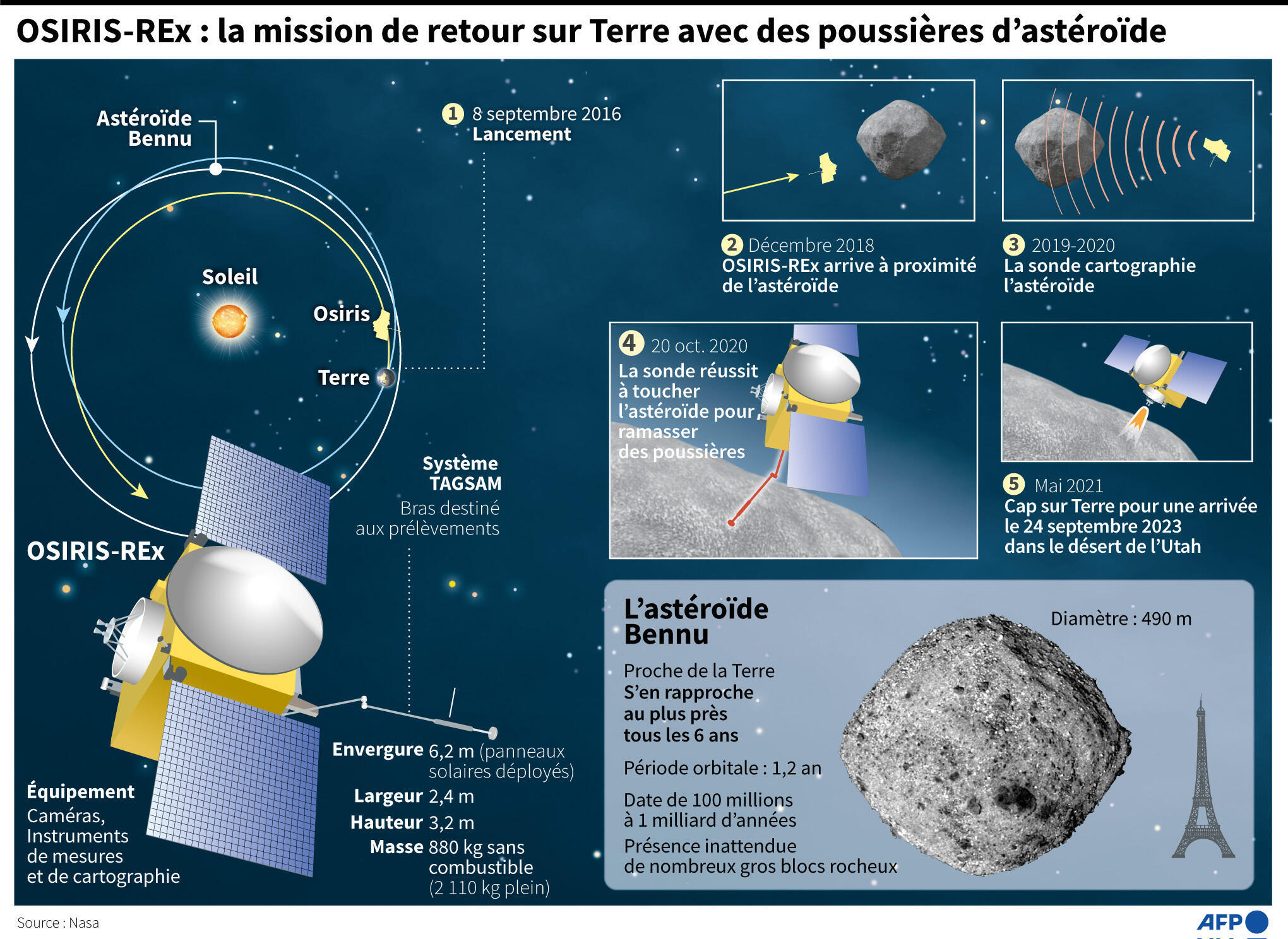 This graphic details key steps in the mission of NASA's Osiris-Rex probe, which returned a sizable sample of asteroid dust to Earth © Jonathan JACOBSEN, Philippe MOUCHE / AFP/File
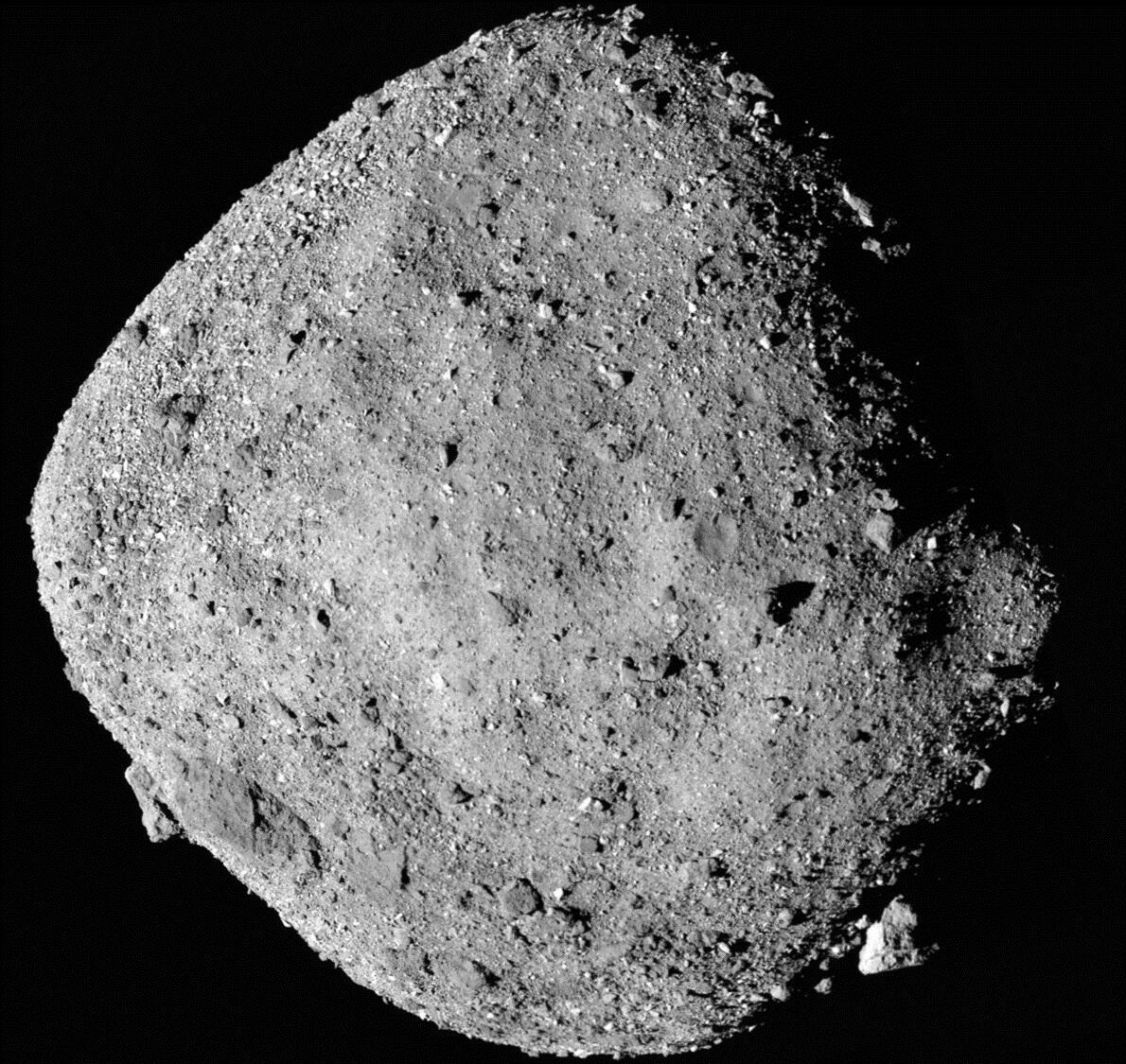 This image, taken by NASA's Osiris-Rex probe in December 2018, shows the asteroid Bennu © HO / NASA/Goddard/Université d'Arizona/AFP/File
 This image from a NASA