



Horse health research will help humans stay healthy, too, with insights on reining in diabetes and obesity
There’s a principle in medicine called One Health, which says that animals, humans and the environment are inextricably connected – for one to be healthy, all must be healthy. It also means that we can learn a lot about our own health by studying the health of animals, and vice versa, including the many parallels in endocrine disorders between humans and horses.
Human and horse endocrine systems
Your endocrine system produces hormones that support many of your body’s basic functions, including growth and development, metabolism, sleep and more. Your hormones also play a role in the health of your bones, tendons and ligaments. Some endocrine disorders change how your body produces and releases hormones and can lead to osteoporosis, arthritis, ligament injury and other orthopedic diseases.
Humans aren’t the only species affected by this dynamic – horses are, too. In fact, approximately 20% of horses and over 34% of people in the U.S. are affected by endocrine disorders such as metabolic syndrome. These disorders are often accompanied by obesity.

Like people, horses with endocrine disorders are also prone to orthopedic diseases. Alberto BN Junior/Moment via Getty Images
For both species, the degree to which endocrine disorders are connected to obesity and its associated negative health effects is complex. As mammals, horses and people share similar anatomy and endocrine physiology, and researchers have noted their parallel genetic links between obesity and metabolic disease.
Like people, obese horses with endocrine disorders often develop low-grade inflammation. Inflammation is a normal response to injuries and sickness. But chronic, low-grade inflammation can have long-term negative effects on the body. For example, low-grade inflammation is associated with metabolic osteoarthritis in people, and my laboratory is studying this possible link in horses.
In people, childhood obesity, which is related to maternal obesity, is associated with a type of joint disease called osteochondrosis. Foals born from obese mares are also predisposed to this same type of joint disease.
Research to note
Because of the similarities between people and horses, research on diagnostics and treatments for metabolic conditions could provide health benefits to both species.
For example, a class of drug called glucagonlike peptide-1 agonists, which includes such brands as Trulicity (dulaglutide) and Ozempic (semaglutide), is commonly used to treat metabolic syndrome and Type II diabetes in people. This class of medication is also effective in treating these conditions in horses, similarly slowing down how quickly food empties the stomach and blunting glucose release into the bloodstream.
Another class of drugs called sodium-glucose cotransporter protein-2 inhibitors, which include such treatments as Jardiance (empagliflozin) and Farxiga (dapagliflozin), are used to treat Type 2 diabetes in people and a similar condition in horses. These drugs alter the kidneys’ ability to absorb sugar from urine such that the body eliminates some of the glucose it would normally absorb. This greatly reduces blood insulin spikes, which can help prevent obesity, metabolic syndrome and cardiovascular disease in both horses and people.
Some dietary supplements, such as resveratrol, especially when used in combination with an amino acid called leucine, also help with weight loss, mobility and insulin sensitivity in people and horses. Lowering blood insulin concentrations can also prevent horses from developing laminitis, a disease that inflames tissues in hooves that can necessitate euthanasia because of incurable pain.
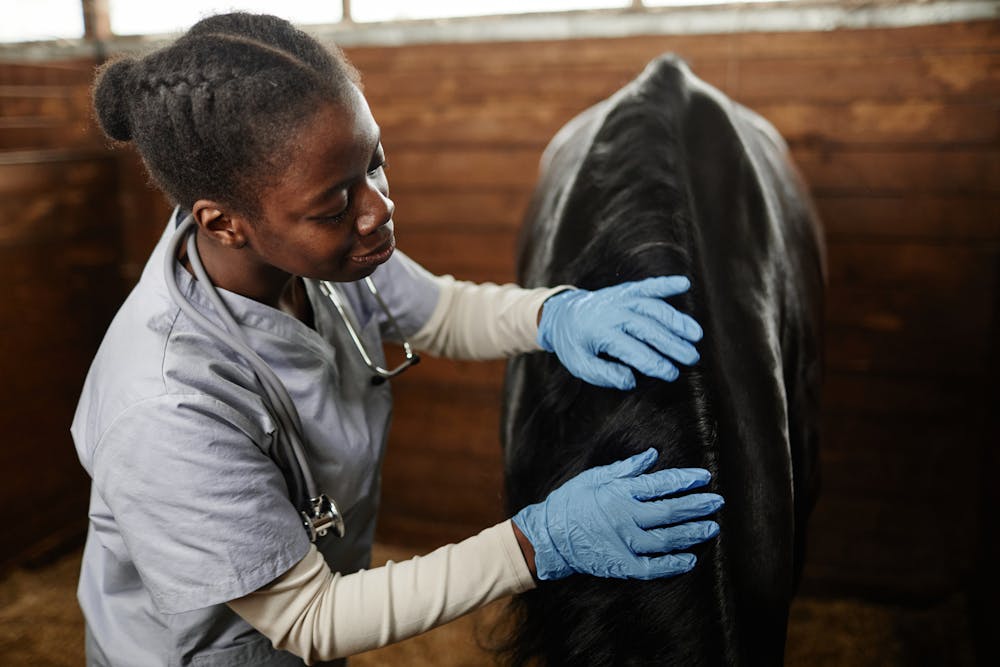
Certain drugs can treat similar conditions in both horses and people. SeventyFour/iStock via Getty Images Plus
Expanding precision medicine
I find one of the most exciting avenues of research in both animals and people to be the expansion of precision medicine. Instead of the standard one-size-fits-all protocol, precision medicine uses information from a person’s genes, environment and medical history to create a customized treatment plan. For example, precision medicine is often applied in oncology when doctors gather genetic information about the patient’s tumor to inform which treatments might work best for them.
In horses, precision medicine currently focuses on DNA-based diagnostic tests to inform exercise regimens, treatment and breeding decisions. Recent work with horses also suggests that measuring the heritability of certain metabolic traits could be used to screen for metabolic syndrome in the future.
Within precision medicine, doctors aim to get a full-picture view of an individual and their metabolic health by using multiomic analysis. Multiomics entails looking at multiple “omics” – or information from a range of biological disciplines, such as epigenomics, lipidomics, genomics and transcriptomics – to better treat an individual patient.
The more researchers learn from individual patients, including horses, the better doctors will be able to treat every patient. My lab and others use multiomic analysis to generate data that may one day help us identify more effective and safer therapies for horses and – likely – people with metabolic conditions.
Jane Manfredi, Associate Professor of Pathobiology and Diagnostic Investigation, Michigan State University
This article is republished from The Conversation under a Creative Commons license. Read the original article.