LONDON (Reuters) — The United Nations Security Council will hold its first formal discussion on artificial intelligence (AI) this week in New York, with Britain to call for an international dialogue about its impact on global peace and security.
Governments around the world are considering how to mitigate the dangers of emerging AI technology, which could reshape the global economy and change the international security landscape.
Britain holds the rotating presidency of the UN Security Council this month and has been seeking a global leadership role in AI regulation.
A Washington Post exposé revealed that Saudi Arabia is aware that their options for growing crops in the desert are limited. It takes a hefty amount of water to grow alfalfa and it appears the country doesn't want to waste their water doing it. So, they're using water from Arizona.
Arizona is among the states currently suffering from an extended heat disaster. During the so-called "monsoon season," Arizona is able to collect water that can help for times like these. Unfortunately, this heat front has lasted longer than normal, resulting in what the Post called a "megadrought."
But while Arizonans are baking "green fields of alfalfa stretch across thousands of acres of the desert land, shimmering in the burning sunlight." The Saudi-owned company sucks wells dry from deep underground, grows their crops, and ships them back.
A memo given to the Post revealed state planners wondered if they should use a meter to capture "accurate information" on the water drained from the valley. But former Gov. Doug Ducey (R) stopped it, saying he wanted to be “cautious of tangling with a powerful company.”
"The proposal also ran headlong into a view, deeply held in the rural West, that water is private property that comes with access to land, rather than a public resource," the Post explained. In a world where water is expected to become a scarce resource, some states are simply giving it away. In Saudi Arabia, the Post explained, their water usage is heavily regulated.
The Postinvestigation found that with lobbying efforts using a former influential GOP member of Congress, and lax regulations on the environment, Arizona has become the perfect place for the Saudi-owned corporation to tap the water resources of the desert state.
Gov. Katie Hobbs (D-AZ) doled out some tough love, demanding details about the company's water usage. When they refused, she threatened to pull their lease. They finally revealed that they use about as much water as a city of 50,000 people.
Meanwhile, despite the lack of water, California's central valley continues to be one of the largest in the country, growing more than half of the fruits, vegetables and nuts grown in the country, said research from NASA and the USDA.
Alzheimer's disease experts are revamping the way doctors diagnose patients with the progressive brain disorder — the most common type of dementia — adopting a seven-point rating scale based on cognitive and biological changes in the patient.
The new guidelines, unveiled by experts on Sunday in a report issued at an Alzheimer's Association conference in Amsterdam, embrace a numerical staging system assessing disease progression similar to the one used in cancer diagnoses.
They also eliminate the use of terms like mild, moderate and severe.
If anxiety or depression does have an impact on how people learn in unpredictable situations, it is likely subtle and not easily detectable, according to new research published in the Journal of Affective Disorders. The findings suggest that the relationship between mental health conditions and learning in volatile environments is not clear-cut. Previous work had suggested a potential link between anxiety and difficulties in adjusting to changes in rewards and punishments during learning. The authors behind the new study were specifically interested in understanding whether abnormal learning p...
WASHINGTON (Reuters) — The United States and China will look to revive efforts to combat global warming this week, in bilateral meetings that observers hope will raise the bar on ambitions ahead of UN-sponsored climate talks in late 2023.
The talks follow two other high-level U.S. visits to China this year, as the world's largest greenhouse gas emitters work to stabilize a relationship strained by trade disputes, military tensions and accusations of spying.
SAN FRANCISCO (AFP) — A driverless taxi slows down on a dark San Francisco street and is quickly surrounded by a group of masked figures.
One of them places a traffic cone on the hood of the car. Its hazard lights flick on, and the car stops in the middle of the road, disabled.
This bizarre scene has been repeated dozens of times across the US tech capital this past week -- the work of activists protesting against the proliferation of robot cars, which they consider unsafe.
ORLANDO, Fla. — Subtropical Storm Don formed in the Atlantic early Friday marking the hurricane season’s fourth named storm, according to the National Hurricane Center.
As of 5 a.m. on Saturday, the NHC said that the center of Don was located 1,010 miles west of the Azores moving north at 9 mph with maximum sustained winds of 45 mph. Don will continue northward, followed by a turn toward the east on Sunday.
By Maria Alejandra Cardona MIAMI/KEY WEST, Florida (Reuters) - Rising temperatures in Florida's waters due to climate change have sparked an extreme stressor for coral reefs causing bleaching, which has scientists concerned. "In the last year, it's been really depressing because we've seen a lot of changes, and we've been monitoring sites from Miami for five years now, and we're starting to see changes in those sites," said Michael Studivan, a scientist with the National Oceanic and Atmospheric Administration's Coral Health and Monitoring Program. Just within the last week, as the U.S. South s...
Our interest in narcissism has never been higher, with Google searches for the word “narcissist” having steadily increased over the past decade. This term has become part of everyday parlance, readily thrown around to describe celebrities, politicians and ex-partners. A byproduct of our growing interest in narcissism is a curiosity about what types of narcissist exist. But this is where things get tricky. A search for “types of narcissists” on Google returns wildly varied results. Some websites describe as few as three types. Others list up to 14. What’s going on here? What is a narcissist?The...
The 47-year-old has wrestled with the eating disorder anorexia for decades; she says she has had a warped relationship with her body since age 8. These days, Pauli says, she weighs 92 pounds and may go days without eating solid food. She says she is too weak to carry groceries home without stopping for breaks.
"Every day is hell," she said. "I'm so tired. I'm done. I've tried everything. I feel like I've lived my life." Pauli cannot legally get medical help to die — yet.
A new study has found that individuals who eat more unhealthy plant foods (such as fruit juices, potatoes, refined grains, and high-sugar foods) have higher risks of depression and anxiety compared to individuals who eat less of such foods. Eating healthy plant foods (such as healthy vegetables, whole grains, fruits, nuts, legumes, vegetable oils, and tea/coffee) was not associated with changes in risks of these disorders. The study was published in PLOS One. Recent studies have indicated that diet plays a significant role in mental health. Researchers have examined various dietary patterns, w...
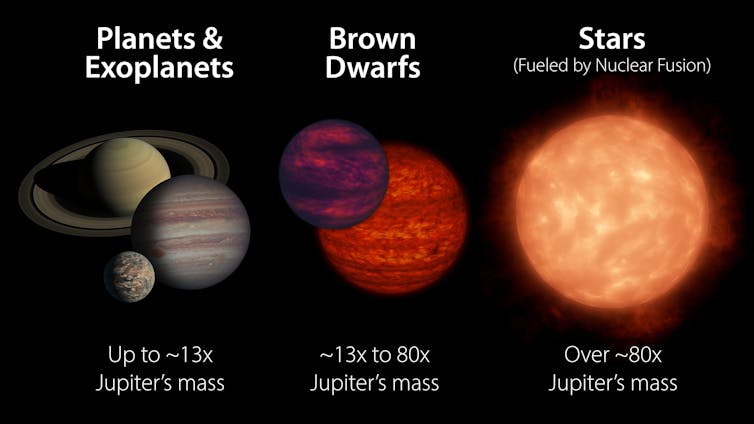
We have identified the coldest star ever found to produce radio waves – a brown dwarf too small to be a regular star and too massive to be a planet.
Our findings, published today in the Astrophysical Journal Letters, detail the detection of pulsed radio emission from this star, called WISE J0623.
Despite being roughly the same size as Jupiter, this dwarf star has a magnetic field much more powerful than our Sun’s. It’s joining the ranks of just a small handful of known ultra-cool dwarfs that generate repeating radio bursts.
Making waves with radio stars
With over 100 billion stars in our Milky Way galaxy, it might surprise you astronomers have detected radio waves from fewer than 1,000 of them. One reason is because radio waves and optical light are generated by different physical processes.
Unlike the thermal (heat) radiation coming from the hot outer layer of a star, radio emission is the result of particles called electrons speeding up and interacting with magnetised gas around the star.
Because of this we can use the radio emission to learn about the atmospheres and magnetic fields of stars, which ultimately could tell us more about the potential for life to survive on any planets that orbit them.
Another factor is the sensitivity of radio telescopes which, historically, could only detect sources that were very bright.
Most of the detections of stars with radio telescopes over the past few decades have been flares from highly active stars or energetic bursts from the interaction of binary (two) star systems. But with the improved sensitivity and coverage of new radio telescopes, we can detect less luminous stars such as cool brown dwarfs.
Mass comparison of stars, brown dwarfs and planets (not to scale). NASA/JPL-Caltech
WISE J0623 has a temperature of around 700 Kelvin. That’s equivalent to 420℃ or about the same temperature as a commercial pizza oven – pretty hot by human standards, but quite cold for a star.
These cool brown dwarfs can’t sustain the levels of atmospheric activity that generates radio emission in hotter stars, making stars like WISE J0623 harder for radio astronomers to find.
How did we find the coolest radio star?
This is where the new Australian SKA Pathfinder radio telescope comes in. This is located at Inyarrimanha Ilgari Bundara, the CSIRO Murchison Radio-astronomy Observatory in Western Australia, and has an array of 36 antennas, each 12 metres in diameter.
The telescope can see large regions of the sky in a single observation and has already surveyed nearly 90% of it. From this survey we have identified close to three million radio sources, most of which are active galactic nuclei – black holes at the centres of distant galaxies.
So how do we tell which of these millions of sources are radio stars? One way is to look for something called “circularly polarised radio emission”.
Radio waves, like other electromagnetic radiation, oscillate as they move through space. Circular polarization occurs when the electric field of the wave rotates in a spiralling or corkscrew motion as it propagates.
For our search we used the fact that the only astronomical objects known to emit a significant fraction of circularly polarized light are stars and pulsars (rotating neutron stars).
By selecting only highly circularly polarized radio sources from an earlier survey of the sky, we found WISE J0623. You can see using the slider in the figure above that once you switch to polarized light, there is only one object visible.
What does this discovery mean?
Was the radio emission from this star some rare one-off event that happened during our 15 minute observation? Or could we detect it again?
Previous research has shown that radio emission detected from other cool brown dwarfs was tied to their magnetic fields and generally repeated at the same rate as the star rotates.
To investigate this we did follow-up observations with CSIRO’s Australian Telescope Compact Array, and with the MeerKAT telescope operated by the South African Radio Astronomy Observatory.
The bottom panel shows the brightness of polarized light over time. The top panel shows emission at different radio frequencies. Author Provided.
These new observations showed that every 1.9 hours there were two bright, circularly polarized bursts from WISE J0623 followed by a half an hour delay before the next pair of bursts.
WISE J0623 is the coolest brown dwarf detected via radio waves and is the first case of persistent radio pulsations. Using this same search method, we expect future surveys to detect even cooler brown dwarfs.
Studying these missing link dwarf stars will help improve our understanding of stellar evolution and how giant exoplanets (planets in other solar systems) develop magnetic fields.
We acknowledge the Wajarri Yamatji as the traditional owners of the Murchison Radio-astronomy Observatory site where Australian SKA Pathfinder is located, and the Gomeroi people as the traditional owners of the Australian Telescope Compact Array site.
Assisted reproductive technologies are medical procedures that help people experiencing difficulty having or an inability to have biological children of their own. From in vitro fertilization to genetic screening to creation of viable eggs from the skin cells of two male mice, each new development speaks to the potential of reproductive technologies to expand access to the experience of pregnancy.
Translating advances from the lab to the clinic, however, comes with challenges that go far beyond the purely technical.
Conversations around the ethics and implications of cutting-edge research often happen after the fact, when the science and technology have advanced beyond the point at which open dialogue could best protect affected groups. In the spirit of starting such cross-discipline conversations earlier, we invited developmental biologist Keith Latham of Michigan State University and bioethicist Mary Faith Marshall of the University of Virginia to discuss the ethical and technological potential of in vitro gametogenesis and assisted reproductive technology post-Roe.
How new are the ethical considerations raised by assisted reproductive technologies?
Keith
Every new technology raises many of the same questions, and likely new ones. On the safety and risk-benefit side of the ethical conversation, there’s nothing here that we haven’t dealt with since the 1970s with other reproductive technologies. But it’s important to keep asking questions, because the benefits are hugely dependent on the success rate. There are potential biological costs, but also possible social costs, financial costs, societal costs and many others.
Mary Faith
It’s probably been that way even longer. One of my mentors, Joseph Francis Fletcher, a pioneering bioethicist and Episcopal priest, wrote a book called “Morals and Medicine” in 1954. It was the first non-Roman Catholic treatment of bioethics. And he raised a lot of these issues there, including the technological imperative – the idea that because we can develop the technology to do something, we therefore should develop it.
Fletcher also said that the use of artifice, or human-made creations, is supremely human. That’s what we do: We figure out how things work and we develop new technologies like vaccines and heart-lung machines based on evolving scientific knowledge.
I think that in most cases, scientists should be involved in thinking about the implications of their work. But often, researchers focus more on the direct applications of their work than the potential indirect consequences.
Given the evolution of assisted reproductive technology, and the fact that its evolution is going to continue, I think one of the central questions to consider is, what are the goals of developing it? For assisted reproduction, it’s to help infertile people and people in nontraditional relationships have children.
What are some recent developments in the field of assisted reproductive technology?
Keith
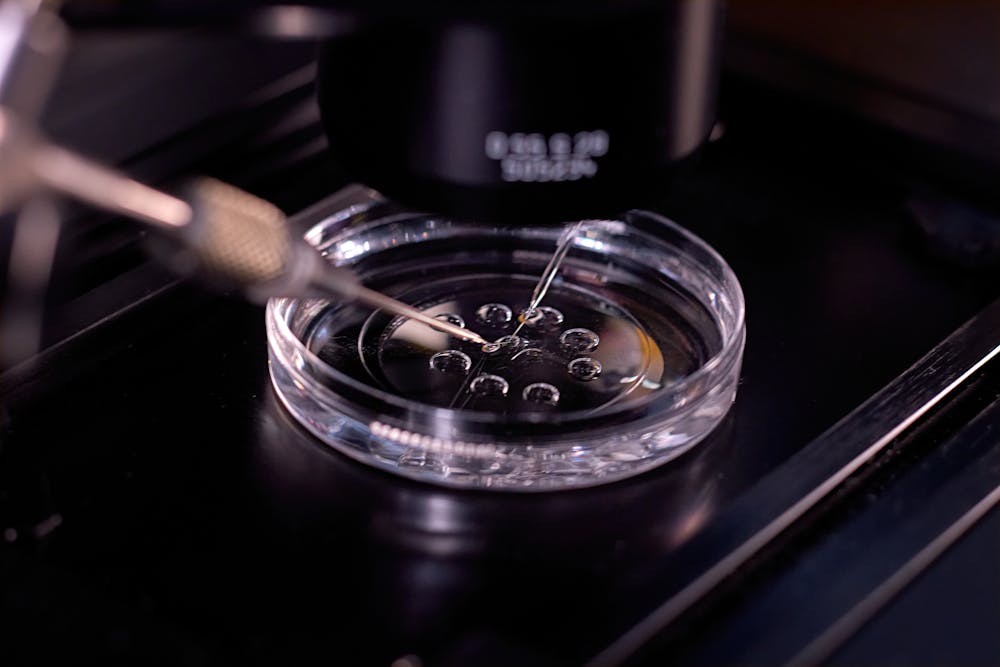
One recent advance in assisted reproductive technology is the expansion of pre-implantation genetic testing methods, particularly DNA sequencing. Many genes come in different variants, or alleles, that can be inherited from each parent. Providers can determine whether an embryo bears a “bad” allele that may increase the risk of certain diseases and select embryos with “healthy” alleles.
Genetic screening raises several ethical concerns. For example, the parents’ genetic profiles could be unwillingly inferred from that of the embryo. This possibility may deter prospective parents from having children, and such knowledge may also have potential effects on any future child. The cost of screening and potential need for additional cycles of IVF may also increase disparities.
There are also considerations about the accuracy of screening predictions without accounting for environmental effects, and what level of genetic risk is “serious” enough for an embryo to be excluded. More extensive screening also raises concerns about possible misuse for purposes other than disease prevention, such as production of “designer babies.”
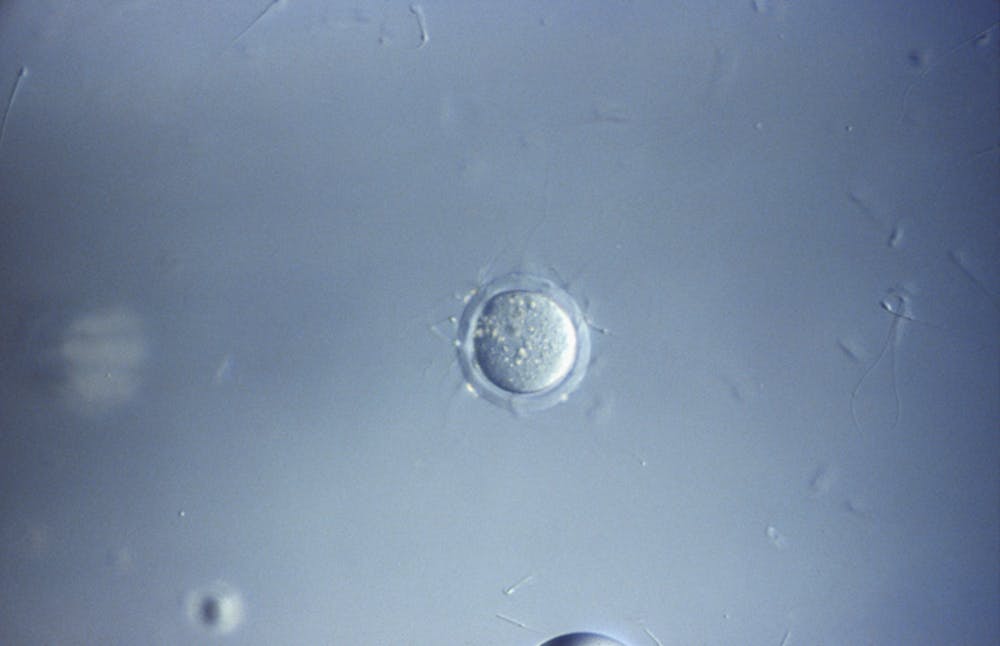
In vitro gametogenesis involves making egg or sperm cells from other adult cells in the body.
At a genome-editing conference in March 2023, researchers announced that they were able to delete and duplicate whole chromosomes from the skin cells of male mice to make eggs. This method is one potential way to make eggs that do not carry genetic abnormalities.
They were very upfront that this was done at 1% efficiency in mice, which could be lower in humans. That means something bad happened to 99% of the embryos. The biological world is not typically binary, so a portion of that surviving 1% could still be abnormal. Just because the mice survived doesn’t mean they’re OK. I would say at this point, it would be unethical to try this on people.
As with some forms of genetic screening, using this technique to reduce the risk of one disease could inadvertently increase the risk of another. Determining that it is absolutely safe to duplicate a chromosome would require knowing every allele of every gene on that chromosome, and what each allele could do to the health of a person. That’s a pretty tall order, as that could involve identifying hundreds to thousands of genes, and the effects of all their variants may not be known.
Mary Faith
That raises the issue of efficacy and costs to yet another order of magnitude.
Keith
Genome editing with CRISPR technology in people carries similar concerns. Because of potential limitations in how precise the technology can be, it may be difficult for researchers to say they are absolutely 100% certain there won’t be off-target changes in the genome. Proceeding without that full knowledge could be risky.
But that’s where bioethicists need to come into play. Researchers don’t know what the full risk is, so how do you make that risk-benefit calculation?
Mary Faith
There’s the option of a voluntary global moratorium on using these technologies on human embryos. But somebody somewhere is still going to do it, because the technology is just sitting there, waiting to be moved forward.
How will the legal landscape affect the development and implementation of assisted reproductive technologies?
Mary Faith
Any research that involves human embryos is in some ways politicized. Not only because the government provides funding to the basic science labs that conduct this research, but because of the wide array of beliefs that members of the public at large have about when life begins or what personhood means.
The Dobbs decision, which overturned the constitutional right to an abortion, has implications for assisted reproduction and beyond. Most people who are pregnant don’t even know they’re pregnant at the earliest stages, and somewhere around 60% of those pregnancies end naturally because of genetic aberrations. Between 1973 and 2005, over 400 women were arrested for miscarriage in the U.S., and I think that number is going to grow. The implications for reproductive health care, and for assisted reproduction in the future, are challenging and frightening.
What will abortion restrictions mean for people who have multiple-gestation pregnancies, in which they carry more than one embryo at the same time? In order to have one healthy child born from that process, the other embryos often need to be removed so they don’t all die. In the past 40 years, the number of twin births doubled and triplet and higher-order births quadrupled, primarily because of fertility treatments.
IVF may transfer one, two, or sometimes three embryos at a time. The cost of care for preterm birth, which is one possible outcome of multiple-gestation pregnancies, can be high. That’s in addition to the cost of delivery. IVF clinics are increasingly transferring just one embryo to mitigate such concerns.
The life-at-conception bills that have been put forth in some U.S. state legislatures and Congress may contain language claiming they are not meant to prevent IVF. But the language of the bills could be extended to affect procedures such as IVF with pre-implantation genetic testing to detect chromosomal abnormalities, particularly when single-embryo transfer is the goal. Pre-implantation genetic testing has been increasing, with one study estimating that over 40% of all IVF cycles in the U.S. in 2018 involved genetic screening.
Could life-at-conception bills criminalize clinics that don’t transfer embryos known to be genetically abnormal? Freezing genetically abnormal embryos could avoid destroying them, but that raises questions of, to what end? Who would pay for the storage, and who would be responsible for those embryos?
How can we determine whether the risks outweigh the benefits when so much is unknown?
Keith
Conducting studies in animal models is an important first step. In some cases, it either hasn’t been done or hasn’t been done extensively. Even with animal studies, you have to recognize that mice, rabbits and monkeys are not human. Animal models may reduce some risks before a technology is used in people, but they won’t eliminate all risks, because of biological differences between species.
The death of Jesse Gelsinger, who was a participant in a gene therapy clinical trial in 1999, led to a halt in all gene therapy clinical trials in the U.S. for a time. When the Food and Drug Administration investigated what went wrong, they found huge numbers of adverse events in both humans and animals that should have been reported to the advisory committee but weren’t. Notably, the principal investigator of the trial was also the primary shareholder of the biotech company that made the drug being tested. That raises questions about the reality of oversight.
I think something like that earlier NIH advisory committee but for reproductive technologies would still be advisable. But researchers, policymakers and regulators need to learn from the lessons of the past to try to ensure that – especially in early-phase research – we’re very thoughtful about the potential risks and that research participants really understand what the implications are for participation in research. That would be one model for translating research from the animal into the human.
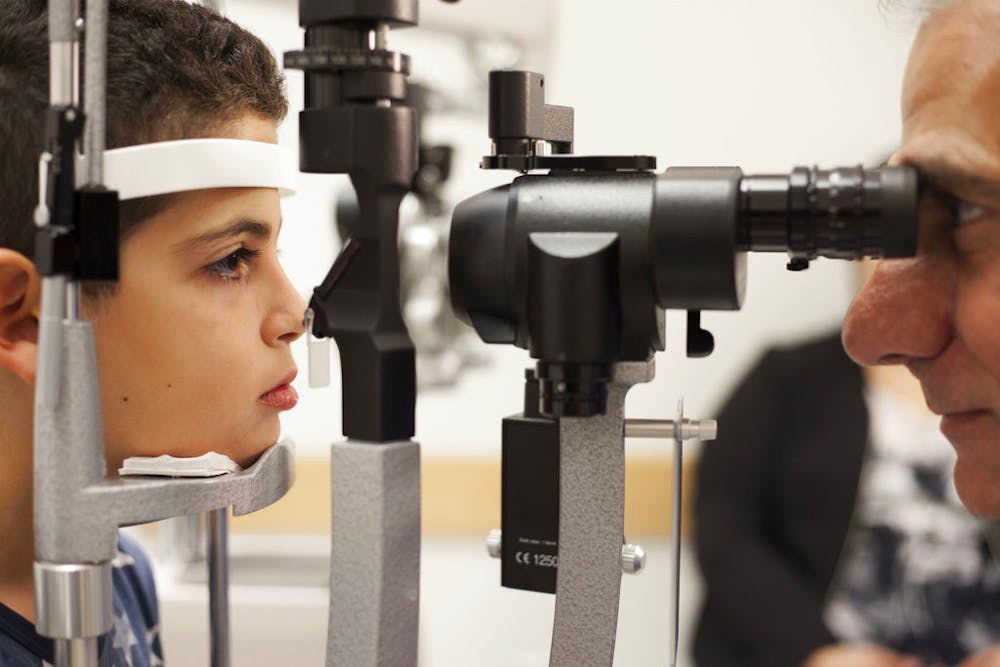
The FDA approved a gene therapy for a form of congenital vision loss in 2017. The child in this photo, then 8, first received gene therapy at age 4. Bill West/AP Photo
Keith
A process to make sure that the people conducting studies don’t have a conflict of interest, like having the potential to commercially profit from the technology, would be useful.
Caution, consensus and cooperation should not take second place to profit motives. Altering the human genome in a way that allows human-made genetic changes to be propagated throughout the population has a potential to alter the genetics of the human species as a whole.
Mary Faith
That raises the question of how long it will take for long-term effects to show. It’s one thing for an implanted egg not to survive. But how long will it take to know whether there are effects that aren’t obvious at birth?
Keith
We’re still collecting long-term outcome data for people born using different reproductive technologies. So far there have been no obviously horrible consequences. But some abnormalities could take decades to manifest, and there are many variables to contend with.
One can arguably say that there’s substantial good in helping couples have babies. There can be a benefit to their emotional well-being, and reproduction is a natural part of human health and biology. And a lot of really smart, dedicated people are putting a lot of energy into making sure that the risks are minimized. We can also look to some of the practices and approaches to oversight that have been used over the past several decades.
Mary Faith
And thinking about international guidelines, such as from the Council for International Medical Science and other groups, could provide guidance on protecting human research subjects.
Keith
You hate to advocate for a world where the automatic response to anything new is “no, don’t do that.” My response is, “Show me it’s safe before you do it.” I don’t think that’s unreasonable.
Some people have a view that scientists don’t think about the ethics of research and what’s right and wrong, advisable or inadvisable. But we do think about it. I co-direct a research training program that includes teaching scientists how to responsibly and ethically conduct research, including speakers who specifically address the ethics of reproductive technologies. It is valuable to have a dialogue between scientists and ethicists, because ethicists will often think about things from a different perspective.
As people go through their scientific careers and see new technologies unfold over time, these discussions can help them develop a deeper appreciation and understanding of the broader impact of their research. It becomes our job to make sure that each generation of scientists is motivated to think about these things.
Mary Faith
It’s also really important to include stakeholders – people who are nonscientists, people who experience barriers to reproduction and people who are opposed to the idea – so they have a voice at the table as well. That’s how you get good policies, right? You have everyone who should be at the table, at the table.