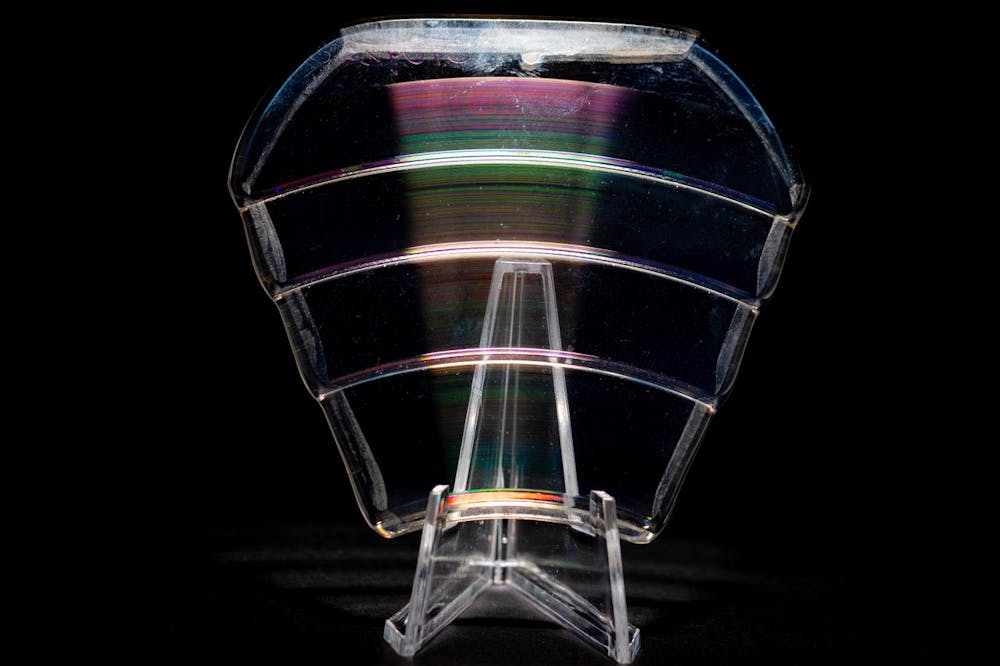
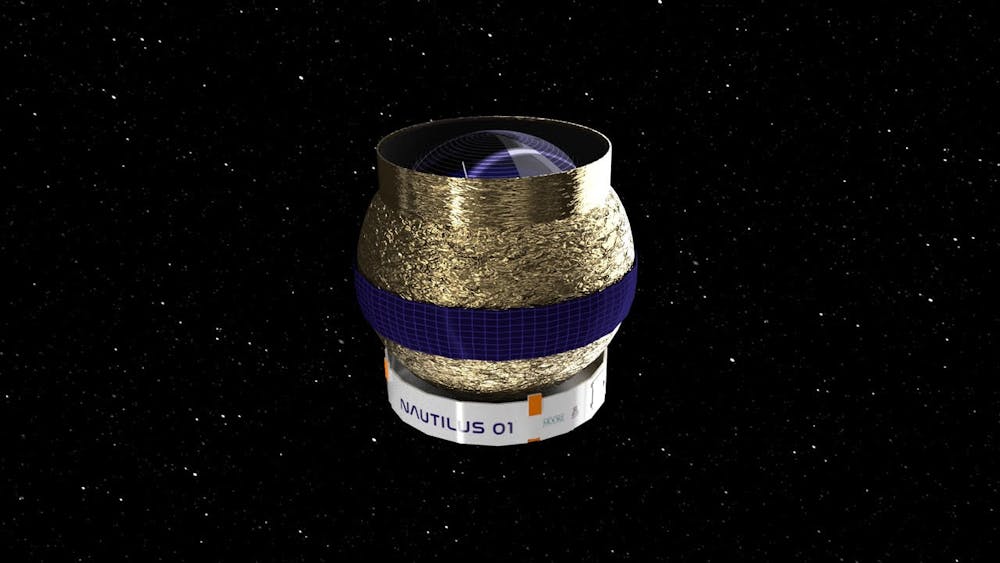
Almost all space telescopes, including Hubble and Webb, collect light using mirrors. Our proposed telescope, the Nautilus Space Observatory, would replace large, heavy mirrors with a novel, thin lens that is much lighter, cheaper and easier to produce than mirrored telescopes. Because of these differences, it would be possible to launch many individual units into orbit and create a powerful network of telescopes.
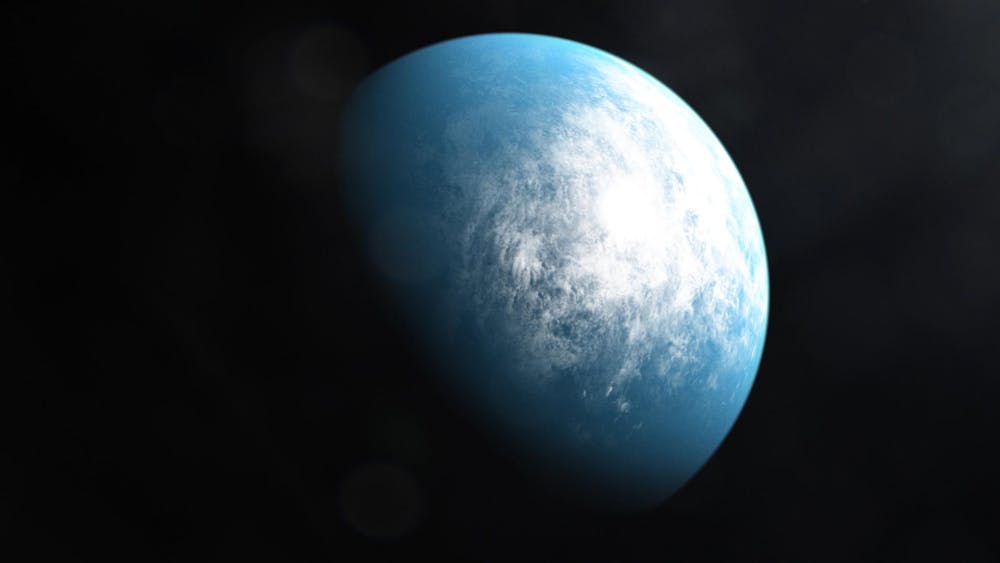
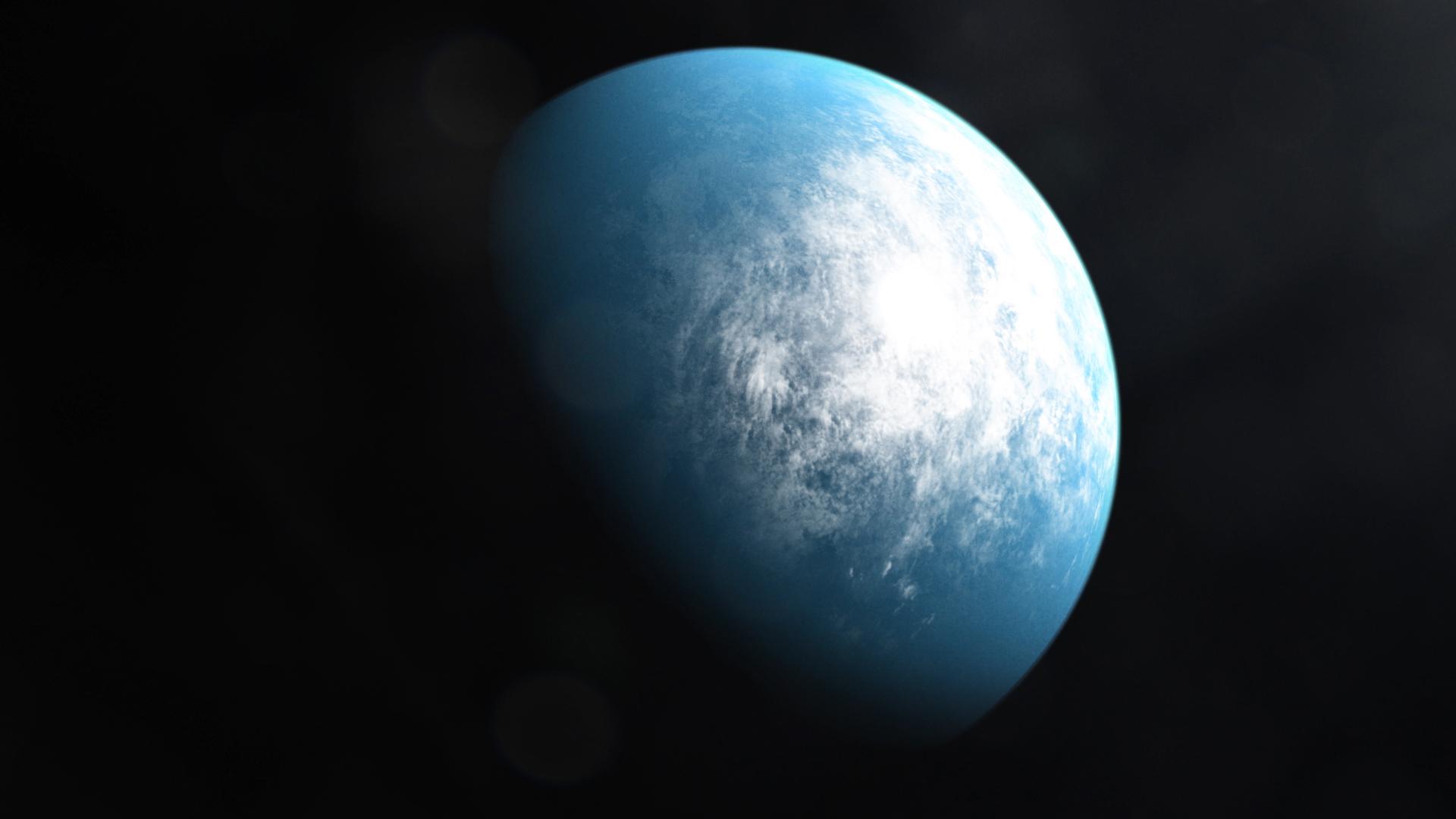
Exoplanets, like TOI-700d shown in this artist’s conception, are planets beyond our solar system and are prime candidates in the search for life. NASA's Goddard Space Flight Center
The need for larger telescopes
Exoplanets – planets that orbit stars other than the Sun – are prime targets in the search for life. Astronomers need to use giant space telescopes that collect huge amounts of light to study these faint and faraway objects.
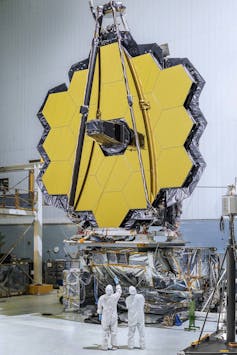
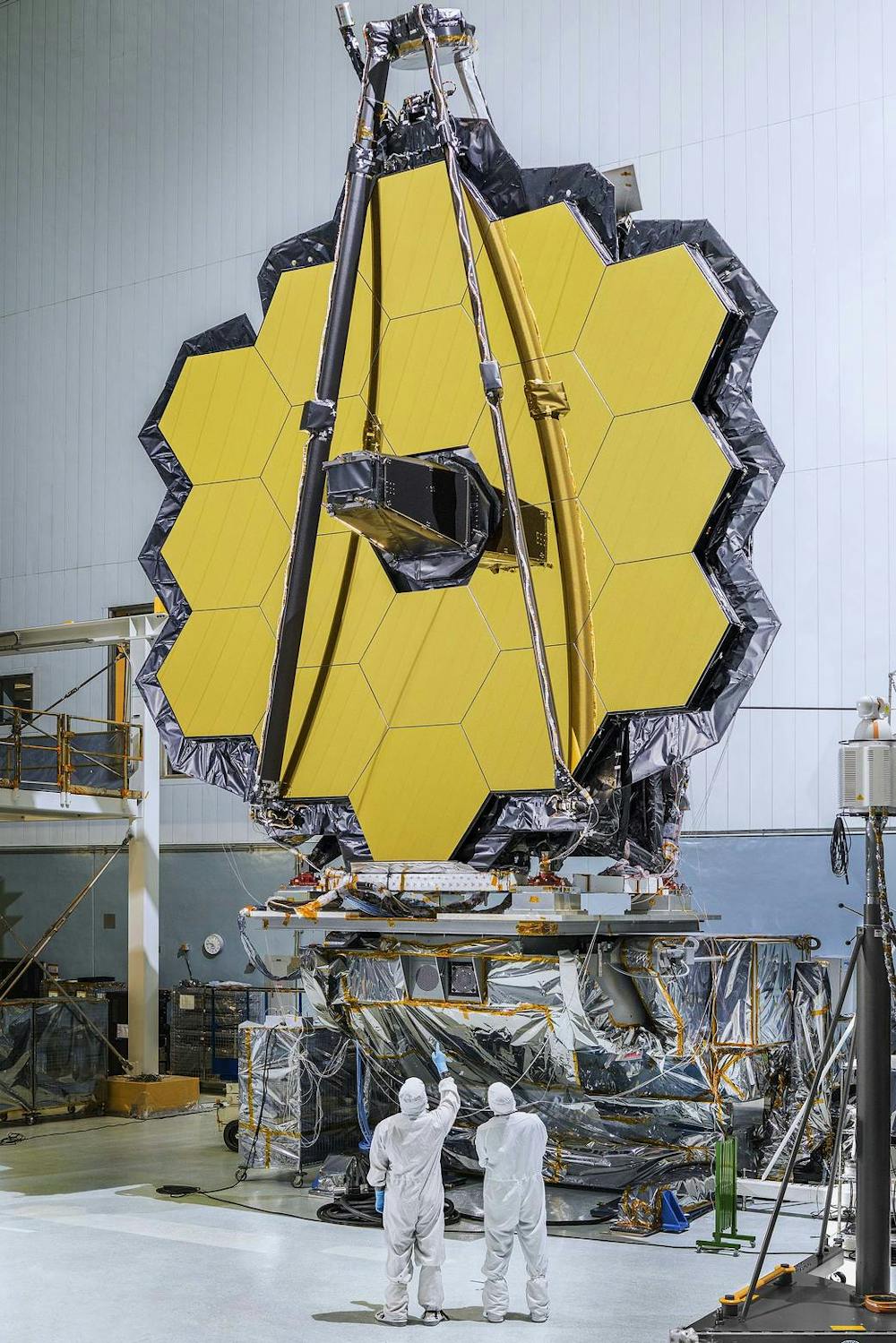
The James Webb Space Telescope is just barely able to search exoplanets for signs of life. NASA
Existing telescopes can detect exoplanets as small as Earth. However, it takes a lot more sensitivity to begin to learn about the chemical composition of these planets. Even Webb is just barely powerful enough to search certain exoplanets for clues of life – namely gases in the atmosphere.
The James Webb Space Telescope cost more than US$8 billion and took over 20 years to build. The next flagship telescope is not expected to fly before 2045 and is estimated to cost $11 billion. These ambitious telescope projects are always expensive, laborious and produce a single powerful – but very specialized – observatory.
A new kind of telescope
In 2016, aerospace giant Northrop Grumman invited me and 14 other professors and NASA scientists – all experts on exoplanets and the search for extraterrestrial life – to Los Angeles to answer one question: What will exoplanet space telescopes look like in 50 years?
In our discussions, we realized that a major bottleneck preventing the construction of more powerful telescopes is the challenge of making larger mirrors and getting them into orbit. To bypass this bottleneck, a few of us came up with the idea of revisiting an old technology called diffractive lenses.
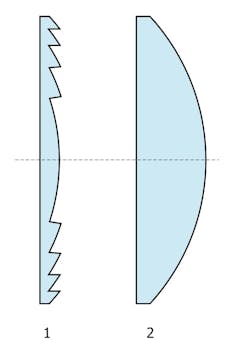
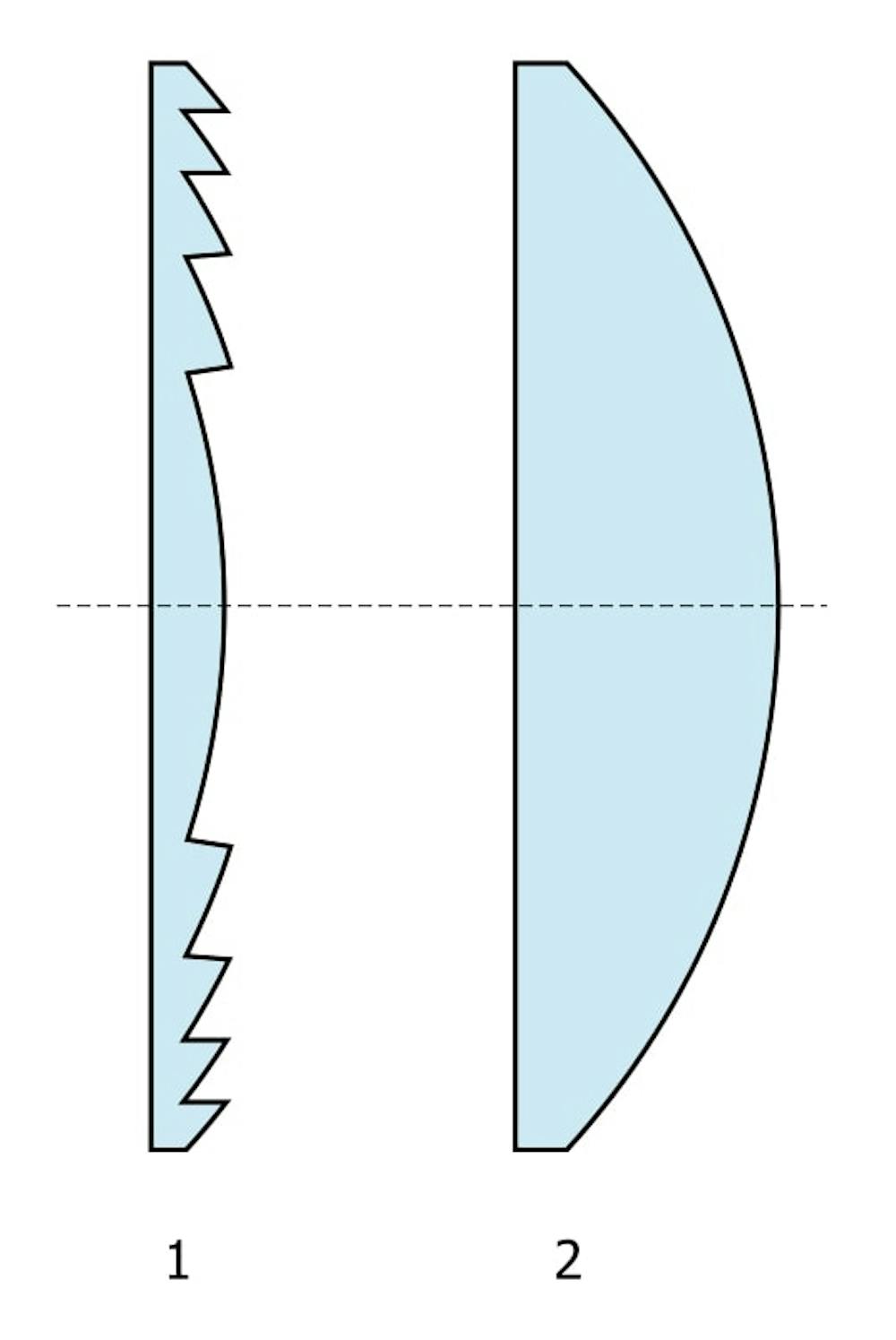
Diffractive lenses, left, are much thinner compared to similarly powerful refractive lenses, right. Pko/Wikimedia Commons
Conventional lenses use refraction to focus light. Refraction is when light changes direction as it passes from one medium to another – it is the reason light bends when it enters water. In contrast, diffraction is when light bends around corners and obstacles. A cleverly arranged pattern of steps and angles on a glass surface can form a diffractive lens.
The first such lenses were invented by the French scientist Augustin-Jean Fresnel in 1819 to provide lightweight lenses for lighthouses. Today, similar diffractive lenses can be found in many small-sized consumer optics – from camera lenses to virtual reality headsets.
Thin, simple diffractive lenses are notorious for their blurry images, so they have never been used in astronomical observatories. But if you could improve their clarity, using diffractive lenses instead of mirrors or refractive lenses would allow a space telescope to be much cheaper, lighter and larger.
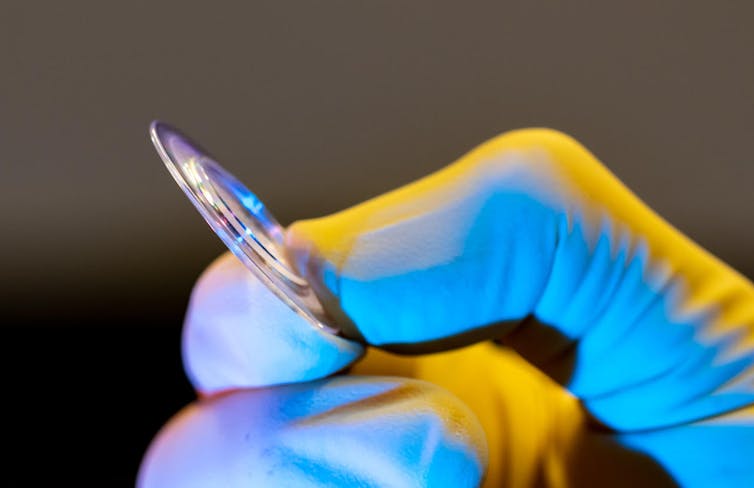
One of the benefits of diffractive lenses is that they can remain thin while increasing in diameter. Daniel Apai/University of Arizona, CC BY-ND
A thin, high-resolution lens
After the meeting, I returned to the University of Arizona and decided to explore whether modern technology could produce diffractive lenses with better image quality. Lucky for me, Thomas Milster – one of the world’s leading experts on diffractive lens design – works in the building next to mine. We formed a team and got to work.
Over the following two years, our team invented a new type of diffractive lens that required new manufacturing technologies to etch a complex pattern of tiny grooves onto a piece of clear glass or plastic. The specific pattern and shape of the cuts focuses incoming light to a single point behind the lens. The new design produces a near-perfect quality image, far better than previous diffractive lenses.
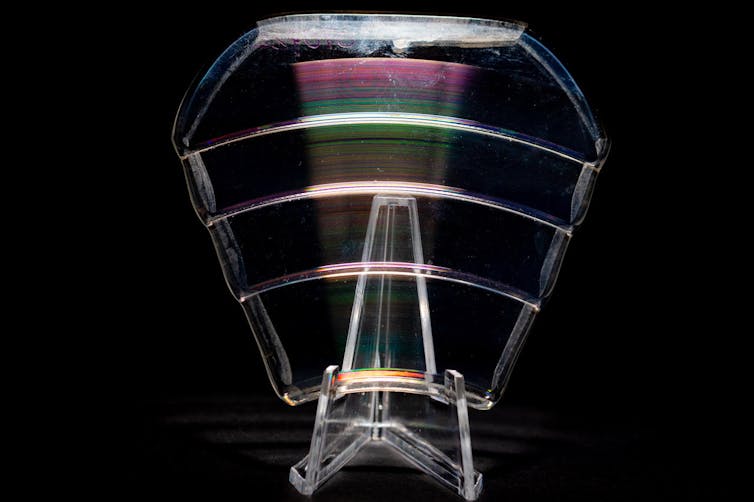
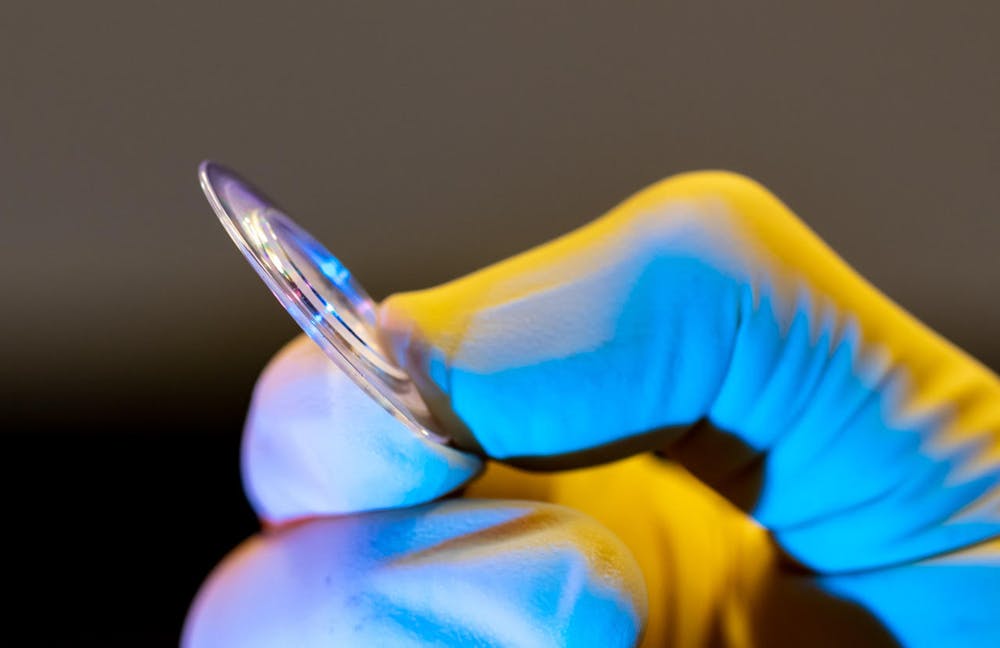
A diffractive lens bends light using etchings and patterns on its surface. Daniel Apai/University of Arizona, CC BY-ND
Because it is the surface texture of the lens that does the focusing, not the thickness, you can easily make the lens bigger while keeping it very thin and lightweight. Bigger lenses collect more light, and low weight means cheaper launches to orbit – both great traits for a space telescope.
In August 2018, our team produced the first prototype, a 2-inch (5-centimeter) diameter lens. Over the next five years, we further improved the image quality and increased the size. We are now completing a 10-inch (24-cm) diameter lens that will be more than 10 times lighter than a conventional refractive lens would be.
Power of a diffraction space telescope
This new lens design makes it possible to rethink how a space telescope might be built. In 2019, our team published a concept called the Nautilus Space Observatory.
Using the new technology, our team thinks it is possible to build a 29.5-foot (8.5-meter) diameter lens that would be only about 0.2 inches (0.5 cm) thick. The lens and support structure of our new telescope could weigh around 1,100 pounds (500 kilograms). This is more than three times lighter than a Webb–style mirror of a similar size and would be bigger than Webb’s 21-foot (6.5-meter) diameter mirror.
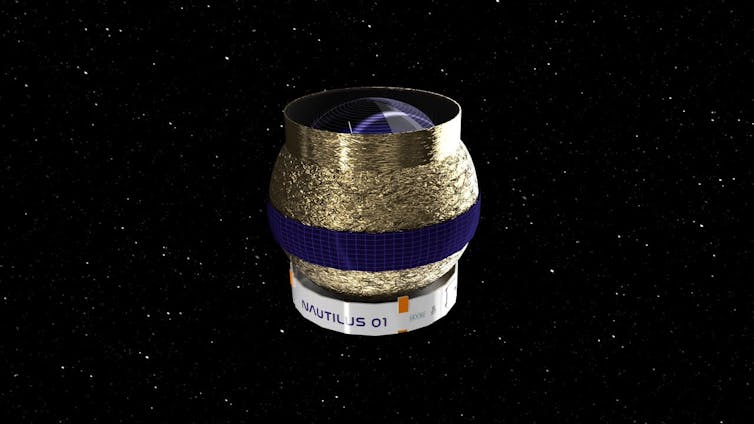
The thin lens allowed the team to design a lighter, cheaper telescope, which they named the Nautilus Space Observatory. Daniel Apai/University of Arizona, CC BY-ND
The lenses have other benefits, too. First, they are much easier and quicker to fabricate than mirrors and can be made en masse. Second, lens-based telescopes work well even when not aligned perfectly, making these telescopes easier to assemble and fly in space than mirror-based telescopes, which require extremely precise alignment.
Finally, since a single Nautilus unit would be light and relatively cheap to produce, it would be possible to put dozens of them into orbit. Our current design is in fact not a single telescope, but a constellation of 35 individual telescope units.
Each individual telescope would be an independent, highly sensitive observatory able to collect more light than Webb. But the real power of Nautilus would come from turning all the individual telescopes toward a single target.
By combining data from all the units, Nautilus’ light-collecting power would equal a telescope nearly 10 times larger than Webb. With this powerful telescope, astronomers could search hundreds of exoplanets for atmospheric gases that may indicate extraterrestrial life.
Although the Nautilus Space Observatory is still a long way from launch, our team has made a lot of progress. We have shown that all aspects of the technology work in small-scale prototypes and are now focusing on building a 3.3-foot (1-meter) diameter lens. Our next steps are to send a small version of the telescope to the edge of space on a high-altitude balloon.
With that, we will be ready to propose a revolutionary new space telescope to NASA and, hopefully, be on the way to exploring hundreds of worlds for signatures of life.
Daniel Apai, Associate Dean for Research and Professor of Astronomy and Planetary Sciences, University of Arizona
This article is republished from The Conversation under a Creative Commons license. Read the original article.