The U.S. Food and Drug Administration on Friday approved Krystal Biotech Inc's first-of-its kind topical gene therapy for patients with a genetic skin disorder, sending its shares up 7% in afternoon trading.
Patients with the rare dystrophic epidermolysis bullosa disorder suffer from open wounds, causing skin infections and are at an increased risk of vision loss, scarring and skin cancer. Most patients rarely survive beyond 30 years of age.
The therapy, Vyjuvek, is expected to be available in the United States in the third quarter of 2023, Krystal Biotech CEO Krish Krishnan told Reuters ahead of the FDA decision.
"We have been preparing for a commercial launch for the last 18 months if not longer. Our intent is to provide access to all the patients if possible in the United States," Krishnan said.
The therapy, which has been approved for patients aged six months or older with either recessive or dominant forms of the disorder, is Krystal's first to be approved in the United States.
About 9,000 to 10,000 people suffer from dystrophic epidermolysis bullosa globally, including a U.S. population of about 3,000 patients, according to Krystal Biotech.
The company did not immediately respond to a Reuters request for comment on the therapy's price.
The FDA approval is supported by data from an early-to-mid-stage study, and a late-stage study of 31 patients which showed Vyjuvek completely healed wounds in about 65% of the participants, compared with just 21.6% of the patients on placebo.
(Reporting by Pratik Jain in Bengaluru; Editing by Shailesh Kuber and Vinay Dwivedi)
Large carnivores like wolves are returning to areas they used to occupy, leading scientists to wonder whether they may once again fulfill important ecological roles. But wolves’ return to the landscape can affect other nearby animals in complex ways.
Our research, published in the journal Science, shows that an increase in predators can lead smaller carnivores, like coyotes and bobcats, to seek refuge near people – but humans then kill them at even higher rates than large predators do.
Large carnivores play crucial roles in their ecosystems. As they prey on or push other animals to avoid the areas they frequently use, predators shape the way interconnected food webs work.
The iconic reintroduction of wolves to Yellowstone National Park in 1995 had cascading effects down the food chain. The elk population shrank, and those that remained avoided areas with wolves, termed a “landscape of fear.” These changes in elk abundance and behavior allowed aspen and willow trees to recover after decades of overconsumption by elk.
But because humans are often intolerant of predators and kill them at high rates, large predators tend to avoid areas that are frequented by people. In national parks where humans rarely kill wildlife, some prey species use areas popular with people, such as hiking trails and campgrounds, as refuges from predators. This is known as the “human shield” effect.
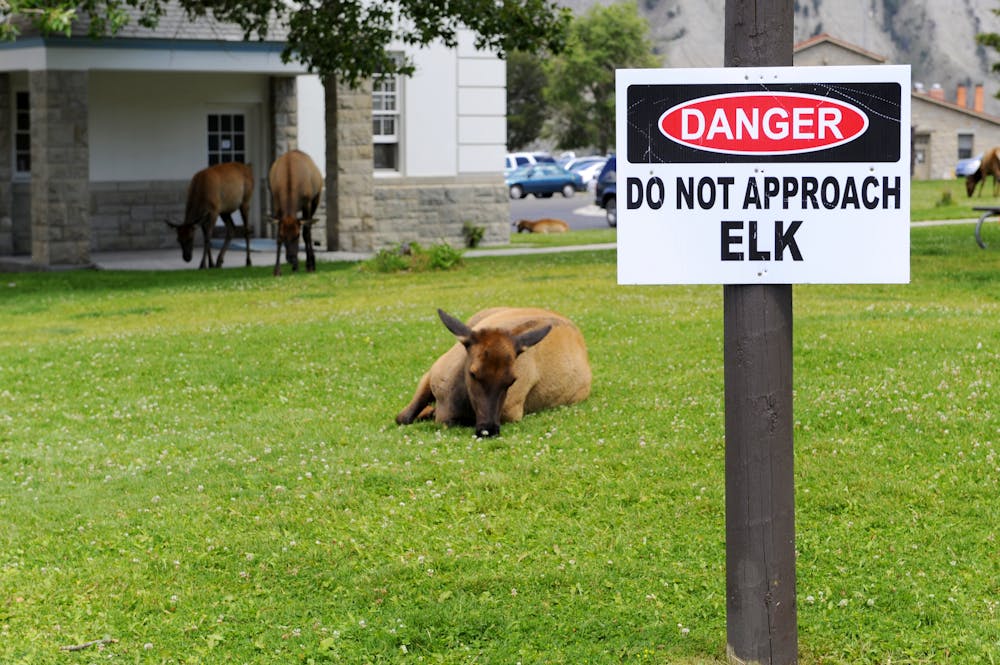
Elk – like these at Mammoth Hot Springs in Yellowstone National Park – and other prey species may use human-dominated landscapes as a way to avoid larger predators like wolves. Dennis Macdonald/Photographer's Choice RF via Getty Images
Predators in human-dominated landscapes
Three decades after the Yellowstone release, wolves have continued to recolonize vast areas of the American West. In 2008, after an 80-year absence, wolves – some of which descended from the original Yellowstone population – began to naturally recolonize Washington. These wolves moved in from neighboring populations in Idaho and British Columbia.
But unlike Yellowstone, many of the landscapes wolves are now returning to are heavily modified by humans. This level of development raises the question: Do predators have the same influence on ecosystems where humans, rather than wolves, are the top dogs?
The Washington Predator Prey Project examines the ecological effects of wolf recovery in Washington state. Video produced by Benjamin Drummond and Sarah Joy Steele.
To answer this question, we used GPS collars to track the movements of 22 wolves, 60 cougars, 35 coyotes and 37 bobcats as they navigated the landscapes of northern Washington, comprising a patchwork of public forests and land used for agriculture, ranching, logging and residential development.
Using hundreds of thousands of GPS locations, we constructed statistical models to reveal how coyotes and bobcats navigated a landscape where humans, wolves and cougars all posed concurrent threats. The GPS collars also notified us when coyotes and bobcats died, allowing us to investigate what caused their deaths.
How researchers from the Washington Department of Fish and Wildlife attach GPS collars to wolves. Video produced by Benjamin Drummond and Sarah Joy Steele.
When ‘human shields’ are lethal
We found that wolves and cougars avoided areas heavily influenced by humans, such as busy roads and residential areas. Coyotes strongly avoided wolves, which brought them closer to humans. In parts of the landscape with large predators around, both coyotes and bobcats moved to areas with approximately double the human influence, potentially using humans as shields.
When coyotes and bobcats sought refuge near people, they instead encountered a more lethal source of danger. We found that humans were the greatest cause of mortality, killing these smaller predators at more than three times the rate that large carnivores did.
Our findings fit with earlier research that characterizes humans as “super predators.” People use modern technologies such as firearms and steel traps to kill small predators at far higher rates than other predators kill small predators. Unlike other predators, humans often target animals in prime condition.
But if people are so dangerous, why would coyotes and bobcats seek refuge near them? Other research shows that smaller predators do indeed fear humans, so they likely still recognize that humans are dangerous. Instead, we think they might not correctly interpret the threats posed by modern humans.
Most bobcats and coyotes in our study were either shot or trapped. These technologies allow people to kill animals either when absent or from large distances, possibly making it difficult for animals to accurately gauge risk.
Additionally, lenient hunting regulations for these small predators puts them at high risk. Under a Washington hunting license, for example, coyotes and bobcats can be legally hunted and trapped without limits – all year for coyotes and six months for bobcats.
The process of capturing and GPS-collaring a bobcat. After being sedated, it is common for animals to initially wake up groggy, but they soon return to normal.
Conservation in human-dominated landscapes
While our findings may at first seem like bad news for conserving smaller predators, these results have important implications for maintaining balanced ecosystems, where no species is too abundant. Unbalanced ecosystems, like ones with too many small predators, can face devastating effects. In Australia, for example, overabundant cats and foxes have contributed to the extinctions of about 30 small mammal species.
Our results show that larger predators can constrain the behavior of smaller predators in human-dominated landscapes, which may help to prevent overabundance.
Rewilding ecosystems by using large predators to reestablish missing ecological processes may provide a way to maintain balanced ecosystems. As wolf populations continue to recover in large parts of the U.S. and Europe, our findings suggest that they are reestablishing important ecological processes by recreating these landscapes of fear that have long been missing.
While visiting various plants, bees need to figure out the best flowers so they can be the most efficient foragers possible, and communicate this to their hive.
But there’s much more these insects’ tiny brains are capable of.
Bees have a great memory and can learn a lot
Bees can visit hundreds of flowers a day across multiple locations, and are great at learning which floral colors, shapes and locations are best for finding food. These flower memories can last for days, allowing for individual workers to return to the best flowers.
Bees are capable of learning in complex ways. They can use “cross-modal” learning, recognizing an object they’ve experienced with one sense when it’s presented in another sense. In one study, bumblebees were trained
to tell cubes and spheres apart using only touch, but could still distinguish them visually if they were unable to touch the shapes – and vice versa.
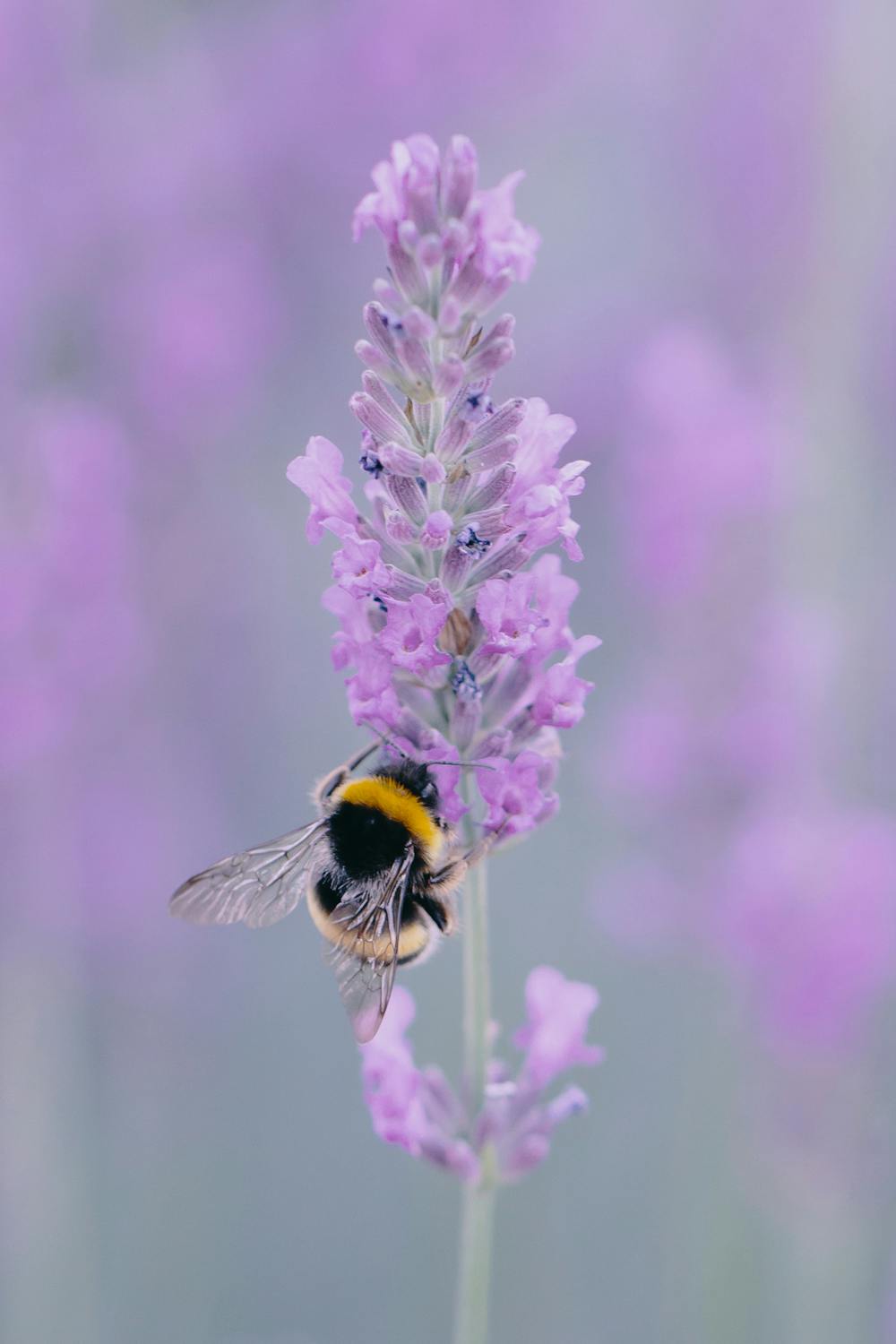
Bumblebees can integrate information from different senses – a useful skill when foraging from colorful flowers.
NON/Unsplash
Bumblebees were trained on
different combinations of higher and lower quality colored flower pairs. When bees were presented with flower combinations that had never been paired together, bumblebees forgot information about how sweet a flower was, but could remember if their experience was better or worse for the two flowers displayed.
This demonstrates bees can integrate sensory information independently of the specific sense involved. This is something human babies do when developing, and how we learn to read and write.
Bees also learn from each other
Honeybees are possibly most famous
for the “waggle dance”, which is how they tell their nest mates about the distance, direction, and quality of a food source.
Honeybees are born to dance, but when young bees are able to observe older, more accomplished dancing bees, the
young bees become “better” dancers.
Aside from the waggle dance, social bees use a range of social information to learn from others. They follow each other to good flowers, they use scent marks to mark both rewarding and empty flowers, or simply
watch more experienced individuals to learn how to access food.
Their learning isn’t simply passive either. Bumblebees have been trained to push balls into holes to get rewards. During these experiments there have been observer bees who have learnt the skill either by watching (and no direct interaction with the teacher bee), or interacting with the teacher bee and then spontaneously improving on the technique.
This demonstrates an understanding of the task at hand and the desired outcome, allowing the observer bee to find her own, better way to get the reward.
As the FIFA Women’s World Cup approaches, we can even use this training technique to get bees to learn to
play soccer.
Bees can recognize faces – and paintings
Bees’ ability to memorize doesn’t stop at flowers. In one example, honeybees were rewarded every time they visited a painting by a “rewarding” artist (either
Monet or Picasso). When bees were given paintings they had never seen before, they still visited the rewarding artist, suggesting they can discriminate between art styles.
Their discrimination ability beyond flowers is also impressive, as honeybees can even
recognize people’s faces.
Bees can play
Play is considered a really important part of learning and cognition, and it’s not limited to humans. A previous study of bumblebees showed
they meet the criteria of play – repeated behaviors that occur voluntarily for pleasure, and offer little value to the animal’s ability to mate, reproduce, or feed successfully.
Bumblebees that entered a room full of wooden balls willingly rolled around with the balls, and were more likely to enter a room that was previously associated with wooden balls, even though they were given no food reward for doing so.
Native bees are smart
Most of our understanding of bee brains focuses on two groups of bees: honeybees and bumblebees. These bees are widely distributed across the globe and are commercially important pollinators.
But there are a lot of other species of bees we don’t know as much about.
In Australia, we have over 2,000 species of native bees, and we know that a lot of them have great colour vision, and innate preferences for particular shapes and colours.
Halictid bees can learn to avoid flowers associated with predation, for example.
It is highly likely that most other bee species are capable of clever feats – we just need to spend more time studying them.
Could bees be… sentient?
Thinking about these abilities and taking the research all together, it becomes clear that the “simple” minds of bees are far more capable than we could have imagined.
Though they only have about a million neurons (we have about 100 billion), bees show complex behaviours like tool use, they have a representation of space, and they can learn through observation.
This has brought about some
exciting discussions around bees potentially having consciousness. If that were true, it could change not only how we see bees, but how we interact with them. It also raises the question – could other invertebrates have consciousness?
Stress and other factors limit their ability to do these clever things
Native bees face many risks, including the negative impacts of habitat loss, pollution, climate change, and the overuse of pesticides.
For bees generally, stress is a problem as well. All kinds of
stress can make it harder for bees to learn, as it impacts their cognitive functions, their ability to think, and remember.
There is evidence that pesticides and air pollution can impair memory and learning in
bumblebees and honeybees. When honeybees were exposed to road pollution, they were less able to remember floral scents, which makes it harder for them to locate the flowers they need to sustain their hive.
Next time you’re watching bees in your garden, don’t forget to appreciate all of the things their brains are able to do – and how much we need to look after them.
When stars like our Sun die, they tend to go out with a whimper and not a bang – unless they happen to be part of a binary (two) star system that could give rise to a supernova explosion.
Now, for the first time, astronomers have spotted the radio signature of just such an event in a galaxy more than 400 million light-years away. The finding, published today in Nature, holds tantalizing clues as to what the companion star must have been like.
An explosive star death
As stars up to eight times heavier than our Sun start to run out of nuclear fuel in their core, they puff off their outer layers. This process gives rise to the colorful clouds of gas misleadingly known as planetary nebulae, and leaves behind a dense, compact hot core known as a white dwarf.
Our own Sun will undergo this transition in 5 billion years or so, then slowly cool and fade away. However, if a white dwarf somehow puts on weight, a self-destruct mechanism kicks in when it gets heavier than about 1.4 times the mass of our Sun. The subsequent thermonuclear detonation destroys the star in a distinctive kind of explosion called a Type Ia supernova.
But where would the extra mass come from to fuel such a bang?
We used to think it could be gas being stripped off a bigger companion star in a close orbit. But stars tend to be messy eaters, spilling gas everywhere. A supernova explosion would shock any spilt gas and make it glow at radio wavelengths. Despite decades of searching however, not a single young Type Ia supernova has ever been detected with radio telescopes.
Instead, we began to think Type Ia supernovae must be pairs of white dwarfs spiraling inwards and merging together in a relatively clean fashion, leaving no gas to shock – and no radio signal.
A rare type of supernova
Supernova 2020eyj was discovered by a telescope in Hawai'i on March 23 2020. For the first seven weeks or so it behaved in much the same way as any other Type Ia supernova.
But for the next five months, it stopped fading in brightness. Around the same time, it began to show features indicating gas that was unusually rich in helium. We began to suspect Supernova 2020eyj belonged to a rare subclass of Type Ia supernovae in which the blast wave, moving at more than 10,000 kilometers per second, sweeps past gas that could only have been stripped off the outer layers of a surviving companion star.
To our great surprise, we had the first-ever clear detection of an “infant” Type Ia supernova at radio wavelengths, confirmed by a second observation some five months later. Could this be the “smoking gun” that not all Type Ia supernovae are caused by the merger of two white dwarfs?
Patience pays off
One of the more remarkable properties of Type Ia supernovae is that they all seem to reach pretty much the same peak brightness. This is consistent with them all having reached a similar critical mass before exploding.
This very attribute allowed astronomer Brian Schmidt and colleagues to reach their Nobel Prize-winning conclusion in the late 1990s: that the universe’s expansion since the Big Bang is not slowing down under gravity (as everyone had expected), but is accelerating due to the effects of what we now call dark energy.
So, Type Ia supernovae are important cosmic objects, and the fact we still don’t know exactly how and when these stellar explosions occur, or what makes them so consistent, has been a worry to astronomers.
In particular, if pairs of merging white dwarfs can range in total mass up to almost three times the mass of our Sun, why should they all release about the same amount of energy?
Our hypothesis (and radio confirmation) that Supernova 2020eyj occurred when enough helium gas was stripped off the companion star and onto the surface of the white dwarf to push it just over the mass limit, provides a natural explanation for this consistency.
The question now is why we haven’t seen this radio signal before in any other Type Ia supernova. Perhaps we tried to detect them too soon after the explosion, and gave up too easily. Or maybe not all companion stars are as helium-rich and prodigious in shedding their gaseous outer layers.
But as our study has shown, patience and persistence sometimes pays off in ways we never expected, allowing us to hear the dying whispers of a distant star.
Inside bomb-proof frozen vaults underneath the English countryside hides a treasure trove of 40,000 species of wild plant seeds from around the world, many of which are in danger of disappearing.
The world's largest seed bank, located in the sleepy countryside south of London, is in a race against time because two out of five plant species are threatened with extinction, according to scientists.
Britain's David Attenborough, a leading environmental figure of international renown, has called the Millennium Seed Bank (MSB) "perhaps the most significant conservation initiative ever".
"The purpose is conservation of wild species through seeds, against those species becoming extinct, in the long run," explained John Dickie, the project's senior research leader.
The 70-year-old has been involved with the MSB since its inception in the late 1990s and the opening of its current home in 2000 to celebrate the millennium.
A total of 2.5 billion seeds are stored at the MSB in Wakehurst, 35 miles (56 kilometers) outside London, and at a branch of the capital's Kew Gardens botanical gardens.
They come in all shapes, colors and sizes, and belong to 40,020 different species originating from 190 countries.
Nearly 20 percent of the world's flora is preserved at Wakehurst, with priority given to plants that are threatened, particularly by climate change, and endemic plants that can only be found in one geographical area.
Plants that have a societal function, such as for medical or economic use, also have their place.
'Not rocket science'
"Plant species are endangered for a number of reasons but mainly through land use change, and increasingly through climate change," said Dickie.
"Some plants will adapt. Others are not adaptable. At least they are here rather than not existing anymore," he added.
Wakehurst receives new seeds from all over the world every week and then the process of saving them begins.
That process is "based on the technology that has already been in use for crop species", said Dickie.
"It's not rocket science. Dry it, freeze it. It's just chemistry," he added, explaining that, once frozen, the seeds can be stored for decades, probably centuries.
Dickie's team of around 20 researchers and various volunteers works in public view in their glass-fronted laboratory.
Lucy Taylor is working on Albizia Polyphylla seeds that have arrived from Madagascar.
"Madagascar is a very interesting place for us. As it was disconnected from Africa, there's a unique flora. And there's also a lot of pressure on land," she said.
One of her jobs is to separate the empty seeds from the rest.
Iran regrets
"Many of them can be empty or infested with bugs or some kind of disease, so it's important for us to clean them as much as we can," explained Taylor.
"We want to have the best quality collection possible but also space in our bank vault is limited."
The seeds are X-rayed for diseases, and each is given its own identity card, with its name, country of origin and date of arrival at the MSB.
The seeds are then stored in glass jars before scientists -- kitted up like Arctic explorers -- take them to the minus 20 degree Celsius (minus four-degree Fahrenheit) underground vaults, built to withstand floods, bombings and radiation.
The largest collection of seeds is from the orchid family.
But there are also rare plants, such as the world's smallest water lily and the Deschampsia Antarctica, also known as Antarctic hair grass, one of two flowering plants native to the frozen continent.
The MSB, which receives public funding and donations, has partnerships with 90 countries.
Some, such as Indonesia, refuse to share their seeds with the MSB, but keep them on their territory and take responsibility for their conservation.
Others, however, seem out of reach. One of Dickie's few regrets is that he has no relationship with Iran.
SARASOTA, Fla. -- A crowd of beachgoers cheered and hollered on Tuesday as they watched Mote Marine staff release two loggerhead sea turtles, named Lilly and Farmer, into the water at Lido Beach in Sarasota. Farmer was transferred to Mote’s on Feb. 21, and Lilly was transported on March 30. Both were found with symptoms of red tide toxicity. Lilly received antibiotics and fluids until symptoms improved, according to a release from Mote Marine. Farmer suffered from extreme lethargy and received fluids daily to help flush out toxins. Both turtles made full recoveries at Mote’s Sea Turtle Rehabil...
An international team of scientists identified plastic-eating bacteria and fungi in Chinese coastal salt marshes, presenting new possibilities for global waste management, according to a study published Thursday.
"A total of 184 fungal and 55 bacterial strains capable of breaking down" various plastics were found in the Jiangsu province of eastern China, the Royal Botanic Gardens in Kew said in a statement.
Researchers from China and the UK in May 2021 sampled microorganisms from China's Dafeng, a UNESCO-protected site near the coast of the Yellow Sea.
They found a distinct "terrestrial plastisphere", described as a "man-made ecological niche", which is an ecosystem that has evolved to live with the presence of coastal plastic debris.
"Scientists are increasingly looking at microorganisms, such as fungi and bacteria, to help tackle some of the most pressing challenges of the modern age, including the rising tide of plastic pollution," Kew Gardens said.
The new findings contribute to existing studies on plastic-degrading microorganisms with some 436 species of fungi and bacteria found capable of breaking down plastic to date, it added.
"Kew scientists and partners believe their latest findings could lead to the development of efficient enzymes designed to biologically degrade plastic waste," it went on.
In 2020, approximately 238 million metric tonnes of waste from short-lived plastics -- such as packaging that ends up in municipal waste -- was generated worldwide, according to a recent report from the United Nations Environment Programme.
Roughly half of that was mismanaged -- for example dumped in the environment or burned.
Later this month, representatives from nearly 200 countries will meet in Paris for a new round of negotiations aimed at reaching a legal agreement next year to end plastic pollution.
Like humans, baboons get by with a little help from their friends.
Forming close social bonds as adults helps the primates triumph over childhood adversity and live longer, according to a new study.
The paper, published in Science Advances on Wednesday, drew on 36 years of data from nearly 200 of the Old World monkeys in the Amboseli National Park, in southern Kenya.
"It's like the saying from the King James Apocrypha, 'a faithful friend is the medicine of life,'" senior author Susan Alberts, a professor of biology and evolutionary anthropology at Duke University, said in a statement.
Baboons who had challenging youths were able to reclaim two years of life expectancy by forming close friendships, the study showed.
Research in humans has found that people who experience early trauma, such as having an alcoholic parent or growing up in an abusive home, are more likely to face an early grave.
But because these experiences are subjective and people's memories of the past are imperfect, wild primates, which share more than 90 percent of our DNA, are thought to be useful study subjects for better understanding humans.
For their research, Alberts and her co-authors focused on female baboons and tracked exposures to sources of childhood hardships, such as being born to a low-ranking mother, losing their mother young, being a drought year baby, or having to compete with many siblings for parental attention.
They found that the effect of such hardships was cumulative, with each additional exposure translating to 1.4 years of life lost.
And the impact wasn't just because such events led to greater social isolation as adults, as had been previously hypothesized. Rather, the survival dip was independently attributable to effects of early adversity.
But that didn't mean that baboons born under an unlucky star were destined to live short, miserable lives.
"Females who have bad early lives are not doomed," said first author Elizabeth Lange, an assistant professor at SUNY Oswego.
The team found that baboons who formed strong friendships, as measured by how often they groomed their closest associates, restored 2.2 years to their lives, regardless of early hardships.
"If you did have early life adversity, whatever you do, try to make friends," said Alberts.
The James Webb Space Telescope has helped astronomers detect the first chemical signs of supermassive stars, "celestial monsters" blazing with the brightness of millions of Suns in the early universe.
So far, the largest stars observed anywhere have a mass of around 300 times that of our Sun.
But the supermassive star described in a new study has an estimated mass of 5,000 to 10,000 Suns.
The team of European researchers behind the study previously theorized the existence of supermassive stars in 2018 in an attempt to explain one of the great mysteries of astronomy.
For decades, astronomers have been baffled by the huge diversity in the composition of different stars packed into what are called globular clusters.
The clusters, which are mostly very old, can contain millions of stars in a relatively small space.
Advances in astronomy have revealed an increasing number of globular clusters, which are thought to be a missing link between the universe's first stars and first galaxies.
Our Milky Way galaxy, which has more than 100 billion stars, has around 180 globular clusters.
But the question remains: Why do the stars in these clusters have such a variety of chemical elements, despite presumably all being born around the same time, from the same cloud of gas?
Rampaging 'seed star'
Many of the stars have elements that would require colossal amounts of heat to produce, such as aluminum which would need a temperature of up to 70 million degrees Celsius.
That is far above the temperature that the stars are thought to get up to at their core, around the 15-20 million Celsius mark which is similar to the Sun.
So the researchers came up with a possible solution: a rampaging supermassive star shooting out chemical "pollution".
They theorize that these huge stars are born from successive collisions in the tightly packed globular clusters.
Corinne Charbonnel, an astrophysicist at the University of Geneva and lead author of the study, told AFP that "a kind of seed star would engulf more and more stars".
It would eventually become "like a huge nuclear reactor, continuously feeding on matter, which will eject out a lot of it," she added.
This discarded "pollution" will in turn feed young forming stars, giving them a greater variety of chemicals the closer they are to the supermassive star, she added.
But the team still needed observations to back up their theory.
'Like finding a bone'
They found them in the galaxy GN-z11, which is more than 13 billion light years away -- the light we see from it comes from just 440 million years after the Big Bang.
It was discovered by the Hubble Space Telescope in 2015, and until recently held the record of oldest observed galaxy.
This made it an obvious early target for Hubble's successor as most powerful space telescope, the James Webb, which started releasing its first observations last year.
Webb offered up two new clues: the incredible density of stars in globular clusters and -- most crucially -- the presence of lots of nitrogen.
It takes truly extreme temperatures to make nitrogen, which the researchers believe could only be produced by a supermassive star.
"Thanks to the data collected by the James Webb Space Telescope, we believe we have found a first clue of the presence of these extraordinary stars," Charbonnel said in a statement, which also called the stars "celestial monsters".
If the team's theory was previously "a sort of footprint of our supermassive star, this is a bit like finding a bone," Charbonnel said.
"We are speculating about the head of the beast behind all this," she added.
But there is little hope of ever directly observing this beast.
The scientists estimate that the life expectancy of supermassive stars is only around two million years -- a blink of an eye in the cosmic time scale.
However they suspect that globular clusters were around until roughly two billion years ago, and they could yet reveal more traces of the supermassive stars they may have once hosted.
The study was published in the journal Astronomy and Astrophysics this month.
It could be the ultimate blend of art and science -- a new seven-suite "space symphony" inspired and illustrated by NASA's latest mind-boggling images.
The world premiere outside Washington last week of "Cosmic Cycles" showcased vivid imagery compiled by the US space agency alongside the first-ever public performance of the music.
Henry Dehlinger, the symphony's American composer, describes it as "almost like a total artwork."
"It's not just music, it's not just visuals -- it's not a score for a film either," the 56-year-old told AFP before the concert.
"It's more of an immersive experience that encapsulates both visuals and sound."
A similar effort was undertaken over a century ago by English composer Gustav Holst -- but when he wrote his famous ode to "The Planets," much in astronomy remained only theoretical.
Since then, humans have walked on the Moon, sent roving research labs to Mars and probed across the solar system with powerful telescopes allowing us to peer billions of light-years away.
The images from that research, compiled by NASA producers into seven short films, served as the inspiration for Dehlinger.
"I had to almost pinch myself and remind myself that this isn't pretend -- this is the real deal. Not science fiction, it's the actual science," he said.
Piotr Gajewski, music director and conductor of the National Philharmonic, explained that the idea for the project came after previous work with NASA on visuals to go with a double-billing of Claude Debussy's "La Mer" ("The Sea") and Holst's "The Planets."
For their next collaboration, 64-year-old Gajewski said he suggested to NASA "that we turn the tables on them."
"Rather than them getting a piece of music and putting pictures to it, that they start by putting short videos together... of their very, very best work."
For Wade Sisler, executive producer at NASA's Goddard Space Flight Center, the challenge was worth the effort.
"It's a journey unlike one that I have ever helped anyone take," Sisler, 64, told AFP.
'Like Van Gogh paintings'
The seven-part piece begins at the heart of our solar system -- the Sun -- with shots of its swirling and gurgling surface, and explosions of particles out to the planets.
The next two movements focus on NASA studies of our home planet, from a global perspective and then through Earth photographs taken by astronauts in orbit.
Apart from photos and videos, interspersed throughout the seven films are a "mesmerizing collection of data visualizations" created by NASA, Sisler explained.
Data on ocean currents, for example, "look like Van Gogh paintings when you put them in motion. The colors are beautiful, you see patterns that you never realized before."
A fourth segment on the Moon is followed by profiles of each planet -- including a focus on images of the Martian surface taken by NASA rovers.
Jupiter, a "regal subject" according to Dehlinger, is introduced by roaring chimes and horns.
The symphony also takes a detailed look at recent experiments on asteroids before a big finale of nebulae, black holes and other galactic phenomena.
In addition to two performances at venues outside Washington, NASA has released the videos to its YouTube page with a synthesized version of Dehlinger's soundtrack.
'A great mystery'
To hammer home the equal importance of the music and video, conductor Gajewski explained, they decided not to aim for exact synchronization, but to be more "fluid."
That approach allows him "to find some moments that are different each time and each performance."
"We really wanted people to be able to experience the music, the performers themselves, and also the science in a balanced portfolio," Sisler added.
Knowing the images and missions were real, Sisler said, elicits a stronger audience response in the digital age, when "you can conjure up anything through AI, conjure up anything in digital effects."
"People are interested in real results. Like 'wow, we really went to that asteroid. Wow, we’re really bringing it back here to Earth,'" he said, referring to the daring OSIRIS-REx sample retrieval mission.
That awe-inspiring factor made the images perfect companions to orchestral pieces, Gajewski said.
"What is it that all of a sudden makes us emotionally weak when we hear one kind of music, or proud when we hear different kinds?" he asked.
"It's all a great mystery, and of course space is the other great mystery, so they complement each other very well."
The swift growth of artificial intelligence technology could put the future of humanity at risk, according to most Americans surveyed in a Reuters/Ipsos poll published on Wednesday.
More than two-thirds of Americans are concerned about the negative effects of AI and 61% believe it could threaten civilization.
Since OpenAI's ChatGPT chatbot became the fastest growing application of all time, the widespread integration of AI into everyday life has catapulted AI to the forefront of public discourse. ChatGPT has kicked off an AI arms race, with tech heavyweights like Microsoft and Google vying to outdo each other's AI accomplishments.
Lawmakers and AI companies are also concerned: OpenAI CEO Sam Altman on Tuesday testified before U.S. Congress, voicing concerns about potential misuse of the technology and asking for regulation.
"There's no way to put this genie in the bottle. Globally, this is exploding," said Senator Cory Booker, one of many lawmakers with questions about how best to regulate AI during a Senate panel on the uses of AI Tuesday.
The Reuters/Ipsos poll found that the number of Americans who foresee adverse outcomes from AI is triple the number of those who don't.
According to the data, 61% of respondents believe that AI poses risks to humanity, while only 22% disagreed, and 17% remained unsure.
Those who voted for Donald Trump in 2020 expressed higher levels of concern; 70% of Trump voters compared to 60% of Joe Biden voters agreed that AI could threaten humankind.
When it came to religious beliefs, Evangelical Christians were more likely to "strongly agree" that AI presents risks to humanity, standing at 32% compared to 24% of non-Evangelical Christians.
"It's telling such a broad swatch of Americans worry about the negative effects of AI," said Landon Klein, director of U.S. policy of the Future of Life Institute, the organization behind an open letter, co-signed by Tesla CEO Elon Musk, demanding a six-month pause in AI research. "We view the current moment similar to the beginning of the nuclear era, and we have the benefit of public perception that is consistent with the need to take action."
While Americans are concerned about AI, crime and the economy rank higher in the list of kitchen table issues: 77% support increasing police funding to fight crime and 82% are worried about the risk of a recession.
Those in the industry said the public should understand AI's benefits more.
“The concerns are very legitimate, but I think what’s missing in the dialogue in general is why are we doing this in the first place?” said Sebastian Thrun, a computer science professor at Stanford who founded Google X. “AI will raise peoples’ quality of life, and help people be more competent and more efficient.”
The positive applications of AI, such as revolutionizing drug discovery, are not as visible as ChatGPT, said Ion Stoica, a UC Berkeley professor who also co-founded AI company Anyscale.
"Americans may not realize how pervasive AI already is in their daily lives, both at home and at work," he said.
The online poll of 4,415 U.S. adults was conducted between May 9 and May 15. It has a credibility interval, a measure of accuracy, of plus or minus 2 percentage points.
(Reporting by Anna Tong in San Francisco; Editing by Ken Li and Lisa Shumaker)
Blue whales will migrate up the West Coast this summer, giving San Diegans the chance to see these massive and graceful animals in local waters. Known as the largest animals in the world, blue whales are members of the baleen whale family. Instead of teeth, they have bristly keratin plates called baleen in their mouths that filter their food from sea water. What makes blue whales unique?Blue whales are the largest mammal alive and are likely the largest to have ever existed on Earth. They can grow more than 90 feet long and weigh up to approximately 300,000 pounds.
In the past few years, 10,000 to 20,000 apps have stampeded into the mental health space, offering to “disrupt” traditional therapy. With the frenzy around AI innovations like ChatGPT, the claim that chatbots can provide mental health care is on the horizon. The numbers explain why: Pandemic stresses led to millions more Americans seeking treatment. At the same time, there has long been a shortage of mental health professionals in the United States; more than half of all counties lack psychiatrists.







 Composer Henry Dehlinger said he was often stunned by the vivid imagery as he worked on the symphony © Mandel NGAN / AFP