



From Black Death to COVID-19, pandemics have always pushed people to honor death and celebrate life
After the last couple of Halloweens were plagued by doubt and worry thanks to a global pandemic with no clear end in sight, Halloween 2022 may feel especially exciting for those ready to celebrate it. Thanks to ongoing vigilance and continuing vaccination efforts, many people in the U.S. are now fortunate enough to feel cautiously optimistic after all those awful months that have passed since March 2020.
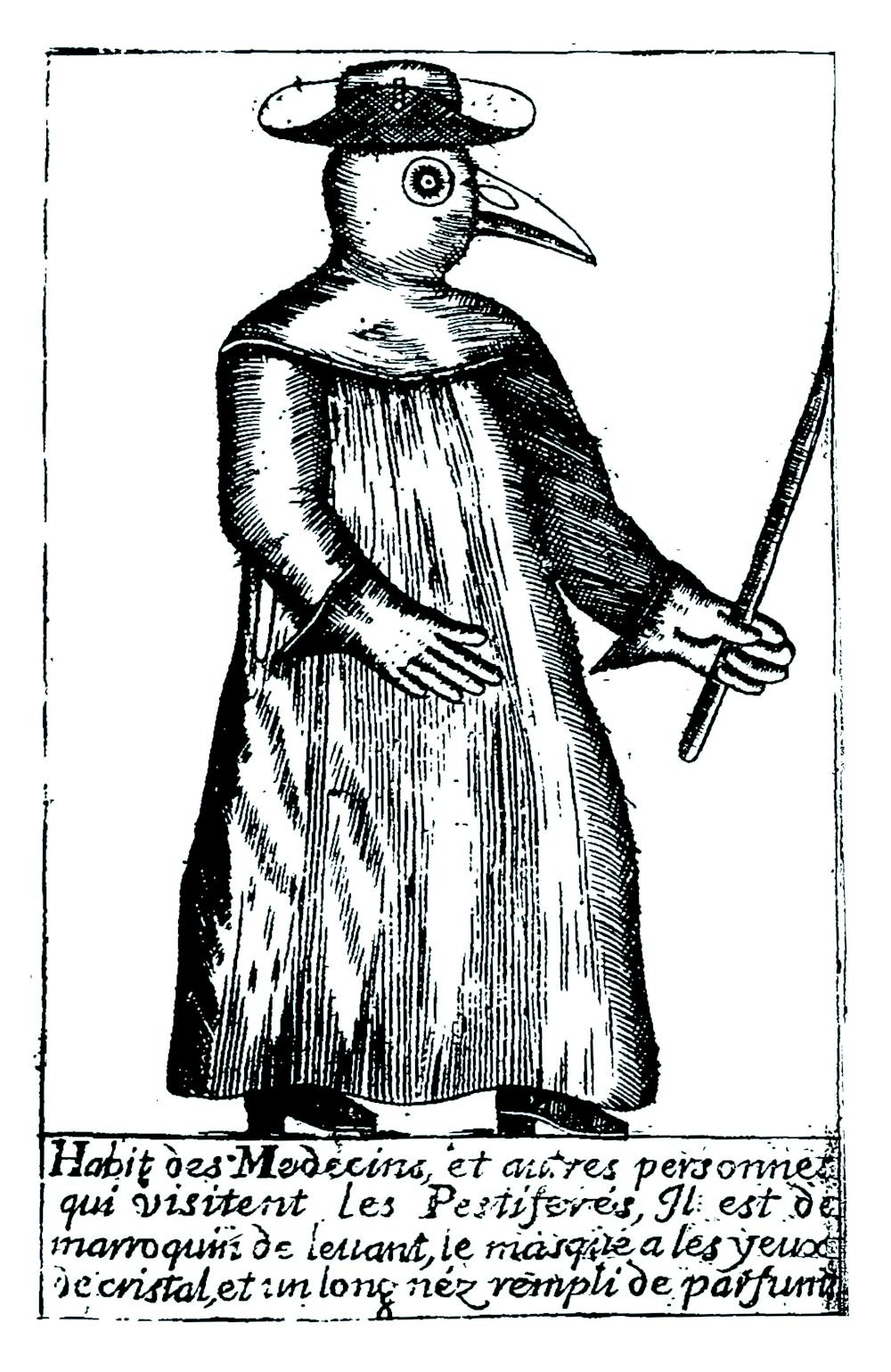
Etching of a plague doctor in the era’s personal protective equipment.
Photo 12/Universal Images Group via Getty Images
I am a historian of pandemics. And yes, Halloween is my favorite holiday because I get to wear my plague doctor costume complete with a beaked mask.
But Halloween opens a little window of freedom for all ages. It lets people move beyond their ordinary social roles, identities and appearances. It is spooky and morbid, yet playful. Even though death is symbolically very much present in Halloween, it’s also a time to celebrate life. The holiday draws from mixed emotions that resonate even more than usual during the COVID-19 era.
Looking at the ways survivors of past pandemics tried to celebrate the triumph of life amid widespread death can add context to the present-day experience. Consider the Black Death — the mother of all pandemics.
Black Death birthed a new death culture
The Black Death was a pandemic of plague, the infectious disease caused by the bacterium Yersinia pestis. Between 1346 and 1353, plague rampaged across Afro-Eurasia and killed an estimated 40% to 60% of the population. The Black Death ended, but plague carried on, making periodic return visits through the centuries.
The catastrophic effects of plague and its relentless recurrences changed life in every possible way.
One aspect was attitudes toward death. In Europe, high levels of mortality caused by the Black Death and its recurrent outbreaks made death even more visible and tangible than ever before. The ubiquity of death contributed to the making of a new death culture, which found an expression in art. For example, images of the dance of death or “danse macabre” showed the dead and the living coming together.
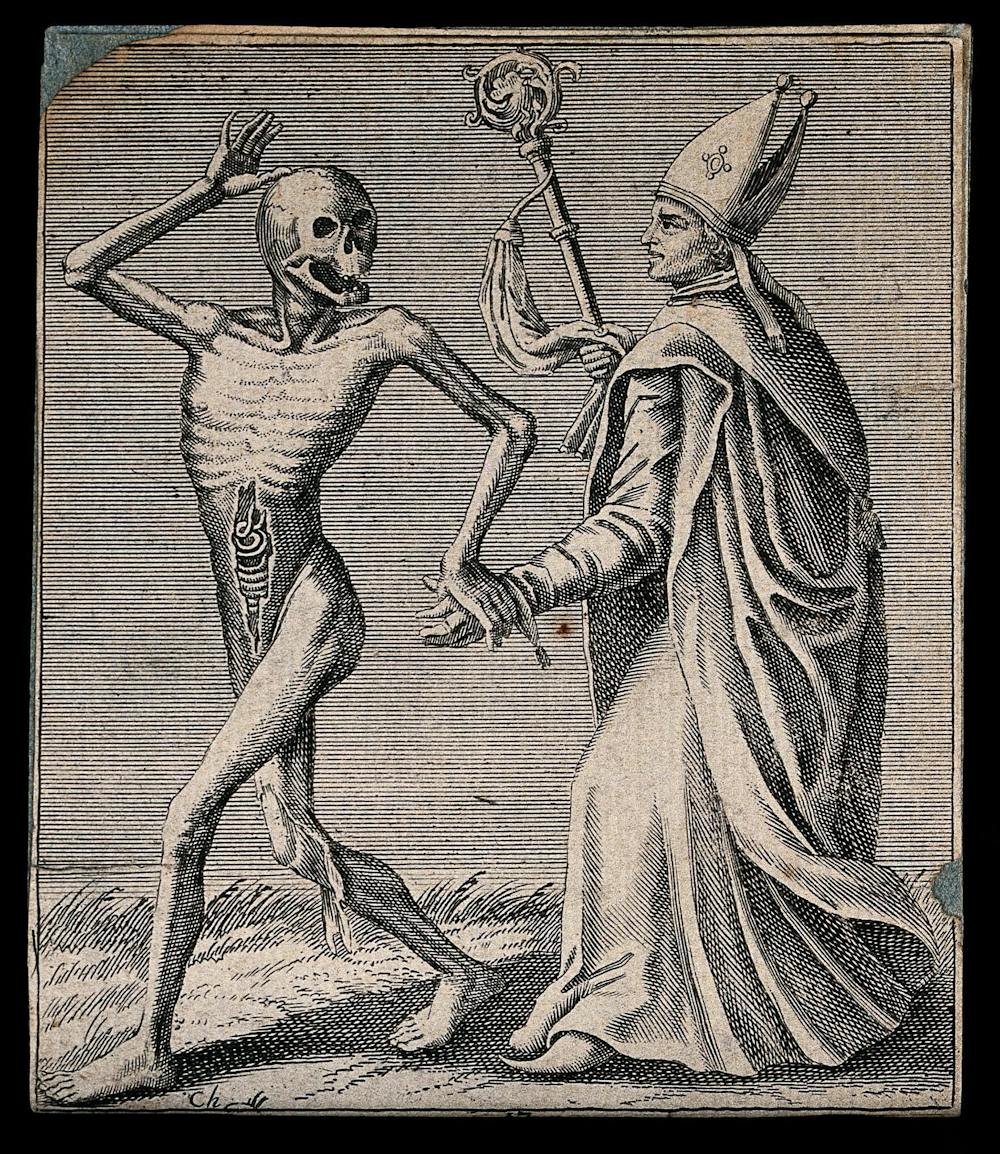
Everyone from the poor to the powerful will eventually dance with death.
Dance of death: death and the bishop. Etching attributed to J.-A. Chovin, 1720-1776, after the Basel dance of death. Wellcome Collection., CC BY
Even though skeletons and skulls representing death had appeared in ancient and medieval art, such symbols gained renewed emphasis following the Black Death. These images epitomized the transient and volatile nature of life and the imminence of death for all — rich and poor, young and old, men and women.
Artists’ allegorical references to death stressed the closeness of the hour of death. Skulls and other “memento mori” symbols, including coffins and hourglasses, appeared in Renaissance paintings to remind viewers that because death was imminent, one must prepare for it.
Bruegel the Elder’s famous “Triumph of Death” stressed the unpredictability of death: Armies of skeletons march over people and take their lives, whether ready or not.
Death culture influenced the 19th-century Western European doctors who started writing about historical pandemics. Through this lens, they imagined a specific version of past pandemics — the Black Death, in particular — that one modern historian named “Gothic epidemiology.”
Flawed image of Black Death emerged in 1800s
The German medical historian Justus Hecker, who died in 1850, and his followers wrote about the Black Death in a dark, gloomy, emotional tone. They emphasized its morbid and bizarre aspects, such as violent anti-Jewish pogroms and the itinerant Flagellants who whipped themselves in public displays of penance. In their 19th-century writing of the Black Death, it was cast as a singular event of cataclysmic proportions — a foreign, peculiar, almost wondrous entity that did not belong to European history.
As it is remembered today, the dominant symbols of the Black Death – like images of uncanny dancing skeletons and the Grim Reaper – are products of that Gothic imagination. Ironically, the iconic plague doctor was not a medieval phenomenon but a 17th-century introduction. It was only then – 300 years post-Black Death – that doctors treating plague patients started wearing special full-body outfits and a beaked mask, a precursor of modern personal protective equipment. So, sadly, my own plague doctor Halloween costume has nothing to do with the Black Death pandemic itself.
Even the term Black Death is a 19th-century invention; none of the medieval witnesses wrote of a “Black Death” or thought of plague as black.
The living legacy of this Gothic epidemiology still defines scholarly and popular understanding of plague and may creep into today’s Halloween costumes and decorations.
Triumph of death or celebration of life?
Pandemics never mean death and suffering for all. There is strong evidence that Black Death survivors experienced better living standards and increased prosperity. Even during subsequent outbreaks, differences in class, location and gender informed people’s experiences. The urban poor died in greater numbers, for example, as the well-off fled to their countryside residences. Giovanni Boccaccio’s famous “Decameron,” written in the immediate aftermath of the Black Death, tells the story of 10 young people who took refuge in the countryside, passing their days telling each other entertaining stories as a way to forget the horrors of plague and imminent death.
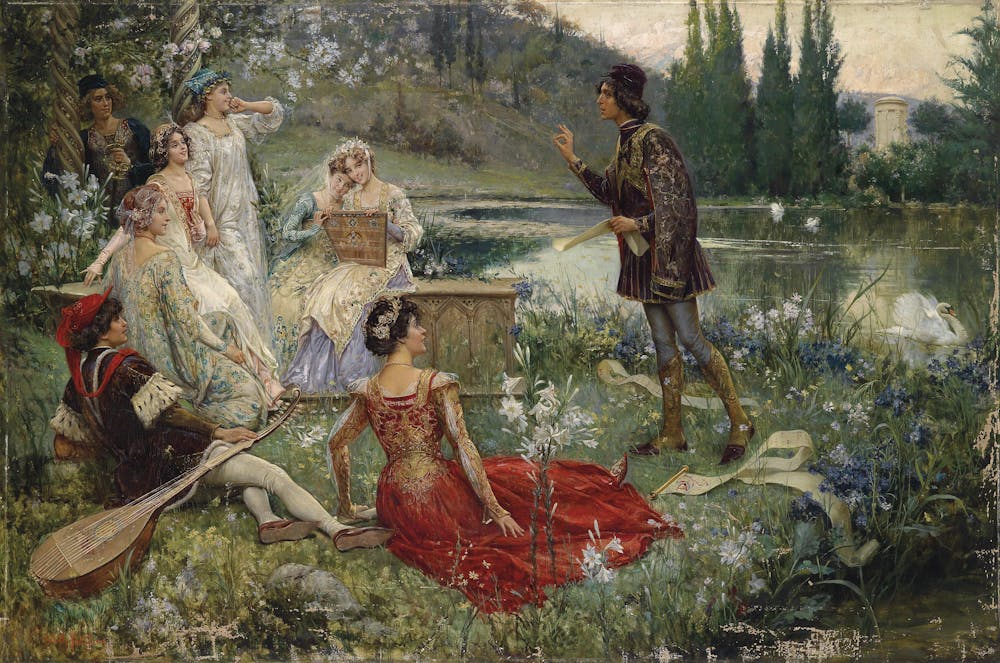
The characters of ‘The Decameron’ retreated and distracted themselves from death. Heritage Images/Hulton Fine Art Collection via Getty Images
A later example is Ogier Ghiselin de Busbecq, a Habsburg ambassador to the Ottoman Empire who took refuge in the Princes’ Islands off the coast of Istanbul during a plague outbreak in 1561. His memoir describes how he spent his days fishing and enjoying other pleasant pastimes, even while the daily death toll in the city surpassed 1,000 for months.
Countless narratives testify that recurrent outbreaks of plague inspired people to find new ways to embrace life and death. For some, this meant turning toward religion: prayer, fasting and processions. For others, it meant excessive drinking, partying and illicit sex. For still others, self-isolation and finding comfort in one’s own company did the trick.
No one yet knows how the COVID-19 pandemic will be remembered. But for the moment, Halloween is the perfect occasion to play with the pandemic lesson to simultaneously celebrate life and contemplate death.
As you dress up in spooky costumes or decorate your home with plastic skeletons to celebrate this late capitalist holiday – yes, Halloween is now a thriving US$10 billion industry annually – you may find comfort thinking about how the way you feel about life and death connects you to those who survived past pandemics.
[The Conversation’s science, health and technology editors pick their favorite stories. Weekly on Wednesdays.]
Nükhet Varlik, Associate Professor of History, Rutgers University - Newark
This article is republished from The Conversation under a Creative Commons license. Read the original article.











.png)

.jpg)
.jpg)
.png)
