They didn’t have backhoes in the Cretaceous period. Dinosaur tracks from 112 million years ago in Utah were damaged in January by construction equipment building a boardwalk at a tourist attraction. The dino footprints at Mill Canyon Dinosaur Tracksite have been drawing visitors since they were discovered in 2009. But people noticed in January that some of the tracks had been damaged, and there was heavy construction equipment at the site. The Bureau of Land Management, which operates the site, claimed at the time that no equipment was in the protected area near the dinosaur tracks. However, t...
Pluto, the Solar System’s largest dwarf planet, just became even more interesting with a report that icy lava flows have recently covered substantial tracts of its surface. In this context, “recently” means probably no more than a billion years ago. That’s old, of course – and there is no suggestion that volcanoes are still active – but it’s only a quarter the age of the Solar System and no one knows how Pluto brewed up the heat needed to power these eruptions.
The news, coming nearly seven years after NASA’s New Horizons probe made its spectacular flyby of Pluto on July 14, 2015, is thanks to analysis of images and other data by a team led by Kelsi Singer of the Southwest Research Institute in Boulder, Colorado.
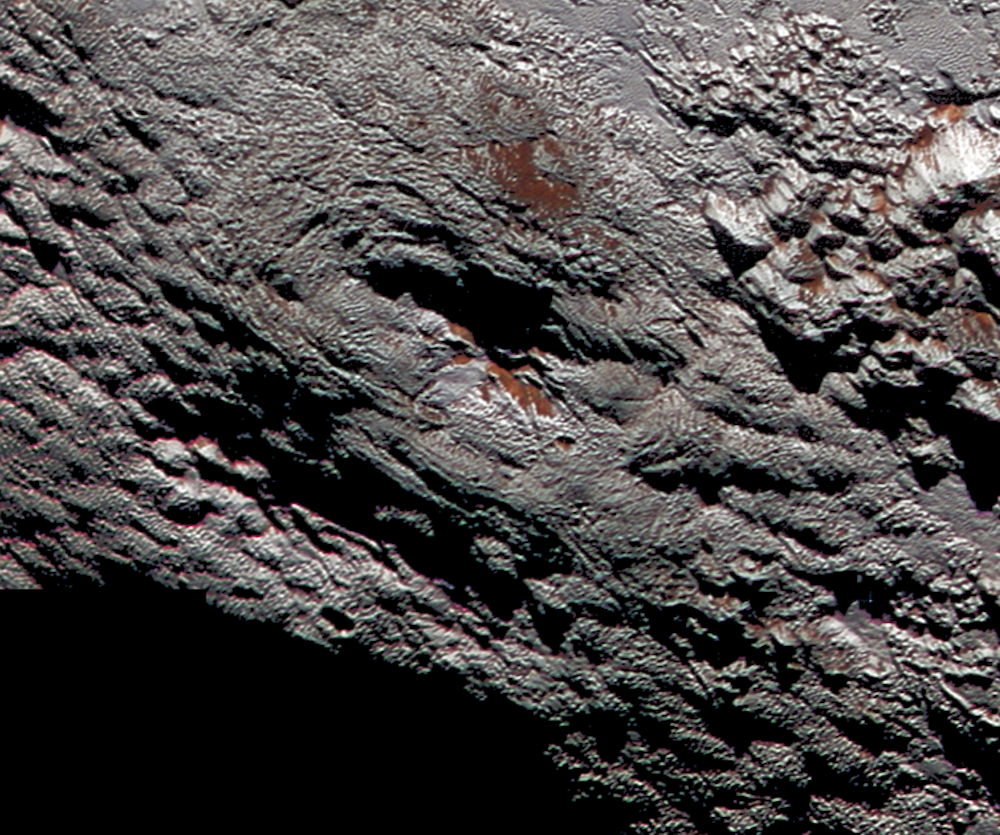
Singer’s team draw particular attention to a mountainous feature named Wright Mons, which rises 4-5km above its surroundings. It is about 150km across its base and has a central depression (a hole) 40-50km wide, with a floor at least as low as the surrounding terrain.
The team claims that Wright Mons is a volcano, and cite the lack of impact craters as evidence that it is not likely to be older than 1-2 billion years. Many other areas of Pluto have been around long enough to accumulate large numbers of impact craters – no recent icy lava flows have covered them.
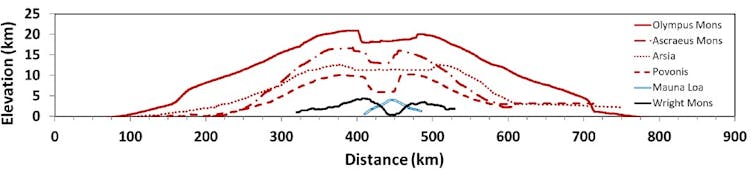
As volcanoes go, Wright Mons is a big one. Its volume exceeds 20 thousand cubic kilometres. Although considerably less than the volume of Mars’s biggest volcanoes, this is similar to the total volume of Hawaii’s Mauna Loa, and much greater than the volume of its above sea-level portion. This is particularly impressive given Pluto’s small size, with a diameter about a third that of Mars and a sixth that of Earth.
Height profile of Wright Mons (blue line), compared with the above sea-level part of Hawaii’s Mauna Loa (blue line) and the biggest volcanoes on Mars (red lines).
Singer et al. (2022)
The Wright stuff
In detail, the slopes of Wright Mons and much of its surroundings are seen to be crowded with hummocks up to 1km high and mostly 6-12km across. The team conclude that these hummocks are made primarily of water-ice, rather than nitrogen- or methane-ice that covers some other young regions on Pluto. They argue that this is consistent with the material strength necessary to form and preserve these domes, but they do recognise small patches of much weaker nitrogen-ice, mainly in the central depression.
The hummocks were likely created by some sort of ice volcanism, known by the technical term “cryovolcanism” – erupting icy water rather than molten rock. Pluto’s bulk density shows that it must have rock in its interior, but its outer regions are a mixture of ices (water, methane, nitrogen and probably ammonia and carbon monoxide, too, all of which are less than a third as dense as rock) in the same way that the crust of the Earth and other rocky planets is a mixture of several silicate minerals.
250km wide image centred on Wright Mons.
NASA/JHUAPL/SwRI
At Pluto’s surface temperature of well below -200°C, ice made of frozen water is immensely strong. It can (and on Pluto, does) form steep mountains that will last for eternity without sagging downhill like a glacier on the much less frigid Earth, where water-ice is weaker.
What melts the ice?
Ice, of course, melts at much lower temperatures than rock. And when there is a mixture of two ices, melting can begin at a lower temperature than for either of the pure ices (the same principle applies in silicate rock made of different minerals). This makes melting even easier. Despite this, it is a surprise to find evidence of relatively young water-rich cryovolcanic eruptions on Pluto, because there is no known heat source to power them.
There is only very limited scope for Pluto’s interior to be heated by tidal forces – a gravitational effect between orbiting bodies, such as a moon and a planet – which warm the interiors of some of the moons of Jupiter and Saturn. And the amount of rock inside Pluto is not enough to produce much heat from radioactivity.
Singer and her coworkers speculate that Pluto somehow held on to heat from its birth, which was unable to leak out until late in the body’s history. This would be consistent with Pluto having a deep internal liquid water ocean, suggested based on other evidence.
If the hummocks from which Wright Mons is built do represent water-ice eruptions, this stuff clearly was not flowing freely like liquid water, but must have been some kind of gooey crystal-rich “mush”, maybe within a completely frozen, but still pliable, outer skin that confined each effusion of fluid into a dome-like hummock.
A hole in the argument?
The team cite the depth and volume of the central depression of Wright Mons to dismiss earlier suggestions that this is a volcanic crater (a caldera) or that it has been excavated by explosive eruptions. Instead, they regard it as a gap that somehow avoided being covered by erupted hummocks.
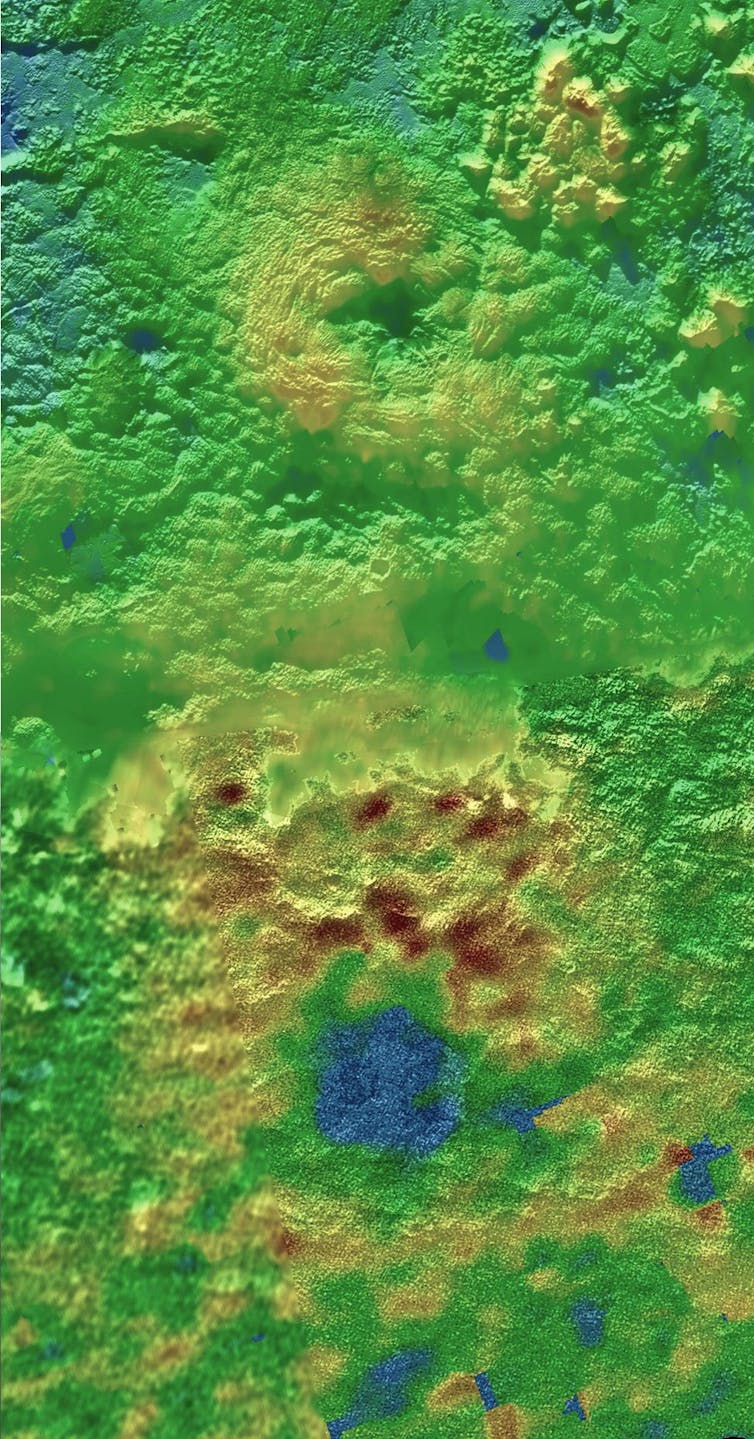
I have my doubts about that, because there is an even bigger probable volcano, Piccard Mons, to the south of Wright Mons that also has a large central depression. It strikes me as too much of a coincidence for there to be two adjacent volcanoes both with fortuitous holes in their middles. I think it is more likely that these central depressions are somehow integral to how these volcanoes grew or erupted.
Height map showing the ring-like Wright Mons in the northern half and the even larger Piccard Mons in the southern half.
NASA/Johns Hopkins University Applied Physics Laboratory/Southwest Research Institute
Piccard Mons is less well characterised than Wright Mons because, by the time New Horizons made its closest approach, Pluto’s rotation had carried Piccard Mons into darkness. The flyby was so fast that only the side of Pluto facing the Sun at the right time could be seen in detail. However, New Horizons was able to image Piccard Mons thanks to sunlight weakly reflected onto the ground by haze in Pluto’s atmosphere.
That was a remarkable achievement, but it leaves us wanting to know more. What extra details are lurking in the poorly imaged half of Pluto? It will probably be decades before we find out, or learn much more about how these icy volcanoes formed.
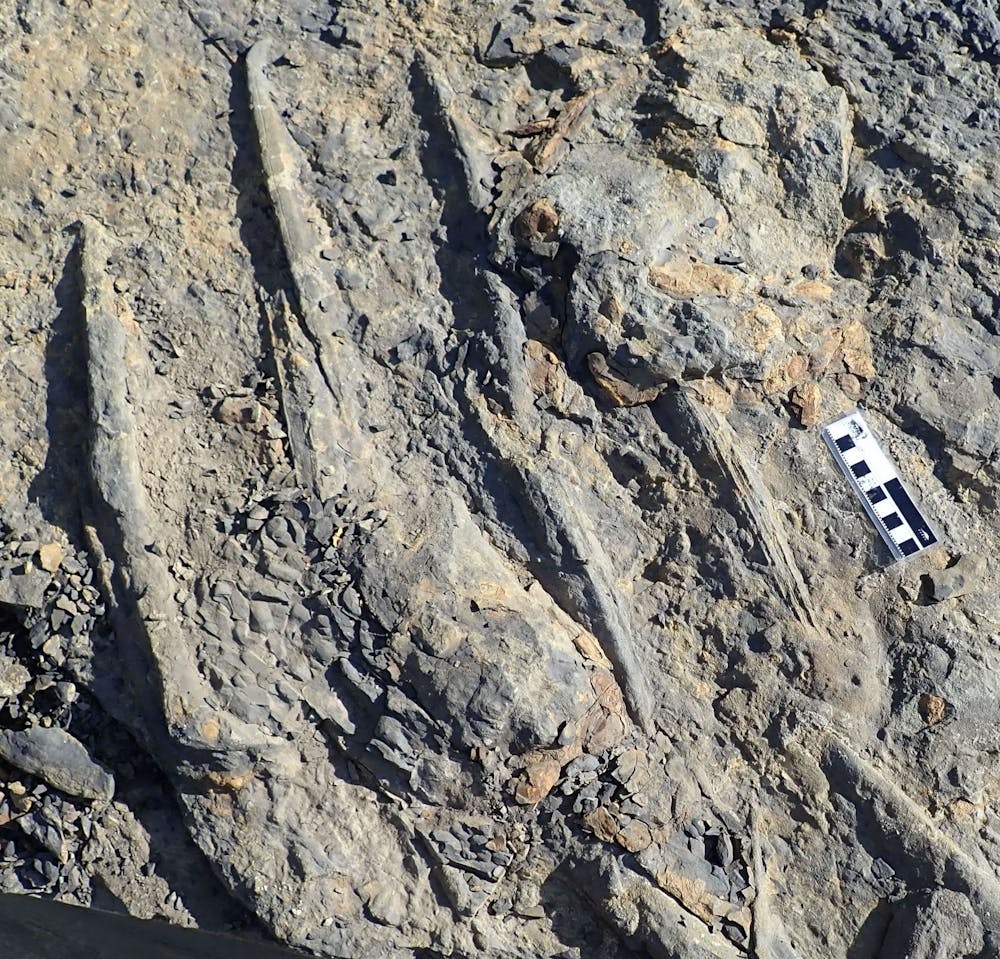
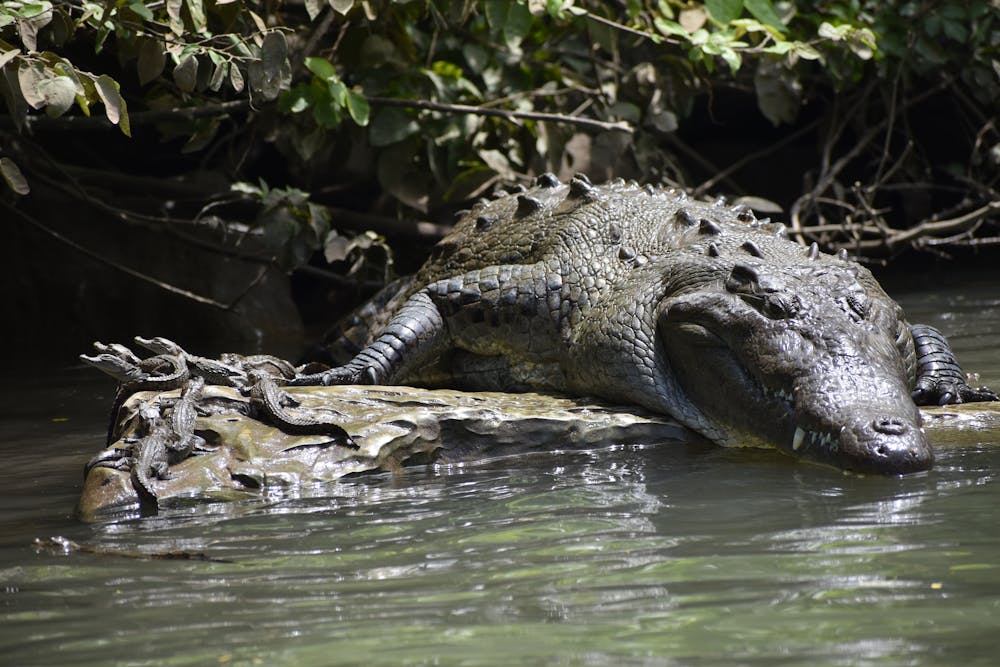
The trace fossils include swim traces, made when the crocodiles were scraping the muddy bottoms of lakes and river channels with their claws. Some of these swim traces showed remarkable detail, including parallel striations that represent scale patterns on the crocodiles’ feet.
An example of giant crocodile swim traces made by a crocodile’s claws scraping the bottom of a river channel, showing scale striations.
(C. Helm), Author provided
Ancient giants
The tracks and traces we examined are in the age range of 95–97 million years from the Cretaceous Period. The tracks included ankylosaurs, ornithopods and turtles.
The size of the crocodiles can be estimated from the distance between their claw impressions. We used this distance to estimate a total body length of about nine metres, and possibly as much as 12 metres. This was corroborated by our identification of a partial track, 75 centimetres long, which allowed for a similar length estimate of close to nine metres.
A crocodile of such prodigious size would have weighed around five tonnes, and would probably have been a top predator. By comparison, the record length of crocodiles living today is about six metres.
Today’s crocodiles are significantly smaller than their prehistoric ancestors.
The large swim traces from north of Tumbler Ridge may represent a precursor to Deinosuchus, that lived at least 13 million years before the previously reported first appearance of giant crocodiles in North America.
Tracking enviromental changes
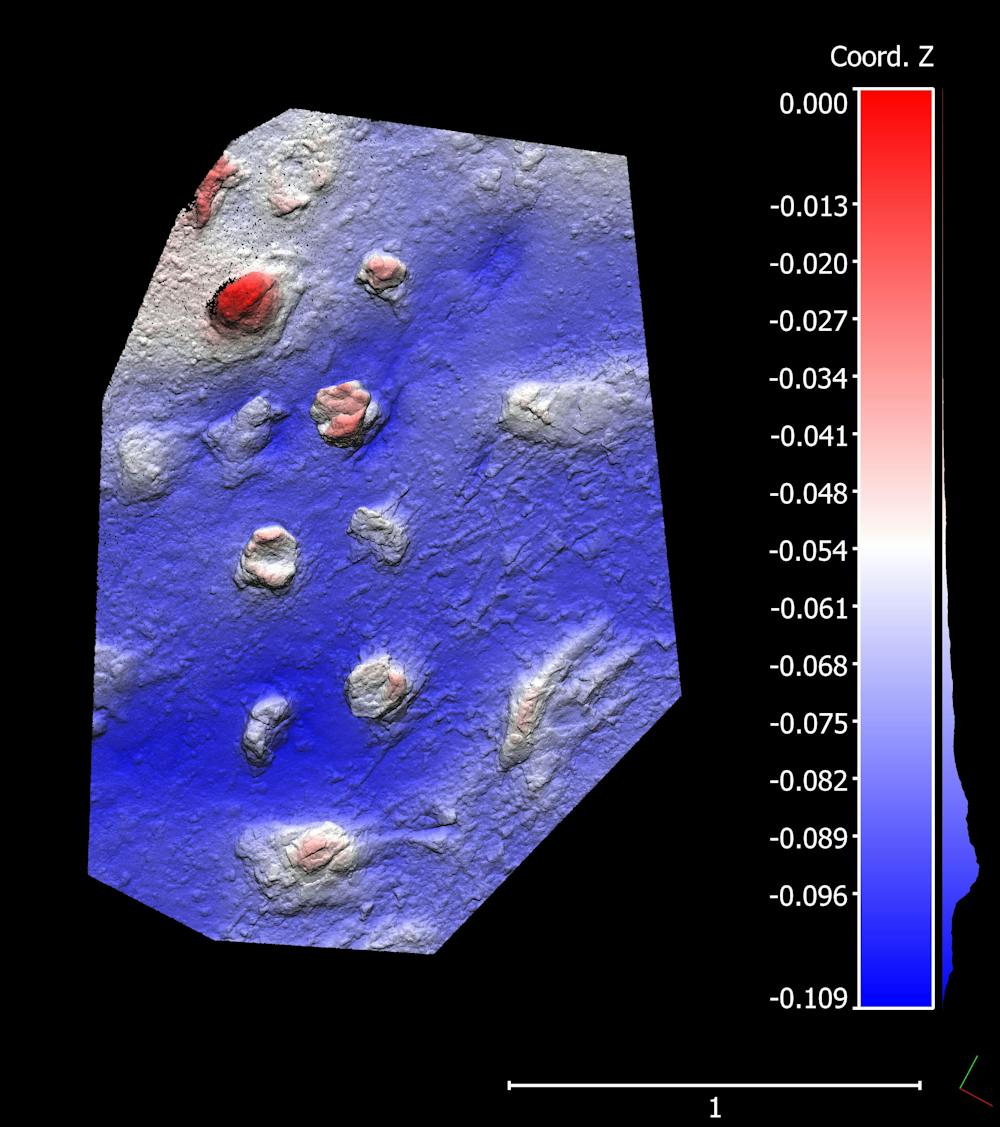
3D photogrammetry image showing a trackway made by a juvenile ankylosaur on the left, and on the right a hybrid between a crocodile track and swim trace; horizontal and vertical scales are in metres.
(C.Helm), Author provided
The environment consisted of a low-lying delta-plain with shallow lakes, river channels and vegetated wetlands, situated about 100 kilometres inland from the shoreline of the Western Interior Seaway that linked the Gulf of Mexico with the Arctic Ocean.
It was possible to document multiple episodes of flooding and emergence, which determined whether and when animals walked or swam. This helped explain the variety of tracks and traces that were identified.
These findings follow our discovery of 112 million-year-old swim traces, made by much smaller crocodylians (between one and two metres long) within the Tumbler Ridge UNESCO Global Geopark. Our familiarity with the nature of the exceptionally well-preserved traces from near Tumbler Ridge led directly to the first identification of crocodile swim traces in Africa.
The co-existence of traces made by walking ankylosaurs and swimming crocodiles on a single surface was intriguing and unprecedented in the fossil record. One of the ankylosaur trackways is the smallest thus far described from the region. It comprised tracks only 10 centimetres wide, presumably made by a juvenile.
Taxonomy, the study of how living organisms relate to one another as species, has been around since the 1700s. Though scientists and philosophers have long debated what makes a species a species, taxonomists treat each species as a group of organisms that share common biological characteristics.
Discovering and describing new species is essential to biology researchers and conservationists because they use species as a unit of analysis. Species are also economically important to agriculture, hunting and fishing, and have special legal status, such as under the U.S. Endangered Species Act.
Despite this, scientists have been able to formally name and describe only an estimated 10% of species on the planet, based on discovery trends over the years.
We are scientists in evolutionarybiology, and figuring out ways to better identify species is central to our research. Using genetic analysis and artificial intelligence, we were able to disentangle hidden species that have been lumped together in a single group and predict where and what types they might be. Our findings also pinpoint a potential cause for this shortfall in species identification: an underinvestment in the science of taxonomy.
Determining what makes a species can get complicated.
Hidden species remain to be discovered
For this study, we chose to focus on mammals. Because of their relatively large size and importance to people as a source of food, companionship and entertainment, we predicted that it was more likely that a large proportion of mammalian species have been already been identified.
Our first task was to identify known species that might actually contain two or more species. To do this, we analyzed 1 million gene sequences from 4,300 named species, identifying clusters of sequences that showed high genetic diversity and fitting the data to an evolutionary model.
We found potentially hundreds of hidden species that were previously classified as a single group. This finding was expected, as it mirrors results from previous studies, albeit on a larger scale.
Where and what are these hidden species?
Once we identified the presence of these potentially hidden species, our second task was to determine what specific traits they have in common. To do this, we used a data science technique called random forest analysis, a form of machine learning that draws information from a large number of different variables in order to make a prediction about a particular outcome. It’s similar to the technique that Netflix uses to suggest shows you might be interested in watching.
Random forests is a machine learning algorithm that makes predictions using multiple decision trees.
In our case, we wanted to predict whether a known species contained hidden species. The predictor variables we used spanned environmental factors, such as the climate of common mammalian habitats, and species-specific factors, such as physical traits, geographic range, reproductive and survival patterns. We also included research-based factors on the techniques scientists used to conduct their studies. In total, we collected some 3.8 million data points to build our model.
Based on our model, we found that three types of predictor variables stood out the most.
The first type comprised attributes of the species itself, such as body mass and geographic range. These results suggest that small mammals with relatively large ranges are more likely to have hidden species. This makes sense as, all things being equal, it is more difficult for scientists to recognize physical differences in smaller animals than larger ones.
The second type was climate – there are likely to be more hidden species in wet, warm areas with a large difference in day and night temperatures. This likely reflects the fact that tropical rainforests tend to have very high levels of mammalian diversity.
The third type was research effort, including the geographic dispersion of samples in museum collections and the number of recent publications mentioning the scientific name of a known species. This implies that researchers are generally effective in identifying new mammals, as how much attention the scientific community has focused on a specific mammal predicts whether that creature is identified. This is supported by how the general characteristics we’ve identified match new mammalian species described over the past 30 years, as well as the fact that our model recognizes areas that scientists are already investigating for hidden species.
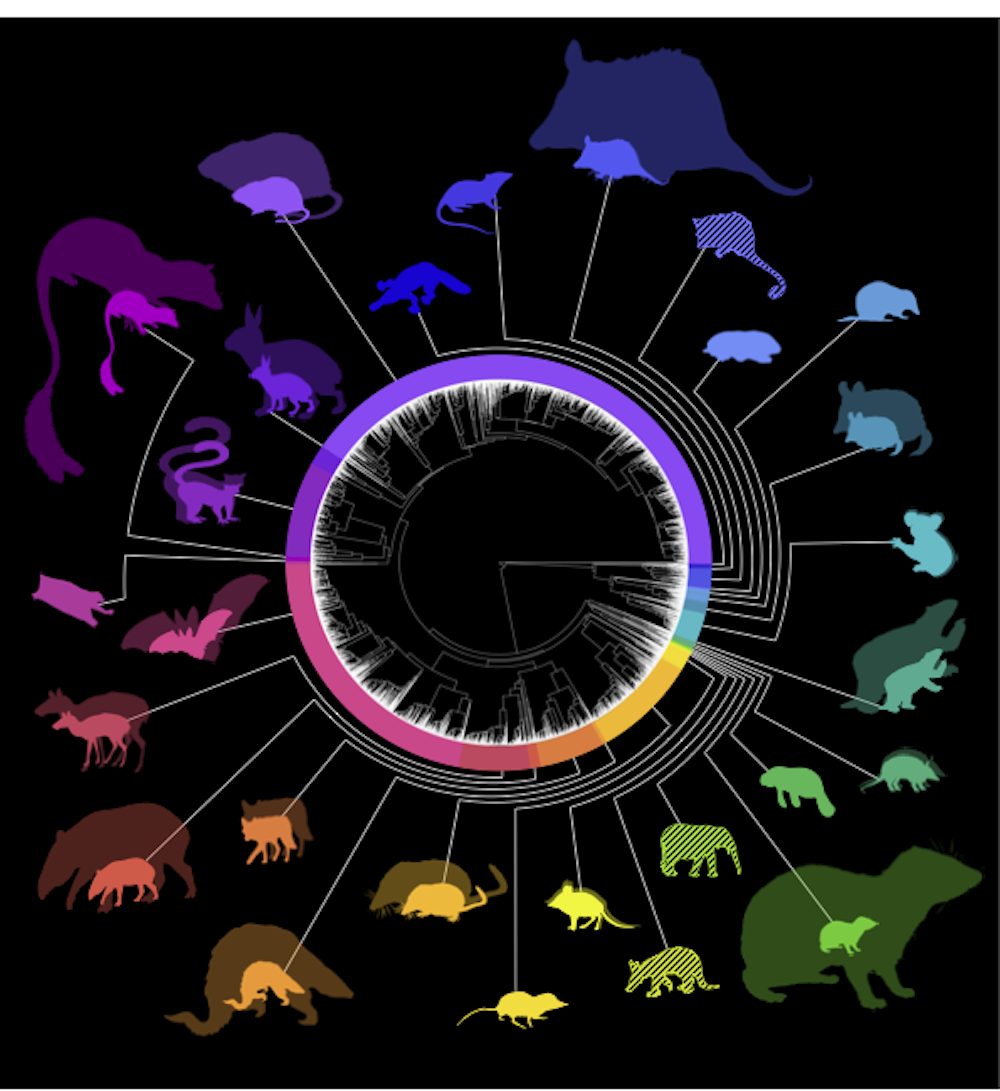
This diagram shows an estimate of the number of hidden species within known mammals. The relative size of the shadow surrounding each silhouette represents the ratio of predicted total existing species to known species. Striped silhouettes represent mammals with conflicting results excluded from the study.
At a time when Earth is facing its greatest extinction crisis since an asteroid killed off the dinosaurs, we believe that identifying and describing the many undiscovered species on Earth is crucial to aiding the preservation of its biodiversity.
Even though our study still found a large number of mammals waiting to be discovered, mammalian diversity is already relatively well captured compared with that of other species. We found that roughly 80% of existing mammal species have already been described, a proportion far higher than in nonmammal groups with even higher diversity such as beetles or mites.
Discovering and describing new species, as with all scientific research, takes a village. Natural history museums are largely responsible for collecting the raw data we analyzed, and genetic and biodiversity databases provided the infrastructure to make it accessible to us. A culture of information sharing among peers and large computer networks supported the thousands of hours of computation time we needed. Our work was made possible only by ongoing investments in taxonomic research.
Biodiversity scientists are racing to better understand the processes that create and maintain biodiversity while in the midst of the planet’s sixth mass extinction, one that is entirely caused by human actions. Taxonomists face the challenge of describing the species around us before they go extinct. As our findings suggest, there is still a long way to go.
In a message posted on Instagram, his daughter, Rumer Willis, said that the condition was “impacting his cognitive abilities.”
Swathi Kiran, director of the Aphasia Research Laboratory at Boston University, explains what aphasia is and how it impairs the communication of those with the condition.
What is aphasia?
Aphasia is a communication disorder that affects someone’s ability to speak or understand speech. It also impacts how they understand written words and their ability to read and to write.
It is important to note that aphasia can take different forms. Some people with aphasia only have difficulty understanding language – a result of damage to the temporal lobe, which governs how sound and language are processed in the brain. Others only have difficulty with speaking – indicating damage to the frontal lobe. A loss of both speaking and comprehension of language would suggest damage to both the large temporal lobe and frontal lobe.
Almost everyone with aphasia struggles when trying to come up with the names of things they know, but can’t find the name for. And because of that, they have trouble using words in sentences. It also affects the ability of those with the condition to read and write.
What causes aphasia?
In most cases, aphasia results from a stroke or hemorrhage in the brain. It can also be caused by damage to the brain from impact injury such as a car accident. Brain tumors can also result in aphasia.
There is also a separate form of the condition called primary progressive aphasia. This starts off with mild symptoms but gets worse over time. The medical community doesn’t know what causes primary progressive aphasia. We know that it affects the same brain regions as in cases where aphasia results from a stroke or hemorrhage, but the onset of symptoms follow a different trajectory.
There is no gender difference in terms of who suffers from aphasia. But people at higher risk of stroke – so those with cardiovascular disabilities and diabetes – are more at risk. This also means that minority groups are more at risk, simply because of the existing health disparities in the U.S.
Aphasia can occur at any age. It is usually people over the age of 65 simply because they have a higher risk of stroke. But young people and even babies can develop the condition.
How is it diagnosed?
When people have aphasia after stroke or hemorrhage, the diagnosis is made by a neurologist. In these cases, patients will have displayed a sudden onset of the disorder – there will be a huge drop in their ability to speak or communicate.
With primary progressive aphasia, it is harder to diagnose. Unlike in cases of stroke, the onset will be very mild at first – people will slowly forget the names of people or of objects. Similarly, difficulty in understanding what people are saying will be gradual. But it is these changes that trigger diagnosis.
What is the prognosis in both forms of aphasia?
People with aphasia resulting from stroke or hemorrhage will recover over time. How fast and how much depends on the extent of damage to the brain, and what therapy they receive.
Primary progressive aphasia is degenerative – the patient will deteriorate over time, although the rate of deterioration can be slowed.
Are there any treatments?
The encouraging thing is that aphasia is treatable. In the non-progressive form, consistent therapy will result in recovery of speech and understanding. One-on-one repetition exercises can help those with the condition regain speech. But the road can be long, and it depends on the extent of damage to the brain.
With primary progressive aphasia, symptoms of speech and language decline will get worse over time.
But the clinical evidence is unambiguous: Rehabilitation can help stroke survivors regain speech and the understanding of language and can slow symptoms in cases of primary progressive aphasia.
Clinical trial of certain types of drugs are under way but in the early stages. There do not appear to be any miracle drugs. But for now, speech rehabilitation therapy is the most common treatment.
When the Human Genome Project announced that they had completed the first human genome in 2003, it was a momentous accomplishment - for the first time, the DNA blueprint of human life was unlocked. But it came with a catch - they weren’t actually able to put together all the genetic information in the genome. There were gaps: unfilled, often repetitive regions that were too confusing to piece together.
I am a genome biologist who studies repetitive DNA sequences and how they shape genomes throughout evolutionary history. I was part of the team that helped characterize the repeat sequences missing from the genome. And now, with a truly complete human genome, these uncovered repetitive regions are finally being explored in full for the first time.
The missing puzzle pieces
German botanist Hans Winkler coined the word “genome” in 1920, combining the word “gene” with the suffix “-ome,” meaning “complete set,” to describe the full DNA sequence contained within each cell. Researchers still use this word a century later to refer to the genetic material that makes up an organism.
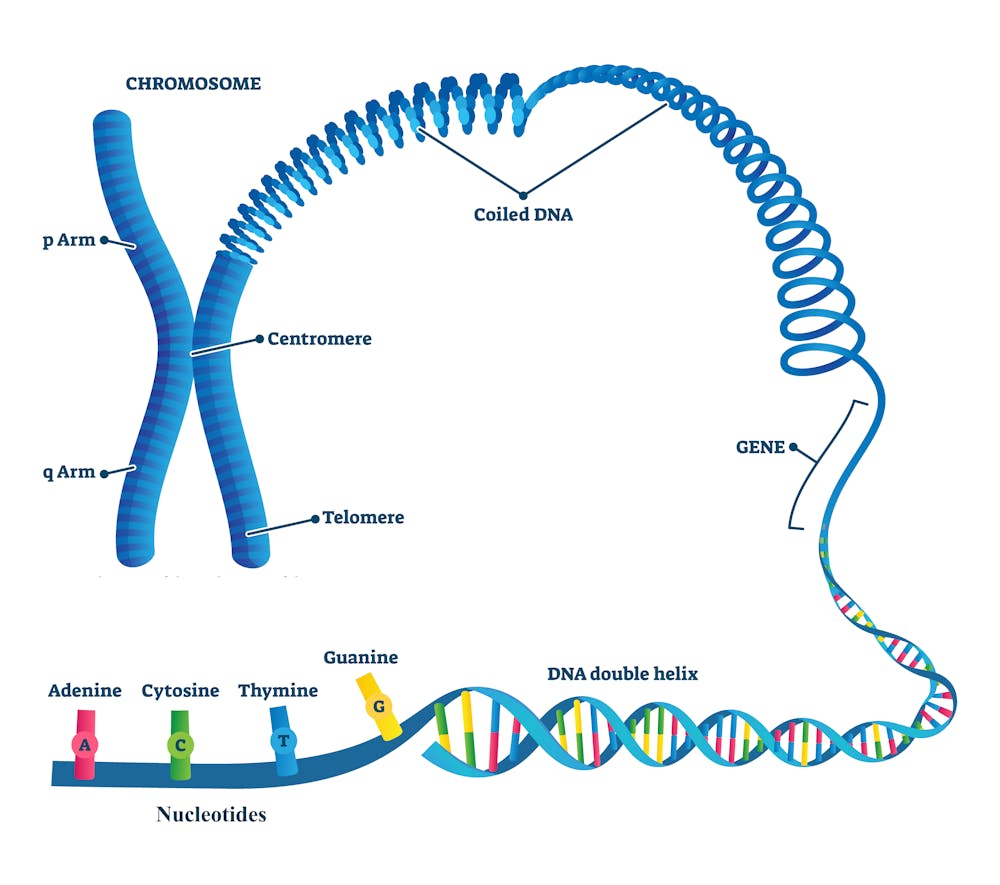
One way to describe what a genome looks like is to compare it to a reference book. In this analogy, a genome is an anthology containing the DNA instructions for life. It’s composed of a vast array of nucleotides (letters) that are packaged into chromosomes (chapters). Each chromosome contains genes (paragraphs) that are regions of DNA which code for the specific proteins that allow an organism to function.
Genetic material is made of DNA tightly packaged into chromosomes. Only select regions of the DNA in a genome contain genes coding for proteins.
While every living organism has a genome, the size of that genome varies from species to species. An elephant uses the same form of genetic information as the grass it eats and the bacteria in its gut. But no two genomes look exactly alike. Some are short, like the genome of the insect-dwelling bacteria Nasuia deltocephalinicola with just 137 genes across 112,000 nucleotides. Some, like the 149 billion nucleotides of the flowering plant Paris japonica, are so long that it’s difficult to get a sense of how many genes are contained within.
But genes as they’ve traditionally been understood – as stretches of DNA that code for proteins – are just a small part of an organism’s genome. In fact, they make up less than 2% of human DNA.
The human genome contains roughly 3 billion nucleotides and just under 20,000 protein-coding genes - an estimated 1% of the genome’s total length. The remaining 99% is non-coding DNA sequences that don’t produce proteins. Some are regulatory components that work as a switchboard to control how other genes work. Others are pseudogenes, or genomic relics that have lost their ability to function.
And over half of the human genome is repetitive, with multiple copies of near-identical sequences.
What is repetitive DNA?
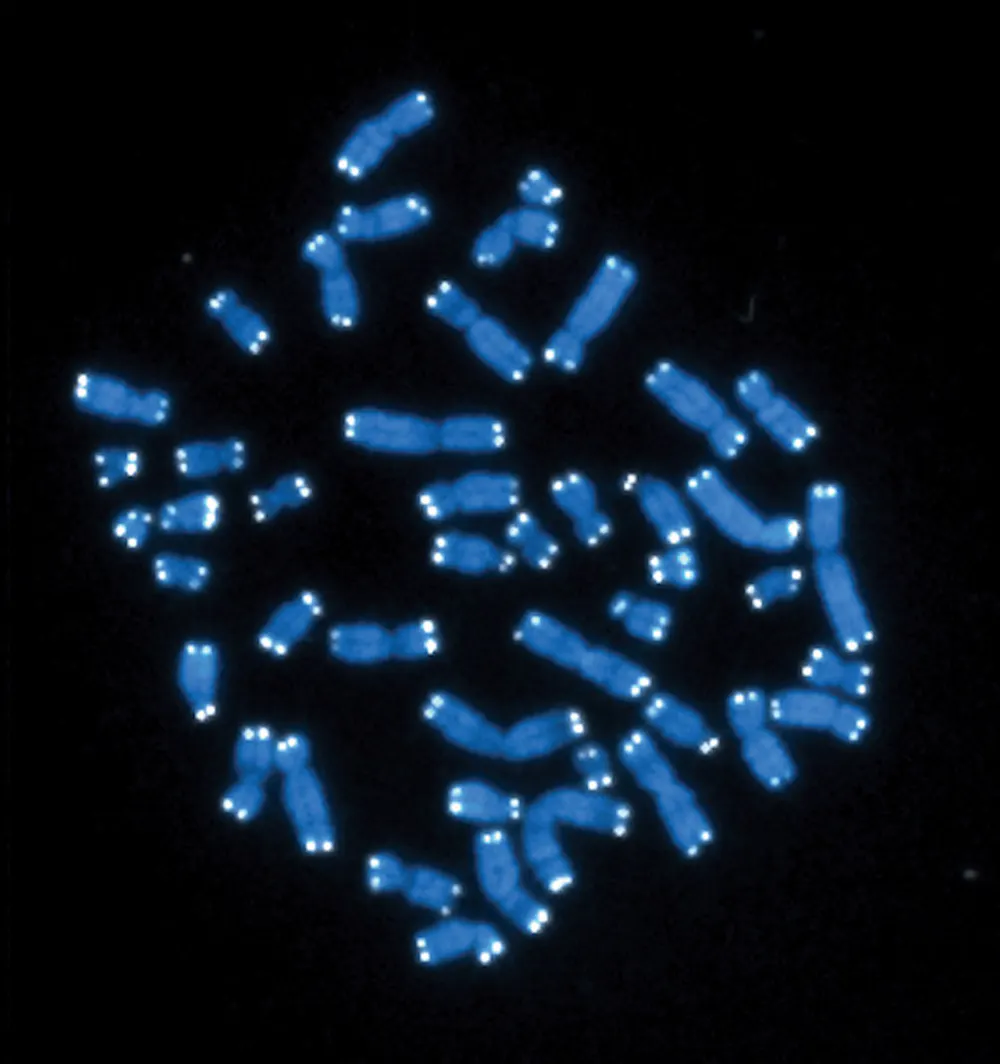
The simplest form of repetitive DNA are blocks of DNA repeated over and over in tandem called satellites. While how much satellite DNA a given genome has varies from person to person, they often cluster toward the ends of chromosomes in regions called telomeres. These regions protect chromosomes from degrading during DNA replication. They’re also found in the centromeres of chromosomes, a region that helps keep genetic information intact when cells divide.
Researchers still lack a clear understanding of all the functions of satellite DNA. But because satellite DNA forms unique patterns in each person, forensic biologists and genealogists use this genomic “fingerprint” to match crime scene samples and track ancestry. Over 50 genetic disorders are linked to variations in satellite DNA, including Huntington’s disease.
Satellite DNA tends to cluster toward the ends of chromosomes in their telomeres. Here, 46 human chromosomes are colored blue, with white telomeres.
Another abundant type of repetitive DNA are transposable elements, or sequences that can move around the genome.
Some scientists have described them as selfish DNA because they can insert themselves anywhere in the genome, regardless of the consequences. As the human genome evolved, many transposable sequences collected mutations repressing their ability to move to avoid harmful interruptions. But some can likely still move about. For example, transposable element insertions are linked to a number of cases of hemophilia A, a genetic bleeding disorder.
Transposable DNA may be the reason why humans have a tailbone but no tail.
But transposable elements aren’t just disruptive. They can have regulatory functions that help control the expression of other DNA sequences. When they’re concentrated in centromeres, they may also help maintain the integrity of the genes fundamental to cell survival.
They can also contribute to evolution. Researchers recently found that the insertion of a transposable element into a gene important to development might be why some primates, including humans, no longer have tails. Chromosome rearrangements due to transposable elements are even linked to the genesis of new species like the gibbons of southeast Asia and the wallabies of Australia.
Completing the genomic puzzle
Until recently, many of these complex regions could be compared to the far side of the moon: known to exist, but unseen.
When the Human Genome Project first launched in 1990, technological limitations made it impossible to fully uncover repetitive regions in the genome. Available sequencing technology could only read about 500 nucleotides at a time, and these short fragments had to overlap one another in order to recreate the full sequence. Researchers used these overlapping segments to identify the next nucleotides in the sequence, incrementally extending the genome assembly one fragment at a time.
These repetitive gap regions were like putting together a 1,000-piece puzzle of an overcast sky: When every piece looks the same, how do you know where one cloud starts and another ends? With near-identical overlapping stretches in many spots, fully sequencing the genome by piecemeal became unfeasible. Millions of nucleotides remained hidden in the the first iteration of the human genome.
Since then, sequence patches have gradually filled in gaps of the human genome bit by bit. And in 2021, the Telomere-to-Telomere (T2T) Consortium, an international consortium of scientists working to complete a human genome assembly from end to end, announced that all remaining gaps were finally filled.
With the completion of the first human genome, researchers are now looking toward capturing the full diversity of humanity.
This was made possible by improved sequencing technology capable of reading longer sequences thousands of nucleotides in length. With more information to situate repetitive sequences within a larger picture, it became easier to identify their proper place in the genome. Like simplifying a 1,000-piece puzzle to a 100-piece puzzle, long-read sequences made it possible to assemble large repetitive regions for the first time.
With the increasing power of long-read DNA sequencing technology, geneticists are positioned to explore a new era of genomics, untangling complex repetitive sequences across populations and species for the first time. And a complete, gap-free human genome provides an invaluable resource for researchers to investigate repetitive regions that shape genetic structure and variation, species evolution and human health.
But one complete genome doesn’t capture it all. Efforts continue to create diverse genomic references that fully represent the human population and life on Earth. With more complete, “telomere-to-telomere” genome references, scientists’ understanding of the repetitive dark matter of DNA will become more clear.
Two more poultry flocks in Iowa — including one with more than 5 million egg-laying chickens — were infected by a deadly and highly contagious avian influenza, the Iowa Department of Agriculture and Land Stewardship reported Friday.
The new detections of the virus were in a massive commercial egg-laying flock in Osceola County, and in a flock of about 88,000 turkeys in Cherokee County.
The virus was confirmed in those flocks on Thursday, the end of the first month of such outbreaks in the state this year. There were a total of 12 detections in nine counties that affected at least 13.2 million birds.
Secretary of Agriculture Mike Naig has said the threat of infection could loom for another two months as wild birds migrate through the state. Those birds are the likely carriers of the virus and can be asymptomatic if they are infected. The virus is often deadly for domestic birds.
Infected flocks are culled as quickly as possible to limit the risk of transmitting the virus to other nearby facilities.
The vast majority of the affected birds in Iowa have been egg-laying chickens due to the size of their flocks. The virus was previously found in a Buena Vista egg-laying flock of more than 5.3 million.
The state is the country’s top egg producer and has about 60 million laying hens, Naig has said. The infected flocks account for about 21% of that total. Naig expects food prices to increase because of the virus.
“If we continue to see the spread of (highly pathogenic avian influenza) and affecting more and more sites … I think you could very well see a change in price and even availability,” he said in an appearance on Iowa Press on Friday. “Now, the good news about the poultry industry is they can restock quickly — they can rebuild populations.”
The virus is unlikely to infect humans, and eggs and meat from infected flocks are discarded.
In 2015, a deadly bird flu outbreak led to the culling of more than 32 million birds in Iowa, which accounted for about two-thirds of the affected birds in the United States that year.
Iowa’s affected birds this year account for 59% of the country’s current 22.4 million total, according to U.S. Department of Agriculture data. The virus has been detected in commercial and backyard flocks in about two dozen states.
The rate of the detections in Iowa has been accelerating. The first was March 1 in a backyard flock in Pottawattamie County. Half of the state’s detections so far occurred in the past week, and all of them were at commercial facilities.
“Maybe we’re approaching the end — maybe we’re just getting started,” Naig said of the virus detections. “Time will tell.”
Here are the flocks that were infected in Iowa in March:
— March 1: A backyard flock of 42 chickens and ducks in Pottawattamie County. — March 6: A commercial flock of about 50,000 turkeys in Buena Vista County. — March 10: A commercial flock of about 916,000 egg-laying chickens in Taylor County. — March 17: A commercial flock of more than 5.3 million egg-laying chickens in Buena Vista County. — March 20: A backyard flock of 11 chickens and ducks in Warren County. — March 23: A commercial flock of about 54,000 turkeys in Buena Vista County. — March 25: A commercial flock of about 250,000 young hens in Franklin County. — March 28: A commercial flock of about 28,000 turkeys in Hamilton County. — March 28: A commercial flock of about 1.5 million egg-laying chickens in Guthrie County. — March 29: A commercial flock of about 35,500 turkeys in Buena Vista County. — March 31: A commercial flock of more than 5 million egg-laying chickens in Osceola County. — March 31: A commercial flock of about 88,000 turkeys in Cherokee County.
Iowa Capital Dispatch is part of States Newsroom, a network of news bureaus supported by grants and a coalition of donors as a 501c(3) public charity. Iowa Capital Dispatch maintains editorial independence. Contact Editor Kathie Obradovich for questions: info@iowacapitaldispatch.com. Follow Iowa Capital Dispatch on Facebook and Twitter.
ORLANDO, Fla. — NASA began its three-day wet dress rehearsal on the launch pad at Kennedy Space Center today for the Artemis I mission to the moon. The test began at 5 p.m. with what NASA refered to as its “call to stations,” in which teams arrived to KSC nearly 46 hours ahead of what would normally be the target liftoff. The wet dress rehearsal will aim to bring the countdown clock nearly to 0, but won’t ignite the massive engines. “This is our last design verification prior to our launch at a design level,” Tom Whitmeyer, NASA’s deputy associate administrator for common exploration systems d...
Alex Tan was walking on a beach in Queensland, Australia last week when he chanced upon something that caused many people to become quite puzzled.
Tan, a pastor at History Maker Church, first thought the creature he was nearing was a flathead fish (or "three-meter flatty" as they're called in Australia) until he got closer and was able to take it all in.
According to CBS News Tan recorded video of his discovery, which he described as having "humanlike hands, long lizard tail, nose like a possum and patches of black fur."
"I've stumbled across something weird," he said in one of the videos. "This is like one of those things you see when people claim that they've found aliens."
Since posting footage of the creature, many people have weighed in on what they think it could possibly be. Guesses on the true genus ranged from a deerhead possum, mini-chupacabra, or extinct marsupial but the most likely answer, which was landed upon just a day ago, is far less fun.
"After consultation with my colleague Heather Janetzki from the Queensland Museum we are pretty sure that it is a swollen, waterlogged brushtail possum who has lost its fur," University of Queensland associate professor Stephen Johnston said to The Courier Mail. "The skull and hindlimb give the clues. The animal was probably washed down into the ocean during the floods," he added.
According to The Daily Mail, the brushtail possum is common in Australia, and has also been spotted in New Zealand, but are most widely found along the east coast.
Even with the logical explanation from Johnston and Janetzki, "pretty sure" isn't a definite, which very much leaves alien on the table.
The first audio recordings on Mars reveal a quiet planet with occasional gusts of wind where two different speeds of sound would have a strange delayed effect on hearing, scientists said Friday.
After NASA's Perseverance rover landed on Mars in February last year, its two microphones started recording, allowing scientists to hear what it is like on the Red Planet for the first time.
In a study published in the Nature journal on Friday, the scientists gave their first analysis of the five hours of sound picked up by Perseverance's microphones.
The audio revealed previously unknown turbulence on Mars, said Sylvestre Maurice, the study's main author and scientific co-director of the shoebox-sized SuperCam mounted on the rover's mast which has the main microphone.
The international team listened to flights by the tiny Ingenuity helicopter, a sister craft to Perseverance, and heard the rover's laser zap rocks to study their chemical composition -- which made a "clack clack" sound, Maurice told AFP.
"We had a very localized sound source, between two and five meters (six to 16 feet) from its target, and we knew exactly when it was going to fire," he said.
The study confirmed for the first time that the speed of sound is slower on Mars, traveling at 240 meters per second, compared to Earth's 340 meters per second.
This had been expected because Mars' atmosphere is 95 percent carbon dioxide -- compared to Earth's 0.04 percent -- and is about 100 times thinner, making sound 20 decibels weaker, the study said.
'I panicked'
But the scientists were surprised when the sound made by the laser took 250 meters a second -- 10 meters faster than expected.
"I panicked a little," Maurice said. "I told myself that one of the two measurements was wrong because on Earth you only have one speed of sound."
They had discovered there are two speeds of sound on the surface of Mars -- one for high-pitched sounds like the zap of the laser, and another for lower frequencies like the whir of the helicopter rotor.
This means that human ears would hear high-pitched sounds slightly earlier.
"On Earth, the sounds from an orchestra reach you at the same speed, whether they are low or high. But imagine on Mars, if you are a little far from the stage, there will be a big delay," Maurice said.
"All of these factors would make it difficult for two people to have a conversation only five meters (16 feet) apart", the French CNRS research institute said in a statement.
'Scientific gamble' pays off
It was otherwise so quiet on Mars that the scientists repeatedly feared something was wrong, the CNRS said, possibly provoking memories of two failed previous attempts in 1999 and 2008 to record sound there.
"There are few natural sound sources with the exception of the wind," the scientists said in a statement linked to the study.
The microphones did pick up numerous "screech" and "clank" sounds as the rover's metal wheels interacted with rocks, the study said.
The recording could also warn about problems with the rover -- like how drivers sense something's wrong when their car starts making strange noises.
Maurice said he felt the "scientific gamble" of taking microphones to Mars was a success.
Thierry Fouchet of the Paris Observatory, who was also involved in the research, said that listening to turbulence, such as vertical winds known as convection plumes, will "allow us to refine our numerical models for predicting climate and weather".
Future missions to Venus or Saturn's moon Titan could also now come equipped with microphones.
And Perseverance is far from done eavesdropping. While its core mission lasts just over two years, it could remain operational well beyond that -- the Curiosity rover is still kicking nine years into a planned two-year stint.
Swedish climate activist Greta Thunberg attends a press conference in Berlin. Thunberg has announced plans to publish a comprehensive book on climate change. Kay Nietfeld/dpa
Swedish environmental activist Greta Thunberg has announced plans to publish a comprehensive book on climate change.
"I've invited over 100 leading voices from around the world - scientists, experts, activists and authors to create a book that covers the climate - and ecological crisis from a holistic perspective," the 19-year-old tweeted on Thursday.
Climate change was just one of several symptoms of a larger sustainability crisis, Thunberg said, according to a report in The Guardian.
She said she hoped the volume would become a kind of reference work on the different, closely related crises.
According to the report, the authors include climate researchers Johan Rockström and Katharine Hayhoe, as well as economist Thomas Piketty and writer Margaret Atwood.
The book is due to be published in Britain in October.
When Maria Gloria Dominguez-Bello travels to the Amazon jungle and tells villagers the reason for her visit, their first response is often laughter. “Did you come all this way just to see my poop?” they ask. She did — no humor intended — and she has been doing it for more than 20 years. She and husband Martin Blaser, both scientists at Rutgers University, are the stars of a new documentary called "Invisible Extinction," describing their years of research on how modern diet and medicine are disrupting our internal colonies of bacteria and other microbes — the human microbiome. The microbiome ha...
SHANGHAI (Reuters) -Authorities began locking down some western areas of Shanghai two days ahead of schedule, as new COVID-19 cases in China's most populous city jumped by a third despite stringent measures already in place to try to stop the virus spreading.
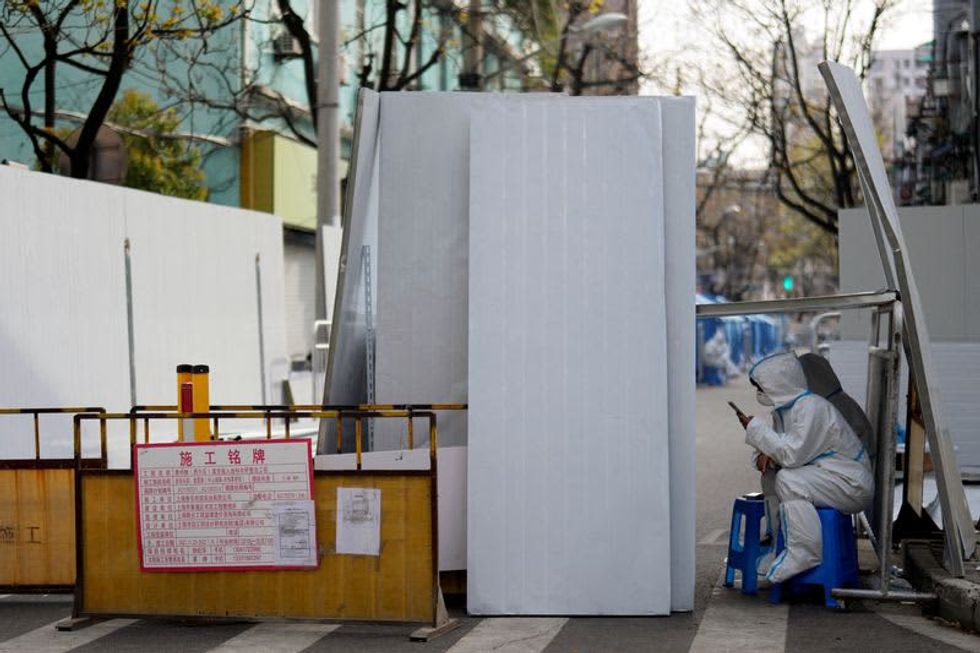
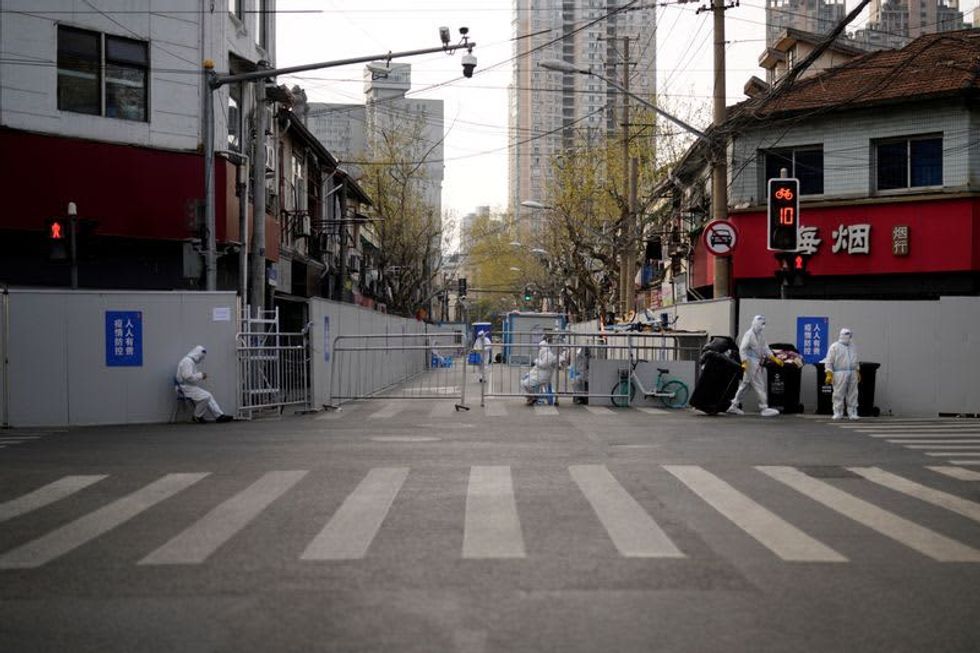
Home to 26 million people, China's financial hub is in the third day of a lockdown officials are imposing by dividing the city roughly along the Huangpu River, splitting the historic centre west of the river from the eastern financial and industrial district of Pudong to allow for staggered mass tests.
While residents in the east have been locked down since Monday, those in the west were previously scheduled to start their four-day lockdown on Friday.
Locking down a major metropolis like Shanghai full-scale would result in a 4% reduction in the national real gross domestic product, economists at the Chinese University of Hong Kong, Tsinghua University and other institutes estimated https://michaelzsong.weebly.com/uploads/4/8/1/4/48141215/truck_flow_and_covid19_220315.pdf in mid-March.
On Wednesday Shanghai reported a record 5,656 asymptomatic COVID cases and 326 symptomatic cases for March 29, up from 4,381 new asymptomatic cases and 96 new cases with symptoms for the prior day. China reclassifies asymptomatic cases if and when they later develop symptoms.
Several residents living in western districts on Tuesday received notice from their housing committees that they would be stopped from leaving their compounds for the next seven days.
"We will resume normal life soon, but in the next period of time we ask everyone to adhere closely to pandemic control measures, do not gather, and reduce movements," said one housing committee notice seen by Reuters.
Meanwhile the city's southwestern district of Minhang, home to more than 2.5 million people, said it would suspend public bus services until April 5.
Shanghai authorities told a press conference on Wednesday that since the lockdown began on Monday they had conducted 9.1 million nucleic acid tests.
They also said they planned to disinfect places such as office buildings, construction sites, wet markets and schools in a month-long campaign.
'PUDONG PANDEMIC'
China's "dynamic clearance" approach means it aims to clear all cases, and all people who test positive are sent to central quarantine centres or hospitals. Close contacts and neighbours must quarantine at home.
Many across the city have taken to social media to vent their frustrations in lockdown, posting videos and images of crowded quarantine centres and also issuing calls for help with medical treatment and purchasing food.
Business life has also been seriously disrupted.
The lockdown has roiled auto production in the city and Chinese firms have halted a wave of planned domestic initial public offerings, filings show, as the current case surge has hampered due diligence and information gathering - affecting an estimated $9 billion-plus in fundraising.
Across mainland China, the daily numbers of new local infections in the past two weeks were much higher than those seen in the first two months this year, marking the biggest wave since the 2020 surge centred on Wuhan.
The eastern city of Xuzhou, which reported a total of less than 20 local infections in the past week, has imposed a three-day lockdown in most areas starting Wednesday.
The Xuzhou government said each household in those areas should only send one person to go out to shop for necessities every other day, while non-essential companies should either shut operations, have employees work from home, or operate in a closed-loop manner.
The National Health Commission (NHC) said on Wednesday China had built, or was in the process of constructing, 82 temporary hospitals across 46 cities. This is more than double the 33 temporary hospitals health authorities said the country had or was preparing eight days ago.
(Reporting by Brenda Goh and Roxanne Liu, additional reporting by David Stanway and the Shanghai Newsroom; Editing by Kenneth Maxwell and Raju Gopalakrishnan)