Top Stories Daily Listen Now
RawStory

Science

Hubble telescope spots most distant star ever seen

The Hubble space telescope has peered back to the dawn of cosmic time and detected light from a star that existed within the first billion years after the Big Bang -- a new record, astronomers said Wednesday.

The newly discovered star, called "Earendel," is so far away its light has taken 12.9 billion years to reach Earth, when the universe was seven percent its current age.

Keep reading... Show less

'Love hormone' oxytocin turns fierce lions into kittens

Scientists who spent years spraying oxytocin up the noses of lions found the big cats became much friendlier with their neighbors and less prone to roaring at strangers when dosed up on the so-called "love hormone."

The results, published in the journal iScience on Wednesday, could have major benefits for conservation efforts as unfamiliar prides are increasingly forced by urban sprawl to live together in reservations.

Keep reading... Show less

Giant ice volcanoes identified on Pluto

Strange lumpy terrain on Pluto unlike anything previously observed in the solar system indicates that giant ice volcanoes were active relatively recently on the dwarf planet, scientists said on Tuesday.

The observation, which was made by analyzing images taken by NASA's New Horizons spacecraft, suggests that Pluto's interior was hotter much later than previously thought, according to a new study in the Nature Communications journal.

Keep reading... Show less

Invasive ants hit Texas hard - now a killer fungus is coming for them

When crazy ants roll into new parts of Texas, the invasive species wipe out local insects and lizards, drive away birds, and even blind baby rabbits by spewing acid in their eyes.

Scientists at the University of Texas at Austin now have good news: a naturally occurring fungus-like pathogen can be used to reverse their rampant spread across the southeastern United States, where they have wrought havoc for the past 20 years.

Keep reading... Show less

New research in mice suggests Alzheimer’s disease is linked to circadian rhythm

A good night’s sleep has always been linked to better mood, and better health. Now, scientists have even more evidence of just how much sleep – and more specifically our circadian rhythm, which regulates our sleep cycle – is linked to certain diseases, such as Alzheimer’s disease. A team of researchers from the United States have found further evidence that the cells which help keep the brain healthy and prevent Alzheimer’s disease also follow a circadian rhythm. Our circadian rhythm is a natural, internal process that follows a 24-hour cycle. It controls everything from sleep, digestion, appe...

The neuroscience behind Will Smith's attack on Chris Rock

In case you missed it, last night at the Oscars, actor Will Smith slapped the bejesus out of comedian Chris Rock, who was one of the award show’s presenters.

If you’ve ever watched the Oscars, you know that comedians are expected to make the atmosphere a little less stuffy by roasting the audience. And remember, the audience is full of insanely rich and beautiful celebrities, so an aim of the roasting is to bring these pop culture gods back down to Earth. You can think of celebrity roasting as a sort of civic duty for comedians.

Keep reading... Show less

Longer naps in the day may be an early sign of dementia in older adults

Doctors often recommend “power naps” as a way to compensate for a poor night’s sleep and help keep alert until bedtime. But for older adults, extensive power naps could be an early sign of dementia.

Research on how napping affects cognition in adults has had mixed results. Some studies on younger adults suggest that napping is beneficial to cognition, while others on older adults suggest it may be linked to cognitive impairment. However, many studies are based on just a single self-reported nap assessment. This methodology may not be accurate for people with cognitive impairment who may not be able to reliably report when or how long they napped.

Keep reading... Show less

How did cockroaches survive the asteroid that led to the extinction of dinosaurs?

When the rock now known as the Chicxulub impactor plummeted from outer space and slammed into the Earth 66 million years ago, cockroaches were there. The impact caused a massive earthquake, and scientists think it also triggered volcanic eruptions thousands of miles from the impact site. Three-quarters of plants and animals on Earth died, including all dinosaurs, except for some species that were ancestors of today’s birds.

How could roaches a couple of inches long survive when so many powerful animals went extinct? It turns out that they were nicely equipped to live through a meteoric catastrophe.

If you’ve ever seen a cockroach, you’ve probably noticed that their bodies are very flat. This is not an accident. Flatter insects can squeeze themselves into tighter places. This enables them to hide practically anywhere – and it may have helped them survive the Chicxulub impact.

Cockroaches have flat bodies that help them squeeze through tiny spaces. They’re also strong and fast.

When the meteor struck, temperatures on Earth’s surface skyrocketed. Many animals had nowhere to flee, but roaches could take shelter in tiny soil crevices, which provide excellent protection from heat.

The meteor’s impact triggered a cascade of effects. It kicked up so much dust that the sky darkened. As the sun dimmed, temperatures plunged and conditions became wintry around the globe. With little sunlight, surviving plants struggled to grow, and many other organisms that relied on those plants went hungry.

Not cockroaches, though. Unlike some insects that prefer to eat one specific plant, cockroaches are omnivorous scavengers. This means they will eat most foods that come from animals or plants as well as cardboard, some kinds of clothing and even poop. Having appetites that aren’t picky has allowed cockroaches to survive lean times since the Chicxulub extinction and other natural disasters.

Another helpful trait is that cockroaches lay their eggs in little protective cases. These egg cartons look like dried beans and are called oothecae, which means “egg cases.” Like phone cases, oothecae are hard and protect their contents from physical damage and other threats, such as flooding and drought. Some cockroaches may have waited out part of the Chicxulub catastrophe from the comfort of their oothecae.

Small brown rectangular egg case on white background

Cockroach egg cases are about 0.5 inches long (10 millimeters) and contain up to 50 eggs, depending on the species.

VitalisG/iStock via Getty Images

Modern cockroaches are little survivors that can live just about anywhere on land, from the heat of the tropics to some of the coldest parts of the globe. Scientists estimate that there over 4,000 cockroach species.

A handful of these species like to live with humans and quickly become pests. Once cockroaches become established in a building, it’s hard to rid every little crack of these insects and their oothecae. When large numbers of roaches are present in unsanitary places, they can spread diseases. The biggest threat they pose to human health is from allergens they produce that can trigger asthma attacks and allergic reactions in some people.

Cockroach pests are hard to manage because they can resist many chemical insecticides and because they have the same abilities that helped their ancestors outlive many dinosaurs. Still, cockroaches are much more than a pest to control. Researchers study cockroaches to understand how they move and how their bodies are designed to get ideas for building better robots.

As a scientist, I see all insects as beautiful, six-legged inspirations. Cockroaches have already overcome odds that were too great for dinosaurs. If another meteorite hit the Earth, I’d be more worried for humans than for cockroaches.

Keep reading... Show less

Astronomy’s 10-year wish list: Big money, bigger telescopes and the biggest questions in science

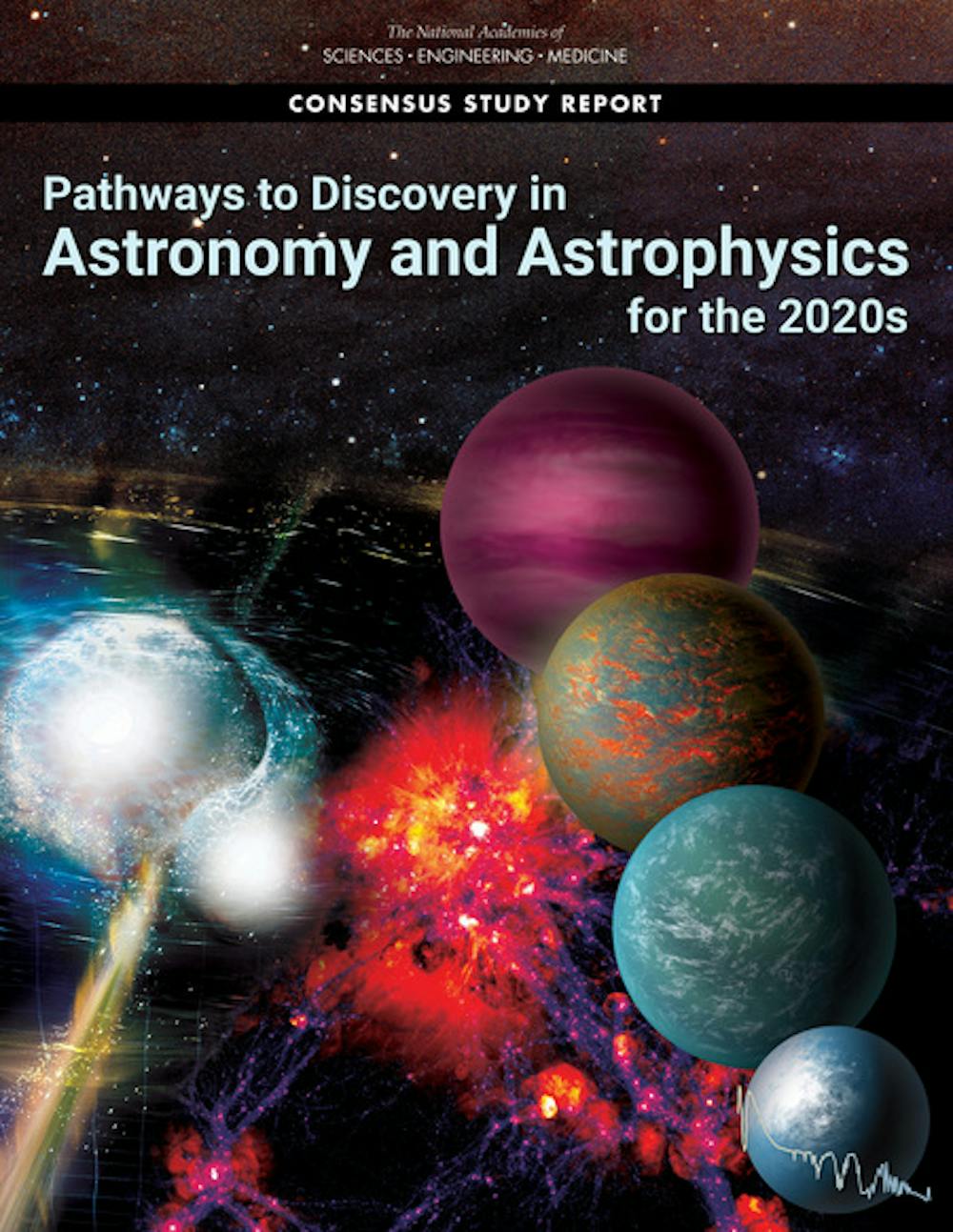
It takes expensive tools to learn about the universe, but projects like the Very Large Array for radio astronomy in New Mexico and the Chandra X-ray Observatory, which orbits Earth, have pushed scientific knowledge forward in ways that would not have been possible without these instruments. Every 10 years, astronomers and astrophysicists outline priorities for the hardware they need in the decadal survey on astronomy and astrophysics. The newest version of the survey was published by the National Academies of Sciences, Engineering and Medicine in late 2021, and debates about funding are in full swing for the next fiscal year.

I’m a professor of astronomy whose research has depended on facilities and equipment built after a recommendation in one of these decadal surveys, and I was involved in the previous survey, published in 2010.

Keep reading... Show less

How a deluge of lockdown volunteers rescued UK’s hidden weather history

When it rains, it pours. Make hay while the sun shines. Save for a rainy day. Come rain or shine. The English language is overflowing with phrases about the weather, especially rain, or the lack of it. Fascination with the weather seems embedded in the UK’s national identity, but there is much people still need to learn about it.

Scientists know there were terrible floods and brutal droughts in the country’s past which could happen again. And as the climate changes, intense downpours in particular are likely to become more common and even more extreme.

The government advises that defenses must be able to withstand floods which are so rare that they only occur once every 100 years. What does such a flood look like? We need as much data from the past as possible to accurately describe these events so that homes are properly protected.

Sadly, much of this information is stored in hand-written paper records which amateur meteorologists compiled over centuries. But thanks to the work of modern volunteers, millions of rainfall measurements were recently made available to science, vastly expanding our understanding of Britain’s climate, revealing new records and shedding light on just how extreme the weather can get.

A treasure trove of data

Starting in the 1860s, The British Rainfall Organization (BRO), led by meteorologist George Symons, collected rainfall observations from around Britain and Ireland by calling on volunteers to send in their records. They dug up measurements from as far back as 1677, from newspapers and other publications, as well as diaries kept by weather enthusiasts.

The BRO collated these observations on 66,000 pieces of paper. Each sheet contained measurements of the rain that fell each month during a particular decade in a particular location.

New rainfall data was immediately stored on computers from 1960 onwards, and the paper sheets were carefully stored in archives where they were largely forgotten. Turning the five million handwritten measurements into digital data a computer can analyse is an enormous task which requires human eyes to recognise the often hard-to-read numbers.

An old hand-written document with numbers in a grid.

A ten-year rainfall sheet for Forbury Gardens in Reading during the 1890s. National Meteorological Archive, Author provided

An opportunity arose in early 2020 during the first national lockdown. The National Meteorological Archive had scanned the paper sheets and made the images available online. The University of Reading launched a citizen science project called Rainfall Rescue, asking the public to help make these measurements available to science once more.

Volunteers were shown an image of a single sheet and asked to type the values for a particular year into the website. Each sheet was shown to at least four different volunteers to iron out any mistakes. We estimated the process would take many months. It took just 16 days.

We had not expected 16,000 volunteers to pitch in. Whether it was people with more spare time or those looking for a distraction during the pandemic, the public response was extraordinary. Night and day the data poured in. Some volunteers looked at more than 1,000 pages, and 100 million keystrokes later, the project has yielded more than 3.3 million rainfall measurements taken between 1677 and 1960 from thousands of locations. These are now available online and have been processed by the Met Office to improve the national rainfall statistics.

New weather records

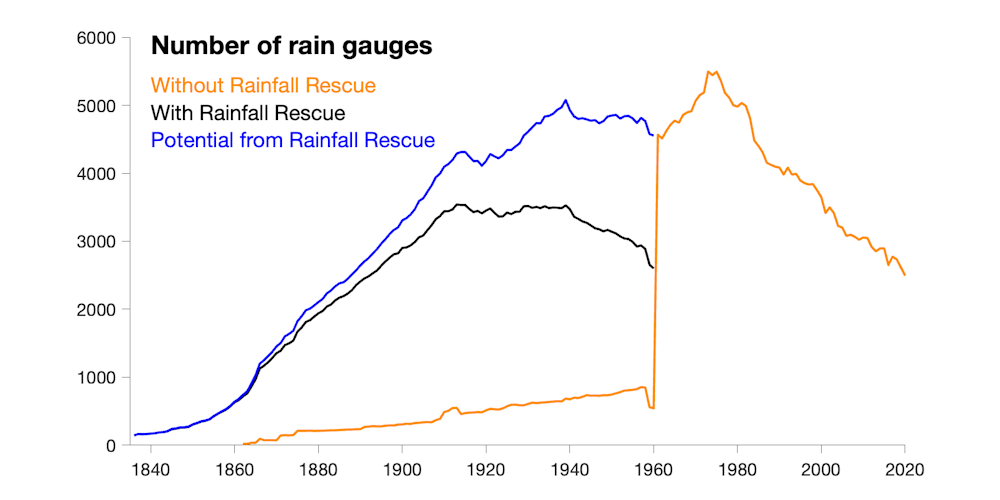
Before Rainfall Rescue began, UK records stretched back to 1862, but only data from 19 rain gauges were available for that year. Thanks to the efforts of volunteers, data from more than 700 rain gauges are now available for 1862, allowing us to map rainfall variation in far greater detail than ever before.

A line graph depicting the number of rain gauges providing data with and without Rainfall Rescue.

Additional data uncovered by Rainfall Rescue could expand available statistics further. Ed Hawkins/National Centre for Atmospheric Science, Author provided

We can also look further back in time and map rainfall across the UK for every month since 1836. This is the year that Charles Darwin returned to the UK on the Beagle with Vice-Admiral Robert Fitzroy (who later set up the Met Office), and is the year before Queen Victoria began her reign.

The data from Rainfall Rescue before 1862 is new to science, and so our records need updating. The driest year on record for the UK used to be 1887. It is now 1855.

February 2020 had been the wettest on record for many regions of the UK, while May was the driest in many places. But those record-breakers have now lost their status. For many regions, February 1848 was wetter than 2020 and, for others, May 1844 was drier than 2020.

Other significant events emerge from the data too. April 1842 is now the driest April on record for the UK. November and December 1852 set records for being extremely wet, with significant flooding across the country.

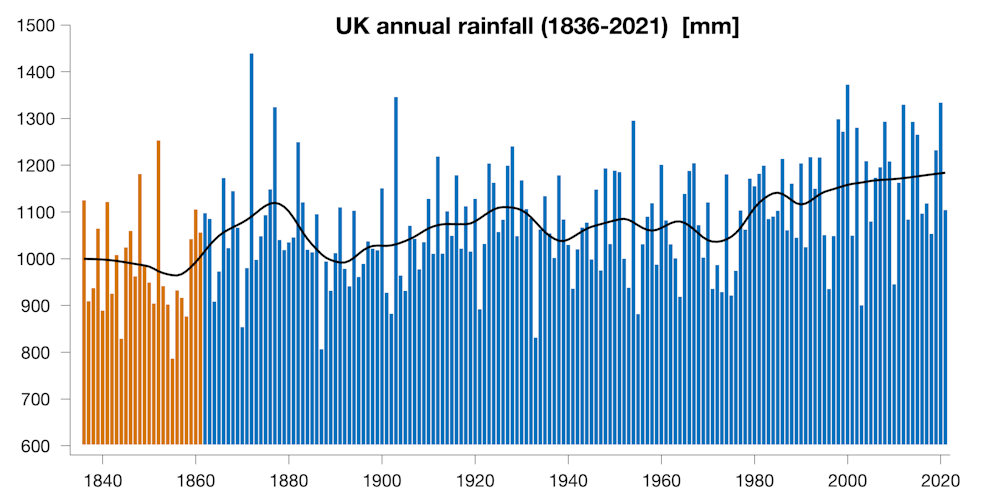
We’re just beginning to analyze the new data, and still adding information from more locations. This will offer invaluable insight into how the UK’s climate is changing and put recent weather in perspective, preparing us for the future with better understanding of what the weather has thrown at us in the past.

A bar chart depicting how much rain fell in each year from 1836 to 2020.

Rainfall Rescue has extended the UK’s rainfall statistics by 26 years. Ed Hawkins/National Centre for Atmospheric Science, Author provided

The sheets of paper which made this possible were assembled by an earlier army of volunteers who dedicated themselves to recording rainfall, every day, often for many decades. Lady Bayning took measurements from 1835 to 1887, even bringing her rain gauge as she travelled from Norfolk to London for the social season. William Buckley Pugh contributed 65 years of rainfall observations at his mill near Hull and later in retirement.

Thousands of other people took measurements at waterworks, factories, vicarages, canals, railway stations, lighthouses and hospitals across the length and breadth of Britain and Ireland. Their efforts, the vision of George Symons, and now the time and commitment of thousands of online volunteers have transformed our knowledge of rainfall in these islands.

Keep reading... Show less

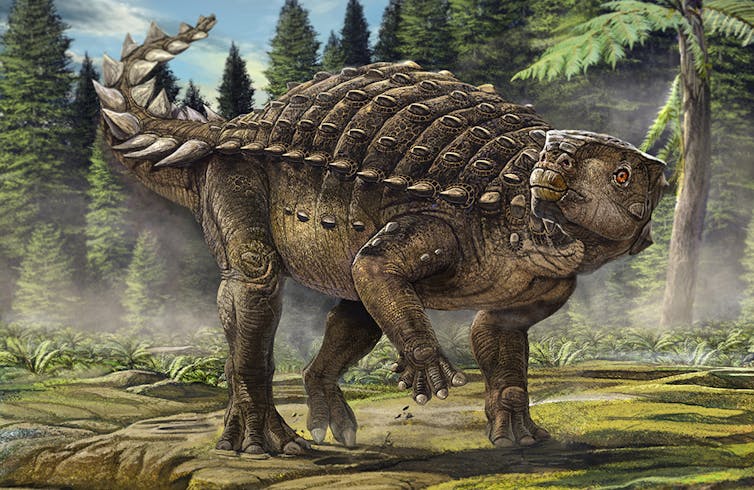
Hidden away in a museum, we found the skull of a rare armoured dinosaur that roamed Queensland 105 million years ago

You might think all important dinosaur “discoveries” are made as soon as fossils are collected in the field – that paleontologist instantly know the significance of what they’ve found.

This is often true. But sometimes, and maybe more often than you’d think, fossils will be stored in museum collections for years before the right researchers come along to “rediscover” them. This was the case for one Australian ankylosaur skull, which we’ve published about today in the journal Frontiers in Earth Sciences.

Keep reading... Show less

Black and brown women are underrepresented in STEM fields. This program works with K-12 girls to fix that

PHILADELPHIA — A commotion of kids exits Mastery Charter School Mann Campus in Philadelphia at the end of the day. Chirping and reenergized by the final bell, they join up with their adults in the schoolyard in animated family reunions, then head toward the street. Off to the side, however, a small clutch of around 10 children who have left the building turn around and are escorted back in, swimming against the tide of homebound classmates. They're part of Black Girls Love Math, a small, regional program committed to eradicating racial and gender inequality in K-12 mathematics. The nonprofit f...