With the imminent arrival of coronavirus vaccines that will need to be stored at ultra-low temperatures, US companies are gearing up for a massive logistical effort to aid their distribution.
Automaker Ford has ordered its own freezers while meat processing giant Smithfield said it is ready to put the cold room at its abattoirs at the disposal of vaccine roll-out operations.
Companies specializing in insulating containers have been on a war footing for weeks after Pfizer and BioNTech said the vaccine they had jointly developed needs to be stored at -94 degrees Fahrenheit (-70 Celsius).
US logistics giant UPS is already producing 1100 lbs (500 kilos) of dry ice an hour in its depots and has developed portable freezers capable of storing the vaccines at temperatures of between -4 to -112 Fahrenheit.
But companies not directly linked to the manufacture, storage or transport of vaccines are also stepping up.
"We have assessed our ultra-low freezer capabilities and capacity and are ready and willing to assist health agencies if storage capacity becomes constrained," said meat giant Smithfield's chief administrative director, Keira Lombardo.
The meatpacker, which suffered a large number of cases of Covid-19 in some of its US slaughterhouses, said it now stands ready to help authorities distribute the vaccine, particularly to workers in the agricultural and food-supply sector, Lombardo said.
For its part, Ford has ordered a dozen ultra-cold freezers in anticipation of the arrival of vaccines, to offer them to employees who want them when they are available.
When the virus began to spread in the spring in the United States, the company had to temporarily close its factories. The group has since resumed its activities but with strict health precautions.
"The health and safety of our workforce is our top priority," a spokesman told AFP.
General Motors has not gone as far as procuring freezers but said it was in contact with US government agencies and health officials to "coordinate as needed when the distribution plans are made available."
Meanwhile, US refrigerator manufacturer So-Low reported a "tremendous surge" in orders for its freezers that can maintain temperatures as low as -120 Fahrenheit.
The company, which supplies industry and research centers, was deluged with orders beginning in late September, sales manager Danny Hensler told AFP.
It has also seen a jump in demand for its freezers that get down to -22 Fahrenheit, suitable for storing the vaccine made by Moderna.
"We now have a backlog of orders to produce," Hensler said. "Our employees are working overtime five days a week and we added Saturday to the production schedule."
Conservationists in Ecuador have found a nest of endangered leatherback sea turtles, a whopper of a species that can weigh up to a tonne and be three meters (10 feet) long.
Also known as the lute turtle (Dermochelys coriacea), it is the world's largest species of sea turtle.
The Environment Ministry said the nest was found in Manabi province but did not say how many eggs were in it. They should hatch in about 60 days, it said.
A protective perimeter has been set up around the nest and a thermometer was installed.
This is the third time a nest of these creatures has been found since 2015 on the coast of Ecuador.
Its status is listed as "vulnerable," and in the eastern Pacific experts say it in danger of disappearing altogether.
The leatherback lives in tropical, subtropical and subarctic waters of the Atlantic, Pacific and Indian oceans.
"If we manage to hatch these eggs, this would be a historic event because this species is very special due to its vulnerability," said Paco Castro, the Environment Ministry director in the region where the nest was found.
In the earlier finds in 2015 and 2017 the eggs in those nests did not hatch.
The US space agency NASA awarded contracts to four companies on Thursday to collect lunar samples for $1 to $15,000, rock-bottom prices that are intended to set a precedent for future exploitation of space resources by the private sector.
"I think it's kind of amazing that we can buy lunar regolith from four companies for a total of $25,001," said Phil McAlister, director of NASA's Commercial Spaceflight Division.
The contracts are with Lunar Outpost of Golden, Colorado for $1; ispace Japan of Tokyo for $5,000; ispace Europe of Luxembourg for $5,000; and Masten Space Systems of Mojave, California for $15,000.
The companies plan to carry out the collection during already scheduled unmanned missions to the Moon in 2022 and 2023.
The firms are to collect a small amount of lunar soil known as regolith from the Moon and to provide imagery to NASA of the collection and the collected material.
Ownership of the lunar soil will then be transferred to NASA and it will become the "sole property of NASA for the agency's use under the Artemis program."
Under the Artemis program, NASA plans to land a man and a woman on the Moon by 2024 and lay the groundwork for sustainable exploration and an eventual mission to Mars.
"The precedent is a very important part of what we're doing today," said Mike Gold, NASA's acting associate administrator for international and interagency relations.
"We think it's very important to establish the precedent that the private sector entities can extract, can take these resources but NASA can purchase and utilize them to fuel not only NASA's activities, but a whole new dynamic era of public and private development and exploration on the Moon," Gold said.
"We must learn to generate our own water, air and even fuel," he said. "Living off the land will enable ambitious exploration activities that will result in awe inspiring science and unprecedented discoveries."
Any lessons learned on the Moon would be crucial to an eventual mission to Mars.
"Human mission to Mars will be even more demanding and challenging than our lunar operations, which is why it's so critical to learn from our experiences on the Moon and apply those lessons to Mars," Gold said.
"We want to demonstrate explicitly that you can extract, you can utilize resources, and that we will be conducting those activities in full compliance with the Outer Space Treaty," he said. "That's the precedent that's important. It's important for America to lead, not just in technology, but in policy."
The United States is seeking to establish a precedent because there is currently no international consensus on property rights in space and China and Russia have not reached an understanding with the United States on the subject.
The 1967 Outer Space Treaty is vague but it deems outer space to be "not subject to national appropriation by claim of sovereignty, by means of use or occupation, or by any other means."
Scientists are a step closer to restoring vision for the blind, after building an implant that bypasses the eyes and allows monkeys to perceive artificially induced patterns in their brains.
The technology, developed by a team at the Netherlands Institute for Neuroscience (NIN), was described in the journal Science on Thursday.
It builds on an idea first conceived decades ago: electrically stimulating the brain so it "sees" lighted dots known as phosphenes, which can also be thought of as artificial pixels.
But the concept had never realized its full potential because of technical limitations.
A team led by NIN director Pieter Roelfsema developed implants consisting of 1024 electrodes wired into the visual cortex of two sighted monkeys, resulting in a much higher resolution than has previously been achieved.
The visual cortex is located at the back of the brain and many of its features are common to humans and other primates.
"The number of electrodes that we have implanted in the visual cortex, and the number of artificial pixels that we can generate to produce high-resolution artificial images, is unprecedented," said Roelfsema.
This allowed the pair of monkeys to make out shapes like letters of the alphabet, lines, and moving dots, which they'd previously been trained to respond to by moving their eyes in a particular direction to win a reward.
The monochrome patterns are still crude compared to real vision, but represent a major leap over previous implants, which allowed human users to only determine vague areas of light and dark.
Roelfsema said his team now had a "proof of principle" that laid the foundation for a neuro-prosthetic device for the world's 40 million blind people.
This might consist of a camera that the user wears or a pair of glasses, which uses artificial intelligence to convert what it sees into a pattern it can send to the user's brain.
Similar technology has appeared in works of science fiction, such as the visor device worn by Geordi La Forge on "Star Trek: The Next Generation."
Writing in a related commentary piece, Michael Beauchamp and Daniel Yoshor of the University of Pennsylvania hailed the breakthrough as a "technical tour de force."
The NIN team profited from advances in miniaturization, and also devised a system to make sure their input currents were big enough to create noticeable dots, but not so great that the pixels grew too large.
They achieved this by placing some electrodes at a more advanced stage of the visual cortex, to monitor how much signal was coming through and then adjust the input.
- Wireless future -
Roelfsema said his team hopes to make similar devices for humans in about three years.
But the electrodes the team used require silicon needles that work for about a year before tissue builds up around the needles and they no longer function.
"So we want to create new types of electrodes that are better accepted by the body," he said.
Ultimately, a wireless solution would be best, as it would mean the user wouldn't need to wear an implant on the back of their skull.
The prosthetics would only be suitable for people who once had sight and then lost it owing to disease or injury.
The brains of people who are born blind dedicate the visual cortex to other functions. But in people whose eyes stop working, the visual cortex remains inactive.
The Moderna Covid-19 vaccine, which was recently demonstrated to have 94 percent efficacy, causes the human immune system to produce potent antibodies that endure for at least three months, a study showed Thursday.
Researchers at the National Institute for Allergies and Infectious Diseases (NIAID), which co-developed the drug, studied the immune response of 34 adult participants, young and old, from the first stage of a clinical trial.
Writing in the New England Journal of Medicine, they said that the antibodies, which stop the SARS-CoV-2 virus from invading human cells, "declined slightly over time, as expected, but they remained elevated in all participants 3 months after the booster vaccination."
The vaccine, called mRNA-1273, is administered in two injections given 28 days apart.
Even though the number of antibodies fade over time, that's not necessarily a cause for concern.
NIAID director Anthony Fauci and other experts have said it's very likely that the immune system will remember the virus if re-exposed later on, and then produce new antibodies.
Encouragingly, the study showed that the vaccine activated a certain type of immune cell that should help out in the so-called memory response, but only longer term study will confirm if this will really be the case.
The Moderna vaccine will be reviewed by an advisory committee of the Food and Drug Administration (FDA) on December 17, and could be greenlit for emergency approval soon after.
Like another vaccine produced by Pfizer and BioNTech, it is based on a new technology that uses genetic material in the form of mRNA (messenger ribonucleic acid).
The mRNA is encased in a lipid molecule and injected into the arm, where it causes cells inside our muscles to build a surface protein of the coronavirus.
This tricks the immune system into believing it's been infected with a microbe, and trains it to build the right kind of antibodies for when it encounters the real virus.
The UK has become the first country to approve the Pfizer/BioNTech vaccine for widespread use. The government has ordered 40 million doses and the first batch of 800,000 doses is expected to be shipped from Belgium – where the vaccine is being made – in the next couple of days. It will be enough to immunise 400,000 people (two doses per person).
The UK drugs regulator, the Medicines and Healthcare products Regulatory Agency (MHRA), is also started a rolling review of other vaccines in late-stage human trials, such as the AstraZeneca/Oxford vaccine and the Moderna vaccine. If these vaccines also meet the very high efficacy and safety standards set by the agency, they too will be approved for mass rollout.
The fastest a vaccine has ever been developed is the mumps vaccine, which took a mere four years from concept to market. These latest vaccines beat that record by some margin – taking less than a year to develop. But that doesn’t mean any corners have been cut.
The MHRA has pored over the records of over 40,000 vaccine trial participants from diverse backgrounds. The efficacy of the vaccine – that is, how effective it is at preventing symptomatic COVID-19 under trial conditions – is 95%. (That figure is expected to fall slightly under real-world conditions.) And there were no serious side effects, although these will continue to be monitored as the vaccine is rolled out.
It is expected that healthcare workers will receive the vaccine first as they are one of the most vulnerable groups. Also, hospitals have the ultra-cold freezers needed to store the vaccine – so, from a logistics standpoint, it’s a good place to start.
Don’t ditch the mask just yet
This is all fantastic news and a good reason to be optimistic about the future. But Peter Openshaw, a professor of experimental medicine at Imperial College London, said it would be a “terrible mistake” to ease up on COVID control measures at this juncture.
So don’t throw away your mask and hug your gran just yet. A report from The Royal Society, the world’s oldest independent scientific academy, says that restrictions are likely to remain in place for some months yet – maybe even a year.
When you get the COVID vaccine, you should not expect immediate protection against infection. White blood cells known as B lymphocytes first need to detect the antigen in the vaccine and then generate specific antibodies against it. If you get exposed to coronavirus, these antibodies latch onto the virus and neutralise it.
The response from your immune system, generated by the B lymphocytes, is known as the primary response and it takes about two weeks to kick in. So for two weeks after getting the jab you are still at risk of getting ill from COVID.
Also, many COVID vaccines require two jabs to provide full protection. And the interval between the jabs varies from 21 to 28 days. So the vaccine will take about six weeks after the first jab to provide full protection against COVID-19 disease.
We don’t know if the vaccines stop transmission
Although the vaccines in late-stage trials seem to be highly effective at preventing symptomatic COVID, we can’t yet be sure that they prevent transmission of the virus.
For this, we would need a vaccine that provides so-called sterilising immunity. This is where immune cells can bind to the virus to prevent it from entering cells where it can start to replicate. So even six weeks after receiving the first jab, you may still get infected with the coronavirus – even if you don’t get sick.
Studies from the preclinical phase of the Oxford vaccine found that rhesus macaques that were immunised with the vaccine were protected from serious disease and had no evidence of lung damage. But they still had coronavirus infection in their upper-respiratory tract and virus shedding from their noses. If this is the same with humans, it would suggest that while they will be protected from symptomatic disease, they might still spread the virus.
At this stage, we don’t know if the Pfizer or Moderna vaccines stop transmission either, although further studies will hopefully tease this out.
Also, if you have been vaccinated, there is a small chance – at least one in twenty – that the vaccine won’t protect you. So even if you have been vaccinated – and full rollout may not be complete till the summer of 2021 – you should still wear a mask, work from home if you can, and practice social distancing. As for good hand hygiene, let’s try to keep that going – viruses, including probably SARS-CoV-2, will always be among us.
In 1916, amid the chaos of World War I, U.S. President Woodrow Wilson and King George V of Great Britain signed the Migratory Bird Treaty. The Migratory Bird Treaty Act wrote the treaty into U.S. law two years later. These measures protected more than 1,100 migratory bird species by making it illegal to pursue, hunt, take, capture, kill or sell live or dead birds, feathers, eggs and nests, except as allowed by permit or regulated hunting.
This bold move was prompted by the decimation of bird populations across North America. Some 5 million birds – especially waterbirds like egrets and herons – were dying yearly to provide feathers to adorn hats, and the passenger pigeon had just become extinct. Fearing that other species would meet the same fate, national leaders took action.
The Interior Department’s proposed rule reinterprets existing law to say that prohibitions on pursuing, hunting, capturing or killing migratory birds, or attempting to do so, apply only to actions directed at migratory birds, their nests, or their eggs. In other words, activities that are not intended to harm birds, but do so directly in ways that could have been foreseen – such as filling in wetlands where migrating birds rest and feed – will no longer be prosecuted.
But this new rule directly counters the way the Migratory Bird Treaty Act has been enforced for decades. It is applied to cases of gross negligence where potential harm should have been anticipated and avoided, such as discharging water contaminated with toxic pesticides into a pond used by migratory birds. This new approach means that companies will escape legal responsibility and liability for actions that kill millions of birds every year.
Pollution, development and habitat loss kill birds
Purposeful killing is only one threat to migratory birds. Habitat loss, invasive species, pollution and collisions with buildings take heavy tolls on many species. According to the U.S. Fish and Wildlife Service, every year more than 40 million birds are killed by industrial activities or structures such as power lines, oil pits, communication towers and wind turbines. The 2010 Deepwater Horizon oil spill in the Gulf of Mexico killed more than 1 million birds in a single event.
Seventeen former Interior Department officials representing every presidential administration from Nixon through Obama wrote a memo in 2018, which this policy was first announced, expressing deep concern. As they explain, the Migratory Bird Treaty Act has given industries a strong incentive to work with government agencies to anticipate, avoid and mitigate foreseeable death or injury to birds.
For example, it prompted energy companies to install nets above pits where they store waste fluids from oil drilling. Because these pits look like water sources, birds often land on them and can become trapped and die. Installing nets over the pits has cut annual bird deaths from roughly 2 million birds yearly to between 500,000 and 1 million. Not perfect, but a meaningful improvement.
Thousands of migrating snow geese died after landing in contaminated pit mine waters in Montana in 2016.
Global citizens, global consequences
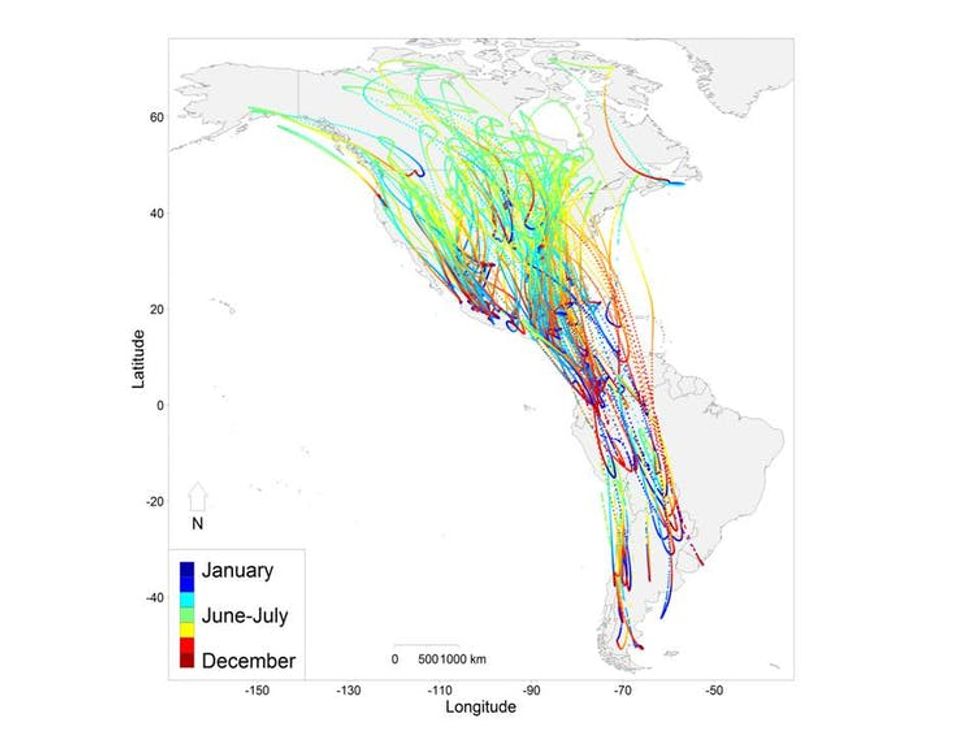
Migratory birds don’t recognize international boundaries, so the consequences of reinterpreting the Migratory Bird Treaty Act may be felt across borders. In one year an individual warbler may spend 80 days in Canada’s boreal forests, 30 days in the United States at resting and refueling sites during migration and over 200 days in Central America.
At the Cornell Lab of Ornithology, we have constructed maps and animations using data collected by volunteers for eBird, the world’s fastest-growing biodiversity database. These references show how migratory birds connect countries.
Migration pathways for populations of 118 migratory birds species within the Western Hemisphere from 2002 to 2014, based on data from eBird.
La Sorte et al., 2016, https://dx.doi.org/10.1098/rspb.2015.2588., Author provided
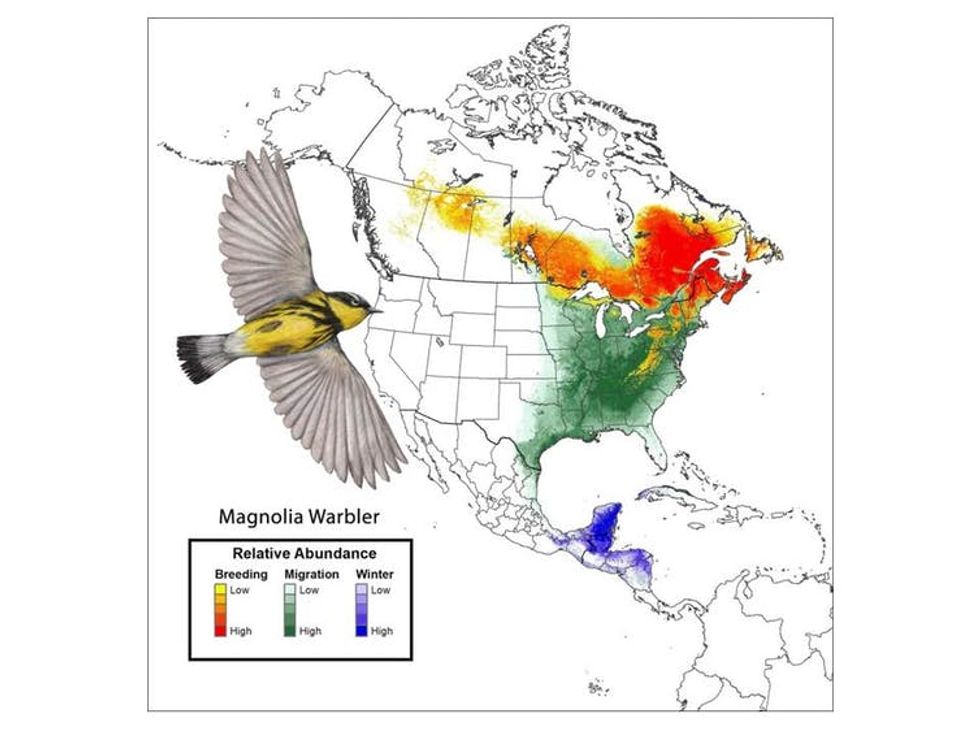
The Eastern-breeding magnolia warbler, for example, spends winters in areas in the Yucatan Peninsula and Central America that are fractions of the size of its breeding range. Seeing how densely these birds are clustered in their winter habitat shows us that each acre of that territory is important to their survival.
Breeding, migration and winter abundance of the magnolia warbler based on computer models using eBird data.
State of North American Bird report
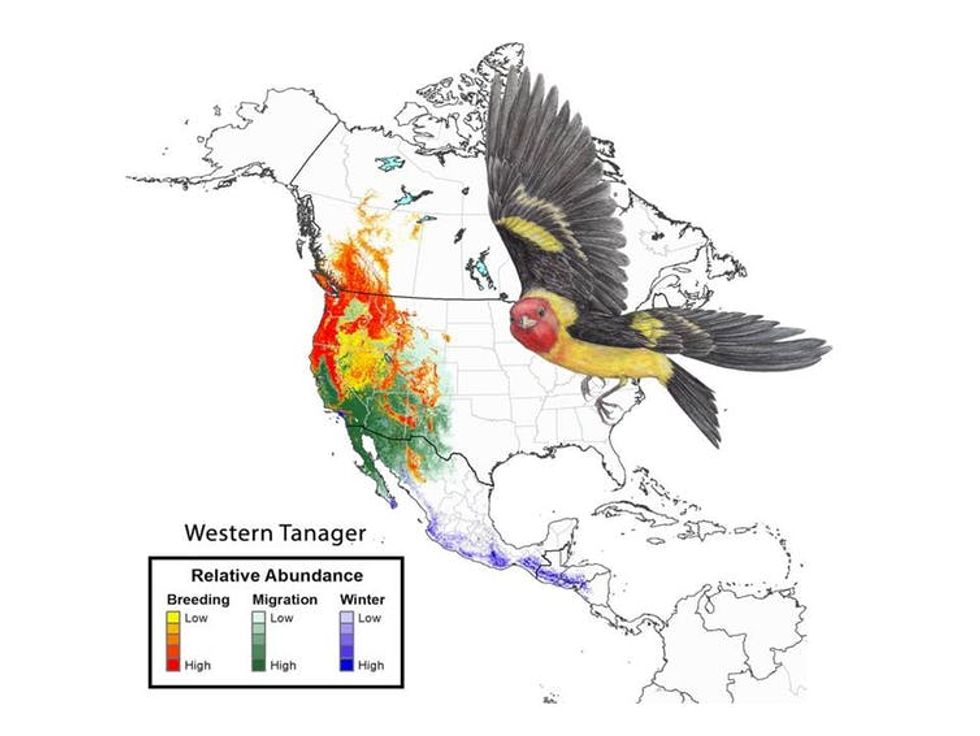
Similarly, most populations of the Western-breeding Western tanager overwinter in Mexico. By identifying where bird populations winter in this way, we can better target conservation actions to protect species throughout their annual cycles.
Year-round abundance map for the Western tanager based on computer models using eBird data.
Conserving migratory birds requires effective protection both in the United States and through international agreements and partnerships. The most important threats are loss and degradation of habitat, which can be caused by land conversion – for example, clearing forests for farming – or by climate change.
In October 2019, a team of scientists from government agencies, universities and nonprofit groups published a study estimating that North American bird populations had declined by one-third since 1970 – a loss of some 3 billion birds. This followed the 2016 State of North American Birds report, in which an international team of scientists found that over one-third of all North American bird species were at risk of extinction without meaningful conservation action.
There are no easy solutions, but new science is supporting responses. Transformational citizen science projects like eBird are developing vast data sets to help pinpoint where conservation action should focus. Bird conservation groups and government agencies have formed international teams to eradicate invasive predators on islands that are critical to breeding seabirds, and drafted multinational agreements to clean up large floating mats of garbage in our seas that can choke, trap or poison seabirds and other animals.
Birds are a shared resource among nations. Where governments have acted, they have successfully protected migratory birds and the habitat they depend on. In my view, the Trump administration’s shift would abdicate U.S. leadership on migratory bird conservation and undermine public good for private profit.
This is an updated version of an article originally published on August 15, 2016.
Scientists said Wednesday they have restored sight in mice using a "milestone" treatment that returns cells to a more youthful state and could one day help treat glaucoma and other age-related diseases.
The process offers the tantalizing possibility of effectively turning back time at the cellular level, helping cells recover the ability to heal damage caused by injury, disease and age.
"I'm excited about being able to rejuvenate organs and tissues that fail due to aging and disease, especially where there are no effective treatments, such as dementia," senior author of the study David Sinclair told AFP.
"We hope to treat glaucoma in human patients (at the trial stage) in two years," added Sinclair, a professor of genetics at Harvard Medical School.
The treatment is based on the properties that cells have when the body is developing as an embryo. At that time, cells can repair and regenerate themselves, but that capacity declines rapidly with age.
The scientists reasoned that if cells could be induced to return to that youthful state, they would be able to repair damage.
To turn back the clock, they modified a process usually used to create the "blank slate" cells known as induced pluripotent stem cells.
Those cells are created by injecting a cocktail of four proteins that help reprogram a cell.
The team did not want to reprogram cells all the way back to that blank-slate status, but to restore them to a more youthful condition.
So they tweaked the cocktail, using just three of the "youth-restoring" proteins -- dubbed OSK -- in the hope they could turn the clock back to just the right point.
They targeted the retinal ganglion cells in the eye, which are linked to the brain through connections called axons.
These axons form the optic nerve -- and damage to them caused by injury, aging or disease causes poor vision and blindness.
To test the effects of the cocktail, they first injected OSK into the eyes of mice with optic nerve injuries.
They saw a twofold increase in the number of surviving retinal ganglion cells and a fivefold increase in nerve regrowth.
"The treatment allowed the nerves to grow back towards the brain. Normally they would simply die," Sinclair said.
- 'Great excitement' -
With signs OSK could reverse damage caused by injury, the team turned to countering the effects of disease -- specifically glaucoma, which is the leading cause of blindness in humans.
They replicated the conditions of the disease, where a build-up of pressure in the eye damages the optic nerve, in several dozen mice.
Those who received the OSK treatment saw "significant" benefits, according to the study published in the journal Nature.
Tests showed "that half of the visual acuity lost from increased intraocular pressure was restored".
The treatment offered similarly promising results in elderly mice with poor vision caused by age.
After the cocktail was injected, the mice's vision improved and their optic nerve cells displayed electrical signals and other features akin to those in younger mice.
The study was conducted over the course of a year, and the mice displayed no side effects.
Andrew Huberman, a neuroscientist at Stanford University School of Medicine, who was not involved in the research, said the findings were "bound to ignite great excitement".
The results will need to be confirmed in further animal tests, with a potentially long path before humans can be treated, but Huberman said they nevertheless represented "a milestone in the field".
"The effects of OSK in people remain to be tested but the existing results suggest that OSK is likely to reprogram brain neurons across species," he wrote in a review commissioned by Nature.
"For decades, it was argued that understanding normal neural developmental processes would one day lead to the tools to repair the aged or damaged brain... (this) work makes it clear: that era has now arrived."
When Donald Trumptested positive for COVID-19 on October 2 and was hospitalised a day later it was widely assumed this would put a major crimp in his re-election campaign. In the event, the US president recovered quite quickly and returned to the campaign trail with gusto after a typically bullish photo-op as he arrived back at the White House.
But survey evidence – initial findings from which are published here for the first time – shows that, despite having apparently triumphed over the virus, he did not escape the grasp of COVID-19 and that his handling of the pandemic played a crucial role in his defeat in the November 3 election.
COVID-19’s horrific toll on human life and its devastating effects on millions of people’s economic and psychological wellbeing have become omnipresent realities. So it’s hardly surprising that the University of Texas at Dallas’ national Cometrends survey, which was conducted in the two weeks before the presidential election, indicates that the pandemic was the dominant issue on many voters’ minds.
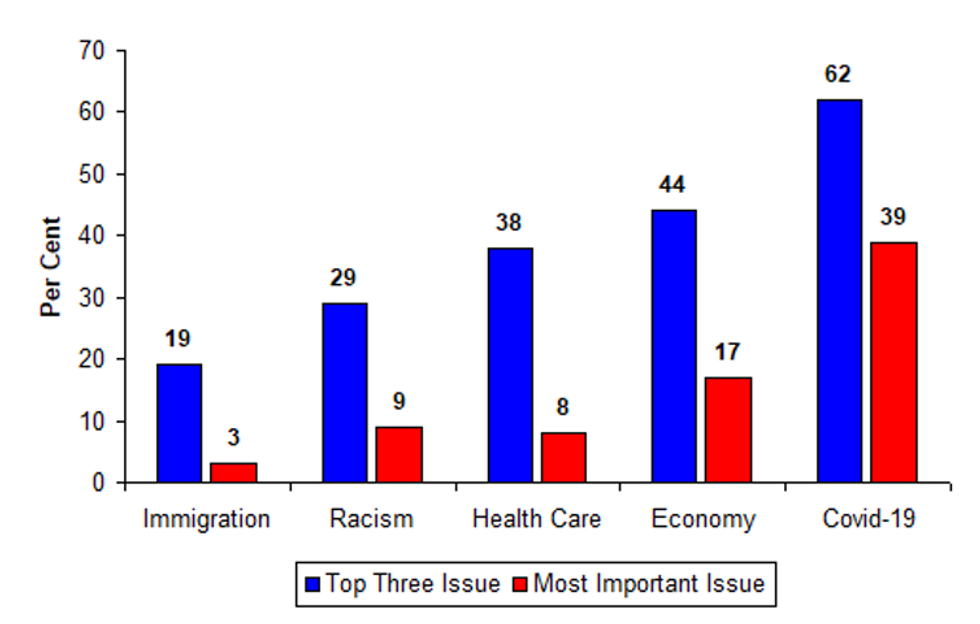
Graph 1: Important issues facing the country, October 2020.
Source: Cometrends October 2020 pre-election survey, Author provided
As the first graph, above, shows, 62% of 2,500 respondents cited the COVID crisis as one of the top three issues facing the country, while 39% said it was the single most important. No other issue – not even the ailing economy – was chosen as most important by one person in five.
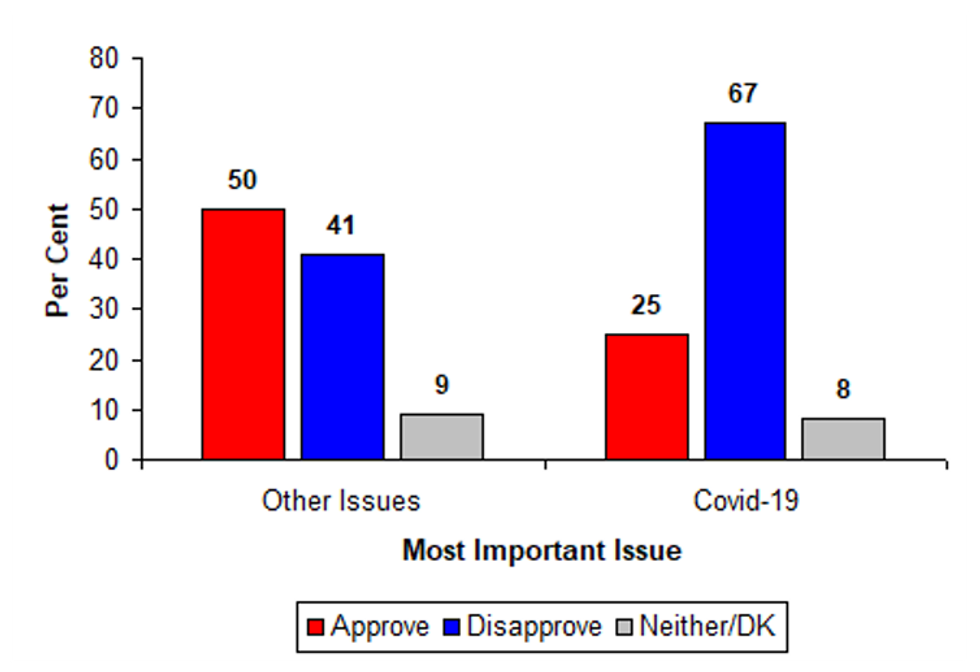
The salience of the pandemic as an issue was a major problem for Trump because an overwhelming number of voters judged that he had mishandled the crisis. As the second graph, below, shows, two-thirds of the Cometrends survey respondents said that they disapproved of the president’s response, while only one person in four approved. When given another chance to comment on his pandemic performance later in the survey, 51% said it had been “bad” or “terrible” and only 38% said “good” or “excellent”.
Graph 2: Approval of Trump’s job performance on most important issue.
Source: Cometrends October 2020 pre-election survey,Author provided
These dismal ratings for the president on coronavirus were quite opposite to those for the economy – among people who thought the economy was the most important issue, 69% approved of the job the president was doing and only 25% disapproved. Although this was good news for Trump, only a relatively small minority (17%) of voters gave the economy top billing as their most important issue. Moreover, he could not rely on various other issues to improve his job approval rating – across all issues other than the pandemic, only 41% approved of the president’s performance compared with 50% who disapproved.
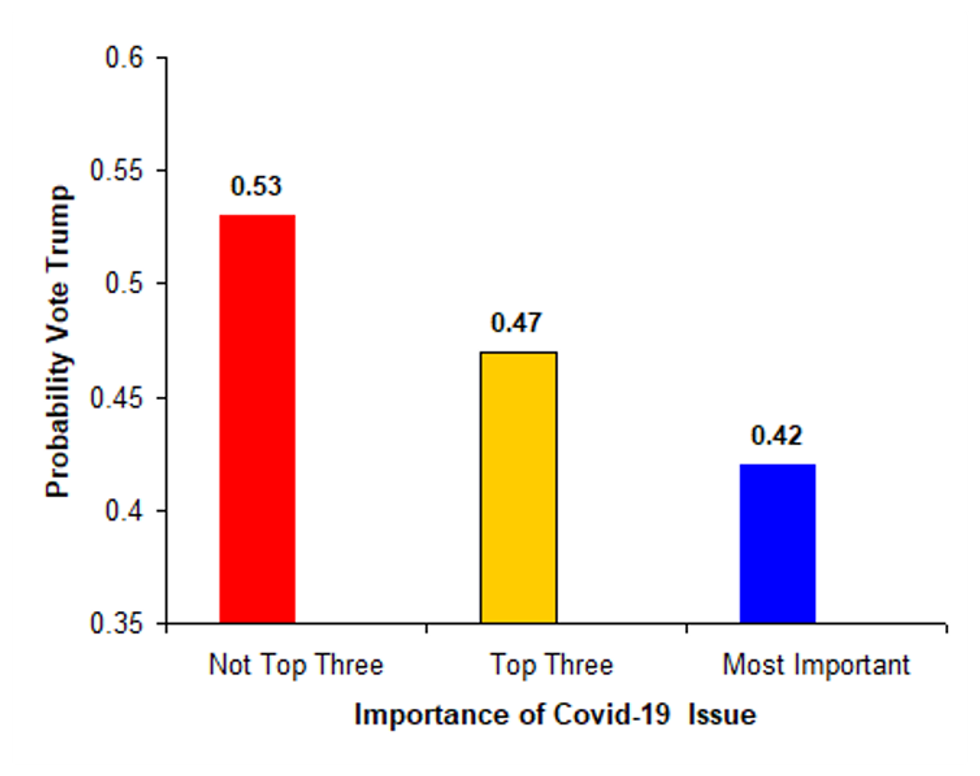
Graph 3: Probability of voting for Trump by importance of COVID-19 issue.
with statistical controls for other issues, partisanship, ideology and demographics.
Source: Cometrends October 2020 pre-election survey, Author provided
The third graph, above, shows clearly that if electors were not that concerned about the pandemic they were more likely to vote for Trump as president. But if they gave the issue the top priority they were much less likely to do so. The graph illustrates the impact of COVID-19 on voting for the president, while at the same time statistically taking into account a number of other factors that influence voting behaviour.
The latter include attitudes to the economy, the environment, healthcare, law and order and race relations, as well as other important measures such as identifications with the Democratic and Republican parties, liberal-conservative ideological views and socio-demographic characteristics. The probability of voting for Trump is only 42% among voters who thought COVID-19 was the most important issue but 53% among those who prioritised some other issue in the top three.
This pattern is the opposite for that of the economy. More than three-quarters of voters who gave top priority to the economy supported Trump. That number fell to less than one in three among those for whom economic conditions were not a major concern.
These numbers are nearly identical to those for the large group of potential swing voters who think of themselves as political independents and have no attachment to either of the parties. Independents giving top priority to the pandemic made up nearly 13% of the voters in the Cometrends survey and, other things being equal, the probability of them voting for Trump was very mediocre, at just slightly over 40%.
Game-changing virus
As he was preparing for the 2020 campaign, Trump repeatedly emphasised that his case for re-election was strengthened by his demonstrated ability to deliver economic prosperity. Soaring stock prices and record low unemployment numbers for many groups of voters including ethnic and racial minorities, women and young people were helping the president to make his case. Then the pandemic came along and profoundly changed America and the election-year issue agenda.
As the election date of November 3 approached, most people focusing on the economy as the number one priority continued to give Trump high marks. But these people were now a distinct minority of the electorate. COVID-19 had become the dominant issue for millions of Americans and our survey evidence strongly indicates that most of them judged Trump very harshly for how he was handling the crisis. In many cases, those adverse judgements translated into votes for Trump’s opponent, Joe Biden.
Trump may have recovered physically from COVID-19. But his prospects of re-election took a body blow that he would not recover from.
This year is on course to be one of the three warmest ever recorded and could even top the record set in 2016, the United Nations said Wednesday.
The past six years, 2015 to 2020, are set to make up all six of the hottest years since modern records began in 1850, the UN's World Meteorological Organization said in its provisional 2020 State of the Global Climate report.
"2020 has, unfortunately, been yet another extraordinary year for our climate," said WMO secretary-general Petteri Taalas.
The 2015 Paris Agreement on climate change calls for capping global warming at well below two degrees Celsius above the the pre-industrial (1850-1900) level, while countries will pursue efforts to limit the increase to 1.5 C.
"The average global temperature in 2020 is set to be about 1.2 C above the pre-industrial level," said Taalas.
"There is at least a one in five chance of it temporarily exceeding 1.5 C by 2024."
The WMO said 2020 seemed on course to be the second-hottest year ever -- but the difference between the top three is small and the picture could change once this year's data sets are complete.
The years from 2015 to 2020 are therefore individually "likely to be the six warmest on record", the report said.
Temperature averages across the last five years, and across the last 10 year period, "are also the warmest on record", it added.
Wildfires and flooding
In 2020, "we saw new extreme temperatures on land, sea and especially in the Arctic," said Taalas.
"Wildfires consumed vast areas in Australia, Siberia, the US West Coast and South America, sending plumes of smoke circumnavigating the globe.
"Flooding in parts of Africa and southeast Asia led to massive population displacement and undermined food security for millions."
Greenhouse gases in the atmosphere -- the main driver of climate change -- hit record highs last year and continued climbing in 2020 despite measures to halt the Covid-19 pandemic.
The annual impact of the coronavirus crisis was expected to be a drop of between 4.2 and 7.5 percent in carbon dioxide emissions.
However, CO2 remains in the atmosphere for centuries, meaning the effect of the pandemic is negligible.
Record warm years usually coincide with a strong El Nino effect in Pacific Ocean surface temperatures, as in 2016.
But this year's opposite La Nina cool phase of the cycle has not been sufficient to keep this year's heat in check -- begging the question of how hot 2020 might have got without it.
The WMO said that more than 80 percent of the ocean area had experienced at least one marine heatwave so far in 2020.
"Sea level has increased throughout the altimeter record, but recently sea level has risen at a higher rate due partly to increased melting of ice sheets in Greenland and Antarctica," the report said.
"In the Arctic, the annual minimum sea-ice extent was the second lowest on record and record low sea-ice extents were observed in the months of July and October."
Hurricanes, Siberia sweltering
Meanwhile a record 30 named storms formed in the Atlantic Ocean, exhausting the alphabet and forcing a switch to the Greek alphabet for only the second time.
They included 13 hurricanes and six major hurricanes, which have maximum sustained winds of at least 178 kilometres (111 miles) per hour.
There were 12 land-falling storms in the continental United States, beating the previous record of nine set in 1916.
2020 was an exceptionally warm year in most of Russia, especially Siberia. Across Russia, temperatures from January to August were 3.7 C above average -- 1.5 C above the previous record set in 2007.
The heat in northern Siberia culminated in late June, when it reached 38 C at Verkhoyansk on June 20, provisionally the highest known temperature anywhere north of the Arctic Circle.
Cuba had its hottest day ever on April 12, at 39.7 C; Taipei on July 24 at 39.7 C; and Jerusalem on September 4 at 42.7 C.
Hamamatsu equalled Japan's national record on August 17 with 41.1 C.
The 2020 provisional State of the Global Climate report is based on temperature data from January to October.
The final 2020 report will be published in March 2021.
Scientists at the University of Pennsylvania and the biotech firm Regeneron are investigating whether technology developed for gene therapy can be used to make a nasal spray that will prevent infection with the new coronavirus.
The idea is to use a weakened virus as a delivery truck to carry genetic instructions to cells within the nose and the throat, which will in turn create powerful antibodies to stop SARS-CoV-2 from invading our bodies.
"The advantage of our approach is that you don't need a competent immune system for this to be effective," James Wilson, a professor of medicine at Penn who is leading the project told AFP.
The technology is currently being tested in animals and Wilson believes that, if successful, it could provide people with around six months of protection from a single dose, sprayed up the nose, and therefore complement vaccines that could soon be approved.
Wilson is a pioneer of gene therapy -- delivering genetic code into a patient's cells to correct for defects and treat disease.
His research team discovered that the Adeno-Associated Virus (AAV) group of viruses, which infect both humans and other primates but aren't known to cause disease, can be engineered to ferry healthy DNA into cells.
This approach led in 2019 to the approval of Zolgensma, the first drug for the treatment of spinal muscular atrophy, and today AAVs are being investigated for dozens of more possible applications.
Wilson was contacted by the US government in February to see if he and his lab could use the technology against Covid-19.
But it wasn't until Regeneron developed two promising lab-made antibodies against the coronavirus, which bind to a surface protein of the pathogen and stop it from invading our cells, that his team could move ahead.
Regeneron's antibodies are themselves in clinical testing but have received emergency approval for patients with mild or moderate Covid-19 who are at high-risk of getting severe disease -- and were notably used recently to treat President Donald Trump.
Researchers are hoping that the nasal spray could be squirted through the nostrils, enter nasal epithelial cells, and hijack their protein-making machinery so that they make Regeneron's antibodies.
Normally, only immune cells create antibodies, which makes the new idea a particularly innovative approach.
Since the coronavirus enters the lungs through the nasal passage, the spray could halt the infection in its tracks.
What's more, AAVs cause only a mild immune response so the side effects could be less severe than the frontrunner vaccines, which work by training the immune system to recognize a key protein of the virus.
Penn and Regeneron hope to complete their animal studies by January, before applying to the Food and Drug Administration to begin human trials.
A nearly 40-million-year-old skeleton belonging to what is popularly known as a saber-toothed tiger is going under the hammer next week in Geneva a year after its discovery on a US ranch.
The skeleton, some 120 centimeters (nearly four feet) long, is expected to fetch between 60,000 and 80,000 Swiss francs ($66,560 to $88,750; 55,300 to 73,750 euros) at auction on December 8 in the Swiss city.
"This fossil is exceptional, above all for its conservation: it's 37 million years old, and it's 90 percent complete," Bernard Piguet, director of the Piguet auction house, told AFP on Tuesday.
"The few missing bones were remade with a 3D printer," he added, with the skeleton reconstructed around a black metal frame.
Piguet said he was fascinated by the merger of "the extremely old with modern technologies".
The original bones are those of a Hoplophoneus. Not strictly a true member of the cat family, they are an extinct genus of the Nimravidae family and stalked around North America.
"It was found in South Dakota during the last excavation season, towards the end of summer 2019," Swiss collector Yann Cuenin, who owns the dozens of paleontology lots on auction, told AFP.
"As in most finds, erosion had unearthed part of the skeleton. While walking around his property, the ranch owner saw bones sticking out of the ground."
While the skeleton is the star of the show, there are plenty of other treasures from the past up for grabs, including ammolite, an opal-like organic gemstone, in shades of red and orange.
Measuring 40 cm long by 36 cm wide, the fossil from the Cretaceous period is 75 million years old and hails from the Canadian Rocky Mountains. It is estimated to fetch between 20,000 and 30,000 Swiss francs.
Jurassic Park enthusiasts can also buy a Tyrannosaurus Rex tooth (2,200 to 2,800 francs), or, for 5,000 to 7,000 francs, an impressive 85-cm long fin from a mosasaur -- a marine reptile that in the Cretaceous period was at the top of the submarine food chain.
A Chinese probe sent to the Moon to bring back the first lunar samples in four decades successfully landed on Tuesday, Beijing's space agency said.
China has poured billions into its military-run space programme, with hopes of having a crewed space station by 2022 and of eventually sending humans to the Moon.
The latest mission's goal is to shovel up lunar rocks and soil to help scientists learn about the Moon's origins, formation and volcanic activity on its surface.
The Chang'e-5 spacecraft -- named for the mythical Chinese moon goddess -- "landed on the near side of the Moon late Tuesday," state media agency Xinhua reported, citing the China National Space Administration.
If the return journey is successful, China will be only the third country to have retrieved samples from the Moon, following the United States and the Soviet Union in the 1960s and 1970s.
The probe entered the Moon's orbit on Saturday after a 112-hour journey from Earth, Xinhua said, after a rocket carried it into space from China's southern Hainan province last week.
- 'Space dream' -
It is to collect two kilogrammes (4.5 pounds) of surface material in a previously unexplored area known as Oceanus Procellarum -- or "Ocean of Storms" -- which consist of a vast lava plain, according to the science journal Nature.
The collection will take place over the course of one lunar day -– equivalent to around 14 Earth days.
Its lunar samples will then be returned to Earth in a capsule programmed to land in northern China's Inner Mongolia region later in December, according to US space agency NASA.
The mission is technically challenging and involves several innovations not seen during previous attempts at collecting moon rocks, Harvard-Smithsonian Center for Astrophysics researcher Jonathan McDowell told AFP last month.
Under President Xi Jinping, plans for China's "space dream", as he calls it, have been put into overdrive.
The new superpower is looking to finally catch up with the US and Russia after years of belatedly matching their space milestones.
A Chinese lunar rover landed on the far side of the Moon in January 2019 in a global first that boosted Beijing's aspirations to become a space superpower.
The latest probe is among a slew of ambitious targets set by Beijing, which include creating a super-powerful rocket capable of delivering payloads heavier than those NASA and private rocket firm SpaceX can handle, a lunar base and a permanently crewed space station.
China's astronauts and scientists have also talked up manned missions to Mars.