The Great Red Spot, a storm larger than the Earth and powerful enough to tear apart smaller storms that get drawn into it, is one of the most recognizable features in Jupiter’s atmosphere and the entire solar system. The counterclockwise-moving storm, an anticyclone, boasts wind speeds as high as 300 miles per hour. This prominent feature, observed since 1830, and possibly as far back as the 1660s, has long been a source of great fascination and scientific study.
Much about the Great Red Spot is still unknown, including exactly when and how it formed, what gives it its striking red color and why it has persisted for so much longer than other storms that have been observed in the atmosphere of Jupiter. However, astronomers think that its position in latitude, consistently observed to be 22 degrees south of Jupiter’s equator, is connected to the prominent cloud bands in Jupiter’s atmosphere.
As a planetary astronomer who studies the atmospheres of comets, I’m normally not investigating massive storms. But I still want to know about the features seen in the atmosphere of other bodies in the solar system, including Jupiter. Studying atmospheres of all kinds deepens our understanding of how they form and work.
Unlike Jupiter, the Earth has land masses that cause major storms to lose energy due to friction with a solid surface. Without this feature, Jupiter’s storms are more long-lasting. However, the Great Red Spot is long-lived, even by Jupiter standards. Researchers don’t quite understand why, but we do know that Jupiter’s storms that are located in cloud bands with the same direction of rotation tend to be longer lasting.
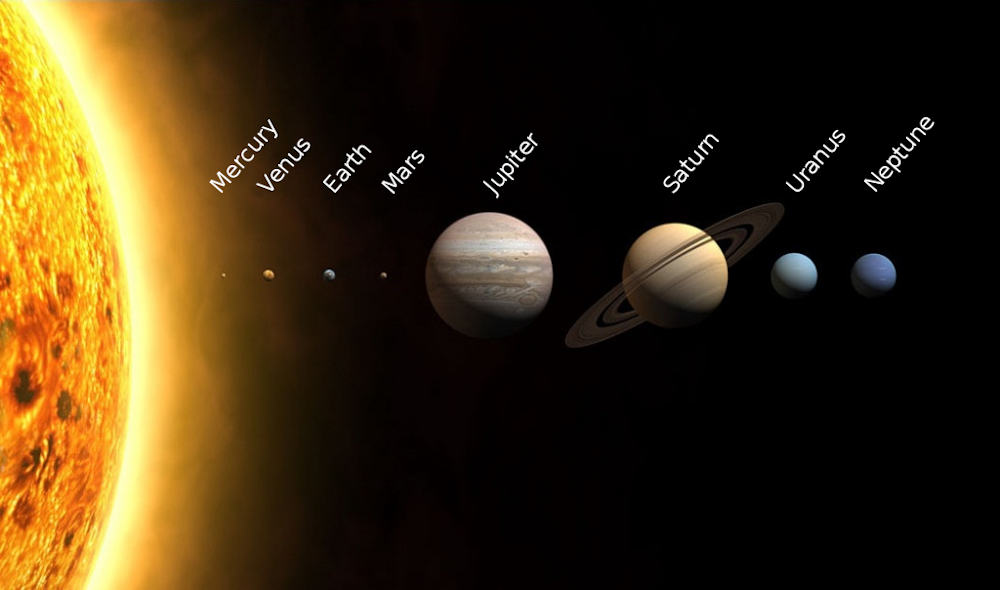
The planets of the solar system to size scale. Jupiter is five times further from the Sun than the Earth.
These colorful alternating bands, called belts (dark bands) and zones (light bands), run parallel to Jupiter’s equator. Researchers aren’t sure what causes the coloration of the bands and zones, but differences in their chemical composition, temperature and transparency of the atmosphere to light have all been suggested as contributing factors. These bands are also counter-rotating, meaning that they move in opposite directions with respect to their neighbors. The boundaries between the bands and zones are marked by strong winds called zonal jets.
The Great Red Spot is confined by an eastward jet to its north and a westward jet to its south, confining the storm to a constant latitude. However, the Great Red Spot has undergone considerable changes in longitude over time, and recent evidence suggests that its rate of westward longitudinal motion is increasing.
Like the Great Red Spot, the bands have undergone little change in latitude over the time during which they have been observed. Researchers
don’t entirely understand the banded structure, but we do have evidence suggesting that the light colored zones are regions of rising material, and the dark belts are regions of material sinking into the atmosphere.
On Earth, there is a well-defined boundary between the atmosphere and the surface of the planet, which is largely covered by liquid water. However, there are no known large oceans of water under Jupiter’s clouds. Based on what researchers do know, the atmosphere smoothly transitions to a liquid hydrogen interior within the planet. There may be a solid core to Jupiter, but it is most likely buried very deep under a thick layer of liquid metallic hydrogen, a form of hydrogen that acts as an electrical conductor.
What else do we know about the Great Red Spot that is changing dramatically? Its size, shape and color. An analysis of historical and recently obtained data on the Great Red Spot has shown that it is shrinking and becoming both rounder and taller, and its color has also varied over time. What is driving these changes, and what do they mean for the future of the Great Red Spot? Researchers aren’t sure.
However, NASA’s Juno spacecraft, currently orbiting Jupiter, is gathering more data on the cloud bands and the Great Red Spot. These new data will likely provide insights into many of the features in Jupiter’s atmosphere.
It would be irresponsible for any scientist to conduct human gene-editing studies in people, and a central registry of research plans should be set up to ensure transparency, World Health Organization experts said on Tuesday.
After its first two-day meeting in Geneva, the WHO panel of gene editing experts - which was established in December after a Chinese scientist said he had edited the genes of twin babies - said it had agreed a framework for setting future standards.
It said a central registry of all human genome editing research was needed “in order to create an open and transparent database of ongoing work”, and asked the WHO to start setting up such a registry immediately.
“The committee will develop essential tools and guidance for all those working on this new technology to ensure maximum benefit and minimal risk to human health,” Soumya Swamanathan, the WHO’s chief scientist, said in a statement.
A Chinese scientist last year claimed to have edited the genes of twin baby girls.
News of the births prompted global condemnation, in part because it raised the ethical specter of so-called “designer babies” - in which embryos can be genetically modified to produce children with desirable traits.
Top scientists and ethicists from seven countries called last week for a global moratorium on gene editing of human eggs, sperm or embryos that would result in such genetically-altered babies - saying this “could have permanent and possibly harmful effects on the species”.
The WHO panel’s statement said any human gene editing work should be done for research only, should not be done in human clinical trials, and should be conducted transparently.
“It is irresponsible at this time for anyone to proceed with clinical applications of human germline genome editing.”
The WHO’s director-general, Tedros Adhanom Ghebreyesus, welcomed the panel’s initial plans. “Gene editing holds incredible promise for health, but it also poses some risks, both ethically and medically,” he said in a statement.
The committee said it aims over the next two years to produce “a comprehensive governance framework” for national, local and international authorities to ensure human genome editing science progresses within agreed ethical boundaries.
Reporting by Kate Kelland; Editing by Mark Heinrich
Vice President Mike Pence in Nebraska on Tuesday took stock of the devastation unleashed across the U.S. Midwest by floods that have killed four people, left one missing and caused more than a billion dollars in damage to crops, livestock and roads.
“I never fail to be inspired by moments like this. The way communities come together and people volunteer to put themselves in harm’s way to help others,” Pence said Tuesday in Omaha, according to an official statement.
Pence also said that the Federal Emergency Management Agency is working to expedite a request from Nebraska’s governor for a federal emergency declaration, which will provide more aid to the state.
The floodwaters have inundated a large swath of farm states Iowa and Nebraska along the Missouri River, North America’s longest river, prompting half of Iowa’s 99 counties to declare states of emergency.
“The hearts of the American people are with those who have been impacted across the Midwest!” Pence said in the tweet earlier Tuesday.
Nebraska, Iowa and Wisconsin have all declared states of emergency in the floods, which stem from a powerful winter hurricane known as a “bomb cyclone” that slammed into the U.S. Farm Belt last week, killing untold numbers of livestock, destroying grains and soybeans in storage, and cutting off access to farms because of road and rail damage.
The latest confirmed death was identified by the sheriff in Fremont County, Iowa, as 55-year-old Aleido Rojas Galan, who was pulled from floodwaters along with another man on Friday and later succumbed to injuries.
A Nebraska man who has been missing since the collapse of the Spencer Dam last week on the Niobrara River was identified by the Omaha World-Herald newspaper as Kenny Angel.
Authorities said they had rescued nearly 300 people in Nebraska alone, with some rivers continuing to rise.
Rescuers could be seen in boats pulling pets from flooded homes. Some roadways crumbled to rubble, while sections of others were submerged. In Hamburg, Iowa, floodwaters covered buildings.
In Brownville, Nebraska, floodwaters lapped at the edge of the small town of 132 people, closing the main bridge across the Missouri River.
$1 BILLION IN DAMAGE
“It’s a lot worse than I’ve ever seen it,” said Malina Wheeldon, who went ahead with the scheduled opening of her new Euphoric Soul Salon & Boutique business despite the floods. Her husband, Justin, who grew up in Brownville, agreed, saying he had lived through the floods of 1993, 2010 and 2011.
“About every five years now, we have a 100-year flood,” he said.
The Missouri was expected to crest at 47.5 feet (14.5 m) on Tuesday, breaking its 2011 record by more than a foot (31 cm), the Nebraska Emergency Management Agency said. The flooding was expected to continue through Thursday.
Nebraska officials estimated more than $1 billion in flood damage for the state’s agricultural sector so far, according to Craig Head, vice president of issue management at the Nebraska Farm Bureau. Head said the number was expected to grow as floodwaters recede.
“It’s really too early to know for sure how bad this is going to get. But one thing we do know: It’s catastrophic for farmers,” said Matt Perdue, government relations director for the National Farmers Union trade group. “We’re hoping it’s only $1 billion, but that’s only a hope.”
Nebraska officials estimate the floods have caused $553 million in damage to public infrastructure and other assets, as well as $89 million in privately owned assets, according to the state’s Emergency Management Agency on Tuesday.
The water also covered about a third of Offutt Air Force Base near Omaha, Nebraska, home to the U.S. Strategic Command, whose responsibilities include defending against and responding to nuclear attacks.
The U.S. Army Corps of Engineers is distributing 400,000 sandbags to operators of 12 levees along the Missouri River in Missouri and Kansas that were in danger of being breached by floodwaters, the Army Corps said in a news release on Tuesday.
In Niobrara, Nebraska, south of the Missouri River near the border with South Dakota, Mayor Jody Stark said flooding that began on Thursday had devastated his community of 350 people, with businesses being the hardest hit.
“Our road system is shot pretty much in every direction coming into town,” Stark said.
The water also covered about a third of Offutt Air Force Base near Omaha, Nebraska, home to the U.S. Strategic Command, whose responsibilities include defending against and responding to nuclear attacks.
The U.S. Army Corps of Engineers is distributing 400,000 sandbags to operators of 12 levees along the Missouri River in Missouri and Kansas that were in danger of being breached by floodwaters, the Army Corps said in a news release on Tuesday.
In Niobrara, Nebraska, south of the Missouri River near the border with South Dakota, Mayor Jody Stark said flooding that began on Thursday had devastated his community of 350 people, with businesses being the hardest hit.
“Our road system is shot pretty much in every direction coming into town,” Stark said.
At precisely 11:48 am on December 18, 2018, a large space rock heading straight for Earth at a speed of 19 miles per second exploded into a vast ball of fire as it entered the atmosphere, 15.9 miles above the Bering Sea.
From below, the only witnesses to this fiery event may have been the fish that inhabit the frigid waters between Russia and Alaska, as no human eye caught sight of it.
A meteor is the luminous phenomenon that results when an asteroid or other celestial body enters the Earth's atmosphere. It is commonly called a shooting star. If it does not fully vaporize and some part of it hits the Earth's surface, it is called a meteorite.
One of the first researchers to detect the event was Peter Brown, a meteor scientist at the Department of Physics and Astronomy at the University of Western Ontario.
On March 8, he was poring over December data from the system used by the Comprehensive Test Ban Treaty Organization to detect atmospheric explosions caused by nuclear tests.
The system is comprised of seismic and acoustic sensors capable of picking up infrasound, inaudible to the human ear, at a distance of tens of thousands of miles.
"Many of them detected the sound waves from this explosion," he told AFP. "If you were directly under it, it would have been deafening."
- 10 meters in diameter -
US military satellites spotted the explosion immediately.
But it was not until March 8 that the Air Force officially informed NASA, which logged the event in the database of fireballs it has kept since 1988, according to Lindley Johnson, NASA's Planetary Defense Officer.
"It was almost immediately published on our website, within 10 minutes, I would say," he told AFP.
NASA's Center for Near Earth Object Studies calculated the energy released by the explosion to be 173 kilotons, more than 10 times as destructive as the 15-kiloton atomic bomb that leveled Hiroshima in 1945.
It was the most powerful explosion in the atmosphere since the fireball that burst over the Russian town of Chelyabinsk in 2013. That was 440 kilotons, and left 1,500 people injured, mostly from glass flying out of smashed windows.
The event was described on Monday by scientists at the 50th Lunar and Planetary Science Conference in Texas.
When he read a report on the subject on the BBC, Simon Proud, a meteorologist and specialist in satellite data at Oxford University, decided to check the archive of images collected by a Japanese weather satellite, Himawari, which his center permanently monitors.
Bingo: the satellite was in the right place at the right time, he told AFP.
Proud published the image on his Twitter account: what looks like an orange ball of fire above the clouds and sea, but which is in fact a cloud of dust from the meteor caught in the sunlight, Brown said.
As it turns out, NASA's MODIS satellite also photographed the dust cloud, the agency's Kurtis Thome told AFP Tuesday.
"It doesn't surprise me," said Patrick Michel, research director and asteroid specialist at the observatory of the Cote d'Azur in southern France.
"It is a good reminder that there are a bunch of these things that pass over our heads and that it would be good to be more concerned about them," he told AFP.
"It should remind us that even if it is the least likely natural risk we face, it is a still a risk that exists and will in the long term become a reality," he said.
The rock was roughly 10 meters (33 feet) in diameter: the most dangerous celestial bodies for the Earth are those in excess of 150 meters.
"Nothing very unusual," said Rudiger Jehn, head of planetary defense at the European Space Agency (ESA).
"We were lucky it was over the ocean. It can happen again, and someday there will be a bigger one," he said, noting that the ESA plans to ask member states for a budget to create a better protection system against asteroids during a ministerial meeting in November.
"That meteor explosion is a perfect promotion for our program. And it is free," he said.
The mixed results in people may be due to the fact that virtually all past studies relied on behavioral decisions from the participants. If human beings do possess a magnetic sense, daily experience suggests that it would be very weak or deeply subconscious. Such faint impressions could easily be misinterpreted – or just plain missed – when trying to make decisions.
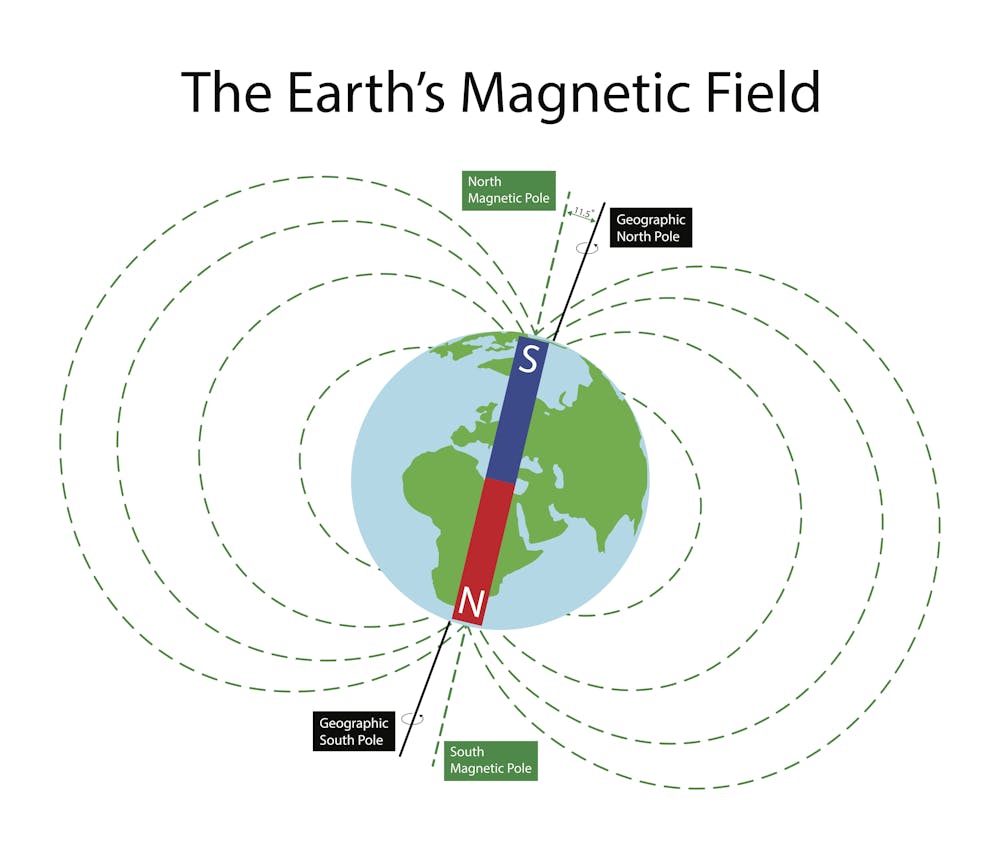
The Earth is surrounded by a magnetic field, generated by the movement of the planet’s liquid core. It’s why a magnetic compass points north. At Earth’s surface, this magnetic field is fairly weak, about 100 times weaker than that of a refrigerator magnet.
Over the past 50 years or so, scientists have shown that hundreds of organisms in nearly all branches of the bacterial, protist and animal kingdoms have the ability to detect and respond to this geomagnetic field. In some animals – such as honey bees – the geomagnetic behavioral responses are as strong as the responses to light, odor or touch. Biologists have identified strong responses in vertebrates ranging from fish, amphibians, reptiles, numerous birds and a diverse variety of mammals including whales, rodents, bats, cows and dogs – the last of which can be trained to find a hidden bar magnet. In all of these cases, the animals are using the geomagnetic field as components of their homing and navigation abilities, along with other cues like sight, smell and hearing.
Skeptics dismissed early reports of these responses, largely because there didn’t seem to be a biophysical mechanism that could translate the Earth’s weak geomagnetic field into strong neural signals. This view was dramatically changed by the discovery that living cells have the ability to build nanocrystals of the ferromagneticmineral magnetite – basically, tiny iron magnets. Biogenic crystals of magnetite were first seen in the teeth of one group of mollusks, later in bacteria, and then in a variety of other organisms ranging from protists and animals such as insects, fish and mammals, including within tissues of the human brain.
Nevertheless, scientists haven’t considered humans to be magnetically sensitive organisms.
Manipulating the magnetic field
Schematic drawing of the human magnetoreception test chamber at Caltech.
Modified from 'Center of attraction' by C. Bickel (Hand, 2016).
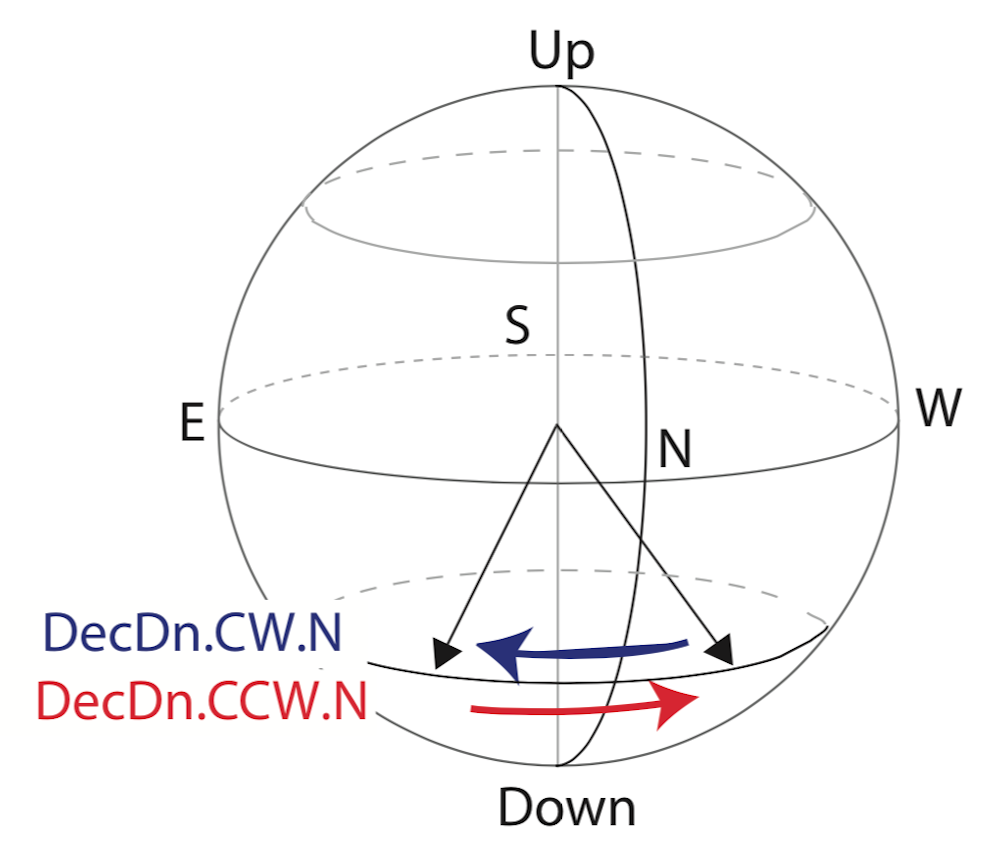
In our new study, we asked 34 participants simply to sit in our testing chamber while we directly recorded electrical activity in their brains with electroencephalography (EEG). Our modified Faraday cage included a set of 3-axis coils that let us create controlled magnetic fields of high uniformity via electric current we ran through its wires. Since we live in mid-latitudes of the Northern Hemisphere, the environmental magnetic field in our lab dips downwards to the north at about 60 degrees from horizontal.
In normal life, when someone rotates their head – say, nodding up and down or turning the head from left to right – the direction of the geomagnetic field (which remains constant in space) will shift relative to their skull. This is no surprise to the subject’s brain, as it directed the muscles to move the head in the appropriate fashion in the first place.
Study participants sat in the experimental chamber facing north, while the downwards-pointing field rotated clockwise (blue arrow) from northwest to northeast or counterclockwise (red arrow) from northeast to northwest.
In our experimental chamber, we can move the magnetic field silently relative to the brain, but without the brain having initiated any signal to move the head. This is comparable to situations when your head or trunk is passively rotated by somebody else, or when you’re a passenger in a vehicle which rotates. In those cases, though, your body will still register vestibular signals about its position in space, along with the magnetic field changes – in contrast, our experimental stimulation was only a magnetic field shift. When we shifted the magnetic field in the chamber, our participants did not experience any obvious feelings.
The EEG data, on the other hand, revealed that certain magnetic field rotations could trigger strong and reproducible brain responses. One EEG pattern known from existing research, called alpha-ERD (event-related desynchronization), typically shows up when a person suddenly detects and processes a sensory stimulus. The brains were “concerned” with the unexpected change in the magnetic field direction, and this triggered the alpha-wave reduction. That we saw such alpha-ERD patterns in response to simple magnetic rotations is powerful evidence for human magnetoreception.
Video shows the dramatic, widespread drop in alpha wave amplitude (deep blue color on leftmost head) following counterclockwise rotations. No drop is observed after clockwise rotation or in the fixed condition. Connie Wang, Caltech
Our participants’ brains only responded when the vertical component of the field was pointing downwards at about 60 degrees (while horizontally rotating), as it does naturally here in Pasadena, California. They did not respond to unnatural directions of the magnetic field – such as when it pointed upwards. We suggest the response is tuned to natural stimuli, reflecting a biological mechanism that has been shaped by natural selection.
Other researchers have shown that animals’ brains filter magnetic signals, only responding to those that are environmentally relevant. It makes sense to reject any magnetic signal that is too far away from the natural values because it most likely is from a magnetic anomaly - a lighting strike, or lodestone deposit in the ground, for example. One early report on birds showed that robins stop using the geomagnetic field if the strength is more than about 25 percent different from what they were used to. It’s possible this tendency might be why previous researchers had trouble identifying this magnetic sense – if they cranked up the strength of the magnetic field to “help” subjects detect it, they might have instead ensured that subjects’ brains ignored it.
Moreover, our series of experiments show that the receptor mechanism – the biological magnetometer in human beings – is not electrical induction, and can tell north from south. This latter feature rules out completely the so-called “quantum compass” or “cryptochrome” mechanism which is popular these days in the animal literature on magnetoreception. Our results are consistent only with functional magnetoreceptor cells based on the biological magnetite hypothesis. Note that a magnetite-based system can also explainall of the behavioral effects in birds that promoted the rise of the quantum compass hypothesis.
Brains register magnetic shifts, subconsciously
Our participants were all unaware of the magnetic field shifts and their brain responses. They felt that nothing had happened during the whole experiment – they’d just sat alone in dark silence for an hour. Underneath, though, their brains revealed a wide range of differences. Some brains showed almost no reaction, while other brains had alpha waves that shrank to half their normal size after a magnetic field shift.
It remains to be seen what these hidden reactions might mean for human behavioral capabilities. Do the weak and strong brain responses reflect some kind of individual differences in navigational ability? Can those with weaker brain responses benefit from some kind of training? Can those with strong brain responses be trained to actually feel the magnetic field?
A human response to Earth-strength magnetic fields might seem surprising. But given the evidence for magnetic sensation in our animal ancestors, it might be more surprising if humans had completely lost every last piece of the system. Thus far, we’ve found evidence that people have working magnetic sensors sending signals to the brain – a previously unknown sensory ability in the subconscious human mind. The full extent of our magnetic inheritance remains to be discovered.
Gene editing is one of the scarier things in the science news, but not all gene editing is the same. It matters whether researchers edit “somatic” cells or “germline” cells.
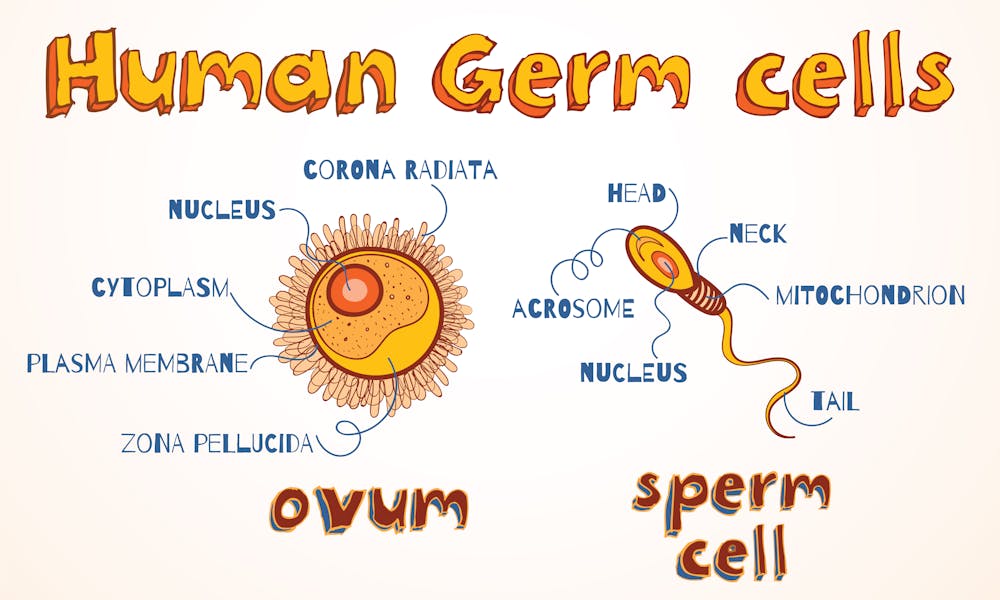
Germline cells are the ones that propogate into an entire organism – either cells that make sperm and eggs (known as germ cells), or the cells in an early embryo that will later differentiate into different functions. What’s critical about those particular cells is that a change or mutation in one will go on to affect every cell in the body of a baby that grows from them. That’s why scientists are calling for a moratorium on editing the genes of germ cells or germline cells.
Somatic cells are everything else – cells in particular organs or tissues that perform a specific function. Skin cells, liver cells, eye cells and heart cells are all somatic. Changes in somatic cells are much less significant than changes in germline cells. If you get a mutation in a liver cell, you may end up with more mutant liver cells as the mutated cell divides and grows, but it will never affect your kidney or your brain.
Our bodies accumulate mutations in somatic tissues throughout our lives. Most of the time humans never know it or suffer any harm. The exception is when one of those somatic mutations grows out of control leading to cancer.
I am a geneticist who studies the genetic and environmental causes of a number of different disorders, from birth defects – cleft lip and palate – to diseases of old age like Alzheimer’s. Studying the genome always entails thinking about how the knowledge you generate will be used, and whether those likely uses are ethical. So geneticists have been following the gene editing news with great interest and concern.
Germ cells are the cells - egg and sperm - that make a baby. Editing genes in these cells will cause permanent changes in the child and all of their progeny.
In gene editing, it matters enormously whether you are messing with a germline cell, and thus an entire future human being and all its future descendants, or just one particular organ. Gene therapy – fixing faulty genes in individual organs – has been one of the great hopes of medical science for decades. There have been a few successes, but more failures. Gene editing may make gene therapy more effective, potentially curing important diseases in adults. The National Institutes of Health runs a well-respected and highly ethical research program to develop tools for safe and effective gene editing to cure disease.
But editing germline cells and creating babies whose genes have been manipulated is a very different story, with multiple ethical issues. The first set of concerns is medical – at this point society doesn’t know anything about the safety. “Fixing” the cells in the liver of someone who might otherwise die of liver disease is one thing, but “fixing” all of the cells in a baby who is otherwise healthy is a much higher-risk proposition. This is why the recent announcement that a Chinese scientist had done just that created such an uproar.
But even if we knew the procedure was safe, gene editing of the germline would still catapult us straight into all of the “designer baby” controversies and the problems of creating a world where people try to micromanage their offspring’s genes. It does not take much imagination to fear that gene editing will could bring us a new era of eugenics and discrimination.
Does gene editing still sound scary? It should. But it makes a big difference whether you are manipulating individual organs or whole human beings.
Federal attorneys have arrested 50 people in a college admission scam that allowed wealthy parents to buy their kids’ admission to elite universities. Prosecutors found that parents together paid up to US$6.5 million to get their kids into college. The list includes celebrity parents such as actresses Felicity Huffman and Lori Loughlin.
Some might ask why did these parents fail to consider the moral implications of their actions?
My 20 years of research in moral psychology suggests many reasons why people behave in an unethical manner. When it comes to the wealthy, research shows that they will go to great lengths to maintain their higher status. A sense of entitlement plays a role.
How people rationalize
Let’s first consider what allows people to act unethically and yet not feel guilt or remorse.
Research shows that people are good at rationalizing unethical actions that serve their self-interest. The success, or failure, of one’s children often has implications for how parents view themselves and are viewed by others. They are more likely to bask in the reflected glory of their children. They seem to gain esteem based on their connection to successful children. This means parents can be motivated by self-interest to ensure their children’s achievement.
In the case of cheating for their children, parents can justify the behavior through comparisons that help them morally disengage with an action. For example, they could say that other parents’ do a lot worse things, or minimize the consequences of their actions through words such as, “My behavior did not cause much harm.”
Viewing the unethical outcomes as serving others, including one’s children, could help parents create a psychological distance to rationalize misconduct. Several studies demonstrate that people are more likely to be unethical when their actions also help someone else. For example, it is easier for employees to accept a bribe when they plan to share the proceeds with coworkers.
Sense of entitlement
When it comes to the wealthy and privileged, a sense of entitlement, or a belief that one is deserving of privileges over others, can play an important role in unethical conduct.
Privileged individuals are also less likely to follow rules and instructions given they believe the rules are unjust. Because they feel deserving of more than their fair share, they are willing to violate norms of appropriate and socially agreed upon conduct.
Feeling a sense of entitlement also leads people to be more competitive, selfish and aggressive when they sense a threat. For example, white males are less likely to support affirmative action to even the playing field because it threatens their privileged status.
Research suggests that entitlement may come in part from being rich. Wealthy individuals who are considered as “upper class” based on their income have been found to lie, steal and cheat more to get what they desire. They have also been found to be less generous. They are more likely to break the law when driving, give less help to strangers in need, and generally give others less attention.
Additionally, growing up with wealth is associated with more narcissistic behavior, which results in selfishness, expressing a need for admiration, and a lack of empathy.
Consequences of status loss
Individuals who think they deserve unfair advantages are more likely to take actions to increase their level of status, such as ensuring their children attend high-status universities. Losing status appears to be particularly threatening for high-status individuals.
Such individuals also made increased efforts to avoid status loss by being willing to pay money and allocating resources to themselves.
In their book “The Coddling of the American Mind,” First Amendment expert Greg Lukianoff and social psychologist Jonathan Haidt make the case that parents, especially in the upper class, are increasingly anxious about their children attending top universities.
People who feel a sense of power, which often comes along with wealth and fame, tend to be less likely to believe they are vulnerable to the detrimental consequences of unethical behavior.
It is possible that some of these moral psychology reasons were behind these wealthy parents cheating on behalf of their children. A desire to go to great lengths to help one’s child is admirable. However, when those lengths cross ethical boundaries it is a step too far.
Top scientists and ethicists from seven countries on Wednesday called for a global moratorium on gene editing of human eggs, sperm or embryos that would result in genetically-altered babies after a rogue Chinese researcher last year announced the birth of the world’s first gene-edited twins.
News of their birth prompted global condemnation of the work, raising the ethical specter of so-called designer babies in which embryos could be genetically modified to produce children with desirable traits.
The scientists and ethicists want to halt genetic alterations of “germline cells” - egg or sperm cells - that can then be inherited by others and “could have permanent and possibly harmful effects on the species.”
The global moratorium would be in place until nations can devise international principles to guide how the technology should be used, the experts wrote in the journal Nature. It would not cover gene editing done in embryos for research purposes that would not lead to a live birth.
Top scientists and ethicists from seven countries on Wednesday called for a global moratorium on gene editing of human eggs, sperm or embryos that would result in genetically-altered babies after a rogue Chinese researcher last year announced the birth of the world’s first gene-edited twins.
News of their birth prompted global condemnation of the work, raising the ethical specter of so-called designer babies in which embryos could be genetically modified to produce children with desirable traits.
The scientists and ethicists want to halt genetic alterations of “germline cells” - egg or sperm cells - that can then be inherited by others and “could have permanent and possibly harmful effects on the species.”
The global moratorium would be in place until nations can devise international principles to guide how the technology should be used, the experts wrote in the journal Nature. It would not cover gene editing done in embryos for research purposes that would not lead to a live birth.
“The governance framework we are calling for will place major speed bumps in front of the most adventurous plans to re-engineer the human species,” the experts said in a commentary in the Nature. “The introduction of genetic modifications into future generations could have permanent and possibly harmful effects on the species,” they wrote.
Such work differs from research being conducted by numerous drug companies and scientists into gene therapies based on editing so-called somatic cells that affect an individual’s health by correcting a disease or condition but would not be passed on to offspring.
Dr. Francis Collins, director of the U.S. National Institutes of Health, said in a letter to the journal that the “NIH strongly agrees” that a ban on the practice should go into immediate effect and stay in place until nations can commit to international rules to determine “whether and under what conditions such research should ever proceed.”
“There is no doubt that genome editing technologies hold huge potential,” Collins said, but added that there are too many scientific and ethical questions that need to be answered.
Some scientists called the proposed ban unnecessary, saying it would not prevent a scientist bent on using the technology from editing DNA in embryos to prevent disease or enhance traits of a child, as was the case with Chinese researcher He Jiankui.
“We do not think a moratorium would have deterred He Jiankui, who acted secretively and in breach of a clear scientific consensus that germline genome editing should not be used in the clinic at this time,” Sarah Norcross, director of Britain-based Progress Educational Trust, said in a statement.
Helen O’Neill, program director for Reproductive Science and Women’s Health at University College London, said the proposal ignores the fact that a global ban already exists.
O’Neill said there were legal and ethical measures in place in China and that He broke many of these rules. “It was not that he did this because the law allowed it.”
(Reporting by Julie Steenhuysen; additional reporting by Kate Kelland in London; editing by Bill Berkrot)
The oil industry should engage with proponents of the “Green New Deal,” a Democratic initiative seeking to radically reduce U.S. dependence on fossil fuels, BP Chief Executive Officer Bob Dudley said on Tuesday.
Dudley made the rare foray into U.S. politics in a keynote speech at the largest U.S. annual gathering of the oil and natural gas sector in Houston, urging peers to engage with young people or lose the trust of society.
“We need to demonstrate that we share the common goal of a low-carbon future and that we are in action toward it,” Dudley said in the speech at the CERAWeek conference by IHS Markit.
Burning of oil and gas accounts for the majority of greenhouse gas emissions blamed for climate change, rising sea levels and severe storms.
Energy companies including BP have increased their investments in renewable energies such as solar and wind in recent years as they look for a new business model in a world seeking to reduce carbon emissions.
But U.S. rivals Exxon Mobil and Chevron have made fewer investments in clean energy in recent years, drawing growing pressure from investors and climate activists.
“Our focus has to be on developing an energy system that is cleaner, better and kinder to the planet,” Dudley, a U.S. citizen, said.
“But we can only fully play our part if we have the trust of society and the confidence of our shareholders. That means engaging more with the young people who will take to the streets on Friday,” he said, referring to scheduled protests in more than 70 countries where kids plan to skip school to demand more action on climate change.
“It means improving the dialogue we have with policymakers around the world, including those behind the Green New Deal,” Dudley said.
The “Green New Deal” resolution was introduced earlier this year, seeking to create large, government-led investments in clean energy, infrastructure and social programs.
Republican lawmakers oppose the proposal, saying it is too expensive and would raise taxes and energy costs. Republican President Donald Trump’s administration opposes action on climate change and favors boosting U.S. production of oil, gas and coal.
Dudley said demand for oil and gas will remain strong for decades as the world’s population grows and economies such as China and India expand.
Two new icebergs have broken off the Grey Glacier in Chile’s Patagonia in recent weeks, amid fears that such ruptures are becoming more frequent, scientists told Reuters.
The breaks, which occurred on Feb. 20 and March 7, came after a larger block of ice the size of three soccer fields, (380 meters (1,247 feet) by 350 meters, separated from the glacier, which sits in a glacial lake in Torres del Paine National Park in southern Chile, in November 2017.
The most significant rupture to the glacier before that was recorded in the early 1990s. Scientists link the increased frequency of breaks to rising temperatures.
“There is a greater frequency in the occurrence of break-off in this east side of the glacier and more data is required to assess its stability,” said Ricardo Jana, researcher and member of the climate change area of the Chilean Antarctic Institute (INACH).
In recent days, “temperature rises above the normal average and intense rainfall were registered together with an increase in water level in the lake, factors that could explain the separation,” he added.
Researchers from universities in Germany and Brazil, together with experts from INACH and other local entities, have been studying the Grey Glacier since 2015 under an international cooperation program.
In December of this year, Chile will host the United Nations climate change summit, COP 25.
Reporting by Fabián Andrés Cambero; writing by Aislinn Laing; Editing by Steve Orlofsky
Like generals planning for the last war, oil company managers and government inspectors tend to believe that because they survived the 2010 BP Deepwater Horizon oil spill, they are ready for all contingencies. Today they are expanding drilling into deeper and deeper waters, and the Trump administration is opening more offshore areas to production.
In fact, however, the worst-case scenario for an oil spill catastrophe is not losing control of a single well, as occurred in the BP disaster. Much more damage would be done if one or more of the thousand or so production platforms that now blanket the Gulf of Mexico were destroyed without warning by a deep-sea mudslide.
Instead of one damaged wellhead, a mudslide would leave a tangled mess of pipes buried under a giant mass of sediments. It would be impossible to stop the discharge with caps or plugs, and there would be little hope of completing dozens of relief wells to stop discharge from damaged wells. Oil might flow for decades.
This scenario has already occurred, and we are seeing the results at a well off Louisiana, owned by Taylor Energy, that has been leaking oil since 2004. Based on this disaster and my 30 years of experience studying deep-sea oil and gas seeps, I believe that regulators and energy companies should be doing much more to prevent such catastrophes at other sites.
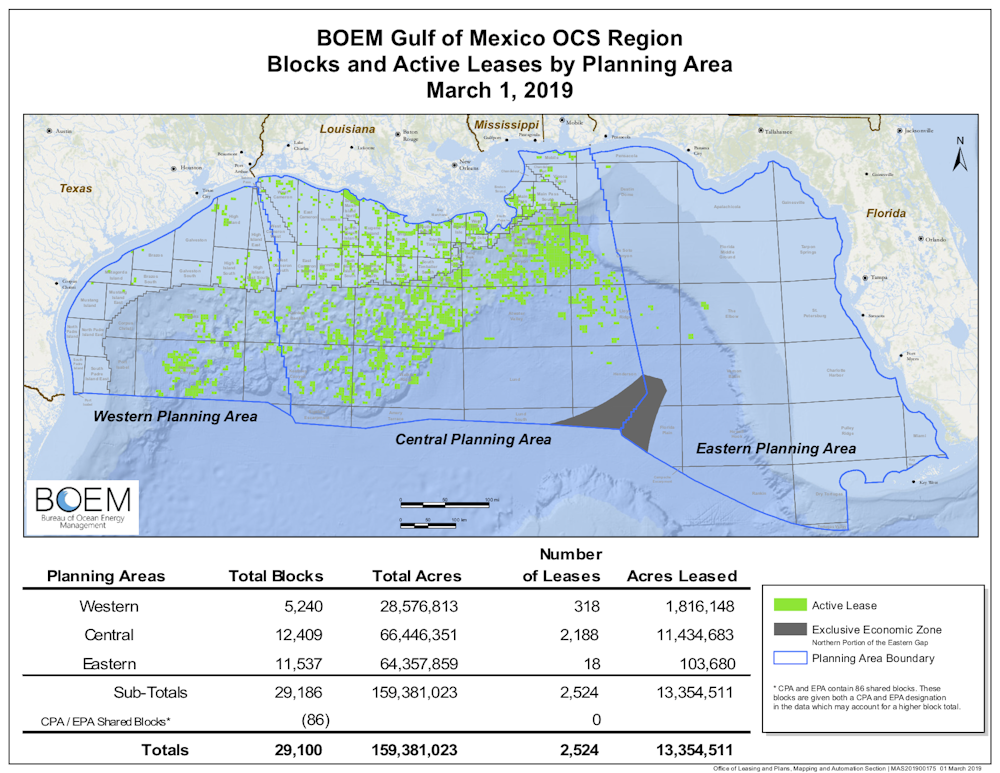
Active leases for oil and gas drilling in the Gulf of Mexico.
The mudslide that caused the Taylor Energy leak was not an isolated event. Many major features of the Gulf of Mexico’s continental slope – where the sea bottom descends from the continent’s outer edge down to the deep ocean floor – were formed when that slope failed. Their bathymetric contours show unmistakable signs of massive mudslides in the past.
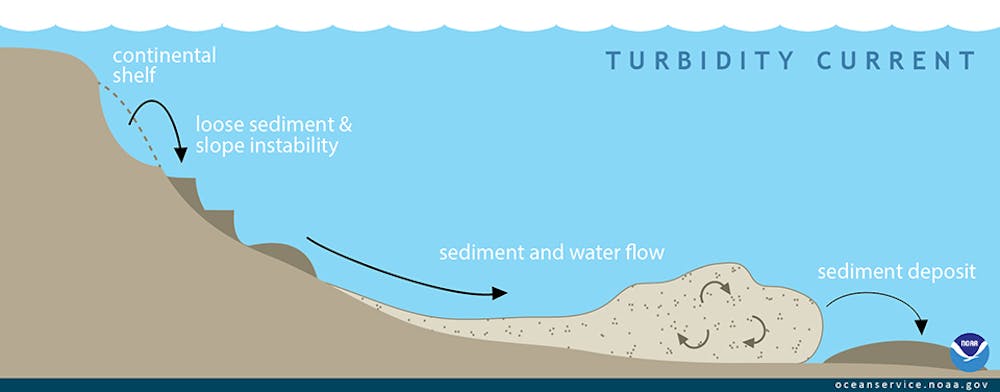
Despite generations of oil production, the sedimentary strata of the northern Gulf of Mexico still harbor billions of barrels of oil. The modern, loose material that lies atop these rock layers is also susceptible to failure, which generates a phenomenon known as turbidity currents. These are massive avalanches of sliding material partly suspended in water, which can travel for miles with astonishing speed.
One of the most famous turbidity currents occurred in 1929 following a 7.2 magnitude earthquake centered near Newfoundland’s Grand Banks. The resulting slide displaced over 40 cubic miles of material, traveling at 50 miles per hour for up to 300 miles.
Turbidity currents can be caused by earthquakes, collapsing slopes and other geological disturbances. Once set in motion, the turbid water rushes downward and can change the physical shape of the seafloor.
In 2004, storm surge and monster waves from Hurricane Ivan initiated the huge mudslide that destroyed the Taylor Energy platform, an aging facility called MC20A, located about 12 miles off the Mississippi River’s Birdfoot Delta. Company engineers claim it had only three flowing wells before it was toppled. Its wells were equipped with subsurface safety valves that were reportedly closed off when the platform was evacuated ahead of the storm.
These valves apparently failed, because miles-long oil slicks have been seen on the waters above ever since the 2004 mudslide. Despite years of effort and expenditure of more than US$230 million, oil is still flowing from beneath the legs of the downed platform at a magnitude I estimate to be at least 100 barrels per day. This event is the longest oil spill in U.S. history.
In deeper waters, modern platforms are specifically designed to resist hurricanes. However, earthquakes also occur in the northern Gulf of Mexico. The National Earthquake Information Center had recorded eight earthquakes in the region prior to 2009, with magnitudes ranging from 3.2 to 5.9. On May 6, 2018 a magnitude 4.6 event occurred at a depth of 6,500 feet.
Newer versions of subsurface safety valves on these platforms are intended to protect automatically against storms or ship collisions. Mudslides generated by earthquakes represent forces on an entirely different scale. Once a flow starts, it could travel for tens of miles, producing an unstoppable wave that would destroy whatever platforms and pipelines that lay in its path.
Modern deepwater oil and gas platforms dwarf Taylor Energy’s MC20A platform in every respect. They are located 100 miles or more from land in water 10 or 20 times deeper. Typically, platforms service a hub of pipelines and robotically controlled structures connecting scores of wells from other oilfields that can be 25 miles or more distant. They are designed for peak production rates of 100,000 to 200,000 barrels of oil per day.
How a deep-sea offshore drilling rig works.
Using platforms to monitor risk
How should planners prepare for this hazard? A 2007 Interior Department study analyzed the danger and proposed guidelines for assessing risks to platforms and pipelines, starting with studies to identify areas of steep or unstable bottom. The agency recently released a digital map of the northern Gulf of Mexico’s deeper waters that shows evidence of past mudslides with graphic realism. Slope failure and turbidity currents are truly part of the gulf’s nature.
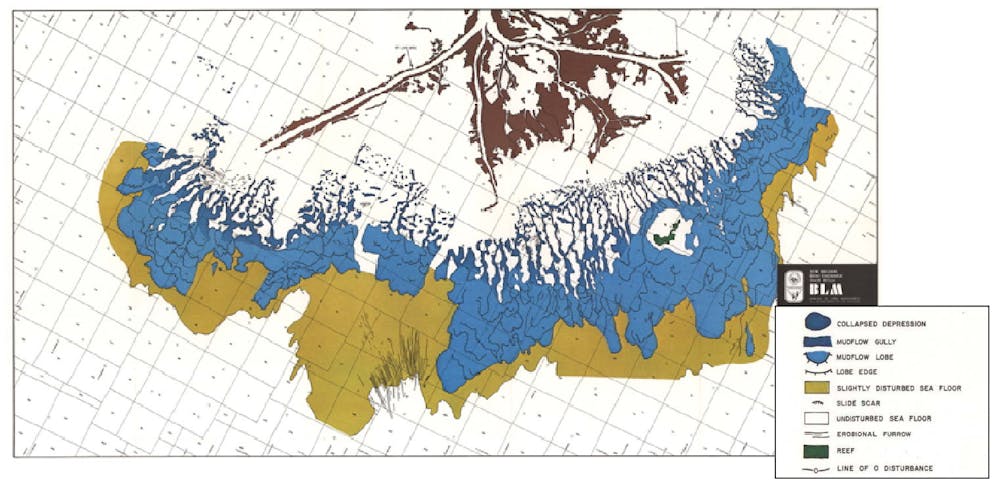
Ironically, however, the map doesn’t cover areas closer to shore. Our most comprehensive survey of mud deposits offshore from the Mississippi Delta dates to the 1980s, but over the last 40 years development and dredging have accelerated sediment loss from the Mississippi Delta. This near-shore sediment load represents a looming risk, much like snowpack in avalanche country.
The Mississippi Delta region of the Gulf of Mexico is crisscrossed by hundreds of miles of oil pipelines and dozens of still-producing oil platforms. As the 2007 Interior Department study showed, these structures are at risk for hurricane-generated mudslides. Obtaining updated survey information using modern methods should be a top priority.
Underwater features in the Mississippi Delta, mapped in 1980. Hundreds of pipelines cross this mudslide-prone area.
There are ways to assess risks in deeper areas as well, including zones such as the Atlantic coast where the Trump administration wants to expand offshore exploration and eventual oil production. This coast is also characterized by submarine canyons formed by turbidity currents.
Oil companies spend billions of dollars to install and operate offshore platforms, but typically resist requests to use their infrastructure for monitoring the marine environment. If they could be induced to cooperate, one option would be to install networks of ocean bottom seismometers to listen for earth movements that might signal risky instability. These systems could transmit data back to land over the platforms’ high-speed communication systems. Platforms could also be used to monitor the heat content of Gulf of Mexico waters, surveying for conditions that promote the rapid intensification of hurricanes.
In my view, U.S. regulators and energy companies have not paid enough attention to hidden vulnerabilities and long-term risks across our fossil fuel economy. But addressing this issue could produce real benefits. Conducting studies to identify unstable slopes will improve our understanding of the seabed. Monitoring for critical warning signs of storms will help coastal communities prepare. Better technology can make offshore infrastructure more durable, and informed regulation can make the offshore industry more vigilant. This would be the best-case scenario.
Anyone who knows me also knows that I have a huge sweet tooth. I always have. My friend and fellow graduate student Andrew is equally afflicted, and living in Hershey, Pennsylvania – the “Chocolate Capital of the World” – doesn’t help either of us.
But Andrew is braver than I am. Last year, he gave up sweets for Lent. I can’t say that I’m following in his footsteps this year, but if you are abstaining from sweets for Lent this year, here’s what you can expect over the next 40 days.
Sugar: natural reward, unnatural fix
In neuroscience, food is something we call a “natural reward.” In order for us to survive as a species, things like eating, having sex and nurturing others must be pleasurable to the brain so that these behaviours are reinforced and repeated.
Evolution has resulted in the mesolimbic pathway, a brain system that deciphers these natural rewards for us. When we do something pleasurable, a bundle of neurons called the ventral tegmental area uses the neurotransmitter dopamine to signal to a part of the brain called the nucleus accumbens. The connection between the nucleus accumbens and our prefrontal cortex dictates our motor movement, such as deciding whether or not to taking another bite of that delicious chocolate cake. The prefrontal cortex also activates hormones that tell our body: “Hey, this cake is really good. And I’m going to remember that for the future.”
Not all foods are equally rewarding, of course. Most of us prefer sweets over sour and bitter foods because, evolutionarily, our mesolimbic pathway reinforces that sweet things provide a healthy source of carbohydrates for our bodies. When our ancestors went scavenging for berries, for example, sour meant “not yet ripe,” while bitter meant “alert – poison!”
21 spoonfuls to go.
Spoonful of sugar by Shutterstock
Fruit is one thing, but modern diets have taken on a life of their own. A decade ago, it was estimated that the average American consumed 22 teaspoons of added sugar per day, amounting to an extra 350 calories; it may well have risen since then. A few months ago, one expert suggested that the average Briton consumes 238 teaspoons of sugar each week.
Today, with convenience more important than ever in our food selections, it’s almost impossible to come across processed and prepared foods that don’t have added sugars for flavour, preservation, or both.
These added sugars are sneaky – and unbeknown to many of us, we’ve become hooked. In ways that drugs of abuse – such as nicotine, cocaine and heroin – hijack the brain’s reward pathway and make users dependent, increasing neuro-chemical and behavioural evidence suggests that sugar is addictive in the same way, too.
Sugar addiction is real
“The first few days are a little rough,” Andrew told me about his sugar-free adventure last year. “It almost feels like you’re detoxing from drugs. I found myself eating a lot of carbs to compensate for the lack of sugar.”
There are four major components of addiction: bingeing, withdrawal, craving, and cross-sensitisation (the notion that one addictive substance predisposes someone to becoming addicted to another). All of these components have been observed in animal models of addiction – for sugar, as well as drugs of abuse.
A typical experiment goes like this: rats are deprived of food for 12 hours each day, then given 12 hours of access to a sugary solution and regular chow. After a month of following this daily pattern, rats display behaviours similar to those on drugs of abuse. They’ll binge on the sugar solution in a short period of time, much more than their regular food. They also show signs of anxiety and depression during the food deprivation period. Many sugar-treated rats who are later exposed to drugs, such as cocaine and opiates, demonstrate dependent behaviours towards the drugs compared to rats who did not consume sugar beforehand.
Like drugs, sugar spikes dopamine release in the nucleus accumbens. Over the long term, regular sugar consumption actually changes the gene expression and availability of dopamine receptors in both the midbrain and frontal cortex. Specifically, sugar increases the concentration of a type of excitatory receptor called D1, but decreases another receptor type called D2, which is inhibitory. Regular sugar consumption also inhibits the action of the dopamine transporter, a protein which pumps dopamine out of the synapse and back into the neuron after firing.
In short, this means that repeated access to sugar over time leads to prolonged dopamine signalling, greater excitation of the brain’s reward pathways and a need for even more sugar to activate all of the midbrain dopamine receptors like before. The brain becomes tolerant to sugar – and more is needed to attain the same “sugar high.”
Sugar withdrawal is also real
Although these studies were conducted in rodents, it’s not far-fetched to say that the same primitive processes are occurring in the human brain, too. “The cravings never stopped, [but that was] probably psychological,” Andrew told me. “But it got easier after the first week or so.”
Sugar rodents.
Sugar by Shutterstock
In a 2002 study by Carlo Colantuoni and colleagues of Princeton University, rats who had undergone a typical sugar dependence protocol then underwent “sugar withdrawal.” This was facilitated by either food deprivation or treatment with naloxone, a drug used for treating opiate addiction which binds to receptors in the brain’s reward system. Both withdrawal methods led to physical problems, including teeth chattering, paw tremors, and head shaking. Naloxone treatment also appeared to make the rats more anxious, as they spent less time on an elevated apparatus that lacked walls on either side.
Similar withdrawal experiments by others also report behaviour similar to depression in tasks such as the forced swim test. Rats in sugar withdrawal are more likely to show passive behaviours (like floating) than active behaviours (like trying to escape) when placed in water, suggesting feelings of helplessness.
A new study published by Victor Mangabeira and colleagues in this month’s Physiology & Behavior reports that sugar withdrawal is also linked to impulsive behaviour. Initially, rats were trained to receive water by pushing a lever. After training, the animals returned to their home cages and had access to a sugar solution and water, or just water alone. After 30 days, when rats were again given the opportunity to press a lever for water, those who had become dependent on sugar pressed the lever significantly more times than control animals, suggesting impulsive behaviour.
These are extreme experiments, of course. We humans aren’t depriving ourselves of food for 12 hours and then allowing ourselves to binge on soda and doughnuts at the end of the day. But these rodent studies certainly give us insight into the neuro-chemical underpinnings of sugar dependence, withdrawal, and behaviour.
Through decades of diet programmes and best-selling books, we’ve toyed with the notion of “sugar addiction” for a long time. There are accounts of those in “sugar withdrawal” describing food cravings, which can trigger relapse and impulsive eating. There are also countless articles and books about the boundless energy and new-found happiness in those who have sworn off sugar for good. But despite the ubiquity of sugar in our diets, the notion of sugar addiction is still a rather taboo topic.
Are you still motivated to give up sugar for Lent? You might wonder how long it will take until you’re free of cravings and side-effects, but there’s no answer – everyone is different and no human studies have been done on this. But after 40 days, it’s clear that Andrew had overcome the worst, likely even reversing some of his altered dopamine signalling. “I remember eating my first sweet and thinking it was too sweet,” he said. “I had to rebuild my tolerance.”
And as regulars of a local bakery in Hershey – I can assure you, readers, that he has done just that.
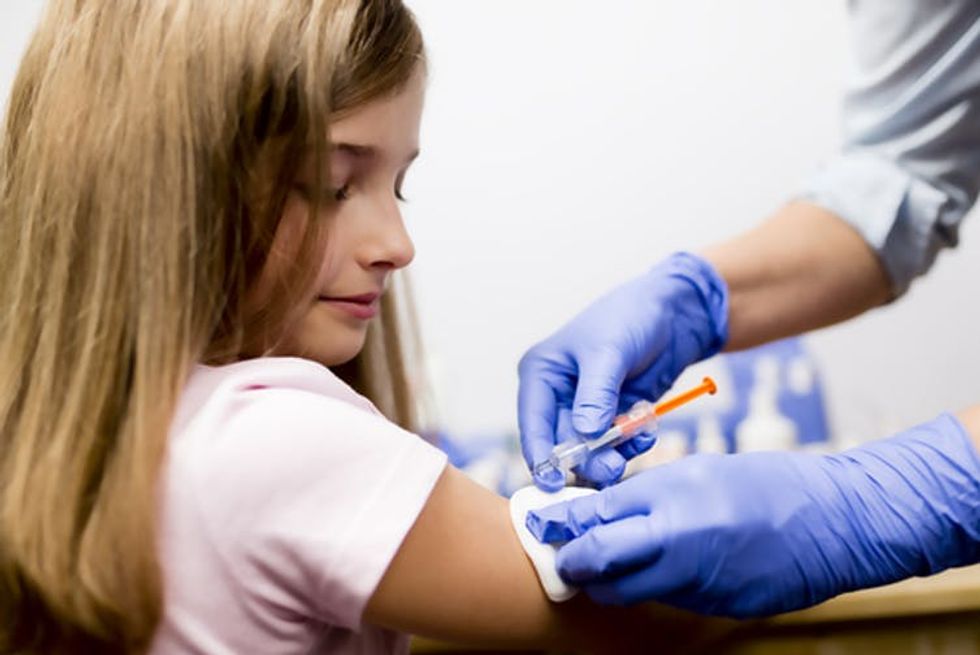
The recent outbreak of measles cases in Clark County, Washington – which has been linked to a plummeting vaccination rate in this hotbed of anti-vaccination activism – makes clear that conspiracy theories, fear, and misinformation know no partisan bounds. The Governor has declared a state of emergency and sent public health officials out to talk to parents – sometimes one on one – as more than 60 cases have now been reported.
Now imagine what might happen if the government itself had embraced an official anti-vaccine policy.
As a philosopher of science who has studied science denial, I know that science denial is a world-wide phenomenon. Although some anti-science claims like evolution denial are particularly virulent in the U.S. (outstripped only by Turkey), it’s not just America that faces this problem.
This can be both a blessing and a curse. While it’s sad to know that the forces behind science denial are larger than any one culture or political party, it’s good to know that if we study what is happening elsewhere, it may help us learn how to fight science denial in general.
One of the first lessons to be learned from this “metastasis” of science denial is how dangerous it is not to fight back. As we’ve seen with climate change in the U.S., science denial isn’t limited to fringe groups – if it isn’t fought in the trenches of corporate interest and ideology, it can spread not only to the general population, but to government too, with horrible policy consequences. But it matters too how we fight back, which I believe is illustrated perfectly by what is happening with the anti-vaccination movement.
The anti-vaccination crisis in Italy
First, it is important to state the facts: the hypothesis that vaccines cause autism was based on a fraud. Andrew Wakefield’s bogus 1998 study has been debunked numerous times and, in the end, it was learned that the whole thing arose not from sloppy science or a mistake, but from what some called deliberate manipulation of the data based on an undisclosed conflict of interest. Wakefield’s paper was retracted and his medical license was stripped. Yet still the generalized fear of vaccines has survived and taken hold among a world-wide audience of parents who are confused and suspicious – and love their children just as much as the rest of us.
At a recent scientific conference in Rome, I learned of a public health debacle that has been brewing in Italy for years.
In 2012, an Italian court ruled there was a link between autism and the measles mumps rubella vaccine; this was overturned in 2015. By that time, however, vaccination rates in Italy had fallen to 85 percent – well below the 95 percent rate that public health officials consider essential for “herd immunity.” As one prominent researcher, Roberto Burioni, put it “Italy’s measles vaccination coverage was on par with Namibia, lower than Ghana.”
Then, just as in Washington state today, measles cases started to rise. In 2016, there were 850 measles cases in Italy. By 2017, this had grown to 5,000. By that point, Italy accounted for 34 percent of all the measles cases in Europe, and 89 percent of the measles cases in Italy were made up of people who hadn’t been vaccinated. In response, health minister Beatrice Lorenzin introduced a compulsory law that parents had to vaccinate their children for daycare and school, with shots against ten diseases, including the MMR. Over time, the vaccination rate increased.
Then, in June 2018, the Five Star Movement came to power and formed a coalition government with the Hard-Right League, which found support in Deputy Prime Minister Matteo Salvini, who was anti-vaccination. Distrustful of experts and institutions, steeped in conspiracy theories, and emphasizing the importance of “personal freedom,” Salvini claimed that vaccines were “useless and in many cases dangerous.” During the campaign some in the Five Star Movement had maintained that compulsory – and state-funded – vaccines amounted to “free genocide.”
Then in August 2018, the new government sought to overturn the law to make vaccines compulsory, in favor of allowing parents to “self-certify.” As measles cases continued, there was some hedging and the government agreed to keep the law in place for another year. In December 2018, Giulia Grillo, the new health minister, announced that all 30 members of the Higher Health Council advisory panel would be fired. Soon after, the director of Italy’s National Institute of Health (ISS), Walter Ricciardi, resigned in protest over the Italian government’s “anti-scientific” vaccine stance.
Changing minds
What is the best way to fight back against such rank ignorance, when it appears at the highest levels of government?
Unfortunately, some of the defenders of science themselves have chosen to engage in what I would call “post-truth” tactics. In a 2014 television interview, then-health minister Beatrice Lorenzin made the claim that 270 kids in London had died of measles in 2013, due to anti-vaccination efforts. Except that this wasn’t true. Was this a mistake? A lie? In any case, it was dangerous, because when the truth came out it only further undermined public confidence in getting reliable information from the government.
What lesson might we learn from this? Some might condone lying in such an emergency. It must be tempting, in the face of willful ignorance and misinformation, to cut corners and pretend there is no such thing as scientific uncertainty. But this too is a lie, and undermines the very tool we need most to fight back against science denial, which is a better understanding of how science works and why its claims are reliable.
One should not pretend that vaccines are 100 percent safe. There have been isolated cases of negative reactions, sometimes even leading to death. These, however, represent such a small risk – as compared to the much larger one of dying from childhood diseases like measles or whooping cough – that unless a child is immuno-compromised, it doesn’t make sense to forego vaccines. Indeed, because there are immuno-suppressed children out there, one might say that it is the obligation of the rest of us whose children are not in such a risk group to make sure that our own children are vaccinated.
Although it might lead to a more difficult conversation, I believe that embracing uncertainty and doubt as a strength, rather than a weakness, of science is a better strategy for fighting science denial in the long run.
Any scientist who understands inductive reasoning knows that no empirical hypothesis can ever be 100 percent proven. And scientists can also make mistakes. But does this justify the assertion that all hypotheses are equally likely to be true? Or that all risks are equal? No. Lack of certainty does not mean that there is no such thing as likelihood or probability, for these are precisely the measures against which scientific conclusions are evaluated.
Scientific claims are based on evidence. Scientists’ beliefs are justified (warranted) because they fit with the facts. Although this may not reach the level of truth because no scientific belief can ever be proven or confirmed, it is significant that this is where scientists aim. So why squander this and begin to use post-truth tactics in the defense of science? When we lie about the certainty of science, it only raises the suspicions of a community that may be disinclined to trust scientists in the first place.
In my view, what we need most to fight science denial is a better understanding of how science works. Not just more knowledge of scientific conclusions, but of the process by which scientific theories are tested and justified in the first place. Rather than pretend that science (or scientists) are perfect – that there is no such thing as cognitive bias or that conflicts of interest never arise – why not embrace what is most special about science, which is that in science there are transparent community standards by which we may discover and correct any error?
As they go house to house, this is at least part of what public health officials in Washington might try to explain to anti-vaccine skeptics. When we take the time to explain the science behind vaccines – rather than belittle every doubt – might this not be the most effective strategy of all?
In this post-truth age, some have claimed that it is impossible to change anyone’s mind with evidence, that even empirical belief is based on our identity. If you belong to the tribe of vaccine-deniers it must be difficult to accept the idea that – by rejecting the consensus view of science – you may be risking your child’s life.
But might scientists also be tribal? If so, let it be around belief in the creed that binds them, which embraces both openness to new ideas and a resolve to test them. The scientific attitude consists of basing our beliefs on evidence, and being willing to change those beliefs as new evidence comes in. Instead of “lying in service of the truth,” let this be what guides us.