Lola Gayle, STEAM Register COLUMBIA, MO: Probiotics are beneficial microorganisms that are said to provide numerous health benefits by interacting with our gut microbes after being ingested. While most studies have focused on the physical health benefits of these live bacteria, researchers at the University of Missouri (MU) are focusing on the mental health benefits of…
Naming new worlds is a confusing mess ESA/Hubble An exoplanet by any other name... 55 Cancri e, or Rho Cancri e, or Janssen, is one of the thousands of exoplanets stuck with multiple names because of inconsistent naming systems. 55 Cancri e is experiencing a bit of an identity crisis. The planet, which orbits a star…
Lola Gayle, STEAM Register GREENBELT, MD: A massive rift in Antarctica's Larsen C ice shelf was photographed on Nov. 10, 2016 by NASA IceBridge mission scientists. Ice shelves are the floating parts of ice streams and glaciers, and they support the grounded ice behind them. But when a collapse occurs, the ice behind the shelf begins…
Lola Gayle, STEAM Register The icy moon Mimas - which is 246 miles (396 kilometers) wide - seems to be dwarfed by Saturn's enormous rings in this image from NASA's Cassini spacecraft. Appearances can be deceiving, however. According to NASA, it would seem that Saturn's rings are far more massive than they actually are. In all…
AIDS march in Los Angeles. Carlos Delgado/AP Today is World AIDS Day. More than three decades after the virus was first discovered, 5,753 people will become HIV infected today. About the same number will become infected tomorrow, and the same number the day after that. While it is true that two-thirds of people living with HIV…
German Xprize team sets its sights on a vintage moon buggy NASA Astronaut Harrison H. Schmitt at the Apollo 17 landing site. The Apollo 17 landing site has been abandoned since the last lunar astronauts went home in 1972. Now the site could get its first visitor in 44 years, as private companies race to the…
Spaceborne just landed in book stores Don Pettit/NASA Star trails Photographs can show us things that unaided human eyes cannot see. Mount a camera on a tripod, point it at the heavens, and open the shutter, and you can capture an image of curving streaks of starlight that reveal information about our planet and its position…
Lucy, the ancient ancestor of modern humans, probably spent at least a third of her day nesting in trees, according to new research unveiled Wednesday.
Our 3.18 million-year-old relative, whose fossilized partial skeleton was discovered in Ethiopia in 1974, likely got around as much like a modern chimpanzee as a modern human, according to a new study published in the journal PLOS ONE by scientists at Johns Hopkins University in Baltimore, Maryland and the University of Texas at Austin.
The beloved, 3-foot-6-inch (about one meter) bipedal Australopithecus afarensis has confounded paleontologists for years. They have been debating whether the 60-pound (27 kilogram) hominid spent most of her time on the ground, like modern humans, or in the trees, like chimpanzees.
The study finds that Lucy had strong upper arms, suggesting she regularly climbed trees. She also had relatively week legs that were not used for climbing and were inefficient for walking.
The combination of the two discoveries led researchers to conclude that Lucy probably nested in tree branches at night in order to avoid predators, used her arms to travel between trees and may have even foraged for food among branches.
The researchers arrived at their conclusions by conducting new high-definition scans of Lucy's bones -- combining 35,000 individual images taken with a powerful scanner capable of penetrating the layers of minerals in her fossilized remains.
They studied the internal structures of the upper bones of Lucy's two arms, and the femur bone of her left leg, discovering that her upper limbs were highly developed -— suggesting they sustained strong muscles similar to tree-climbing modern chimpanzees.
"It is a well-established fact that the skeleton responds to loads during life, adding bone to resist high forces and subtracting bone when forces are reduced," said John Kappelman, an anthropology professor at the University of Texas, and one of the main authors of the research.
Chimpanzee skeletons have more solidly built upper limbs, because they use their arms to climb, while humans have more developed lower limbs due to walking, according to Christophe Ruff, anatomy professor at The Johns Hopkins University and a co-author of the study.
"The results for Lucy are convincing," he said.
Another recent study concluded that Lucy probably died from a fall from a particularly tall tree. The study, published in the British magazine Nature, arrived at that conclusion after analyzing a bone fracture in Lucy's fossilized remains.
But scientists have had trouble determining exactly how much of Lucy's time was spent off the ground. The new study suggests that if she slept around eight hours a day, she would have spent at least a third of her time in and among branches.
Other comparisons in the study suggest that even when Lucy walked on her two legs, she did so less efficiently than modern humans, limiting her ability to move long distances by foot.
Long considered the longest living human relative, Lucy was dethroned of her status in 1994 following the discovery -— also in Ethiopia -— of Ardi, a female Ardipithecus ramidus who lived 4.5 million years ago.
She is the most ancient hominid fossil from the evolutionary branch that led to humans.
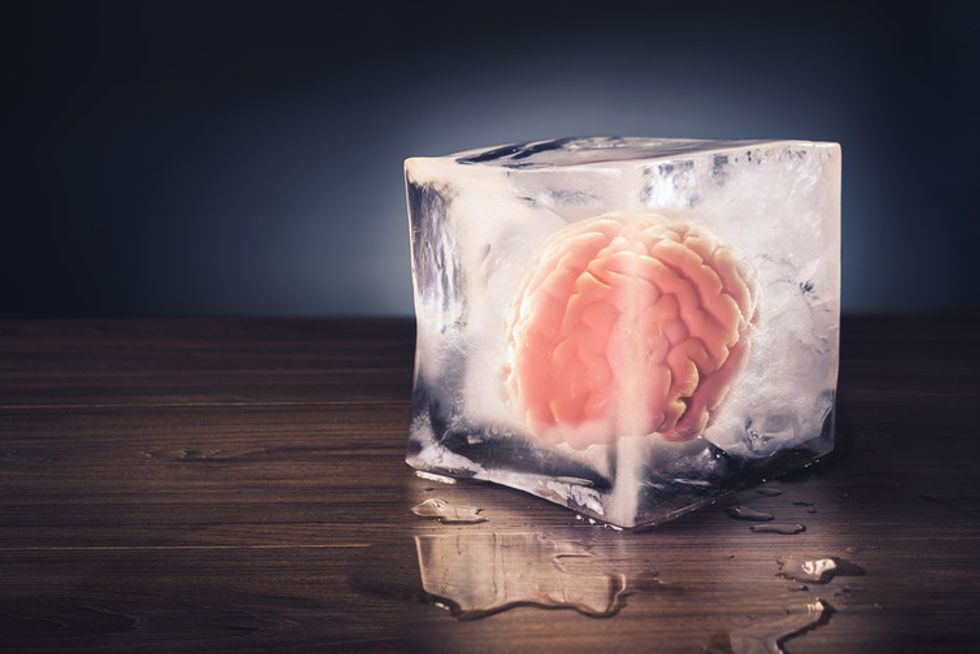
A teenager who tragically died of cancer recently has become the latest among a tiny but growing number of people to be cryogenically frozen after death. These individuals were hoping that advances in science will one day allow them to be woken up and cured of the conditions that killed them. But how likely is it that such a day will ever come?
Nature has shown us that it is possible to cryopreserve animals like reptiles, amphibians, worms and insects. Nematode worms trained to recognise certain smells retain this memory after being frozen. The wood frog (Rana sylvatica) freezes during winter into a block of ice and hops around the following spring. However, in human tissue each freeze-thaw process causes significant damage. Understanding and minimising this damage is one of the aims of cryobiology.
At the cellular level, these damages are still poorly understood, but can be controlled. Each innovation in the field relies on two aspects: improving preservation during freezing and advancing recovery after thawing. During freezing, damage can be avoided by carefully modulating temperatures and by relying on various types of cryoprotectants. One of the main objectives is to inhibit ice formation which can destroy cells and tissues by displacing and rupturing them. For that reason, a smooth transition to a “glassy stage” (vitrification) by rapid cooling, rather than “freezing”, is the aim.
For this, simple substances such as sugars and starches have been used to change viscosity and protect cell membranes. Chemicals like dimethyl sulfoxide (DMSO), ethylene glycol, glycerol and propandiol are used to prevent intracellular ice formation and anti-freeze proteins inhibit ice crystal growth and re-crystallisation during thawing.
But it’s not just the individual cells we have to worry about. In a frozen state, tissues are generally biologically stable. Biochemical reactions, including degeneration, are slowed at ultra-low temperatures to a point where they are effectively halted. Nonetheless, there is a risk that frozen structures can experience physical disruption, such as hairline cracks. Then, upon thawing, temperature fluctuation causes a series of problems. Tissues and cells can be damaged at this state. But it also has an effect on our overall “epigenetics” – how environmental factors and lifestyle choices influence our genes – by causing epigenetic reprogramming. However, antioxidants and other substances can help aid post-thaw recovery and prevent damage.
Reviving whole bodies also poses its own challenges as organs need to commence function homogeneously. The challenges of restoring the flow of blood to organs and tissues are already well-known in emergency medicine. But it is perhaps encouraging that cooling itself does not only have negative effects – it can actually mitigate trauma. In fact, drowning victims who have been revived seem to have been protected by the cold water – something that has led to longstanding research into using low-temperature approaches during surgery.
The pacemakers of scientific innovation in cryobiology are both medical and economic. Many advances in cell preservation are driven by the infertility sector and an emerging regenerative medicine sector. Cryopreserved and vitrified cells and simple tissues (eggs, sperm, bone marrow, stem cells, cornea, skin) are already regularly thawed and transplanted.
Work has also started on cryopreservation of “simple” body parts such as fingers and legs. Some complex organs (kidney, liver, intestines) have been cryopreserved, thawed, and successfully re-transplanted into an animal. While transplantation of human organs currently relies on chilled, not frozen, organs, there is a strengthening case for developing cryopreservation of whole organs for therapeutic purposes.
The biggest hurdles
Cryopreservation of whole brains is a niche interest at best. Experiments with frozen whole animal brains have not been reported since the 1970s. While factors like a good blood supply and high tolerance to mechanical distortion may facilitate brain freezing, particular technical and scientific challenges exist, especially where the goal is to preserve regulatory function and memory. Without huge breakthroughs in such research, it is likely to remain the one factor holding back therapeutic applications of whole-body cryopreservation.
The final frontier.
Fer Gregory
But there’s another huge hurdle for cryonics: to not only repair the damage incurred due to the freezing process but also to reverse the damage that led to death – and in such a manner that the individual resumes conscious existence.
From a purely technical point of view, this added complication might be worth avoiding. For example, someone who suffers from dementia will have already lost his or her memory by the time they die and will therefore no longer be the same if woken up after being cryogenically frozen. Faced with this, patients with neuro-degenerative disorders who do not wish to live with the condition any longer may therefore seek to be frozen before death, in the hope that they will retain some memory if revived in the distant future. This clearly raises both legal and ethical questions.
So will it one day be possible to cryopreserve a human brain in such a manner that it can be revived intact? As explained, success will depend on the quality of the cryopreservation as well as the quality of the revival technology. Where the former is flawed, as it would be with current technologies, the demands on the latter increase.
This has led to the suggestion that effective repair must inevitably rely on highly advanced nanotechnology – a field once considered science fiction. The idea is that tiny, artificial molecular machines could one day repair all sorts of damage to our cells and tissues caused by cryonics extremely quickly, making revival possible. Given the rapid advances in this field, it may seem hasty to dismiss the entire scientific aim behind cryonics.
The US medical community is slowly embracing marijuana. Will magic mushrooms be next? Two studies published Thursday in the Journal of Psychopharmacology could open a path to transforming this taboo drug into a routine psychiatric treatment. The studies - one conducted at Johns Hopkins University and the other at New York University - found that a…
What all these techniques and technologies have in common is that they’re recent neuroscientific breakthroughs propelled by military research within a broader context of rapid neuroscientific development, driven by massive government-funded projects in both America and the European Union. Even while much about the brain remains mysterious, this research has contributed to the rapid and startling development of neuroscientific technology.
And while we might marvel at these developments, it is also undeniably true that this state of affairs raises significant ethical questions. What is the proper role – if any – of neuroscience in national defense or war efforts? My research addresses these questions in the broader context of looking at how international relations, and specifically warfare, are shaped by scientific and medical expertise and technology.
An Air Force video about military research on the human brain.
Weaponization of a peaceable science?
To understand the relationship between science and war, academic bioethicists, journalists and policy advisors alike typically rely on the framework of “dual use.” Starting from the assumption that the purpose of science is to improve human life, this perspective nevertheless admits that many technologies used in peacetime or to help enhance human capacities can also be harnessed to a second use: harming and degrading human capacities as part of a military arsenal. This framework calls attention to the potential misappropriation of sciences and technologies. By acknowledging potential misuses, it aims to help guide policy to limit such possibilities through practical tools such as weapons conventions.
Key to this framework is the concept of “weaponization.” The dual use idea assumes that we should be concerned with how a once “peaceful” science or technology came to be developed and used in war or national security applications. This process is termed the “weaponization of neuroscience.”
The dual use framework and the weaponization concept may offer some immediate potential practical utility. But, as I have written more extensively elsewhere, they’re based on a massively misguided notion both of the history of neuroscience and of what is at stake practically and politically.
Neuroscience’s roots are both civilian and military
The dual use framework and weaponization concept assume stark war/peace and military/civilian divides. But in fact, the discipline of neuroscience grew equally and simultaneously out of institutions we typically consider civilian and military.
The Walter Reed Army Institute of Research building, site of much early neuroscience work.
Modern neuroscience was established in the post-WWII period. Like many disciplines developed and funded in that era (such as physics, nuclear medicine and others), the discipline was established through military funding in both “civilian” institutions such as MIT and Harvard and military research institutes such as the Walter Reed Army Institute of Research. That Institute’s Department of Neuropsychiatry originated the idea that researchers should study brain anatomy and physiology at the same time as psychology or psychiatry. Neuroscience was funded and shaped to meet the needs of warfare and national security imperatives.
This state of affairs was nothing new: Modern warfare and medical and scientific innovation have long been symbiotic, including the “invention” of American clinical neurology through the American Civil War. It’s not possible to say that neuroscience has been “weaponized,” because this presumes a naturally peaceful and nonmilitary origin story that is simply historically inaccurate.
Simultaneously used for good and ill
Also, the dual use framework and the concept of weaponization assume a distinct divide between help and harm. People using these concepts are primarily concerned with harmful applications of neuroscience – those that degrade human capacities. Without a doubt, these are of deep concern. Few would deny that we should pay close attention, for instance, to the use of neuropharmaceuticals to degrade the combat capabilities of enemies or produce interrogation susceptibility, or related developments.
But the stark divide between help and harm elides the fact that many technologies can do both simultaneously.
One example is the current DARPA-funded development of brain-machine interfaces. These technologies seek to connect the brain directly to machine technologies in order to control them remotely. Of course this may be a boon for veterans and soldiers in need of better prosthetic devices. But these are the very same technologies (and sometimes the same experimental subjects) that are being used to pilot drones for potential use in warfare.
‘Virtual Iraq’ exposure therapy can help veterans – and prepare them to return to the battlefield.
By way of a second example, consider military medical and rehabilitative practices. These are assumed to be on the “help” rather than “harm” side of the split. Think, for instance, of increasing diagnosis of (mild) traumatic brain injuries in military settings. Treatment of these injuries may do great good in the clinical setting for individuals who receive this care. But these therapies are also part of a system of military medicine aimed at producing war readiness and potential redeployment of soldiers. The good health of soldiers (help) is integral to warfare (harm), suggesting that the help/harm divide is not so stark as the dual use framework assumes.
For all these reasons, it’s not possible to say that neuroscience has been “militarized” or “weaponized.” The dual use framework ignores how embedded neuroscience has always been with war and national defense. In doing so, it leads us to underestimate the political task at hand, both in relation to war and in relation to science. On the side of war, it elides the ethical questions we need to be asking, not only about weaponization, but also about the supposedly benign practices of diagnosis, cure and enhancement. On the side of science, it obscures questions about what research gets funded and praised, and about the opportunity costs of allowing military imperatives to drive scientific inquiry.
Controlling the minds of others from a distance has long been a favourite science fiction theme – but recent advances in genetics and neuroscience suggest that we might soon have that power for real. Just over a decade ago, the bioengineer Karl Deisseroth and his colleagues at Stanford University published their paper on the optical control of the brain – now known as optogenetics – in which the firing pattern of neurons is controlled by light. To create the system, they retrofitted neurons in mouse brains with genes for a biomolecule called channelrhodopsin, found in algae. Channelrhodopsin uses energy from light to open pathways so that charged ions can flow into cells. The charged ions can alter the electrical activity of neurons, influencing the animal’s behaviour along the way.
Soon researchers were using implants to guide light to channelrhodopsin in specific neurons in the brains of those mice, eliciting behaviour on demand. At the University of California the team of Anatol Kreitzer worked with Deisseroth to disrupt movement, mimicking Parkinson’s disease and even restoring normal movement in a Parkinsonian mouse. Deisseroth and his colleague Luis de Lecea later demonstrated that it was possible to wake up mice by activating a group of neurons in the brain that control arousal and sleep.
But optogenetics has been challenging. Since light does not easily penetrate dense fatty brain tissue, researchers must implant a fibre-optic cable to bring light into the brain. This limitation led to the development of another, less intrusive technique known as DREADD (designer receptors exclusively activated by designer drugs). In this case, a receptor normally activated by the neurotransmitter acetylcholine is modified to respond to a designer drug not normally found in the body. When the designer drug is delivered, neurons can be manipulated and behaviour changed over a number of hours. The major drawback here: the slow course of drug administration compared with the rapid changes in brain activity that occur during most tasks.
In the past couple of years, researchers have pioneered a newer technique using low-frequency radio waves or a magnetic field, both of which can penetrate the body without causing damage. The waves serve to heat iron oxide nanoparticles injected or genetically targeted to the body region of interest. In a process similar to optogenetics, the heated nanoparticles open an ion channel called TRPV (transient receptor potential vanilloid), allowing calcium ions into the cell. Depending on the location of the nanoparticles, the ions might accomplish any number of tasks – from releasing insulin to suppressing the gastric hormones involved in feelings of hunger.
It seems only a matter of time before we use similar technology to treat neurological and mental health problems originating in the brain. Toward this end, some researchers are working with gold nanoparticles, which, when exposed to special light, can generate enough heat to make a neuron fire without the need to alter its genes.
More research is needed, but these systems are potentially more precise and less invasive than existing techniques for altering brain activity such as deep brain stimulation. With so much progress on a variety of fronts, some form of human mind control – and the treatments and benefits it confers – should be here before long. We just need to make sure that like other emerging technologies – artificial intelligence and robotics come to mind – they are used for good to improve lives.
By Catriona Houston
This article was originally published at Aeon and has been republished under Creative Commons.
Since the 1950s, scientific and engineering research has generated enormous progress toward forcing hydrogen atoms to fuse together in a self-sustaining reaction – as well as a small but demonstrable amount of fusion energy. Skeptics and proponents alike note the two most important remaining challenges: maintaining the reactions over long periods of time and devising a material structure to harness the fusion power for electricity.
As fusion researchers at the Princeton Plasma Physics Lab, we know that realistically, the first commercial fusion power plant is still at least 25 years away. But the potential for its outsize benefits to arrive in the second half of this century means we must keep working. Major demonstrations of fusion’s feasibility can be accomplished earlier – and must, so that fusion power can be incorporated into planning for our energy future.
Unlike other forms of electrical generation, such as solar, natural gas and nuclear fission, fusion cannot be developed in miniature and then be simply scaled up. The experimental steps are large and take time to build. But the problem of abundant, clean energy will be a major calling for humankind for the next century and beyond. It would be foolhardy not to exploit fully this most promising of energy sources.
In fusion, two nuclei of the hydrogen atom (deuterium and tritium isotopes) fuse together. This is relatively difficult to do: Both nuclei are positively charged, and therefore repel each other. Only if they are moving extremely fast when they collide will they smash together, fuse and thereby release the energy we’re after.
This happens naturally in the sun. Here on Earth, we use powerful magnets to contain an extremely hot gas of electrically charged deuterium and tritium nuclei and electrons. This hot, charged gas is called a plasma.
The plasma is so hot – more than 100 million degrees Celsius – that the positively charged nuclei move fast enough to overcome their electrical repulsion and fuse. When the nuclei fuse, they form two energetic particles – an alpha particle (the nucleus of the helium atom) and a neutron.
Heating the plasma to such a high temperature takes a large amount of energy – which must be put into the reactor before fusion can begin. But once it gets going, fusion has the potential to generate enough energy to maintain its own heat, allowing us to draw off excess heat to turn into usable electricity.
Fuel for fusion power is abundant in nature. Deuterium is plentiful in water, and the reactor itself can make tritium from lithium. And it is available to all nations, mostly independent of local natural resources.
Fusion power is clean. It emits no greenhouse gases, and produces only helium and a neutron.
It is safe. There is no possibility for a runaway reaction, like a nuclear-fission “meltdown.” Rather, if there is any malfunction, the plasma cools, and the fusion reactions cease.
All these attributes have motivated research for decades, and have become even more attractive over time. But the positives are matched by the significant scientific challenge of fusion.
Progress to date
The progress in fusion can be measured in two ways. The first is the tremendous advance in basic understanding of high-temperature plasmas. Scientists had to develop a new field of physics – plasma physics – to conceive of methods to confine the plasma in strong magnetic fields, and then evolve the abilities to heat, stabilize, control turbulence in and measure the properties of the superhot plasma.
It is easy to convey the practical metrics that track fusion’s march to commercialization. Chief among them is the fusion power that has been generated in the laboratory: Fusion power generation escalated from milliwatts for microseconds in the 1970s to 10 megawatts of fusion power (at the Princeton Plasma Physics Laboratory) and 16 megawatts for one second (at the Joint European Torus in England) in the 1990s.
A new chapter in research
Now the international scientific community is working in unity to construct a massive fusion research facility in France. Called ITER (Latin for “the way”), this plant will generate about 500 megawatts of thermal fusion power for about eight minutes at a time. If this power were converted to electricity, it could power about 150,000 homes. As an experiment, it will allow us to test key science and engineering issues in preparation for fusion power plants that will function continuously.
ITER employs the design known as the “tokamak,” originally a Russian acronym. It involves a doughnut-shaped plasma, confined in a very strong magnetic field, which is partly created by electrical current that flows in the plasma itself.
Though it is designed as a research project, and not intended to be a net producer of electric energy, ITER will produce 10 times more fusion energy than the 50 megawatts needed to heat the plasma. This is a huge scientific step, creating the first “burning plasma,” in which most of the energy used to heat the plasma comes from the fusion reaction itself.
From here, the remaining path toward fusion power has two components. First, we must continue research on the tokamak. This means advancing physics and engineering so that we can sustain the plasma in a steady state for months at a time. We will need to develop materials that can withstand an amount of heat equal to one-fifth the heat flux on the surface of the sun for long periods. And we must develop materials that will blanket the reactor core to absorb the neutrons and breed tritium.
The second component on the path to fusion is to develop ideas that enhance fusion’s attractiveness. Four such ideas are:
1) Using computers, optimize fusion reactor designs within the constraints of physics and engineering. Beyond what humans can calculate, these optimized designs produce twisted doughnut shapes that are highly stable and can operate automatically for months on end. They are called “stellarators” in the fusion business.
2) Developing new high-temperature superconducting magnets that can be stronger and smaller than today’s best. That will allow us to build smaller, and likely cheaper, fusion reactors.
3) Using liquid metal, rather than a solid, as the material surrounding the plasma. Liquid metals do not break, offering a possible solution to the immense challenge how a surrounding material might behave when it contacts the plasma.
4) Building systems that contain doughnut-shaped plasmas with no hole in the center, forming a plasma shaped almost like a sphere. Some of these approaches could also function with a weaker magnetic field. These “compact tori” and “low-field” approaches also offer the possibility of reduced size and cost.
Government-sponsored research programs around the world are at work on the elements of both components – and will result in findings that benefit all approaches to fusion energy (as well as our understanding of plasmas in the cosmos and industry). In the past 10 to 15 years, privately funded companies have also joined the effort, particularly in search of compact tori and low-field breakthroughs. Progress is coming and it will bring abundant, clean, safe energy with it.