Somewhere in the neighborhood of 80 percent of New Year’s resolutions fail. Gyms get emptier as the year winds on, the lure of social media grows increasingly harder to resist and travel plans are delayed day by day until it’s suddenly been a year again. But if you can stick to one particular common resolution—to cut out drinking for a bit—the dividends may pay off down the line.
That’s the finding of a study by the University of Sussex in England, where researchers decided to see how giving up drinking for a month—the 31-day period popularly known as dry January—affected participants’ tendencies for imbibing later on. They found that those who successfully abstained for the duration of the month continued to drink less even once drinking resumed. Additionally, at points one and six months later, those participants reported they were better able to resist the urge to drink in “social settings when others are drinking, for emotion regulation, and opportunistic drinking.” Put simply, there was an impressive reduction in drunkeness in their lives in general after the month was over.
The study involved 857 volunteers. Of those, 64.1 percent made it through the entire month of January without drinking. Perhaps unsurprisingly, a fairly good predictor of the ability to remain dry throughout the period was the regularity with which participants normally drank; more moderate drinkers fared better than their boozier peers. Having a partner in not drinking—using the buddy system—seemed to have little impact on success.
Interestingly, in addition to curbing drinking for those who successfully completed dry January, even those who merely attempted the challenge also saw a drinking drop-off. In other words, failing the initial mission still resulted in benefits.
Researchers admit that since the volunteers were a self-selected group and there was no control group, there are limits to deductions that can be made about the findings. In any case, the results suggest “that successful completion of one month of abstinence may have lasting effects on drinking behavior and beliefs, and that increases in [the ability to refuse drinks] arising from abstinence attempts may be an important influence on subsequent patterns of alcohol use.”
Young Earth creationism evangelist Kent Hovind asserted this week that God had purposefully put contradictions in the Bible to "weed out" non-believers.
In a YouTube video posted on Monday, the Christian fundamentalist responds to a follower who is troubled by a contradiction in the book of Acts.
"If I was God," Hovind explains, "I would write the book in such a way that those who don't want to believe in me anyway would think they found something. 'Aha, here's why I don't believe.'"
"And then they could go on with their own life because they don't want to believe God anyways," he continues. "I would put things in there that would appear without digging to be contradictions. I don't think that's deceptive, I think that's wise for the Heavenly Father to weed out those who are really serious."
Hovind says that he made a choice to "believe the Bible until it's proven wrong."
"I know others who have decided, 'I'm not going to believe it until you prove everything is right,'" he notes. "Okay, you do whatever you want to do, but I made the opposite decision."
Watch the video below from Kent Hovind, recorded Dec. 28, 2015.
Anyone who knows me also knows that I have a huge sweet tooth. I always have. My friend and fellow graduate student Andrew is equally afflicted, and living in Hershey, Pennsylvania – the “Chocolate Capital of the World” – doesn’t help either of us.
But Andrew is braver than I am. Last year, he gave up sweets for Lent. I can’t say that I’m following in his footsteps this year, but if you are abstaining from sweets this year, here’s what you can expect over the next 40 days.
Sugar: natural reward, unnatural fix
In neuroscience, food is something we call a “natural reward.” In order for us to survive as a species, things like eating, having sex and nurturing others must be pleasurable to the brain so that these behaviours are reinforced and repeated.
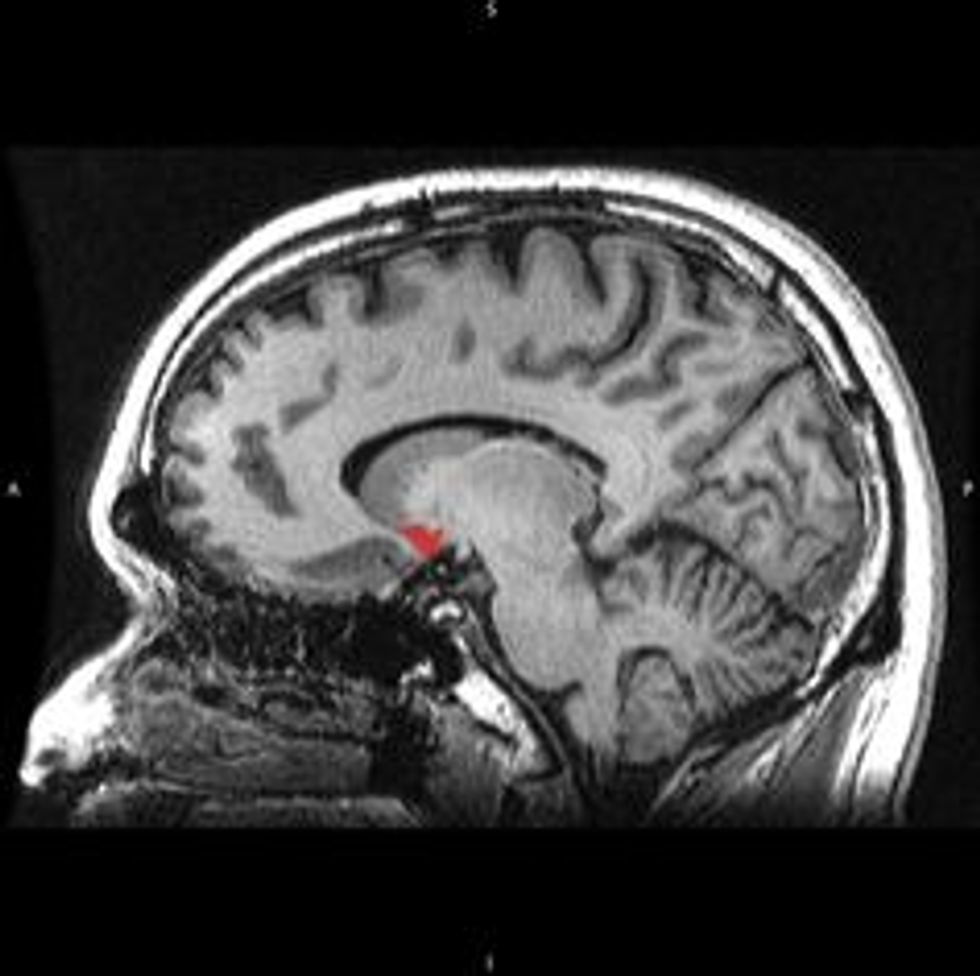
Evolution has resulted in the mesolimbic pathway, a brain system that deciphers these natural rewards for us. When we do something pleasurable, a bundle of neurons called the ventral tegmental area uses the neurotransmitter dopamine to signal to a part of the brain called the nucleus accumbens. The connection between the nucleus accumbens and our prefrontal cortex dictates our motor movement, such as deciding whether or not to taking another bite of that delicious chocolate cake. The prefrontal cortex also activates hormones that tell our body: “Hey, this cake is really good. And I’m going to remember that for the future.”
Not all foods are equally rewarding, of course. Most of us prefer sweets over sour and bitter foods because, evolutionarily, our mesolimbic pathway reinforces that sweet things provide a healthy source of carbohydrates for our bodies. When our ancestors went scavenging for berries, for example, sour meant “not yet ripe,” while bitter meant “alert – poison!”
21 spoonfuls to go.
Spoonful of sugar by Shutterstock
Fruit is one thing, but modern diets have taken on a life of their own. A decade ago, it was estimated that the average American consumed 22 teaspoons of added sugar per day, amounting to an extra 350 calories; it may well have risen since then. A few months ago, one expert suggested that the average Briton consumes 238 teaspoons of sugar each week.
Today, with convenience more important than ever in our food selections, it’s almost impossible to come across processed and prepared foods that don’t have added sugars for flavour, preservation, or both.
These added sugars are sneaky – and unbeknown to many of us, we’ve become hooked. In ways that drugs of abuse – such as nicotine, cocaine and heroin – hijack the brain’s reward pathway and make users dependent, increasing neuro-chemical and behavioural evidence suggests that sugar is addictive in the same way, too.
Sugar addiction is real
“The first few days are a little rough,” Andrew told me about his sugar-free adventure last year. “It almost feels like you’re detoxing from drugs. I found myself eating a lot of carbs to compensate for the lack of sugar.”
There are four major components of addiction: bingeing, withdrawal, craving, and cross-sensitisation (the notion that one addictive substance predisposes someone to becoming addicted to another). All of these components have been observed in animal models of addiction – for sugar, as well as drugs of abuse.
A typical experiment goes like this: rats are deprived of food for 12 hours each day, then given 12 hours of access to a sugary solution and regular chow. After a month of following this daily pattern, rats display behaviours similar to those on drugs of abuse. They’ll binge on the sugar solution in a short period of time, much more than their regular food. They also show signs of anxiety and depression during the food deprivation period. Many sugar-treated rats who are later exposed to drugs, such as cocaine and opiates, demonstrate dependent behaviours towards the drugs compared to rats who did not consume sugar beforehand.
Like drugs, sugar spikes dopamine release in the nucleus accumbens. Over the long term, regular sugar consumption actually changes the gene expression and availability of dopamine receptors in both the midbrain and frontal cortex. Specifically, sugar increases the concentration of a type of excitatory receptor called D1, but decreases another receptor type called D2, which is inhibitory. Regular sugar consumption also inhibits the action of the dopamine transporter, a protein which pumps dopamine out of the synapse and back into the neuron after firing.
In short, this means that repeated access to sugar over time leads to prolonged dopamine signalling, greater excitation of the brain’s reward pathways and a need for even more sugar to activate all of the midbrain dopamine receptors like before. The brain becomes tolerant to sugar – and more is needed to attain the same “sugar high.”
Sugar withdrawal is also real
Although these studies were conducted in rodents, it’s not far-fetched to say that the same primitive processes are occurring in the human brain, too. “The cravings never stopped, [but that was] probably psychological,” Andrew told me. “But it got easier after the first week or so.”
Sugar rodents.
Sugar by Shutterstock
In a 2002 study by Carlo Colantuoni and colleagues of Princeton University, rats who had undergone a typical sugar dependence protocol then underwent “sugar withdrawal.” This was facilitated by either food deprivation or treatment with naloxone, a drug used for treating opiate addiction which binds to receptors in the brain’s reward system. Both withdrawal methods led to physical problems, including teeth chattering, paw tremors, and head shaking. Naloxone treatment also appeared to make the rats more anxious, as they spent less time on an elevated apparatus that lacked walls on either side.
Similar withdrawal experiments by others also report behaviour similar to depression in tasks such as the forced swim test. Rats in sugar withdrawal are more likely to show passive behaviours (like floating) than active behaviours (like trying to escape) when placed in water, suggesting feelings of helplessness.
A new study published by Victor Mangabeira and colleagues in this month’s Physiology & Behavior reports that sugar withdrawal is also linked to impulsive behaviour. Initially, rats were trained to receive water by pushing a lever. After training, the animals returned to their home cages and had access to a sugar solution and water, or just water alone. After 30 days, when rats were again given the opportunity to press a lever for water, those who had become dependent on sugar pressed the lever significantly more times than control animals, suggesting impulsive behaviour.
These are extreme experiments, of course. We humans aren’t depriving ourselves of food for 12 hours and then allowing ourselves to binge on soda and doughnuts at the end of the day. But these rodent studies certainly give us insight into the neuro-chemical underpinnings of sugar dependence, withdrawal, and behaviour.
Through decades of diet programmes and best-selling books, we’ve toyed with the notion of “sugar addiction” for a long time. There are accounts of those in “sugar withdrawal” describing food cravings, which can trigger relapse and impulsive eating. There are also countless articles and books about the boundless energy and new-found happiness in those who have sworn off sugar for good. But despite the ubiquity of sugar in our diets, the notion of sugar addiction is still a rather taboo topic.
Are you still motivated to give up sugar for Lent? You might wonder how long it will take until you’re free of cravings and side-effects, but there’s no answer – everyone is different and no human studies have been done on this. But after 40 days, it’s clear that Andrew had overcome the worst, likely even reversing some of his altered dopamine signalling. “I remember eating my first sweet and thinking it was too sweet,” he said. “I had to rebuild my tolerance.”
And as regulars of a local bakery in Hershey – I can assure you, readers, that he has done just that.
No substantial evidence links marijuana to traffic accidents, domestic violence or cancer, yet pot is illegal and listed as a Schedule I controlled substance by the U.S. Drug Enforcement Administration. Meanwhile, alcohol remains legal despite the fact that it has been proven to contribute to many societal ills, including domestic violence and auto accidents.
Some of the obvious hypocrisy inherent to marijuana prohibition is highlighted in a commercial (see below) that ran a brief stint before NASCAR audiences last month, until it was removed to preserve the "family atmosphere” of the event, according to race organizers. The ad space for the commercial was purchased by the Marijuana Policy Project (MPP), the largest marijuana legalization advocacy group in the states, and the creators of the commercial.
The Huffington Post reported that MPP celebrated the commercial as:
“... the first time a pro-pot campaign would be seen at a major sporting event. Organizers for the Brickyard 400 race at the Indianapolis Motor Speedway disputed that claim, noting that the boards set to display the commercial were not technically on stadium grounds. When officials with the company that had allowed MPP to purchase air time caught wind of its pro-marijuana message, they scrambled to take it down.”
In 31 seconds, the ad points to a series of clearcut ways pot is statistically less harmful than alcohol. The commercial has received more than 944,500 YouTube hits and made the rounds on Facebook.
It begins with the line: “If you’re an adult who enjoys a good beer, there’s a similar product you might want to know about—one without all the calories or serious health problems, less toxic so it doesn't cause hangovers or overdose deaths, and it’s not linked to violence or reckless behavior.”
That product, of course, is marijuana. MPP created the commercial in an effort to clarify some of the myths and misconceptions that taint marijuana’s reputation—misconceptions MPP says are perpetuated by the U.S. government.
“If you’re like most Americans, you have been led to believe that marijuana is a dangerous and addictive drug that has destroyed the lives of millions of teens and adults. You have been encouraged to believe that marijuana causes lung cancer and is a ‘gateway’ to harder drugs. The government has even tried to convince you that most people who use marijuana are losers who sit around on couches all day doing nothing.”
MPP says its goal is to “wipe the slate clean” and replace fiction with facts about marijuana use. “We simply hope you will come to understand that it is far, far less harmful than what your government has told you,” the text states. The MPP website goes on to describes the common recreational uses of marijuana, which are similar to alcohol consumption patterns:
“None of this is ‘bad’ or ‘wrong’ or ‘immoral.’ It is simply something that these responsible adults choose to do. And frequently, it is something they choose to do specifically instead of alcohol. And for good reason! Alcohol is more toxic, more addictive, more harmful to the body, more likely to result in injuries, and more likely to lead to interpersonal violence than marijuana.”
The page also includes the following bulleted list comparing alcohol to marijuana:
1. Many people die from alcohol use. Nobody dies from marijuana use. The U.S. Centers for Disease Control and Prevention (CDC) reports that more than 37,000 annual U.S. deaths are attributed to alcohol use alone (this figure does not include accidental deaths). On the other hand, the CDC does not even have a category for deaths caused by the use of marijuana.
2. People die from alcohol overdoses.There has never been a fatal marijuana overdose. The official publication of the Scientific Research Society, American Scientist, reported that alcohol is one of the most toxic drugs and using just 10 times what one would use to get the desired effect could lead to death. Marijuana is one of – if not the – least toxic drugs, requiring thousands of times the dose one would use to get the desired effect to lead to death. This “thousands of times” is actually theoretical, since there has never been a case of an individual dying from a marijuana overdose. Meanwhile, according to the CDC, hundreds of alcohol overdose deaths occur in the United States each year.
3. The health-related costs associated with alcohol use far exceed those for marijuana use. Health-related costs for alcohol consumers are eight times greater than those for marijuana consumers, according to an assessment recently published in the British Columbia Mental Health and Addictions Journal. More specifically, the annual health-related cost of alcohol consumption is $165 per user, compared to just $20 per user for marijuana. This should not come as a surprise given the vast amount of research that shows alcohol poses far more – and more significant – health problems than marijuana.
4. Alcohol use damages the brain. Marijuana use does not. Despite the myths we've heard throughout our lives about marijuana killing brain cells, it turns out that a growing number of studies seem to indicate that marijuana actually has neuroprotective properties. This means that it works to protect brain cells from harm. For example, one recent study found that teens who used marijuana as well as alcohol suffered significantly less damage to the white matter in their brains. Of course, what is beyond question is that alcohol damages brain cells.
5. Alcohol use is linked to cancer. Marijuana use is not. Alcohol use is associated with a wide variety of cancers, including cancers of the esophagus, stomach, colon, lungs, pancreas, liver, and prostate. Marijuana use has not been conclusively associated with any form of cancer. In fact, one study recently contradicted the long-time government claim that marijuana use is associated with head and neck cancers. It found that marijuana use actually reduced the likelihood of head and neck cancers. If you are concerned about marijuana being associated with lung cancer, you may be interested in the results of the largest case-controlled study ever conducted to investigate the respiratory effects of marijuana smoking and cigarette smoking. Released in 2006, the study, conducted by Dr. Donald Tashkin at the University of California at Los Angeles, found that marijuana smoking was not associated with an increased risk of developing lung cancer. Surprisingly, the researchers found that people who smoked marijuana actually had lower incidences of cancer compared to non-users of the drug.
6. Alcohol is more addictive than marijuana. Addiction researchers have consistently reported that marijuana is far less addictive than alcohol based on a number of factors. In particular, alcohol use can result in significant and potentially fatal physical withdrawal, whereas marijuana has not been found to produce any symptoms of physical withdrawal. Those who use alcohol are also much more likely to develop dependence and build tolerance.
7. Alcohol use increases the risk of injury to the consumer. Marijuana use does not. Many people who have consumed alcohol, or know others who have consumed alcohol, would not be surprised to hear that it greatly increases the risk of serious injury. Research published in 2011 in the journal Alcoholism: Clinical & Experimental Research found that 36% of hospitalized assaults and 21% of all injuries are attributable to alcohol use by the injured person. Meanwhile, the American Journal of Emergency Medicine reported that lifetime use of marijuana is rarely associated with emergency room visits. According to the British Advisory Council on the Misuse of Drugs, this is because: "Cannabis differs from alcohol … in one major respect. It does not seem to increase risk-taking behavior. This means that cannabis rarely contributes to violence either to others or to oneself, whereas alcohol use is a major factor in deliberate self-harm, domestic accidents and violence." Interestingly enough, some research has even shown that marijuana use has been associated with a decreased risk of injury.
Slightly over-indulged in wine this festive season? Suffering from throbbing headache, dry mouth, and nausea after the office Christmas party? The hair of the dog somehow does not appeal? Are you looking for time-tested cures? Fear not: these Greek and Roman remedies to alleviate a hangover or prevent one will come in handy.
In the ancient understanding of the body, drunkenness, and attendant headache, nausea and dizziness, are caused by an imbalance in your humours. Excess wine will cause over-heating of your humours, and you must try to use cooling agents to feel better.
Don’t be a barbarian
Undiluted barbarism in ancient Scythia.
Dilute your wine with water – the water will temper the heating effect of the wine. The Greeks and Romans frowned upon anyone who drank their wine “neat”, as in their opinion, this showed clear lack of self-control.
“Barbarians”, and in particular the northern Scythians, had a bad reputation among the Greeks and Romans for their drinking of undiluted wine, a clear sign of their lack of civilisation. It is from Scythia, however, that came the wise man Anacharsis (sixth century BCE), who allegedly uttered the following pearl of wisdom:
The vine bears three kinds of grapes: the first of pleasure, the next of intoxication, and the third of disgust.
Water in your wine will allow you to enjoy the first of these three grapes, without suffering from the poisoning effects of the two others.
Women: stick to white
Try to drink white wine rather than red wine. Wine is, according to the ancients, haemopoietic – it creates blood. The ancients did not know that blood circulates in the body; instead they thought food and drink were transformed into blood in the liver, whence it was distributed to the other organs, which used that blood up to perform functions such as breathing.
Haemopoietic products such as wine are of course useful, but should be consumed carefully, as excess blood leads to all sorts of dangerous ailments. Red wine, because it is closer to blood in appearance, is more haemopoietic than white wine, and therefore more likely to make you feel unwell when over-consumed.
This is particularly relevant if you are female, as according to the ancients, you are then less able to process food into blood (which explains your need to menstruate).
Wear flowers in your hair
Nailed it.
Emulate the example of your teenager daughter (niece, granddaughter, neighbour) at the latest festival and wear a wreath of ivy or flowers while drinking. The smell of flowers such as roses or myrtle will cool down your bad humours and relieve any headache. But try to avoid flowers with a heavy scent such a lilies.
Believe it or not, Greek and Roman physicians devoted entire treatises to the topic of curative wreaths. Unfortunately, these works are now lost, save for short extracts. I am not certain whether the wreath you have hung on your door for Christmas will serve this healing purpose.
Sour humour
Drink vinegar, perhaps with the addition of some herbs or flowers: the soured wine will counteract the wine that has already soured in your belly.
If you can’t stomach the vinegar you have drunk, you will be purged, which was considered a positive outcome in ancient medicine. Indeed, getting rid of bad humours is as good an effect as any.
Activate your almonds
Eat five almonds before drinking, as according to the great pharmacologist Dioscorides (first century CE), this will prevent drunkenness. It can’t hurt and chances are you will have received a festive pack of nuts from your great aunt.
Put your Brussels sprouts and other cabbage to good use. The Greeks and Romans believed that the vine and the cabbage were natural enemies. They thought the vine had the capacity to perceive the smell of cabbage and refused to grow properly in the vicinity of the pungent vegetable. By extension, cabbage will counteract an excess of wine in your belly. Raw cabbage may work better than cooked.
Read the classics
Follow the wise advice of the author Vindanius Anatolius of Beirut (fourth century CE) and discuss ancient history to sober up. You will find sobering examples in stories such as that of the demise of Cleomenes, king of Sparta, who became mad because of his habit of drinking neat wine.
Alternatively, concentrating on retelling or listening to ancient stories will distract you from incipient drunkenness. Or perhaps this will send you to sleep, which, all things considered, is probably no bad thing.
Although the remedies outlined here are relatively safe, the author does not recommend their use and declines all responsibility.
New Year’s resolutions are set with the best of intentions. But they notoriously fail to translate into lasting behavioural changes.
The new gym membership falls into disuse come February; items forbidden from the new diet sneak back into the pantry by March. Even goals to work less and spend more time with friends and family seem to fall by the wayside almost as soon as the holiday break is over and the brimming email inbox beckons.
But recent psychological research highlights several reasons why these kinds of resolutions might actually work – as well as simple ways to set yourself up for success.
The fresh start effect
A series of recent studies supports the idea that the start of a new calendar year spurs initiation of activities related to self-improvement. They show Google searches for the term “diet”, gym attendance, and use of goal-support websites are highest in January and decline month by month over time.
Researchers doing the studies call it the “fresh start effect” - the idea that particular days and dates serve as temporal landmarks, much like physical landmarks serve as demarcations of important places. In the case of temporal landmarks, the demarcation is between a past self, who has perhaps failed to meet goals, and the present self, who has goal pursuit at their fingertips.
An additional set of studies, published recently in the journal Psychological Science by the same team, looked into this effect in more detail. In one experiment, participants asked to think about New Year’s Day as a meaningful day visited more websites related to goal-support (and spent more time browsing them) than those who were asked to think about it as an ordinary day.
Directly speaking to the idea that a temporal landmark mentally separates people from their past selves, another experiment in the series established that framing a character in a short story as experiencing a new beginning led participants to perceive that character as different from who they’d been in the past.
Importantly, that past/present differentiation statistically explained the effect of the new beginning on how much participants believed the character would pursue a previously unmet goal. In other words, the reason why goal pursuit flows from a new beginning is because of a perceived separation from past selves.
Another reason why temporal landmarks may work to promote goal pursuit is that they spur a search for meaning in life. Research from 2014 shows people whose ages end in the digit 9 (29, for instance or 39, and so on) report more desire for having a sense of meaning in life.
It’s not far-fetched to imagine that the end of the year (rather than a decade) might spur similar soul-searching. And that, in turn, can engender goals for self-improvement.
Effective New Year’s resolutions
There are several ways to set yourself up for success with your New Year’s resolution. Here are a few relatively easy, research-supported methods.
Let the calendar be your guide: the “fresh start” research discussed above shows a similar goal-boosting effect for the start of the month (with activity peaking at the 1st of the month and declining towards the 30th or 31st). It even works for the start of the week (with activity peaking on Monday and declining through to Sunday). And there’s also a boost around birthdays and national holidays.
Clearly, the calendar itself can help in re-committing to goals. From this view, “a case of the Mondays” could be the impetus to revisit the gym, shut off email in the evening, or trade spaghetti bolognese for salad.
Don’t go it alone: setting a goal with friends can be the setup for success. One research study found signing up for a weight-loss program with friends and having that social support reinforced over time resulted in an increase from 75% to 95% in course completion. It even resulted in an increase from 24% to 66% in weight-loss maintenance, compared to signing up alone and receiving treatment not focused on social support.
As you ring in the New Year, look around for those with whom you can set collective resolutions.
Set a range: Many people are tempted (or even told) to set a specific goal. But research suggests that setting a range for a goal (planning to lose five to ten kilograms) rather than a specific target (aiming to lose eight kilos) will likely be more effective.
In research where participants were given a bag of M&Ms and asked to eat as few as possible across 25 minutes, the average consumed five. But participants who set a range goal of how many M&Ms to eat (on average, between three and eight) rather than a specific number (on average, five) reported that their goal seemed simultaneously more challenging and more attainable.
They also felt more accomplishment at the end of the 25 minutes as well as more interested in pursuing the goal again. The researchers who did that study found similar effects across a range of contexts, including weight loss and spending money.
These tactics will help you leverage the “fresh start” of the New Year to get ahead. Let the rhythm of the calendar push you, find a buddy, and set a range for your resolution. Science will be on your side.
This is the first article in our series about New Year’s resolutions, A Fresh Start. Look out for more articles on the topic in the coming days.
Temperatures at the North Pole rose above freezing point Wednesday, 20 degrees Celsius above the mid-winter norm and the latest abnormality in a season of extreme weather events.
Canadian weather authorities blamed the temperature spike on the freak depression which has already brought record Christmas temperatures to North America and lashed Britain with winds and floods.
The deep low pressure area is currently looming over Iceland and churning up hurricane force 75-knot winds and 30-foot waves in the north Atlantic while dragging warm air northwards.
"It's a very violent and extremely powerful depression, so it's not surprising that hot temperatures have been pushed so far north," said Canadian government meteorologist Nathalie Hasell.
"This deep depression has pushed hot air as far as the North Pole, where temperatures are at least 20 degrees above normal, at around freezing point, between zero and two degrees," she said.
US scientists from the North Pole Environmental Observatory told AFP that the temperatures had climbed suddenly.
An Arctic monitoring point 180 miles (300 kilometers) from the Pole that had been recording minus 37 degrees on Monday had shot up to minus eight by Wednesday, said senior researcher James Morison.
The polar region is the area of the world that has seen the most profound effects of climate change in recent decades.
Average year-round temperatures in the Arctic are three degrees Celsius higher than they were in the pre-industrial era, snowfall is heavier, winds are stronger and the ice sheet has been shrinking for 30 years.
- El Nino -
It would be too hasty, however, to pin this week's extreme weather directly on the man-made climate change phenomenon, rather than on a discreet anomaly.
Hasell said that Canada has not kept complete records of North Pole weather but that it was nonetheless "bizarre" to see such high temperatures on the ice pack in the middle of its long night.
After tormenting the North Atlantic, the depression is expected to head towards Russia's Siberia, where the inhabitants can expect a heatwave of sorts.
In Canada, the capital of the Nunavut territory of the native Inuit, Iqaluit, celebrated a relatively balmy Christmas when temperatures rose to minus 4.6 degrees -- up from an average of minus 21.
Baffin Island, better known for its snow and ice, experienced unheard of rainfall in December, said David Phillips of Canada's Environment Ministry.
"It's doubtless the El Nino effect, venturing further north," he told AFP, referring to a tropical Pacific weather phenomenon that reoccurs every four to seven years in more southerly climes.
The 2015 El Nino is regarded as perhaps the most powerful in a century and, combined with the effects of climate change, it has generated storms, flood and droughts in Central America and beyond.
Dozens of Americans were killed in rare, late season tornados in the southern United States before Christmas, and then the hot El Nino air was dragged north along the Atlantic coast bringing T-shirt weather to normally frigid cities.
The bangs and fizzes of fireworks are rapidly replacing the chimes of Big Ben as the defining sound of New Year’s Eve celebrations in London, while around the world, city landmarks are becoming stages for increasingly spectacular pyrotechnic displays. Since the millennium, the popularity of fireworks has even extended into back gardens, where smaller fireworks or sparklers are lit up at the stroke of midnight.
Fireworks are great fun. We all enjoy guessing the colours of the rockets before they ignite in the sky, hearing the explosions echo off nearby buildings, or writing our names in light with hand sparklers.
But there is an environmental price to pay. Firework smoke is rich in tiny metal particles. These metals make firework colours, in much the same way as Victorian scientists identified chemicals by burning them in a Bunsen flame; blue from copper, red from strontium or lithium, and bright green or white from barium compounds.
There is more smoke from potassium and aluminium compounds, which are used to propel fireworks into the air. Perchlorates are also used as firework propellants; these are a family of very reactive chlorine and oxygen compounds, which were also used by NASA to boost space shuttles off the launch pad.
Terrific, but toxic
Fireworks can lead to substantial air pollution problems. There are well documented examples from cites around the world. In Spain, metal particle pollution from Girona’s Sant Joan fireworks fiesta can linger in the city for days. Across India’s cities, the annual Diwali fireworks cause pollution that is far worse than Beijing on a bad day.
Guy Fawkes is regularly the most polluted day of the year in the UK, although scientists from King’s College London have found that pollution from bonfires – the traditional way of marking Guy Fawkes – is also a part of this mixture. Fireworks can have significant effects on air pollution in enclosed spaces, too. In Germany, tests have shown how goal and match celebrations with flares, smoke bombs and other pyrotechnics can fill football stadiums with high concentrations of airborne particles.
And of course, what goes up has to come down. Fireworks that fall to the ground contain residues of unburnt propellants and colourants, while particle pollution in the air eventually deposits on the ground or gets washed out by rain. Some of this finds its way into lakes and rivers , where percolate has been linked to thyroid problems, causing limits to be set for drinking water in some US states. This is a major concern for lakeside resorts and attractions that have frequent firework displays.
Researchers in London have collected airborne particles from Diwali and Guy Fawkes. These were found to deplete lung defences far more than pollution from traffic sources, suggesting a greater toxicity. Across India, Diwali fireworks have been linked to a 30% to 40% increase in recorded breathing problems. Like New Year’s Eve, fireworks are a relatively new phenomenon at Diwali.
Traditionally, Diwali was celebrated with the lighting of ghee burning lamps – but this changed with the opening of India’s first firework factory in 1940. An Indian court petition is demanding better public safety information and restrictions on the sale and use of fireworks – but this came too late to limit the smog caused by this year’s celebrations.
Playing it safe
Some simple steps can be taken to reduce our exposure to firework pollution. For one thing, setting them off in enclosed spaces is a very bad idea, as are hand-held sparklers. Positioning crowds upwind of fireworks displays is another obvious way of reducing their negative health impacts.
Yet fireworks are already the largest manufactured source of some types of metal particles in the UK atmosphere. And the proportion of pollution from fireworks will only increase, as huge investments are made to reduce other sources of urban pollution. Particle filters are present on nearly all modern diesel vehicles and factory emissions across the developed world are continually being tightened – but firework pollution remains unchecked.
Perhaps the best way to tackle the pollution caused by fireworks is not to have them at all. But this seems rather extreme (not to mention a lot less fun). The high-precision, controlled displays that we see at international landmarks on New Year’s Eve demonstrate the great innovation of the fireworks industry. It’s time for this innovative approach to be applied to reduce the environmental impact of fireworks, so that we can continue to enjoy the excitement of displays for years to come.
Palaeontologists re-examine a 200-million-year-old fossil from Greenland, reigniting debate about the origins of mammals
How old are you? What if, when someone asked you this question, you answered with the age of all humans? 2.3 million years, you would say. What about all primates? Around 80 million years old. If you wanted to answer for the whole of mammal-kind, you’d find the answer depends who you ask.
In November a new paper came out that stirred an ongoing debate among palaeontologists working on the first mammals and their close relatives. Early-mammal expert Professor Zhe-Xi Luo, from the University of Chicago, led a team reanalysing the fossil of a mouse-sized creature called Haramiyavia clemenseni using CT-scans . They found anatomical details that appear to push this little beastie out of the bushy crown of the mammalian tree, relegating it to the side branches. This has big implications for the age of all mammals.
One thing that really gets an early-mammal researcher talking is the question: what is a mammal? Any seven-year-old could answer this about the lions, elephants and armadillos alive today, but rewind 230 million years to the Triassic and things get trickier. If we had a time machine, we could send the BBC natural history unit back with their film equipment to create a stunning documentary showing us whether these ancient ancestors laid eggs, produced milk, or had full coats of fur. Along with them, a scientist could extract some blood and use genetics to tell us who is related to who, and how closely. For now though, we can only rely on fossils to provide evidence. We must examine their petrified skinless skeletons for clues about when mammal-like reptiles became actual mammals.
Palaeontologists class early mammals as either mammaliformes, or crown mammals. The mammaliaformes are mammal-like, but not quite mammals. The crown mammals are considered mammals and include our ancient relatives, alongside a plethora of extinct brothers and sisters. Slight changes in anatomy – such as different grooves in the jaw and the development of the inner ear bones - indicate to palaeontologists whether these creatures are more closely related to later mammal groups. Whether the haramiyidans – the group that includes the re-described Haramiyavia clemenseni specimen – are crown mammals or not, has divided expert opinion.
Haramiyidans were originally identified from individual teeth scattered randomly through the Triassic rocks of Europe . Scientists couldn’t figure out how the teeth fit into a jaw, and without that information, assessing where they fit in the mammal tree was difficult. Researchers suggested they were related to another extinct group of mammals called multituberculates (named for the multiple knobbles on their teeth) who shared some of their dental characteristics.
In time, more haramiyidan specimens emerged, including H. clemenseni from the frozen rocks of Greenland. This comprised teeth set into a jaw, as well as some pieces of the body skeleton. For a long time it was the most important fossil in the debate about haramiyidans. A team led by the late palaeontologist Farish Jenkins used it as evidence to place the haramiyidans right at the base of crown Mammalia , arguing that although the little animal’s teeth were distinctly different from other early mammals, it was indeed an early crown mammal, and had the jaw grooves to prove it. Others said the grooves necessary to diagnose H. clemenseni as a crown mammal were missing and inconclusive - it was probably only a mammaliaform.
Why, you may be wondering, does it matter if this little mouse-thing* was a crown mammal or not? It makes all the difference for the timing of our mammal origins – the age of us.
The haramiyidans first appear in the late Triassic – H. clemenseni is one of the oldest found so far. If it is a crown mammal, this pushes our common ancestor right back into the Triassic. It means mammals survived not only the end-Cretaceous extinction that killed off the dinosaurs 65 million years ago, but also the end-Triassic extinction 200 million years ago. This lesser known extinction event wiped the decks clear and allowed dinosaurs to dominate the earth.
However, if the haramiyidans are not crown mammals, and are instead just close relatives, then mammals have their origins much later, in the Jurassic. Such details are important to scientists studying macro-evolution; large scale patterns of life on earth and the forces that drive them. Lots of new creatures emerged in the early Jurassic as life recovered from the end-Triassic mass extinction, so if mammals appeared at this time it would make sense. However, if crown mammals diversified before the extinction event, this raises questions about what drove their evolution. It may not sound like a big deal, but the time difference in crown mammal origins is about 30 million years. To put that into perspective, the primates that would become humans split away from our common ancestor with chimps about 7.5 million years ago. Geologically it seems trivial, but a lot can happen in 30 million years.
Haramiyidans are one of many enigmatic beasts to emerge from new fossil beds in China. Specimens like Arboroharamiya jenkinsi from the Tiaojishan Formation , described by a team led by palaeontologist Xiaoting Zheng of Linyi University in Shandong, are stunningly complete, giving us a whole body to work with for the first time, and a wealth of new anatomical data to argue over. Just last year three more amazingly complete haramiyidans from the same rock formation were the basis of a fresh argument by Shundong Bi (Chinese Academy of Sciences) and colleagues that these creatures are crown mammals after all, related to multituberculates as previously suggested, and that the common ancestor of all crown mammals was, indeed, 30 million years older in the late Triassic.
And so the argument continues. Last month’s paper is the most recent in a line of contributions to scientific knowledge. It uses the latest techniques to update the discussion: reconstructing that battered H. clemenseni jaw from Greenland using x-ray computed tomography – the same CT scanning carried out in hospitals to see inside the human body. This is something the early palaeontologists could never have dreamed of when they tried to stick those first fiddly haramiyidan teeth together over 100 years ago.
Until that time machine becomes available, teams of palaeontologists will use complex dental arrangements and the placement of jaw grooves in fossils to try and determine just how long ago our last common ancestor scurried away from the rest of the mammaliaformes to become the first “true” mammal. We will continue to write new pages in the story of us.
*mouse-like, but rodents didn’t exist for another 140 million years.
A revolutionary floating dam that traps plastic bags, bottles and other waste choking the world's oceans will be tested at sea for the first time in 2016, the Ocean Cleanup foundation said.
"It will be the first time our barrier design will be put to the test in openwaters," the foundation said of the 100 kilometre-long (62 miles) barrier segment that will be deployed 23 kilometres off the coast of The Netherlands in the second quarter of the year.
Most ocean waste collection programmes use boats to scour the surf for the plastic flotsam and jetsam in which dolphins, seals and other sea creatures become entangled.
Ocean Cleanup's barrier uses currents to passively ensnare waves of garbage -- while allowing fish and other sea creatures through.
The foundation said the goal of the North Sea test, which comes after earlier tests in controlled environments on Dutch lakes, was "to monitor the effects of real-life sea conditions, with a focus on waves and currents".
Apart from spinning a deadly web for marine life plastic waste is also ingested by some creatures, with sea turtles for example mistaking plastic bags for jellyfish.
The contaminants then enter the food chain, where they are suspected of links to cancer, infertility and other health risks.
By 2020, the Ocean Clean project hopes to have installed a 100-kilometre-long V-shaped floating barrier in the Great Pacific Garbage Patch -- a vortex in the North Pacific where trash collects.
Each arm of the V would consist of a screen three metres deep that blocks waste and directs it to a central point where it can be collected for recycling.
The Kraken is perhaps the largest monster ever imagined by mankind. In Nordic folklore, it was said to haunt the seas from Norway through Iceland and all the way to Greenland. The Kraken had a knack for harassing ships and many pseudoscientific reports (including official naval ones) said it would attack vessels with its strong arms. If this strategy failed, the beast would start swimming in circles around the ship, creating a fierce maelstrom to drag the vessel down.
Of course, to be worth its salt, a monster needs to have a taste for human flesh. Legends say that the Kraken could devour a ship’s entire crew at once. But despite its fearsome reputation, the monster could also bring benefits: it swam accompanied by huge schools of fish that cascaded down its back when it emerged from the water. Brave fishermen could thus risk going near the beast to secure a bounteous catch.
The history of the Kraken goes back to an account written in 1180 by King Sverre of Norway. As with many legends, the Kraken started with something real, based on sightings of a real animal, the giant squid. For the ancient navigators, the sea was treacherous and dangerous, hiding a horde of monsters in its inconceivable depths. Any encounter with an unknown animal could gain a mythological edge from sailors' stories. After all, the tale grows in the telling.
Scientific legend
The strength of the myth became so strong that the Kraken could still be found in Europe’s first modern scientific surveys of the natural world in the 18th century. Not even Carl Linnaeus – father of modern biological classification – could avoid it and he included the Kraken among the cephalopod mollusks in the first edition of his groundbreaking Systema Naturae (1735).
But when, in 1853, a giant cephalopod was found stranded on a Danish beach, Norwegian naturalist Japetus Steenstrup recovered the animal’s beak and used it to scientifically describe the giant squid, Architeuthis dux. And so what had become legend officially entered the annals of science, returning our image of the Kraken to the animal that originated the myths.
After 150 years of research into the giant squid that inhabits all the world’s oceans, there is still much debate as to whether they represent a single species or as many as 20. The largest Architeuthis recorded reaches 18 metres in length, including the very long pair of tentacles, but the vast majority of specimens are much smaller. The giant squid’s eyes are the largest in the animal kingdom and are crucial in the dark depths it inhabits (up to 1,100 metres deep, perhaps reaching 2,000 metres).
Like some other squid species, Architeuthis has pockets in its muscles containing an ammonium solution that is less dense than sea water. This allows the animal to float underwater, meaning that it can keep itself steady without actively swimming. The presence of unpalatable ammonium in their muscles is also probably the reason why giant squid have not yet been fished to near extinction.
Hunter or prey?
For many years, scientists debated whether the giant squid was a swift and agile hunter like the powerful predator of legends or an ambush hunter. After decades of discussion, a welcome answer came in 2005 with the unprecedented film footage from Japanese researchers T. Kubodera and K. Mori. They filmed a live Architeuthis in its natural habitat, 900m deep in the North Pacific, showing that it is in fact a fast and powerful swimmer, using its tentacles to capture prey.
Reconstruction of an epic battle between a giant squid and its nemesis, the sperm whale (American Museum of Natural History.)
Despite its size and speed, Architeuthis has a predator: the sperm whale. The battles between these titans must be frequent, since it is common to find scars on whales’ skins left by the squids’ tentacles and arms, which have suckers lined with sharp chitinous tooth-like structures. But Architeuthis doesn’t have the muscles in its tentacles to use them to constrict prey and it can never overcome a sperm whale in a “duel”. Its only option is to flee, covering its escape with the usual cephalopod ink cloud.
Although we now know it is not just a legend, the giant squid remains perhaps the most elusive large animal in the world, which has greatly contributed to its aura of mystery. Many people today are still surprised in learning that it really exists. After all, even after so much scientific research, the Kraken is still alive in popular imagination thanks to films, books and computer games, even if it sometimes turns up in the wrong mythology, such as the 1981 (and 2010) ancient Greek epic Clash of the Titans. These representations have come to define it in the public mind: a beast lurking in sunken ships waiting for reckless divers.
Animal attacks have been in the news a lot. Late last year, a 22-year-old student in New Jersey was killed by a black bear he had been photographing. This summer, swimmers off the coast of North Carolina have suffered a record number of shark attacks, several of which resulted in amputations. And early in July, a 28-year-old Texas swimmer who ignored warning signs was killed by an alligator.
Of course, not all human-killing animals are so large. Each year, dozens of Americans die due to bites by venomous snakes, lizards and spiders. Other small animals such as ticks and fleas, though not naturally outfitted with their own lethal weaponry, can nonetheless kill by transmitting deadly infections, such as Powassan virus.
Worldwide, the animal responsible for by far the greatest number of human deaths is just such an insect that transmits a deadly infection: the mosquito. The World Health Organization estimates that over 600,000 people die each year after being bitten by mosquitoes bearing the deadly malaria parasite. Happily, however, deaths from mosquito-borne diseases are much rarer in the US.
Operating with a biologist’s definition of an animal – an organism with specialized sense organs that responds rapidly to stimuli – one creature has proved to be far more lethal to Americans than all other animal species combined: human beings. Each year in the US, the Centers for Disease Control counts over 16,000 homicides and over 41,000 deaths from suicide and self-inflicted injury.
Yet among nonhuman animals, the creatures that cause more American deaths than any other are bees and wasps. In a typical year, nearly 100 American deaths are caused by bee stings. In fact, this number probably represents an underestimate, since some bee sting deaths are erroneously attributed to heart attacks, sun stroke and other causes.
The impacts of bee stings can differ widely. Two weeks ago, a five-year-old girl attending a birthday party in my backyard was stung three times, leading to tears but no permanent damage. Last week, an acquaintance of mine from work, a man in his 50’s with a known allergy to bee stings, lost his life after being stung by a bee.
To the vast majority of people, a bee sting is not life-threatening. Experts say that the average adult can safely withstand more than 1,000 bee stings. Of course, fewer stings could prove dangerous to an infant or small child. What makes stings deadly is generally not the toxicity of bee venom itself but an allergy developed as a result of prior stings.
It is estimated that about two million Americans have allergies to insect stings. Signs of a severe allergic reaction include difficulty breathing, hives, swelling of the face, throat, or mouth, anxiety, rapid pulse, and a drop in blood pressure. Death can result in as little as 10 minutes. Individuals with severe allergies are often advised to carry injectable epinephrine (commonly called an EpiPen), to be administered immediately after a sting.
Anyone who has ever been stung knows how painful it can be. The pain is due primarily to a component of bee venom known as melittin, a small protein that interferes with the normal function of cell membranes. Another component of bee venom, histamine, can cause the affected area to become swollen, red, warm and itchy.
Some have speculated that melittin may someday be used for therapeutic purposes. For example, it inhibits the bacterium that causes Lyme disease and can suppress the infectious agents involved in a number of sexually transmitted diseases. For the moment, however, most human encounters with melittin are strictly painful.
Some bees cannot sting. Male bees, for example, do not have stingers, which makes sense when you know that a bee’s stinger is in fact a modified form of an organ insects use to deposit eggs. And in most situations, bees are unlikely to attack. Generally they do so only when provoked, such as when a lawn mower disturbs a hive.
One reason bees are disinclined to sting is the fact that, at least among honey bees, doing so often kills the bee. Their stingers are barbed, and the deeper they penetrate into the skin, the more likely they are to become lodged there. When the bee pulls away, it tears away part of its abdomen, typically causing death within minutes.
On the other hand, when the hive is threatened, bees may launch what appears to be a coordinated attack. This is facilitated by the release of alarm pheromones, which attract other bees to the location. Once such an attack commences, they may continue to sting until the offender has left the scene or died.
A routine bee sting requires no specific treatment, although there are a number of approaches that can provide symptom relief. The first order of business is to remove the stinger, in order to limit the amount of venom received. The best way to do this is by scraping it off with a fingernail. Squeezing the sac will only inject more venom.
Generally speaking, it is a good idea to wash the affected area with soap and water. If the hand is involved, rings should be removed prior to the development of swelling. Swelling can be reduced with an icepack and over-the-counter antihistamines, which can also help with itching. Medications such as aspirin or ibuprofen can relieve pain, though it is important to heed their warning labels.
Though bees take the crown as America’s most lethal animal, they are not naturally aggressive creatures, and when they attack, they do so in defense against a perceived threat. The key to avoiding bee stings is to steer clear of hives and nests, operate motorized equipment such as lawnmowers with care and avoid swatting at them when they are in the vicinity.
Popular wisdom and established evolutionary science hold that the sexes seek fundamentally different relationships: men want short-term, no-strings-attached relationships whereas women value longer-term, loyal partnerships.
The explanation generally comes down to biological differences between men and women. Because women invest more in reproduction than men do – think pregnancy, morning sickness and stretchmarks – being picky becomes important because choosing poorly can be costly, even devastating. However, for men, reproduction may only entail a brief sexual liaison and a bit of sperm – there are potentially no long-term costs. This calculus has been built into our psychology, many argue.
Sorry sweetie, there are too many fish in the sea.
Think about it more carefully, though. Where do all the women sleeping with these guys come from? Shouldn’t it be difficult for men to find so many willing partners? As theorist Hanna Kokko noted, it takes two to tango.
If we go by the numbers, in a group with an equal number of both sexes, it is impossible, on average, for men to have more partners than women. So why do we expect male psychology to be so hellbent on one-night stands? And why, clearly in opposition to this notion, are many men often so devotedly paternal?
Here’s where an established body of literature in sociology and demography – called mating market theory (MMT) – can help out. According to MMT, relationship preferences are expected to follow not simply from these fixed biological propensities, but also to be heavily influenced by partner availability.
If we think of the number of men and women in market terms, namely supply and demand, the rarer sex has more bargaining power in the market place. Individuals of the less numerous sex are more likely to get their way because they are awash with options. In theory, they can, if not pleased with a relationship, or terms therein, easily replace a disappointing partner.
The more abundant sex, by contrast, has fewer outside options and must cater to the preferences of the rarer sex. For example, when there are extra women, men face a favorable market and can behave promiscuously, offering little parental investment to their mates. However, when women are in short supply, they can demand relationship faithfulness and commitment – with men responding because female partners are rare and therefore a valued resource. And if he’s out on the prowl, so may she be!
In order to evaluate these ideas empirically, we worked with an Amerindian population in southwestern Guyana, the Makushi. The Makushi offer striking juxtapositions of the traditional and modern world. Bows line a house’s walls and arrows are stuck into the thatched roof, ready to be pulled out at a moment’s notice to make a meal of a passing deer or peccary, while round the back a group of villagers are transfixed by the village’s lone TV and DVD player, powered by an old car battery.
While the Makushi traditionally relied on processing the bitter tuber cassava, fishing and hunting to feed their families, recent access to the market economy has led to differing numbers of men and women leaving communities in search of paid labor. This migration produces quite strong sex-ratio variation across communities.
Conducting an interview, including use of a nonverbal response card.
We selected eight communities of varying sex ratios and interviewed 300 men and women. One set of questions specifically targeted relationship preferences with questions like ‘how many partners have you had in the last year?’ and ‘do you enjoy casual sex?’ These are sensitive inquiries, but we administered them only after developing rapport through living in the villages of study and, of course, using same-sex interviewers.
Two findings emerged from our analysis. First, if we simply look to differences between men and women, we find support for biological expectations. On average, men were more interested in uncommitted sexual relationships than women were.
But if we look to how the responses of men and women are influenced by the sex ratio, some interesting patterns emerged. When women were abundant, men were the cads we often expect them to be. They had many sexual partners, and yet still wanted more!
Local cowboys in one of the more male-biased communities.
However, as the sex ratio became more male-biased, men’s interest in short-term relationships waned. In fact, in the communities with the most surplus men, men’s and women’s preferences were indistinguishable - both men and women desired long-term, committed relationships with a single partner. In these places, we saw no evidence of simple, biological sex differences – when women were rare, men’s preferences were indistinguishable from women’s. So in some communities sex wasn’t a useful predictor of behavior and in fact told us nothing about a person’s preferences!
The evolutionary social sciences have only recently begun exploring the effects of frequency-dependent dynamics on reproductive decision-making, and here we show the usefulness of moving away from simple biological models of behavior.
The take home point is this: context matters. Yes, men and women likely employ different strategies to find partners because of biological differences, but these strategies are strongly affected by partner availability.
Yes, women do face steeper reproductive costs than men and this may constrain their willingness to engage in short-term relationships. However, men may also face steep reproductive costs that may constrain their interest in a casual fling because if they were to do so, they could lose what they have at home.
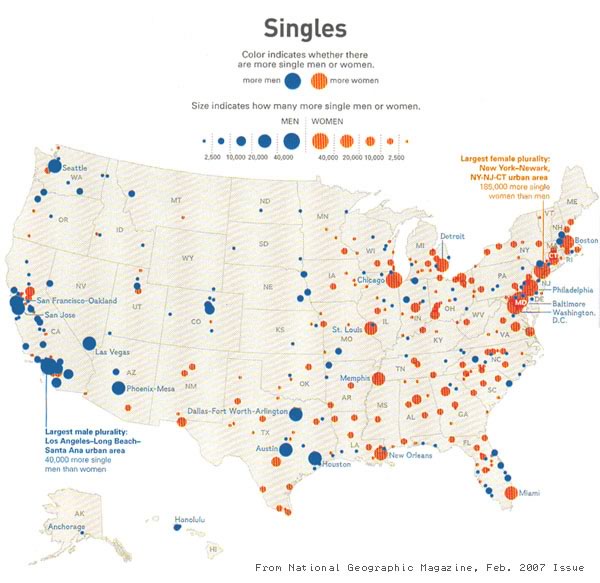
Just looking to sex does not adequately explain the rich tapestry of factors that influence reproductive decision making – in Makushi society and closer to home too. Different US regions are also home to variable sex ratios. Generally speaking, both rural areas and western states have more men than women. These male biased-sex ratios are associated with higher rates of marriage and relationship stability, and lower rates of female-headed households and children born out of wedlock. These findings, along with our Makushi study, all point to the strong commitment men make to relationships when partners are scarce, challenging simple sexual stereotypes.