The US space agency's Opportunity rover has now clocked more miles on Mars than any man-made vehicle to reach another celestial body, NASA said.
Since arriving on the Red Planet in 2004, the solar-powered robot has journeyed across 25 miles (40 kilometers) of Martian terrain.
That surpasses the previous record, held by the Soviet Union's Lunokhod 2 rover, which landed on the Moon in 1973.
"Opportunity has driven farther than any other wheeled vehicle on another world," said Mars Exploration Rover Project Manager John Callas of NASA's Jet Propulsion Laboratory (JPL) in Pasadena, California.
"This is so remarkable considering Opportunity was intended to drive about one kilometer and was never designed for distance."
Opportunity and its twin rover, Spirit -- now defunct -- discovered wet environmental conditions on ancient Mars, some of which are mild enough to have been favorable for life.
Opportunity is now exploring the Endeavour Crater on Mars.
Its next-generation robotic counterpart, the Curiosity rover, launched in 2012 and is tooling around near the Gale Crater on Mars.
NASA said that the Soviet Union's Lunokhod 2 rover landed on Earth's moon on January 15, 1973, and drove about 24.2 miles (39 kilometers) in less than five months.
Those figures are based on calculations recently made using images from NASA's Lunar Reconnaissance Orbiter (LRO) cameras that reveal Lunokhod 2's tracks, the US space agency said.
The world's largest solar boat, the catamaran PlanetSolar, will embark on a Greek mission to find one of the oldest sites inhabited by man in Europe, an organiser said Monday.
Starting on August 11, a team of Swiss and Greek scientists will seek a "prehistoric countryside" in the southeastern Peloponnese peninsula, University of Geneva researcher Julien Beck told AFP.
The month-long mission, jointly organised with the Swiss school of archaeology and the Greek culture ministry, will search around the Franchthi cave in the Argolic gulf, where early Europeans lived between the Paleolithic and Neolithic periods.
The cave was eventually abandoned around 3,000 BCE but scientists assume the inhabitants must have built a village nearby.
"This cave was inhabited continuously for around 35,000 years... and we have reason to believe that towards the end of the Neolithic era, the inhabitants moved to a neighbouring site that is now underwater," Beck said.
"If we could find this village, it would be among the oldest in Greece and Europe," he said.
PlanetSolar, built in Germany, is 31 metres (100 feet) long and is powered by over 500 square metres of solar panels.
The catamaran in 2012 became the first vessel to circumnavigate the globe purely on solar energy. It has an average speed of 7.5 knots, or 14 kilometres (8.6 miles) per hour.
Whilst in Greece it will also conduct geophysical research and assist underwater archaeologists in Aegean Sea surveys.
By Don Newgreen, Murdoch Childrens Research Institute and Jeffrey Craig, Murdoch Childrens Research Institute
Take a look at several domesticated mammal species and you might spot a number of similarities between them, including those cute floppy ears.
The famous naturalist and evolutionary theorist Charles Darwin even observed in the first chapter of his On the Origin of Species that: Not a single domestic animal can be named which has not in some country drooping ears […]
And it’s not just the ears. Domesticated animals share a fairly consistent set of differences from their wild ancestors such as smaller brains, smaller teeth, shorter curly tails and lighter and blotchy coats: a phenomenon called the “domestication syndrome”.
A paper published this week in the journal Genetics poses a new explanation as to why so many domesticated animals have such a similar set of traits.
Adam Wilkins, from South Africa’s Stellenbosch Institute of Advanced Study, and colleagues propose that human selection has, in domesticated species, altered the development of the neural crest, an organ system present during embryonic development.
The silver fox experiment
The dog has been befriended by humans for at least 11,000 years, longer than any other domesticated animal. They differ from their wild ancestor wolves in all the above listed features of domestication syndrome.
Dogs aren’t the only examples, of course. Humans have also domesticated cattle, horses, sheep, goats … the list goes on.
In the late 1950s, Russian fox-fur-farmer-turned-geneticist Dmitry Belyaev set up a long-term experiment to find out whether he could selectively breed the wildness out of the silver fox, which was hard to breed because of its aggressive nature.
In each generation of foxes, he bred from animals that showed the least aggression towards their captors.
It took him and his successor Lyudmilla Trut just 20 generations – only about 25 years – to create a line of silver foxes who from birth were tame enough to be kept as pets. For those who study evolution, this is an extraordinarily short time span.
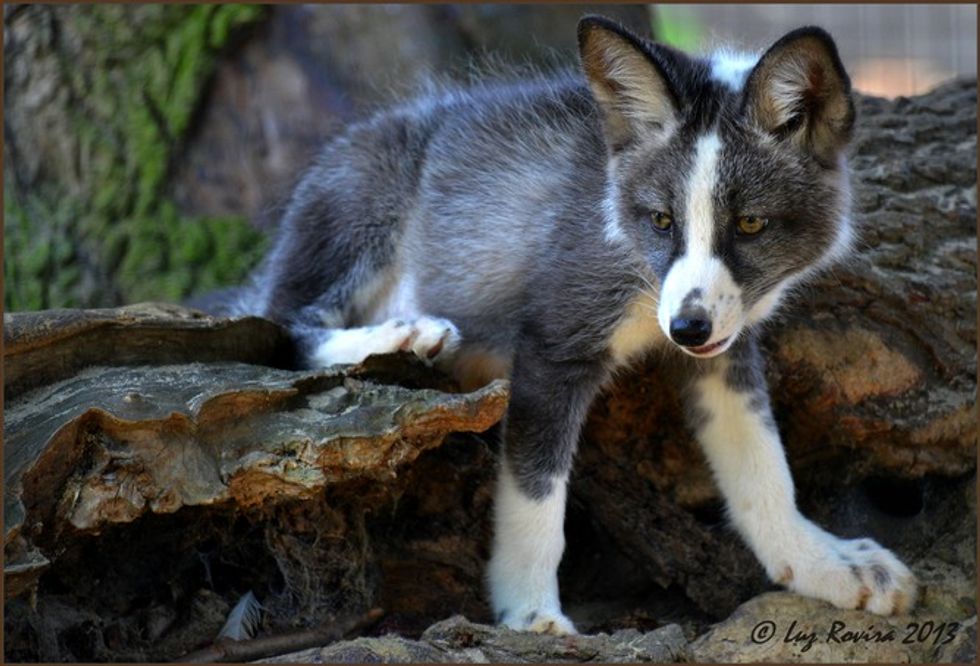
But that wasn’t the most surprising result. Although selected only for their temperament, the later generations of silver foxes also had shorter faces, smaller teeth, soft and droopy ears, curly tails and altered colour.
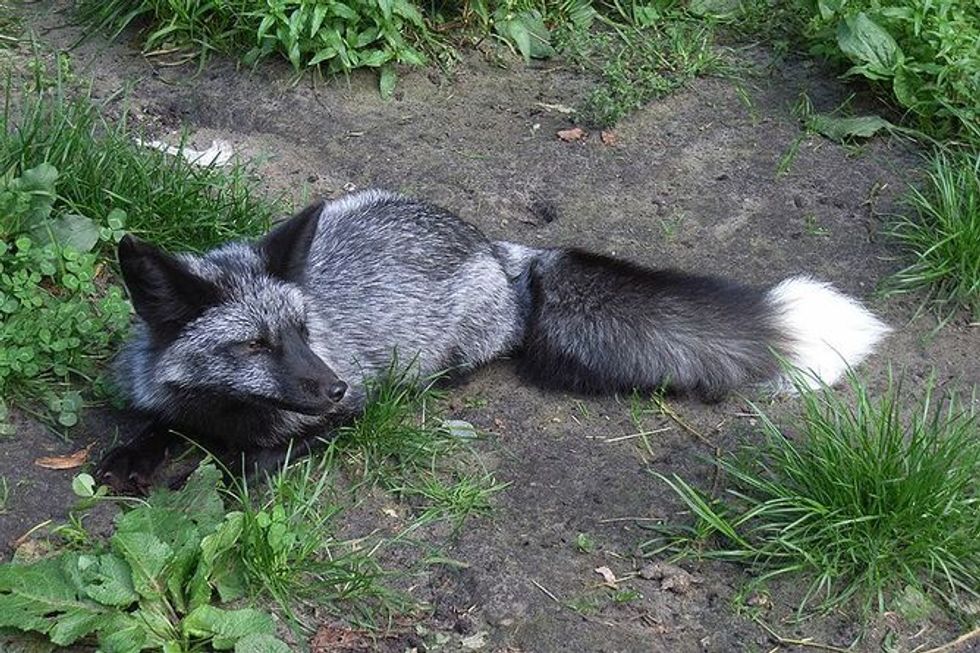
A domesticated silver fox, looking quite a bit more similar to Fido.
Humans might selectively breed for less “flighty” and less “fighty” beasts, but why should domesticated animals also show characteristic changes in other body features?
The neural crest
In 1868, the same year that Darwin published an entire monograph on domestication, Swiss anatomist Wilhelm His Sr described what became known as the embryonic neural crest.
Vertebrate embryos at an early stage of development consist of three “germ layers”. He described a strip of cells in the outer layer (ectoderm), between the part that produces skin and the part that produces the central nervous system, and named this the Zwischenstrang (“between-strand”). It’s now called the neural crest.
These cells migrate into the middle layer (mesoderm), which produces skeletal, connective, muscular, glandular and reproductive tissues.
In a developing embryo, neural crest (NC) cells migrate in the direction indicated by the red arrows, from the outer germ layer (ectoderm) to the middle germ layer (mesoderm). Once there, they form a range of body structures.
Each germ layer was thought to produce mutually-exclusive tissues, but the bombshell came 20 years later when Russian biologist Nikolai Kastschenko proposed that archetypal middle layer tissues such as the craniofacial skeleton originated in the neural crest.
It took more than 30 years before Kastschenko’s heretical observations were accepted.
Explaining domestication syndrome
Wilkins and colleagues now propose a hypothesis that links the development of the neural crest with the body changes that accompany domestication.
The neural crest produces not only facial skeletal and connective tissues, teeth and external ears but also pigment cells, nerves and adrenal glands, which mediate the “fight or flight” response.
Neural crest cells are also important for stimulating the development of parts of the forebrain and for several hormonal glands.
The researchers argue that the domestication process selects for pre-existing variants in a number of genes that affect neural crest development. This causes a modest reduction in neural crest cell number or activity. This in turn affects the broad range of structures derived from the neural crest, giving rise to domestication syndrome.
Interestingly, deleterious alterations in genes controlling neural crest development cause wide-ranging syndromes called neurocristopathies in humans and in animals.
The researchers bolster their argument using several examples including Treacher Collins, Mowat-Wilson and Waardenburg syndromes. Indeed, they suggest that the domestication syndrome resembles a mild multi-gene neurocristopathy.
Surprisingly, they fail to include Williams Syndrome, which allies a mild variation in facial development with an unusually friendly disposition, as illustrated in the last year’s French-Canadian film Gabrielle.
The genetic region associated with Williams syndrome has been identified as one of the many regions in the canine genome that varies genetically between dogs and their wild ancestors, wolves.
This new hypothesis proposes one intriguing answer to the domestication question originally identified by Darwin and illustrated by Belyaev and Trut: why do all the traits of domestication co-exist in multiple species?
It may be that neural crest contributions are so diverse that it’s possible to cherry-pick points of congruence to support any hypothesis. Nevertheless, the researchers suggest several lines of molecular genetic and functional experiments that can further put their ideas to the test.
Don Newgreen receives funding from National Health & Medical Research Council, Stem Cells Australia and Financial Markets Foundation for Children.
Jeffrey Craig receives funding from the National Health and Medical Research Council, the Financial Markets Foundation For Children and the Jack Brockhoff Foundation
The transportation sector is a major contributor to climate-changing carbon dioxide emissions, and, worldwide, it’s also one of the most vulnerable sectors to the effects of climate change, according to a new report.
In other words, climate change could mean “sun kinks” could warp train tracks in the heat, airplanes will be more expensive to fly, highway surfaces could soften in heat waves, roadways and bridges could be washed away in rising seas and storm surges, and storms in the open ocean could increase the cost and risks associated with shipping.
In the Fifth Assessment Report, the IPCC concluded that climate change brought about by the greenhouse gas emissions, mainly carbon dioxide, that humans release into the atmosphere will likely lead to more intense floods, heat waves and sea level rise, all of which could potentially damage transportation infrastructure.
Transportation could be both a cause and a casualty of climate change, according to the Cambridge-BSR report.
“The transport sector relies overwhelmingly on oil,” Angie Farrag-Thibault, a BSR associate director and a lead author of the report, said in a statement Monday. “Without action, greenhouse gas emissions from transportation will continue to rise. Fortunately, this report points to a large number of options for reducing emissions.”
The global transportation sector contributes about 25 percent of the world’s energy-related carbon emissions, and those emissions could double to 50 percent if countries and businesses don’t act soon to slash emissions, the report says.
More than half of global production of crude oil is used for transportation, and 94 percent of the energy used to fuel trains, airplanes, highway vehicles and ships is supplied by crude oil, according to the report.
If those emissions aren’t slashed, the report paints a bleak picture of how roads, rails, bridges, shipping and aviation could be affected.
Roadways could be impacted in a variety of ways: Asphalt pavement could be softened in heat waves, requiring resurfacing with more durable materials. Flooding in low-lying areas is likely to force highway departments to improve drainage on roads and maintain them more frequently. Bridges may need to be retrofitted to withstand greater flooding, costing $250 billion in the U.S. through 2065.
Railroads could be affected in similar ways, the report says, but high temperatures during heat waves could buckle tracks, and urban subway systems could be more exposed to flooding in the same way Hurricane Sandy severely damaged the New York City subway and New Jersey’s PATH train tunnels in 2012, paralyzing the city.
Shipping is highly vulnerable to climate change, too, as droughts could force inland shippers to use smaller vessels, especially in the Great Lakes, and inland waterways could be useable for fewer days, according to the report.
On the open ocean, more frequent storms could force ships to take longer routes through regions that are less prone to storms, costing shippers more.
Aviation could become vulnerable to climate change because heat waves could make it more costly to take off from some airports. Credit: Takashi Ota/flickr
Aviation could take a hit from climate change, too, the report says. In addition to weather-related cancellations and delays in extreme weather, turbulence in clear skies could increase over the Atlantic, leading to less comfortable flights for passengers.Airport runways could suffer the same effects from climate change as heat-vulnerable highways.
High heat also means that the air over airport runways is less dense, which decreases the amount of weight an airplane can carry and increases the necessary length of a runway in order for airplanes to take off safely. Reduced maximum takeoff weight of an aircraft could mean higher costs for airline travel, according to the report.
The solutions to the problems climate change poses for the transportation sector may be costly and complex, the report says. They primarily involve replacing fossil fuels with alternative energy sources, increasing vehicle efficiency, reducing demand for transportation and shifting that demand from modes of transportation that use a lot of energy to modes that are more efficient or use little energy at all, according to the report.
In other words, people should bike or take public transportation instead of driving.
Reimagining how cities are built is also critical, especially in the developing world where most new urbanization is expected to occur in the coming decades, Eliot Whittington, climate change director for the Cambridge Institute for Sustainability Leadership told Climate Central on Monday.
“One key change in terms of the way people around the world live is in city design,” he said. “A shift in city design that causes more densely populated cities and hence more use of public transport is a really key way to create a better quality of life and lower carbon emissions per person.”
Dense cities have a much smaller carbon footprint than sprawling ones because of the modes of transport they require, he said.
Focusing on making transportation more energy efficient and encouraging people to use modes of transport that emit less carbon dioxide is nearly as important as addressing the carbon emissions of the electric power sector, he said.
The grave of King Richard III, immortalised by Shakespeare as one of history's great villains, was opened up to the public on Saturday in central England.
The remains of the infamous ruler were found in 2012 under a car park in the city of Leicester.
Around a hundred visitors were on hand to watch city mayor Peter Soulsby cut the ribbon on the £4 million ($6.8 million, 5 million euro) new visitor centre at the discovery site.
Early arrivals at the building, in an abandoned school close to Richard's grave, were able to examine a replica of his skeleton made using a 3D printer.
One floor guides visitors through the epic story of the king's life and brutal death in the 1485 Battle of Bosworth that ended the War of the Roses, the 32-year conflict between two rival branches of the royal House of Plantagenet.
Another tells of the momentous and painstaking work carried out by archaeologists that led to the discovery and identification of the king in a makeshift grave at the former site of a medieval friary.
Only then can visitors examine the excavated grave, which the centre says has been "preserved in a quiet, respectful setting... fitting for the last resting place of a slain warrior and anointed monarch."
"On the actual grave, a light shows how the bones looked, so you get the effect of the skeleton lying in the grave," Leicester City Council spokeswoman Debra Reynolds told AFP.
"The feedback from people is really excellent, people are particularly enjoying the graveside area."
British judges in May finally ended a bitter debate over Richard's reburial, ruling that his remains should be laid to rest in a cathedral near to where he was found.
Shakespeare portrayed Richard as a scheming hunchback who ordered the murder of two young nephews barring his way to the throne.
Descendants of the ill-famed king had fought for his skeleton to be buried in York Minster, in the northern city that gave its name to Richard's royal house.
But the High Court said that there was no reason that Richard should not remain in Leicester.
"It is time for Richard III to be given a dignified reburial, and finally laid to rest," the judges said in their ruling.
British authorities have drawn up plans for a grand re-interment ceremony at Leicester Cathedral, which is due to take place early next year.
Richard, the 14th great-granduncle of Queen Elizabeth II, became the last English king to die in battle.
His death marked the end of the war between the houses of Lancaster and York -- named after their respective heraldic symbols of the red and white rose -- and the rise of the Tudor dynasty.
(Reuters) - Flooding is increasing in frequency along much of the U.S. coast, and the rate of increase is accelerating along the Gulf ofMexico and Atlantic coasts, a team of federal government scientists found in a study released Monday.
The study examined how often 45 tide gauges along the country’s shore exceeded National Weather Service flood thresholds across several decades. The researchers found that the frequency of flooding increased at 41 locations. Moreover, they found that the rate of increase was accelerating at 28 of those locations. The highest rates of increase were concentrated along the mid-Atlantic coast.
“We stress that in many areas, the frequency of nuisance flooding is already on an accelerating trajectory, and many other locations will soon follow” if trends in rising sea levels continue, the scientists wrote.
The thresholds are usually associated with minor flooding, also called nuisance flooding, which can overwhelm drainage systems, cause road closures and damage infrastructure not built to withstand frequent flooding or exposure to salt water. Such flooding is one of the more recognizable effects of rising seas, as opposed to less frequent but more damaging extreme storms, such as hurricanes, the scientists said.
In the 1950s, nuisance flooding occurred once every one to five years, the study found. By 2012, the frequency had increased to about once every three months at most NOAA gauges.
These storms “are no longer really extreme,” said William Sweet, a NOAA oceanographer and lead author of the study. “It takes a lesser storm to inundate similar (elevations).”
The study is the latest to examine whether minor flooding is increasing as seas rise. Reuters published the results of its own independent analysis earlier this month that found that the number of days a year that tidal waters reached or exceeded flood thresholds more than tripled in many places.
Another study, by Old Dominion University researchers Tal Ezer and Larry Atkinson, found that the U.S. East Coast is “a hotspot of accelerated flooding.” They also found that flooding outside of storm events has increased in frequency and duration. The results of their study are expected to be published later this year.
Among the NOAA study’s findings:
*The northeast Atlantic coast experienced a "significant increase" in nuisance flooding, largely because of the combination of rising sea levels and subsidence, whereby land sinks due to geological forces and the extraction of groundwater.
*In the southeast Atlantic, five of eight gauges “are now on an accelerating nuisance flood frequency trajectory.”
*Four of the eight gauges on the Gulf coast showed accelerating increases in minor flooding.
Such flooding events “are only going to become more noticeable and much more severe in the coming decades” as the seas continue to rise, Sweet said.
The scientists warned in their report that coastal communities may face a “time horizon” when public and private infrastructure “will become increasingly compromised by tidal flooding.” That time is dependent on how fast seas rise --- something scientists can’t predict.
“When that day comes, these impacts are going to be accelerated,” Sweet said, “and that’s going to spell all sorts of issues for communities when it comes to adaptation and resilience.”
Although the Koch brothers help fund Republican candidates, who often express creationist beliefs, they promote more mainstream scientific endeavors through their charitable foundations.
Billionaire industrialist David Koch indulges his fascination for paleontology through massive contributions to museums and research, reported Salon, despite relying on lawmakers who are hostile to science to advance his pro-business libertarian agenda.
Koch, who developed a passion for dinosaurs during a boyhood trip to the American Museum of Natural History in New York, donated $35 million in April to the National Museum of Natural History in Washington, D.C.
That’s the largest single gift in the museum’s history, and it pays for most of the museum’s $45 million renovation project to expand its paleontology exhibit space.
Koch and his brother, Charles, spend much more than that campaigning against environmental regulations, unions, and other threats to their corporate profits.
But unlike fellow conservative Michael Peroutka – who donated unusually well-preserved allosaurus fossils to the Creation Museum – David Koch trusts the scientific view on evolution.
“What's amazing is how much Darwin got right 150 years ago,” David Koch said in a 2009 interview with Archaeology. “It's staggering what he got right. He got enormously more right on evolution than what he got wrong.”
He told the magazine that science teachers, not lawmakers or school boards, should decide what gets taught in science class.
“I think politicians should really stay out of it and allow scientists to present the facts and discoveries,” David Koch said. “I hate to see it politicized.”
He suggested this view was in line with his strong libertarian beliefs.
“It's like saying what role should politics play in, for instance, religion?” David Koch said. “I think it should be up to individuals to decide what they believe. So often politicians are totally uninformed about scientific facts.”
With the announcement of an inquiry into the murder of Alexander Litvinenko, talk of poisons is back in the news. There are many articles with lists of the most poisonous substances, which are often gathered based on their acute toxicity as measured by something called LD50. But acute toxicity is only one factor that needs to be considered, and relying solely on LD50 or similar measures is overly simplistic.
LD50 is a measure of the dose of a substance needed to kill half of a given population, usually of mice. It is usually measured in dosage needed per unit weight of the animal. This seems a cruel but objective way to quantify how deadly a given substance is, but overall toxicity is more complex than that.
Toxicologists are aware of the limitations of LD50, and for technical, ethical, and legal reasons, measuring that values in animals is increasingly less common. So here is a list of substances that are more poisonous than their LD50 values might indicate.
Even though some of them are used in the cosmetic industry (including in botox), the botulinum family of neurotoxins includes the most toxic substances known to man. The LD50 values reported for these seven proteins are about 5 ng/kg (ng stands for nanogram, which is a billionth of a gram).
Non-lethal quantities injected into mice can paralyse the affected limb for as long as a month. The exquisite selectivity of these toxins for certain types of cells in the human body is remarkable, but also means that many species (including all invertebrates) are simply unaffected.
Like botulinum toxins, most snake venoms are a mixture of many proteins which are often neurotoxins with LD50s below 1 mg/kg. A crucial complication here, however, is the speed of activity. While some snake venoms may be highly potent, other, less potent venoms might kill faster. This is vital information. A potent but slow-acting venom might leave enough time to intervene, while a fast-acting poison with a lower LD50 might kill you before you can get help.
Elemental arsenic has an LD50 of around 13 mg/kg – orders of magnitude higher than some of the substances on this list. Despite that, the Agency for Toxic Substances and Disease Registry gives it the top rank on its priority list of hazardous substances.
This highlights a key consideration – how common a substance is and how likely you are to be exposed to it. Ex-spies notwithstanding, your odds of being exposed to polonium or botulinum in lethal quantities are negligible. But chronic exposure to toxic metals is a real problem for many people around the world, and a simple measure of acute lethality such as LD50 simply cannot capture this.
4. Polonium-210
The radioisotope used to kill Alexander Litvinenko is extraordinarily toxic even in quantities less than a billionth of a gram. The LD50 of this compound is not a property of its chemistry. While other toxic metals such as mercury and arsenic kill through the interaction of the metal with the body, polonium kills by emitting radiation which shreds sensitive biomolecules, such as DNA, and kills cells. Its half-life – the time taken for half of the ingested material to decay – is about a month, leading to a slow death by radiation poisoning.
The harmful effects of mercury are perhaps most famously exemplified by Lewis Carroll’s Mad Hatter, who was chronically exposed to mercury while plying his trade. But the toxicity of mercury is actually far more complicated, depending critically upon the kind of mercury involved. Organic and inorganic mercury compounds have different effects and hence LD50 values (which are typically between 1mg/kg and 100 mg/kg).
Pure mercury is considerably less toxic, as dramatically illustrated by the case of a dental worker who attempted suicide by injecting the liquid element into her veins. Ten months later she was effectively symptom-free, despite having mercury distributed throughout her lungs.
Andrew Bissette does not work for, consult to, own shares in or receive funding from any company or organisation that would benefit from this article, and has no relevant affiliations.
David Whitworth of Aberystwyth University in Wales studied the bacterial transfer from a number of common greetings, including the fist-bump, the high-five, and the handshake, and found that the fist-bump only communicates one-twentieth as much bacterial matter as a handshake and one-fifth as much as a high-five.
The reason that fist-bumps are more sanitary is simply a matter of surface area. A fist bump entails far less contact between the two hands, and for a far shorter duration.
During cold and flu season, Whitworth emphasized the importance of using a hand greeting that doesn't facilitate the transmission of bacterial and viral material -- especially in hospitals, where despite the focus placed on hand-washing, handshakes are still the most common form of greeting, according to Mary Lou Manning, president-elect of the Association for Professionals in Infection Control and Epidemiology.
Despite its long history of being used as a greeting by germophobic individuals like television's Howie Mandel, when the president was first observed using the gesture in 2008, Fox News' E.D. Hill asked whether it was "a fist bump? A pound? A terrorist fist jab?" before claiming that it is a "gesture everyone seems to interpret differently."
Edinburgh University experts say asteroid hit Earth at a time when ecosystems had been weakened by a loss of biodiversity
Dinosaurs might have survived the catastrophic impact that ended their reign had the devastating asteroid that slammed into the Earth arrived at a "more convenient time", a scientist has claimed. As a result humans would probably not exist.
The violent collision 66m years ago, which occurred in the area that is now Mexico, triggered tsunamis across the oceans, caused powerful earthquakes and released enough heat to start many fires.
Material thrown into the air descended as acid rain, and also blocked the sun's warmth, cooling the Earth temporarily, perhaps by tens of degrees celsius. A thick blanket of dust that was thrown up darkened the globe, affecting plants and other photosynthesising life.
The devastation wrought by the impact almost certainly explains the sudden death of the land-based dinosaurs, according to fresh analysis of the latest data.
But one scientist on the team said the beasts might have prevailed had the asteroid struck earlier or later than it did.
Steve Brusatte, a paleontologist at Edinburgh University, was in an international team of researchers who reviewed the evidence on dinosaur extinction. The group looked at work done on prehistoric climate and temperatures, changes in sea levels, volcanic activity and biodiversity, before reaching a consensus that the asteroid was the prime culprit.
"The asteroid almost certainly did it but it just so happened to hit at a bad time when dinosaur ecosystems had been weakened by a loss of diversity," Brusatte said. "If the asteroid had hit a few million years earlier, or a few million years later, then dinosaurs probably wouldn't have gone extinct."
The scientists' report, published in Biological Reviews, found that while, largely, the dinosaurs were faring well at the time of the asteroid impact, the big plant-eating types, including the horned triceratops and duck-billed dinosaurs, had suffered a loss of biodiversity.
The loss of biodiversity in plant-eating dinosaurs left fewer animals at the bottom of the food chain for larger beasts to prey on.
"The decline made those ecosystems at the very end of the cretaceous [period], when the asteroid hit, considerably more vulnerable to collapse than those ecosystems that existed even a few million years before," said Brusatte. "There is strong reason to believe that if the asteroid had hit a few million years earlier dinosaurs would have been better able to cope."
Dinosaur biodiversity rose and fell throughout their time on Earth over 150m years. Brusatte said he suspected that given a few million years more the large plant-eaters would have recovered again, making the ecosystem more able to withstand a massive impact.
The asteroid, which had a diameter of about six miles struck the Yucatan peninsula and left a crater, now known as the Chicxulub, measuring 12 miles deep by 124 miles wide.
The collision wiped out about 80% of the Earth's species alive on Earth at the time. The non-avian dinosaurs were killed off completely, but others survived and became the direct ancestors of birds.
Though devastating for the dinosaurs, the asteroid strike cleared the way for other animals to gain ground and thrive on the planet.
"If the asteroid didn't hit, I have no reason to believe they'd have gone extinct. There is a good chance they would still be with us today. And if dinosaurs didn't go extinct, then mammals would have never had their opportunity to blossom. So if it wasn't for that asteroid, then humans probably wouldn't be here. It's as simple as that," Brusatte said.
Strong as the evidence is for the asteroid wiping out the dinosaurs, there are huge gaps in dinosaur experts' knowledge.
There is only one site, the Hell Creek rock formation in the US, spread across Wyoming, the Dakotas and Montana, that has a good fossil record covering the final years of the cretaceous period. To round out the picture of the dinosaurs' fate, far more fossils from other regions are needed.
Paul Barrett, a paleontologist and co-author of the paper, based at the Natural History Museum, in London, said: "The great dinosaur mass extinction has been one of the world's biggest mysteries and has captured the imaginations of many people. Although some types of dinosaurs were already declining in numbers before the famous asteroid impact, in most cases this impact was the smoking gun for the cause of the extinction.
"This new work provides the best evidence for sudden dinosaur extinction and for tying this event to the asteroid impact rather than other possible causes such as the longer-term effects of the extensive volcanic activity that occurred at the end of the cretaceous."
One in almost 3,000 blood donors in England carry the hepatitis E virus (HEV) which can cause liver disease, said a study Monday that sparked a call for screening in Europe.
Published on World Hepatitis Day, a study in The Lancet medical journal said a systematic analysis of donated blood showed that 79 out of 225,000 donations were infected with a version of the virus, genotype 3, most prevalent in developed countries.
Humans can contract it from infected pigs and contaminated blood or drinking water.
Transmission of the virus had occurred in 18 of 43 exposed blood recipients, the authors said.
One developed mild clinical hepatitis.
"HEV genotype 3 infections are widespread in the English population, including blood donors," said principal investigator Richard Tedder from the Blood Borne Virus Unit at Public Health England.
"We estimate that between 80,000 and 100,000 human HEV infections are likely to have occurred in England during the year of our study."
Similar prevalences had previously been reported in Sweden in Germany, suggesting the virus was widespread on the European continent, said the study.
Most people who contract the virus recover from symptoms including appetite loss and fever without treatment, but it can be dangerous for those with a suppressed immune systems, like cancer patients and organ transplant recipients, as well as pregnant women.
There is no cure.
The study authors said the overall risk was slight, and "there appears to be no pressing need at this time for blood donations to be screened."
In a comment carried by The Lancet, however, Jean-Michel Pawlotsky from the Henri Mondor hospital in Paris, said this conclusion was "surprising".
On his own reading of the results, "systematic screening of blood components for markers of hepatitis E infection should be implemented in areas where HEV is endemic" -- including the European Union.
Two other papers carried by the journal reported successes in trials with two pill-form antiviral drugs in treating hepatitis C, a blood-borne liver disease that affects about 150 million people worldwide and is often transmitted through needle-sharing.
It is a major cause of liver failure and cancer.
The two drug regimens hold promise for a safer, shorter and simpler cure, said the papers -- one took only 12 weeks to work compared to older injection-pill combination treatments that could last up to a year.
"In the future, very-short-duration, all-oral (antivirals) should improve treatment uptake and success," Ed Gane, director of the New Zealand Liver Transplant Unit at Auckland City Hospital wrote in a comment.
The only barrier to achieving this goal would be the cost of treatment, he added.
An American doctor battling West Africa's Ebola epidemic has himself fallen sick with the disease in Liberia, his aid agency said.
Samaritan's Purse, a Christian charity, said Dr Kent Brantly had been isolated at the group's Ebola treatment center at the ELWA hospital in the Liberian capital Monrovia.
"Dr. Brantly is married with two children," the group said, in a statement posted to its website on Saturday.
"Samaritan?s Purse is committed to doing everything possible to help Dr. Brantly during this time of crisis. We ask everyone to please pray for him and his family."
Brantly is the medical director of the Samaritan's Purse Ebola case management center in Liberia, where the agency continues to work with Liberian and international health officials to contain the outbreak.
Ebola is an haemorrhagic fever with a very high fatality rate. Liberia, Sierra Leone and Guinea have borne the brunt of the recent epidemic, and last week Nigeria recorded its first death.
As of July 20, the number of Ebola cases recorded in the months-long epidemic stood at 1,093, including more than 660 deaths, according to the World Health Organization.
The virus can fell victims within days, causing severe fever and muscle pain, vomiting, diarrhoea and, in some cases, organ failure and unstoppable bleeding.
Ebola is believed to be carried by animals hunted for meat, notably bats.
It spreads among humans via bodily fluids including sweat, meaning you can get sick from touching an infected person.
With no vaccine, patients believed to have caught the virus must be isolated to prevent further contagion.
Ebola first emerged in 1976 in what is now the Democratic Republic of Congo, and is named after a river there.
Greek-Cypriot engineer wins European Inventor Award for USB device that decodes patient's DNA within minutes outside a lab
There was a time when the closest Christofer Toumazou thought he would get to the hallowed halls of Imperial College in London was when he was walking down Exhibition road on the way to the science museum, with the workshops of the esteemed institution visible on his right.
But at age 23, and without an O level or A level – let alone an Oxbridge degree – on his CV, the young engineer was accepted for a postdoctoral position in the university, beginning a career from there which would see him create a combined digital and analogue mobile phone, an artificial pancreas for type one diabetics and a wireless heart monitor, among other inventions.
It is his latest creation, however, which has sparked the most interest and last month earned him a European Inventor award. Using a small silicon microchip in a USB, a 'lab on a chip' as it has been coined, DNA data can be analysed within minutes and outside a laboratory.
The new technology is aimed at identifying predispositions for hereditary diseases like diabetes and prescribing the exact right dosage for medications, cutting down on the cost of current DNA testing machines.
"My dream was to have a handheld consumer device with … a little USB stick that could look at rapidly screening for genetic mutations of particular diseases, whether it is a predisposition to type two diabetes [or] whether to a type of breast cancer," said Toumazou in his office in the Institute of Biomedical Engineering.
The new DNA analysis method is the latest instalment in a far from traditional career path for the Greek-Cypriot. Having left school in Cheltenham at 16 with a "few CSEs", the most typical route for him to follow would have been in the family catering business until he became inspired by an aunt's husband who was an engineer and from there developed an interest in electrical engineering.
Encouraged to do a one year radio and electronics certificate – when the "whole Greek Cypriot contingent of Cheltenham turned up" on his first day – he says he found the environment in which he wanted to thrive and went on to a two year general engineering course, a degree at the then Oxford polytechnic and later a PhD. By 23, he had applied for a postdoctoral position at Imperial College and was offered it the same day.
The position involved working with industry to reduce the size of a satellite phone at a time when his interest was in analogue – speech, sound and vision – electronics. Thaksin Shinawatra, the former Thai prime minister who then ran a mobile phone operator, asked him to make a combined digital and analogue mobile phone in the 90s, which led to the establishment of Toumaz Technology, a commercial spin-off.
His next inspiration came in combining the biological and electronic, working on cochlear implants and directing Toumazou towards healthcare. "I was very keen on bringing medical grade technology to the consumer," he said.
Later came the Sensium, a processor termed a "digital plaster" which could monitor vital health signs – heart rate, respiration and temperature among others – of patients and then send them to a nurses' station, cutting down on the gaps between observations and leading to prioritisation of patients in accident and emergency departments.
At around the same time, his son Marcus – now in his early 20s – got renal failure when he was nine years old. "For the first time I was on the receiving side of what medical technology was like rather than being in a plush environment trying to develop all these super duper widgets and gadgets and it really, really frightened me," he said.
This personal development led him to focus on technology which could detect hereditary diseases like his son had which, while it would not have prevented it, would have been able to help manage his condition better.
Describing his DNA analysis system as his "simplest invention but most significant", Toumazou focuses on the fact that humans differ by 0.1%. That difference, he says, shows whether people can metabolise drugs properly and whether there are different genetic conditions present.
His invention uses small silicon microchips which can identify genetic differences which dictate a person's inclination to hereditary diseases like diabetes or how they will react to a drug like warfarin, which is used to treat blood clots.
To use the 'lab on a chip' system, a sample of saliva or a swab from inside the mouth is taken and put inside a container with the chip inside. The chip is then put inside a USB stick and plugged into a computer after which results are returned within about 30 minutes.
One of the key benefits is the speed of the return of information, said Toumazou. In a situation where a drug is needed to counter a hospital-based infection, the new technology could help determine what drug is needed in a short space of time instead of waiting and risking fatality. Cost savings on conventional DNA-sequencing machines opens the possibility for use in areas like sub-Saharan Africa where clinics can be poorly equipped.
DNA Electronics, the company set up by Toumazou around the technology, licences out its patents to companies including Roche, Life Technologies and the National Institute for Health Research of the NHS.
The technology has also been licensed out to Geneu, a cosmetics company based on New Bond Street where bespoke anti-ageing products are created based on DNA testing. Toumazou says "real science" will get recognised in the industry where there is so much "placebo science" and will help in wider acceptance of his invention.
"If it gets recognised, then it will help with my big picture of getting consumer acceptance. It takes the stigma away from it being a medial device and then I can go back to the big picture and it is all about lifestyle," he said.
How it Works
The DNA testing takes place on the "lab on a chip" where organic semiconductors and sensors which use tiny amounts of chemicals do tests on the spot. The chip can recognise a genetic mutation in a sample which is placed on it and return the results in minutes. This allows the identification of certain hereditary diseases like diabetes. It is through this technology that Toumazou claims doctors will soon be looking at a patient's future medical records instead of their past.