As the sports cardiology director at the University of Colorado Anschutz Medical Campus, I’m often asked how much and what kind of exercise is necessary to get the benefits of exercise. Many people also wonder about the risks of exercise, and what happens if you exercise too much.
The American Heart Association generally recommends 150 minutes of moderate-intensity exercise, such as brisk walking, or 75 minutes of vigorous-intensity exercise, such as running, each week. It also recommends muscle strengthening exercises at least twice per week.
When people exceed these guidelines, the heart may remodel itself in response – that is, it begins to change its size and shape. As a result, heart function may also change. These changes in heart structure and function among people who engage in high levels of exercise are referred to as the athletic heart, or athlete’s heart. Athletic heart doesn’t necessarily cause problems, but in some people it can increase the risk of certain heart issues.
What is athletic heart?
To understand how exercise affects the heart, it’s important to consider what kind of exercise you’re participating in.
Exercise is generally divided into two broad categories: dynamic and static.
Dynamic exercises, like running, cross-country skiing and soccer, require the heart to pump an increased amount of blood, compared to the amount delivered to the body at rest, in order to sustain the activity. For example, when running, the amount of blood the heart pumps to the body may increase by threefold to fivefold compared to at rest.
Static exercises, like weightlifting, gymnastics or rock climbing, require the body to use skeletal muscle in order to push or pull heavy amounts of weight. While the heart does pump more blood to skeletal muscles that are working during these activities, these kinds of exercises depend on a muscle’s ability to move the weight. For example, in order to do curls with dumbbells, the biceps must be strong enough to lift the desired weight.

Cycling involves both dynamic and static exercise. Judit Murcia/Unsplash, CC BY-SA
Some exercises, like rowing or cycling, are both highly dynamic and highly static because they require the heart to pump large amounts of blood while simultaneously requiring a large amount of muscle strength to sustain effort.
It is important to distinguish between dynamic and static exercise because the heart adapts differently according to the type of exercise you engage in over time. Dynamic exercise increases the volume of blood pumping through the heart and can cause the heart to become enlarged, or dilated, over time. Static exercise increases the amount of pressure on the heart and can also cause it to become enlarged over time but with thickened walls.
Who develops athletic heart?
Exercise that exceeds guidelines, such as exercising more than an hour most days of the week, may lead to development of athletic heart. Athletic heart commonly occurs among endurance athletes, who regularly compete in activities like marathons or other long-duration events. Many exercise several hours per day and more than 12 to 15 hours per week.
Among runners, for example, the heart remodels itself in response to having to pump a high volume of blood. As a result, the chambers of the heart enlarge to hold and pump more blood. Among weightlifters, the heart remodels itself by thickening in response to the increase in pressure applied on the heart.
Exercise is good for the body, and athletic heart results from a lifelong commitment to an activity that promotes good health. But there may be some issues that arise from an athletic heart.
First, athletes with markedly enlarged hearts may be at risk of developing atrial fibrillation, which is abnormal heart rhythms that typically occur among older adults or people with high blood pressure or heart failure. Abnormal heart rhythms are worrisome because they may lead to a stroke.
There are many potential reasons atrial fibrillation occurs in athletes. A dilated atrium – the top chamber in the heart – may become inflamed and develop scar tissue, increasing the risk of atrial fibrillation. Stress and environmental factors may also work together to increase the risk of arrhythmia.
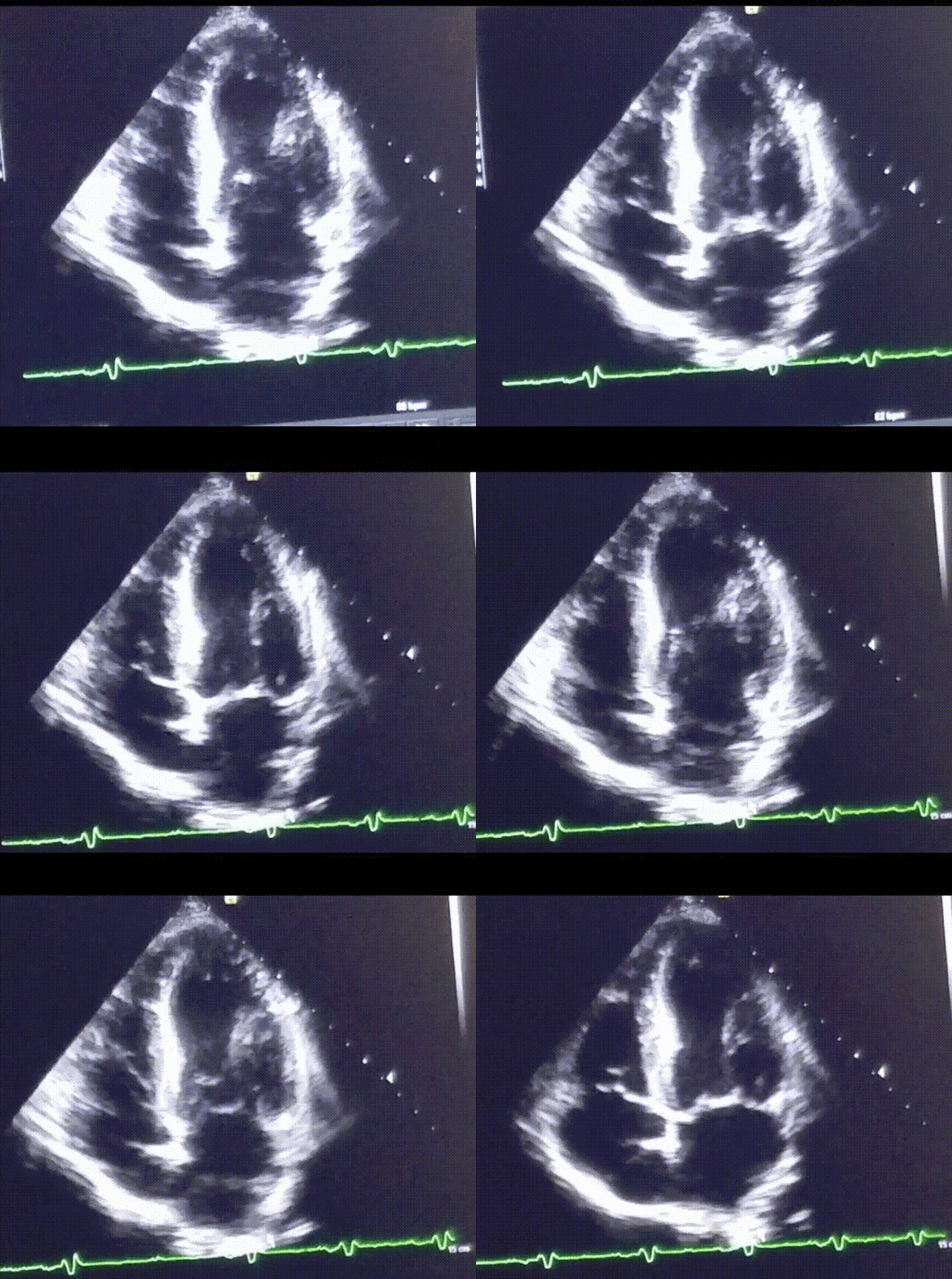
This is an echocardiogram of a 30-year-old athlete with an enlarged heart. Runandbike/Wikimedia Commons, CC BY-SA
Coronary artery calcification, or CAC, is another concern among elite athletes. Coronary artery calcification, which commonly occurs in older adults or those with risk factors for coronary artery disease, increases the risk of having a heart attack or stroke. In recent years, doctors have been using imaging tests to monitor calcium buildup in the arteries of their patients to try to determine their risk of heart attack or stroke over time.
It is not entirely clear why elite athletes develop coronary artery calcification. Fortunately, it does not appear that athletes have an increased risk of heart attack, even among those with very high levels of CAC. For example, a large study of almost 22,000 participants found that even athletes who engaged in high amounts of exercise and had elevated levels of CAC did not have an increased risk of death from cardiovascular disease over a decade of follow-up.
Some athletes are appropriately concerned about having calcium buildup in their heart arteries and may wonder whether or not they should be taking medications like aspirin or statins. But risks vary from person to person, so anyone concerned about CAC should talk to their doctor
Putting exercise in its place
Though elite athletes may have an increased risk of developing athletic heart, exercise undoubtedly remains one of, if not the best, methods to maintain a healthy lifestyle.
For example, if someone does not exercise routinely, their heart will become stiff and not pump blood as well as it once did. Routine exercise – especially dynamic exercise like running – maintains a compliant heart and prevents stiffening. A compliant heart will expand a lot more as it fills with blood and, in turn, pump out more blood with each heartbeat. A stiff heart has difficulty filling up with blood and has difficulty pumping blood through the body.

Regular exercise can help keep your heart young. Viacheslav Peretiatko/iStock via Getty Images Plus
Generally, routine exercise throughout adulthood encourages the heart to remain strong and flexible even in old age. Even if someone were only to begin regularly exercising in their 40s to 50s, it is possible to reverse some of the effects of sedentary aging.
For example, a 2018 study of 53 sedentary people mostly in their early 50s found that those who participated in a two-year exercise training program using a combination of running, cycling and elliptical exercise had hearts that became more compliant compared to the hearts of those who did not exercise.
It is never too late to start exercising. Routinely following exercise guidelines can help promote physical and mental health and help your heart stay young throughout your life.
William Cornwell, Associate Professor of Cardiology, University of Colorado Anschutz Medical Campus
This article is republished from The Conversation under a Creative Commons license. Read the original article.










 US Astronaut Edwin "Buzz" Aldrin is shown walking near the Lunar Module on July 20, 1969, during the Apollo 11 space mission © Neil ARMSTRONG / NASA/AFP/File
 In 2020, Chang'e-5 carried out China's first lunar sample return mission from a region known as Oceanus Procellarum, or the Ocean of Storms © STR / AFP/File
 A scanning electron microscope image of the hydrated tardigrade, Ramazzottius varieornatus © HO / NATURE PUBLISHING GROUP/AFP/File
 Baleen whale songs can traverse great distances through the water © Elliott Hazen / Stanford University/AFP








 State Sen. Scott Wiener, a San Francisco Democrat, addresses lawmakers on the first day of session in the California Senate, on Jan. 3, 2024. Photo by Fred Greaves for CalMatters Photo by Fred Greaves for CalMatters
.gif)