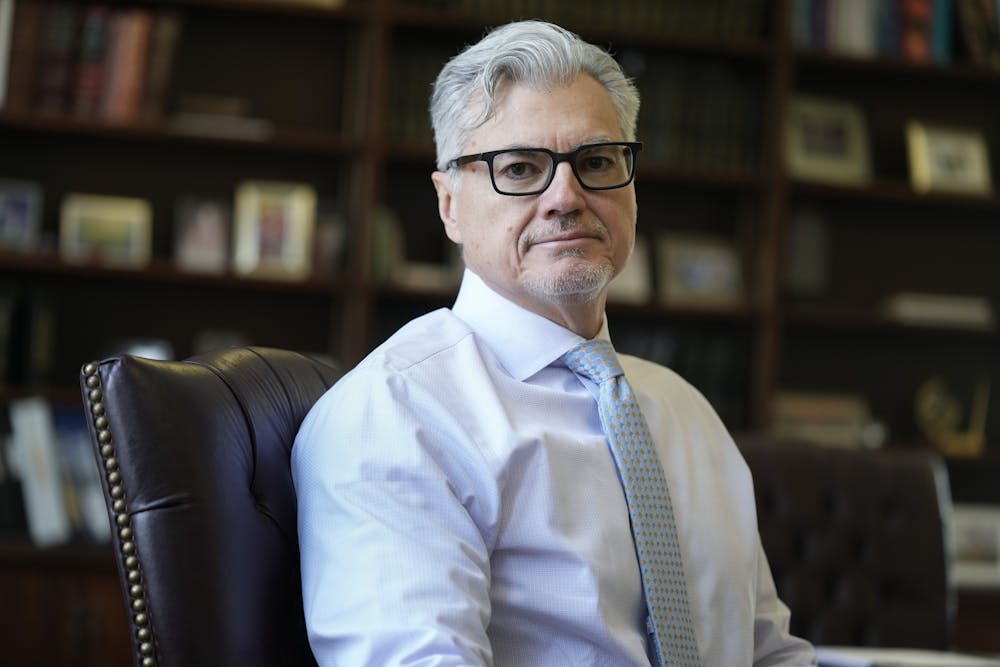
Samuel Alito lied — and the Deep South proved it
Friends,
When I learned what Samuel Alito and the other Republican appointees to the Supreme Court did to the Voting Rights Act last week, I thought of Mickey.
(Forgive me if I’ve already told you about him, but he was very important to me.)
I met Mickey the summer after third grade. His family had rented one of the summer cabins in the Adirondack Mountains where my grandmother also had a tiny summer cabin. I was eight, and Mickey was a teenager. We were not friends, yet I came to love him.
Mickey was kind and gentle, with a ready smile. I don’t recall asking him to protect me. He wasn’t the kind of hulking kid I usually chose as a protector from bullies who’d torment and ridicule me. Mickey was on the short side and thin. He wore a sailor’s cap and seemed forever cheerful. I don’t remember him fighting to defend me or even quieting the kids who made fun of me, but I do remember his warmth and reassuring presence. His calm good nature seemed to cast a positive spell over kids who might otherwise turn to teasing or bullying.
Years went by and I grew into a teenager who no longer needed older boys to protect me from bullies, and I lost track of Mickey.
It wasn’t until September 1964, the start of my freshman year at Dartmouth College, that I heard what had happened to him.
Early that summer, Mickey — whose full name was Michael Schwerner — had traveled to Mississippi. The Civil Rights Movement was gaining strength. Martin Luther King Jr. had given his famous “I Have a Dream” speech at the August 1963 March on Washington, where 250,000 people had gathered at the Lincoln Memorial to hear him.
“Freedom Summer” of 1964 had brought college students, both Black and white, Mickey among them, from northern schools together with Black people from Mississippi to educate and register Black voters, under the aegis of the Student Nonviolent Coordinating Committee (SNCC).
Mississippi was chosen because only 7 percent of the state’s eligible Black voters were registered, in a state that was about 40 percent Black. Most had been frozen out of the polls with poll taxes, subjective literacy tests, and brutality. It had been that way since 1877. The system was enforced by white supremacists who could commit crimes with impunity because the entire region had become a one-party state run by white supremacists.
Mickey was among the first wave of volunteers to arrive in Mississippi for Freedom Summer. On the afternoon of June 21, he and two other student volunteers — Andrew Goodman, also white, and James Chaney, a young Black man — were driving near the town of Philadelphia when Neshoba County Deputy Sheriff Cecil Ray Price stopped them for allegedly speeding. Price locked them up in the local jail. That night, after they paid their speeding ticket and left the jail, Price followed them in his police car, stopped them again, ordered them into his car, and took them down a deserted road where he turned them over to a group of his fellow Ku Klux Klan members. They beat Mickey, Goodman, and Chaney with chains. Then they killed them and buried their bodies in an earthen dam under construction.
For weeks, no one knew what had happened to the three volunteers. Lyndon Johnson used concern over their disappearance to pressure the House to pass the Civil Rights Act of 1964 into law on July 2.
On July 16, a little more than three weeks after Chaney, Goodman, and Schwerner disappeared, and two weeks after Johnson signed the Civil Rights Act, Senator Barry Goldwater accepted the Republican nomination for president at the Cow Palace in Daly City, California. Goldwater told Republican delegates that “extremism in the defense of liberty is no vice. And … moderation in the pursuit of justice is no virtue.”
Mickey’s body and those of Chaney and Goodman were found on August 4. They were illustrations of extremism in the defense of what white supremacists defined as liberty.
The state of Mississippi refused to bring murder charges against any of the killers, but eventually Price and Neshoba County Sheriff Laurence Rainey, also a Klan member, and sixteen others, including Samuel Bowers, the Imperial Wizard of Mississippi’s White Knights of the Ku Klux Klan, were arraigned for the federal crime of conspiracy to violate the civil rights of the murdered young men. An all-white jury found seven of them guilty, including Price and Bowers. After several unsuccessful appeals, each received a sentence of between three and 10 years. None would spend more than six years behind bars.
When the news reached me that Mickey had been beaten and murdered by white supremacists — by adult bullies who would stop at nothing to prevent Black people from exercising their right to vote — something snapped inside me. It was as if I had gotten a new pair of eyes and began to see everything differently. Before then, I understood bullying as a few kids picking on me for being short, making me feel bad about myself. After I learned what happened to Mickey, I began to see bullying on a larger scale, all around me: Black people bullied by whites; workers bullied by employers; girls and women bullied by men; the disabled or gay or poor or sick or immigrant bullied by politicians, insurance companies, landlords, and bigots. I saw the powerful and the powerless, the exploiters and the exploited.
It seemed as if the world had changed, when in fact it was I who had changed. I had a different understanding of the meaning of injustice. It became as personal to me as were the bullies who had called me names and threatened me in the boys’ room and on the playground — but larger, more encompassing, more urgent.
In 1965, Congress passed the Voting Rights Act, protecting the right of Black people to vote.
After that, the stranglehold of the white supremacists on the one-party South began to loosen. At the center of the law’s success was Section 5, commonly referred to as the “coverage formula,” which determined those states that had to receive clearance from the Justice Department before changing their election rules, based on their histories of race-based voter discrimination.
Another critical part of the law was Section 2, which prohibits states and political subdivisions from imposing voting qualifications, standards, or practices that discriminate on the basis of race, color, or membership in a language minority group. It forbids any election rule that results in a denial or abridgment of the right to vote, aimed at preventing vote dilution, such as discriminatory redistricting.
In the 20 years following the law’s passage, the disparity in registration rates between white and Black people dropped from nearly 30 percent in the early 1960s to 8 percent. Based on its continuing success, the Voting Rights Act was repeatedly reauthorized by Congress. But the forces of racism and violence did not disappear.
On August 3, 1980, Ronald Reagan launched his presidential campaign with a rally at the Neshoba County Fair, only a few miles from where Cecil Ray Price had stopped Schwerner, Chaney, and Goodman on that fateful night 16 years earlier. In defending “states’ rights” that day, Reagan, the cheerful “morning in America” candidate, was sending a dark dog-whistle to racist bullies, telling them he was on their side.
Thirty-three years later, on June 25, 2013, the Supreme Court struck down the coverage formula in the Voting Rights Act, in the case Shelby County v. Holder. The court’s five conservatives decided that the formula was out of date, despite Congress’s repeated reauthorizations, effectively ending pre-clearance. The court’s opinion was written by Chief Justice John Roberts and joined by Samuel Alito, Antonin Scalia, Anthony Kennedy, and Clarence Thomas. Reagan had put Scalia and Kennedy on the court.
“Our country has changed,” Roberts wrote. The Voting Rights Act was “strong medicine,” but in 1965 it was the right response to “entrenched racial discrimination.” When first enacted, he wrote, the rate of voter registration among Black people in Mississippi was 6.4 percent, and the gap between Black and white rates of registration was more than 60 percentage points. But now, Roberts said, pre-clearance was no longer needed.
Yet within 24 hours of the ruling, states of the old Confederacy were already proving Roberts wrong. Texas announced it would implement a strict photo ID law. Mississippi and Alabama began to enforce the same photo ID laws that federal pre-clearance had previously barred. Other Southern states began to purge voters from their rolls, curtail early voting, eliminate same-day registration, and prevent county boards of elections from opening polls for an additional hour.
In 2021 and 2022, in response to record voter turnout in the 2020 election, 19 states passed more than 30 laws making it harder to vote. The United States Senate, although nominally under Democratic control, did not have the votes needed to overcome a Republican filibuster and restore Section 5.
Then, last week, the six Republican appointees on the court decided to gut Section 2. In Louisiana v. Callais, Alito — in a remarkably dishonest opinion, even for him — said he was only bringing Section 2 up to date. “Vast social change has occurred throughout the country,” Alito wrote, “particularly in the South.” As a result of the Voting Rights Act, he claimed, Black Americans, once barred from the polls, now vote at similar rates as the rest of the electorate.
Rubbish. According to a recent study in which researchers analyzed nearly a billion votes cast in federal general elections between 2008 and 2022, “significant and robust evidence” shows that the racial turnout gap widened in parts of the country that had been covered by the Voting Rights Act after Shelby gutted Section 5.
The Republican appointees on the court have now invited Republican state legislatures to draw new congressional maps that will likely create a solid red South, creating the largest reduction in Black political representation since the death of Reconstruction. It could result in a loss of as many as 19 seats in the U.S. House and nearly 200 state legislative seats nationwide — and dramatically remake the balance of power in favor of Republicans. The Roberts-Alito court has ensured that Dred Scott and the Confederacy are reborn.
Immediately after the ruling, the Florida legislature passed a new congressional map drafted by Gov. Ron DeSantis’s office, aiming to flip up to four Democratic-leaning seats. Louisiana is postponing primaries to allow for a special session to redraw maps. Officials in Alabama are seeking to lift a lower court injunction to change their map. Mississippi is also actively exploring new white Republican districts.
It is hard for me to think back on the deaths of Mickey Schwerner, Andrew Goodman, and James Chaney, along with that of Martin Luther King Jr. and other martyrs to civil and voting rights, and not fear that — because of the dishonest and regressive opinions of Roberts, Alito, Thomas, and other Republican appointees to the Supreme Court — they died in vain.
- Robert Reich is an emeritus professor of public policy at Berkeley and former secretary of labor. His writings can be found at https://robertreich.substack.com/. His new memoir, Coming Up Short, can be found wherever you buy books. You can also support local bookstores nationally by ordering the book at bookshop.org


Chris QuaglinChris Quaglin shows off ammunition for his various guns. Courtesy Storyline Media
Randy Ireland at a rally in support of Jan. 6 defendants in Portland, Oregon in August 2021. Courtesy Storyline Media