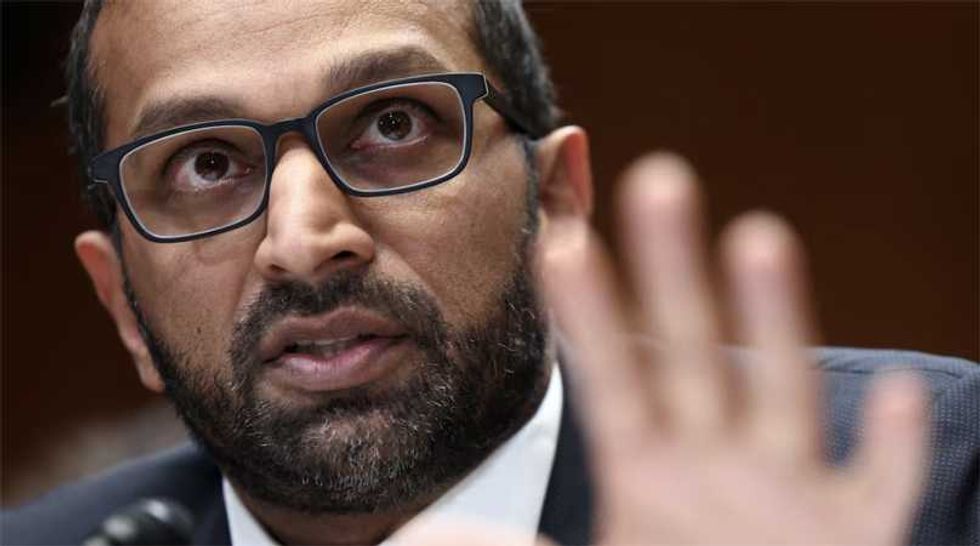
FBI Director Kash Patel testifies before the Senate Appropriations Committee hearing on President Trump’s proposed budget request for the Federal Bureau of Investigation, on Capitol Hill in Washington, D.C., U.S., May 8, 2025. REUTERS/Kevin Lamarque

FBI Director Kash Patel was behind threats made to stop claims about his drinking habits from becoming public, newly released documents reveal.
Attorney Jesse Binnall sent a letter to The Atlantic hours before it published the story on April 17, 2026, demanding the outlet not publish. The Atlantic published anyway. Three days later, Patel filed suit in the U.S. District Court for the District of Columbia seeking $250 million. The threats emerged in court documents filed July 27.
Among the demands in the letter was an ultimatum.
"Accordingly, should The Atlantic choose to publish this demonstrably false and defamatory article, Director Patel will have no choice but to take swift legal action to uphold his reputation," Binnall wrote.
"With this letter, you are also on notice of your ongoing obligations to preserve documents related to Director Patel," the letter said, also accusing The Atlantic of running "an ongoing campaign to damage his reputation."
The story Patel wanted to kill reported that he was known to "drink to the point of obvious intoxication" at private clubs in Washington, D.C., and Las Vegas.
The Atlantic reported that sources said his drinking had "negatively impacted various law-enforcement investigations" — including the murder of Charlie Kirk — and that his "drinking has been a recurring source of concern across the government."
The documents show that behind the scenes, the Trump administration was scrambling to contain the damage.
Sarah Fitzpatrick, who reported the story, had already heard from FBI assistant director Ben Williamson on publication day that the story was "…one of the most absurd things I've ever read."
"He has accomplished more in 14 months than the previous administration did in four years," acting Attorney General Todd Blanche wrote in a statement to The Atlantic. "Anonymously sourced hit pieces do not constitute journalism."
White House press secretary Karoline Leavitt said Patel "remains a critical player on the Administration's law and order team" — also without refuting a single claim.
In court documents filed July 27, The Atlantic argued the complaint "does not allege a single fact showing that any statement in the Article is false" and called several claims "substantially true" — backed by congressional testimony, public lawsuits by fired FBI agents, and oversight letters from Democratic lawmakers.
The Atlantic's attorneys noted the suit is Patel's fifth defamation action against media outlets, all of which have been dismissed or dropped.
His previous suit — against an MS NOW contributor who said Patel spent more time at nightclubs than at FBI headquarters — was dismissed the day after Patel filed this one.
Report typos and corrections to corrections@rawstory.com.
For customer support contact support@rawstory.com.