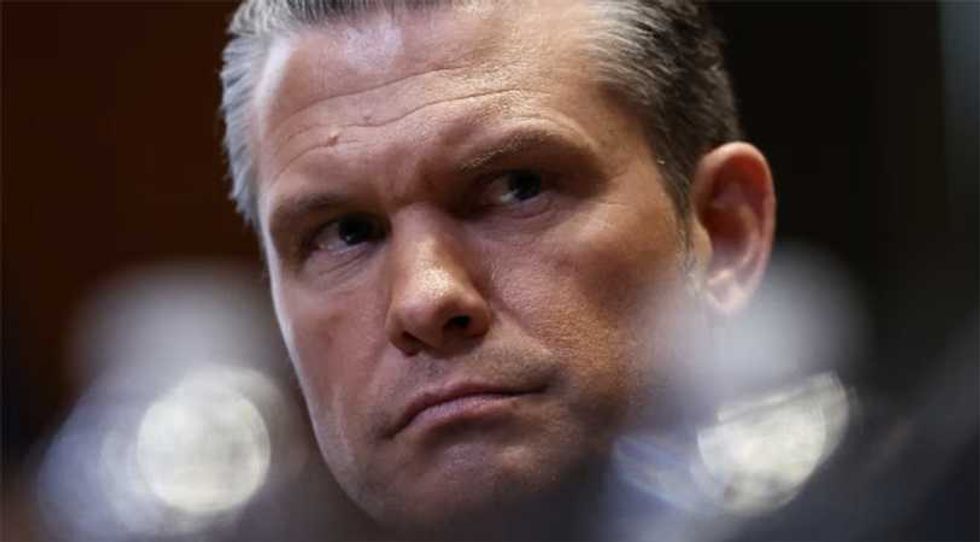
Defense Secretary Pete Hegseth has ordered a day off so troops can vote in the midterms, but experts say the move may come too late for some absentee ballots to arrive in time, and the troops who do vote may not be as solidly Republican as often assumed.
Earlier this month, Hegseth ordered all commanders to hold a one-day “stand down” so service members could vote. He told troops the Pentagon was “not telling you who to vote for,” and his memo ordered that voting assistance remain strictly nonpartisan.
But the timing leaves little room, MS NOW reported. Under federal law, states had to send ballots by Sept. 19, 45 days before the Nov. 3 election, to military and overseas voters who had requested them. A service member who only asked for a ballot during the October stand-down now has to get it, fill it out and mail it back in a matter of weeks.
“You basically have to plan really far in advance to not only receive the ballot, but then also mail it in time to get it back,” said retired Navy Capt. Donald Inbody, author of “The Soldier Vote.” He estimated that getting a ballot and sending it back could take three weeks.
Military turnout was already a problem, as just 43 percent of active-duty service members voted in 2024, compared with 65 percent of all U.S. citizens, and the force skews young. More than 60 percent of troops are under 30, an age group that already turns out at low rates.
The troops who do vote may not be a reliable Republican bloc. Jason Dempsey, an Army veteran and Columbia University professor who studies military demographics, said race and gender shape service members’ votes far more than military service does, though senior officers have historically leaned Republican. Nearly 20 percent of the military is Black, and Dempsey noted those troops have been more likely to vote Democratic.
Dempsey questioned Hegseth’s motives. “Would he do this if he thought that it was just about soldiers getting to vote and if he didn’t have some idea of which way they might go?” he asked. “He’s just not somebody who respects the normal processes and the independence of the military.”
Frustration with the administration could also drive some otherwise disengaged troops to the polls. Troops deployed for record-breaking stretches in the Middle East, unease over Christian nationalism inside the Pentagon, National Guard deployments to U.S. cities and possibly illegal orders have all fueled discontent. When Blue Star Families surveyed about 200 military families in March, 81 percent reported elevated stress over the Middle East conflict.
“They want to follow leaders, and they want to do what they’re told, and they’re strong believers in defense and will go on deployments, but they just don’t believe that the leaders know what they’re doing,” Inbody said.