President Donald Trump's rural base is suffering as his administration keeps yanking critical funding, according to a new report.
Iowa farmers are decrying the Trump U.S. Department of Agriculture's cancellation of millions of dollars' worth of grants because of "wasteful spending" and cuts to diversity, equity, and inclusion (DEI) programs, according to reporting by The Guardian.
"You feel like a slingshot," Jason Grimm, the executive director of the Iowa Valley Resource Conservation and Development, told The Guardian. The Iowa Valley RC&D is a non-profit that used USDA funding to set up and train new farmers.
The Guardian noted a federal judge ordered the USDA to reinstate $127 million in grants awarded to organizations like the Iowa Valley RC&D after pulling the funding.
However, Grimm said he already had to cut programming, and the reversal left him and other farmers feeling like, "You're just getting bounced back and forth," he told The Guardian.
"The continued cancelled funding that we're seeing from USDA continues to be the cherry on top for many organizations and farmers that are already up against really hard times," Anna Pesek, who farms poultry, pigs and flowers in Iowa, told The Guardian.
Farmer Lawrencia Rogers told The Guardian that she was being laid off because of the Trump administration's cuts to DEI programs, describing it as a "slap in the face," and said it made her realize the Trump administration's hostility to farmers.
"I have never had a decision on such a level impact my life literally overnight in such a drastic way," Rogers said. "If that wasn't a rude awakening to pay more attention and, I don't know, maybe be more vocal or take more action, I don't know what could be."
President Donald Trump lavished praise on himself for building a $400 million ballroom while speaking to farmers who have faced devastation because of his tariff policies.
During a White House event on Friday, Trump told a group of farmers that he had "given" them $12 billion in aid to address the fallout from the tariffs.
The president then paused to admire the ballroom's construction.
"You know, while I'm up here, I'm looking around that, I love construction. You see all those nice Caterpillars and John Deeres. We have a lot of John Deeres. That's a big, that's a big dig," he explained. "And we're building a ballroom. For 150 years, they haven't, they've wanted, every president said, could we have a ballroom, please, a room where you can have a lot of people."
Trump hoped that he would soon be greeting King Charles III in the ballroom.
"And we're building, that'll be the finest ballroom anywhere in the world when it's completed," he insisted. "And I'm just looking at the construction. In fact, if you don't mind, I'll walk over there and look for a little while. Then I'll come back and I'll continue to speak. I love construction. I love building beautiful things."
President Donald Trump’s sweeping tariffs policy brought Ohio farmer Chris Gibbs into the national spotlight in Trump's first term, when he sent a message asking Trump to consider how his global trade war hurt American agriculture.
After Trump returned to the White House last year and enacted a stream of even more aggressive — if fluctuating — tariffs on global trade, Gibbs felt the need to speak out again.
“It’s such a déjà vu moment,” Gibbs said, “because we're right back in the same situation, right back there, right now, the same doggone thing as 2018.”
Gibbs was then a Republican but told Raw Storyhe came out “swinging pretty hard” in Trump’s first term when retaliatory tariffs caused the value of his soybeans to plummet 20 percent overnight.
“The party didn't want to stand behind that. They wanted to stand behind the president. I said, ‘No, I gotta protect my business,’ so I ended up leaving the party,” Gibbs said.
Chris Gibbs (provided photo)
Last Friday, after the U.S. Supreme Courtissued a 6-3 decision striking down Trump’s attempt to justify his tariffs under the International Emergency Economic Powers Act, Trump proceeded to announce a new global tariff of 10 percent, then 15 percent, under different legislation.
After blasting the Supreme Court justices who ruled against him in virulent terms, Trump seems certain to focus on the issue again in his State of the Union address, to Congress at the Capitol on Tuesday night.
Gibbs said: “The one thing I agree with Trump, and that is the Supreme Court got it all wrong, and what I mean by that is it should have been 9-0, not 6-3 because the president … never had that authority, and why there were still three Supreme Court justices that couldn't see that is disconcerting to me.”
‘I’m not going back’
Now chair of the Ohio Democratic Party Rural Caucus, Gibbs is continuing to speak out against tariffs, featuring in a new $5 million ad campaign from the Small Businesses Against Tariffs, a project from Defending Democracy Together Institute, an advocacy group formed by anti-Trump conservatives.
“I'm justified,” Gibbs said. “I'm not going back. I am where I'm going to be. I'm in the Democratic Party. I can make a difference here.
“I'm a Democrat because I want to be part of a party that looks for solutions for people, not retribution or revenge against individuals. It's just that simple.”
Gibbs has farmed in Maplewood, Ohio, for nearly 50 years, growing soybeans, corn and wheat and raising cattle. He said tariffs raise the prices of steel, lumber, machinery and other materials used on his farm.
Uncertainty fostered by Trump’s tariffs also strains relations with overseas trading partners, which in turn hurts the grains and agriculture industry in the U.S., Gibbs said.
“We’re on the verge of not becoming the first choice for agricultural supplies. We're now in an agricultural deficit, a trade deficit, which is very odd,” he said.
“The whole time that I've been in farming we were always proud of the trade surplus that agriculture had, and now we’ve moved that back to a trade deficit, so when we have adverse relationships with trading partners, that's how that backs up to me.”
Undeterred by the Supreme Court’s decision, on Monday, Trump said countries who “play games” over U.S. trade deals will face even higher tariffs under different laws.
“This has thrown the whole supply chain, trading sector, trading partners into absolute chaos,” Gibbs said.
Small businesses especially suffer under “ad hoc” and “unpredictable” trade policies, he added.
For the past four years, Gibbs said, his farm’s cost of production has been higher than his income.
“We don't know where we're at, as a farmer, number one for things that we use that come from overseas, but what about the crops that we want to sell into these other countries based on these handshake deals?” Gibbs said.
“It's chaos, and we are in limbo.”
‘Worst thing you can do’
Even as an established farmer with other sources of income such as a federal retirement account from working with the U.S. Department of Agriculture, Gibbs said he is struggling to pay his monthly bills.
Thinking about farmers with less cash flow who might need to rely on government assistance “makes me wake up in the middle of the night in a cold sweat,” he said.
“That's the worst thing you can do for an independent rancher is to put the government in a place where it's their only choice to seek relief is the taxpayer.
“There is nothing more demeaning, nothing more heart-wrenching. I call it the silent killer of the soul. That's what's happened before our eyes, to our nation's farmers.”
Former Republican strategist Rick Wilson described Friday how the financial crisis among American farmers has become a political crisis for the GOP ahead of the midterm elections.
In his Substack Friday, the co-founder of anti-Trump organization The Lincoln Project, discussed how some of President Donald Trump's most loyal voters have been facing an alarming economic reality.
"Welcome to the 'Find Out' phase of the most expensive political experiment in American history. As we enter 2026, rural America is learning a hard truth: you can’t eat 'owning the libs,' and you can’t pay a mortgage with Facebook memes," Wilson wrote.
"In 2024, rural America didn’t just vote for Donald Trump—it formed a suicide pact with him," Wilson wrote. "In the nation’s 444 farming-dependent counties, Trump pulled in nearly 78% of the vote. Those same counties are now watching multi-generational family farms get fed into the woodchipper of MAGA-nomics. It’s the purest Leopards Eating People’s Faces moment yet, and the leopards are ordering seconds."
As the Trump administration implemented sweeping tariffs, it took a major hit on farmers' incomes.
"For farmers, this wasn’t 'winning'—it was a state-sponsored execution," Wilson wrote. "China, once the buyer of half of all U.S. soybean exports, walked away entirely. By 2026, major crops were bleeding red ink: corn down $169 an acre, soybeans $114, cotton nearly $400."
"Net farm income is projected to collapse by $41 billion this year—a 23% drop and one of the sharpest declines in decades. Farmers aren’t tightening belts; they’re checking whether the barn rafters will hold," he added.
But that wasn't the only blow to farmers. The Trump administration's aggressive immigration policies were the next strike. By threatening the people who work in the fields at-risk of arrest, farmers were left with even more problems.
"If tariffs were the heart attack, immigration policy was the stroke," Wilson wrote. "MAGA demanded mass deportations and got them—only to discover that Stephen Miller’s raids didn’t inspire local teenagers to pick blueberries in 100-degree heat. With roughly 70% of farmworkers foreign-born, the labor force vanished. In New Jersey and California, fruit rotted in the fields; one grower alone lost $5 million simply because no one was left to harvest."
The financial backlash hasn't just struck farmers — it's now a political liability for the GOP.
"For Republicans running in 2026, this is a slow-motion catastrophe. They’re chained to an incumbent who is bankrupting his most loyal voters," Wilson explained.
"The tragedy isn’t that experts warned this would happen. It’s the people paying the price who built Trump’s pedestal. They voted for the trade war, ICE, and the chaos," Wilson wrote.
Ben Palen — a Kansas native and a fifth-generation farmer and agriculture consultant — blasted President Donald Trump’s repeated tactic of putting farmers in distress and then dangling tax-funded salvation before them and hungry developers.
“[T]he Trump administration will provide several billion dollars in bailouts to farmers, with an emphasis on corn and soybean growers,” Palen wrote in the Kansas Reflector. “... Predictably, political dances followed the announcement, with various farm groups issuing statements supporting release of this money.”
“It’s pathetic,” Palen wrote. “It’s especially so when the Republican sycophants who represent Kansas farmers fall all over themselves to pay homage to Trump. How about some honest conversations about what this regime has done to American farmers via a patchwork of actions that show little understanding of international trade and so many other issues?”
Palen said there is no Republican “representative” from Kansas who is speaking the truth about the “folly from Washington D.C.,” like the damage Trump does to rural hospitals or the fact that people are going hungry because of the administration's policies. Meanwhile, farmers “are receiving just a few breadcrumbs."
"The fundamental challenges of trade policy remain unsolved, and our competitors are gleeful as they take market share from U.S. farmers," he wrote.
“The peril in farm country is real,” Palen warned. “In less than 12 months, damage done to Kansas farmers and their peers across the nation is only just beginning to be felt. This latest bailout completely fails to address the underlying issues. Again, I will ask Kansas politicians: When are you going to do your job for the people who voted for you?”
Palen lamented that those same politicians are eager to spend millions of dollars and expend state resources to woo the Kansas City Chiefs to a new stadium and the development of "entertainment districts."
“Let’s not kid ourselves,” said Palen. “Regardless of whether these deals are funded with grants, contributions from donors, tax incentives or other methods, there are adverse economic and social consequences often overlooked. … These large sums of money could be better spent. How about fixing crumbling infrastructure? How about encouraging companies to bring good-paying manufacturing jobs to the area? In the case of [Kansas University], how about big money donors helping students afford the high cost of an education, instead of being so focused on having one’s name on a sports venue?”
“Our society has some strange priorities. Maybe it’s time to focus on taking care of what we have instead of pouring enormous sums into brand new, shiny buildings,” Palen added.
A heated CNN anchor gave fierce pushback on Tuesday afternoon to a Republican lawmaker who tried to deny hearing pleas from farmers who said they're struggling to make ends meet.
CNN's Brianna Keilar got in a fiery back-and-forth with Rep. Mark Alford (R-MO) after she asked him during a live broadcast about what farmers are saying. Alford claimed that the Trump administration was working to give them more relief when the conversation got heated.
"We are giving the farmers their safety nets through 80% of the farm bill that was passed through the 'One Big, Beautiful Bill,'" Alford said. "Those safety nets are there an increase in reference prices. We are helping the American farmers, Donald J. Trump knows the importance of feeding America and the world, and we're gonna get it done."
Keilar didn't hold back in response.
"But that's not what farmers are telling you, right? I know that you've heard from them," she shot back. "They say they're hurting from tariffs. I know you had a town hall this summer, KMIZ reported about one farmer telling you it's not just that China was retaliating, they're not buying soybeans, even though that's back now, but tariffs actually drove up prices of fertilizer and other farm goods. So, I mean, of this idea of loans, but when you're paying more for goods that you paid a certain price for before, and your margins are pretty slim. Do you think the administration is understanding this? Do you think they're getting that message?"
Alford attempted to blame former President Joe Biden for farmers' current woes.
"They do, and they understand as I do, that it was Joe Biden that drove up the price of fertilizer and fuel with his war," he said.
"Well, no, that's not what this farmer told you. So what do you say to him?" Keilar said, pushing back again.
"Well, that's what I'm telling you. I'm telling you right now," Alford said.
"But that's not what this farmer told you, and he's the farmer who's telling you... excuse me. This farmer you heard him. He said this to you," she said.
"Yes, we need to look at fertilizer prices. Fuel has come down and will continue to come down thanks to Donald Trump," Alford said.
But Keilar still wasn't satisfied with Alford's response and pressed further.
"Are you listening to your constituents? Because he was very clear about why his prices were going up," she said.
"Brianna, I did 15 stops on a town hall tour, one of the few Congress members on the Republican side and the Democrat side to actually do that. Yes ma'am. I listened," he said. "I took 256 questions and sat there and listened. Listened to insults, listened to yelling, listened to name-calling, and answered when they wanted to be respectful. I remember that farmer. I understand his concern, but the large number of farmers in Missouri believe in Donald J. Trump and that he's going to get things done. We are doing that with beef prices."
An American farmer made a dire plea to President Donald Trump on Tuesday, saying "hope he's listening," as America's "backbone" risks collapse.
Arkansas farmer Scott Brown told CNN it's unclear how he or other agriculture producers will survive Trump's ongoing tariff war, especially as the fall harvest begins.
"I hope to break even, but I mean, we don't know," Brown said. "We're not cutting soybeans yet, and I don't know what the yield is. We're just finishing up corn. I'm a pretty low-debt-load farmer. I farm 800 acres. My equipment's all paid for. I do it all by myself. I'm a first-generation farmer, so I don't have as big of problems as a lot of the guys do. But, I mean, I have friends that farm thousands of acres, 5,000, 10,000, 11,000 acres. They've got worlds of problems. I mean, I don't know that there's any way to yield yourself out of this."
For his friends, the tariff fallout could mean losing everything.
"I don't think that the average American understands when you go down to the bank and get a crop loan, you put all your equipment up, all your equity in your ground, you put your home up, your pickup truck, everything up," he said. "And if they can't pay out and if they've rolled over any debt from last year, they're going to call the auctioneer and they're going to line everything up and they're going to sell it."
Trump is reportedly considering a potential bailout for farmers, a key Republican voting bloc. But that's not enough, Scott said.
"Well, the stopgap needs to come because they've kind of painted the farmer in a corner," he added. "I mean, I want trade, not aid. I need a market. I need a place to sell this stuff. I can work hard enough and make a product. If you give me someplace to sell it, I'll take care of myself, but they've painted us in a corner with this China deal and China buying soybeans. I mean, they've torn a market in half."
China — the biggest buyer — has made zero soybean orders this year. Instead, they've pivoted to purchasing soybeans from South American countries, including Argentina, Paraguay, and Bolivia. These countries plan to expand planting acreage for their crops and focus on planting soon for the 2025 and 2026 crops in the Southern Hemisphere.
The price per bushel of soybeans has also dropped, he added.
"The farmer can't continue to produce a crop below the cost of production. And that's where we're at. And we don't have anywhere to sell it. We're in a tariff war with China. We're in a tariff war with everybody else. I mean, where do they want me to market this stuff?" Scott asked.
This uncertainty also makes it hard to plan for 2026.
"Farming is done in a Russian roulette fashion to say a better set of words," Scott said. "If you pay out, then you get to go again. If you've got enough equity and you don't pay out, you can roll over debt. There's lots of guys farming that have between $400 and $700,000 worth of rollover debt. You know, and then and then you compound the problem with the tariffs. Look at this. When we had USAID, we provided 40% of the humanitarian food for the world. That's all grain and food bought from farmers, from vegetable farmers in the United States. The row crop farmers and grain and everything. So we abandoned that deal. And China accelerates theirs. So now I've got a tariff war that's killing my market."
He also wants the president to hear his message.
"I hope he's listening because, you know, agriculture is the backbone of rural America," Scott said. "For every dollar in agriculture, you get $8 in your rural community. I mean, we help pay taxes on schools, roads. We're the guys that keep the park store open, we're the guy that keeps the local co-op open, that 20 guys work at, and the little town I live in, we have a chicken plant, about 600 chicken houses, except for the school and the hospital. Almost our entire town of 7,000."
Agriculture is tied to everything in rural America, he explained.
"People's economy revolves around agriculture," Scott said. "I mean, I think he needs to listen. It's bigger than the farmer. It's all my friends. Whether they work in town or anything else. I mean, rural America depends on agriculture. And it doesn't matter if you're in Nebraska or you're in Arkansas."
A high-ranking Republican who represents an agriculture-heavy state says the government shutdown is hitting a key GOP voting bloc — farmers — in an "unnecessary consequence."
The USDA's Farm Service Agency offices are closed and currently only available for "emergency scenarios," Politico reports. Thousands of these offices support the agriculture industry and give producers access to loans and other services.
“FSA employees are important to the farmers that we all represent. Again, that’s an unnecessary consequence of the Schumer shutdown,” Senate Majority Leader John Thune (R-SD) told Politico on Thursday.
Republicans continue to argue that Democrats are responsible for the shutdown. Democrats have pushed back, saying Republicans refuse to negotiate over extending Affordable Care Act subsidies that will expire and insurance premiums that are expected to double.
Thune told Politico that the Trump administration will "try as best they can" to help farmers.
But he said the circumstances are not ideal.
“They’re being put into a situation where they’re going to have to make decisions that are not good for some of the constituencies that people represent out there,” he said.
American farmers are hitting a major pain point as the shutdown continues in its second day and harvest approaches, all while the tariff backlash looms. So far, farmers have received zero soybean orders from China.
“I hope that they can find ways to keep the FSA offices open and certainly encourage that. But you know, the quickest way to end any conversation about that is to reopen the government,” Thune said.
President Donald Trump's tariffs have decimated U.S. farmers' soybean market and there is "no sign of Chinese buying."
The fall harvest has started without any orders from China, the world's biggest buyer, according to a new report published on agriculture.com's Successful Farming.
American farmers are reporting record yields for crops this fall but it's unclear who will buy them. The USDA estimates that American farmers are harvesting 4.3 billion bushels, however there is no indication if or when shipments to China will continue. Most years, China buys more than half of U.S. soybean exports — but not this year.
Brazil, however, has had record demand from China from January to August 2025 for Brazilian soybeans. And in the new report, experts "consider the possible consequences if a trade deal is not reached this fall."
"From the 2017/18 to the 2024/25 crop season, Brazil jumped its soybean production from 4.5 billion bushels to 6.3 billion bushels, according to the National Supply Company (Conab) – Brazil’s food supply and statistics agency."
There is speculation that Chinese buyers importing soybeans could be "accelerating shipments to avoid sourcing from the United States."
The ongoing trade war between China and the U.S. is testing farmers' faith in the Trump administration. During the first trade war in 2018 during Trump's first term, farmers took a hit and during President Joe Biden's term had begun to recover.
Now under Trump's second term, farmers have called for more assistance during the prolonged economic uncertainty.
"Some relief might come from federal government payments to producers, as happened during the first round of trade war, but in many cases, that assistance may not be enough to prevent an uptick in financial stress," according to the report.
Chinese buyers are expected to continue shifting soybean purchases to other South American countries, including Argentina, Paraguay and Bolivia. These countries are planning to expand planting acreage for their crops and focusing on planting soon for the 2025 and 2026 crop in the Southern Hemisphere.
Critics are pointing to Trump's trade policies as a major disruption to the U.S. agriculture industry.
"Until Trump's first term, the US was by far the world's largest exporter of soybeans. Now Brazil dominates," David Frum, writer at The Atlantic, wrote via X.
"Has Iowa thanked Trump/Vance for devastating their soybeans market?" Former U.S. Representative Barbara Comstock (R-VA) wrote on X.
Farmers are reporting record yields for crops this fall but it's unclear who will buy them.
The ongoing trade war between China and the U.S. is testing farmers' faith in the Trump administration, Politico reports.
“When our members are in the fields harvesting, they will be staring at a visual representation of this economy and this looming farm crisis. They will be looking at literal piles of corn and other row crops,” said Lesly Weber McNitt, vice president of public policy at the National Corn Growers Association, in an interview with Politico. “They don’t know where it’s going.”
And with no soybean orders coming from China since May, "crop farmers have lost a significant export market, driving down the price of top U.S. crops like soybeans and corn, even as Trump’s tariffs drive up the cost of farm equipment and fertilizer." The American Soybean Association is now shifting its purchases to Brazil and other countries. In comparison, China purchased $12.64 billion in soybeans from American farmers in 2024.
Republican lawmakers and farmers warn that this could be a looming crisis for America's agriculture industry — crops could pile up and farmers could end up in the red.
But farmers are still not blaming Trump and his trade policies yet, "a sign of just how much grace the agriculture community continues to grant Trump, even as his ambitious efforts to restructure the global trade economy clash directly with their economic interests," Politico reports.
However, that patience and loyalty could wane.
President Donald Trump won farmers' support in the 2024 election, promising to improve wages and lower inflation. As the administration struggles to pursue trade negotiations, slapping tariffs and Wednesday urging the EU to slap 100% tariffs on China and India, Reuters reports.
Companies like John Deere — an agricultural industry supplier for farmers — report significant losses due to the higher tariffs, mostly on steel but also on aluminum, are impacting its profits. The company has lost $300 million so far and nearly another $300 million loss is expected by the end of 2025. The company laid off 238 employees in Illinois and Iowa factories over the summer.
As farmers see a lowering demand for some crops overseas, the company cites a 15 to 20 percent drop in large agricultural machinery purchases, the New York Times reports. That downward trend is expected to carry into 2026.




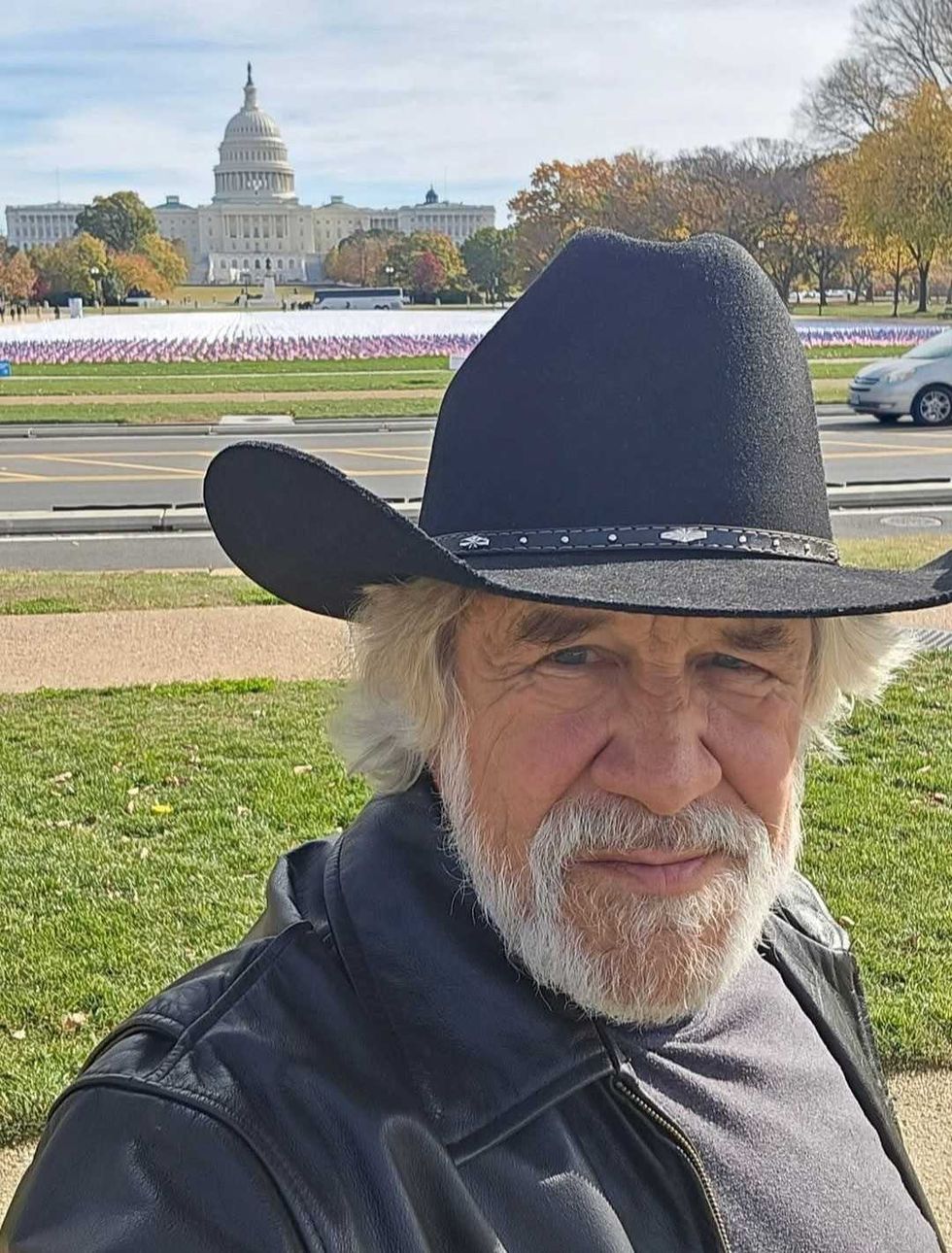 Chris Gibbs (provided photo)