Former Pope Benedict XVI has emerged from years of relative silence to declare that the "sexual revolution" of the 1960's, "homosexual cliques" inside seminaries, and a societal collapse in morality are to blame for the Catholic Church's decades-long international scandal of priests raping children.
Before becoming Pope Benedict he was Cardinal Joseph Aloisius Ratzinger, the Vatican's man in charge of managing the growing revelations of the Catholic Church's child sexual abuse scandal. Ratzinger has been accused of personally making decisions to not punish priests who raped young and teen boys but to ship them off to other dioceses, where they often committed their crimes on an entirely new population.
The Post notes that Benedict "laments the secularization of the West and describes seminaries filled with 'homosexual cliques.'"
He "devoted the first third of his letter to changes in society and inside the church beginning in the 1960s that gave rise to an 'all-out sexual freedom.' He wrote that Catholic moral theology 'suffered a collapse' of its own during a period of major reforms."
Benedict also wrote that the sexual revolution of the '60's enabled pedophilia to be "diagnosed as allowed and appropriate."
The former pope, now titled Pope Emeritus, did not blame himself or his actions for enabling the sexual and emotional abuse of countless thousands – or more – of children.
The response by many noted theologians can be summed up by Brian Flanagan, professor of theology at Marymount University in Virginia, who Reuters cites in its reporting:
A heroic campaigner for openness, or an enemy of the US state trying to avoid justice: after a decade in the limelight, WikiLeaks founder Julian Assange remains a polarising figure.
The 47-year-old Australian was on Thursday arrested by British police at Ecuador's embassy in London, his home since 2012, after it withdrew his asylum status.
Assange lived in a small apartment in the embassy where he sought refuge while facing investigation for sexual assault and rape in Sweden, claims which were later dropped.
He denied the allegations, saying they were politically motivated and expressing fears of a plot to ultimately extradite him to the United States.
At the time, he was famous as the frontman of WikiLeaks as the whistleblowing website exposed government secrets worldwide.
He was applauded by transparency and anti-war campaigners for revealing the death of civilians, torture and clandestine military operations with the release of 500,000 US documents on the Iraq and Afghan wars.
But the United States and its allies accused him of risking lives by revealing information on sources, intelligence techniques and key infrastructure sites.
Human rights groups and newspapers that once worked with Assange to edit and publish the war logs were also horrified when WikiLeaks dumped the documents unredacted online, including the names of informants.
There have since been questions about his relationship with Russia, with WikiLeaks identified in independent prosecutor Robert Mueller's probe into interference in the 2016 US election.
Mueller found that Russian government actors hacked White House hopeful Hillary Clinton's campaign "and publicly disseminated those materials through various intermediaries, including WikiLeaks".
- Exposing 'truth' of war -
Born in Townsville, Queensland, in 1971, Assange has described a nomadic childhood and claims to have attended 37 schools before settling in Melbourne.
As a teenager he discovered a talent for computer hacking, and although he has pleaded guilty to 25 such offences, he has only ever walked away with fines.
He created WikiLeaks in 2006 with a group of like-minded activists and IT experts, to provide a secure way for whistleblowers to leak information.
A confident speaker, he became its figurehead -- and a lightning rod for criticism.
The most damaging leaks emerged in 2010, beginning with a video showing a US military Apache helicopter firing on and killing two journalists and several Iraqi civilians on a Baghdad street in 2007.
It was followed by more than 90,000 classified US military files from the Afghan war, 400,000 from Iraq, and in November that year, around 250,000 US diplomatic cables covering almost every country in the world.
- Facing justice -
He was arrested in Britain in December 2010 and a judge ordered his extradition to Sweden. Although the claims were dropped, he still faced arrest by British police for having jumped bail.
Ecuador's then president, Rafael Correa, said Assange's human rights could be at risk and offered him refuge, but his successor, Lenin Moreno who took office in 2017, has had less patience.
He has accused Assange of interfering in foreign affairs. Ecuador temporarily cut his internet connection last year, and last week said the Australian had "repeatedly violated" the terms of his stay.
In the past, Assange said his time at the embassy was like living in a space station -- he exercised on a treadmill and used a sun lamp to make up for the lack of natural light.
This week, his supporters said it had become a "Truman-show type situation", accusing the Ecuador authorities of gathering thousands of photographs and videos from inside the apartment.
In 2016 a UN panel declared that Assange had been detained arbitrarily, but critics have said his concerns of extradition to the US are unfounded and accused him of seeking to avoid justice.
"WikiLeaks was founded on exposing those who ignored the rule of law. Surely its editor-in-chief should recognise his duty to see it upheld," The Guardian newspaper, which once worked with him to publish the leaks, wrote in 2016.
Assange has, however, found growing growing backing among supporters of Donald Trump, after the US institutions he had exposed began also to investigate the president.
With the final season of HBO’s “Game of Thrones” commencing, I imagine most fans are harboring hopes that things will turn out well for the remaining heroes in Westeros.
A large part of me hopes for the same. But a different part of me – the part that researches the political effects of entertainment – is pulling for a final season that is as brutally unjust as the first five seasons of the series. It wants the White Walkers to overrun the North and kill Jon Snow and Daenerys, or Cersei to betray the heroes after they battle the army of the dead, leaving no opposition to her claim to the Iron Throne.
A study I recently conducted with some students on “Game of Thrones” colored my views on unhappy endings, revealing that perhaps television series and movies need more of them.
Do good things happen to good people?
People prefer stories with happy endings. For this reason, most stories developed for mass audiences – whether they’re books, films or TV shows – will conclude with the protagonist rewarded for doing the right thing.
All those happy endings, however, have political consequences – at least according to one researcher.
In a 2007 study, communication psychologist Markus Appel showed that the more fictional narratives people see, the more likely they are to believe in a just world.
What does this belief have to do with politics? Well, when you believe in a just world, you tend to think that good things happen to good people and bad things happen to bad people.
This worldview then influences support for certain policies. For example, if you believe in a just world, you would probably believe that poor people deserve to be poor. Not surprisingly, the worldview has been associated with lower support for antipoverty programs and affirmative action. It’s also been associated with negative feelings about the poor and authoritarianism.
The belief in a just world seems to be activated as a psychological response to experiencing the discomfort of witnessing victims of abuse, crime, economic catastrophe and war. Rather than force someone to grapple with the complex emotions evoked by these victims, this worldview operates like a shield – why devote emotional energy and resources to these people if they deserve what they got?
Can ‘Game of Thrones’ color your worldview?
When it debuted in 2011, “Game of Thrones” wasn’t like most other shows.
It didn’t just abandon the typical plot in which protagonists are rewarded for doing the right thing. It went as far as possible in the opposite direction, feeding viewers a relentless diet of cruel and brutal injustices.
Plot developments included a sadistic young king ordering the beheading of the lead character; a slaughter of unarmed guests at a wedding; physical and psychological torture; and marriages forced on young girls, who are then raped and sexually assaulted. The show taught audiences to never get too attached to any one character because that character, in all likelihood, would meet a cruel and unjust fate.
I wondered: If Appel found that fictional narratives with happy endings increased belief in a just world, could exposure to the repeated injustices of “Game of Thrones” do the opposite and reduce audiences’ tendency to believe in a just world?
My students and I set about devising ways to test for such an effect. Over two semesters we carried out a survey and an experiment, and I followed that work up with a second experiment.
For the survey and experiment we recruited participants through social media. I randomly assigned those volunteers to three groups, asking subjects in one group to watch six episodes of “Game of Thrones,” subjects in the second group to watch six episodes of “True Blood” – a show that depicts a more just world – and subjects in the third group to just fill out the survey. For the second experiment I randomly assigned students in a large class to watch either five episodes of “Game of Thrones” or the movie “The Hobbit: The Battle of the Five Armies.”
In the studies, we found that exposure to “Game of Thrones” was associated with or resulted in lower levels of just world beliefs. These findings held true even while taking into consideration other characteristics of the respondents.
In other words, exposure to “Game of Thrones” seemed to have an effect on viewers that was more akin to consuming the news than to exposure to other fictional stories.
I’m hoping “Game of Thrones” has an unhappy ending because, sadly, unhappy endings mimic reality. I recognize the need to occasionally escape from the ugliness of the real world into fictional ones with happy endings. But in a media environment dominated by entertainment, it’s also important to be periodically shocked into remembering that things don’t always work out so nicely.
That was the value I saw in the first five seasons of “Game of Thrones” – and that’s why I want to see it end badly.
“If someone is gay and he searches for the Lord and has good will, who am I to judge?”
However, the pope has also discouraged homosexual men from entering the priesthood. He categorically stated in another interview that for one with homosexual tendencies, the “ministry or the consecrated life is not his place.”
As a scholar specializing in the history of the Catholic Church and gender studies, I can attest that 1,000 years ago, gay priests were not so restricted. In earlier centuries, the Catholic Church paid little attention to homosexual activity among priests or laypeople.
While the church’s official stance prohibiting sexual relations between people of the same sex has remained constant, the importance the church ascribes to the “sin” has varied. Additionally, over centuries, the church only sporadically chose to investigate or enforce its prohibitions.
The Bible places as little emphasis on same-sex acts as the early church did, even though many Christians may have been taught that the Bible clearly prohibits homosexuality.
Judeo-Christian scriptures rarely mention same-sex sexuality. Of the 35,527 versesin the Catholic Bible, only seven – 0.02% – are sometimes interpreted as prohibiting homosexual acts.
Even within those, apparent references to same-sex relations were not originally written or understood as categorically indicting homosexual acts, as in modern times. Christians before the late 19th century had no concept of gay or straight identity.
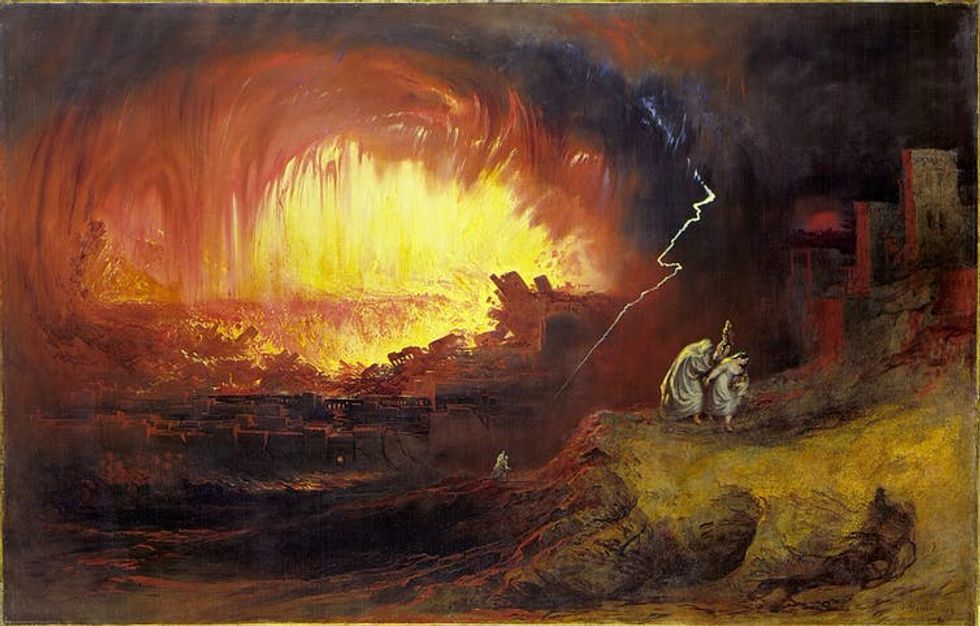
It took centuries for a Christian consensus to agree with Philo’s misinterpretation, and it eventually became the accepted understanding of this scripture, from which the derogatory term “sodomite” emerged.
Religious scholars have similarly researched the other six scriptures that Christians in modern times claim justify God’s categorical condemnation of all same-sex acts. They have uncovered how similar mistranslations, miscontextualizations, and misinterpretations have altered the meanings of these ancient scriptures to legitimate modern social prejudices against homosexuality.
For example, instead of labeling all homosexual acts as sinful in the eyes of God, ancient Christians were concerned about excesses of behavior that might separate believers from God. The apostle Paul criticized same-sex acts along with a list of immoderate behaviors, such as gossip and boastfulness, that any believer could overindulge in.
He could not have been delivering a blanket condemnation of homosexuality or homosexuals because these concepts would not exist for 1,800 more years.
Gay sex, as such, usually went unpunished
Early church leaders didn’t seem overly concerned about punishing those who engaged in homosexual practice. I have found that there is a remarkable silence about homosexual acts, both in theologies and in church laws for over 1,000 years, before the late 12th century.
When early Christian commentators such as John Chrysostom, one of the most prolific biblical writers of the fourth century, criticized homosexual acts, it was typically part of an ascetic condemnation of all sexual experiences.
If a man took on the passive role in a same-sex act, he took on the woman’s role. He was “unmasculine and effeminate,” a transgression of the gender hierarchy that Philo of Alexandria called the “greatest of all evils.” The concern was to police gender roles rather than sex acts, in and of themselves.
Church councils and penance manuals show little concern over the issue. In the early 12th century, a time of church revival, reform and expansion, prominent priests and monks could write poetry and letters glorifying love and passion – even physical passion – toward those of the same sex and not be censured.
Instead, it was civil authorities that eventually took serious interest in prosecuting the offenders.
The Third Lateran Council of 1179, a church council held at the Lateran palace in Rome, for example, outlawed sodomy. Clerics who practiced it were either to be defrocked or enter a monastery to perform penance. Laypeople were more harshly punished with excommunication.
It might be mentioned that such hostility grew, not only toward people engaging in same-sex relations but toward other minority groups as well. Jews, Muslims and lepers also faced rising levels of persecution.
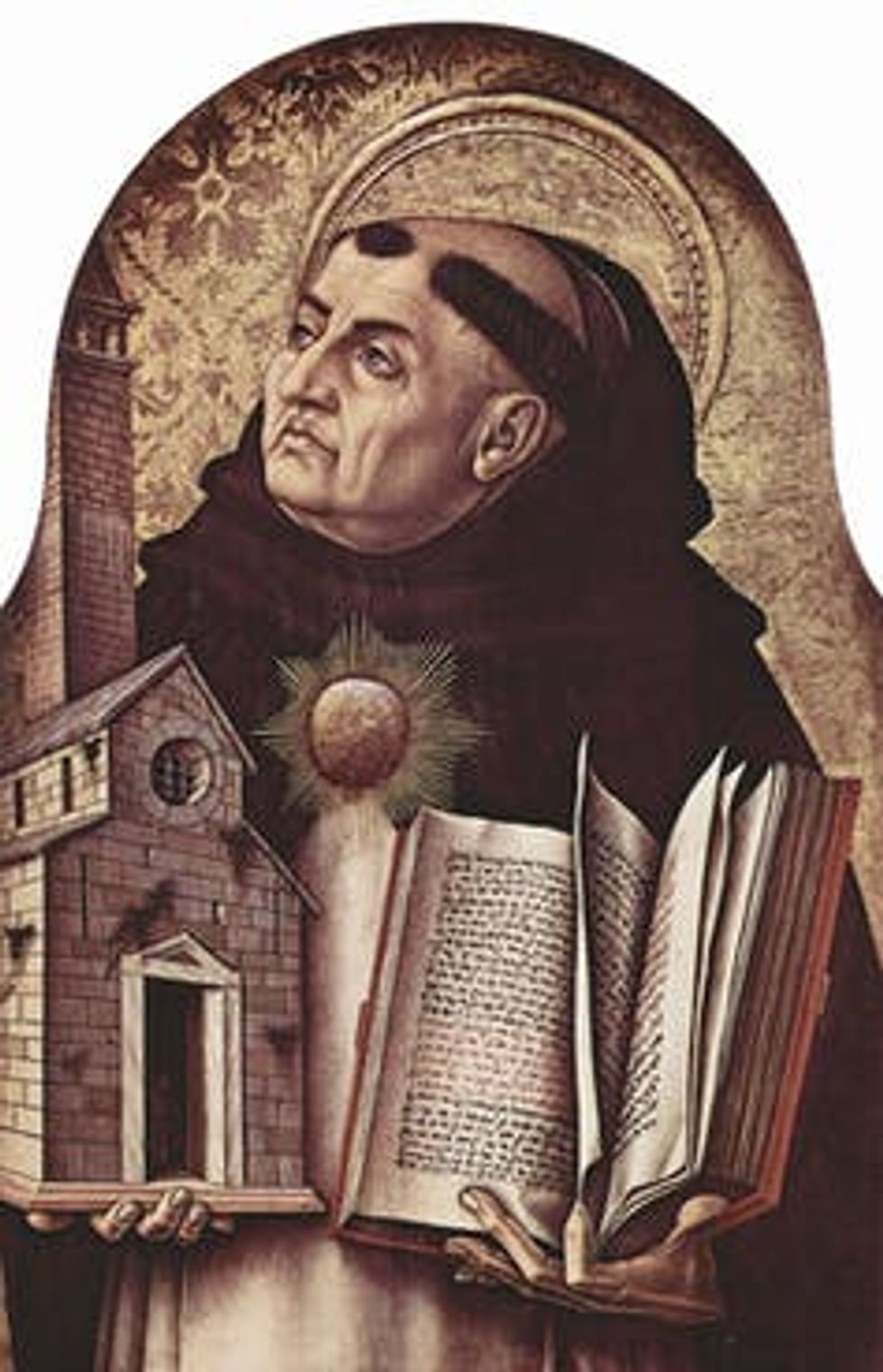
While church laws and punishments against same-sex acts grew increasingly harsh, they were, at first, only sporadically enforced. Influential churchmen, such as 13th-century theologian and philosopher Thomas Aquinas and popular preacher Bernardino of Siena, known as the “Apostle of Italy,” disagreed about the severity of sin involved.
Today, the Catholic Catechism teaches that desiring others of the same sex is not sinful but acting on those desires is.
As the Catechism says, persons with such desires should remain chaste and “must be accepted with respect and sensitivity. Every sign of unjust discrimination in their regard should be avoided.” Indeed, Catholic ministries such as DignityUSA and New Ways Ministries seek to serve and advocate for this population.
Yet gay priests are in a different category. They live and work under mandatory celibacy, often in same-sex religious orders. Pope Francis I has encouraged them to be “perfectly responsible” to avoid scandal, while discouraging other gay men from entering the priesthood.
Many fear retribution if they cannot live up to this ideal. For the estimated 30-40% of U.S priests who are gay, the openness of same-sex desire among clerics of the past is but a memory.
Russian lawmakers on Thursday approved in a key second reading a controversial bill that would allow Moscow to cut off the country's internet traffic from foreign servers.
Lawmakers in the State Duma, parliament's lower house, voted 320 to 15 to pass the proposed bill.
It is set to take effect on November 1 once it formally becomes law.
The proposed measures would create technology to monitor internet routing and steer Russian internet traffic away from foreign servers, ostensibly to prevent a foreign country from shutting it down.
Authors of the initiative say Russia must ensure the security of its networks after US President Donald Trump unveiled a new American cybersecurity strategy last year that said Russia had carried out cyber attacks with impunity.
The legislation has been dubbed a "sovereign internet" bill by Russian media.
Critics say implementing the measures would be expensive and give vast censorship powers to the government's new traffic monitoring centre.
"It's a bill on digital slavery and the introduction of censorship for the web," said Sergei Ivanov, a member of the nationalist Liberal-Democratic Party.
The bill's authors insist however that the measures only outline a plan to make Russian internet "more secure and reliable".
"The bill's popular name -- 'The Chinese Firewall' -- has nothing to do with our initiative," said Leonid Levin, a lawmaker from the ruling United Russia party which dominates Russian parliament.
International anti-mafia stings may have increased in recent months, but Italian organised crime groups constitute a social and economic "cancer" that the world seems to underestimate, experts say.
The most high-profile recent operation saw 90 mobsters from the Calabrian 'Ndrangheta mafia arrested in December in six different countries, in raids involving hundreds of police officers.
While the notorious Sicilian Cosa Nostra is well known to be present in Australia, Canada and the United States, other Italian mafias have been globalising too -- with Europe Union countries among their top destinations.
The three main groups -- Cosa Nostra, the Neapolitan Camorra and the 'Ndrangheta -- are "among the most threatening in Europe" because of the global reach of their criminal operations, according to Europol.
Their power lies in their control and exploitation of territory and community, including installing allies in administrative positions even in places far from the territories they control, the European police agency said.
Italian mafia-hunting expert Cristiano Tomassi cited cases of entire neighbourhoods in European cities which are under the control of organised crime groups, and are having the life strangled out of them.
"Why does it seem like nothing's going on in those areas? Because the mafia is in control, but it is not a healthy control, it is like a cancer that progresses. And where there is a cancer there is no more life," Tomassi told AFP.
"Petty crime no longer exists, but neither does the healthy economy. It's true that weeds no longer grow, but grass doesn't grow either," said Tomassi, a police colonel and organised crime analyst with anti-mafia investigative authority DIA.
- Mobsters 'think like economists' -
The powerful Italian mafias make their money in large-scale drug trafficking and money laundering, as well as currency and goods counterfeiting, and the trafficking of toxic waste.
dpa/AFP/File / Oliver Berg Italian mafia-hunting expert Cristiano Tomassi cited cases of entire neighbourhoods in European cities which are under the control of organised crime groups, and are having the life strangled out of them
They wreak heavy damage on local and national economies, according to the latest DIA report: They "pollute financial and credit channels, disrupt competition and the markets (and) promote black market activities and tax evasion."
In places suffering an economic crisis -- such as Europe -- the mafia infiltrates even more easily, for "whoever brings in new money can initially be seen as a resource," says Tomassi, referring to the mob's "almost unlimited" financial means.
Tomassi and his colleagues at the authority's imposing offices on the outskirts of Rome have been forced in recent years to expand their scope beyond Germany, France and Spain to eastern European countries.
Assets worth 250 million euros ($280 million) were seized in a recent operation in Romania, where the mafia had got its claws into everything from construction companies to hundreds of apartments and even spas, Tomassi said.
"Mafiosi reason like economists: growth rates and development prospects are higher (in Eastern EU countries) even than those in prosperous Germany," he said.
- 'A choice for life' -
Investigators have uncovered mob activity in Slovakia, for example, where the 'Ndrangheta is attempting a favourite mafia pastime -- syphoning off European Union grants, he added.
Vast sums are also to be made through illegal gambling, and the mob has been moving its operations in that sector to Austria, the Netherlands Antilles, Panama, Romania and Spain, "where the law is most advantageous in terms of tax".
Drawing heavily on DIA expertise, the European Commission set up a new EU taskforce at the end of last year aimed primarily at fighting Italian organised crime groups, as well as Eurasian and Albanian criminal networks.
Experts know well that the issues key to understanding the mafia -- the concepts of family, power, respect and territory -- also make their clans difficult to infiltrate.
"It's a choice for life. You decide to embrace a lifestyle, an idea, and that's the difference between the mafia and 'simple' organised crime," Tomassi said.
Julian Assange has been arrested in London after Ecuador withdrew his asylum.
The fugitive founder of WikiLeaks was wanted by British police for skipping bail in August 2012, while he was under investigation for sexual assault and rape in Sweden, and had lived since then in the Ecuadorian Embassy in London, reported NBC News.
The Australian had long complained that he would eventually be extradited to the U.S. to face charges if he was forced to surrender.
The 47-year-old Assange and WikiLeaks have been implicated by U.S. intelligence services and special counsel Robert Mueller in a scheme to release emails hacked by Russian intelligence from the Democratic National Committee.
President Donald Trump's former lawyer Michael Cohen has testified before Congress that Assange had been in contact with Republican operative Roger Stone to coordinate the release of the stolen emails during the 2016 campaign.
Assange has insisted the hacked emails had not come from Russia.
Sweden eventually dropped its investigation of Assange, and he is no longer wanted by authorities there, but London's Metropolitan Police said he would be arrested for violating his bail if he ever left the embassy.
Assange became an Ecuadorian citizen last year but had quarreled with embassy staff for years, especially in recent months.
European leaders agreed with Britain on Thursday to delay Brexit by up to six months, saving the continent from what could have been a chaotic no-deal departure at the end of the week.
The deal struck during late night talks in Brussels means that if London remains in the EU after May 22, British voters will have to take part in European elections.
Prime Minister Theresa May and the other 27 EU leaders "have agreed a flexible extension until 31 October", European Council president Donald Tusk said in a tweet.
"This means additional six months for the UK to find the best possible solution."
France's President Emmanuel Macron was the strongest voice opposing a long extension, but most leaders backed it and the French had to settle for a promise that the delay will be reviewed at an EU summit on June 21.
Most of the leaders gathered for the emergency summit, including German Chancellor Angela Merkel, had backed a plan for Brexit to be postponed for up to a year.
But as the talks went into Thursday morning, Macron -- with backing from Belgium, Austria and some smaller EU states -- held out for a short delay of only a few weeks and demanded solid guarantees that London would not interfere in EU business during that time.
May has already said that if Britain is still an EU member when the European parliamentary election begins on May 23, UK voters will take part. But some EU leaders are unconvinced that she is sincere, despite one official telling reporters her presentation had been "solid".
Without a postponement, Britain would have ended its 46-year membership of the EU at midnight (2200 GMT) on Friday with no deal, risking economic chaos on both sides of the Channel.
May agreed a divorce deal with the EU last November but MPs in London have rejected it three times, forcing her to turn to the main opposition Labour party in a bid to find a way through.
'As soon as possible'
But these talks are moving slowly, and the prime minister is under intense pressure from hardline Brexit supporters in her Conservative party not to compromise.
As she arrived, May said she wanted to leave the EU "as soon as possible".
"I've asked for an extension to June 30 but what is important is that any extension enables us to leave at the point at which we ratify the withdrawal agreement," she said.
She said she still hoped to leave the EU on May 22, the last day before Britain must hold European Parliament elections.
For as long as Britain is in the EU, it must take part in bloc elections for them to be valid.
EU leaders have already agreed one delay to Brexit, from March 29 to April 12, and Tusk has warned there is "little reason to believe" the British parliament can ratify May's deal by June 30.
A draft copy of the summit conclusions seen by AFP before the leaders sat down to finalise it said "an extension should last only as long as necessary and, in any event, no longer than [XX.XX.XXXX]."
"If the withdrawal agreement is ratified by both parties before this date, the withdrawal will take place on the first day of the following month," the draft stated.
EU members want to ensure that a semi-detached Britain does not seek leverage in Brexit talks by intervening in choosing the next head of the European Commission or the next multi-year EU budget.
May's ministers have begun cross-party talks with Labour on a compromise to get the withdrawal agreement through the House of Commons.
Labour leader Jeremy Corbyn wants Britain to commit to remaining within the EU customs union, an idea that many in Europe would be keen to accommodate.
"We would be generous in negotiating that, understanding that the UK couldn't be a silent partner in such an arrangement -- it would have to have a say in decisions being made," Irish premier Leo Varadkar said as he arrived at the summit.
Facebook on Wednesday ramped up its battle against misinformation, taking aim at groups spreading lies and adding "trust" indicators to news feeds.
Moves outlined by Facebook vice president of integrity Guy Rosen were described as part of a strategy launched three years ago to "remove, reduce and inform" when it comes for troublesome content posted at the leading social network's family of services.
"This involves removing content that violates our policies, reducing the spread of problematic content that does not violate our policies and informing people with additional information so they can choose what to click, read or share," Rosen said.
An array of updates included cracking down on misbehaving groups and those who run them, as well as making it harder to impersonate others.
The leading social network indicated it will be tougher on inappropriate content in groups, which may not be seen by the public but which can circulate hoaxes and promote abusive or violent actions.
When reviewing groups to decide whether they should be taken down, Facebook will more closely scrutinize what posts are approved by their administrators and which are rejected to determine whether social network standards are being violated.
Facebook will als add a "group quality" feature that provides an overview of content that has been flagged, removed or found to be false information, according to Rosen.
Starting Wednesday, if people in a group repeatedly share content deemed to be false by independent fact-checkers, Facebook will reduce that group's overall news feed distribution, Rosen said.
The internet titan also launched a collaboration with outside experts to find more ways to quickly fight misinformation.
An idea Facebook has been exploring since 2017 involves enlisting members of the social network pinpointing journalistic sources to corroborate or contradict online content.
Facebook added a section to its Community Standards website where people can track updates made by the social network.
"Over the last two years, we've focused heavily on reducing misinformation on Facebook," Rosen said.
The "trust" indicators to be added to news feeds are developed by a consortium of news organizations known as the Trust Project -- which offer information on a news organization's ethics and other standards for fairness and accuracy, according to Facebook.
Facebook also said it would seek to stop impersonations by bringing is "verified badge" to Messenger.
"This tool will help people avoid scammers that pretend to be high-profile people by providing a visible indicator of a verified account," Rosen said.
The Dalai Lama has been admitted to hospital in New Delhi for treatment but is "doing much better" and should be released soon, his close aide told AFP on Wednesday.
"His Holiness is doing much better, but he is still undergoing treatment at a hospital and we hope in few days he will be discharged," Tenzin Taklha, the Dalai Lama's personal spokesman, told AFP.
Another aide told AFP the 83-year-old Buddhist monk flew to the Indian capital early Tuesday for a doctor's visit at Max hospital after he experienced a "light cough."
"The doctor said there's nothing to worry about. It's not that serious," said Ngodup Tsering, the Dalai Lama's representative in the United States.
"He's taking a few days' rest."
Kangra police superintendent Santosh Patial told The Indian Express that the Dalai Lama, who is based in Dharamshala and has been in permanent exile in India for some 60 years, took a regular morning flight Tuesday and was not airlifted.
A spokeswoman for Max hospital in Delhi said they would not comment on the condition of the Dalai Lama's health due to patient confidentiality.
Although the exiled leader remains a hugely popular speaker, he has cut back on his global engagements and has not met a world leader since 2016 -- while governments have been wary of extending invitations to him for fear of angering Beijing.
The Dalai Lama has sought to pre-empt any attempt by Beijing, which has effectively wiped out any organized opposition to its rule in Tibet, to name his reincarnated successor, even announcing in 2011 that he may be the last in the lineage.
The Tibetan spiritual leader enjoys wide support across the partisan divide in Washington, where a senator raised the issue of his succession at a hearing Tuesday.
Senator Cory Gardner, the Republican who heads the Senate Foreign Relations subcommittee on Asia, said that the United States should follow the Dalai Lama's lead on how to choose his successor.
"Let me be very clear -- the United States Congress will never recognise a Dalai Lama that is selected by the Chinese," Gardner said.
But even India, which offered asylum to the Dalai Lama in 1959 when he made a daring escape across the Himalayas dressed as a soldier, has turned its back, with the government reportedly warning officials against attending events featuring him, citing diplomatic sensitivities.
Executions fell worldwide by nearly a third last year to their lowest levels in at least a decade, but several countries recorded a rise, Amnesty International said Wednesday.
Use of the death penalty dropped in Iran -- by an eye-popping 50 percent, following a change to its anti-narcotics laws -- Iraq, Pakistan and Somalia, the rights group found in its annual review.
But it rose in Belarus, Japan, Singapore, South Sudan and the United States, while Thailand resumed executions for the first time in a decade and Sri Lanka threatened to follow suit.
"Despite regressive steps from some, the number of executions carried out by several of the worst perpetrators has fallen significantly," said Kumi Naidoo, Amnesty International's Secretary General.
He added the "dramatic" drop globally proved that "even the most unlikely countries are starting to change their ways and realise the death penalty is not the answer".
"This is a hopeful indication that it's only a matter of time before this cruel punishment is consigned to history, where it belongs," Naidoo said.
In total, death penalty figures fell around the world from at least 993 in 2017, to at least 690 last year.
Amnesty's count excludes China -- the world's top executioner -- where the numbers are classified as a state secret.
The organisation estimates thousands of people are sentenced to death and executed there every year.
Iran (253), Saudi Arabia (149), Vietnam (at least 85) and Iraq (at least 52) were the other countries that resorted to the death penalty most in 2018.
Vietnamese authorities' decision to release figures for last year was "unprecedented" for the southeast Asian nation, Amnesty noted.
Elsewhere Japan, Singapore and South Sudan reported their highest levels of executions in years.
Naidoo said these three countries "now form a dwindling minority" and challenged them "to act boldly and put a stop to this abhorrent punishment".
Amnesty also noted concern over a sharp spike in the number of death sentences imposed in some countries -- particularly Iraq and Egypt -- over the course of 2018.
But its annual review found the global trend towards abolition of the death penalty had gathered steam.
Burkina Faso adopted a new penal code effectively banning executions, while Gambia and Malaysia both declared an official moratorium.
Meanwhile, courts in the US state of Washington declared the death penalty unconstitutional there.
Amnesty highlighted a December vote by the United Nations General Assembly that saw 121 countries support a global moratorium on the death penalty, with only 35 states opposed.
"Slowly but steadily, global consensus is building towards ending the use of the death penalty," Naidoo said.
Security has long been the central issue in Israeli politics. It’s the one area in which this unique party would presumably have had the most to say. Former Israeli generals and retired intelligence chiefs have traditionally been the nation’s most outspoken critics of Netanyahu’s security policies.
Yet, the generals did not capitalize on their security credentials by offering a real alternative to the government’s policies, especially the government’s hard-line policies toward the Palestinians. Instead, their “Blue and White” ticket chose to turn this election into one more referendum on Netanyahu’s character.
In doing so, they failed in their effort to create a new centrist, nonideological bloc that would replace Netanyahu’s ruling right-wing bloc.
Military at home in politics
The participation of retired generals in Israeli politics is nothing new. The Israel Defense Forces, or IDF, has always been the country’s most revered institution, and it has been common practice for generals to enter the political arena upon retirement.
Three of Israel’s 12 prime ministers – Yitzhak Rabin, Ehud Barak and Ariel Sharon – were retired generals, and numerous other military veterans have entered the political fray over the years, some more successfully than others.
But the unified list of three former IDF chiefs – Benny Gantz, Moshe Ya’alon and Gabi Ashkenazi – who teamed up in February to unseat the prime minister was without precedent.
The generals’ Blue and White ticket was co-led by the popular centrist politician Yair Lapid, whose enigmatic views on security issues mirrored the vague centrism of the three generals. The party tried to attract both right-of-center and left-of-center voters by running a campaign that was largely devoid of substance.
It studiously avoided engaging in key issues, such as the two-state solution to the Israeli-Palestinian conflict. Blue and White offered only banal policy pronouncements and a Trump-like “Israel First” slogan.
Netanyahu’s agenda lives
Netanyahu received bad news in the midst of his election campaign. In February, Israel’s attorney general announced his intention to indict him on three separate corruption cases.
By focusing on Netanyahu’s flawed character and homing in on his corruption scandals, the Blue and White candidates convinced center-left voters to abandon the traditionally left-leaning Labor and Meretz parties.
But they did not convince right-of-center voters to abandon Netanyahu.
I believe that by failing to offer a coherent alternative to the right’s hard-line national security approach, the leadership of Blue and White failed to sway voters from Netanyahu’s camp over to their centrist slate.
Instead, they took votes from the left-bloc parties. Indeed, Tuesday’s results show that both Labor and Meretz suffered stinging defeats, with Labor falling to historic lows – their voters shifted over to Blue and White.
Likud in the lead
To be sure, replacing Netanyahu’s dominant Likud party was no small ambition – not even for generals who once led their country into the battlefield.
Indeed, a preelection survey found that a plurality of Jewish Israelis, 40%, wanted to see the formation of a right-wing government. Just 25% preferred a right-center government; 16%, a centrist government of national unity; and a center-left or left-wing government was the least preferred option at 15%.
Letting Netanyahu off the hook on security issues allowed him to maintain his self-cultivated image as “Mr. Security.” It also enabled him to put the generals on the defensive, warning that they would establish a Palestinian state that “will endanger our existence.”
Who defines Israel’s national interest?
The security community, composed of veterans of the IDF and Israel’s intelligence agencies, has for years argued the opposite.
Several organizations of senior security establishment veterans have argued that the two-state solution is the only way to preserve Israel as both a Jewish and democratic state. They include the Peace and Security Association and the more recently formed Commanders for Israel’s Security, and are supported by hundreds of former generals and intelligence chiefs.
The silence of Gantz’s team on the two-state solution also enabled Netanyahu to move the security discussion from a status quo policy, which critics call “creeping annexation,” to a full embrace of the hard-right’s agenda to annex the occupied territories.
Just three days before the election, Netanyahu vowed to annex West Bank settlements, a step he had always resisted but apparently felt he needed to take to shore up his right flank.
It was also a step he could take in the absence of countervailing pressure from his centrist rivals, who could have emphasized – but didn’t – the dangers of annexation to Israeli national interests.
Netanyahu was therefore able to get away with a dramatic policy shift that, if carried out, would bury the prospects for a two-state solution. He endorsed that position in June 2009, but has since abandoned his pledge.
The last two IDF chiefs who beat a Likud prime minister – Rabin in 1992 and Barak in 1999 – offered clear alternatives to the incumbent’s policies. By calling for a reordering of national priorities, they were able to form left-of-center governments, a scenario that is impossible today due to the decimation of the left.
President Donald Trump said Wednesday that election results handing a narrow victory to right-wing Israeli Prime Minister Benjamin Netanyahu give a "better chance" to a yet to be unveiled US peace plan.
"I'd like to congratulate Bibi Netanyahu," said Trump after nearly complete results put the incumbent premier in position to form a coalition.
Trump predicted a boost to his administration's promised plan for a settlement to the Israeli-Palestinian conflict. "The fact that Bibi won, I think we'll see some pretty good action in terms of peace," Trump said.
"Everybody said you can't have peace in the Middle East with Israel and Palestinians. I think we have a chance and I think we now have a better chance," he added.
Nearly complete results in the tight election put Netanyahu in position to form a narrow parliamentary majority with a coalition of right-wing and religious parties, allowing him to become Israel's longest-serving prime minister.
Trump has enthusiastically backed Netanyahu, making controversial gestures of support to the hawkish leader, including recognition of Israeli sovereignty in the occupied Golan Heights area.
- Peace plan doubts -
The peace plan is being developed by Trump's son in law, Jared Kushner.
Palestinian leaders have indicated they are deeply skeptical, given Trump's all-out support for Netanyahu.
Kushner is an Orthodox Jew and has huge business dealings and other ties to Israel, making many question his ability to serve as a broker between the two sides.
US officials have so far only revealed vague outlines of what the plan might propose, but Secretary of State Mike Pompeo suggested it could break abruptly with precedent.
"I'm very confident that what was tried before failed," he said Tuesday in congressional testimony.
That could mean revisiting longstanding US support for the creation of a future Palestinian state.
Asked if he stood by the so-called "two-state solution," Pompeo repeatedly declined to answer firmly.
This comes as Netanyahu says he could annex Jewish settlements built in the Israeli-occupied Palestinian West Bank -- a move that would seek to formalize Israeli control over parts of the supposedly future Palestinian state.
Such a move would previously have been almost unthinkable, leaving Israel diplomatically isolated. But some analysts believe that Washington's relatively less controversial Golan Heights recognition may have paved the way.
In another sign of Israel's current feeling of strength, Netanyahu insisted last week that he would refuse removal of any Jewish settlements built inside occupied Palestinian land as part of any peace plan.
He said he told Trump "there shouldn't be the removal of even one settlement."
Since taking office, Trump has also moved the US embassy from Tel Aviv to the politically contested city of Jerusalem, closed the Palestinians' office in Washington, pulled the United States from UN bodies accused of anti-Israel bias and cut off funding for the UN agency that provides schooling and other services to Palestinian refugees.






 dpa/AFP/File / Oliver Berg


