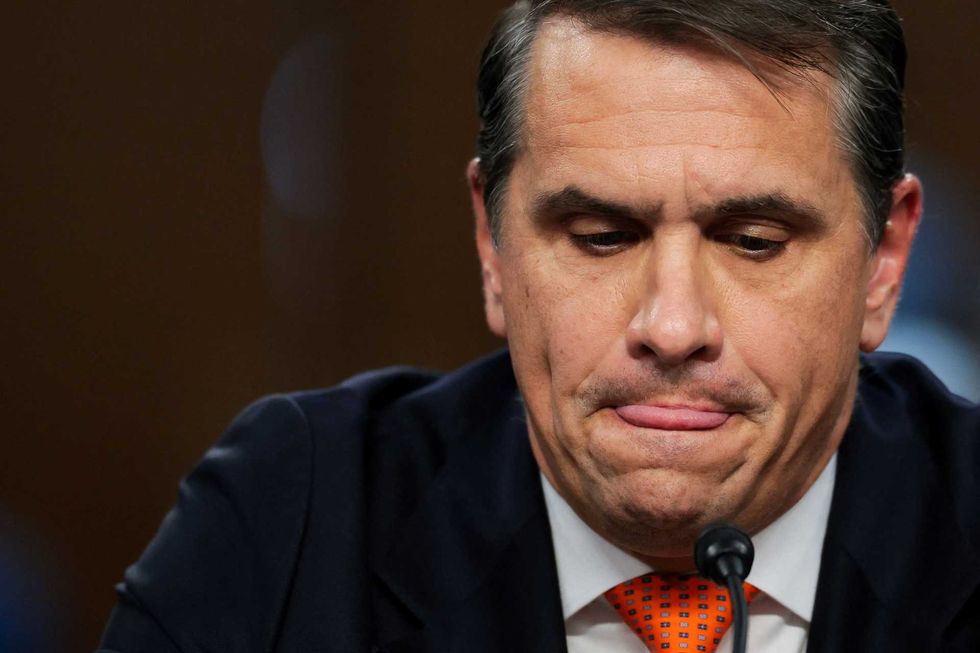
Acting U.S. Attorney General Todd Blanche testifies before a Senate Judiciary Committee confirmation hearing on his nomination to be attorney general, on Capitol Hill in Washington, D.C., U.S., July 15, 2026. REUTERS/Jonathan Ernst

Attorney General Todd Blanche's efforts to talk the Anti-Weaponization Fund to death without committing to it in writing have handed a federal court the tools to finish the job.
Allison Gill, a former Department of Veterans Affairs health specialist and co-host and co-founder of the Mueller, She Wrote podcast, filed a summary judgment motion Friday in San Diego federal court.
According to the filing, the Department of Justice created the fund's rules without the public notice-and-comment process required by the Administrative Procedure Act — a federal law that requires agencies to solicit public input before creating new programs.
The motion asks U.S. District Judge Cathy Ann Bencivengo to declare those rules unlawful and bar the government from reviving the fund without following proper procedure.
Gill believes the Trump administration forced her out of her VA job in 2020 after officials identified her as the host of an anti-Trump podcast, according to the motion.
Her motion argues that she is eligible to file a claim with the fund and that she wants the chance to weigh in on how it would work.
Instead of closing the case, the motion argues, Blanche's own moves to sidestep the fund have become the evidence that a court order is necessary. Blanche testified before the Senate that the settlement agreement behind the fund remains an "enforceable document," according to the motion.
He signed a Rescission Order canceling his May 18 fund-establishment order only after Sens. John Cornyn (R-TX) and Thom Tillis (R-NC) threatened to withhold their confirmation votes, the motion said.
But the Rescission Order did not address a parallel DOJ website notice that also established the fund's rules.
It also said nothing about the government's contractual obligations to President Donald Trump, which require that the fund proceed under the settlement agreement, the motion noted.
The order also described the lawsuits challenging the fund as "several frivolous lawsuits," suggesting to the motion's authors that it was designed to defeat court jurisdiction rather than end the program.
In a related lawsuit in the U.S. District Court for the Eastern District of Virginia, a judge offered the government the option of filing "a short, written declaration under the penalty of perjury" to confirm the fund was finished and render the litigation moot, according to the motion.
Blanche, however, declined to make those declarations to the court.
Blanche has insisted that the fund is "dead" and is "not moving forward" — but the motion argues those statements were tied to pending litigation and his push for Senate confirmation, which he has since secured, leaving him free to resurrect the fund at "some more propitious moment."
A separate federal court in Florida has already pointed to Blanche's personal conduct as a liability in the same matter.
"Then-Acting Attorney General Blanche unilaterally renounced the Anti-Weaponization Fund, without any indication of Plaintiffs' consent," a court-ordered brief said — conduct the court found demonstrated "his confidence that he could speak for, and bind, both sides of this matter."
A hearing before Judge Bencivengo is set for Sept. 25.
Report typos and corrections to corrections@rawstory.com.
For customer support contact support@rawstory.com.