White House reporter Asawin Suebsaeng, who writes for The Daily Beast, explains on “Salon Talks” why the Trump International Hotel in Washington is a powerful place of influence and intrigue. Located less than a mile away from the White House, Suebsaeng details how the hotel became a gathering place and home base for Trump’s confidants, members of his administration and supportive members of Congress and the media. Suebsaeng, along with Daily Beast reporter Lachlan Markay, detail what they witnessed at the Trump Hotel and more in their book Sinking in the Swamp: How Trump's Minions and Misfits Poisoned Washington.” To learn more about Suebsaeng’s reporting on Trump over the past three years and how Giuliani attempted to troll him, watch “Salon Talks.” Watch SalonTV’s interviews with actors, authors, comedians, politicians and more on “Salon Talks”: https://www.salon.com/tv Subscribe to SalonTV on YouTube HERE: https://www.youtube.com/salontv expand=1] Like Salon on Facebook HERE: https://www.facebook.com/salon Follow Salon on Twitter HERE: https://twitter.com/salon Follow Salon on Instagram HERE: https://www.instagram.com/salonofficial
The title of your book is "Sinking in the Swamp," but I know you wanted something else. Tell us about that.
We'd originally pitched the title, "Another S**tstorm in F**ktown: The Donald J. Trump Odyssey." We, or at the very least I, earnestly wanted that to be the title of the book. In my point of view, it is an appropriate title for a book about the current political era. Now, everybody involved in the decision-making process actually had a sway over this—book agents or people working for the publisher 100 percent vetoed that title. The compromise was that "Another S**tstorm in F**ktown" is the title of the first chapter of the book. You can't get everything in life, but there's compromises to be had.
I want to get your sense of what "the swamp" is exactly, because what I thought Trump meant by the swamp is clearly not the same as what you mean — unless he was being sarcastic when he said he was going to drain it. So when you say "Trump's swamp," what do you mean by that?
When we talk about the swam, it fits a little bit with Trump and his apparatchiks' messaging about "draining the swamp." He has been saying for years that he and his administration are draining the swamp and that his supporters should be very proud of him for that. What he means by that is sort of attacking the legalized and normalized form of corruption that the political class in Washington, D.C., and elsewhere has allowed to fester in this country for years, if not decades or centuries.
Now, it may shock your viewers to hear me say this, but it's just another lie. It's another lie that Trump tells the media and tells his supporters, because there is no swamp-draining whatsoever. All of that legalized form of corruption in Washington and influence-peddling and people with well-connected families and well-connected social networks, they're still getting the exact same jobs. When he says he's getting rid of that and draining that, that's just a complete lie. It's bullshit.
The second category is this more in-your-face Trumpian, almost reality-TV form of corruption. Obviously, the pre-eminent example of that that we've seen in recent years was the Trump-Ukraine scandal.
Speaking of Donald Trump's in-your-face corruption, last week he granted clemency to Paul Pogue, a Republican donor who gave $85,000 to the Trump Victory fund and $150,000 the Republican National Committee in the last year. Trump is literally selling clemency to people, yet his base just cheers at the rallies. To them, Trump's promise to clean the swamp means nothing. Or are they in this for other reasons?
Well, obviously there are so many reasons, in terms of cultural grievance and concrete policy, that Trump's base of supporters will never abandoned him. But when it comes to the drain-the-swamp rhetoric, which is just a complete and total lie, it doesn't really matter. It's a catchphrase at this point for them. As you pointed out, when it comes to any rational or objective definition of the Washington swamp, granting favors for donors or close buddies and sort of maintaining a clique where the rules simply don't apply — by any reasonable, objective standard, Donald Trump is the poster boy for that.
But as with so many other calculations that he and his team make, they came to the determination a long time ago that political hypocrisy does not matter, at least not as it pertains to the Republican Party, Republicans on Capitol Hill or his base of supporters. It's just something he has gotten away with lying about and will continue to get away with lying about as long as he's in power. Because the Republican Party has decided it does not matter and this is our guy.
I get the sense from your book that the Trump International Hotel in Washington is Swamp Central. Is that where the swamp creatures go to hang out, meet and work with each other?
Oh, 100 percent. Trump International Hotel in Washington, which is just a stone's throw away from the Oval Office, it's just as much of a character as any of the human beings we profile in "Sinking in the Swamp." I mean, when Obama was in office, there obviously was not an Obama International Hotel just walking distance from the West Wing. But here, it's just completely in your face, available for anybody to witness. The lobby of the Trump International Hotel — it's sort of a cliché at this point to describe it as a Star Wars cantina of characters in Trump World, whether they are highly prominent media people or senior administration officials or campaign hands mingling, buying extremely overpriced drinks, going there for fundraisers, going there for various pro-Trump events. Trump himself will show up there routinely to attend some of these events, or mingle with people, or just grab a well-done steak with ketchup on it at the steakhouse in the lobby.
And again, all of this is high-powered people — sometimes foreign dignitaries, sometimes senior officials in his own White House — who are just putting money directly into Donald J. Trump's pocket and the pocket of his family empire. It's incredibly quiet when he wants to talk about the "corruption" of the Biden family, when this is all happening in broad daylight, just a rock's throw away from the White House.
You write about some of the personal connections you developed talking to well-known Trump people. You have an interesting relationship with actor Jon Voight, who has become the biggest Trump defender in Hollywood. Why did you call Jon Voight? Why did you think he would talk to you?
During the 2016 campaign, part of my function at the Daily Beast was to cover the intersection of Hollywood and politics. At some point, I just happened to come upon his personal phone number and I started calling him to ask him about Donald Trump and what he was doing for the campaign and what degree of coordination there was. This telephone-tag relationship sort of continued throughout the wild months of the 2016 campaign. One day I just called him to bother him about something, which was a speech he was about to deliver in Washington in support of Republicans and in support of Trump.
We had a brief conversation where I annoyed him for, I think, a couple of minutes. I hung up the phone. I was alone in the Daily Beast office a few hours later. I was working into the early evening, just alone in the office counting down the minutes till I could go home. And then suddenly, my phone starts buzzing, and it's Jon Voight again. Obviously, this makes me curious. As we recount in the book, I pick it up and he starts asking me something to the effect of, "Is this a good time? I hope I'm not bothering you." He's extremely deferential, which is a complete 180 from how he usually is when we talk, which is usually just pissed off that I'm bothering him.
I tell him, "No, go ahead Jon. What do you want to talk about?" "I really hope I'm not bothering you," he said again, sort of gingerly. And I'm completely weirded out by this. I ask him, "OK, just get on with it. What do you want to talk to me about?" And he starts saying something to the effect of, "Well, I had some ideas for the upcoming Trump event and if you have a moment, I'd like to go over with you X, Y and Z." And then he cuts himself off, and he asked me, "Wait a minute, is this Steve? Steve Mnuchin?" Who was obviously the former Hollywood executive producer who at the time was Trump's campaign finance chair, and who's now treasury secretary of the United States. So journalistic ethics prevented me from lying.
I was extremely curious about what he would have said to me if I were actually Steve Mnuchin, and we were able to talk about details about a fundraiser, or an event or what have you. So unfortunately I had to break and say, "No, Jon, this is Asawin Suebsaeng, we spoke a couple of hours ago." So he immediately said, "Oh, all right. Sorry lad. Thank you. Bye." And he just hung up the phone. To this day I still wonder what Jon Voight was about to dish to me had he continued to think I was Steve Mnuchin.
You've also spoken with Rudy Giuliani, but one incident where he's texting you while on a plane is just bizarre. Tell us about that one.
This was in December 2018, shortly before Christmas, I believe. I'm sitting in my in-laws' house in Ohio, just working remote out of the office. It was early evening and I'm counting down the minutes or hours before I can start hanging out with my in-laws and my wife and stop working. And suddenly, my phone starts dinging and it's text messages from Trump's attorney, Rudy Giuliani. This is recounted verbatim in the book, but I'm going to lightly paraphrase here.
He starts claiming to me that he's stuck on a tarmac in New York and that he's convinced Robert Mueller has basically taken him hostage, and he's trying to sweat him out to get him to rat on President Trump. He sends a little rat emoji with this ridiculous text message and starts saying, "I'm no rat. Mueller wants me to squeal on these unpaid parking tickets that Trump had in the 1970s when he was parked in front of the Moscow Embassy but he's not going to break me. I'm no snitch. I'm trying to liberate the plane. I try and get him to list my pals and FDNY or the NYPD, to come save us." I have no idea what's going on. I'm thinking through my head, is he drunk? Did he sync his phone with his laptop and he left his laptop open and someone saw this, and is now pretending to be Rudy Giuliani and just fucking with a journalist who happens to be in his contacts?
I couldn't for the life of me figure out what was going on at the time. So I messaged him back, "Is this like a weirdo tweet that you accidentally sent to me?" He says, "No, no, no. This is a secret text, I'm trying to give you the low down on what's going on." I'm convinced he's pranking me or that someone's pranking me. So I try to ignore it and get up from the table where I was sitting and put the phone in my pocket. And then it starts ringing and it says, Rudy Giuliani. So I pick it up and the guy is clearly Rudy Giuliani, it's not somebody else.
He's saying, "Well, Asawin, I've liberated the plane and everything's OK now. Just wanted to let you know." I'm really confused as to what's going on. At some point, after he senses my utter befuddlement at the scenario, he breaks character, starts laughing and reveals to me that he was just prank-texting me and prank-calling me. This was all a ruse and he is stuck on a tarmac in New York, but it was for completely mundane reasons and he was bored. So he decided to pull up about 10 contacts or so in his phone and start sending people the exact same messages. Some of them were journalists, he said. Some of them were Trump World associates or friends. He was just seeing how people would respond. Part of him was curious, if he would send these messages to a reporter, if the reporter would tweet it out, taking them at face value and basically print fake news saying, "Rudy Giuliani is going nuts about trying to liberate some plane from Robert Mueller." Or something like that.
We had kind of a good awkward laugh about it, we hung up and I just sort of stared into the mouth of madness for a moment that the president's personal attorney, while defending him in this extremely high stakes Mueller-Russia probe, was wasting his time prank-calling and prank-texting a bunch of people, just because.
It was an utterly surreal moment that in a weird way encapsulated my experiences of covering Trump World and the administration. Much later on, after Lev Parnas started supplying information to Capitol Hill investigators and they released some of the private text messages between him and Rudy Giuliani as the impeachment inquiry was getting underway, I realized that one of the people he was sending these exact same text messages and emojis to was Lev Parnas, that same night.
You made Rudy Giuliani's top 10! It makes you wonder about some of the statements Giuliani has made on television, and if that was partly fun for him. You also talk about a sea of professional liars in Washington. There's two people you say you will never cite as sources because they lack credibility. Who are they?
You basically hear lies from multiple sources, from different angles. These people have different agendas and different biases, and you cross reference those lies. And somewhere, while talking to these administration officials or Trump World sources, you cross-reference enough lies that you find the little kernel of truth and agreement at the center in between. And you take that little kernel of reportable truth and that's what ends up being published. So that's, I think, a healthily cynical way to go about reporting, just to help ensure that you're not getting played by these people who very frequently are granted anonymity and could be trying to shovel bullshit or spin us their way.
In grappling with that, at some point you encounter fairly prominent people within Trump World who just exhaust all your goodwill and good faith to the point where —look, you can make the argument that perhaps everybody within Trump World is a mendacious, prolific liar.
For me as a political reporter, I have to be able to look at myself comfortably in the mirror in the morning while I'm shaving. There are just some things I cannot bring myself to do. And two things I have not been able to bring myself to do for years are to grant anonymity to two specific people in particular: Roger Stone and Corey Lewandowski. Obviously, Roger Stone has been in the news quite a bit recently, and the two of them happen to be mortal foes and hate each other's guts.
But as we detail in the book, there came a point early on in the Trump era where we straight up told Corey Lewandowski directly, "OK, if we're talking to you as reporters, we don't go off the record ever and we're not going to grant you anonymity. Everything that we say to each other from this point out is now on the record because we just cannot trust you and you are such a proven, prolific, shameless liar that that's the deal we're making with you right now. And if you don't like it, literally never speak to us ever again because there's just no way we can justify doing it without everything being on the record and usable as quotes attributed directly to Corey Lewandowski, because you're going to lie shamelessly to us. We're not going to let you get away with doing it with the cloak of anonymity."
I think it's very healthy for political reporters, not just covering this president but any American president, to draw lines in the sand with people who have proven that they don't deserve your good faith as a reporter and that they should not be trusted for a split second.
What's the line where you're trying to get access to people, but if you press too hard or you write a hideous story about them, you lose access to them? That's your currency as a White House reporter, the idea of having access to certain people in the administration. Is there a push and pull, a balance that you have to keep?
There's 100 percent a balancing act and it's different in every individual case and for each individual reporter. I'm not going to sit here and judge anybody else in this profession for how they decide to go about their job, but for me, generally the line is that you have conclusively determined that someone has tried to fuck you before you hit publication, before you hit publish on a story. They're clearly trying to ratfuck you or trying to get you to print lies, either for their own agenda, to screw over a colleague or just to mess with you. Then if you've conclusively proved that, get on the phone with them and tell them, "Either the only time we're going to talk is going to be completely on the record or I'm never calling you again. Good luck and godspeed trying to do this with any of the scores of other liberal reporters, but you're not going to do it with me."
Again, case by case basis, but there are definitely senior people in the White House right now who I no longer talk to. Not because it was necessarily their decision, but because I determined that there's no use and trying to wring even a kernel of truth out of talking to them, whether on the record, anonymously or off the record.
One last thing: You have interacted for years now with people who were in Trump World, left and now are back, like Hope Hicks. You talk about her in your book a great deal. You've dealt with people like Sebastian Gorka and Giuliani and the like. Are you concerned with the idea that some people in Trump's world would literally do anything to keep him in power?
I think it's important, not just as a political reporter, but just as a citizen who consumes this stuff on a semi-regular basis, to be extremely vigilant about what's going on right now. I don't think people need to necessarily set their hair on fire or get hysterical about anything, but we are seeing in real time what looks like President Trump's active attempts to politicize as much as he can, and wring as much fealty as he can, out of supposedly nonpartisan and independent institutions like, say, the Justice Department or the intelligence community.
What is going on in plain sight every day and what we know, and what Trump almost freely admits on a public basis, is that he would prefer these institutions, whether they're the FBI, DOJ, CIA or ODNI, to be unflinchingly loyal to him. Not to the Constitution, not to the country, not even necessarily to a political party, but to Donald J. Trump himself. That is a way scarier prospect — what is currently being attempted, however clumsily, by this president — than someone like Sebastian Gorka, who is easier to write off more as sort of a bumbling character.








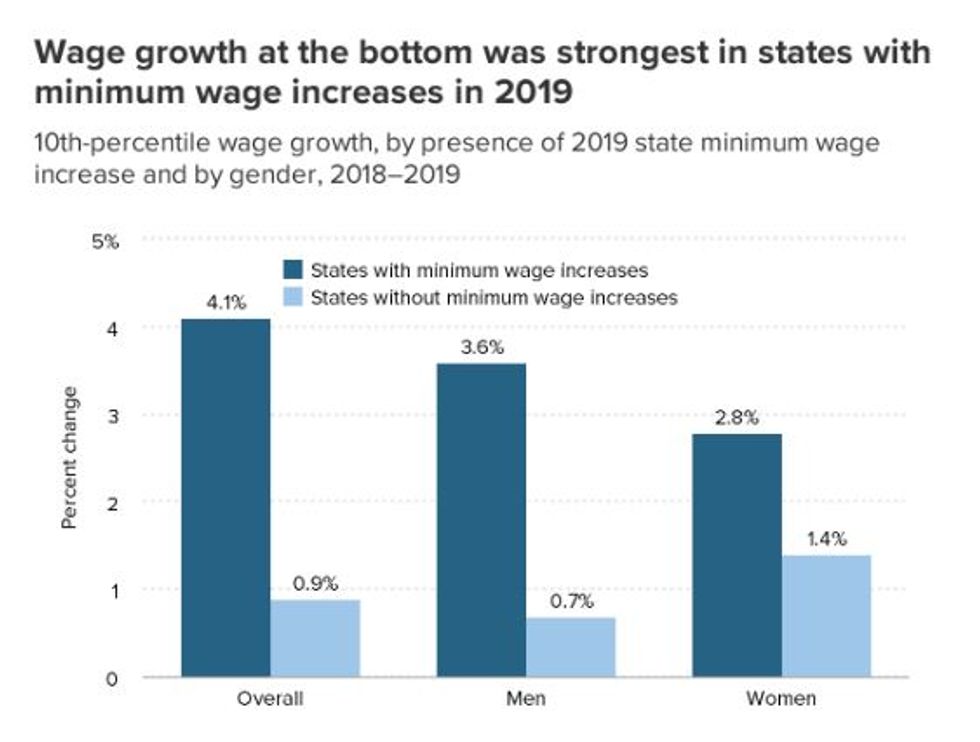 Source:
 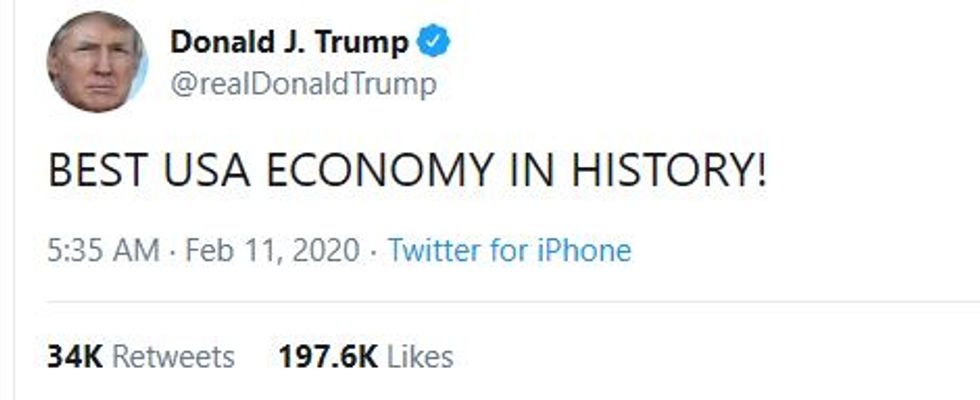 Finally, if you harbor any remaining belief that Trump is helping workers make more, consider these two facts from consecutive days earlier this month.