It may be the global day for pranks but with the world under assault from the deadly coronavirus pandemic many governments on Wednesday were warning against virus-themed April Fools' jokes -- some even threatening jail.
The April 1 tradition sees families, web users and corporations embrace practical jokes.
But few are in the mood as the global death toll mounts and billions remain under some form of lockdown.
Google, a company renowned for its elaborate annual stunts, told its employees it would "take the year off from that tradition out of respect for all those fighting the Covid-19 pandemic," according to an internal email obtained by Business Insider.
The deadly outbreak has already been accompanied by a deluge of online misinformation, making it harder for governments to keep their citizens safe.
Some are now threatening jail for virus pranks.
Taiwan, which has been held up as a model for how to tackle an outbreak, warned people who spread false rumours that they faced up to three years in jail and a TW$3 million fine ($100,000).
"On April Fools' Day we can exercise our sense of humour if we have to but we can't make jokes on the pandemic to avoid breaking the law," President Tsai Ing-wen posted on Facebook alongside a photo of one of her cats.
"I wish everybody not only a humorous but also healthy and safe April Fools' Day."
The island's health ministry has also been using an official "spokesdog" called Zongchai to make public statements.
"Zongchai asks you not to make any pranks on the outbreak. Please be considerate to the frontline workers on epidemic prevention," one post on the ministry's Facebook page said on Wednesday next to a photo of the popular shiba inu.
Thailand was taking a similarly hard line, threatening up to five years in jail.
"It's against the law to fake having COVID-19 this April Fools' Day," the government said on Twitter.
"There may be people who do not have good intentions... who may use April 1 or April Fools' Day and assume they will not face legal action," Krissana Pattanacharoen, deputy national police spokesman, told reporters on Tuesday.
In India, where disinformation -- especially on Whatsapp -- remains a pervasive problem, politicians made similar appeals.
"The state govt won't allow anyone to spread rumours/panic on #Corona," tweeted Maharashtra state's home minister Anil Deshmukh.
"We urge citizens to verify information and only share messages from trusted sources and not fall for fake news," Pranay Ashok, a spokesman for Mumbai Police, told AFP, adding that anyone found spreading fake news would be prosecuted.
Many well-known brands with a prior track record of jumping on the annual bandwagon were steering clear of the tradition this year.
James Herring, from London-based PR agency Taylor Herring, had the following warning.
"Tip for any PR agencies planning an April Fools Day stunt," he wrote last week on Twitter. "Just. Don't."'
The automotive industry is offering its expertise and manpower to the hospital sector as it gears up to build mechanical ventilators during the coronavirus pandemic, an initiative that is being met with some scepticism.
American auto manufacturers General Motors and Ford, French car companies PSA and Renault, and Formula 1 engineers have joined the ranks in response to a massive global shortage of the vital piece of medical equipment.
As hospitals around the world face a surge of patients with breathing difficulties from COVID-19, the scarcity of ventilators has forced doctors to make life-or-death decisions.
Repurposing car factories for emergency production has drawn comparisons to World War II, when they were used to build tanks and fighter planes.
But some experts say that in this situation, building critical care ventilators will require different techniques and procedures from what a car factory normally sees.
US President Donald Trump used wartime economy analogies to justify his appeal to the automobile industry as the country grapples with a mounting number of coronavirus cases. He ultimately used a 1950s law concerning defence production to force one of GM's plants to make ventilators.
In France, meanwhile, a consortium of industrial companies has been created -- including PSA and automotive equipment supplier Valeo -- to manufacture "10,000 ventilators by mid-May", President Emmanuel Macron announced Tuesday.
For its part, Mercedes has asked its Formula 1 team, which was idle due to postponed or cancelled Grand Prix races, to get to work.
The six-time world champion team built a less-invasive respiratory device in order to reserve ventilators -- which require breathing tubes and sedation -- for the most severely affected patients.
The team says it could manufacture some 1,000 units a day with the help of six other UK-based F1 teams which have committed to help build the devices.
A version of the device -- which increases air and oxygen flow into the lungs and is often used to treat sleep apnea -- has already been used in hospitals in Italy and China to help COVID-19 patients.
The "Project Pitlane" mission takes advantage of "the core skills of the F1 industry: rapid design, prototype manufacture, test and skilled assembly," Formula 1 said in a statement.
- Dependent on suppliers -
Some look sceptically on the car industry's entry into the world of medical equipment, however.
The Bulletin of the Atomic Scientists, a non-profit organisation founded after the creation of the atomic bomb and which is known for its symbolic "Doomsday Clock", said in a recent article that car manufacturers are not best placed for assembling medical equipment.
"Ventilators might resemble the pumps and air conditioners used in automobiles, but few automakers build their own -- they buy them from specialised producers," the group pointed out.
University College London (UCL)/AFP/File / James Tye Mechanical engineers, doctors and the Mercedes Formula 1 team in conjunction with University College London have adapted a device used to help people who have trouble breathing while sleeping to help COVID-19 patients
While carmakers have under-utilised production capacity at the moment, they are still dependent on suppliers who are often overseas, at a moment when supply chains have nearly ground to a halt, it said in its report.
"Facile images of Ford assembly lines building World War II bombers can only get us so far in solving the ventilator problems of today," the group said.
But car manufacturers say they are up to the task.
Renault has put its "technocentre" outside of Paris, its largest research and development centre in France, to work on developing a prototype using state-of-the-art equipment such as 3D printers
In the world race to get ahead of the coronavirus, time is of the essence.
For Formula 1 and University College London engineers, "it took fewer than 100 hours from the initial meeting to production of the first device," the team said.
This may be a typical lead time in motor racing, but not necessarily in other industries.
The captain of the US nuclear-powered aircraft carrier Theodore Roosevelt told the Pentagon that new coronavirus is spreading uncontrollably through his ship and called for immediate help to quarantine its crew.
But Defense Secretary Mark Esper on Tuesday ruled out evacuating the ship, whose plight bears similarities to that on civilian cruise ships where the COVID-19 illness spread.
Captain Brett Crozier wrote in a four-page letter that they had not been able to stem the spread of COVID-19 through the 4,000 crewmembers, describing a dire situation aboard the vessel now docked at Guam, a US territory in the Pacific.
"We are not at war. Sailors do not need to die," Crozier wrote, according to the San Francisco Chronicle, which published a copy of the letter on Tuesday.
"The spread of the disease is ongoing and accelerating," Crozier wrote, referring to the ship's "inherent limitations of space."
He asked to be able to quarantine nearly the entire crew onshore at Guam, saying keeping them all on board the ship was an "unnecessary risk."
There is little opportunity for "social distancing", which US civilians have been told to practice, among the cramped passageways and sleeping quarters of an aircraft carrier.
"Removing the majority of personnel from a deployed US nuclear aircraft carrier and isolating them for two weeks may seem like an extraordinary measure," he said. "This is a necessary risk."
Asked on the CBS Evening News whether it was time for an evacuation, Esper said: I don't think we're at that point."
He added that supplies and medical assistance are being moved out to the Roosevelt.
"We're providing additional medical medical personnel as they need it."
He added that "none of them are seriously ill" and the Navy is "trying to make sure that we contain the virus, that we deploy testing kits. We get a good assessment of how much of the crew is infected."
- Over 100 cases on board -
The Chronicle said that more than 100 aboard the warship had been confirmed infected with the new coronavirus, around four times the figures given last Friday.
Crozier asked in the letter for quarantine facilities for the entire crew on Guam.
Navy Office of Information/AFP / Kaylianna GENIER Hospital Corpsman 1st Class Ernesto Santa Ana loads a sample for complex surveillance testing of COVID-19 in a mobile laboratory aboard the aircraft carrier USS Theodore Roosevelt (CVN 71)
The US Navy did not confirm the contents of the letter, which were also reported by The New York Times.
In a statement, a Navy official under condition of anonymity said that Crozier had alerted his Pacific fleet leaders on Sunday of the problems aboard the carrier.
"The ship's commanding officer advocated for housing more members of the crew in facilities that allow for better isolation," the official said.
"Navy leadership is moving quickly to take all necessary measures to ensure the health and safety of the crew of USS Theodore Roosevelt, and is pursuing options to address the concerns raised by the commanding officer."
- Vietnam port stop -
Some speculated that the infection could have begun with a port stop in Vietnam by the Roosevelt.
The carrier put in to Da Nang port for five days in early March, when the virus was raging in China and more than a dozen cases had been detected in Vietnam.
Acting Navy Secretary Thomas Modly told CNN Tuesday that he agreed with Crozier on the seriousness of the situation, and that they had been working over the past few days to move people off of the Roosevelt.
However, he said, facilities to sequester the afflicted sailors in Guam, which hosts a major US naval base, are limited.
"We are having to talk to the government there to see if we can get some hotel space, create some tent-type facilities there," Modly said.
In his letter published by the Chronicle, Crozier referred to a study about the Diamond Princess cruise ship which was quarantined off Japan earlier this year.
The study concluded that early evacuation of passengers and crew would have prevented many more infections. Ten passengers died and more than 700 people who were on board contracted the virus.
China on Wednesday said it has more than 1,300 asymptomatic coronavirus cases, the first time it has released such data following public concern over people who have tested positive but are not showing symptoms.
Health officials also reported the first imported case from abroad in Wuhan -- the epicentre where the virus first emerged late last year -- heightening fears of infections being brought into China from other countries.
Of 36 new cases reported Wednesday, 35 were imported from abroad.
The National Health Commission (NHC) said 1,367 asymptomatic patients were under medical observation, with 130 new cases newly added in the last day.
The NHC announced Tuesday that it would respond "to public concerns" by starting to publish daily data on asymptomatic cases, which it said were infectious.
There were mass online calls for the government to reveal the number of asymptomatic cases after authorities revealed over the weekend that an infected woman in Henan province had been in close contact with three asymptomatic cases.
AFP / NOEL CELIS Health officials in China have reported the first imported case from abroad in Wuhan -- the epicentre where the virus first emerged late last year
However, asymptomatic cases are not being added to the official tally unless they later show clinical symptoms.
Historical data on those infected without showing symptoms has not been published.
Beijing has announced a series of dramatic measures to curb arrivals into the country and control imported cases -- including a ban on foreigners entering China and testing those arriving from overseas -- making it easier to determine those who are infected but don't show symptoms.
China says all detected asymptomatic cases and their close contacts must undergo 14-day centralised quarantine.
Experts agree that asymptomatic patients are likely to be infectious, but it remains unknown how responsible they are for spreading the deadly virus.
Chinese respiratory expert Zhong Nanshan said in a state media interview last week that asymptomatic carriers could potentially infect "3 to 3.5 people each".
Many other countries including South Korea and Japan count asymptomatic cases in their national tallies of confirmed diagnoses.
There have now been 81,554 infections in China, with 3,312 deaths -- mostly concentrated in the epicentre of Wuhan and surrounding Hubei province.
The first imported case confirmed in Wuhan, a Chinese national studying in Britain, arrived in the city last week as it starts to gradually lift travel restrictions imposed to control the outbreak.
Recently Facebook, Reddit, Google, LinkedIn, Microsoft, Twitter and YouTube committed to removing coronavirus-related misinformation from their platforms.
Unfortunately, this comes with myriad misinformation, much of which is spread through social media bots.
These fake accounts are common on Twitter, Facebook, and Instagram. They have one goal: to spread fear and fake news.
We witnessed this in the 2016 United States presidential elections, with arson rumours in the bushfire crisis, and we’re seeing it again in relation to the coronavirus pandemic.
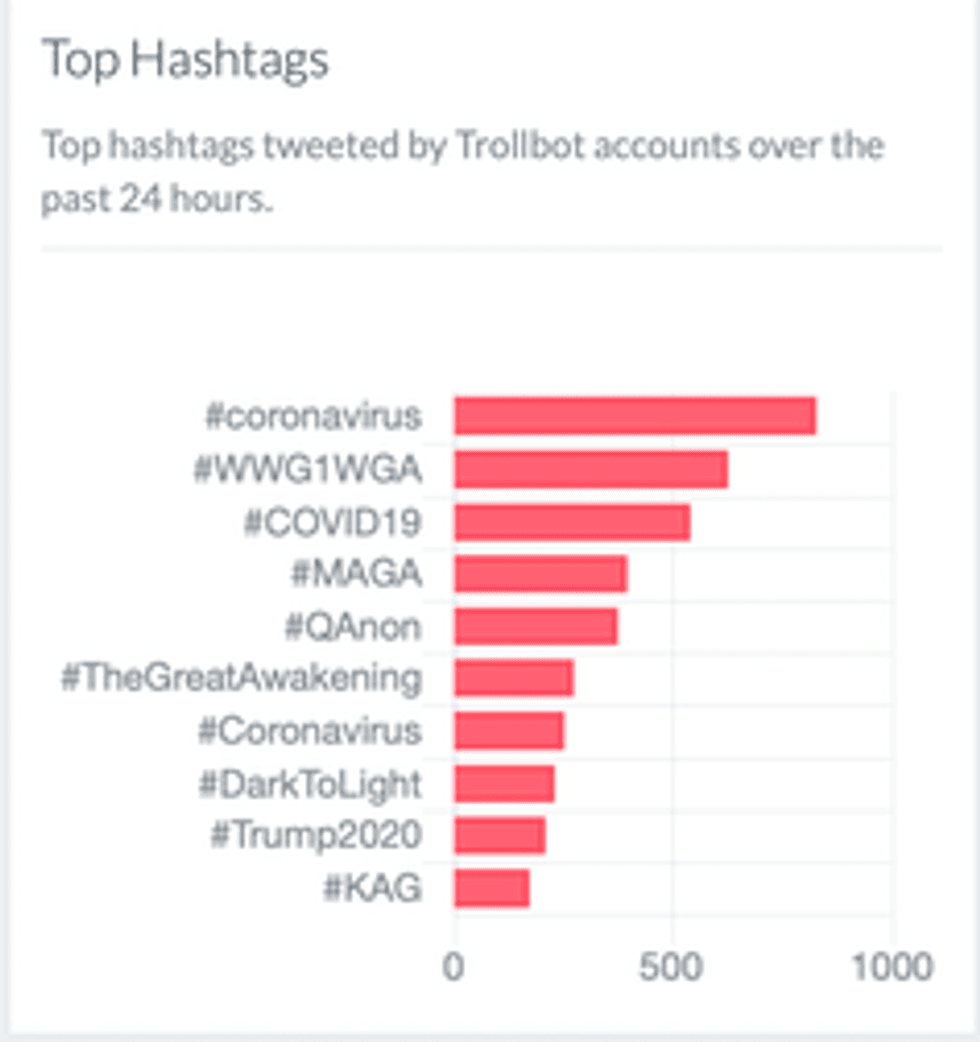
This figure shows the top Twitter hashtags tweeted by bots over 24 hours.
Bot Sentinel
The exact scale of misinformation is difficult to measure. But its global presence can be felt through snapshots of Twitter bot involvement in COVID-19-related hashtag activity.
Bot Sentinel is a website that uses machine learning to identify potential Twitter bots, using a score and rating. According to the site, on March 26 bot accounts were responsible for 828 counts of #coronavirus, 544 counts of #COVID19 and 255 counts of #Coronavirus hashtags within 24 hours.
These hashtags respectively took the 1st, 3rd and 7th positions of all top-trolled Twitter hashtags.
It’s important to note the actual number of coronavirus-related bot tweets are likely much higher, as Bot Sentinel only recognises hashtag terms (such as #coronavirus), and wouldn’t pick up on “coronavirus”, “COVID19” or “Coronavirus”.
How are bots created?
Bots are usually managed by automated programs called bot “campaigns”, and these are controlled by human users. The actual process of creating such a campaign is relatively simple. There are several websites that teach people how to do this for “marketing” purposes. In the underground hacker economy on the dark web, such services are available for hire.
While it’s difficult to attribute bots to the humans controlling them, the purpose of bot campaigns is obvious: create social disorder by spreading misinformation. This can increase public anxiety, frustration and anger against authorities in certain situations.
A 2019 report published by researchers from the Oxford Internet Institute revealed a worrying trend in organised “social media manipulation by governments and political parties”. They reported:
Evidence of organised social media manipulation campaigns which have taken place in 70 countries, up from 48 countries in 2018 and 28 countries in 2017. In each country, there is at least one political party or government agency using social media to shape public attitudes domestically.
The modus operandi of bots
Typically, in the context of COVID-19 messages, bots would spread misinformation through two main techniques.
The first involves content creation, wherein bots start new posts with pictures that validate or mirror existing worldwide trends. Examples include pictures of shopping baskets filled with food, or hoarders emptying supermarket shelves. This generates anxiety and confirms what people are reading from other sources.
The second technique involves content augmentation. In this, bots latch onto official government feeds and news sites to sow discord. They retweet alarming tweets or add false comments and information in a bid to stoke fear and anger among users. It’s common to see bots talking about a “frustrating event”, or some social injustice faced by their “loved ones”.
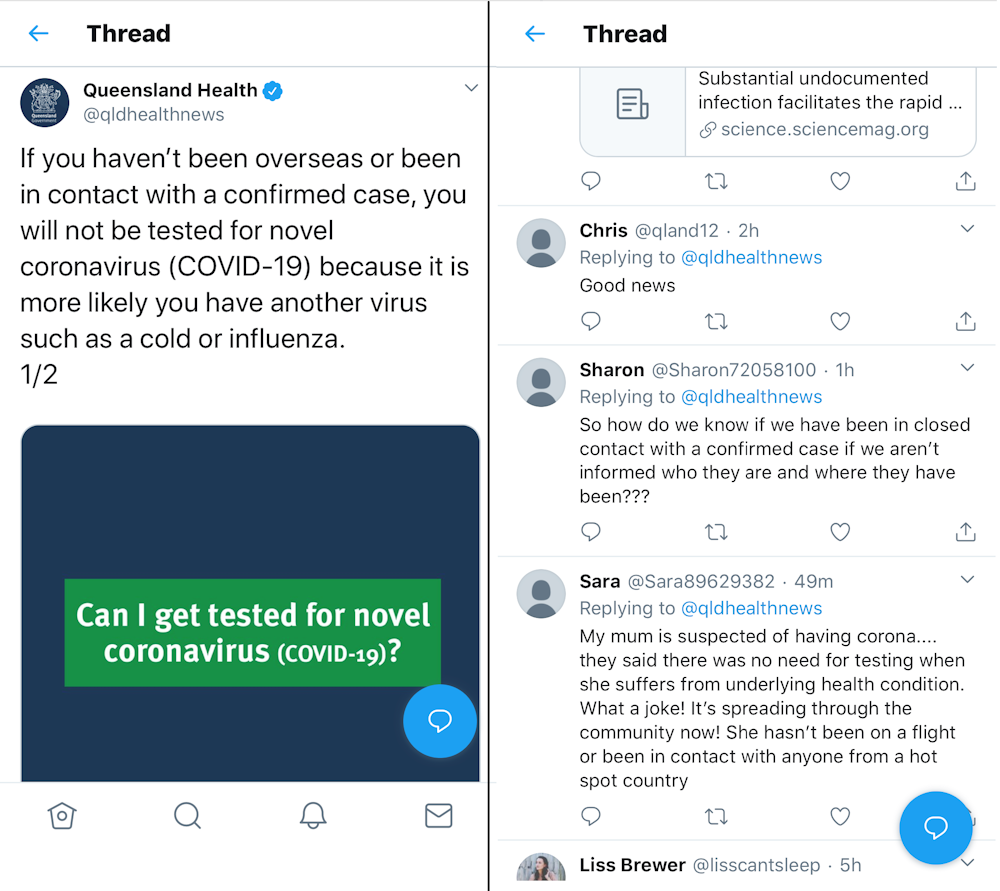
The example below shows a Twitter post from Queensland Health’s official twitter page, followed by comments from accounts named “Sharon” and “Sara” which I have identified as bot accounts. Many real users reading Sara’s post would undoubtedly feel a sense of injustice on behalf of her “mum”.
The official tweet from Queensland Health and the bots’ responses.
While we can’t be 100% certain these are bot accounts, many factors point to this very likely being the case. Our ability to accurately identify bots will get better as machine learning algorithms in programs such as Bot Sentinel improve.
How to spot a bot
To learn the characteristics of a bot, let’s take a closer look Sharon’s and Sara’s accounts.
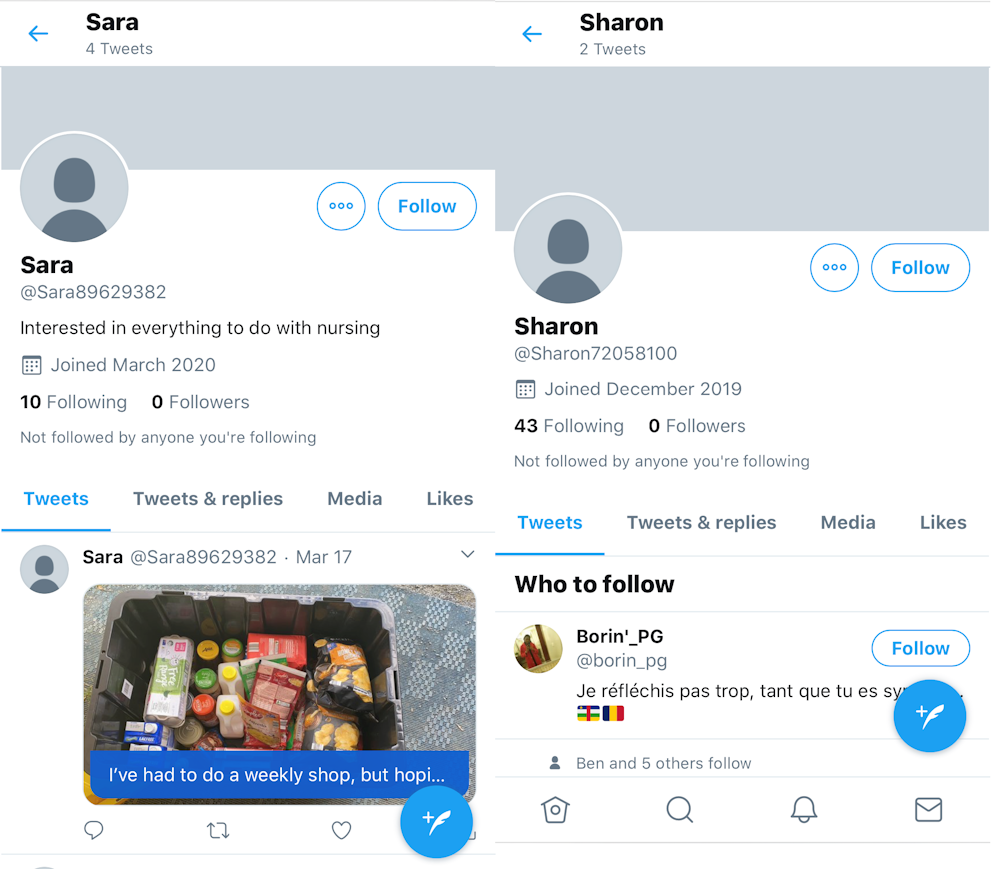
Screenshots of the accounts of ‘Sharon’ and ‘Sara’.
Both profiles lack human uniqueness, and display some telltale signs they may be bots:
they have no followers
they only recently joined Twitter
they have no last names, and have alphanumeric handles (such as Sara89629382)
they have only tweeted a few times
their posts have one theme: spreading alarmist comments
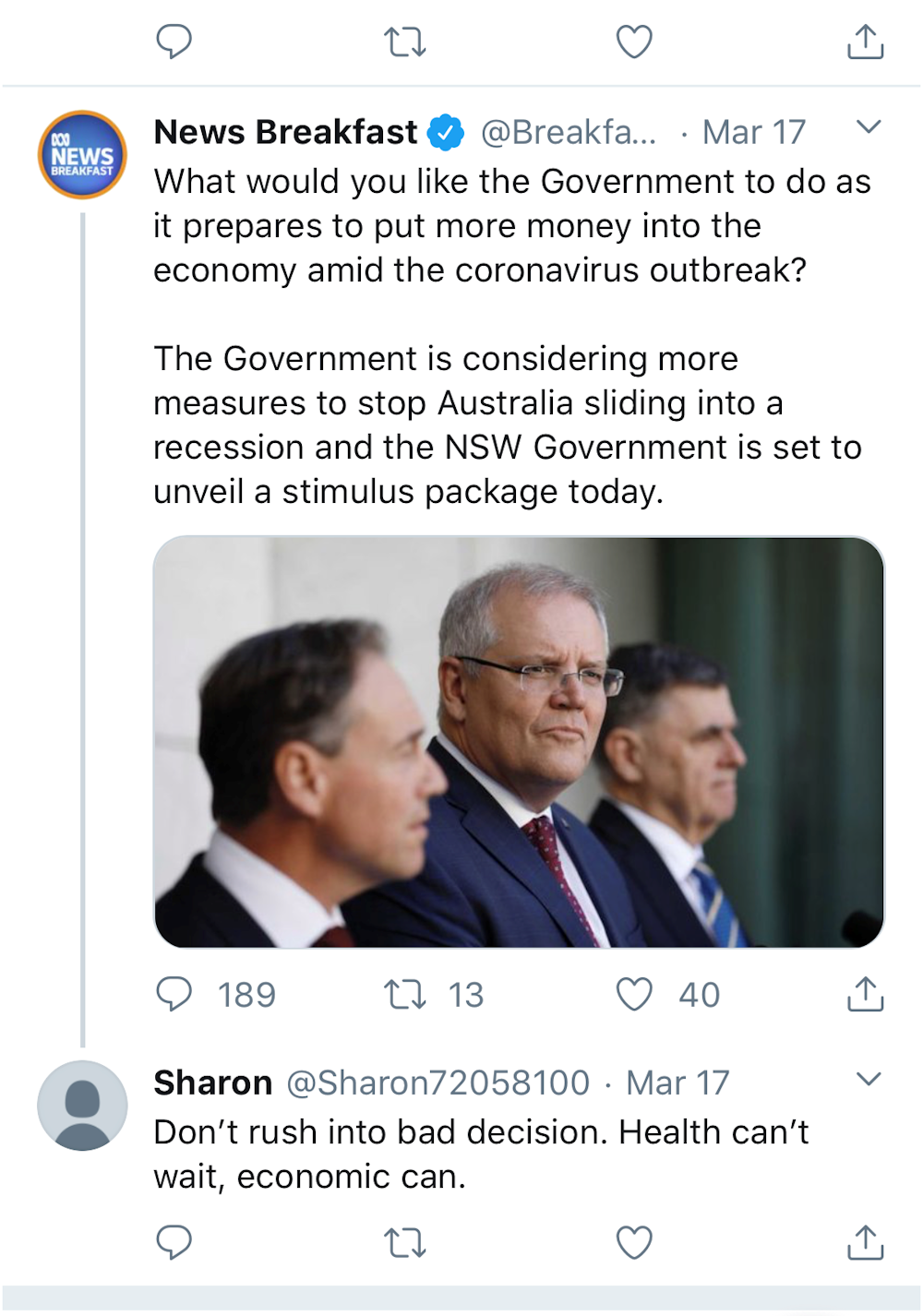
Bot ‘Sharon’ tried to rile others up through her tweets.
they mostly follow news sites, government authorities, or human users who are highly influential in a certain subject (in this case, virology and medicine).
My investigation into Sharon revealed the bot had attempted to exacerbate anger on a news article about the federal government’s coronavirus response.
The language: “Health can’t wait. Economic (sic) can” indicates a potentially non-native English speaker.
It seems Sharon was trying to stoke the flames of public anger by calling out “bad decisions”.
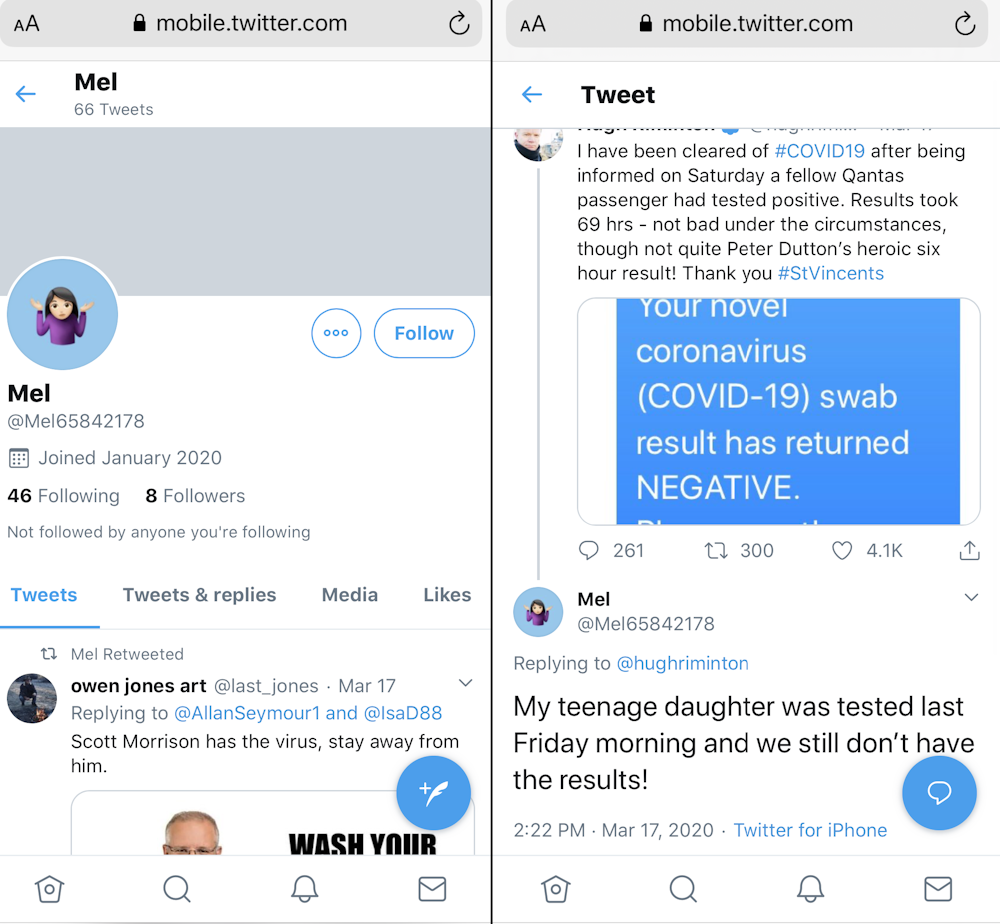
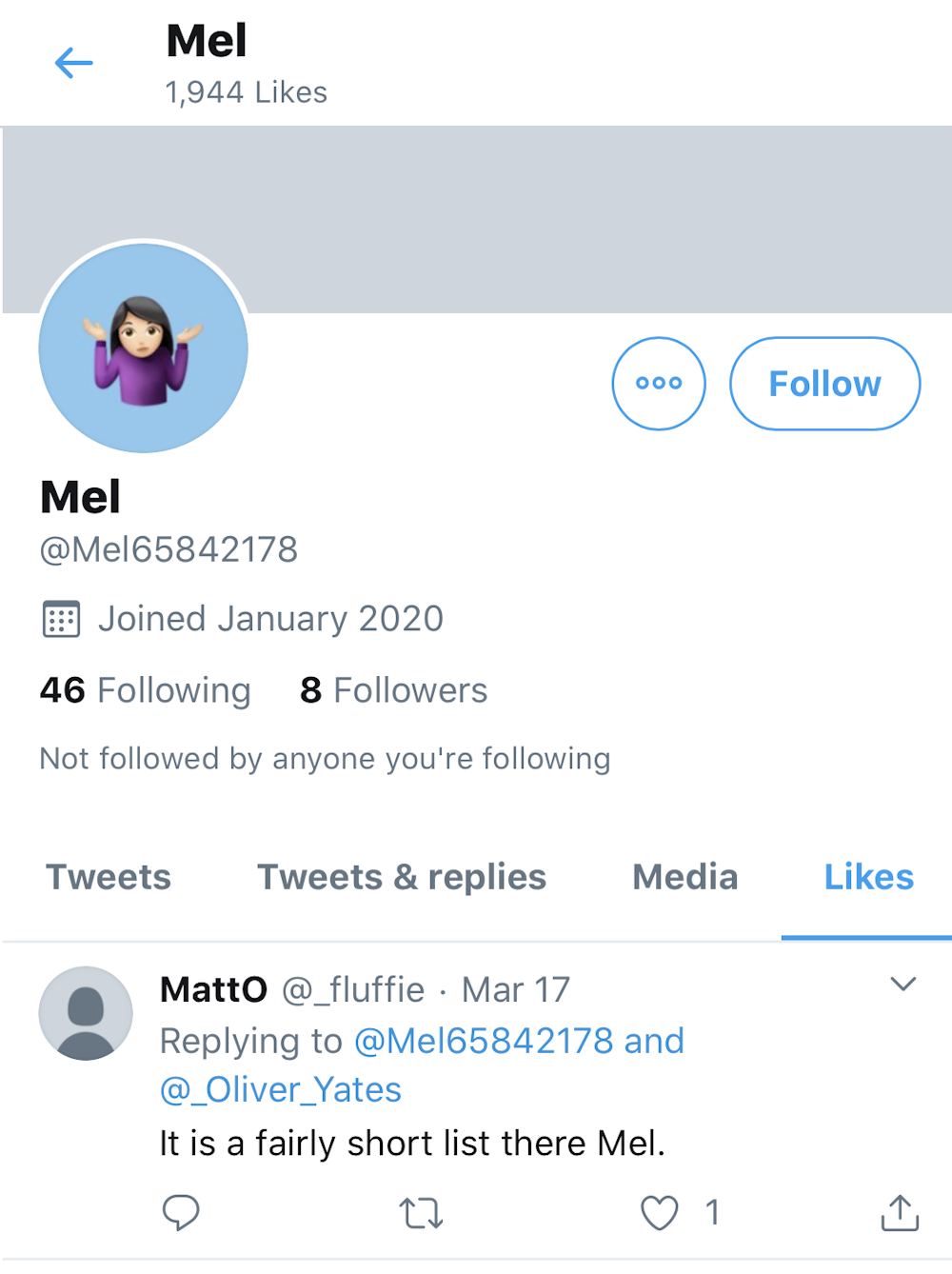
Looking through Sharon’s tweets, I discovered Sharon’s friend “Mel”, another bot with its own programmed agenda.
Bot ‘Mel’ spread false information about a possible delay in COVID-19 results, and retweeted hateful messages.
What was concerning was that a human user was engaging with Mel.
An account that seemed to belong to a real Twitter user began engaging with ‘Mel’.
You can help tackle misinformation
Currently, it’s simply too hard to attribute the true source of bot-driven misinformation campaigns. This can only be achieved with the full cooperation of social media companies.
The motives of a bot campaign can range from creating mischief to exercising geopolitical control. And some researchers still can’t agree on what exactly constitutes a “bot”.
But one thing is for sure: Australia needs to develop legislation and mechanisms to detect and stop these automated culprits. Organisations running legitimate social media campaigns should dedicate time to using a bot detection tool to weed out and report fake accounts.
And as a social media user in the age of the coronavirus, you can also help by reporting suspicious accounts. The last thing we need is malicious parties making an already worrying crisis worse.
NEW YORK — Gov. Andrew Cuomo and Mayor Bill de Blasio warned Tuesday that New York has likely only seen the tip of the coronavirus iceberg, even as the state’s death toll topped 1,500 and city hospitals scrambled to make room for thousands of new COVID-19 patients.In his daily briefing from Albany, Cuomo reported there are now more than 75,000 confirmed coronavirus cases in New York, accounting for nearly half of all infections in the U.S. At least 1,550 New Yorkers have died and nearly 11,000 are hospitalized, Cuomo said in the morning briefing, though the devastating numbers keep rising by t...
Walmart announced Tuesday it will begin taking the temperatures of workers at stores and warehouse facilities in the United States as it fortifies its response to the coronavirus pandemic.
Workers with a temperature of 100 degrees fahrenheit will be paid and not allowed to return to work until they are fever-free for at least three days, Walmart said in a blog post.
Walmart, the world's biggest retailer and the nation's biggest employer, has previously said that it would guarantee workers up to two weeks of pay if they get the coronavirus or if their store or distribution center is closed by a government agency.
The company, which has more than 5,300 stores in the United States, said it is sending infrared thermometers to all locations, which could take up to three weeks.
Images from China of temperature checks outside of restaurants and stores have been a mainstay of the coronavirus outbreak.
Some observers believe the practice could become widespread in the United States as well once the outbreak is better managed and the country begins to ramp its economy back up.
Walmart will also make gloves and face masks available to workers who desire them "as supplies permit," the company said.
"The masks will arrive in one-two weeks," Walmart said. "They will be high-quality masks, but not N95 respirators -- which should be reserved for at-risk healthcare workers."
On Monday, Amazon warehouse employees and Instacart delivery workers joined protests seeking better safeguards against the virus and guaranteed paid leave.
A mobile home park near a Los Angeles beach -- usually home to vacationers with an ocean view -- has become an isolation zone for COVID-19 patients.
About 100 white caravans are lined up side by side at the Dockweiler RV Park, with mask-wearing guards blocking entrances as health workers in protective gear move in and out of the trailers.
The park is one of five shelters, including motel and hotel rooms, commissioned by Los Angeles County to isolate patients, especially those from among the county's tens of thousands of homeless people.
There were 21 people staying there as of Monday morning.
"We need places where people can be safely isolated from the public and even from their families," County Supervisor Janice Hahn said in a statement.
"We are using the Dockweiler RV Park for this purpose and we are actively identifying more sites like it for quarantine and isolation housing across the county."
There have been 2,505 COVID-19 cases and 44 deaths in Los Angeles County -- the most populous in the US with nearly 10 million residents -- according to a Johns Hopkins University tracker.
California as a whole has counted more than 7,500 cases and 150 deaths as one of the worst-affected states in the US.
Governor Gavin Newsom two weeks ago announced a $50 million fund to buy mobile homes and to rent spaces in which those living on the street could self-isolate.
"People experiencing homelessness are among the most vulnerable to the spread of COVID-19," Newsom said in a statement at the time.
According to the RV Industry Association, California purchased 1,300 mobile homes for the project.
The group plans to donate 20 vehicles and sell 100 others at a discounted price to help meet demand, the group said in a letter to Vice President Mike Pence, who is spearheading the country's response to the pandemic.
Such caravans have also been used as temporary housing in other emergencies, including during Hurricane Katrina in 2005.
California authorities were already investigating mobile homes as shelters for homeless people in the state before the spread of the novel coronavirus.
The state's homeless population of 150,000 is the largest in the nation, and about 60,000 of them live in Los Angeles County.
Social media-stoked theories that ibuprofens such as Advil and Motrin can worsen symptoms of the coronavirushave been essentially dispelled by the World Health Organization (WHO), the Food and Drug Administration (FDA) and the Centers for Disease Control and Prevention (CDC).Even though these agencies released statements debunking the false reports almost two weeks ago, misguided warnings continue to be circulated by people on Facebook, Twitter and other social media platforms.The following announcement was issued by the FDAon March 19."At this time, FDA is not aware of scientific evidence con...
President Donald Trump warned the nation Tuesday to brace for “a hell of a bad two weeks,” as his top infectious disease experts projected that upward of 240,000 people will die from coronavirus in the U.S. even if current social distancing guidelines are precisely maintained.Drs. Anthony Fauci and Deborah Birx, two of the country’s top immunologists and senior advisers on Trump’s coronavirus task force, offered an extremely alarming estimate during a briefing at the White House.The doctors stressed that the death toll could be lower if Americans radically change their lifestyles over the next...
President Donald Trump said Tuesday that the risk from coronavirus is emphatically worse than regular flu, reversing his previous statements.
Trump told a White House press conference that "a lot of people" had previously suggested the country should simply let the coronavirus take its course, just like the seasonal flu.
"Ride it out, don't do anything, just ride it out and think of it as the flu," they said, according to Trump, who said: "But it's not the flu. It is vicious."
Trump's clear statement contrasted with numerous recent times when he made the argument himself that the pandemic was comparable to the annual spread of flu.
He appeared to favor this thinking while questioning the need to shut down the US economy through social distancing measures and travel bans.
On March 9, for example, Trump noted that tens of thousands of Americans die from the flu annually.
"Nothing is shut down, life & the economy go on," he tweeted. "At this moment there are 546 confirmed cases of CoronaVirus, with 22 deaths. Think about that!"
Just a week ago, Trump told Fox News in an interview that despite deaths of about 36,000 people a year on average from flu, "we've never closed down the country for the flu."
"So you say to yourself, 'What is this all about?'"
Projections that at least 100,000 people will have been killed by the coronavirus in the United States, even if social distancing measures are carried out, appear to have prompted a major shift in Trump's outlook.
On Tuesday, he said that with no social distancing, the projections ran as high as 2.2 million deaths.
"If we did nothing, if we just carried on with our life," he said, "you would have seen people dying on airplanes, you would have seen people dying in hotel lobbies. You would have seen death all over."
Long before she contracted COVID-19 at a Kirkland, Washington, nursing home, Barbara Dreyfuss made sure to document the wishes that would govern how she died.The medical directiveshe signed last year at the Life Care Center outside Seattle called for no resuscitation if her heart stopped, no machine to help her breathe. The 75-year-old, who suffered from lung disease and heart problems, had been on a ventilator for two weeks in 2016, a grueling experience she didn’t want to repeat.“Mom’s form said, ‘Do not resuscitate, allow natural death,’” said son Doug Briggs, 54. “That was her choice.”So a...
Americans were told Tuesday to brace for "very painful" weeks ahead in a worsening coronavirus pandemic projected to claim up to a quarter million US lives, as fatalities spiked in European hotspots Spain, France and Britain.
With more than 42,100 already killed by the disease barrelling around the globe, the United States registered a record 865 deaths in 24 hours -- taking its death toll to 3,873.
As field hospitals sprouted in the US outbreak's epicenter New York City, Trump said he was extending social distancing and stay-at-home orders for another 30 days.
"This is going to be a very painful -- a very, very painful -- two weeks," the president said at the White House as he described the pandemic as "a plague."
"I want every American to be prepared for the hard days that lie ahead."
In a matter of months, the virus has infected more than 857,000 people in a crisis hammering the global economy and transforming the daily existence of some 3.6 billion people told to stay home under lockdowns.
Deaths shot up again across Europe. While there are hopeful signs that the spread of infections is slowing in hardest-hit Italy and Spain, more than 800 died overnight in both countries.
France recorded a one-day record of 499 dead while Britain reported 381 coronavirus deaths.
But members of Trump's coronavirus task force offered a grim forecast of between 100,000 and 240,000 US deaths in coming months, taking into account current mitigation efforts.
"As sobering a number as that is, we should be prepared for it," Anthony Fauci, the nation's top infectious disease expert, said with Trump at his side when asked about the lower figure of 100,000.
But Fauci said mitigation was "actually working" and that authorities are doing everything they can to get the death toll "significantly below that."
With hospitals direly overstretched, lockdowns have been extended despite their crushing economic impact.
In Belgium a 12-year-old girl died in another worrying case of a youth succumbing to the disease.
France joined the US with a surge to 3,525 deaths, an official toll that includes only those who died in hospital and not those who perished at home or in seniors' homes.
The inundation of patients has sent health facilities worldwide into overdrive.
Emergency hospitals are popping up in event spaces while distressed medical staff make grim decisions about how to distribute limited protective gear, beds and life-saving respirators.
In scenes previously unimaginable in peacetime, around a dozen white tents were erected to serve as a field hospital in New York's Central Park.
While many companies and schools around the globe have shifted to teleworking and teaching over video platforms, huge swaths of the world's workforce cannot perform their jobs online and are now lacking pay and face a deeply uncertain future.
Food banks in New York City have seen a huge rise in newcomers struggling to feed their families.
"It is my first time," Lina Alba, a cleaner at a Manhattan hotel that closed two weeks ago, said from a food distribution center.
"We need the help now. This is crazy," said Alba, a 40-year-old single mother of five.
Three quarters of Americans are now under some form of lockdown, while off the Florida coast a coronavirus-stricken cruise ship and its sister vessel are pleading for somewhere to dock after four passengers died on board.
The extraordinary economic and political upheaval spurred by the virus is opening new fronts for cooperation and conflict.
In virtual talks Tuesday, finance ministers and central bankers from the world's 20 major economies pledged to address the debt burden of low-income countries and deliver aid to emerging markets.
Last week G20 leaders said they were injecting $5 trillion into the global economy to head off a feared deep recession.
In the European Union, however, battle lines have been drawn over the terms of a rescue plan.
Worst-hit Italy and Spain are leading a push for a shared debt instrument -- dubbed "coronabonds."
But talk of shared debt is a red line for Germany and other northern countries, threatening to divide the bloc.
European Commission chief Ursula von der Leyen also warned against using emergency measures as a pretext for power grabs -- after a new law gave Hungary's nationalist leader Viktor Orban authority to rule by decree until his government deems the crisis over.
The economic pain of lockdowns is especially acute in the developing world.
In Tunisia several hundred protested a week-old lockdown that has disproportionately impacted the poor.
"Nevermind coronavirus, we're going to die anyway! Let us work!" shouted one protester in the demonstration on the outskirts of the capital Tunis.
Africa's biggest city Lagos entered its first full day of a two-week shutdown -- containment will be especially tough in the megacity's packed slums, where many rely on daily wages to survive.
"There is no money for the citizens," engineer Ogun Nubi Victor, 60.
"People are just sitting at home, with nothing to eat."
While much of the world shuts down, the ground-zero Chinese city of Wuhan has begun reawakening in recent days, giving the bereaved the first chance in months to bury their dead.




 University College London (UCL)/AFP/File / James Tye
  Navy Office of Information/AFP / Kaylianna GENIER
  AFP / NOEL CELIS