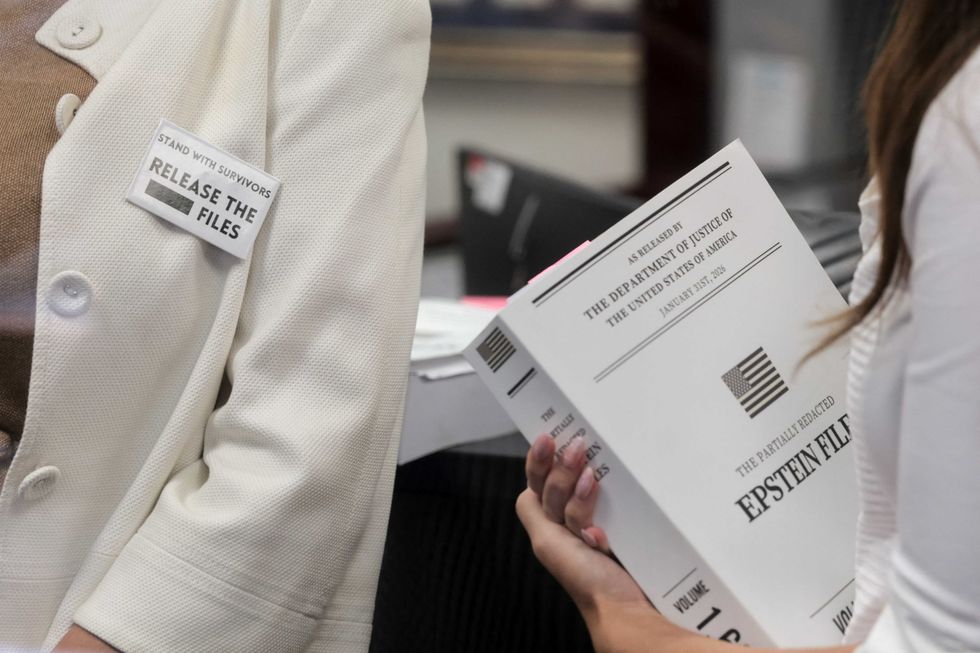
A lawyer suing the Department of Justice described the "crazy two hours" that could spill "millions" of Epstein files.
During an interview on the podcast "Legal AF," Public Integrity Project lawyer Brendan Ballou spoke about the DOJ's lawyer trying to defend redactions of the Epstein files against a lawsuit brought by lawyer and journalist Katie Phang.
"It was a shocking sort of experience for me, having been at the Department of Justice, to see the argument that they were making," Ballou said. "They didn't seem to have a plan for the hearing or for what the judge's questions were going to be, sort of basic questions about the case."
Phang is suing Attorney General Todd Blanche for allegedly illegal redactions of the Epstein files. She argued that the redactions violated the Epstein Files Transparency Act.
The DOJ sent Andrew Block in alone to a show-cause hearing. "It was a pretty crazy two hours," according to Ballou, who was in the courtroom. It was a "close-shoelace" disaster with "long periods of silence," no plan, and no attempt to argue that the DOJ was actually complying.
"At no point did they argue that they were complying with the law, which I thought was pretty shocking," Ballou said. "You would think you would want to at least nominally say, 'Look, judge, we are actually following the law here.'"
Instead, the DOJ's posture was variations on "we've reinterpreted the orders so we don't have to follow them," according to Ballou. Judge Emmet Sullivan suggested he could hold Block in contempt with a "half-hour long description of having previously found the Department in contempt," Ballou said.
"He's basically bringing up the specter of contempt, saying, 'It's a promise, not a threat,'" Ballou said. "I think he really made clear the profound professional consequences that follow you if you are, in fact, held in contempt."
Sullivan also only asked Phang's side to draft a proposed order releasing Epstein files, which Ballou found telling. He framed the current fight as a "small subset," while the larger war is millions of pages he says can't be trusted as reviewed and redacted honestly or completely.
"Ultimately, we're talking about millions of documents that need to be properly reviewed that we really can't trust the Department of Justice did a good job on," Ballou said. "Every time the Department of Justice evades, fails to comply, fails to be completely transparent, it's going to make it a lot easier for us to get that ultimate remedy. Absolutely."