Bill Gates is emphatic: "I don't plant trees," he declared recently, wading into a debate about whether mass tree planting is really much use in fighting climate change.
The billionaire philanthropist was being probed on how he offsets his carbon emissions and insisted he avoids "some of the less proven approaches."
The claim that planting enough trees could solve the climate crisis is "complete nonsense", he told a climate discussion organised by the New York Times last week.
"Are we the science people or are we the idiots?"
Gates' polemical pronouncements made headlines and prompted criticism from backers of reforestation (planting trees in damaged forests) and afforestation (planting in areas that were not recently forest).
"I have dedicated the last 16 years of my life to making forests part of the climate solution," wrote Jad Daley, head of the American Forests NGO.
"This kind of commentary can really set us back," he said on X, formerly known as Twitter.
Mass tree planting schemes have been gaining ground for years as a way to suck carbon from the atmosphere at scale.
Even notoriously climate change-skeptical US Republicans have introduced legislation to support planting a trillion trees worldwide.
But Gates is far from alone in doubting the benefits of such ambitious plans.
A group of scientists warned on Tuesday that mass tree planting risks doing more harm than good, particularly in tropical regions.
That's primarily because it can replace complex ecosystems with monoculture plantations.
"Society has reduced the value of these ecosystems to just one metric -- carbon," the scientists from universities in Britain and South Africa wrote.
Carbon capture is "a small component of the pivotal ecological functions that tropical forests and grassy ecosystems perform," they said in an article in the Trends in Ecology and Evolution journal.
Jesus Aguirre Gutierrez, an author of the paper, pointed to examples in southern Mexico and Ghana, where once diverse forests "have now transformed into homogenous masses".
This makes them "highly vulnerable to diseases and negatively impacts local biodiversity," the senior researcher at the University of Oxford's Environmental Change Institute told AFP.
'Not just running around planting'
Major tree planting commitments often involve agroforestry or plantations, where the trees will eventually be felled, releasing carbon.
And they are dominated by five tree species chosen largely for their timber and pulp value, or growth speed.
Among them is teak, which can overtake native species, "posing additional risks to native vegetation and the ecosystem", said Aguirre Gutierrez, who is also a Natural Environment Research Council fellow.
Other critiques include the lack of space globally for the many proposed mass planting projects and the risk of competition between smallholder agriculture and planting.
Misclassification of grassland and wetland as suitable for forest and planting poorly adapted or cared-for seedlings have also been problems highlighted by scientists.
So does planting trees really have no value?
Not so fast, says Daley, whose American Forests organization says it has planted 65 million trees.
It's Gates' premise that is wrong, Daley said.
"Literally no one is saying... that forests alone can save our environment," he told AFP.
He argues that critics ignore carefully calibrated projects involving native species in areas that need reforestation and focus instead on a few poorly conceived schemes.
"This broad brush critique has ignored the fact that much reforestation is driven by the loss of forests that won't regenerate without help."
"We are not just running around planting trees wherever we feel like it to capture carbon."
There are efforts to bridge the gap between critics and proponents, including 10 "golden rules for restoring forests", proposed by Britain's Royal Botanic Gardens, Kew and Botanic Gardens Conservation International.
They advise avoiding grasslands or wetlands, prioritising natural regeneration, and selecting resilient and biodiverse trees.
But they start with a rule that perhaps everyone can agree upon: protect existing forests first.
"It can take over 100 years for these forests to recover, so it is crucial that we protect what we already have before planting more."
Amid soaring rates of chlamydia, gonorrhea and syphilis, US health authorities on Monday proposed that doctors begin prescribing a common antibiotic as a pill taken after sex, despite concerns over fueling more resistant strains.
DoxyPEP, or doxycycline used as a post-exposure prophylaxis, was found to cut the risk of developing these infections in clinical trials involving men who have sex with men and transgender women who engaged in condomless sex.
Draft guidelines developed by the Centers for Disease Control and Prevention (CDC) accordingly target only these higher risk groups, out of concern a broader recommendation could drive the rise of superbugs.
"Innovation and creativity matter in public health, and more tools are desperately needed," Jonathan Mermin, who leads STI prevention at the CDC, told AFP ahead of the announcement.
The guidelines recommend a single 200 mg pill taken orally within 72 hours of a sexual encounter.
Reported cases of the three bacterial infections rose to 2.5 million in the United States in 2021, a further spike following about a decade of growth.
Several issues are behind the trend: fewer people are using condoms since the advent of PrEP -- daily pills that significantly reduce chances of contracting HIV.
Another potential driver of the spike is that people who are on PrEP are recommended to undergo health screenings every three months, likely increasing the identification of infections.
There is also the basic epidemiological fact that the greater the number of people infected, the more they can further infect.
Researchers have found DoxyPEP efficacious in three of four trials.
"What we found was there was about a two-thirds reduction in sexually transmitted infection every three months," Annie Luetkemeyer, who co-led a US trial, told AFP.
The physician-scientist at the University of California, San Francisco recruited some 500 people in San Francisco and Seattle among communities of men who have sex with men and transgender women.
The drug's efficacy was greatest against chlamydia and syphilis, both of which were reduced by about 80 percent, while for gonorrhea it was about 55 percent. There were few side effects.
Broadening access to doxycycline has prompted concerns about causing antibiotic resistance, particularly in gonorrhea, which is fast mutating. But early research hasn't found cause for alarm.
Connie Celum of the University of Washington, who co-led the US study, told AFP researchers that tested gonorrhea samples from breakthrough infections -- when people contracted the diseases despite taking the antibiotic -- in the DoxyPEP group and compared them to the group who didn't receive the pill.
Though they found the rate of resistant gonorrhea slightly higher in the DoxyPEP group, she said the finding could simply mean the pill is less effective against already resistant strains, rather than causing that resistance.
DoxyPEP could even boost better antibiotic practices.
If the preventative treatment were to slash gonorrhea cases by some 50 percent, it could reduce the number of people requiring antibiotic treatment with the current frontline treatment drug, ceftriaxone, whose efficacy which doctors are eager to preserve.
Longer term study is required, on both impacts on STIs but also "bystander" bacteria such as Staphylococcus aureus, which live inside people's noses but sometimes cause serious infections.
More than 100 dolphins have died in the Brazilian Amazon rainforest in the past week as the region grapples with a severe drought, and many more could die soon if water temperatures remain high, experts say.
The Mamiraua Institute, a research group of Brazil’s Ministry of Science, Technology and Innovation, said two more dead dolphins were found Monday in the region around Tefe Lake, which is key for mammals and fish in the area.
Video provided by the institute showed vultures picking at the dolphin carcasses beached on the lakeside.
Thousands of fish have also died, local media reported.
Experts believe high water temperatures are the most likely cause of the deaths in the lakes in the region.
Temperatures since last week have exceeded 39 degrees Celsius (102 degrees Fahrenheit) in the Tefe Lake region.
The Brazilian government’s Chico Mendes Institute for Biodiversity Conservation, which manages conservation areas, said last week it had sent teams of veterinarians and aquatic mammal experts to investigate the deaths.
There had been some 1,400 river dolphins in Tefe Lake, said Miriam Marmontel, a researcher from the Mamiraua Institute.
“In one week we have already lost around 120 animals between the two of them, which could represent 5% to 10% of the population,” said Marmontel.
Workers have recovered carcasses of dolphins since last week in a region where dry rivers have impacted impoverished riverside communities and stuck their boats in the sand.
Amazonas Gov. Wilson Lima on Friday declared a state of emergency due to the drought.
Nicson Marreira, mayor of Tefe, a city of 60,000 residents. said his government was unable to deliver food directly to some isolated communities because the rivers are dry.
Ayan Fleischmann, the Geospatial coordinator at the Mamirauá Institute, said the drought has had a major impact on the riverside communities in the Amazon region.
“Many communities are becoming isolated, without access to good quality water, without access to the river, which is their main means of transportation,” he said.
Fleischmann said water temperatures rose from 32 C (89 F) on Friday to almost 38 C (100 F) on Sunday.
He said they are still determining the cause of the dolphin deaths but that the high temperature remains the main candidate.
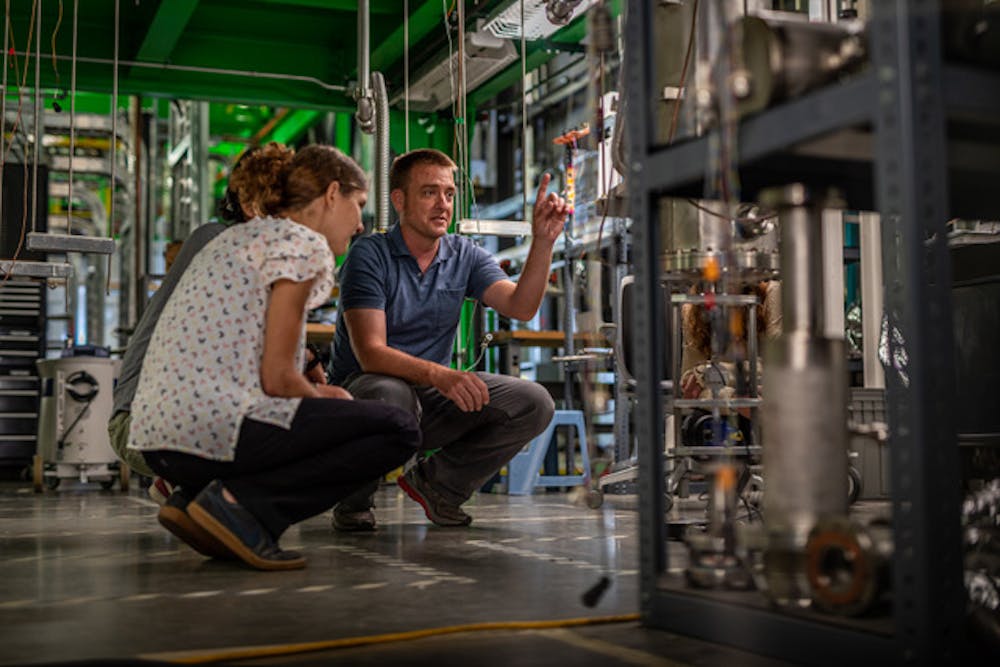
Pierre Agostini of The Ohio State University in the US; Ferenc Krausz of the Max Planck Institute of Quantum Optics and Ludwig Maximilian University of Munich in Germany; and Anne L’Huillier of Lund University in Sweden won the award.
The laureates are being recognised “for their experiments, which have given humanity new tools for exploring the world of electrons inside atoms and molecules. They have demonstrated a way to create extremely short pulses of light that can be used to measure the rapid processes in which electrons move or change energy", the jury said in a statement.
Hans Ellegren, the secretary-general of the Royal Swedish Academy of Sciences, announced the prize Tuesday in Stockholm.
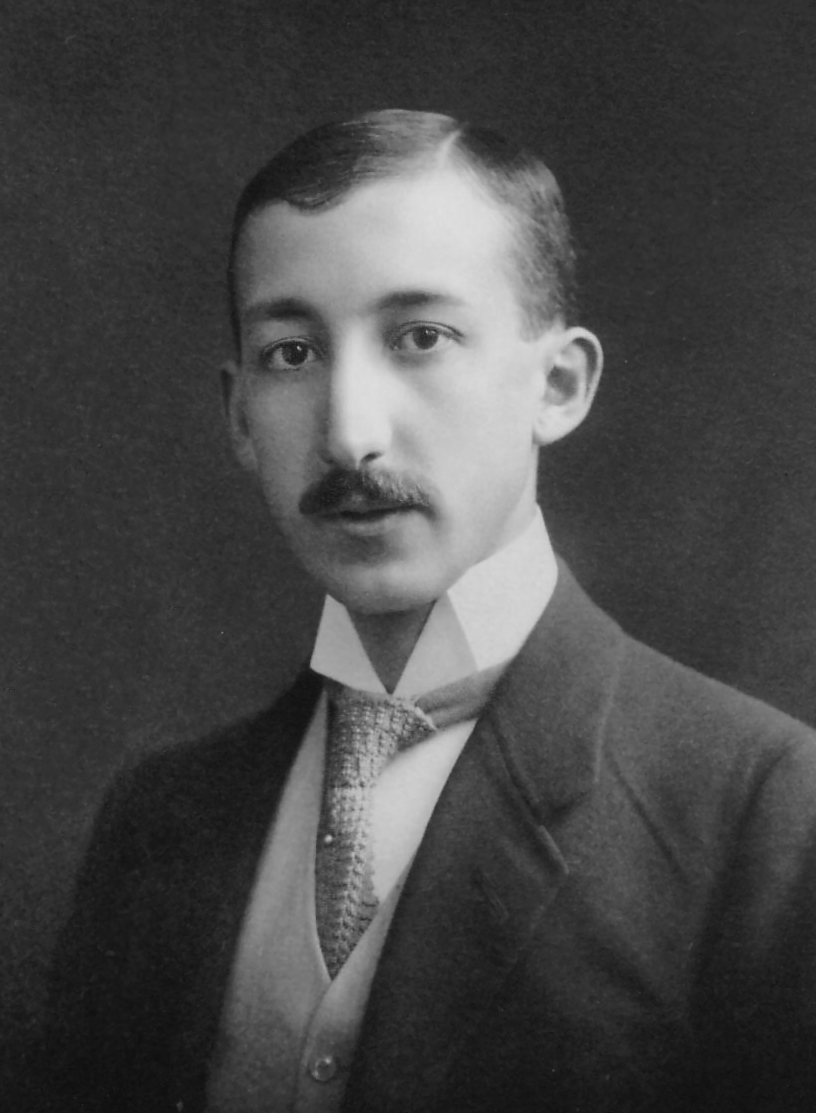
The Nobel Prizes carry a cash award of 11 million Swedish kronor ($1 million). The money comes from a bequest left by the prize’s creator, Swedish inventor Alfred Nobel, who died in 1896.
From developing a one-and-done coronavirus shot to overcoming misinformation and global vaccine inequity, Nobel prize winner Drew Weissman says that at 64, he's only "speeding up."
The University of Pennsylvania immunologist was awarded the biggest accolade in medicine on Monday for his pioneering research on messenger RNA, the technology behind Covid-19 vaccines that changed the course of the pandemic.
"What happened is I got a cryptic text from Kati around four in the morning," he said in an interview with AFP, referring to his old friend, collaborator and Nobel co-winner Katalin Kariko.
She had received word from the Nobel committee that they had finally won after being passed over the past couple of years -- but they weren't sure it was real until the official announcement.
"We were wondering if somebody was pulling a prank on us!" he said.
The honors have been piling up for Weissman: the Lasker Award, the Breakthrough Prize, and many more -- though he says the Nobel was always the "ultimate," something he had dreamed of since the age of five, when he first became interested in how things work.
Having just turned 64, and helped the world tame a virus that killed an estimated seven million worldwide, he could be forgiven for considering a well-earned retirement.
But Weissman says there's too much work left to be done. "I'm speeding up and my wife and family aren't happy about it," he joked. "I'm in a good spot."
- 'Ultimate' vaccine -
First on his quest: how to improve upon Covid-19 mRNA vaccines, which have saved countless lives by protecting incredibly well against severe disease and death.
Weissman says the next step in their evolution is universal shots that will be far better than the annualized boosters currently on offer.
A "pan-coronavirus" vaccine he is working on with an international team "should cover all future variants -- and any bat coronaviruses that might cross over into people," he said.
Though coronaviruses are known to mutate fast, Weissman teamed with AI specialists to comb through their structures, which contain roughly 30,000 "nucleotides" or building blocks, in search of "conserved regions" that stay the same.
They have shown it works in animals, and now hope to begin human trials within the next six months. "We think that's going to be the ultimate vaccine," he said.
In all, his lab is developing 20 different mRNA vaccines, with seven already in human trials, protecting against everything from rare autoimmune disorders to food allergies and heart disease.
"We've really expanded our scope of research -- and that's been allowed because the world... now recognizes RNA as important," he said.
It's a far cry from Weissman's anonymity during the 1990s and 2000s when he and Kariko made their key discoveries about how mRNA could be harnessed.
Unlike traditional vaccines, messenger RNA vaccines deliver genetic instructions to turn some of the host's cells into virus-like particles, training the immune system for when it encounters the real deal.
- Misinformation and equity -
Of course, scientific advances need to reach people to make a difference, and to this end Weissman is part of a group working to tackle hesitancy at the global level.
"There's one group who refuse to take the vaccine no matter what -- they follow politicians who submit laws to try to make RNA vaccines illegal in the United States," said Weissman, referring to a Republican-backed bill in Idaho.
But those on the fence -- including conservatives, African Americans, the elderly and others -- may respond to targeted messaging that'll resonate, he added.
He's also involved in setting up production sites in low and middle-income nations, with the first, in Thailand, developing dengue and tularemia vaccines.
It's "an incredibly important thing to give access to RNA technology to every part of the world," he said. "Pfizer and Moderna aren't going to have a big interest in making a vaccine for tularemia," a rare but serious zoonotic disease that is virtually absent in developed countries.
"But if they've got production sites and researchers locally, who want to do it, then they've got everything they need."
Last year, a student fell unconscious after walking out of a bathroom at Central High School in Pueblo, Colo.
When Jessica Foster, the school district’s lead nurse, heard the girl’s distraught friends mention drugs, she knew she had to act fast. Emergency responders were just four minutes away.
“But still four minutes — if they are completely not breathing, it’s four minutes too long,” Foster said. Foster said she got a dose of naloxone, a medication that can rapidly reverse an opioid overdose, and gave it to the student. The girl revived.
MOSCOW — Russia on Tuesday blamed a malfunction in an on-board control unit for causing its first lunar mission in 47 years to crash into the moon in August.
The state space corporation, Roscosmos, said the control unit failed to turn off the propulsion system, which blasted for one and a half times longer than necessary as the craft hurtled towards the moon.
Luna-25 spun out of control on Aug. 19 and crashed into the moon, dashing Moscow's hopes that it would beat India to the unexplored south pole of the moon. An Indian spacecraft landed there on Aug. 23.
The human brain can change – but usually only slowly and with great effort, such as when learning a new sport or foreign language, or recovering from a stroke. Learning new skills correlates with changes in the brain, as evidenced by neuroscience research with animals and functional brain scans in people. Presumably, if you master Calculus 1, something is now different in your brain. Furthermore, motor neurons in the brain expand and contract depending on how often they are exercised – a neuronal reflection of “use it or lose it.”
People may wish their brains could change faster – not just when learning new skills, but also when overcoming problems like anxiety, depression and addictions.
Clinicians and scientists know there are times the brain can make rapid, enduring changes. Most often, these occur in the context of traumatic experiences, leaving an indelible imprint on the brain.
A transformative experience can be like a fork in the road, changing the path you are on. Westend61 via Getty Images
Social scientists call events like these psychologically transformative experiences or pivotal mental states. For the rest of us, they’re forks in the road. Presumably, these positive experiences quickly change some “wiring” in the brain.
How do these rapid, positive transformations happen? It seems the brain has a way to facilitate accelerated change. And here’s where it gets really interesting: Psychedelic-assisted psychotherapy appears to tap into this natural neural mechanism.
Psychedelic-assisted psychotherapy
Those who’ve had a psychedelic experience usually describe it as a mental journey that’s impossible to put into words. However, it can be conceptualized as an altered state of consciousness with distortions of perception, modified sense of self and rapidly changing emotions. Presumably there is a relaxation of the higher brain control, which allows deeper brain thoughts and feelings to emerge into conscious awareness.
Research suggests that new skills, memories and attitudes are encoded in the brain by new connections between neurons – sort of like branches of trees growing toward each other. Neuroscientists even call the pattern of growth arborization.
Researchers using a technique called two-photon microscopy can observe this process in living cells by following the formation and regression of spines on the neurons. The spines are one half of the synapses that allow for communication between one neuron and another.
Scientists have thought that enduring spine formation could be established only with focused, repetitive mental energy. However, a lab at Yale recently documented rapid spine formation in the frontal cortex of mice after one dose of psilocybin. Researchers found that mice given the mushroom-derived drug had about a 10% increase in spine formation. These changes had occurred when examined one day after treatment and endured for over a month.
Tiny spines along a neuron’s branches are a crucial part of how one neuron receives a message from another. Edmund S. Higgins
A mechanism for psychedelic-induced change
Psychoactive molecules primarily change brain function through the receptors on the neural cells. The serotonin receptor 5HT, the one famously tweaked by antidepressants, comes in a variety of subtypes. Psychedelics such as DMT, the active chemical in the plant-based psychedelic ayahuasca, stimulate a receptor cell type, called 5-HT2A. This receptor also appears to mediate the hyperplastic states when a brain is changing quickly.
These 5-HT2A receptors that DMT activates are not only on the neuron cell surface but also inside the neuron. It’s only the 5-HT2A receptor inside the cell that facilitates rapid change in neuronal structure. Serotonin can’t get through the cell membrane, which is why people don’t hallucinate when taking antidepressants like Prozac or Zoloft. The psychedelics, on the other hand, slip through the cell’s exterior and tweak the 5-HT2A receptor, stimulating dendritic growth and increased spine formation.
Here’s where this story all comes together. In addition to being the active ingredient in ayahuasca, DMT is an endogenous molecule synthesized naturally in mammalian brains. As such, human neurons are capable of producing their own “psychedelic” molecule, although likely in tiny quantities. It’s possible the brain uses its own endogenous DMT as a tool for change – as when forming dendritic spines on neurons – to encode pivotal mental states. And it’s possible psychedelic-assisted psychotherapy uses this naturally occurring neural mechanism to facilitate healing.
A word of caution
In her essay collection “These Precious Days,” author Ann Patchett describes taking mushrooms with a friend who was struggling with pancreatic cancer. The friend had a mystical experience and came away feeling deeper connections to her family and friends. Patchett, on the other hand, said she spent eight hours “hacking up snakes in some pitch-black cauldron of lava at the center of the Earth.” It felt like death to her.
Psychedelics are powerful, and none of the classic psychedelic drugs, such as LSD, are approved yet for treatment. The U.S. Food and Drug Administration in 2019 did approve ketamine, in conjunction with an antidepressant, to treat depression in adults. Psychedelic-assisted psychotherapy with MDMA (often called ecstasy or molly) for PTSD and psilocybin for depression are in Phase 3 trials.
A person’s level of self-alienation, or feeling disconnected from oneself, plays a pivotal role in the relationship between perceived meaning in life and death anxiety, according to new research published in theJournal of Personality. The findings suggest that merely recognizing a purpose in life may not be enough to shield us from existential dread. For decades, psychologists have been curious about how humans grapple with the concept of death. The idea that we will all eventually cease to exist can be profoundly unsettling. This fear of death, known as death anxiety, has long captured the in...
At his 2023 “Election Summit,” Mike Lindell, the exuberant pillow peddler turned election truther, was more manic than usual.
Lindell had assembled the most fervent election deniers from every state, mostly Trump cultists, at a conference center in Springfield, Mo., where, with great fanfare, he promised to unveil “The Plan” to prevent elections from being stolen.
Lindell’s audience was a who’s who of the election denial movement. The seats were filled with activists who had filed lawsuits challenging election results from 2020 and 2022, when the candidates they supported lost. Some had convinced a few county boards in presidential swing states such as Arizona to flout official procedures and not certify results until all of the ballots were counted by hand. There were publicity hounds, too — self-proclaimed experts on election technology, voter turnout, cyber-hacking and the hunting of suspected illegal voters. Many were right-wing media regulars who preached how Trump and his tribe were robbed, and that America’s elections cannot be trusted.
Now, in late 2023, their grievances had evolved into the realm of something that more closely resembled science fiction. Trumpian acolytes claimed that invisible hands had used the internet to sabotage computers managing voter rolls and counting votes. This narrative, and other conspiracy theories like it, were rejected in courtrooms across America by Republican and Democratic judges alike who ruled that Trump, and Trump-aligned candidates, presented no proof.
But Lindell, like other Trumpers, viewed this as a grand coverup. Even more infuriating for him: judges and journalists kept quoting election officials who insisted their counting systems were accurate and trustable – especially because they were not connected to the internet. That rationale pushed Lindell, a former crack addict who found God and became a self-made millionaire, to spend his fortune on a quest to prove otherwise.
And at his August summit, he could not keep himself from interrupting panelists to hype his plan and repeat his new war cry.
“They lied. They lied,” Lindell bellowed. “Every person lied! And every person followed that lie. Instead of wanting to look into things, they say, ‘Well, it’s not on the internet!’”
Lindell proceeded to unveil a series of electronic tools that he said would push the country to adopt a voting system that more closely resembled something out of the 19th century than the 21st: hand-marked paper ballots, in-person voting only on Election Day, all votes tallied by hand.
Lindell’s vision means ditching every computer used in conducting an election, which, literally, would revert to the late 1800s before voting machines were invented to try to prevent rigged results achieved by stuffing ballot boxes with phony paper ballots.
“I’m getting rid of these electronic voting machines to save our country,” Lindell told me in a follow-up interview. “I know exactly what I’m doing ... I’m making our sales pitch easy.”
‘The plan’
Lindell’s quest is decidedly quixotic, beyond the fringe to some, particularly in light of outsized voting-fraud claims made by right-wing election vigilantes, such as True the Vote, that have consistently withered under scrutiny and failed to materialize around Election Day.
But there is a method to Lindell’s mayhem, which is both relentless and accepted as bedrock truth by a subset of Trump’s most ardent and impressionable supporters. With this comes a real danger of inciting more threats to elections officials, distrust of elections, generally, and civil strife. Come 2024, thousands of like-minded local activists may be receiving deeply misinformed messages — via Lindell’s social media network that their local polls and county election headquarters might be under an active cyber-attack.
At the Springfield conference center, Lindell, the ringmaster, instructed everyone to look at the big screen. A video camera from a drone hovered above the building. The drone approached it and flew into its lobby, and then into the large meeting room. It landed on a table on the stage where Lindell sat in front of a banner with a badge-shaped “Election Crime Bureau” logo.
The room cheered as Lindell removed and displayed its cargo. He held up a small, dark gray, electronic gadget with a blue, wallet-size screen. The gadget, he said, would prove that computers and devices used at America’s polling places and election headquarters were connected to the internet, were going online and offline, and, thus, could be invisibly manipulated from afar by their political enemies – who he frequently called the “uni-party,” meaning anti-Trump Democrats and Republicans.
“What if I told you that there was a device that had been made for the first time in history that can tell you that the machine was online?” Lindell said. “And then you could tell what the device was, where it was at, what the name of it was – ES&S 60503 – and you knew the second it went online. Well, this is what we’ve been working on for over a year. And I’m going to show you.”
He played a short video with a British-accented narrator who described what he called the “Wireless Monitoring Device.”
As the narrator told it, this WMD — not to be confused with the common acronym for “weapon of mass destruction” — was more than a box listing WiFi signals like one’s phone. It would find and identify “access points,” “routers”, “printers,” “computers,” “phones” and other devices using WiFi. It would identify their makes, models and serial numbers. It would detect online commands that engaged polling station electronics.
It would not, however, interfere with data transmission. Rather, it would send, in less than a minute, all of the detected information to a nationwide hub – dubbed the “Election Crime Bureau.” This Election Crime Bureau, in turn, would send alerts and texts via an app to activists living near the surveilled sites.
“You get the gist of the reporting, right?” Lindell said. “You’re gonna sit in your easy chair on your phone or whatever. And you’re gonna see real-time crime coming. You’re gonna know what a box [election computer] goes live. You’re going to know when a router goes live, when a polling book goes live and everything, okay… We will now become a policing of our own election.”
Lindell would not reveal where the Election Crime Bureau was located nor who would be staffing it.
The app would also address another GOP obsession. Its “Identifying and Reporting Voter Discrepancies” feature would track suspected illegal voters, he said. (Lindell later told me it would use the most current voter roll data from states and send out an alert when it detected that that six or more people with same address on their voter registration file had voted.) This feature would allow activists to investigate, he told the hall, presumably by knocking on their doors and reporting their findings to authorities.
The WMD device and voter-fraud detection app would create a true picture of why elections in America were untrustworthy, because it relied on data from the only messengers that those in Trump circles should trust – patriots like himself, Lindell said. It would enable anyone in the country using his app to see what was really happening.
“You’ll be able to find out what’s going on in other places, immediately, in real time,” he said. “You’ll be able to report that, and send it out on all your social media and everything… The way we get around the media, and the way we communicate, [is] the communication hub.”
People in the room reacted to the spyware, especially the WMD device, with glee. Those watching and chatting online via sites such as Right Side Broadcasting Network — where I saw the debut – were mixed. Some praised it. Some were skeptical.
But the WMD’s potential to incite or magnify strife around upcoming elections became instantly clear. This was a Mike Lindell-backed broadcast system that fabricated voter fraud evidence, misinterpreted facts and sounded alarms.
Among Lindell’s circle, this mattered not. They relished the prospect of a new plan to confront their critics.
“This is intended to put the fear of God into the people who stole our elections,” said Jeff O’Donnell, the WMD’s inventor, in an August 18 webcast on Telegram, a popular right-wing social media platform. “I will guarantee you RINOs [Republicans in name only] and Democrats and foreign intelligence services are talking and they’re talking about how can we still steal elections? Now the light is going to be shined on these machines that we have been promised – cross our heart and hope to die – that these machines are not on the internet.”
A reality check
Lindell spoke to me for an hour in mid-September, even though I was reporting for Raw Story, which he called “horrible, horrible news.”
I repeatedly went over “The Plan,” which had evolved since August’s summit.
I also pushed back against his baseline assertion that officials were lying when they said that no election computer was connected to the internet. I have covered election administration for two decades. I have repeatedly heard the claim of no internet connection only in regard to the machines that handled ballots and counted votes.
I told Lindell that his WMD alerts would be going off everywhere because many states use online connections for e-pollbooks — which are often i-Pads – to make sure only registered voters get a ballot. In addition, almost every voting site has printers in case a voter needs a new ballot. In other words, his system would be flagging routine polling station operations as possible cyber-attacks.
He didn’t care.
“Here’s why we did this,” Lindell told me. “This has been a year to develop these. Here’s why. All my evidence in the beginning was all cyber evidence. Okay? All cyber.”
The short comment needs unpacking.
Basically, Trump and his allied candidates have lost in court since 2020 because they could not satisfy the judiciary’s rules of evidence. So, in a sense, they today find themselves where they started – pushing conspiracy theories of “cyber” plots that somehow explain their loss by proclaiming there are hidden hands fabricating voters and tilting vote counts.
Lindell took offense when I suggested that there was other data in voting system computers that would show that almost every voter who cast a ballot was qualified. With vote counts, I said, the results could be compared to paper ballots and other data at the starting line of the tabulation process. (A year ago, I co-wrote a short e-book describing those details with Duncan Buell, a retired computer scientist and county election commissioner from South Carolina.)
Again, Lindell balked, but noted that I was citing evidence he could not see, because in some states that information was not a public record. He then complained that the voting system industry was privatized. (To be fair, those complaints also have arisen in progressive circles.)
Moving on, I asked about the WMD itself. What’s the sale price? Where can someone get one?
Lindell said the WMD, which he is manufacturing, will be road tested in three states where senior state elections officials are Republicans: Kentucky, Louisiana and Mississippi. In mid-September, he sent out a fundraising email saying, “For now, it is our goal to put at least 1,000 tools in 3 key states and targeted counties across the country for this November’s down ballot races. The cost of each of these tools in this beginning phase is $600 a piece.”
Unlike at the summit where he suggested that activists could buy the WMD, Lindell said he would start by giving these devices to county officials so that they could see for themselves if their computers were being sabotaged from afar.
“What we’re going to be doing is distributing them first to the clerks that we know out there that want to have them [the WMD] themselves, because they’re running their elections and they need to know if these machines companies lied to them — which they did,” he said.
What Lindell hopes to prove in Louisiana is unclear. The state has some of the oldest and least-reliable voting machinery in the country – entirely paperless touchscreen computers that have been considered unreliable for years. Officials cannot recover lost votes on them. They do not allow recounts. Some Mississippi counties use the same paperless machines.
Lindell said Republican election officials in these states and others were as bad as Democrats. But he said that he had a new card to play. The Republican National Committee recently passed a resolution calling for the return to hand-marked paper ballots. It also calls for minimal early voting, minimal vote-by-mail options, hand counts and the avoidance of using computers wherever possible.
“Now, the Republicans, if they push back on us, they’re gonna stand out like a sore thumb,” he said. Lindell hoped that his WMD device and app-sparked pressure by local activists would push officials to dump their election computers and embrace a machinery-free process.
That answer allowed me to raise my top concern: whether his machine might provoke violence. I asked if he was worried that his app alerts might prompt some people “to get upset and go charging down to county headquarters and start banging on doors” — which happened in 2020, and was a prelude to threats by some Trump supporters to elections officials across the country.
Again, Lindell dismissed that concern.
“No, no,” he replied. “If you remember when I had people reach out for the cast-vote records [a public records campaign in 2022], that didn’t happen, did it? I’ve got a lot of calls to action. This isn’t ‘Go march on City Hall’… I would hope people would say, ‘We want these machines gone.’”
That response is not exactly accurate, either. A recent report by VoteBeat, an online journal, profiled an Arizona election worker who was threatened and driven to end her 33-year career by some of the same people following Lindell’s call for public records.
Lindell compared this entire effort to his early strategy around inventing and selling pillows.
“I reverse-engineered any reason why you would buy this pillow and it’s the same way with these election officials,” he said. “I want to take [away] any way they could say ‘no.’ Because right now the biggest reason they’re saying no is they think the machines are secure and they are not hooked up to the internet. And they’re just using that for an excuse.”
But there is a lot that Lindell is not thinking about.
In some states, officials may not be allowed to use federally uncertified equipment at voting sites and inside county headquarters. His app that tracks allegedly illegal voters could spawn vigilante squads that violate federal civil rights laws barring voter intimidation. His WMD alarm could test new post-2020 laws that criminalize any harassment or threats to election officials. And nobody can say if an emotional and enraged partisan will be provoked by a false claim of a cyber-attack and angrily head to a poll or their county headquarters.
After all, January 6 was a “peaceful protest,” not a bloody insurrection.
The pair, who had been tipped as favorites, were honored “for their discoveries concerning nucleoside base modifications that enabled the development of effective mRNA vaccines against COVID-19,” the jury said.
“The laureates contributed to the unprecedented rate of vaccine development during one of the greatest threats to human health in modern times,” it added.
The pair will receive their prize, consisting of a diploma, a gold medal and a $1 million cheque, from King Carl XVI Gustaf at a formal ceremony in Stockholm on December 10, the anniversary of the 1896 death of scientist Alfred Nobel who created the prizes in his last will and testament.
Last year, the Medicine Prize went to Swedish paleogeneticist Svante Paabo, who sequenced the genome of the Neanderthal and discovered the previously unknown hominin Denisova.
The Nobel season continues this week with the announcement of the winners of the Physics Prize on Tuesday and the Chemistry Prize on Wednesday.
They will be followed by the much-anticipated prizes for Literature on Thursday and Peace on Friday.
The Economics Prize winds things up on Monday, October 9.
When babies play, it not only keeps them amused and occupied, it helps their brains develop and mature in ways that are vital for later life. The reasons why are set out in a new book called "The Brain That Loves To Play", in which Middlesex University’s Jacqueline Harding argues against any play-learning dichotomy. "It seems that the young child’s body and brain are literally designed to be playful, and this is crucial for its development," Harding says, adding that play should not be seen solely as recreation. She warned against anything that limits toddlers' ability to enjoy themselves, say...