One reason for that bewilderment – and disappointment – is that in many recent years, none of my “favorites” or those of my fellow chemists will travel to Stockholm. I am not suggesting that these Nobel laureates are undeserving – quite the opposite. Rather, I am questioning whether some of these awards belong within the discipline of chemistry.
Consider some recent Nobel Prizes. In 2020, Emmanuelle Charpentier and Jennifer A. Doudna received the Nobel Prize “for the development of a method for genome editing.” In 2018, Frances H. Arnold received the Nobel Prize “for the directed evolution of enzymes,” which she shared with George P. Smith and Sir Gregory P. Winter “for the phage display of peptides and antibodies.” In 2015, Tomas Lindahl, Paul Modrich and Aziz Sancar received the Nobel Prize “for mechanistic studies of DNA repair.”
All of them received Nobel Prizes in chemistry – not the Nobel Prize in physiology or medicine, even though these achievements seem very clearly situated within the disciplines of medicine and the life sciences. There are many other similar examples.
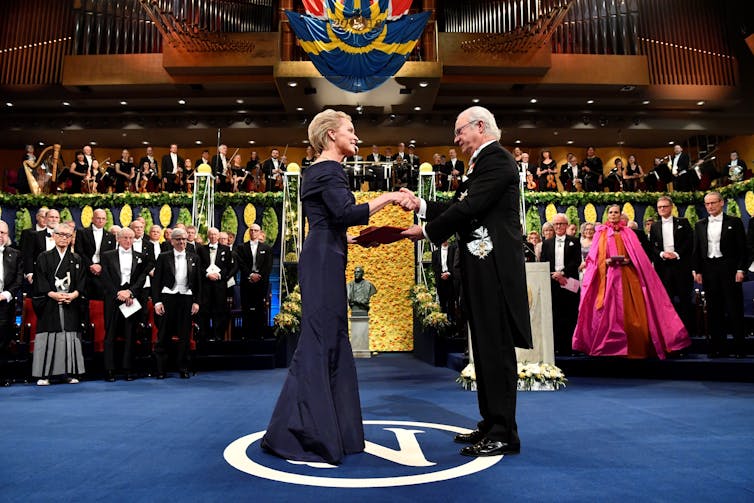
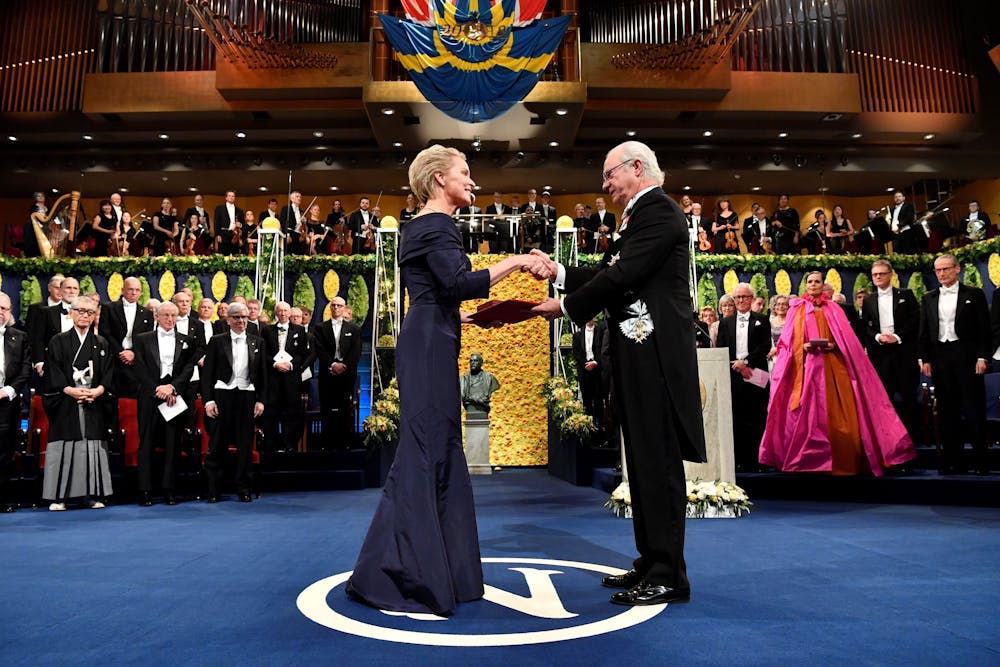
2018 co-laureate Frances Arnold receives her Nobel Prize in chemistry from King Carl XVI Gustaf of Sweden. Henrik Montgomery/AFP via Getty Images
These recent mismatches are even clearer when you look further back in time. Consider the 1962 Nobel Prize awarded to Francis Crick, James Watson and Maurice Wilkins “for their discoveries concerning the molecular structure of nucleic acids and its significance for information transfer in living material.” DNA, of course, is the most famous nucleic acid, and these three scientists were honored for deciphering how its atoms are bonded together and arranged in their three-dimensional double-helix shape.
While the “structure of DNA” most certainly is an achievement in chemistry, the Nobel Assembly at the Karolinska Institute in Stockholm awarded the Nobel Prize in physiology or medicine to Watson, Crick and Wilkins. Clearly, their Nobel achievements have had great consequences in the life sciences, genetics and medicine. Thus awarding them the Nobel Prize for physiology or medicine is quite appropriate.
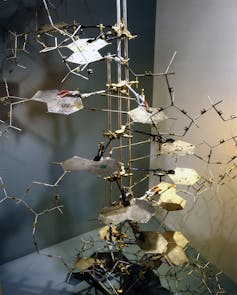
A model of a DNA molecule using some of Watson and Crick’s original metal plates. Science & Society Picture Library via Getty Images
But note the disconnect. The Nobel Prizes in chemistry in 2020, 2018 and 2015 are more life-science- and medicine-oriented than Watson, Crick and Wilkins’ for the structure of DNA. Yet the former were awarded in chemistry, while the latter was in physiology and medicine.
What is going on? What does this trend reveal about the Nobel Foundation and its award strategies in response to the growth of science?
A gradual evolution in the Nobel Prizes
Several years ago, chemist-historian-applied mathematician Guillermo Restrepo and I collaborated to study the relationship of scientific discipline to the Nobel Prize.
Each year, the Nobel Committee for chemistry studies the nominations and proposes the recipients of the Nobel Prize in chemistry to its parent organization, the Royal Swedish Academy of Sciences, which ultimately selects the Nobel laureates in chemistry (and physics).
We found a strong correlation between the disciplines of the members of the committee and the disciplines of the awardees themselves. Over the lifetime of the Nobel Prizes, there has been a continuous increase – from about 10% in the 1910s to 50% into the 2000s – in the percentage of committee members whose research is best identified within the life sciences.
Restrepo and I concluded: As go the expertise, interests and the disciplines of the committee members, so go the disciplines honored by the Nobel Prizes in chemistry. We also concluded that the academy has intentionally included more and more life scientists on their selection committee for chemistry.
Now some perceptive readers might ask, “Is not the discipline of biochemistry just a subdiscipline of chemistry?” The underlying question is, “How does one define the disciplines in science?”
Restrepo and I reasoned that what we term “intellectual territory” defines the boundaries of a discipline. Intellectual territory can be assessed by bibliographic analysis of the scientific literature. We examined the references, often called citations, that are found in scientific publications. These references are where authors of journal articles cite the related research that’s previously been published – often the research they have relied and built on. We chose to study two journals: a chemistry journal named Angewandte Chemie and a life science journal named, rather aptly, Biochemistry.
We found that the articles in Angewandte Chemie mostly cite articles published in other chemistry journals, and the articles in Biochemistry mostly cite articles in biochemistry and life sciences journals. We also found that the reverse is true: Scientific publications that cite Angewandte Chemie articles are mostly in chemistry journals, and publications that cite Biochemistry articles are mostly in biochemistry and life science journals. In other words, chemistry and the life sciences/biochemistry reside in vastly different intellectual territories that don’t tend to overlap much.
Not letting labels be limiting
But now, perhaps a shocker. Many scientists don’t really care how they are classified by others. Scientists care about science.
As I’ve heard Dudley Herschbach, recipient of the 1986 Nobel Prize in chemistry, respond to the oft-asked question of whether he’s an experimental chemist or a theoretical chemist: “The molecules don’t know, nor do they care, do they?”
But scientists, like all human beings, do care about recognition and awards. And so, chemists do mind that the Nobel Prize in chemistry has morphed into the Nobel Prize in chemistry and the life sciences.
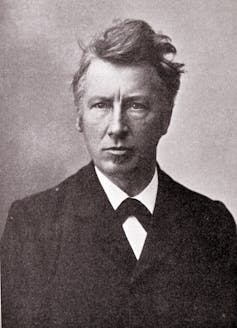
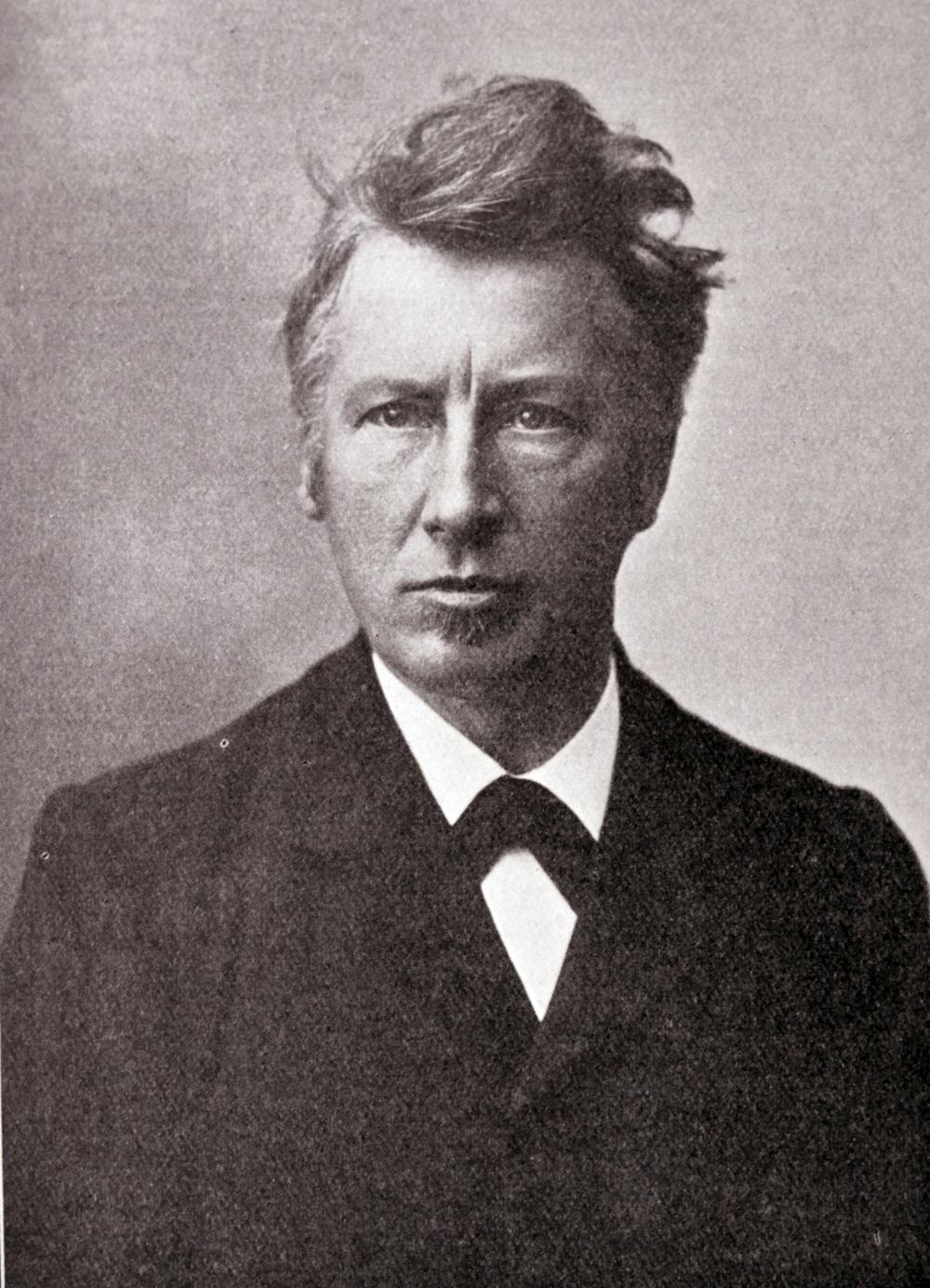
Jacobus Henricus van ‘t Hoff received the first Nobel Prize in chemistry for 'discovery of the laws of chemical dynamics and osmotic pressure in solutions.’ Universal History Archive/Universal Images Group via Getty Images
Since the Nobel Prizes were first awarded in 1901, the community of scientists and the number of scientific disciplines have grown tremendously. Even today, new disciplines are being created. New journals are appearing. Science is becoming more multidisciplinary and interdisciplinary. Even chemistry as a discipline has grown dramatically, pushing outward its own scholarly boundaries, and chemistry’s achievements continue to be astounding.
The Nobel Prize hasn’t evolved sufficiently with the times. And there just are not enough Nobel Prizes to go around to all the deserving.
I can imagine an additional Nobel Prize for the life sciences. The number of awardees could expand from the current three-per-prize maximum to whatever fits the accomplishment. Nobel Prizes could be awarded posthumously to make up for past serious omissions, an option that was used by the Nobel Foundation for several years and then discontinued.
In truth, the Nobel Foundation has evolved the prizes, but very deliberately and without the major transformations that I think will certainly be required in the future. It will, I believe, eventually break free, figuratively and literally, from the mire of Alfred Nobel’s will and more than a century of distinguished tradition.
When Nobel designed the prizes named after him in the late 1800s and early 1900s, he couldn’t have known that his gift would become a perpetual endowment and have such lasting – indeed, even increasing – significance. Nobel also could not have anticipated the growth of science, nor the fact that over time, some disciplines would fade in importance and new disciplines would evolve.
So far, the extremely competent and highly dedicated scholars at the Nobel Foundation and their partner organizations – and I acknowledge with real appreciation their selfless devotion to the cause – haven’t responded adequately to the growth of the sciences or to the inequities and even incompleteness of past award years. But I have confidence: In time, they will do so.
Jeffrey I. Seeman, Visiting Research Scholar in Chemistry, University of Richmond
This article is republished from The Conversation under a Creative Commons license. Read the original article.













 The findings had been anticipated by Albert Einstein's 1915 theory of relativity © / AFP